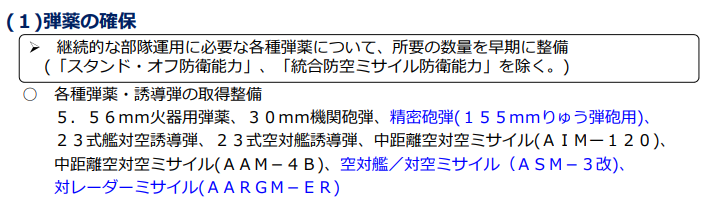
So, ASM-3A can actually be use as AAM.
2 Likes
Here is written ASM-3 Kai, not ASM-3A
But tbh here is a question isn’t that a typo.
For example basic ASM-3 has only 10G overload what is very low (especially for Mach 3+ missile) to be used as anti air plane
My bad. The recent Japanese armament designation is really confusing.
I had thought it may be a typo. But what are they original want to write? Air to ship/Air to ??
10G may not be enough to hunt a fighter jet. But it is more than enough for a large aircraft like AWACS, bomber, tanker
Yeah
Atm we have ASM-3, ASM-3A and ASM-3 Kai and I still don’t clearly know difference between ASM-3 and 3A
The most possible version - 対陸 - air-to-ground
Of course it can be really air-to-air function and probably they upgraded overload since simple ASM-3 but idk
Sounds doubtful tbh without more data
1 Like
Just a genuine question, but where does that ‘10G overload’ figure come from?
In one of XASM-3 documents was said about maximum possible overloads for Y and Z, overload was written as 100m/s2 what is around 10G
If it does turn out to be AIR to AIR I wonder if it is a special modification or if simply ASM-3 Kai will have an air to air mode alongside anti ship and I wonder if it also can be used on ground?
it could be along the idea of the Russians converting arms into anti awacs missiles, g load really doesn’t matter vs big/slow aircraft like that.
And this confirms that the new ASM-3 KAI will be anti ship and have Air to AIR capabilities!
“Regarding the implications of this, a Ministry of Defense official clarified that the ASM-3 Kai will be a dual-purpose missile capable of both air-to-ship and air-to-air combat. The ASM-3 series uses an inertial/GPS guidance system for the mid-stage and an active/passive radar combined guidance system for the terminal stage, but it will be possible to use it as an air-to-air missile simply by modifying the program.”
1 Like
Honestly peak, im so happy my copium about it possibly being able to cause of it’s seeker became not copium.
If only the news happened after gaijin added it, now there’s like zero chance of it coming soon.
2 Likes
What does this part mean? Like it’s not an air to air missile for now but could be potentially?
I’m pretty sure its saying the ASM-3s always could have, but that they’re only just now working on it with the ASM-3 Kai.
2 Likes
Ah that makes sense, thanks.
Do you happen to have this document? I don’t think I have it.
Im curious since it has active passive seeker. Once its close enough would it be possible to track a aircraft homing in on its radar frequency? Would this give a rwr warning?
Potentially, especially if its designed as an AWACS killer, keeping its own radar off should be fairly possible. Although it might need to be turned on for use as a proximity fuse as I’m not aware of it having a dedicated proxy fuse?
In game though we’d need seperate versions for ARH and PRH.
2 Likes
My biggest concern/objection towards the ASM-3 being both air to ship and air to air is the warhead.
Against a ship, you want a big warhead with a delay so it penetrates the hull of the ship and maybe a deck or 2 before detonating and creating massive internal damage.
Against an aircraft, you need a big enough warhead but you don’t want a contact fuze but a proximity fuze (we learned that lesson from the AIM-4 Falcon {7.6 lb warhead so small it needed direct contact} and the 2.75" FFAR used by the F-89D and F-94C). The AIM-9 Sidewinder typically has a 20.8 lb annular blast fragmentation proximity fuze which is generally considered the minimum recommended for an effective air to air missile.
For a dual role missile, you would need an extremely large warhead (compared to air combat) that can switch detonation between delayed impact to proximity. The excess warhead (for air to air) isn’t necessarily a bad thing but could produce enough particles to actual jam the interceptor’s radar in that region (acting as rapid bloom chaff with the debris of the target). Of course that also means a relatively large miss with such a large warhead effectively becomes a kill.
Not impossible but the difficulty lies in the redundancy and reliability. If the proximity fuze detonates against a ship, you might severely damage the paint job and incite corrosion. If the proximity fuze fails against an aircraft, a miss is a miss, even if it is a fraction of a millimeter. A hit with a delayed action fuze may result in detonation a quarter mile beyond the target leaving a gaping hole through the target which, based on hit location, may or may not be sufficiently destructive.
Warhead will most likely change, i imagine asm-3 should be similar compared to Stratus RS missile develloped by France, from anti AWACS, SEAD and anti-ship missile.
Its explicitely said it will be with no physical alterations.
Tbf, this might not be the only thing it has proxy detonation for? Iirc at one point it was looked into having the missile proxy detonate to deal with multiple smaller vessels like landing craft, although I dunno if it went anywhere.