@Fireball_2020 switching thread.
Anyway, we are going around with lots of theoretical. I think we need to have a better look at all of this before drawing any clear conclusions (as clear as we can get them anyway)
ADA257018 - Airbreathing Propulsion For Missiles and Projectiles - pages 33 - 44 has very detailed info on an air to air ramjet powered missile, with range tables, flight profile, thrust profile, etc. it’s not directly related to the meteor or any of the development missiles like the a3m but it’s still really good to get an idea of how a missile of this type works in details
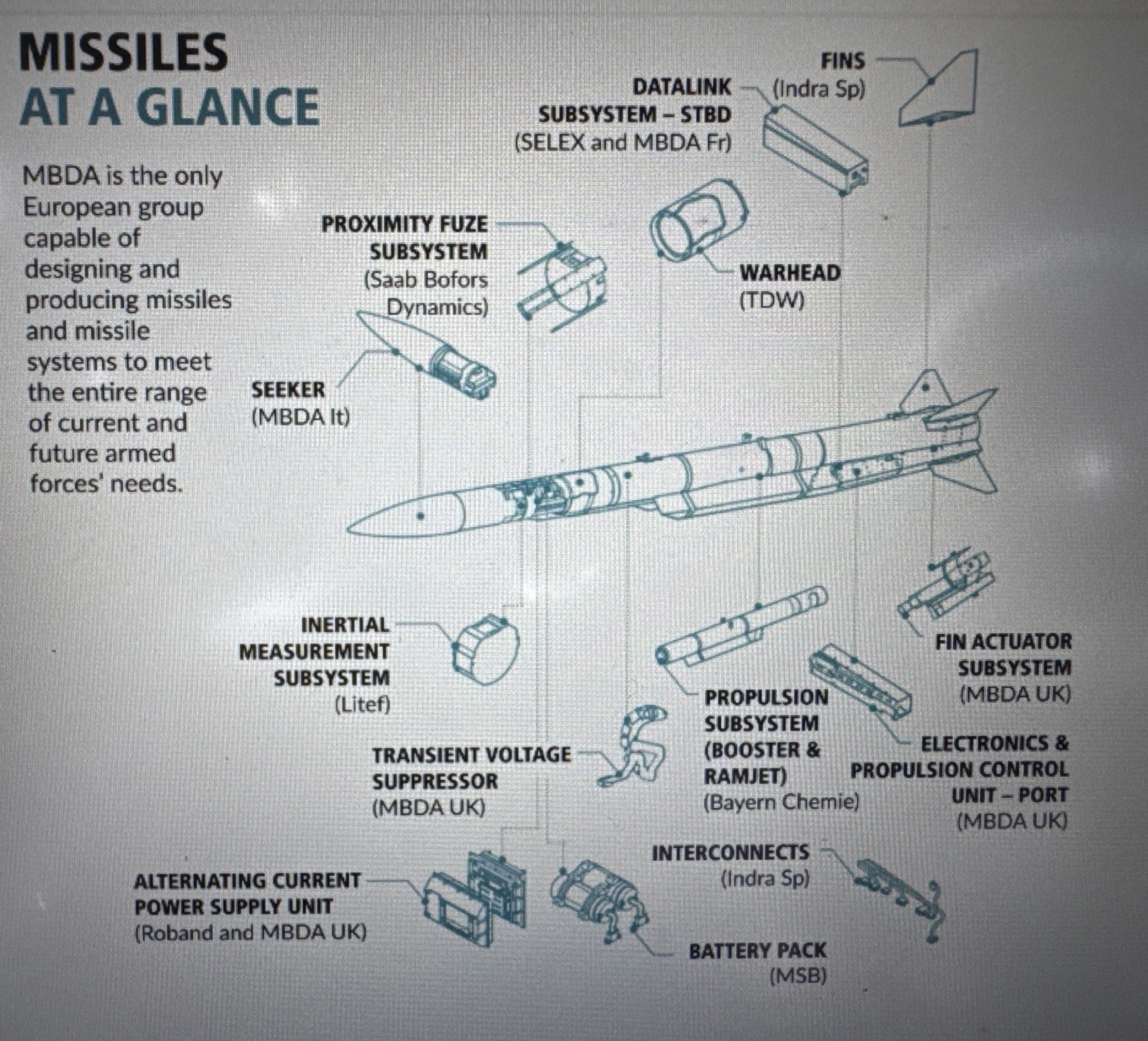
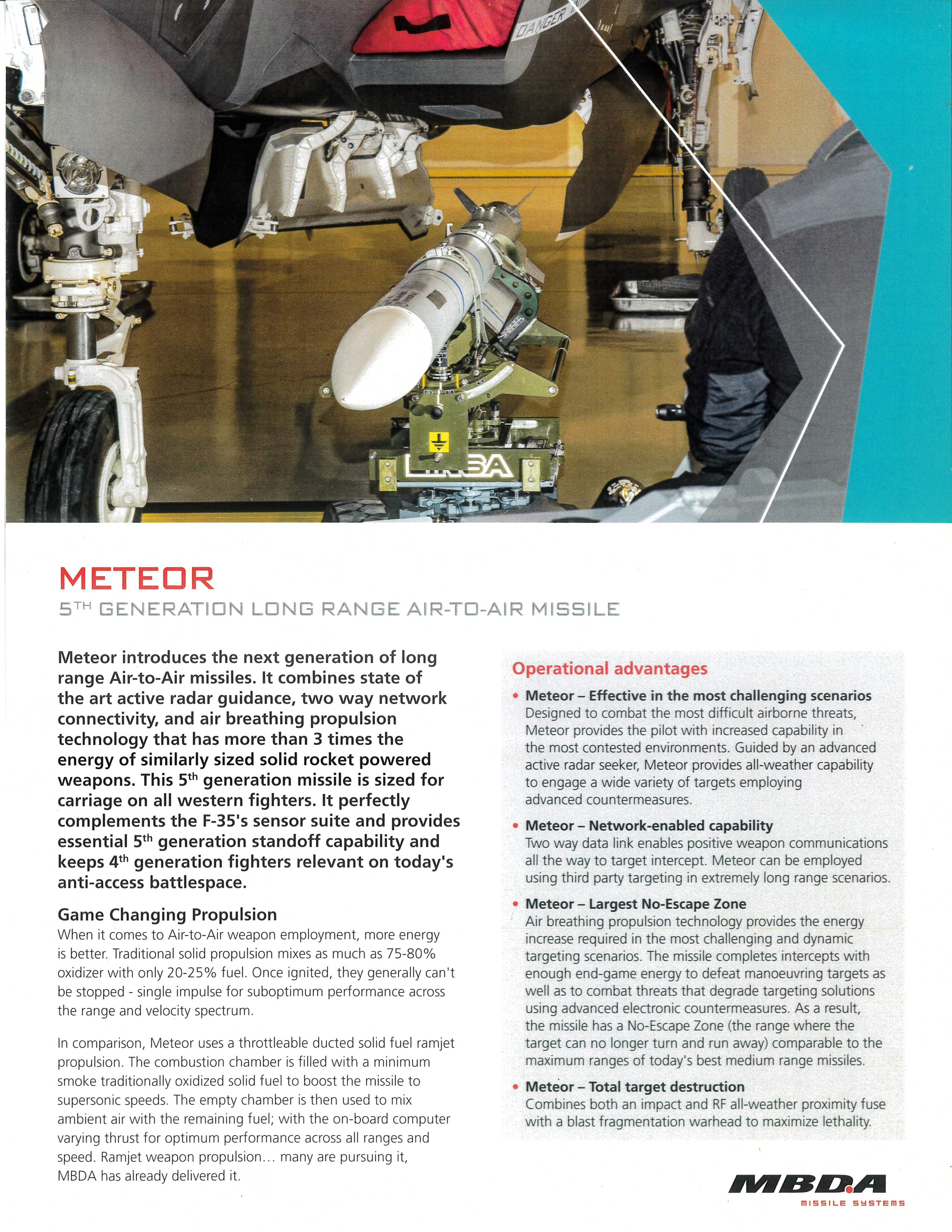
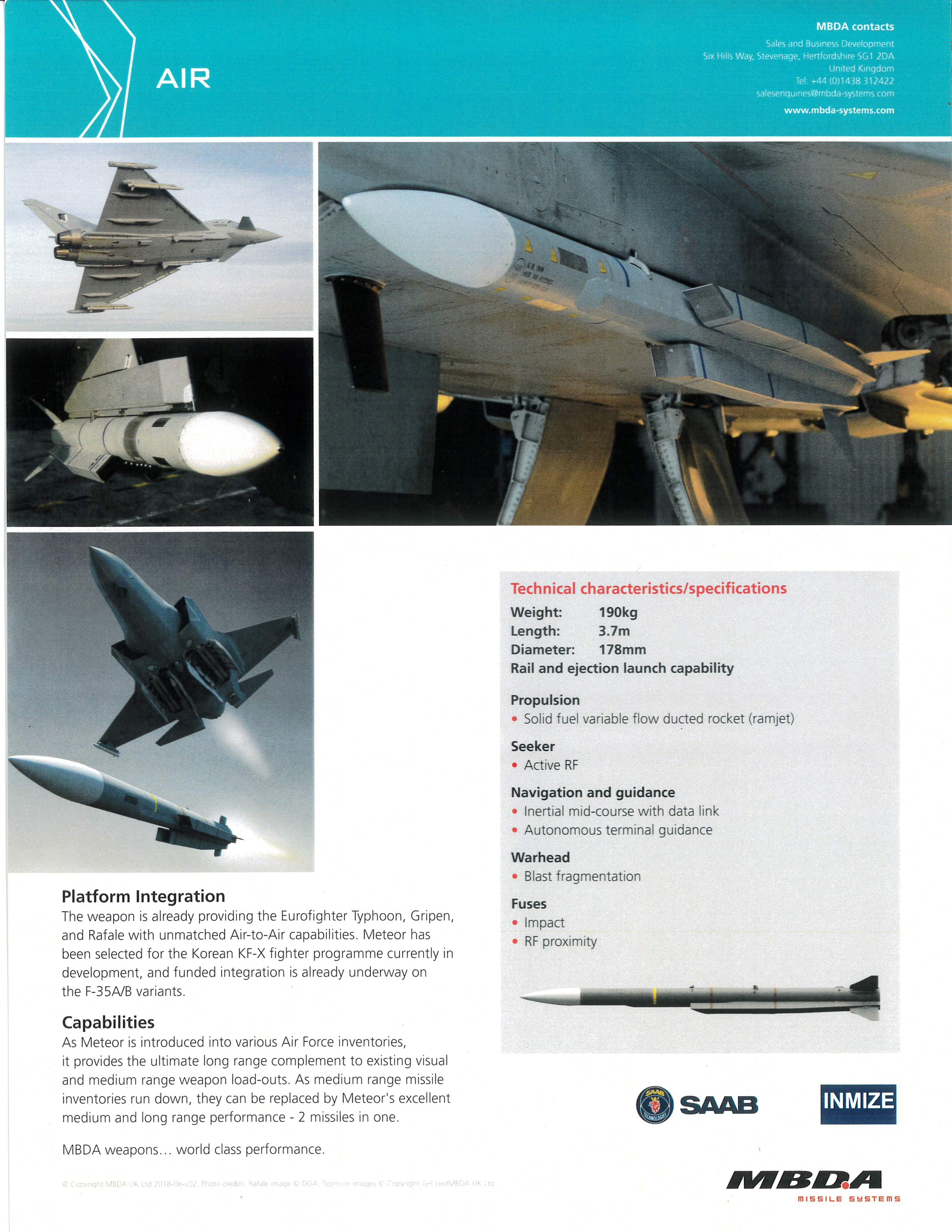
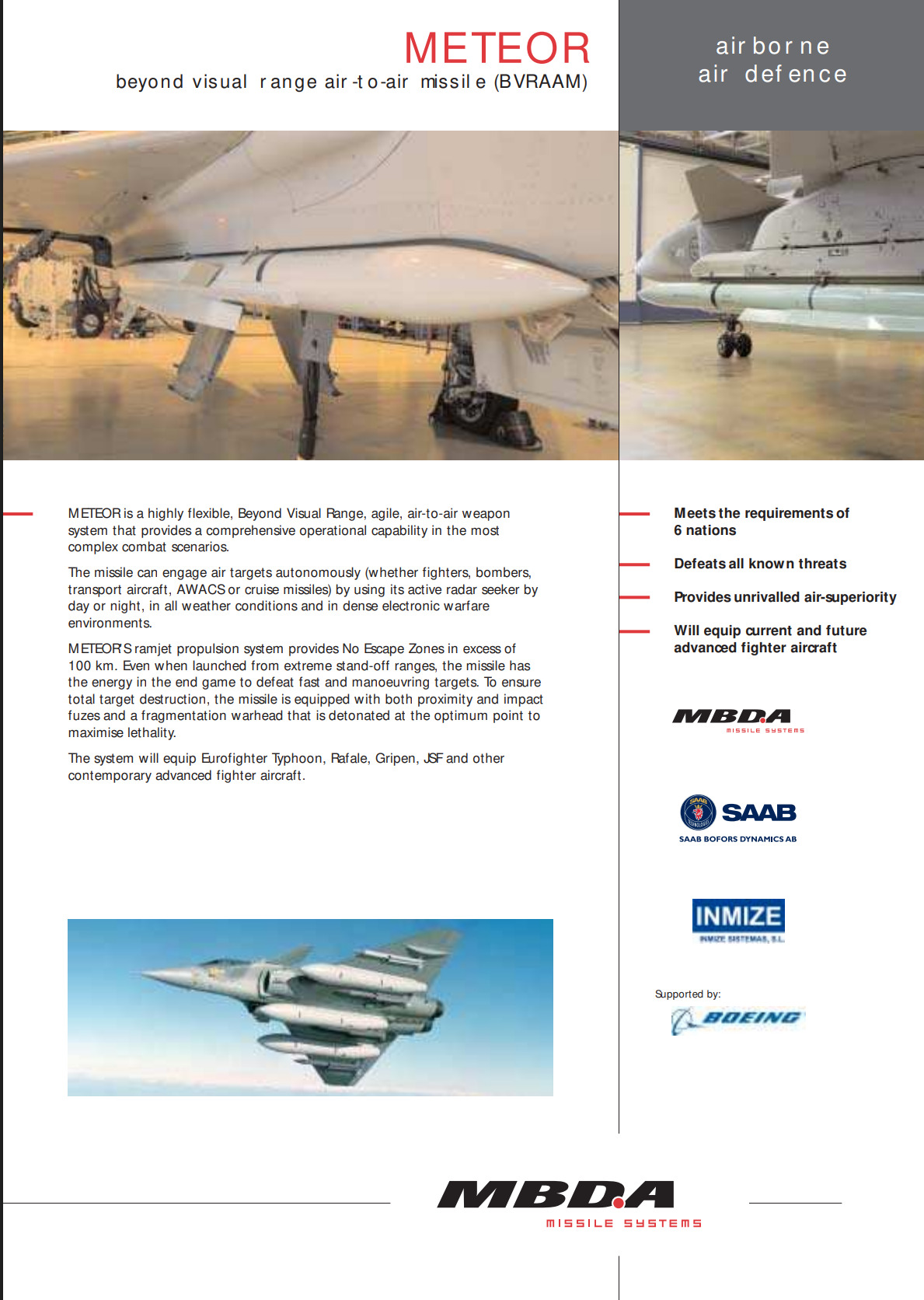
i believe this is an older brochure, i think it has more info than the current brochure on MBDA’s website
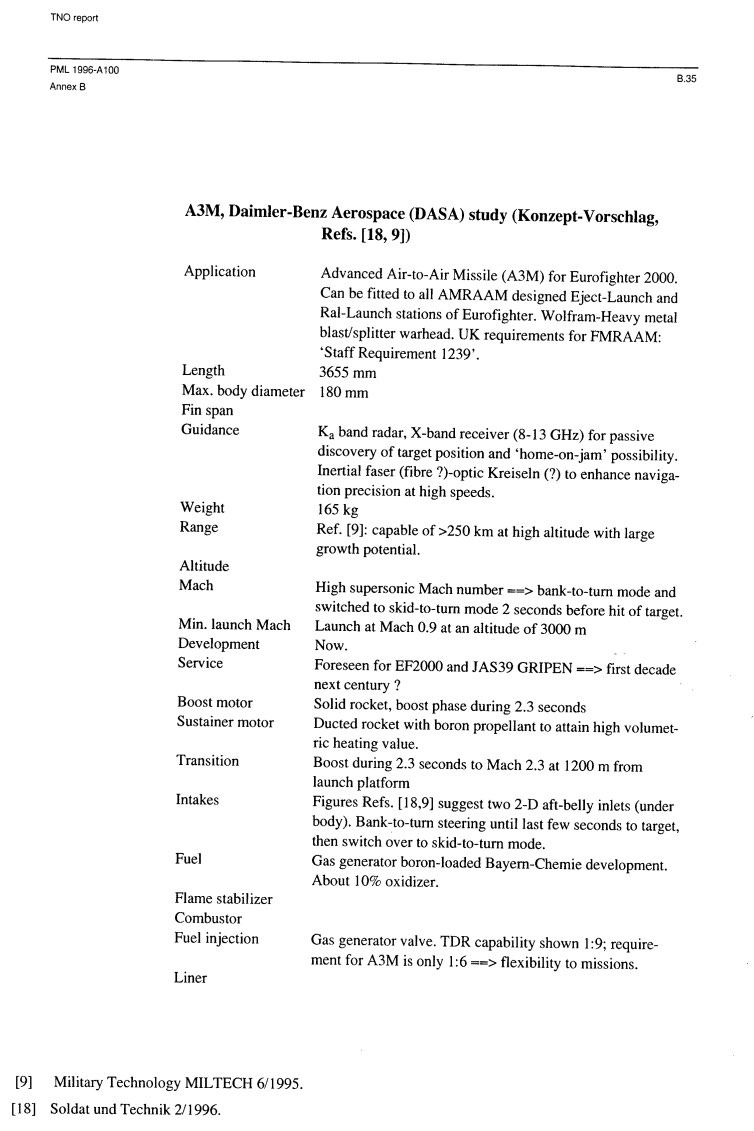
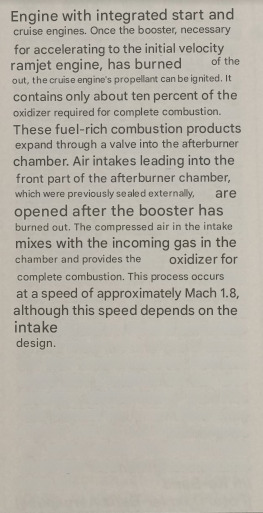
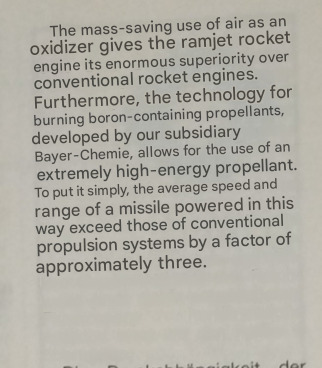
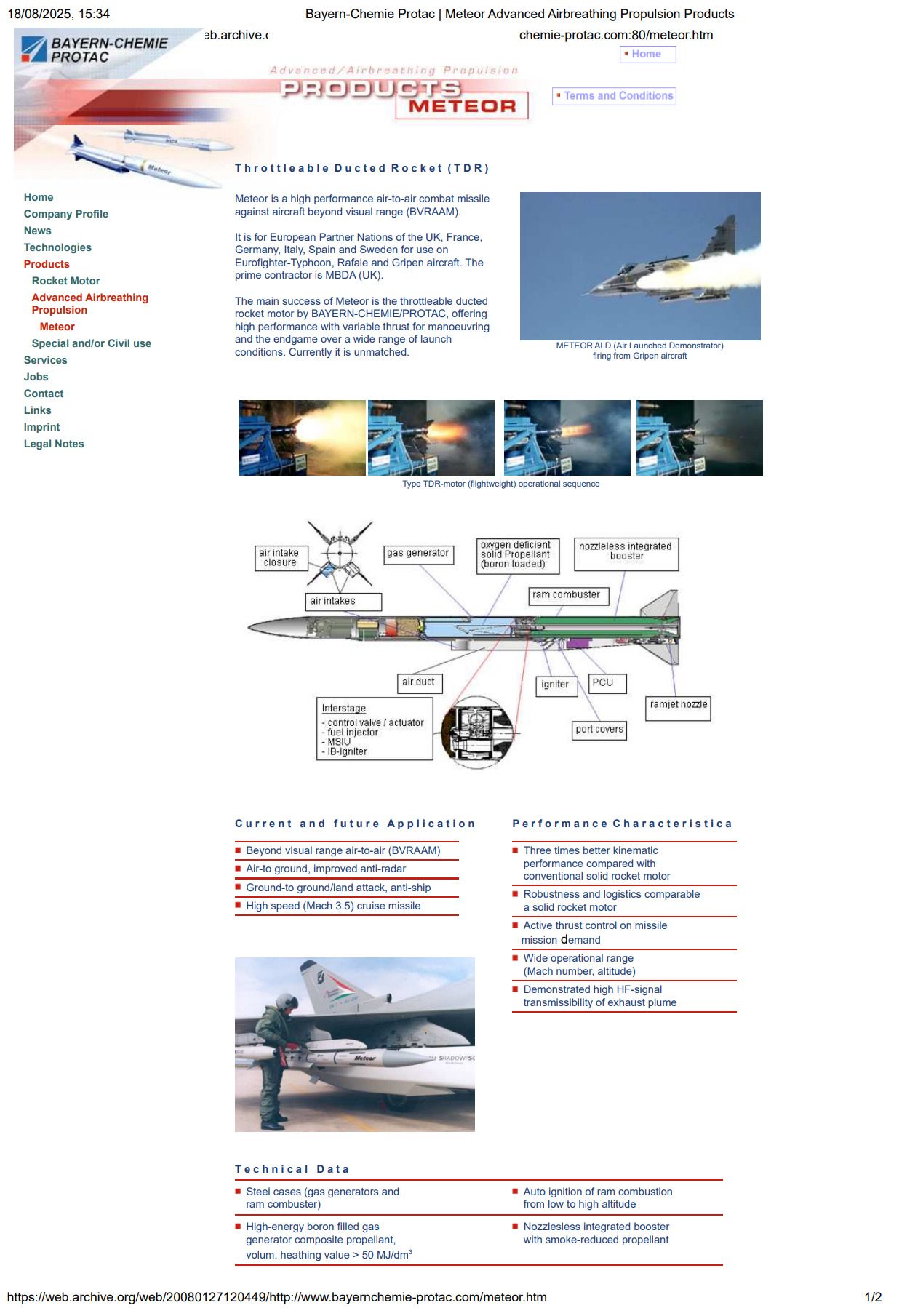
a page from a german magazine talking about the a3m, i’ll only post these two images here, the original source is in german
one of the most solid info in some of these files i sent is that the meteor should have approximately 2.5x - 3x more energy than a simarly sized solid fueled missile (amraam B? C?)
What makes the meteor so good at what it does is the throttleable engine, it optimizes speed and fuel usage depending on what the target is currently doing. If the target is flying straight away it will use less fuel so that the range increases, if the target is flying towards you it will speed up to have as high of a hit probability as possible, if the target is maneuvering in an attempt to doge it will conserve energy and use the engine when it’s reasonable to do so. All this while still aiming for still having fuel enough left for a terminal boost in speed to increase hit probability.
If ramjet mraam type missiles so much stronger what solid propellant mraam type missiles, why US China Russia and etc , why they abandoned all their development of ramjet missiles
As long as you’re fast enough for the ramjet to begin working, it’s good enough. You don’t need to be super fast like for AIM-120C-5 on Typhoons or at basically Mach 2 with Rafale & MICA, although it helps in covering distance fast earlier on before the coasting/low thrust part of the flight.
Altitude helps obvs, the lower the drag the better for fuel efficiency