- Yes
- No
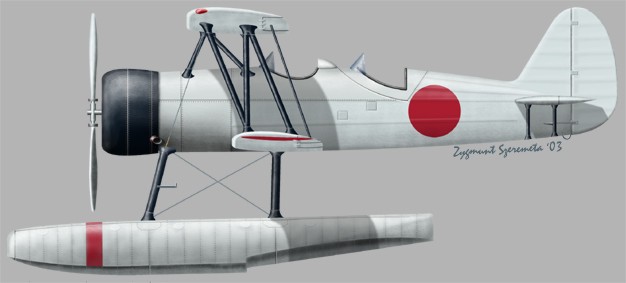
Kawanishi K6K (11-Shi) (十一試水上中間練習機)
The Kawanishi K6K is a Japanese prototype seaplane developed in 1938. This aircraft was created for the 11-Shi competition, which aimed to replace the Yokosuka/Kawanishi K5Y2 and Yokosuka K4Y1 aircraft. Only 3 prototypes were built. The aircraft competed with the Watanabe K6W.
History
After the emergence of the Yokosuka/Kawanishi K5Y2 aircraft, the Japanese Navy Command regarded this aircraft as a temporary solution meant to be used until a better aircraft was developed. In February 1936, the Japanese Navy Command issued the 11-Shi competition specification, aimed at creating a new seaplane that would completely replace the old Yokosuka K4Y1 as well as the temporary Yokosuka/Kawanishi K5Y2. The competition for the new training aircraft included submissions from Kawanishi, Watanabe, and Mitsubishi. In February 1937, an evaluation of the new training aircraft designs took place, during which Mitsubishi’s proposal was rejected. After the project was positively approved, work on the first prototype began at the Kawanishi facilities. In the design and construction of the future Kawanishi K6K, experience from previous work on improving the Yokosuka Type 91 aircraft (i.e., the Yokosuka/Kawanishi K5Y) and the Kawanishi E7K1 was utilized. The first prototype of the K6K aircraft was completed in April 1938 and flew for the first time on April 30. The aircraft was initially subjected to in-house tests at the Kawanishi company to detect all defects. Only in July 1938 did the Kawanishi K6K aircraft undergo testing by the Japanese Navy Command, where it was compared with the Watanabe K6W, Yokosuka K4Y1, and Yokosuka/Kawanishi K5Y2 aircraft. In October, the next two prototype K6Ks were completed and also sent for Navy tests. The tests showed that the aircraft did not meet the requirements and was not significantly better than the already produced Yokosuka K4Y1 and Yokosuka/Kawanishi K5Y2. Therefore, both the Kawanishi K6K and the Watanabe K6W were rejected and returned to the manufacturer. At the Kawanishi factory, it was decided to improve the prototype K6K to meet Navy requirements, but in January 1940 the decision was made that the K5Y2 would become the standard training aircraft, and work on improving the Kawanishi K6K was abandoned. The further fate of the Kawanishi K6K aircraft is not known.
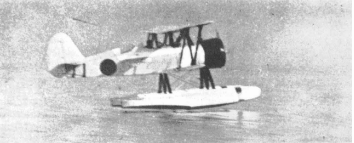
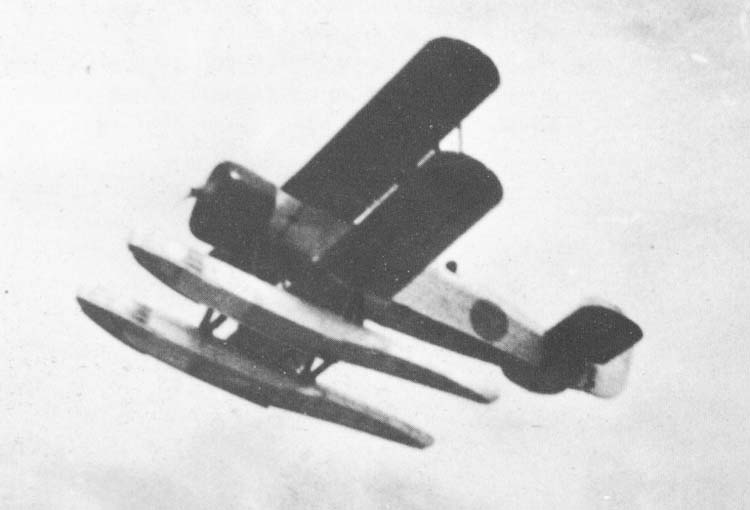
Photos of the Kawanishi K6K.
Art about the Kawanishi K6K.
Construction description
The Kawanishi K6K is a two-seat seaplane with a metal structure covered with fabric in a biplane configuration. The aircraft is equipped with two main float landing gears. The Kawanishi K6K is powered by a Nakajima Kotobuki 2 Kai 1 air-cooled nine-cylinder radial engine with a take-off power of 427 kW (580 hp). The aircraft is equipped with a two-blade metal propeller with a fixed pitch and a diameter of 2,950 mm. The armament of the Kawanishi K6K consists of a fixed Type 92 7.7 mm machine gun in the nose and a movable Type 92 7.7 mm machine gun in the second pilot’s cockpit. Additionally, the aircraft can be armed with two 30 kg bombs or four 10 kg bombs under the wings.
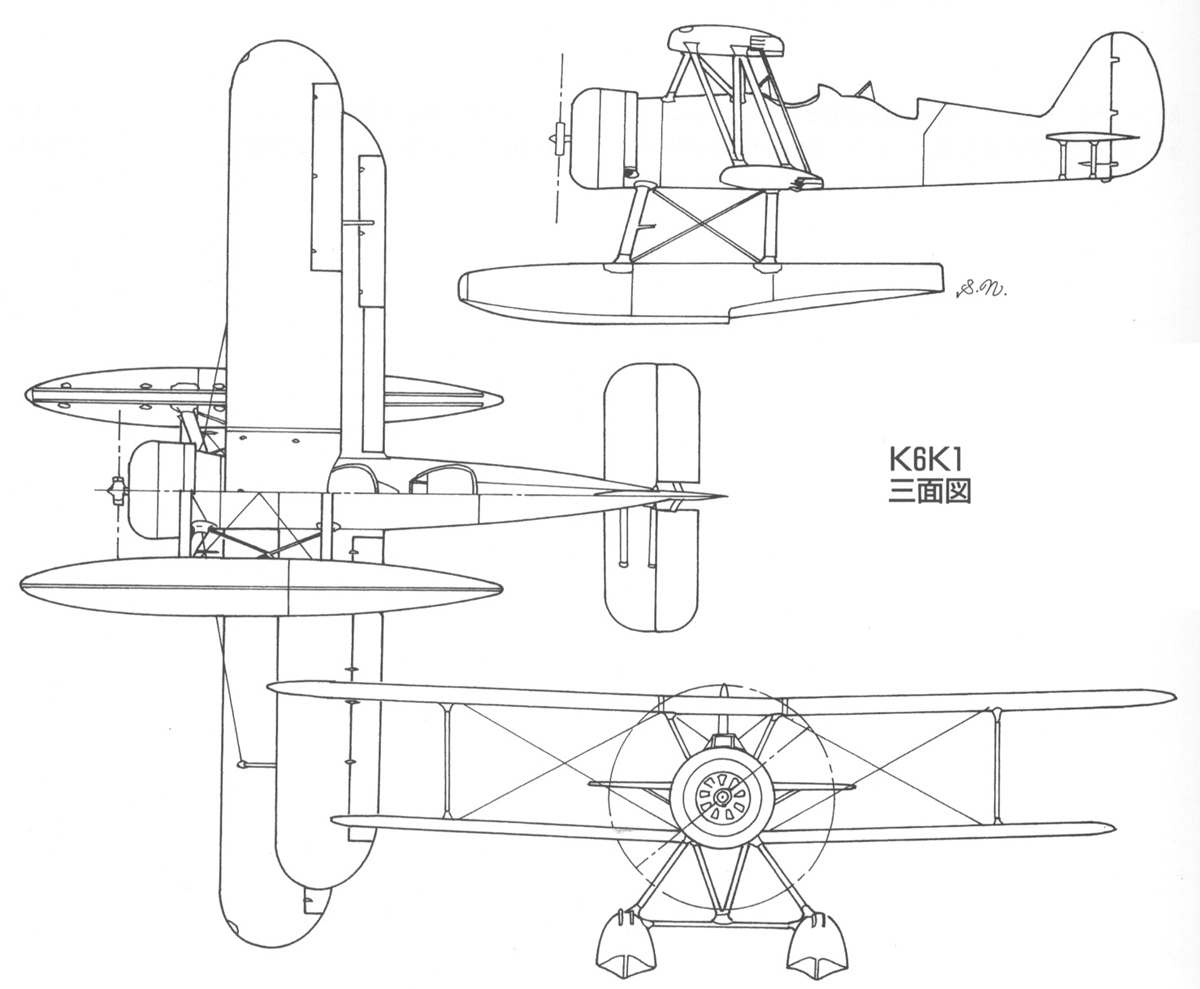
General characteristics
- Crew: 2
- Length: 9,30 m
- Wingspan: 12,2 m
- Height: 4,0 m
- Wing area: 30 m2
- Empty weight: 1300 kg
- Gross weight: 1800 kg
- Powerplant: 1 × Nakajima Kotobuki 2 Kai 1 air-cooled radial nine-cylinder engine with a take-off power of 427 kW (580 hp)
- Propellers: Two-blade metal propeller with a fixed pitch and a diameter of 2,950 mm
Performance
- Maximum speed: 232 km/h
- Cruising speed: 130 km/h
- Range: 1500 km
- Maximum Range: ?
- Service ceiling: 4 200 m
- Climb Rate: ?
- Rate of climb: 11.00 min to 3000 m
Armament
- Guns:
- 1 x Type 92 Fixed Machine Gun 7.7mm in the nose
- 1 x A movable Type 92 7.7 mm machine gun in the co-pilot position
- Bombs
- 2 x 30 kg bombs (Under the wings)
- 4 x 10 kg bombs (Under the wings)
Special thanks
Summary
The Kawanishi K6K is an interesting aircraft for Japan in War Thunder. This plane would be a good supplementary aircraft for the Yokosuka/Kawanishi K5Y2, which can perform the same roles. The K6K can be used in naval battles to capture bases or harass ships, or in ground battles for surprise attacks.I encourage you to discuss in the comments and to share your own knowledge on this subject.
Finally, I apologize for the linguistic and logical errors because unfortunately English is not my main language and I had to use google translator.
Internet sources
十一試水上中間練習機 - Wikipedia
Kawanishi K6К - Trainer Aircraft
KAWANISHI K6K Japan aircraft engine, power, speed
Уголок неба ¦ Kawanishi K6K
Kawaniši K6K1 11-Ši : Kawaniši / Šin-Meiwa
Book sources
- Japońskie Samoloty Marynarki 1912-45 część II (Japanese naval aircraft 1912-45 part II) page 156
- Mikesh, Robert C.; Abe, Shorzoe (1990).Japanese Aircraft, 1910-1941 page 140
- 日本航空機辞典 1910年(明治43年)~1945年(昭和20年) 上巻 (Encyclopedia of Japanese Aircraft 1910 (Meiji 43) – 1945 (Showa 20), Volume 1) page 211
- 野沢正『日本航空機総集 川西・広廠篇』出版協同社 - page 107-109

Thank you for reading the suggestion, see you in the next one. Good luck pilots
