IAF P-51K-10-NT Mustang - The IAF’s P-51K
- Yes.
- No.
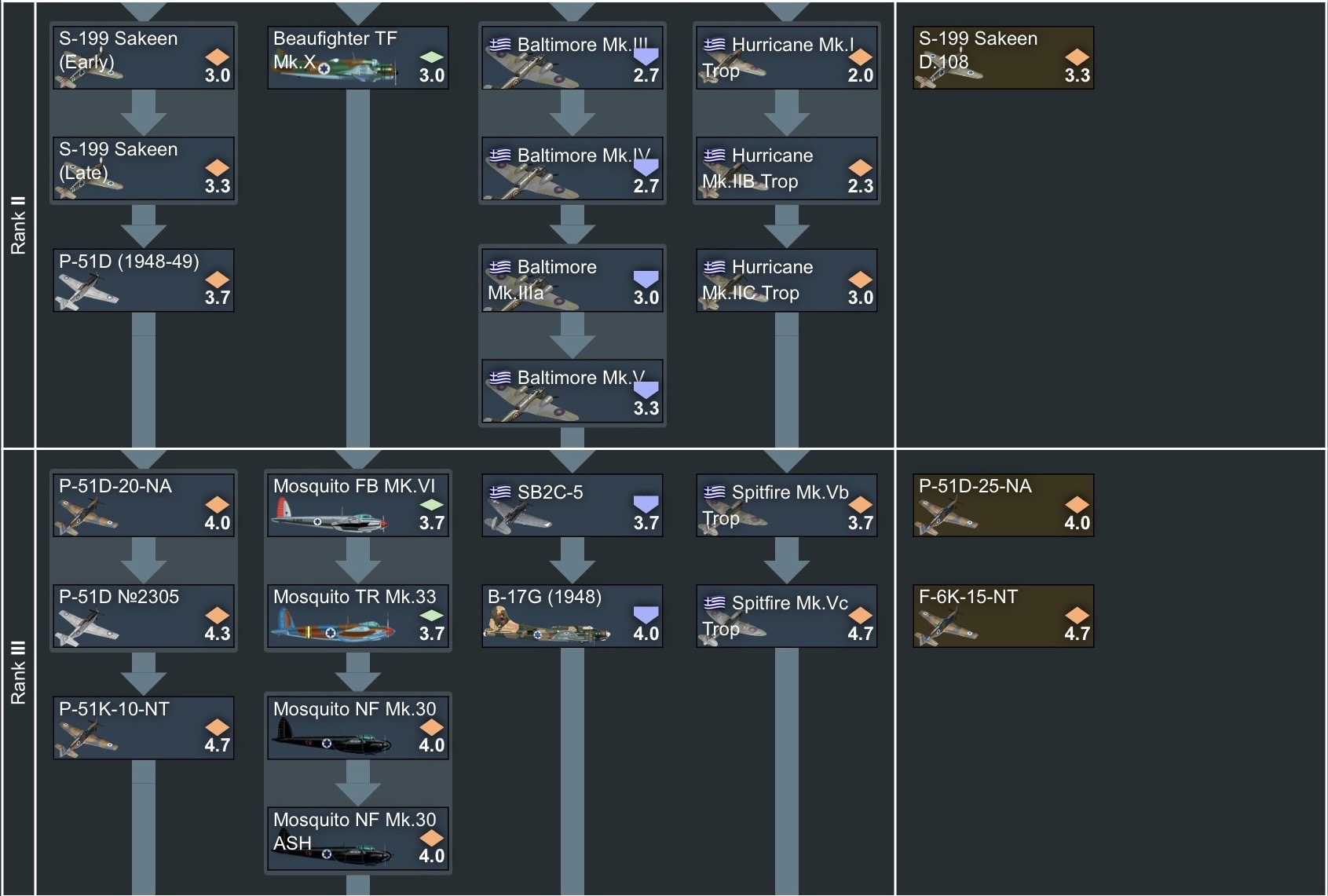
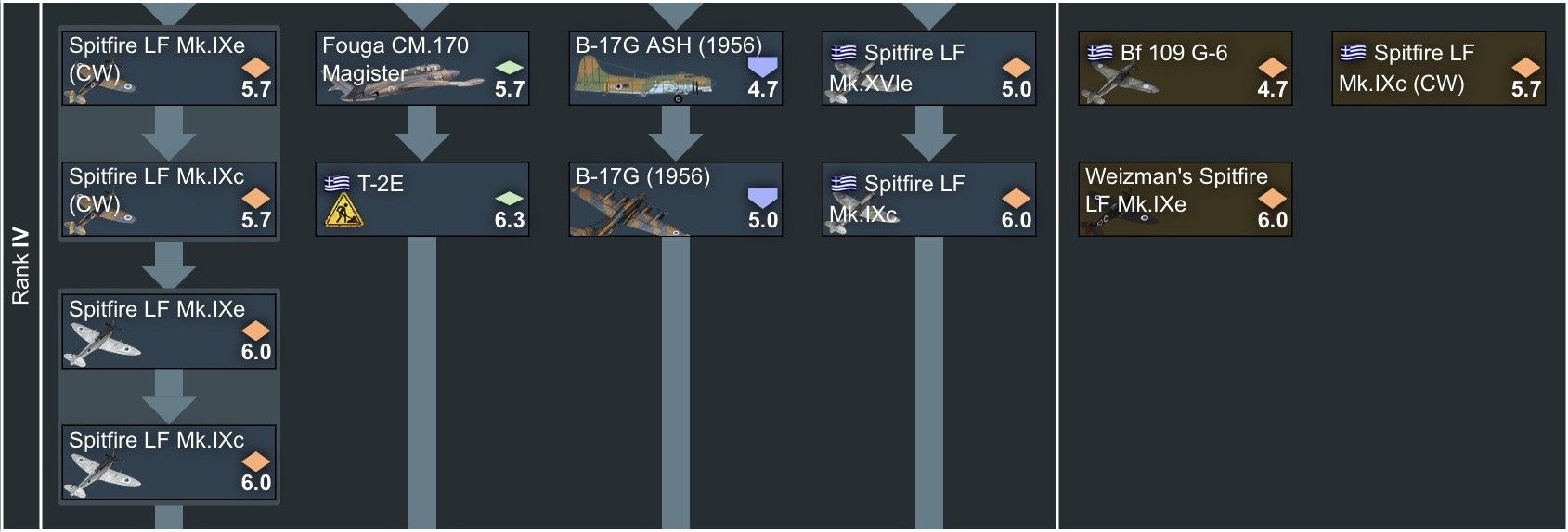
This suggestion is for the IAF P-51K-10-NT, a variant of the P-51K Mustang produced in Dallas Texas based on the P-51D series. The IAF acquired at least one example of this aircraft, being No.2342 in IAF service. However unlike other P-51Ks that had a unique aeroproducts propeller off the assembly line (which some IAF mustangs did use), this one replaced it with the earlier Hamilton Standard 6523A-25 propeller in IAF service. Israeli Mustangs also used Israeli made Napalm bombs, as well as 40mm & 80mm rockets, making it even more unique. (I personally suggest this vehicle sits at 5.0 as a researchable option for the Israeli Air Tree, as it has no 5.0 options ingame.)
- 4.0 (Like the P-51D-5/20 at 4.0)
- 4.3 (Like the P-51D-10 at 4.3)
- 4.7
- 5.0 (Like the P-51K/D-30 at 5.0)
- I Voted No.
- As a Researchable vehicle
- As a Squadron vehicle
- As a Premium vehicle
- As a Event vehicle
- I Voted No.
Ingame, the P-51D/K series currently has 3 different max power outputs, as based on the time periods the later mustangs had access to later fuel types that became available, and these mustangs had the ability to use higher manifold pressure. This gave these later mustangs a higher power output. (For this vehicle, I personally recommend a power output identical to the P-51K/D-30.)
- 1,630hp (Like the P-51D-5/20 at 4.0)
- 1,782hp (Like the P-51D-10 at 4.3)
- 1,848hp (Like the P-51K/D-30 at 5.0)
- I Voted No.
History:
(Click to Show)
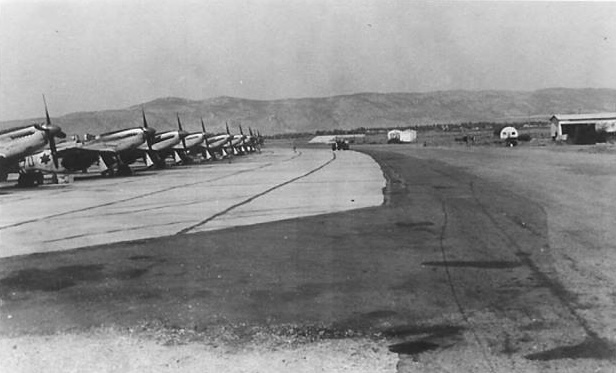
The IAF used the P-51 mustang series for many years, and first acquired their initial P-51s via smuggling airframes out of the US in 1948 during the War of Independence through the help of third parties. Two mustangs would serve in the war, and many others were acquired and came into service after its conclusion.
P-51 Mustangs in early IAF service.
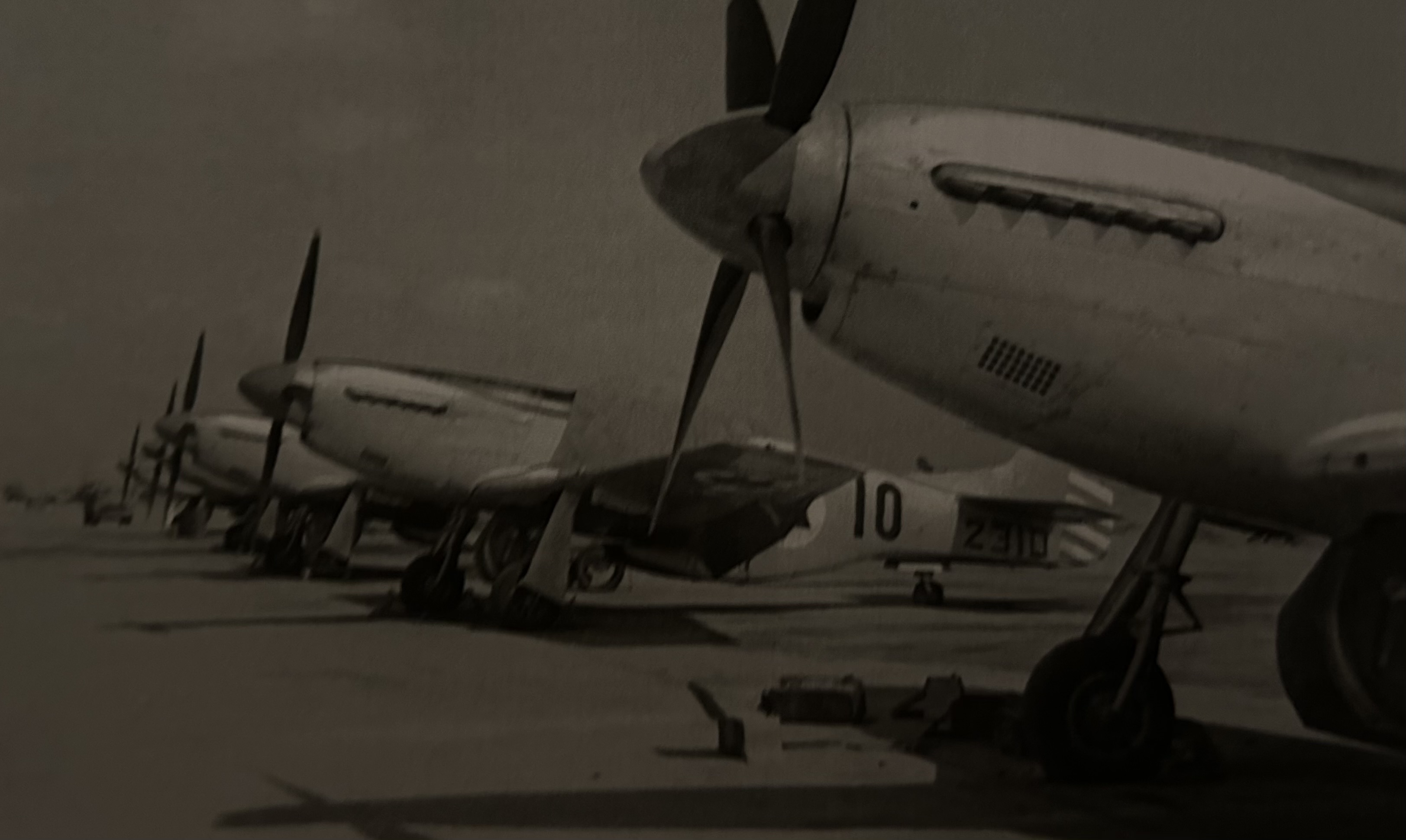
The mustang this suggestion refers to is one of these mustangs, which was acquired between 1949-1950. A P-51K-10 with the US serial number 44-12016, flew for the 348th fighter group in the pacific during WWII. It was known to have flown with pilot 2nd Lt. Bert Lee, but later flew with another pilot where it was famously known as “Fragile but Agile”.
“Fragile But Agile” during WWII.
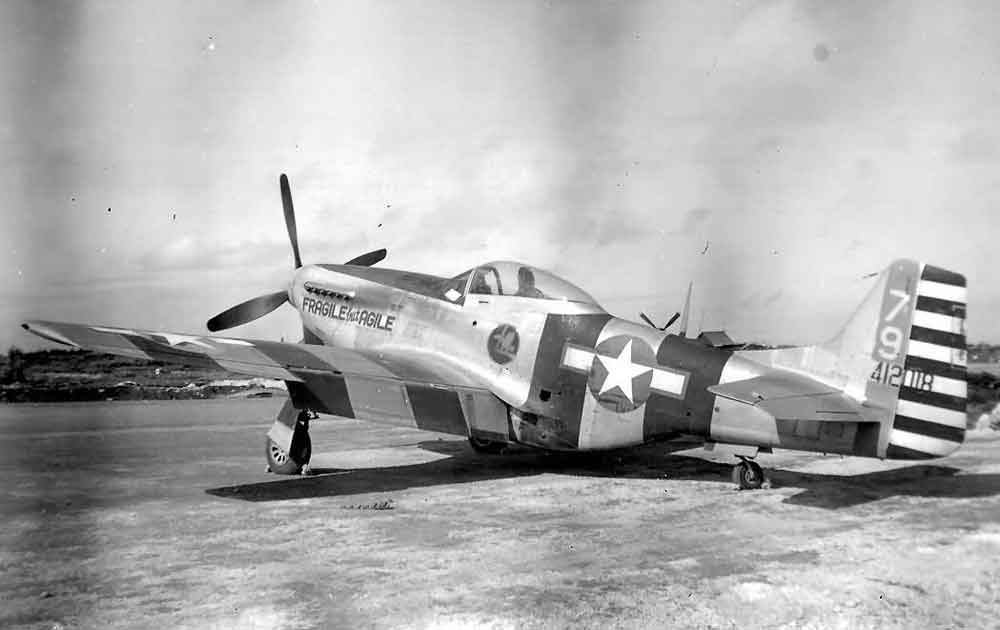
During its time in the Pacific, this P-51 picked up two known kills and sported kill markings for a Japanese A6M Zero and G4M Betty aircraft. At some point the ground crew mistakenly painted aircraft’s tail to show the identification of “44-12018” on one side of the tail, while the other sported the correct 44-12016. At some point after WWII, it fell out of use. Little is known about what happened to it following the wars conclusion, but one thing is for certain: the third party known as Intercontinental definitely acquired this aircraft, repaired it, and then sent it to Israel where it would serve as IAF Mustang No.2342, or just No.42 for short, as a part of Squadron 105 initially.
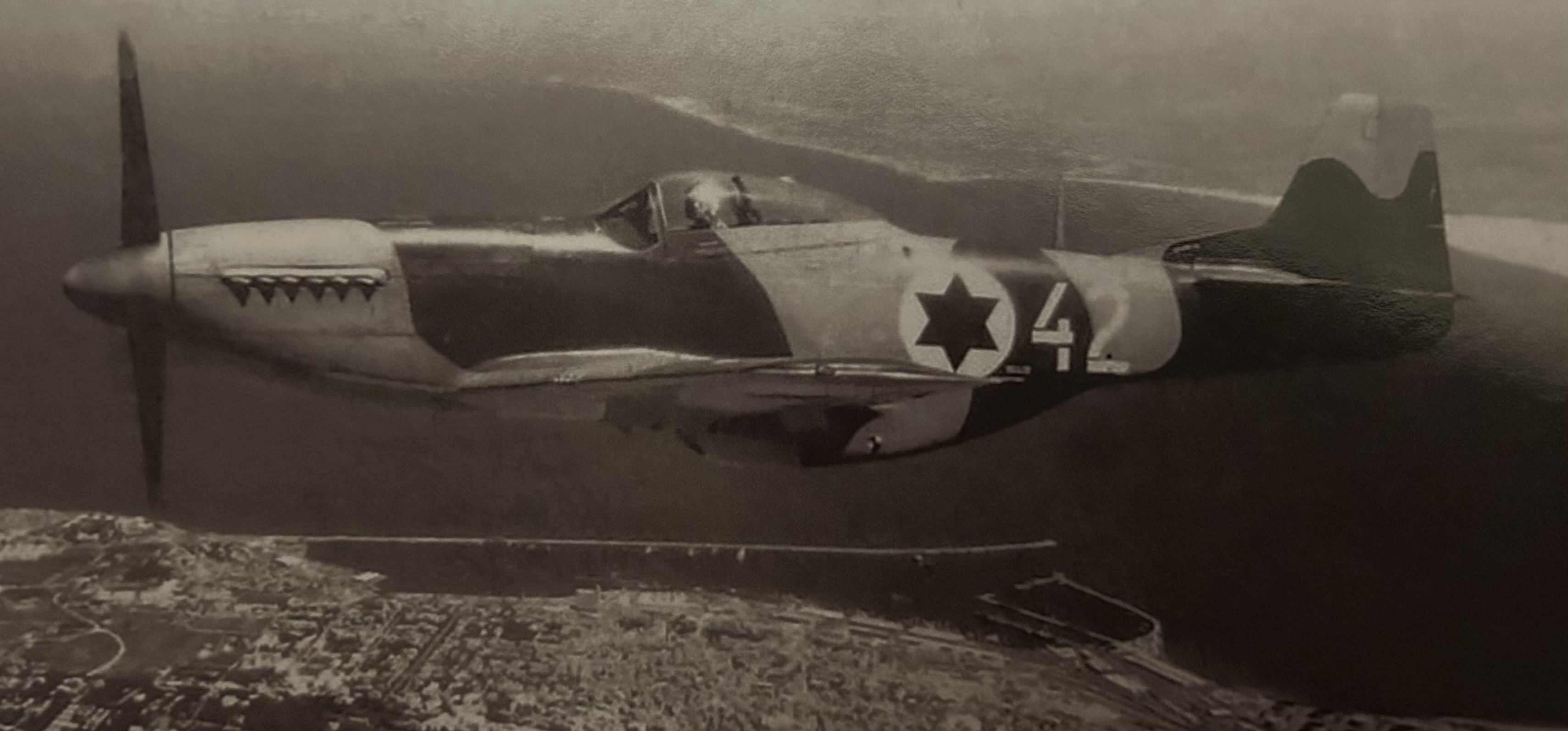
This image of No.42 was used on the cover of the book listed below, during this time the aircraft featured a red spinner and IAF Type B stencil for its number markings.
The newly released book, “P-51 Mustang in Israeli Air Force Service 1948-1960”, identifies the IAF No.42 airframe as having originally been the “Fragile but Agile” aircraft, and found its lost history. Thanks to the research of the authors and contributors of this fantastic book, the history of this aircraft and its service in the IAF is certain, as well as its history after its service.
P-51K-10 No.2342 of the IAF in flight.
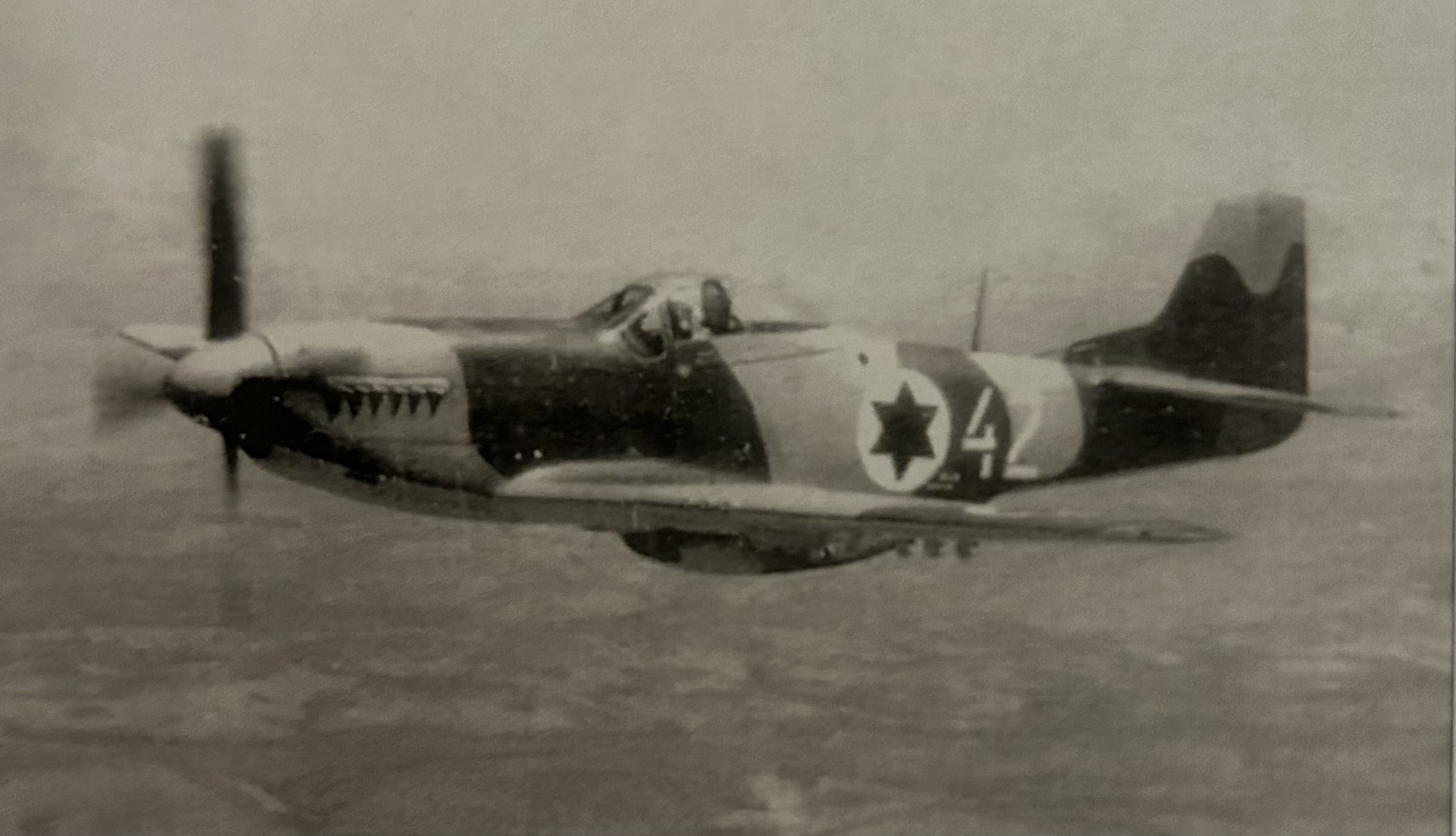
It served for many years in the IAF, however in July of 1956, just months before the Suez Crisis, it suffered a minor landing accident when it was with 116 squadron and was put into live storage where it remained during the conflict, and after. The aircraft sitting in storage as it did was actually to its benefit, as it stayed in a relatively good condition for some years after.
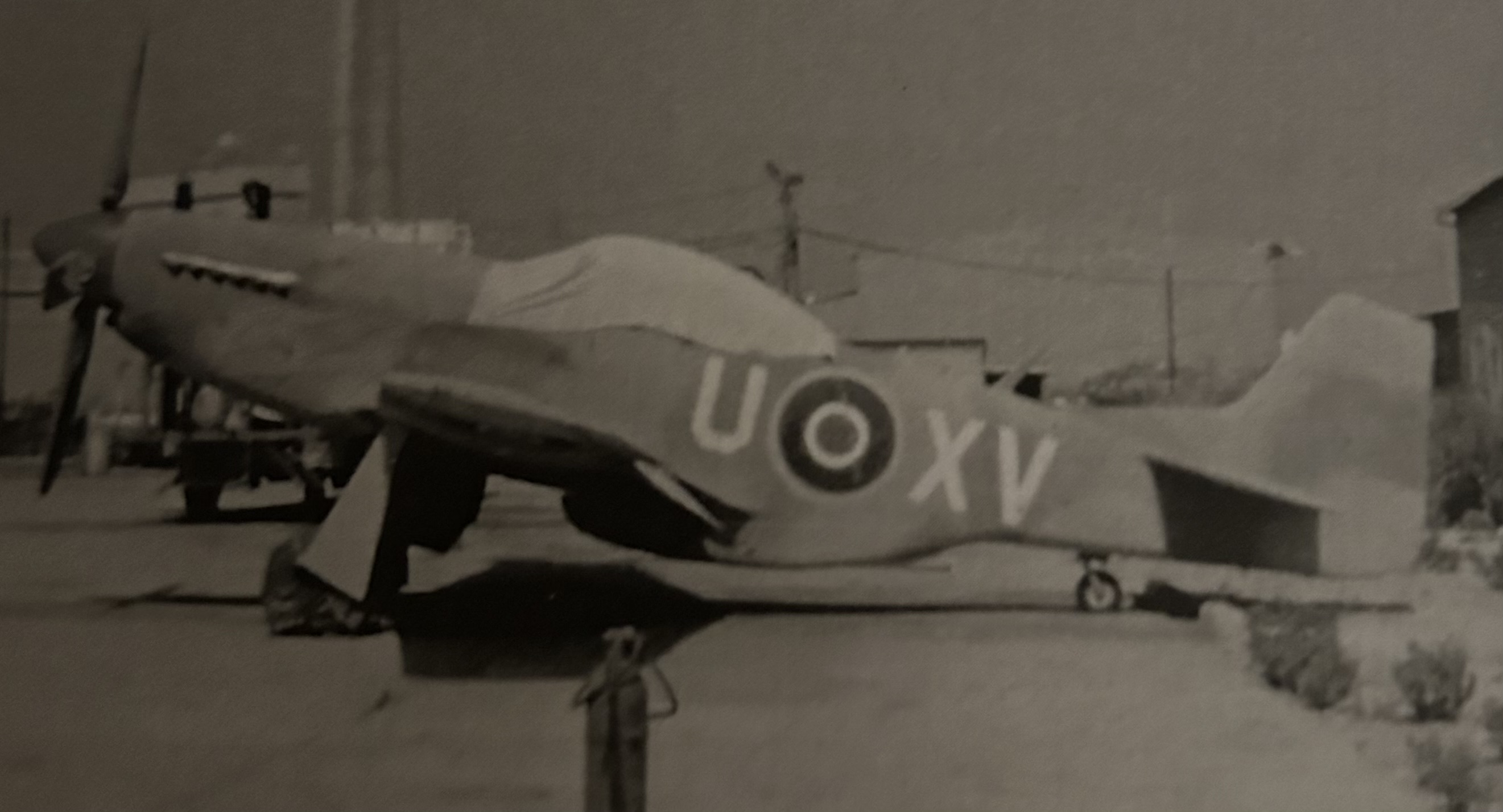
P-51K No.42 after its refurbishment where it was repaired and repainted, now sporting a smaller IAF Type D stencil for its number markings.
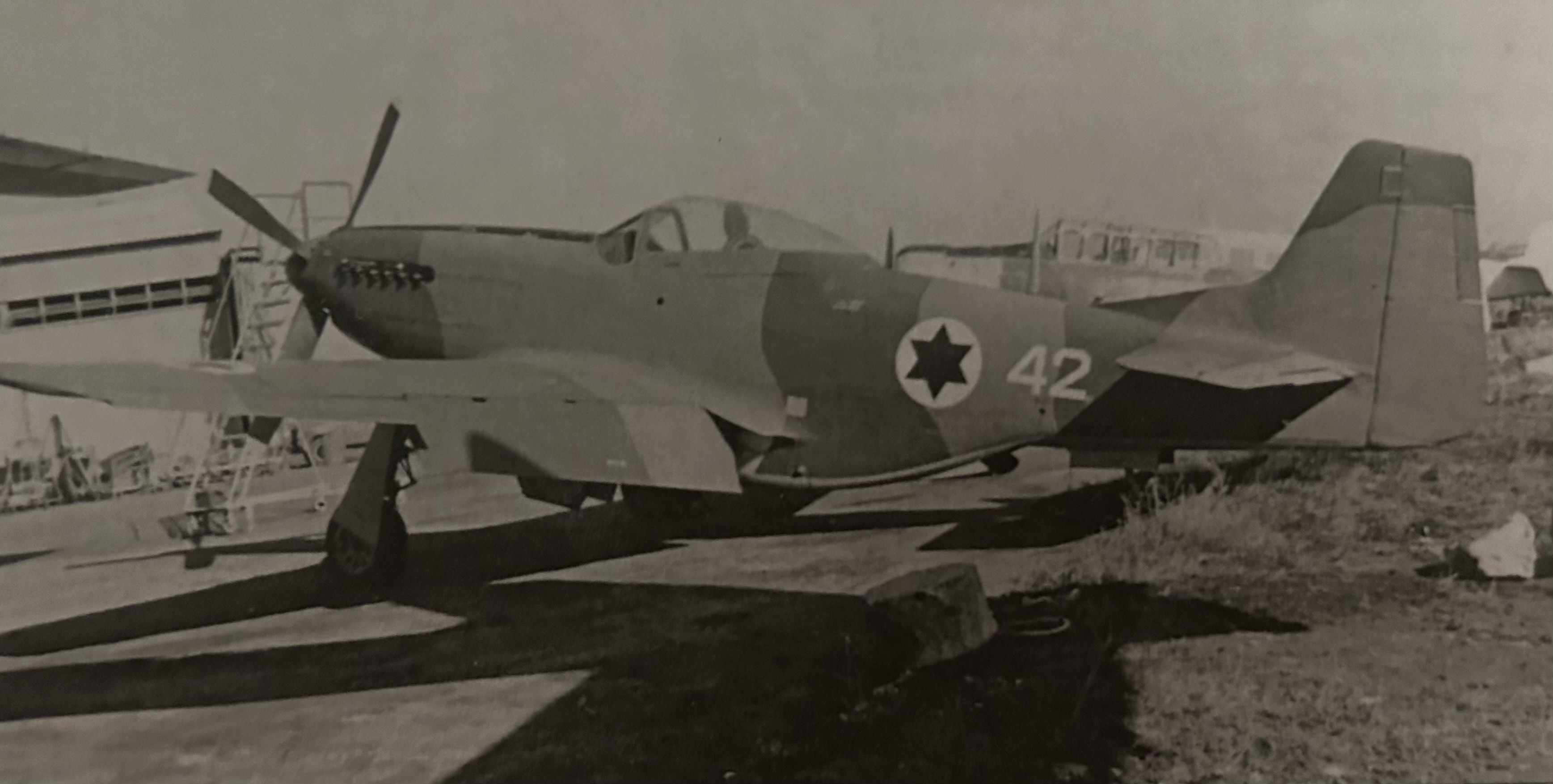
That wasn’t the end of the story however, far from it actually. Mustang 2342 was soon taken up by Bedek Aviation Company or just Bedek, later known as IAI or Israeli Aerospace Industries, for a refurbishment project. The goal was to turn this aircraft into a demonstrator to be used for foreign sales, as the IAF realistically had no more use for its mustangs and was looking to sell them off. However no one ended up purchasing the mustangs in bulk as they wanted, and No.42 ended up getting being a abandoned on an airfield and then put into an airfield hangar yet again to be stored after Marom Aviation Services acquired the aircraft.
P-51K No.42 after its time spent with Marom Aviation Services rotting away in a hangar.
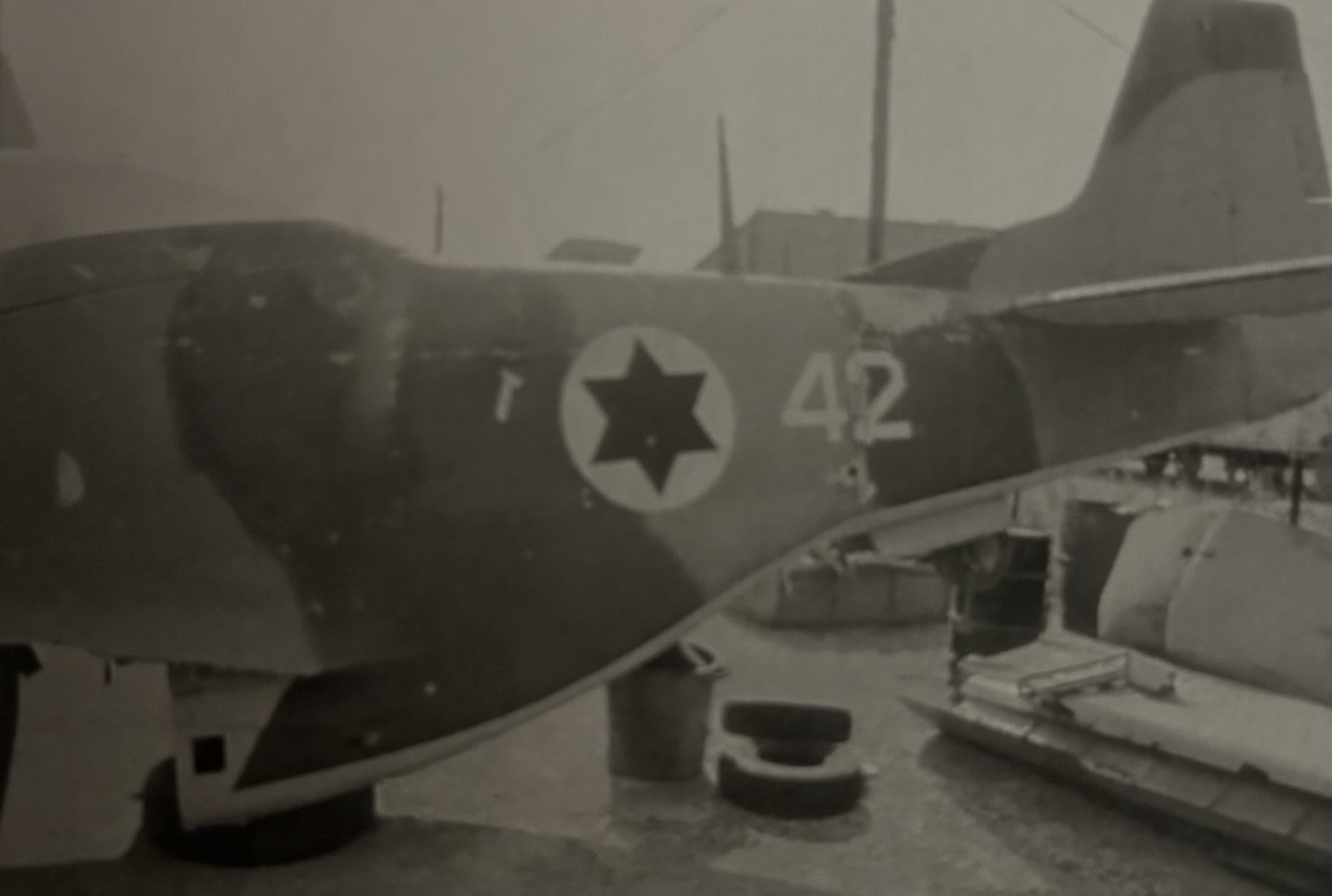
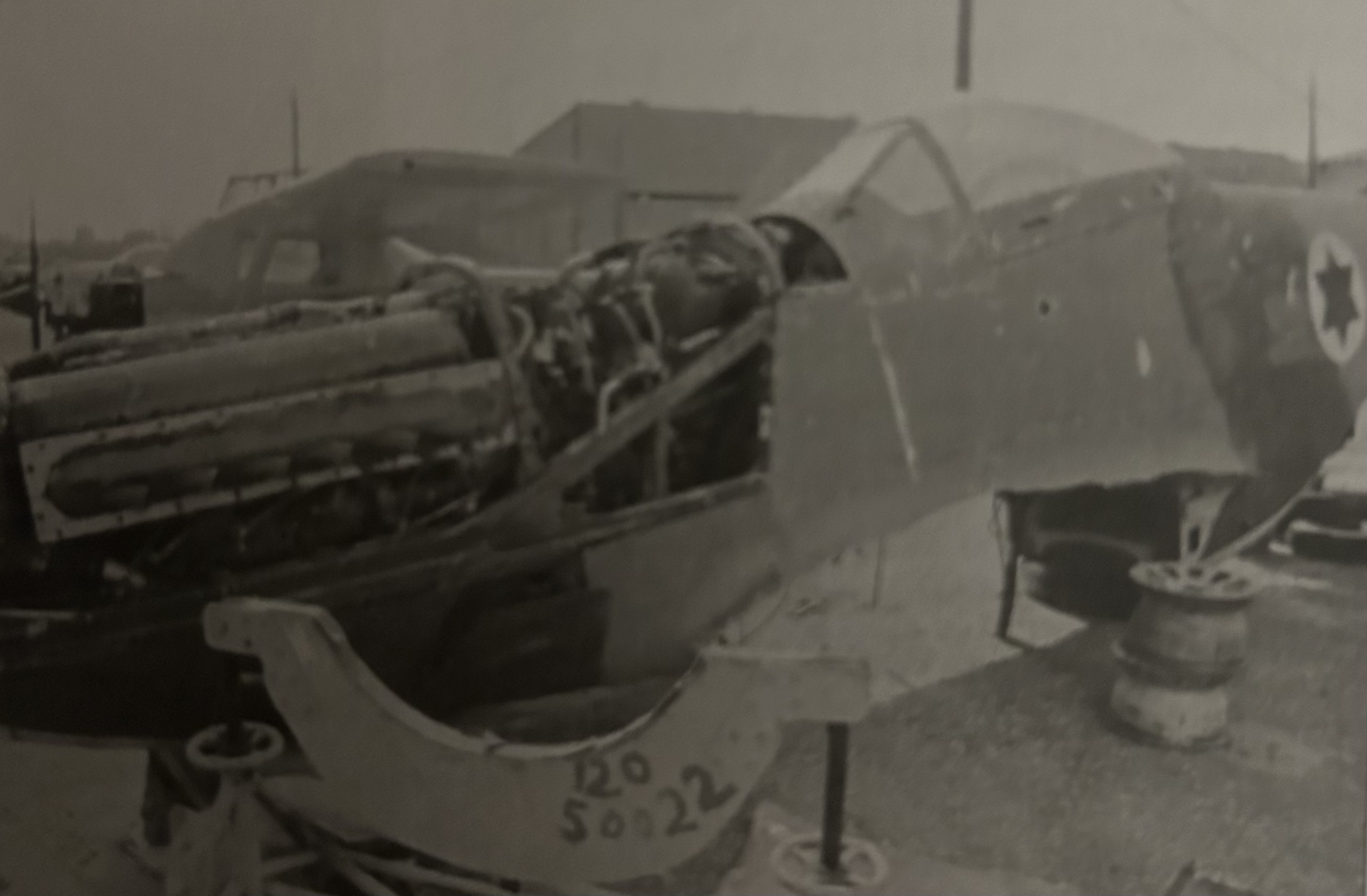
A man by the name of Israel Yitzhaki who dreamt of restoring a mustang to flying condition then came into the picture. He owned his own company, AIM aviation, and was even a part of the team that founded the Israeli Air Force Museum. He eventually went on to acquire the mustang from Marom Aviation Services who wanted the hangar space back at that point, and he practically got it for free. Yitzhaki also acquired numerous other mustangs, but out of the No.42 was in the best shape by far. Eventually the Israel Civil Aviation Authority gave him the serial “4X-AIM” for the aircraft, however he falsely registered it as serial 44-63864 (it did incorporate parts from it, but 4X-AIM was not this aircraft) to make the process easier. There are many other parts to this story of fraud, but I’ll keep it brief:
4X-AIM being repaired and finished.
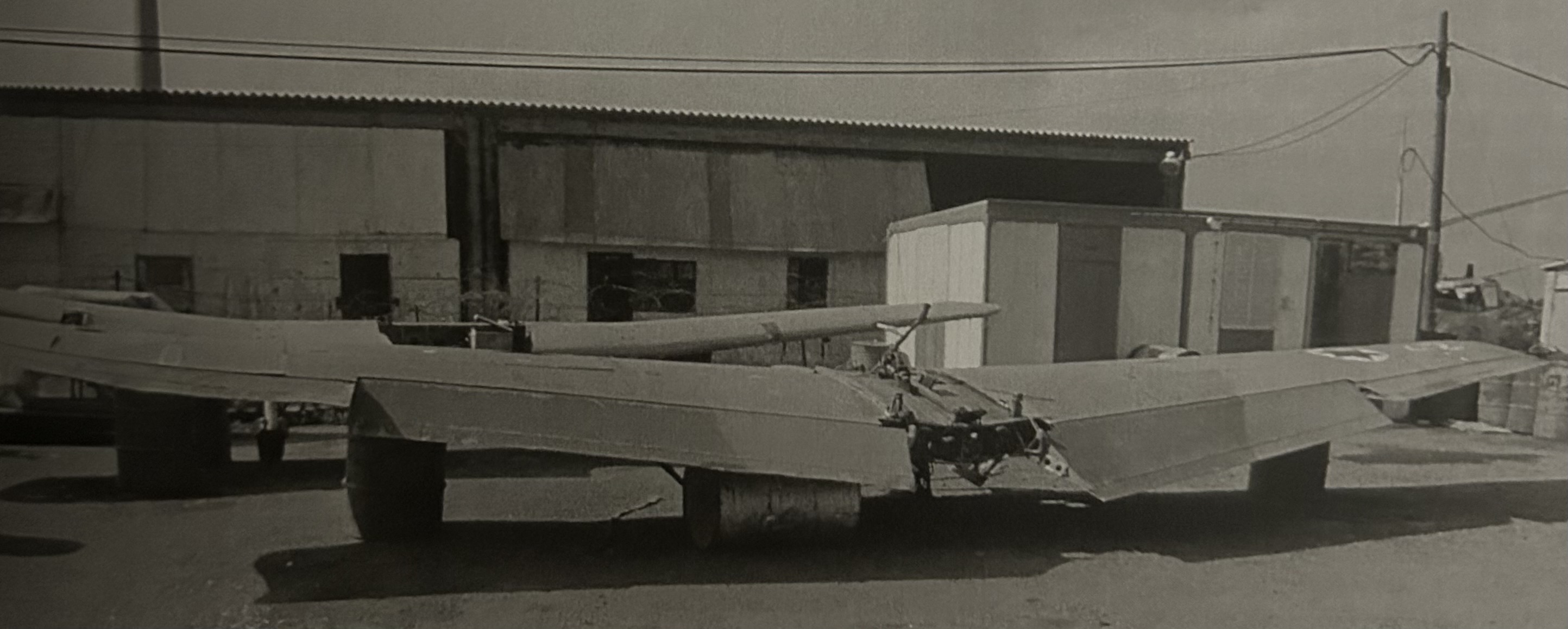

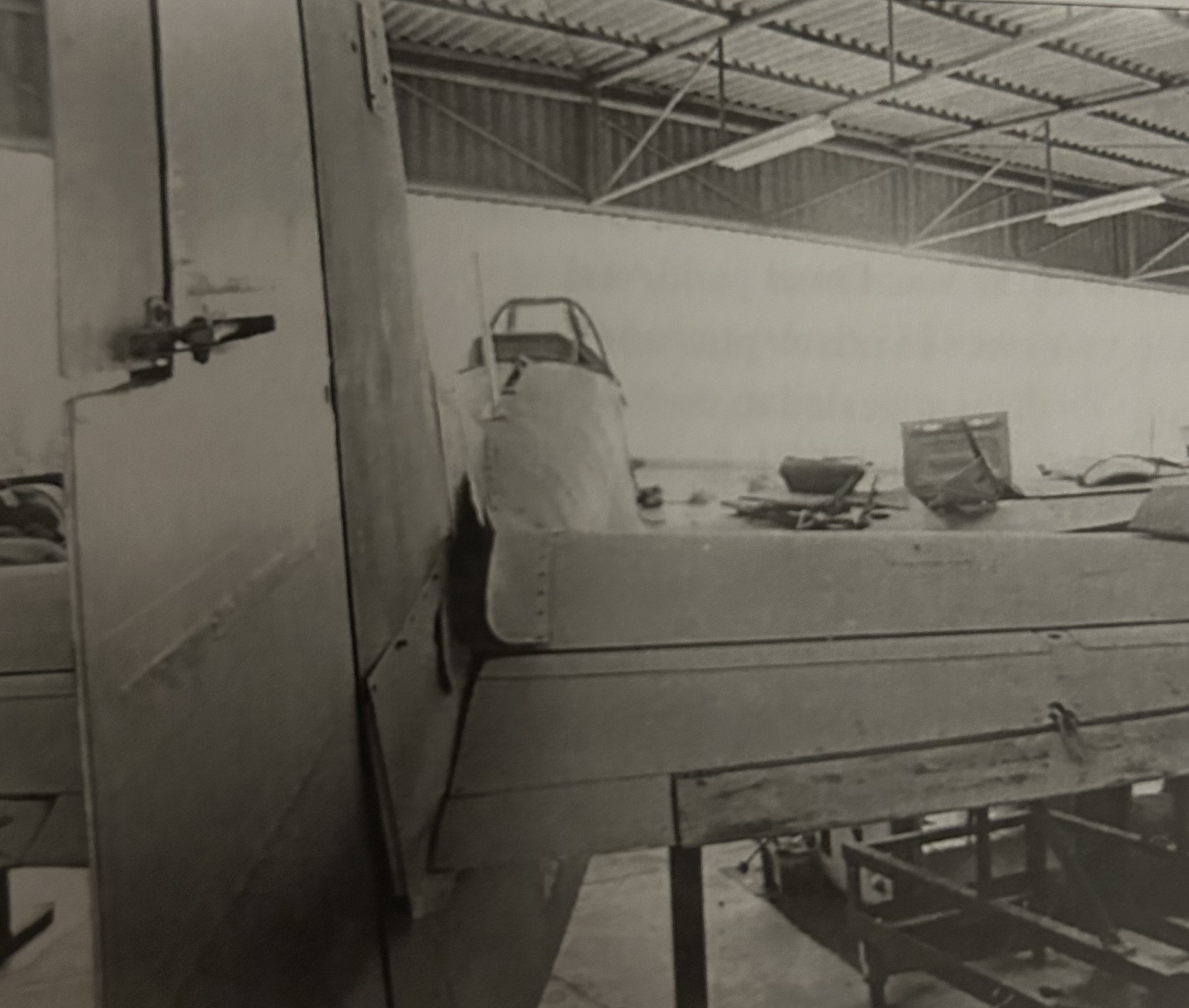
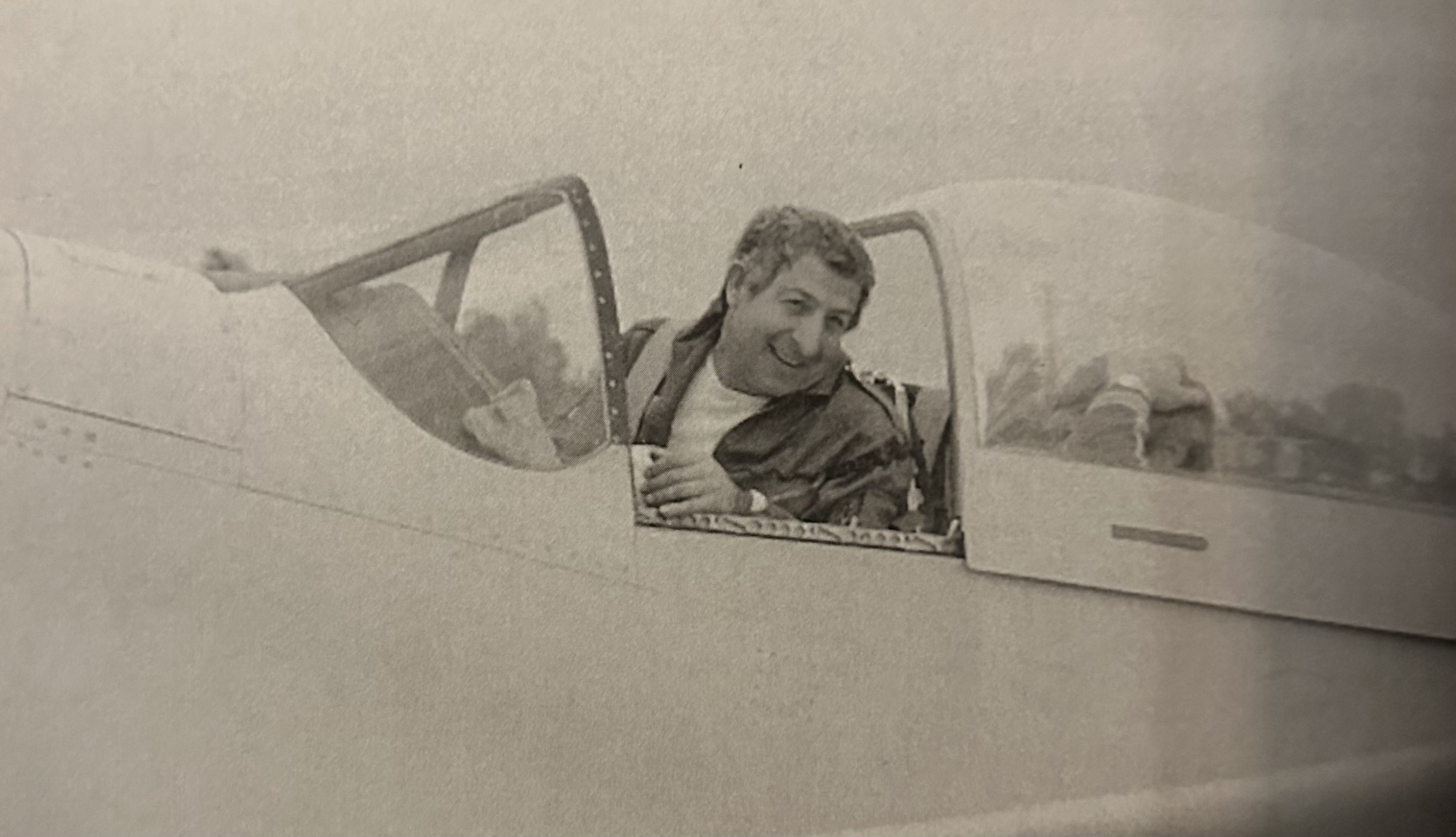
Israel Yitzhaki in the cockpit of 4X-AIM.
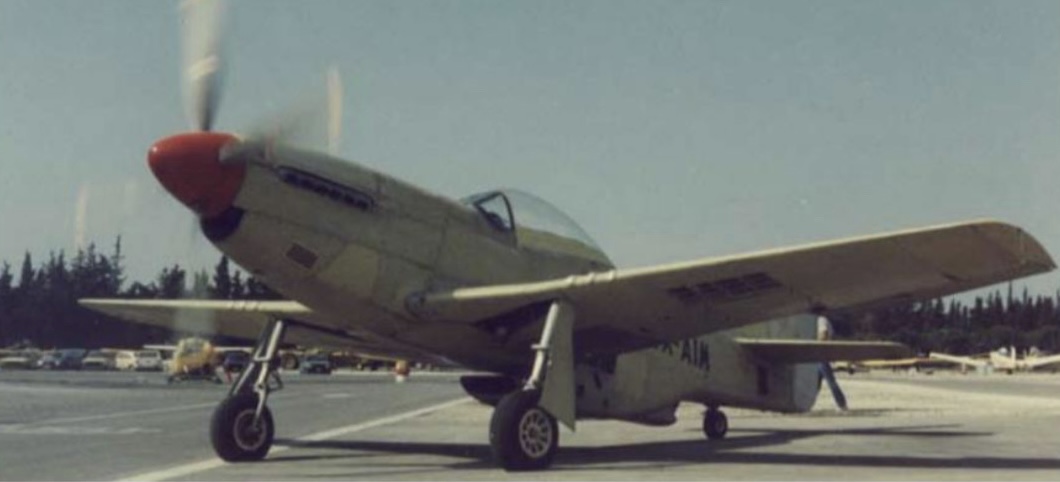
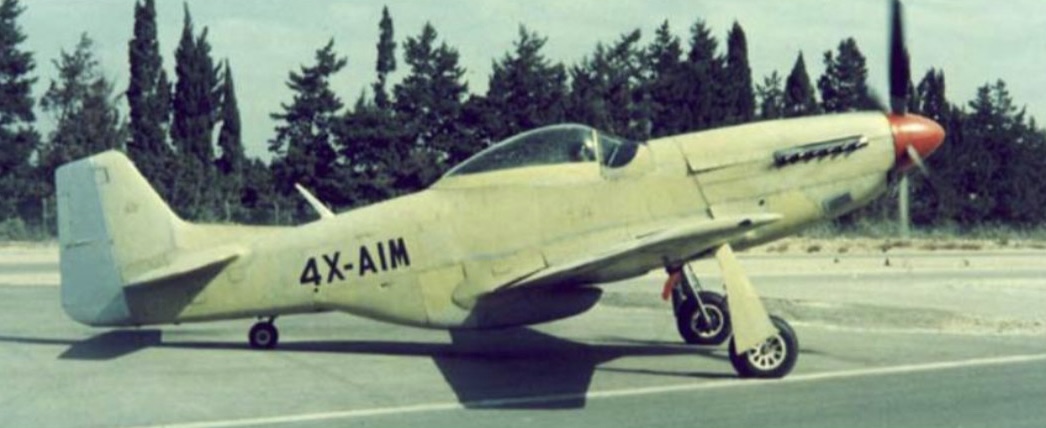
4X-AIM was completed and took to the air for the first time in February of 1984, dawning the designation on the tail section and a new pale-ish yellow color all around. It also appeared to have gotten the newer Hamilton Standard 6547A-6 propeller during this time.
4X-AIM also appeared in the movie “Every Time We Say Goodbye” with Tom Hanks, but notably sported inaccurate RAF colors.
The aircraft changed hands a few times, (and went back to the old propeller at some point during this) but many years after in 2007 when it was shipped to the US for an airshow, a restoration in Chino California revealed its true identity as 44-12016 where a former pilots name and kill markings were found on the aircraft. The aircraft was later sold to Comanche Fighters based in Houston.
4X-AIM in color.
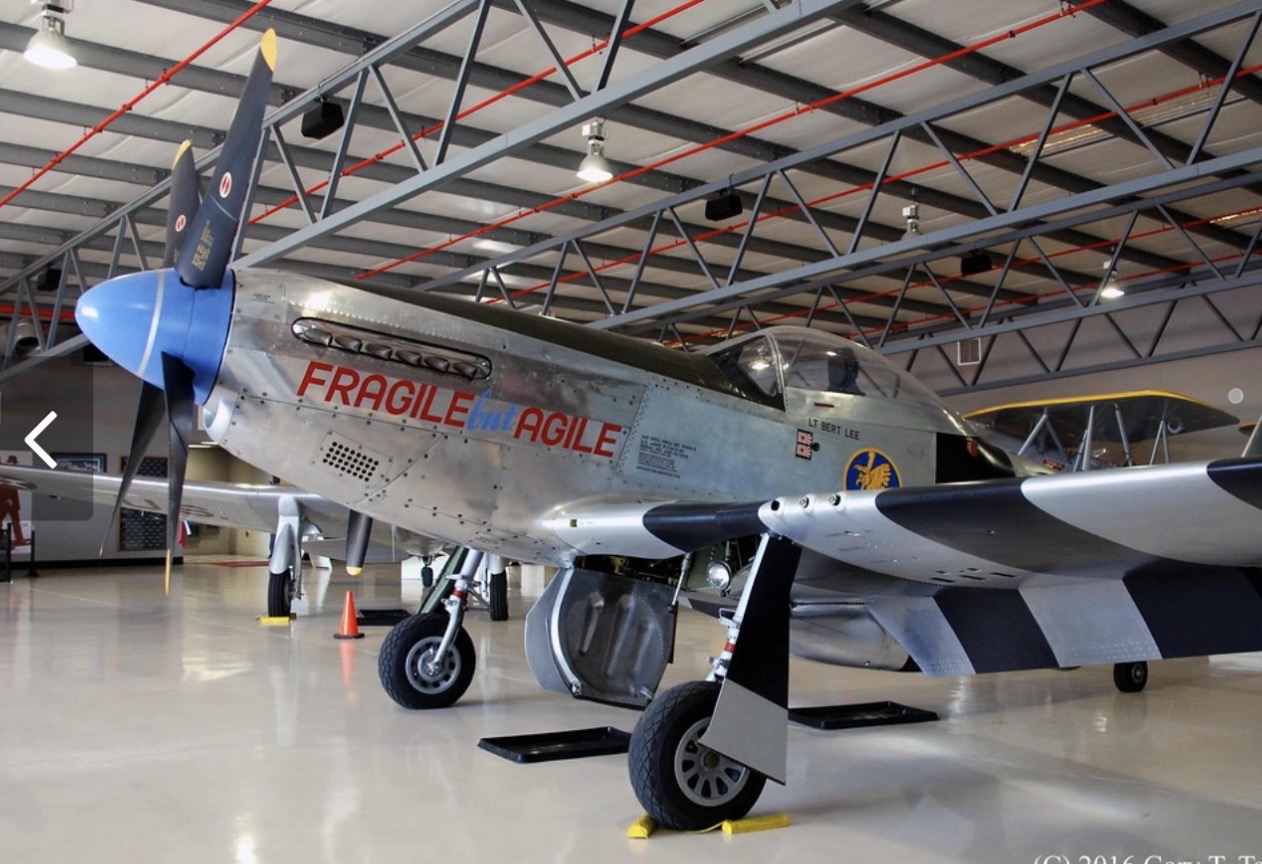
The FAA, upon concluding that the aircraft was not actually 44-63864, gave the aircraft the civil registration of N98CF. With the Comanche Fighters this aircraft dawned a hybrid of its original “Fragile but Agile” livery, with the former pilots name and the wrong serial number of 44-12018 on one side of the rudder, just like the original! This is where the aircraft resides to this day, and is still airworthy to this day!
P-51K-10-NT Serial 44-12016 as it is today, sporting its iconic “Fragile but Agile” scheme.
In Short:
The P-51K-10-NT was the only aircraft of such designation in IAF service, and although functionally identical to its P-51D counterparts, it offers potential in the Israeli Air Tech Tree to take up a unique spot in the tree. Ingame there is only one P-51K, that being found in the China Tech Tree, where it sits at 5.0 with the highest possible engine power output of the P-51D/K series. Israel currently lacks a 5.0 option within the tree, which this aircraft could fill depending on how gaijin wants to implement it (literally entirely up to gaijin, every P-51D/K after 1944 were fully capable of the same engine power output as the P-51D-30/K Ingame).
Specifications:
(Click to Show)

Operating Country: Israel
Type: Single-Seat Fighter Aircraft
Crew: 1 Pilot
Wingspan: 37.04ft.
Length: 32ft 3in.
Height: 13.67ft.
Powerplant: Packard (Rolls Royce) V-1650-7.
(Please note this engine has different power outputs based on the fuel the aircraft was given. Please refer to the poll at the top about this topic.)
Power Outputs: 1,490hp on max throttle, and 1,630hp-1,848hp on War Engine Power (depending on gaijin).
Climb Rate: 18m/s-22.7m/s (depending on gaijin).
Max speed: 698km/h-721km/h (depending on gaijin).
Service Ceiling: ~41,900ft
Range: ~1,155mi (without drop tanks)
Empty Weight: 7,635lbs
Fully Loaded: 12,100lbs
Electronics and Systems:
(Click to Show)
- Radar: None (some P-51D/K variants received a rearward tail mounted AN/APS-13 radar that would light up a small light on the dash if it detected anything within 3km behind it, this is visually modeled on the IAF P-51D-20-NA and more but is non functional ingame. No IAF mustang ever seemingly had this.)
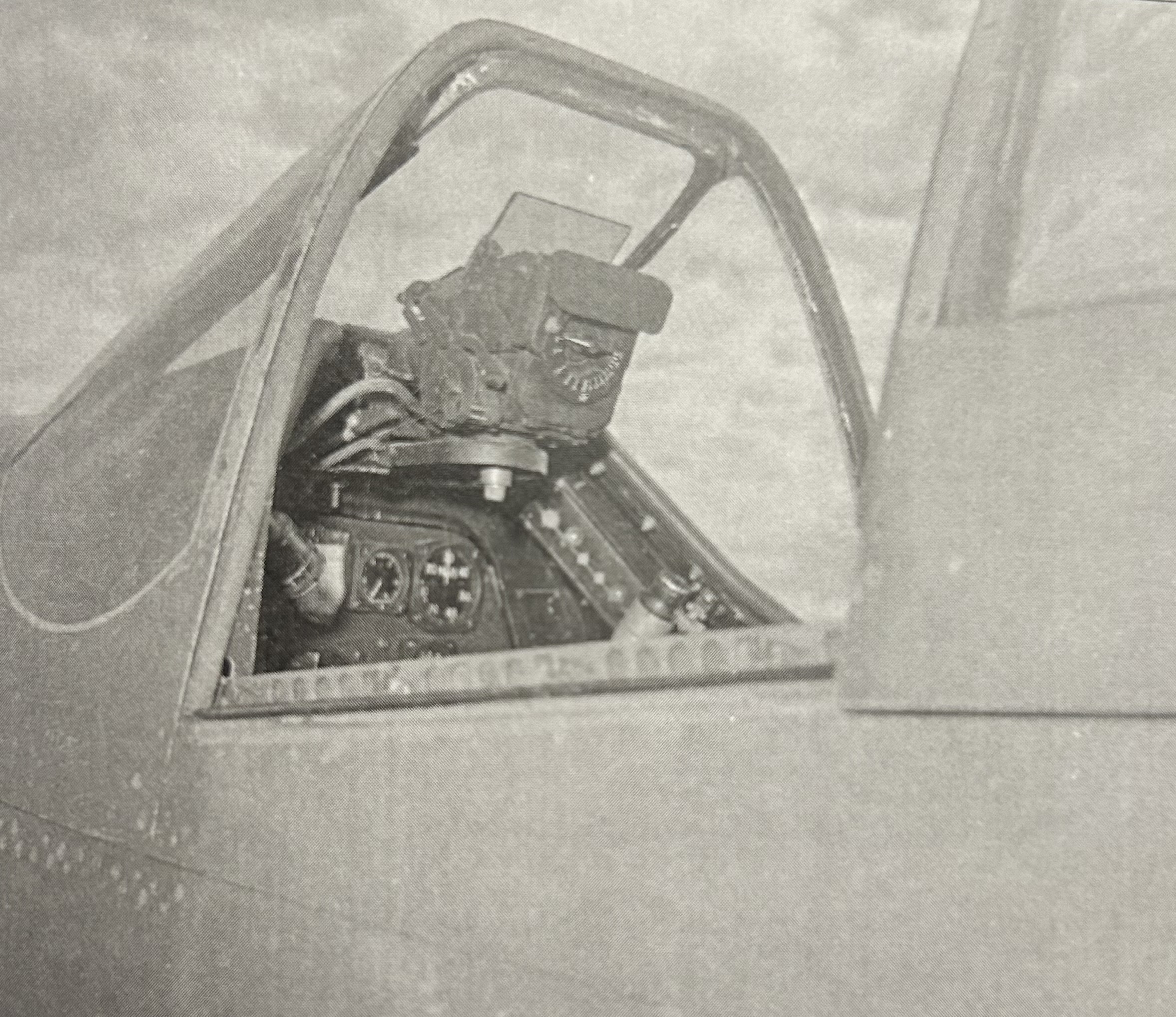
- Gunsight: First the Standard US K-14 gunsight, then later the British Mk.IV Gyro Gunsight as many examples had been acquired from Sweden.
Armament:
(Click to Show)
(Identical to the IAF P-51D-20 variant seen ingame, with small differences presented based on the inaccuracies of the IAF P-51Ds ingame)
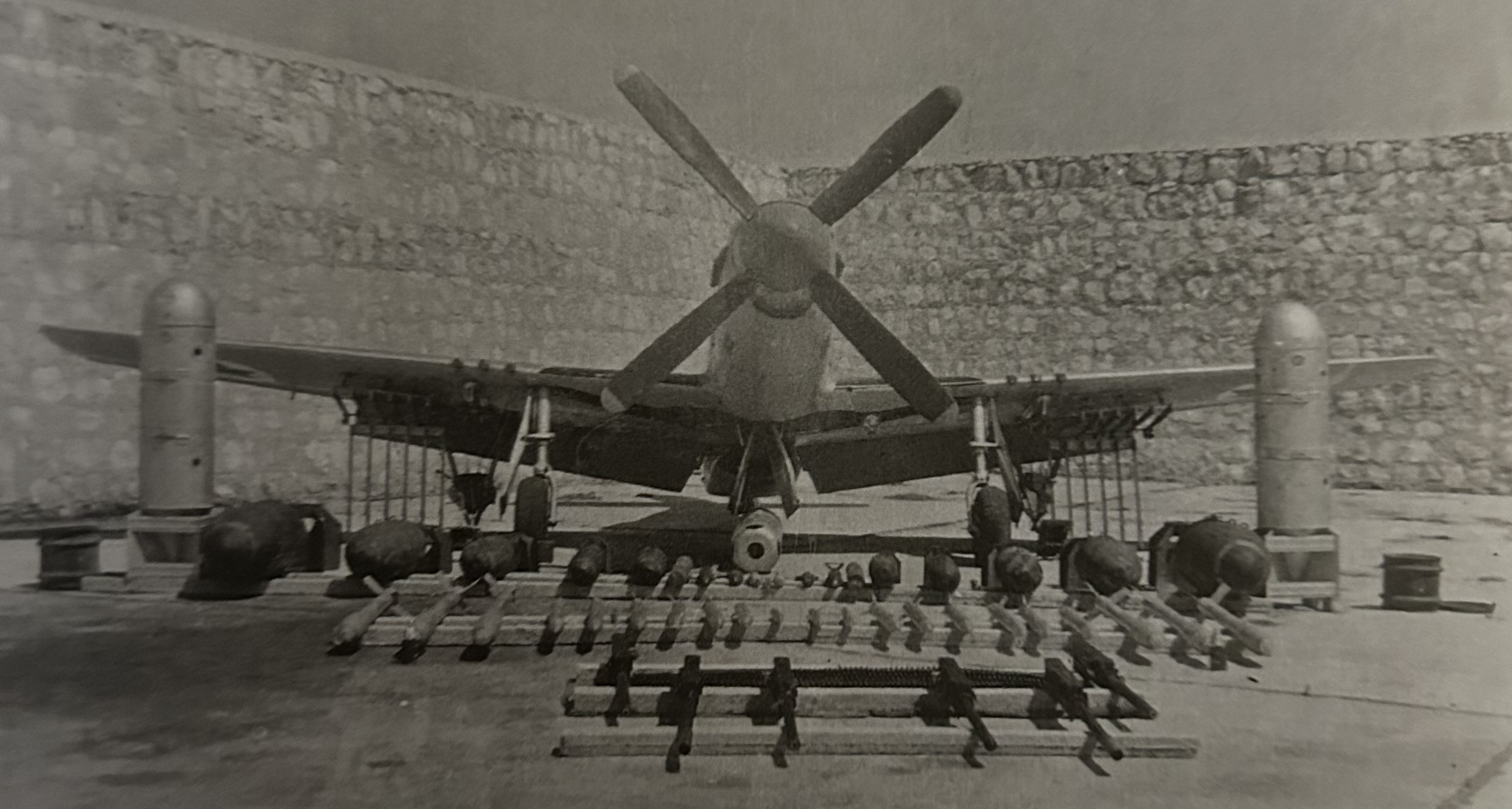
- 6x 12.7mm/.50 caliber M2 Browning Machine Guns. The 4 most outward guns have 270 rounds of ammunition each, while the 2 most inward guns have 400 rounds each. 1880 rounds of ammunition in total.
- Up to 2x 1000lb AN-M65A1 Bombs.
- Up to 2x 500lb AN-M64A1 Bombs.
- Up to 2x 250lb AN-M57 Bombs.
- Up to 8x AR Rockets.
Missing Weaponry:
- Up to 2x Underwing Drop Tanks with a capacity of 75 or 108 gallons.
- Up to 2x US “70lb” Bombs.
- Up to 2x 100lb AN-M30A1 Bombs.
- Up to 2x US “150lb” Bombs.
- Up to 2x (250 liter) Mk.I Napalm Bombs.
- Up to 2x (250 liter) Mk.II Napalm Bombs. (Earlier iteration of the one we have ingame)
- Up to 2x Drop tanks converted to napalm bombs.
- Up to 12x-24x 8-cm Flz.-Rakete Oerlikon HE/HEAT rockets (later license produced by TA’AS).
- Up to 6x-24x 4-cm TA’AS-made rockets.
- Up to 6x (possibly 10x) HVAR 5-inch rockets (later license produced by TA’AS).
Dual mount 40/80mm rocket racks:
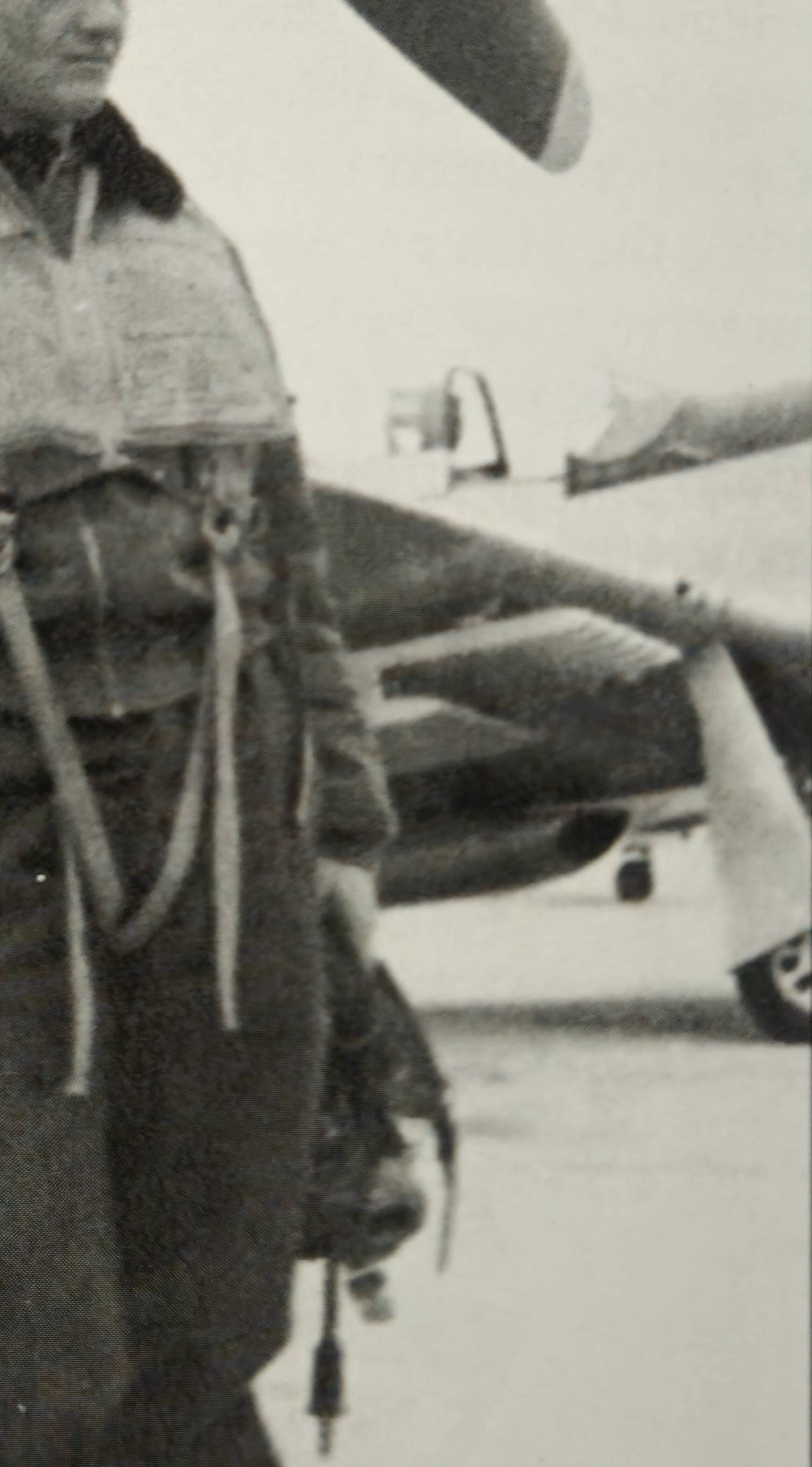
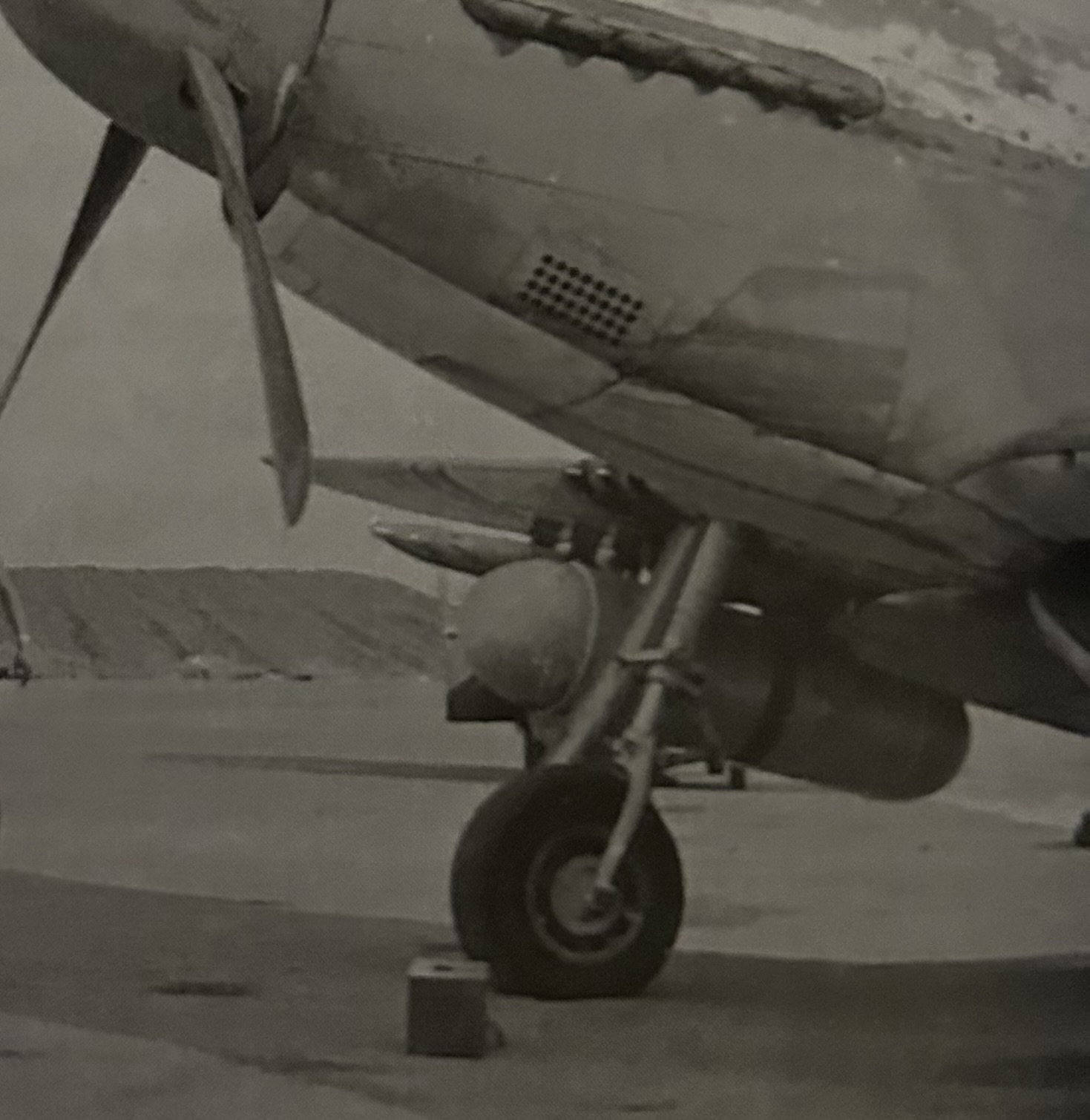
Single mount 80mm rocket mounts and Mk.I Napalm bombs: (Supposedly the 40mm rockets could be mounted in a 6x configuration as well by using different single mount racks similar to the 80mm ones)

5-inch HVARs and a lone 40mm Rocket mounted:
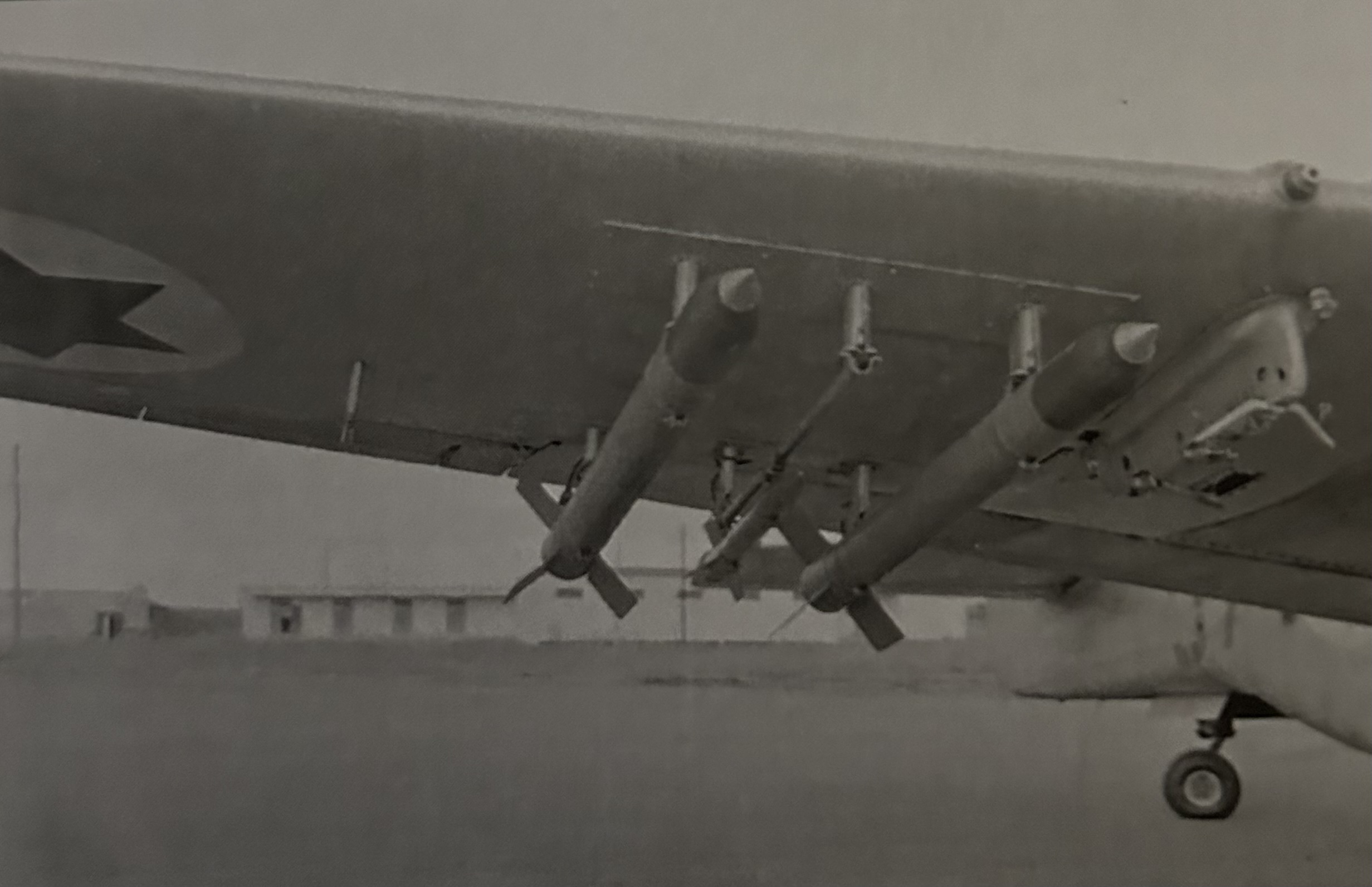
The tail-less Mk.II napalm bomb:
The full armament of the IAF P-51 on display:
Sources:
(Click to Show)
“P-51 Mustang in Israeli Air Force Service 1948-1960” by Alex Yofe and Lawrence Nyveen, published December 15th, 2025. ISBN 10: 0977462730, ISBN-13: 978-0977462735.
https://www.jewishvirtuallibrary.org/north-american-p-51d-mustang
North American P-51 Mustang - Wikipedia
List of surviving North American P-51 Mustangs - Wikipedia
North American P-51D Mustang | Military Aviation Museum
https://forgottenprops.warbirdsresourcegroup.org/p51dk-mustang.html
P-51 Mustang Survivors - MustangsMustangs.com
P-51 Mustang Variants - P-51K - MustangsMustangs.com
Thank you for taking the time to read my second Israeli Mustang suggestion! Special thanks to Yoyolast for going over and sharing information with me that helped make this suggestion possible! I hope y’all have a wonderfully blessed day and I’ll see ya in my next suggestion!