IAF P-51D-25-NA Mustang - The IAF’s P-51D-25
- Yes.
- No.
This suggestion is for the IAF P-51D-25-NA, a variant of the P-51D Mustang produced in Inglewood California. The IAF acquired at least one example of this aircraft, being No.2371 in IAF service. Israeli Mustangs also used Israeli made Napalm bombs and 40/80mm rockets, making it even more unique. (I personally suggest this vehicle sits at 4.0 as a premium option for the Israeli Air Tree, as it has no 4.0 premium options ingame.)
- 4.0 (Like the P-51D-5/20 at 4.0)
- 4.3 (Like the P-51D-10 at 4.3)
- 4.7
- 5.0 (Like the P-51K/D-30 at 5.0)
- I Voted No.
- As a Researchable vehicle
- As a Squadron vehicle
- As a Premium vehicle
- As a Event vehicle
- I Voted No.
Ingame, the P-51D/K series currently has 3 different max power outputs, as based on the time periods the later mustangs had access to later fuel types that became available, and these mustangs had the ability to use higher manifold pressure. This gave these later mustangs a higher power output. (For this vehicle, I personally recommend a power output identical to the P-51D-5/20.)
- 1,630hp (Like the P-51D-5/20 at 4.0)
- 1,782hp (Like the P-51D-10 at 4.3)
- 1,848hp (Like the P-51K/D-30 at 5.0)
- I Voted No.
History:
(Click to Show)
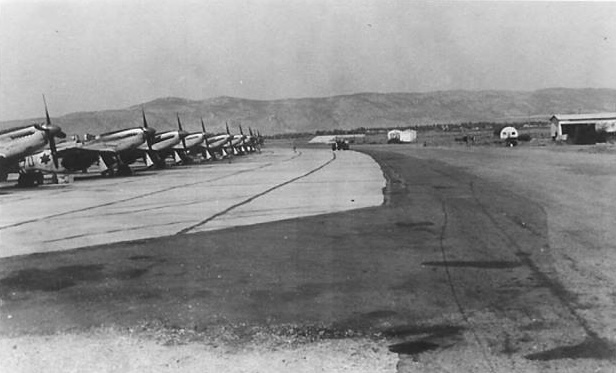
The IAF used the P-51 mustang series for many years, and first acquired their initial P-51s via smuggling airframes out of the US in 1948 during the War of Independence through the help of third parties. Two mustangs would serve in the war, and many others were acquired and came into service after its conclusion.
P-51 Mustangs in early IAF service.
The mustang this suggestion refers to is not one of these mustangs, but instead was apart of a purchase from Sweden. A single P-51D-25 with the US serial number 44-72970, was apart of this deal. In September of 1952, the IAF signed a contract for 25 P-51D mustangs. The Swedes first batch of mustangs arrived in early December of 1952, with the rest arriving in late June the next year. The aircraft were in much better condition than the previous P-51s in IAF service, and soon took priority over them.
The second batch of Swedish mustangs on their way to Israel, making a stop in the Athens. The nose of a Greek, Royal Hellenic Air Force, SB2C-5 Helldiver is in the foreground.
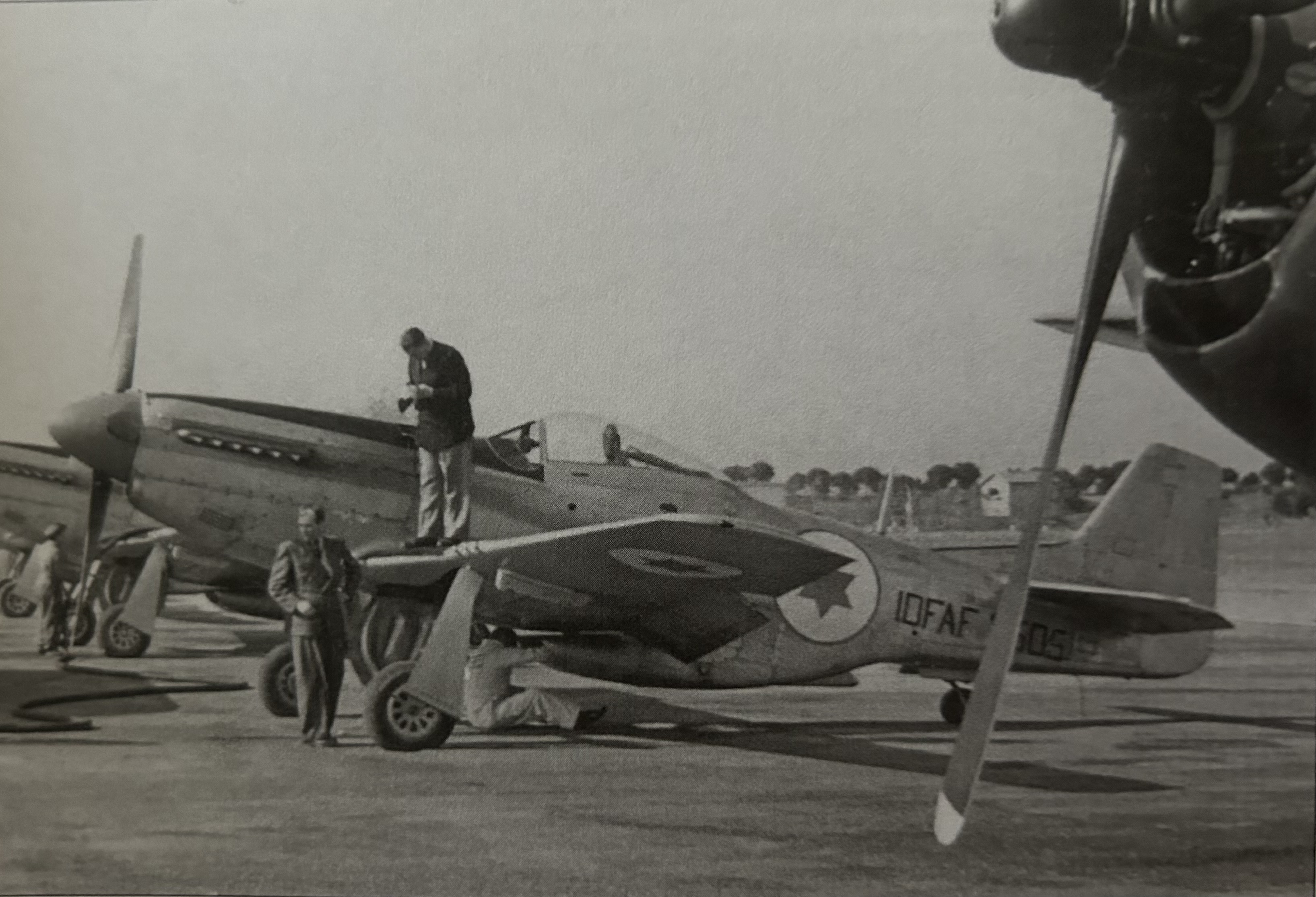
Upon arrival they receive new markings of identification, which would late be changed. Some first arrived with yellow spinners, but they’d be pained red before being used in service. Next they painted over the RSwAF roundels with new IAF roundels, with a smaller Star of David than was standard on previous UAF mustangs. They also received new tail markings with numbers of 35XX, 36XX, or 37XX with the letters “IDFAF following after them, with the single P-51D-25-NA being designated as 3701.
The last batch of Swedish mustangs refueling in Lyon.

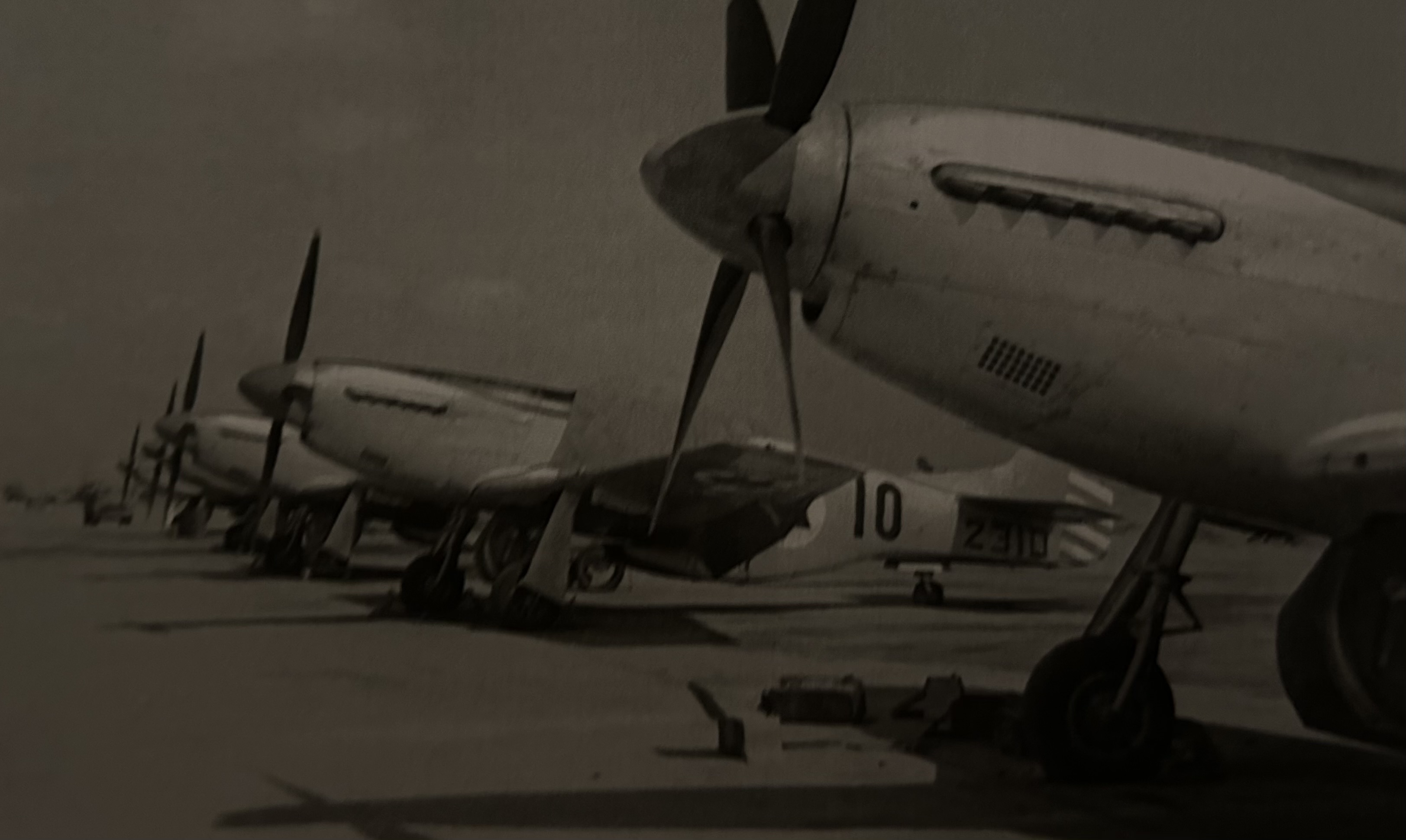
Not longer after, they were repainted and brought in line with the other mustang’s liveries. The Roundels featured larger Stars on the tail and in most cases both wings, with the lettering below the elevators was changed to the 23XX designations. Notably, the numbering below the elevators omitted the 23 part of the designation in some cases (possibly out of laziness), or even the whole number outright whereas opting to only show the larger two digit designation of the aircraft after the 23 part of the designation.
2 repainted ex-Swedish mustangs, showing off new roundel, lettering, and rudder stripe paint.
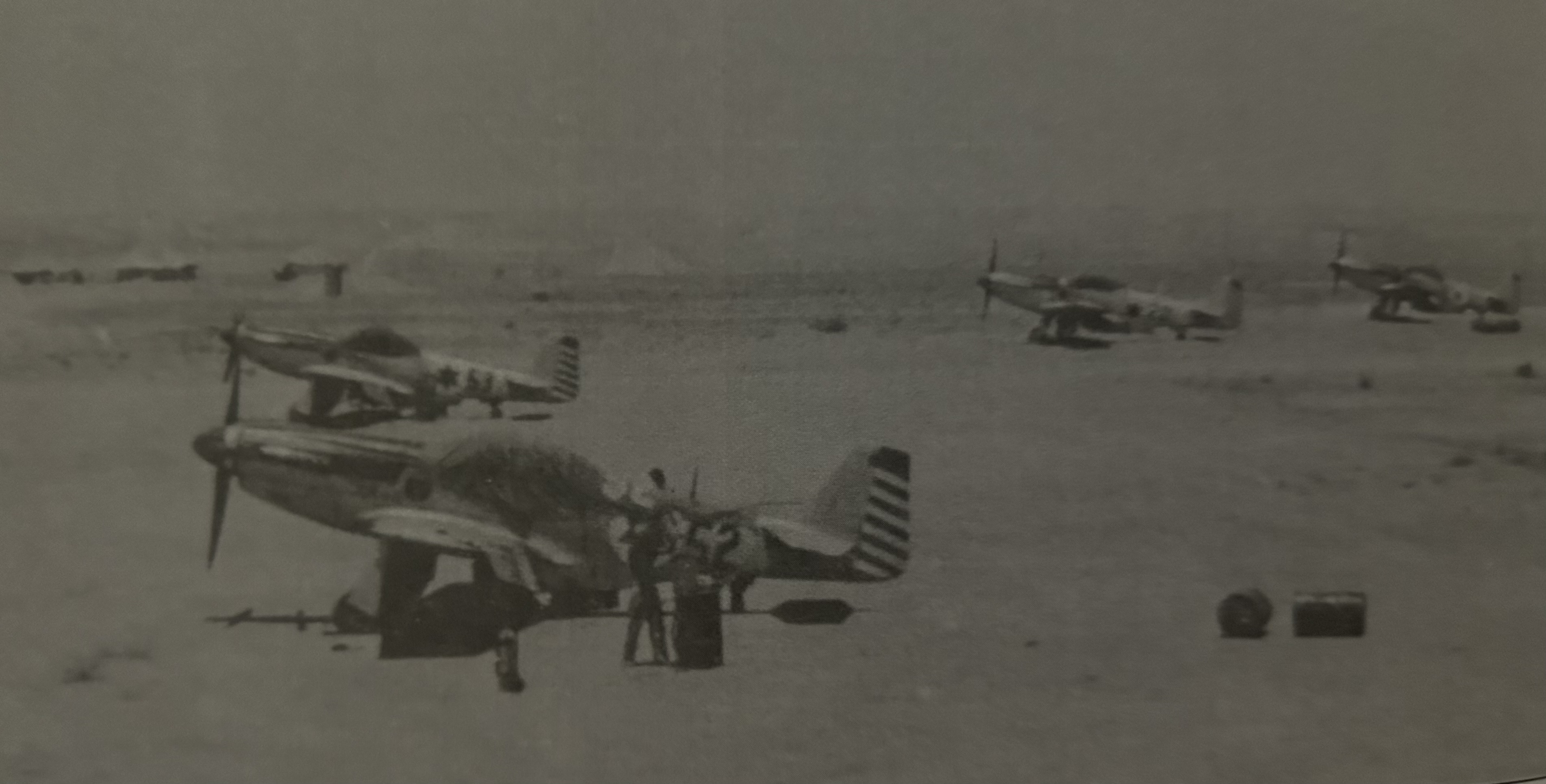
Unfortunately, I’ve only found one image of P-51D No.71, and it shows it mostly covered up in the background only slightly showing the Number 7 on its tail section, but the image proves this aircraft was repainted at some point like all other Swedish mustangs.
In this image, Mustang No.71 is supposedly behind Mustang No.66 in the background to the left (According to the authors of “P-51 Mustang in Israeli Air Force Service 1948-1960”).
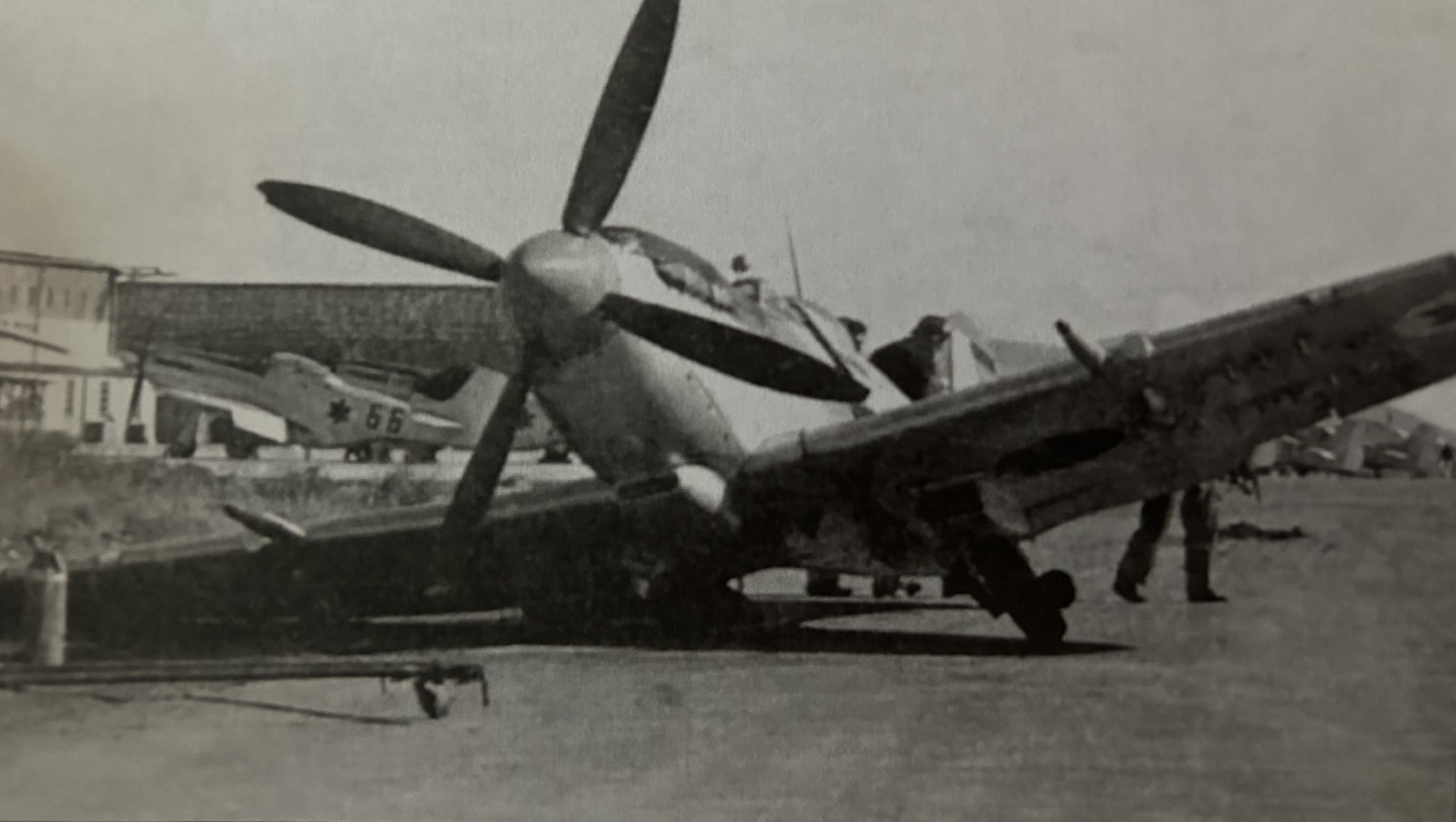
Starting in July of 1955, IAF mustangs received yet another camouflage style, that being the two-tone Brown and Blue desert camouflage seen on many other IAF aircraft of the time. P-51D No.71 as the IAF Type A stencil lettering for its numbering.
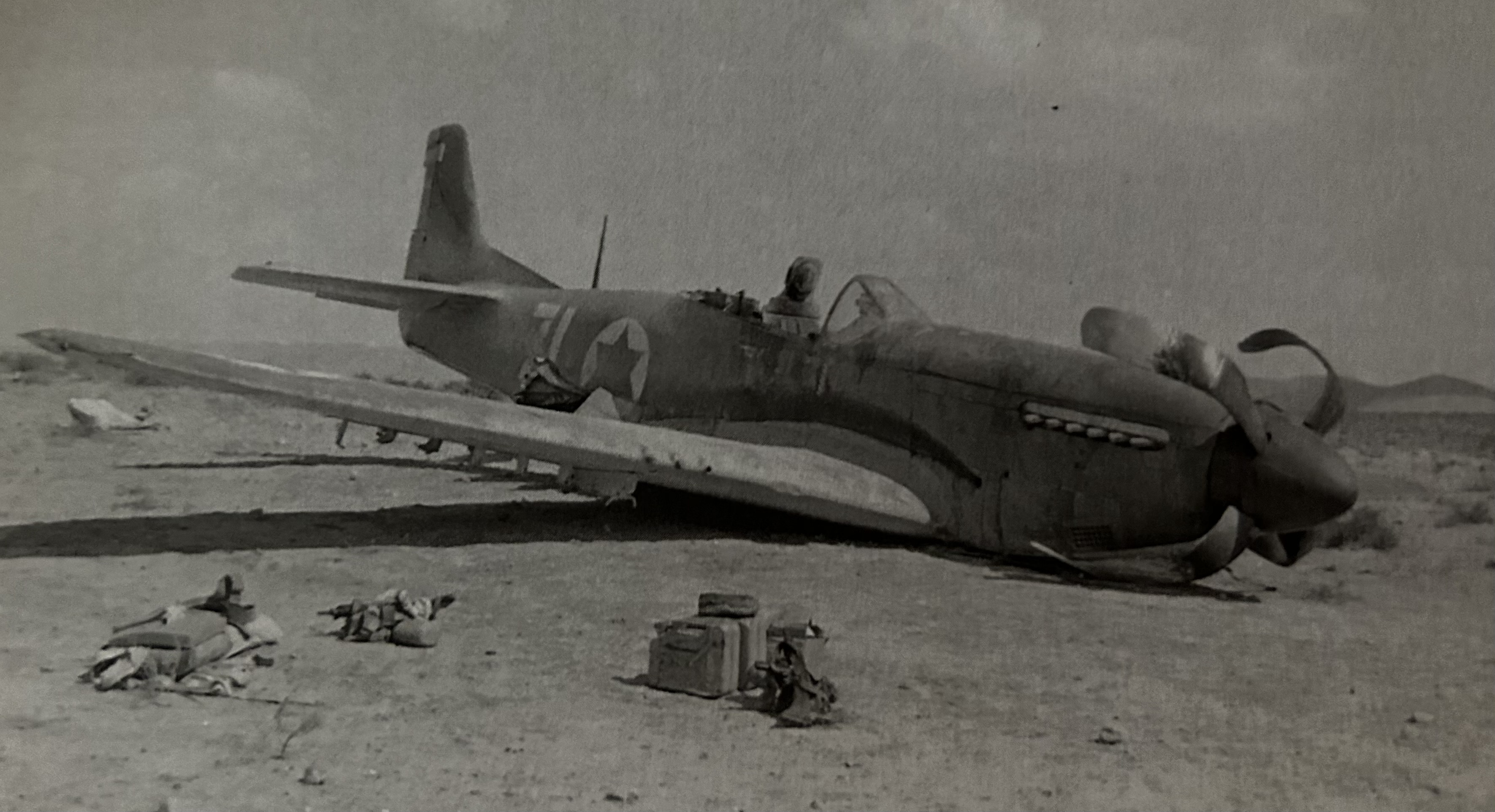
Mustang No.71 after its crash.
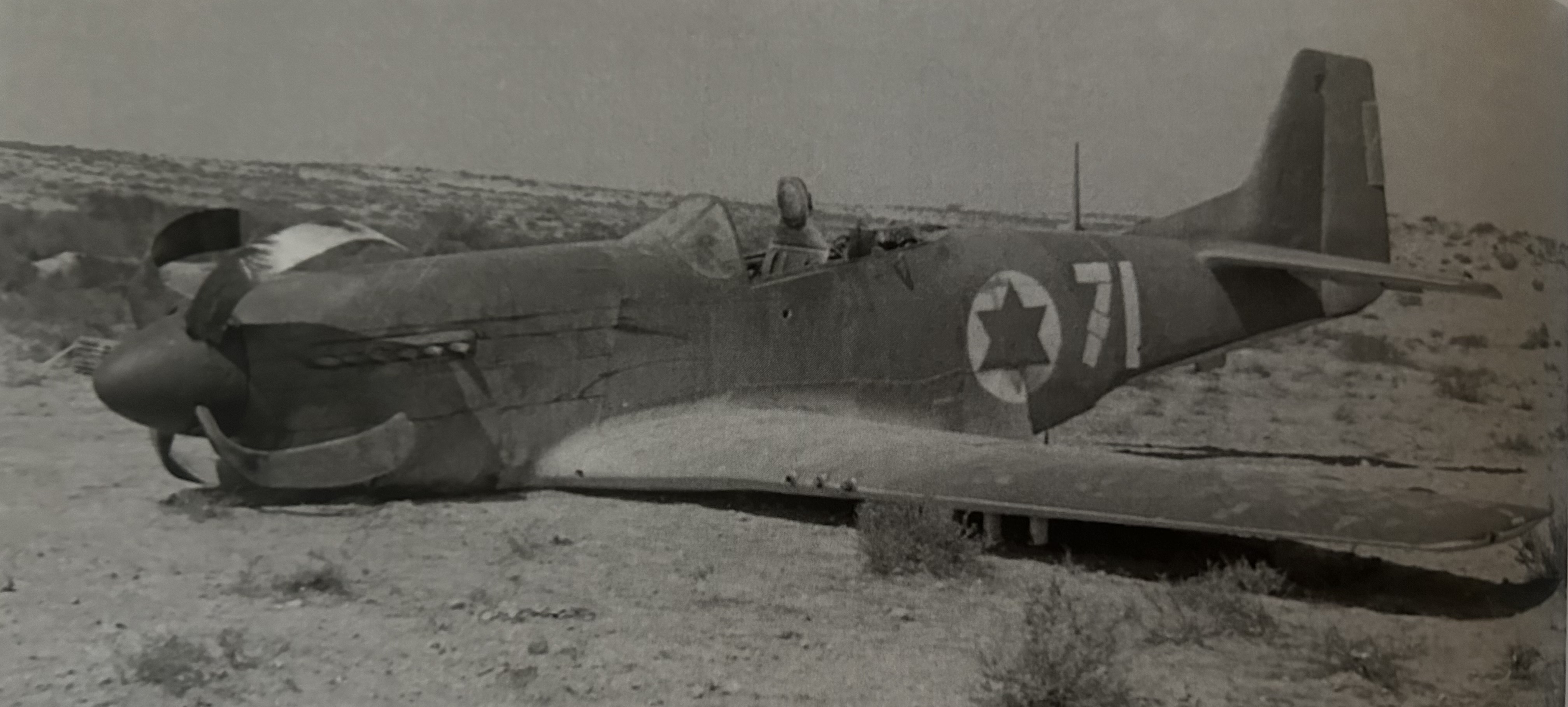

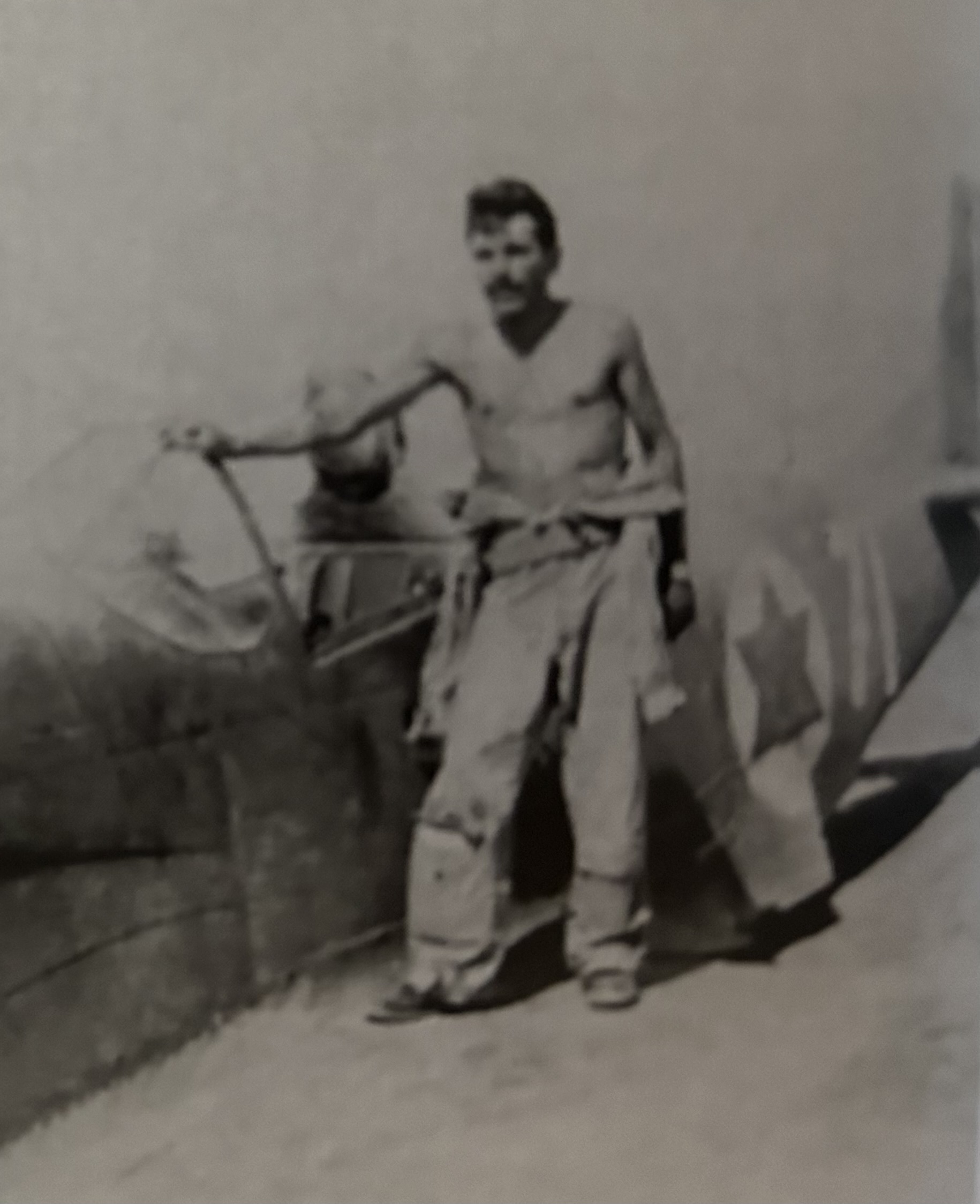
Unfortunately the IAF only P-51D-25 didn’t go in to participate in the Suez Crisis, as it crashed on September 4th of 1956 after it lost oil pressure near Yerucham in the Negev Desert. The person who crashed it also makes its fate quite interesting. IAF pilot Eland Paz was piloting the aircraft when he crashed it, but this wasn’t the only mustang he crashed.
The aircraft has a replacement rudder in this image, a red spinner, a faded or worn out camouflage, and IAF Type A Stencil lettering markings.
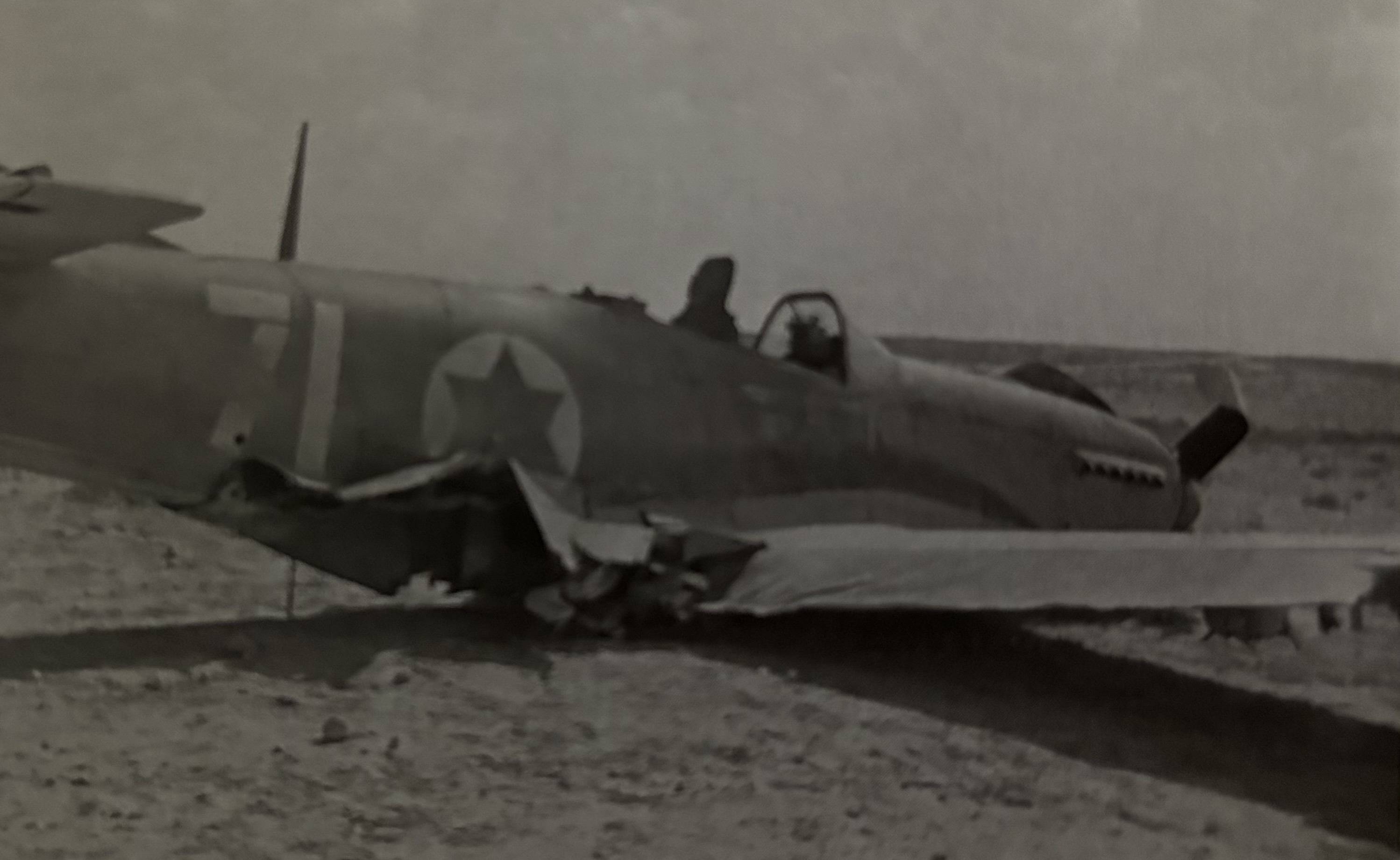
Eland Paz crashed not only Mustang No.71, but also crashed No.19, No.21, and No.27. No IAF pilot crashed more mustangs than him, and he could possibly even hold a world record for this feat, although it’s not a very flattering one to hold. Regardless, this mustang’s journey ends there, as it was written off and scrapped soon after.
Pilot Eland Paz standing by the wreck of No.71, claiming yet another victim.
In Short:
The P-51D-25 was the only aircraft of such designation in IAF service. Acquired from Sweden and devoid of any combat usage, its service was brief and uneventful. Its unique designation allows it to obtain a special spot in the tree, possibly acting as a Pack/GE premium option to act as a counterpart to the researchable P-51D-20 at 4.0, with the only notable difference being simply its name and markings. One thing I’ve read online is that the P-51D-25 uniquely has a landing gear light while the P-51D-20 does not. However given the images we have of No.71 we don’t know if it was even retained or used, even if they were present on this model of the P-51D.
Specifications:
(Click to Show)

Operating Country: Israel
Type: Single-Seat Fighter Aircraft
Crew: 1 Pilot
Wingspan: 37.04ft.
Length: 32ft 3in.
Height: 13.67ft.
Powerplant: Packard (Rolls Royce) V-1650-7.
(Please note this engine has different power outputs based on the fuel the aircraft was given and if it’s allotted increased manifold pressure. Please refer to the poll at the top about this topic.)
Power Outputs: 1,490hp on max throttle, and 1,630hp-1,848hp on War Engine Power (depending on gaijin).
Climb Rate: 18m/s-22.7m/s (depending on gaijin).
Max speed: 698km/h-721km/h (depending on gaijin).
Service Ceiling: ~41,900ft
Range: ~1,155mi (without drop tanks)
Empty Weight: 7,635lbs
Fully Loaded: 12,100lbs
Electronics and Systems:
(Click to Show)
- Radar: None (some P-51D variants received a rearward tail mounted AN/APS-13 radar that would light up a small light on the dash if it detected anything within 3km behind it, this is modeled on the IAF P-51D-20-NA and more but is non functional ingame. No IAF mustang ever seemingly had this.)
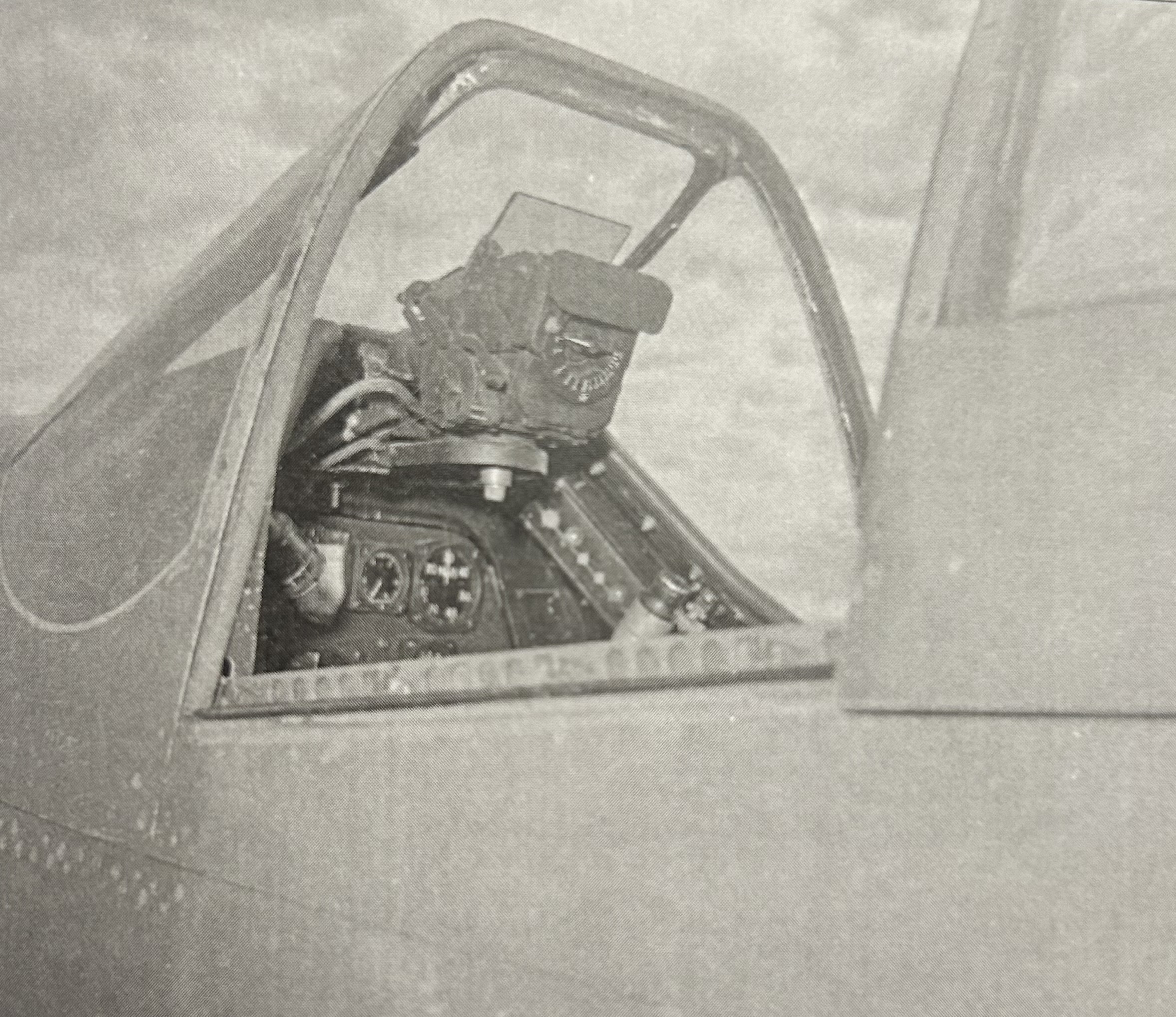
- Gunsight: British Mk.IV Gyro Gunsight.
Armament:
(Click to Show)
(Identical to the IAF P-51D-20 variant seen ingame, with small differences presented based on the inaccuracies of the IAF P-51Ds ingame)
- 6x 12.7mm/.50 caliber M2 Browning Machine Guns. The 4 most outward guns have 270 rounds of ammunition each, while the 2 most inward guns have 400 rounds each. 1880 rounds of ammunition in total.
- Up to 2x 1000lb AN-M65A1 Bombs.
- Up to 2x 500lb AN-M64A1 Bombs.
- Up to 2x 250lb AN-M57 Bombs.
- Up to 8x AR Rockets.
Missing Weaponry:
- Up to 2x Underwing Drop Tanks with a capacity of 75 or 108 gallons.
- Up to 2x US “70lb” Bombs.
- Up to 2x 100lb AN-M30A1 Bombs.
- Up to 2x US “150lb” Bombs.
- Up to 2x (250 liter) Mk.I Napalm Bombs.
- Up to 2x (250 liter) Mk.II Napalm Bombs. (Earlier iteration of the one we have ingame)
- Up to 2x Drop tanks converted to napalm bombs.
- Up to 12x-24x 8-cm Flz.-Rakete Oerlikon HE/HEAT rockets (later license produced by TA’AS).
- Up to 6x-24x 4-cm TA’AS-made rockets.
- Up to 6x (possibly 10x) HVAR 5-inch rockets (later license produced by TA’AS).
Dual mount 40/80mm rocket racks:
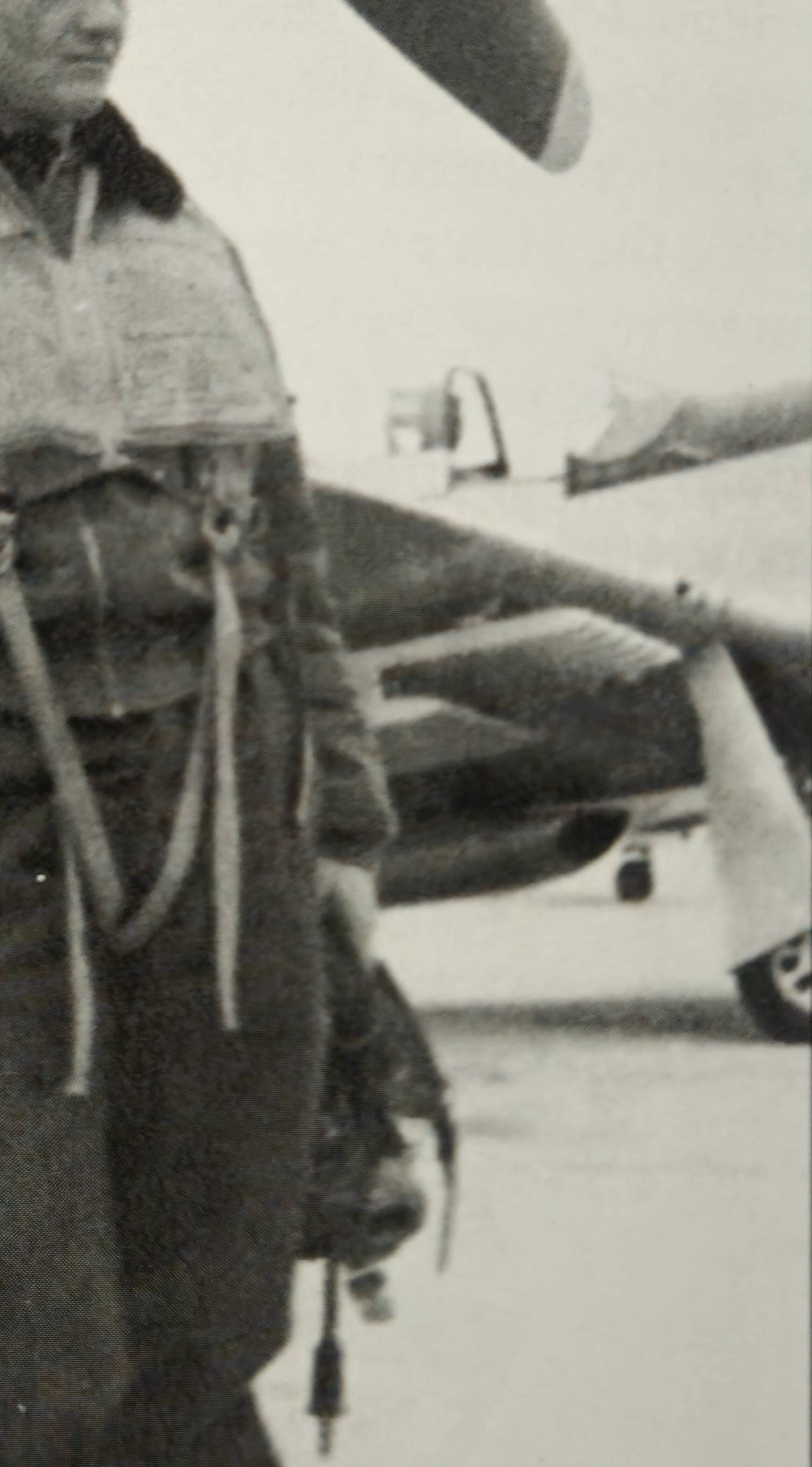
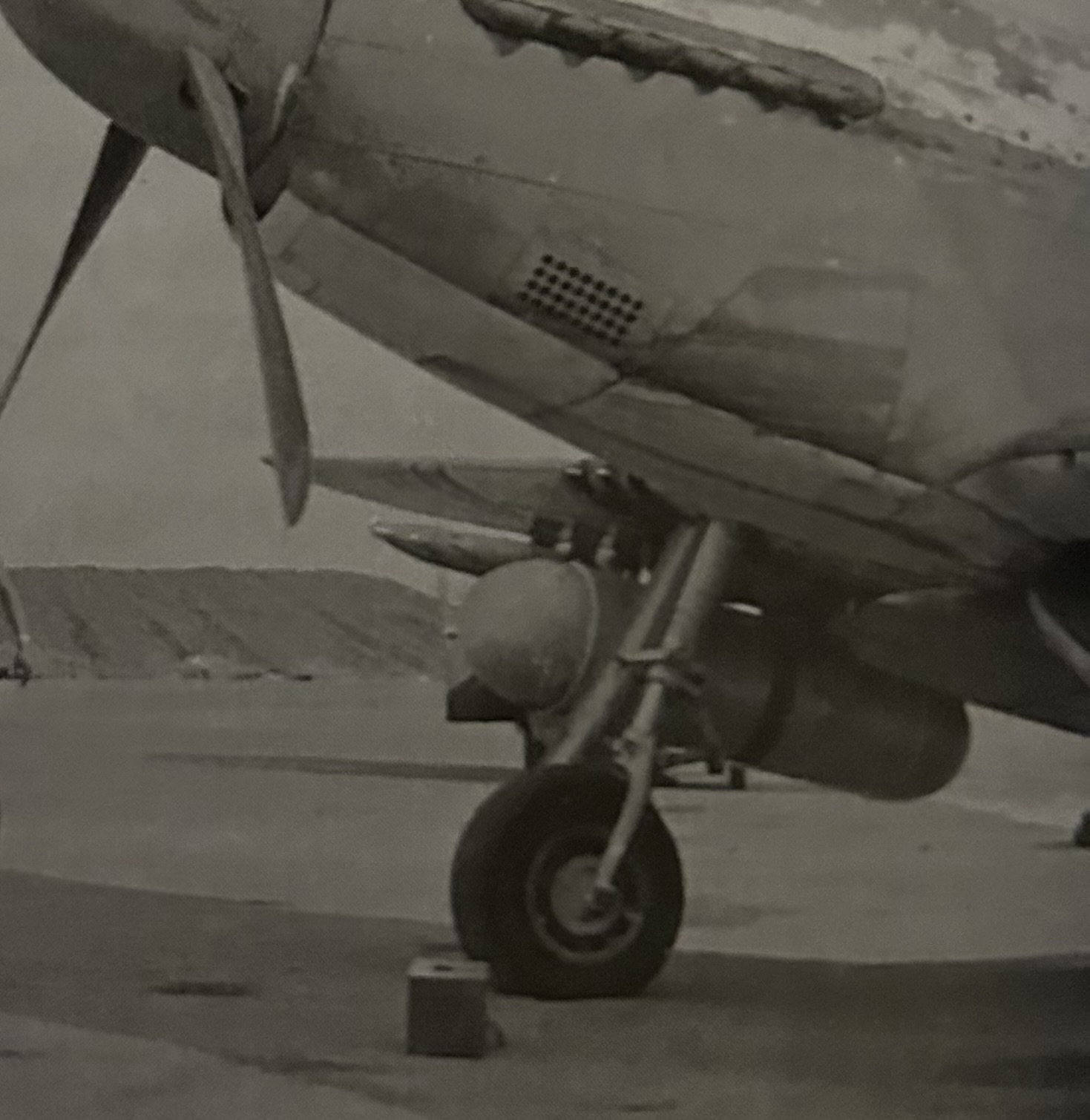
Single mount 80mm rocket mounts and Mk.I Napalm bombs: (Supposedly the 40mm rockets could be mounted in a 6x configuration as well by using different single mount racks similar to the 80mm ones)

5-inch HVARs and a lone 40mm Rocket mounted:
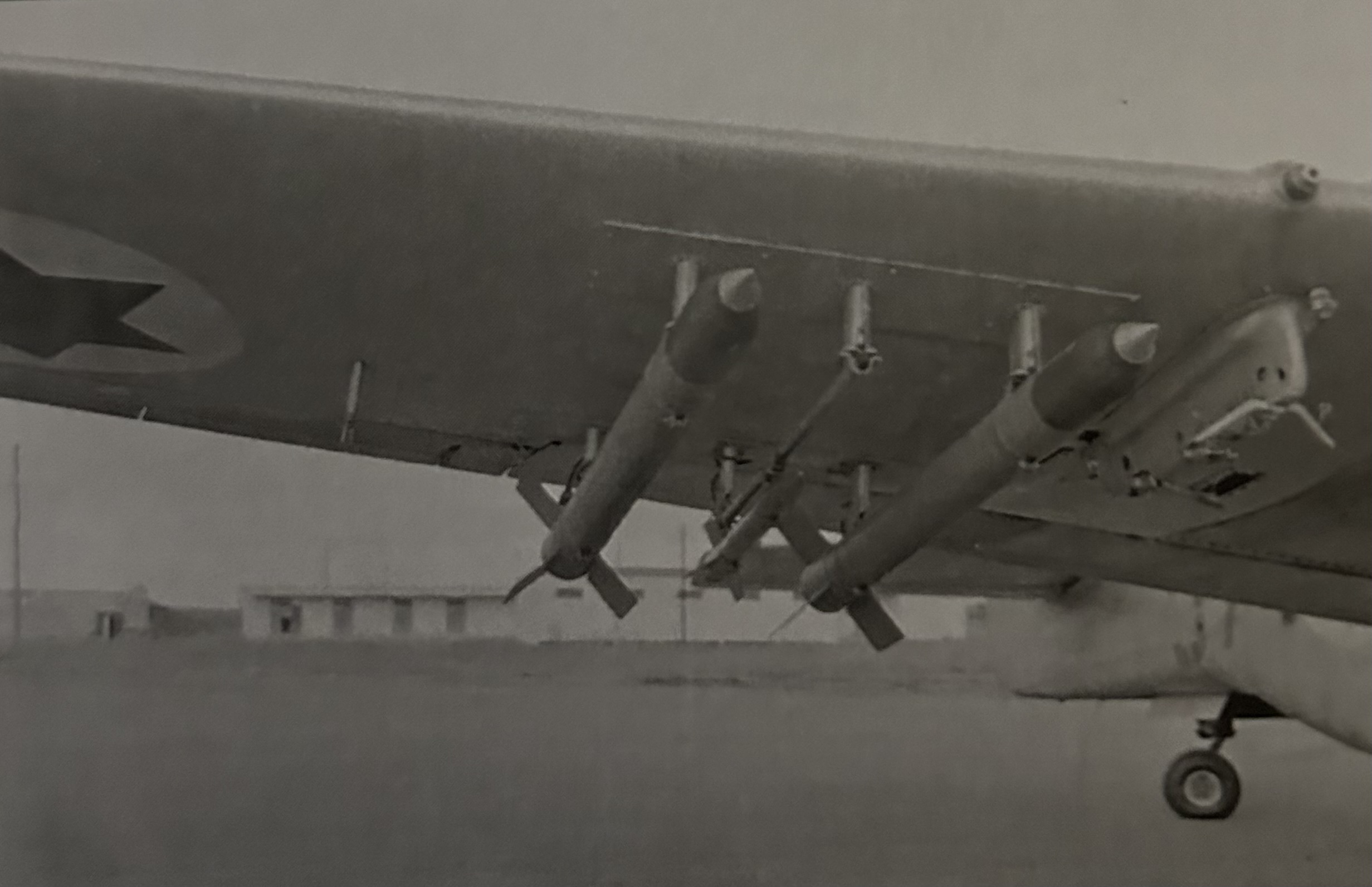
The tail-less Mk.II napalm bomb:
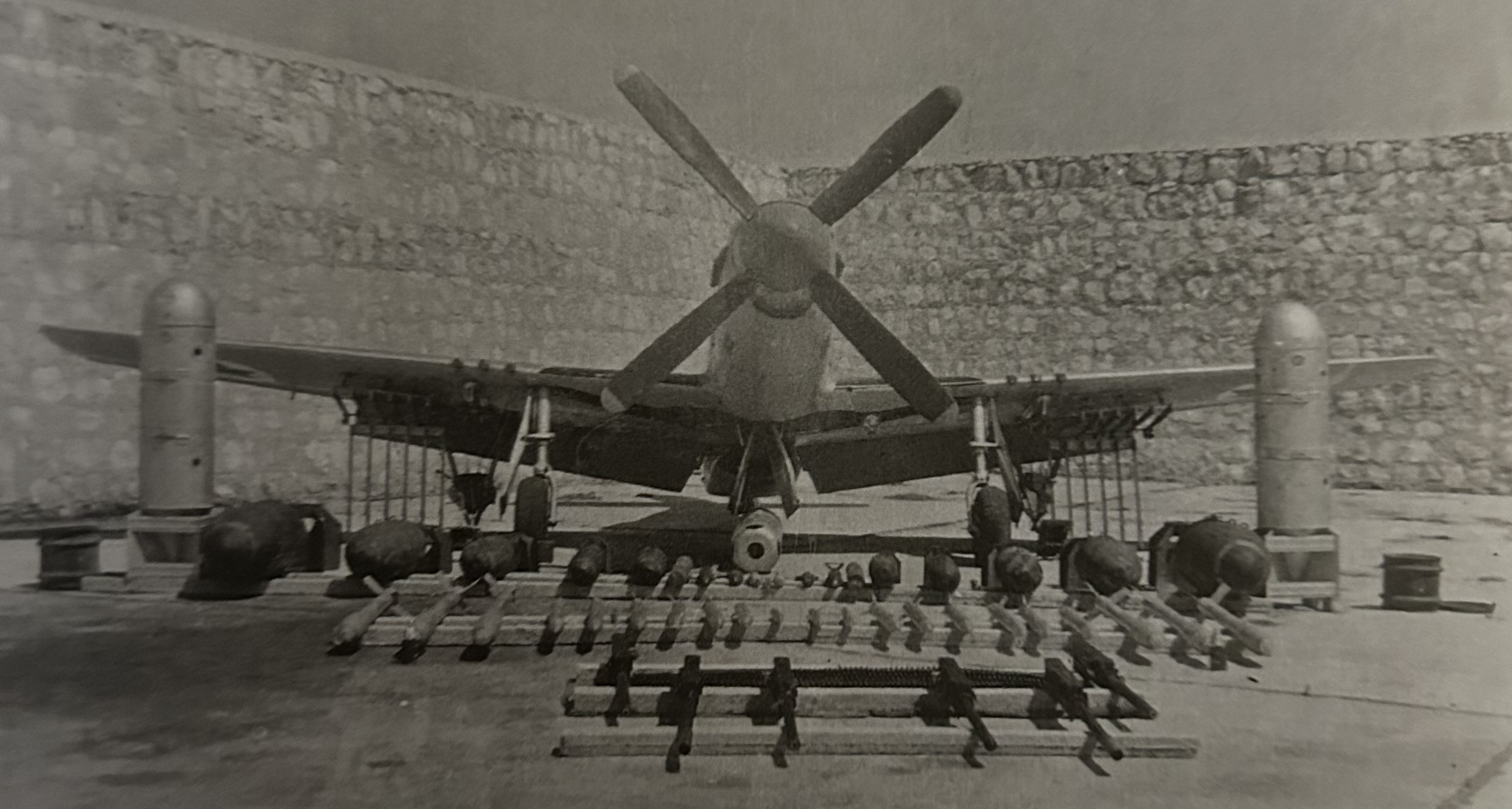
The full armament of the IAF P-51 on display:
Sources:
(Click to Show)
“P-51 Mustang in Israeli Air Force Service 1948-1960” by Alex Yofe and Lawrence Nyveen, published December 15th, 2025. ISBN 10: 0977462730, ISBN-13: 978-0977462735.
תאונת מוסטנג 2371 - מרקיע שחקים
https://www.jewishvirtuallibrary.org/north-american-p-51d-mustang
North American P-51 Mustang - Wikipedia
North American P-51D Mustang | Military Aviation Museum
Thank you for taking the time to read my third Israeli Mustang suggestion! Special thanks to Yoyolast for going over and sharing information with me that helped make this suggestion possible! I hope y’all have a wonderfully blessed day and I’ll see ya in my next suggestion!