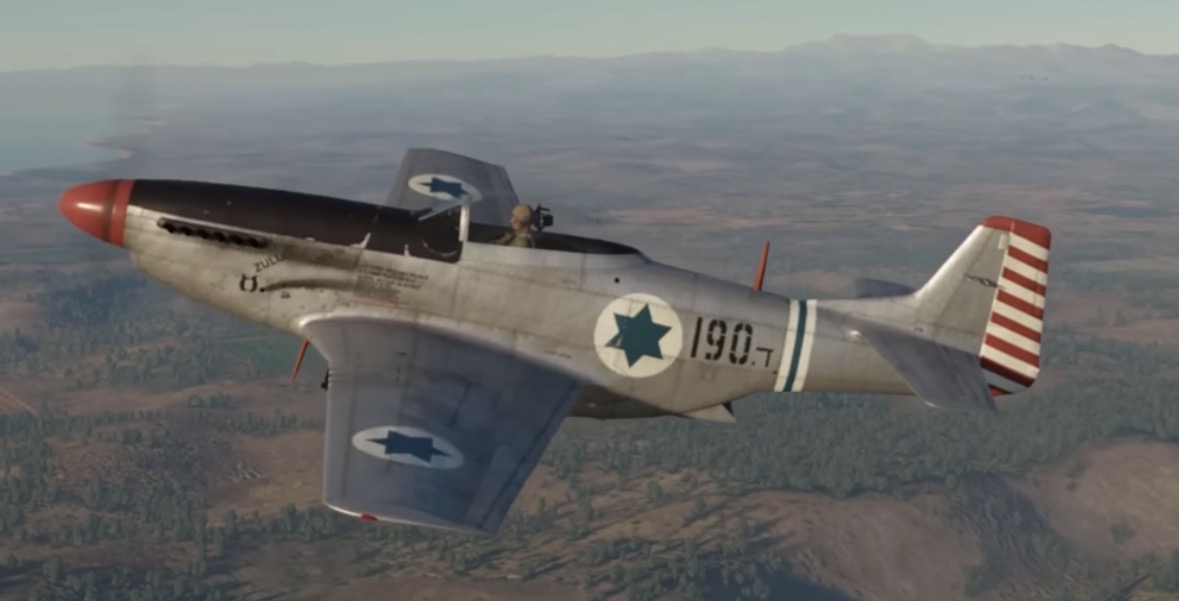
IAF P-51D Mustang (1948-49) - The War of Independence Mustangs
- Yes.
- No.
This suggestion is for the IAF P-51Ds during the war for independence when they were arguably much less powerful. The IAF acquired four disassembled P-51D mustang airframes in 1948 for usage during the war of independence, but only 2 were completed and used during the conflict. These examples had their inner guns on both wings removed and the gun ports capped, reducing their firepower significantly. Alongside this, it had less available underwing weaponry options, and uniquely a S-199 Sakeen German Revi 16B Reflector Gunsight. (I personally suggest this vehicle sits at 3.7 as a researchable option for the Israeli Air Tree, as it has no 3.7 options ingame currently.)
- 3.7
- 4.0
- 4.3
- 4.7
- I Voted No.
- As a Researchable vehicle
- As a Squadron vehicle
- As a Premium vehicle
- As a Event vehicle
- I Voted No.
- “P-51D (1948)” Without Rockets
- “P-51D (1949)” With Rockets
- “P-51D (Early)” With/Without Rockets
- I Voted No.
History:
(Click to Show)
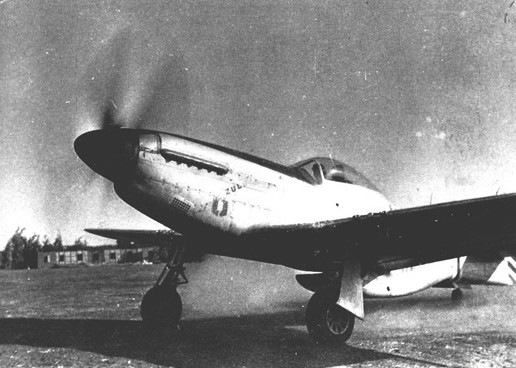
In the early days of the Israeli War of Independence, also known as the first Arab-Israeli War, the sky’s were dominated the newly proclaimed state’s enemies and their fighter aircraft. Commonly known they acquired the S-199 “Sakeen”, an outright worse Bf 109 due to its inferior engine from the variant it was based on, however later arriving Spitfires also joined the fray. They weren’t the only aircraft to be active during the conflict however, as Israel got its hands on some P-51Ds too, and they weren’t quite unique examples given the desperate measures taken to make them serviceable for the conflict.
D.190 on the ground.
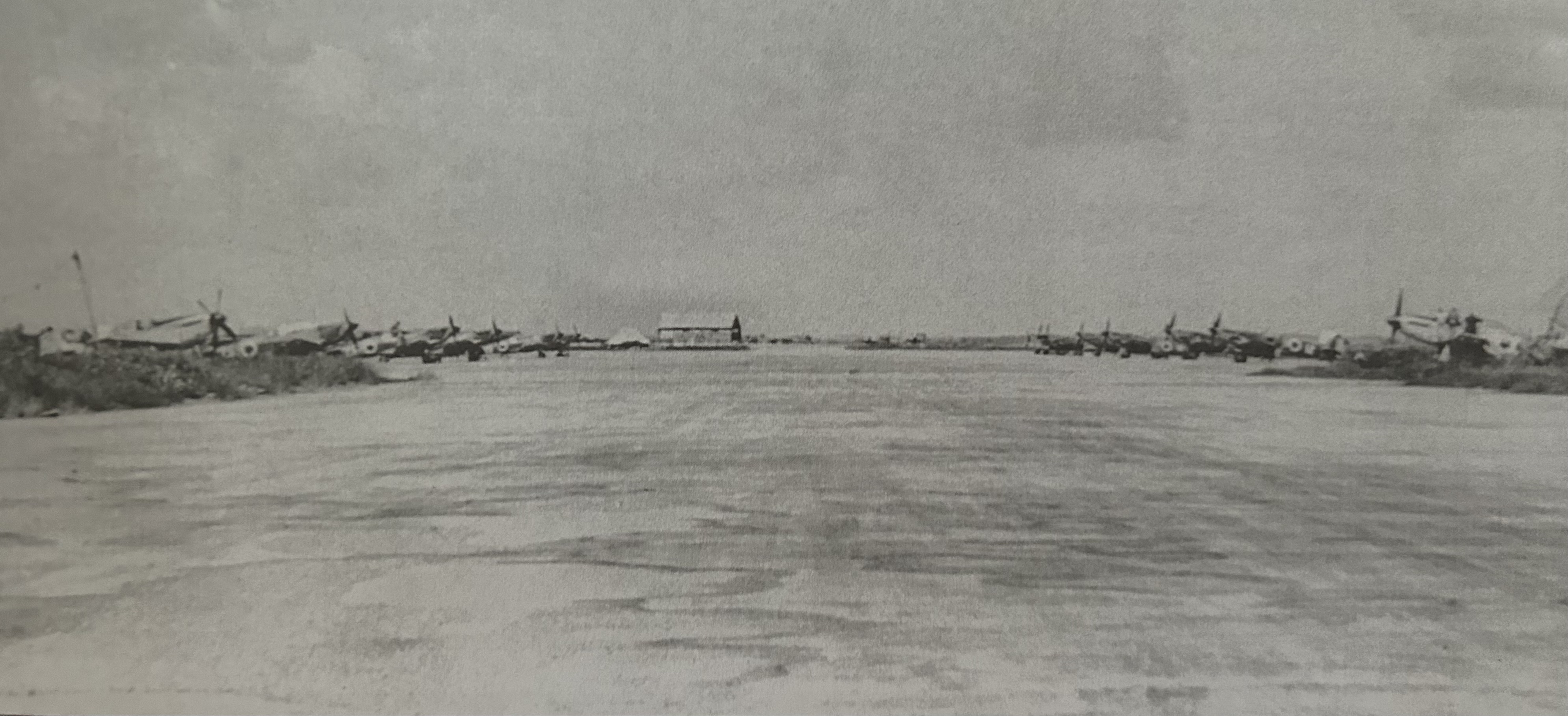
During the conflict an arms embargo was in place by the US, and to get around it Israel had to get them from 3rd parties who smuggled them in. The mustangs acquired for this conflict came from a company called Schwimmer Aviation, lead by an Adolph “Al” Schwimmer. They obtained 5 P-51D mustangs in April, (of which only 4 airframes would reach Israel during the conflict) with these airframes being fully unarmed. The first pair was disassembled for transport and left on July 17th, arriving in Haifa on August 16th and unloaded 3 days after. The second pair arrived sometime in late September but would not be finished or used in the conflict.
The second pair of mustangs strapped to the deck of a boat.
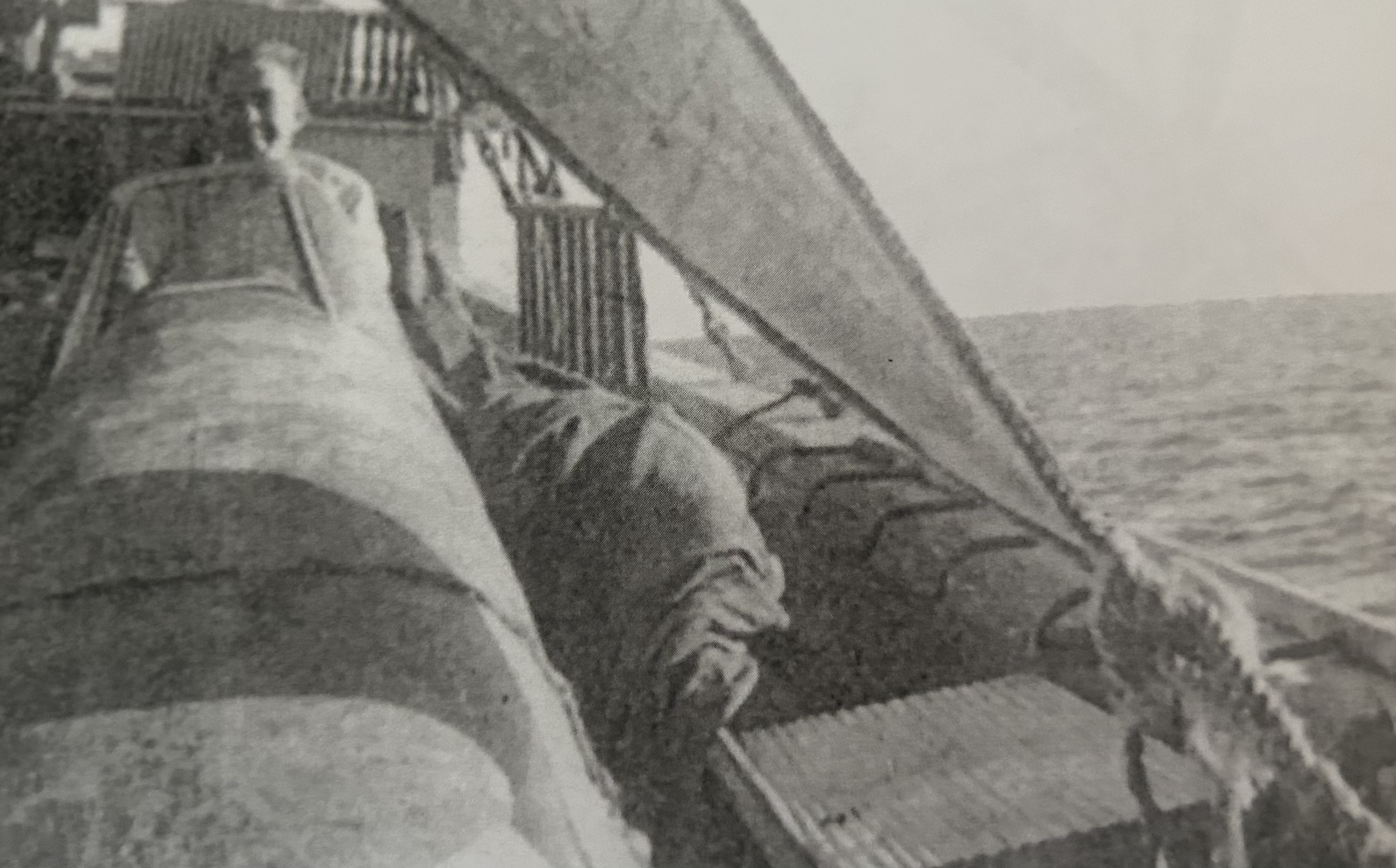
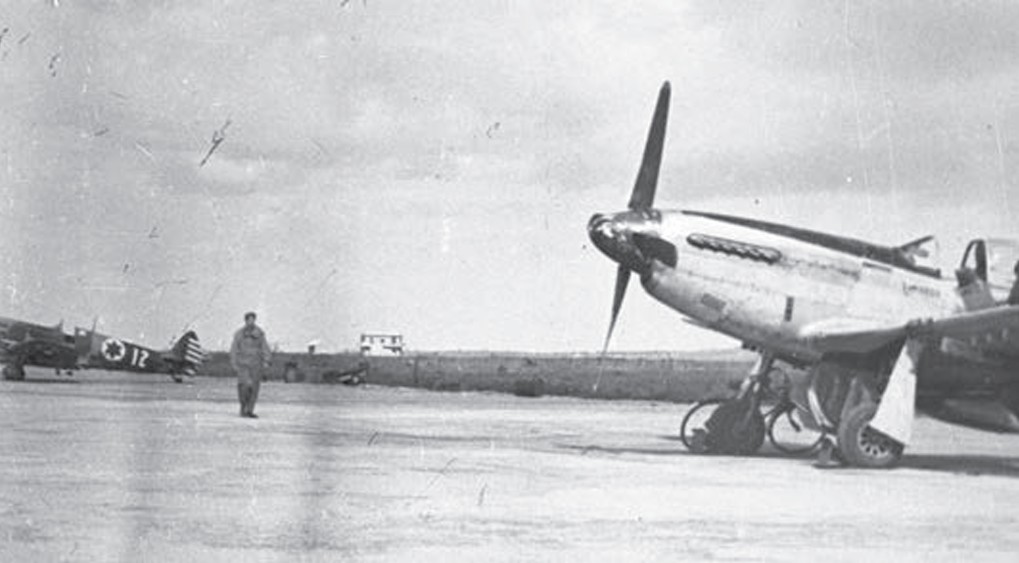
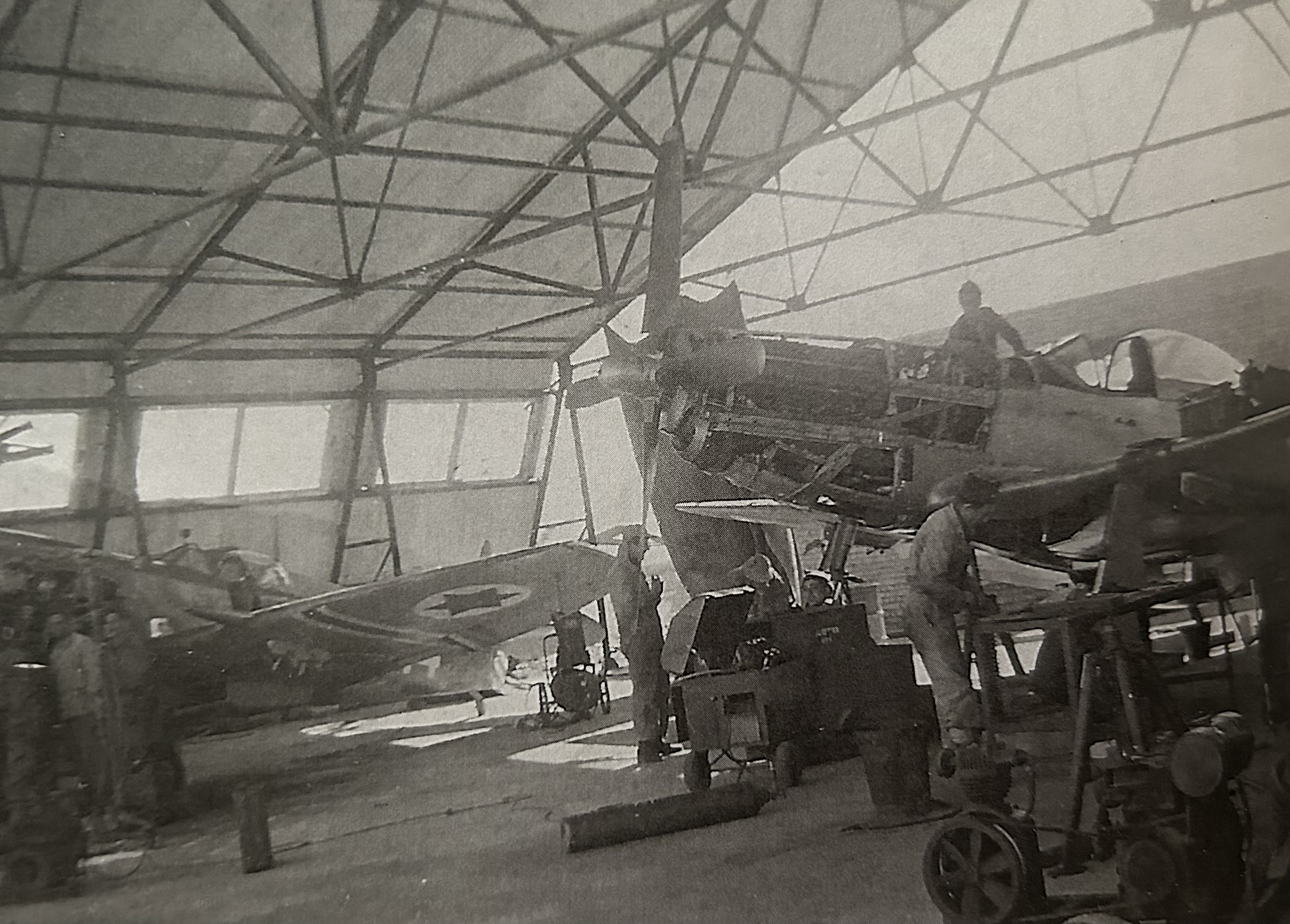
The first pair of mustangs were then put into the process of reassembly, which given the expertise of the crew behind this, took quite some time. Due to the fact they came without gunsights, the crews opted to install German Revi 16B Reflector gunsights from the S-199, making these aircraft unique.
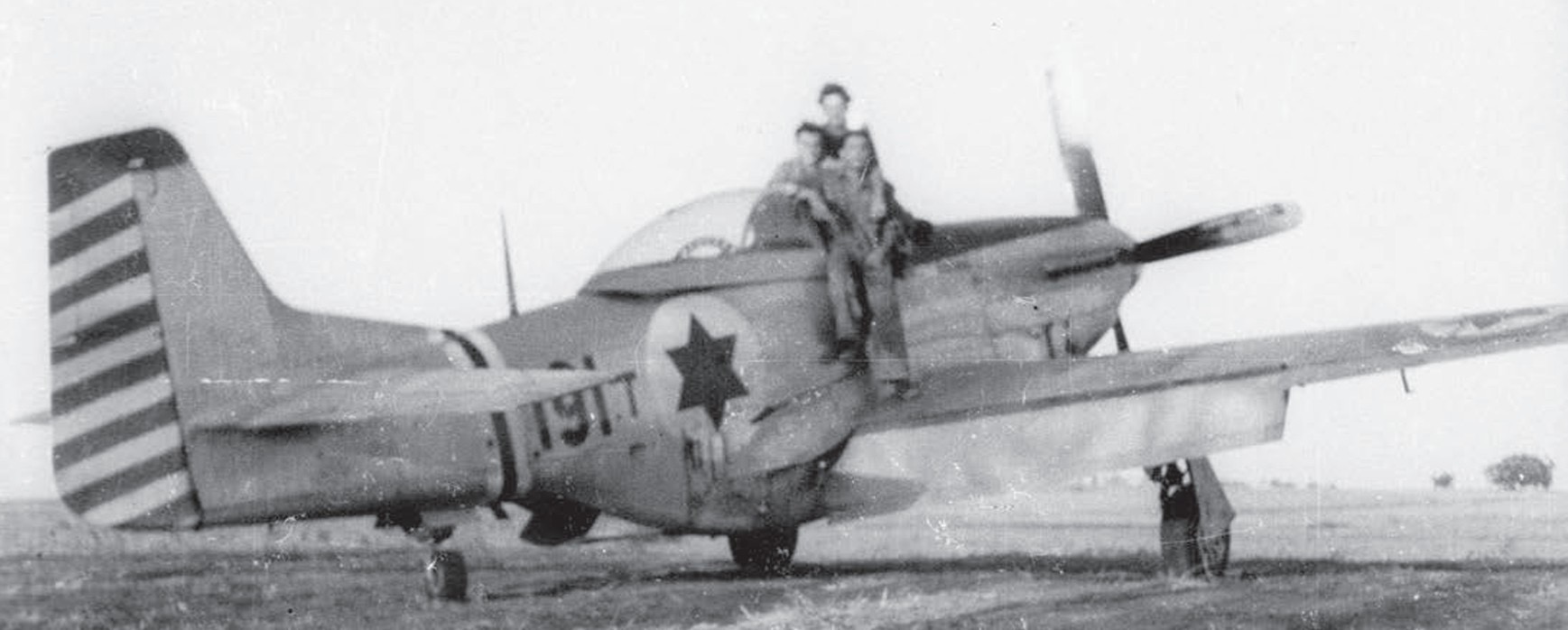
Images 1 & 2 are of D.190 being assembled and tested, 3 is D.191.
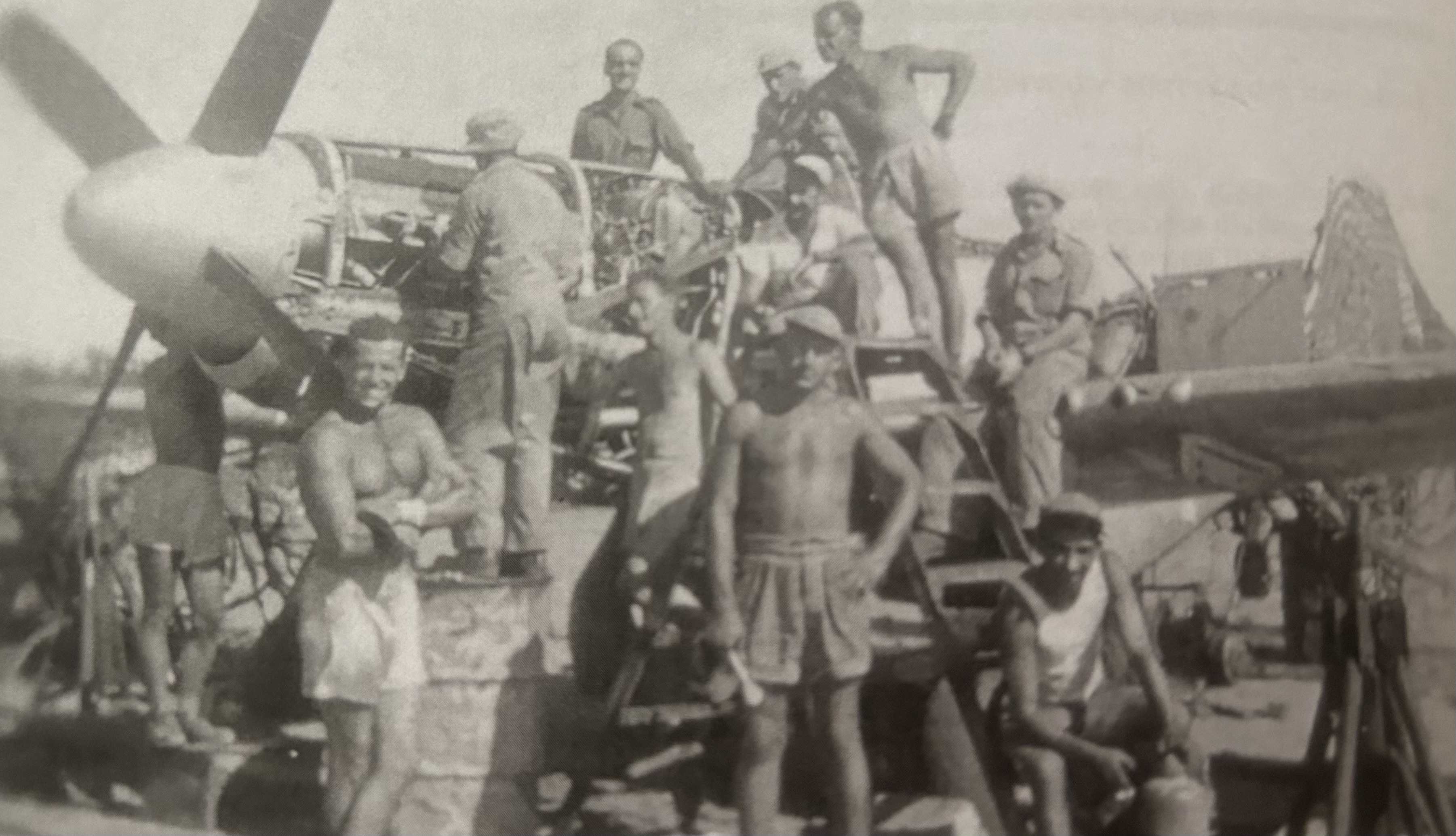
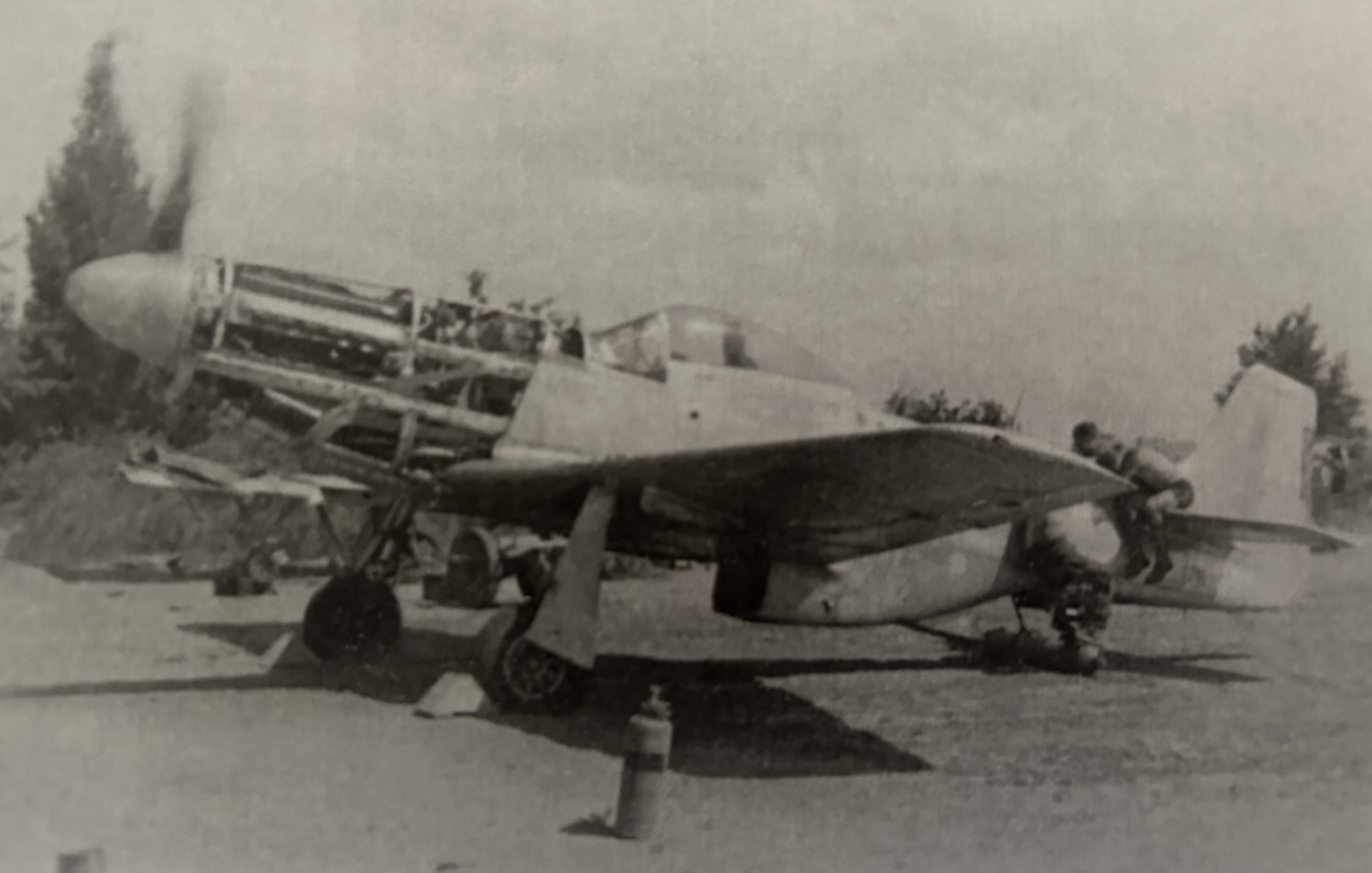
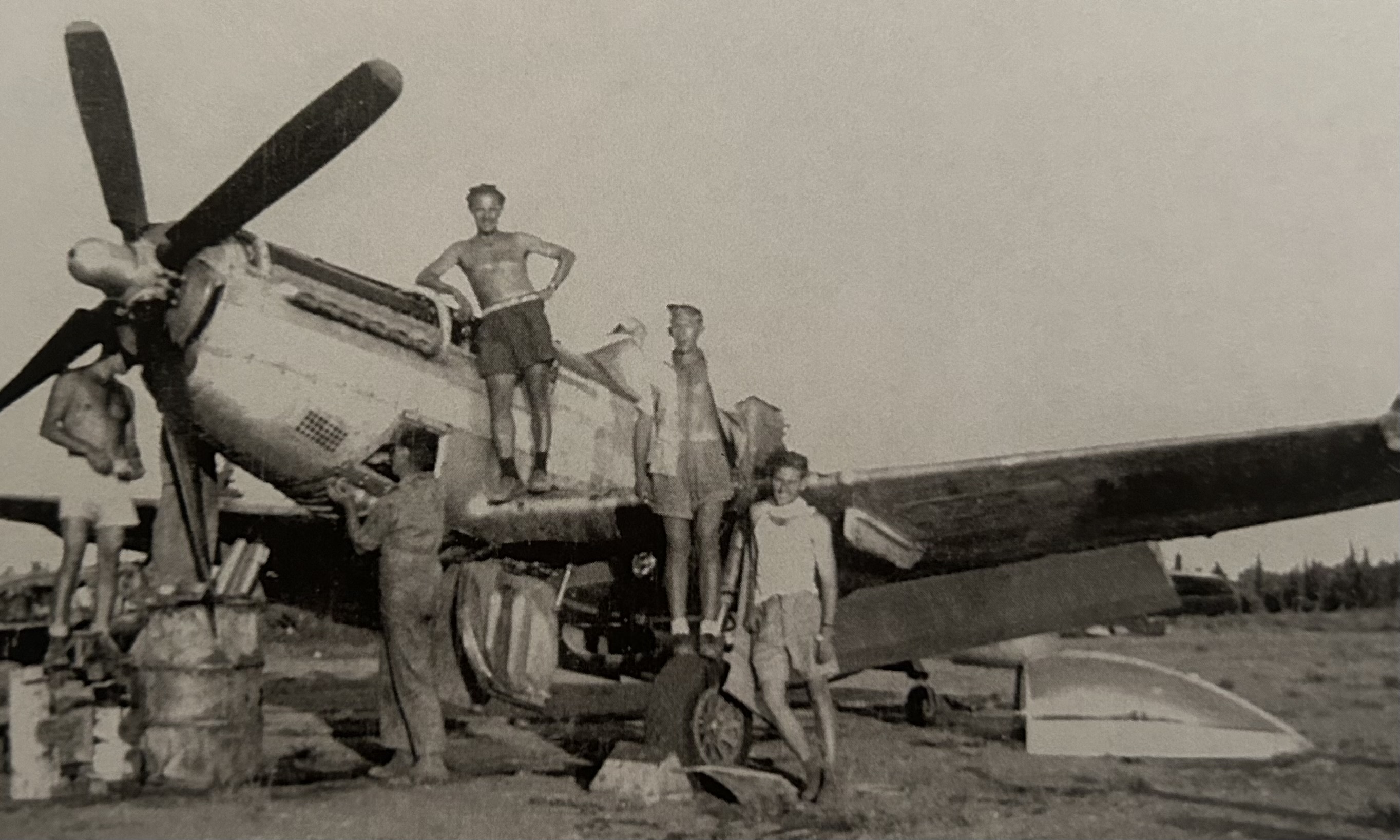
The crews installed only four M2 Browning machine guns, with 2 per wing on both aircraft, as opposed to the standard six guns in total common on P-51Ds. Due to the lack of these guns being available, the inner guns on each wing were omitted with a visual cap being left over the gun ports from when the aircraft were demilitarized. The first completed P-51 took to the skies on October 2nd.
First image is D.190, second is D.191. This is both aircraft before being given any identification markings.

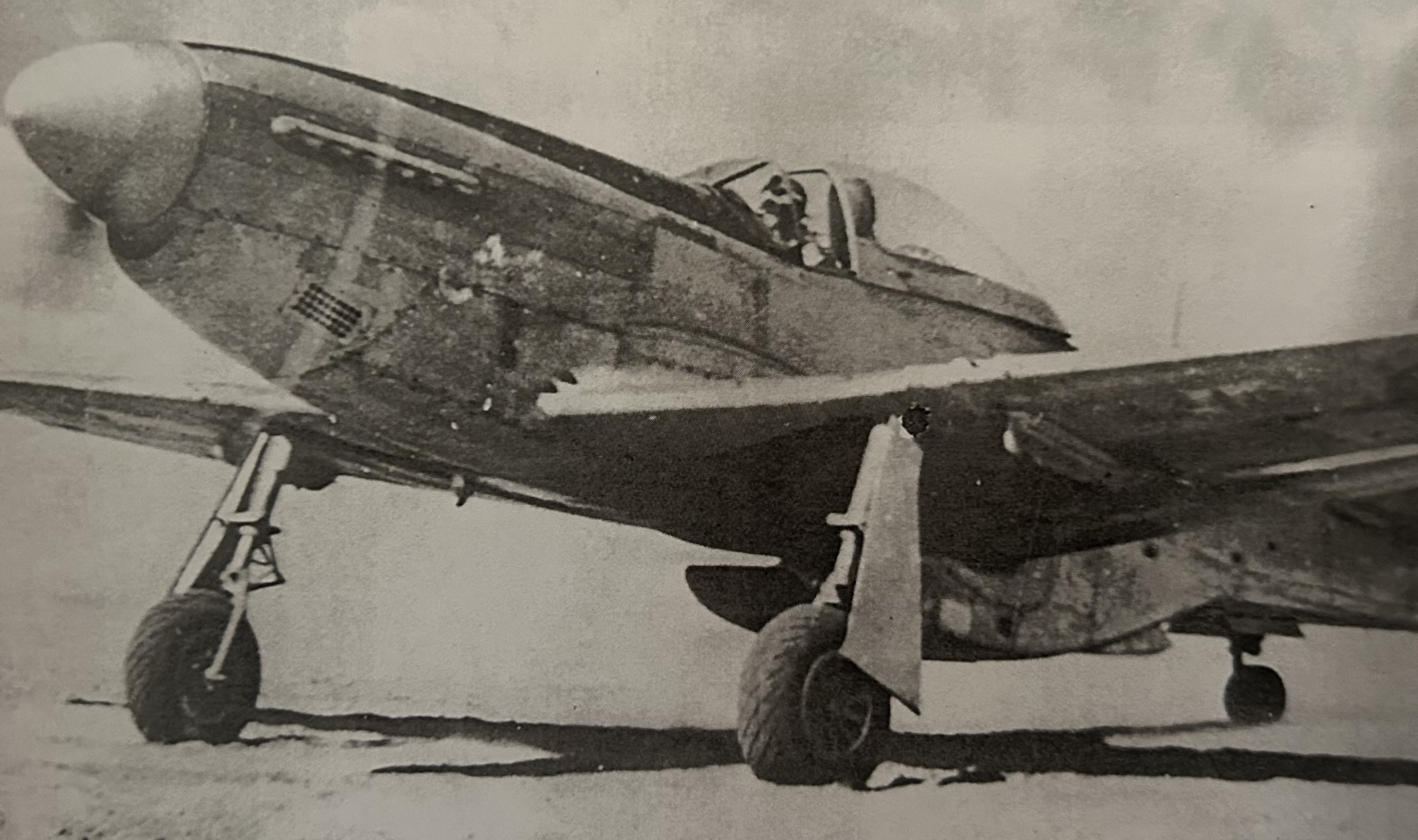
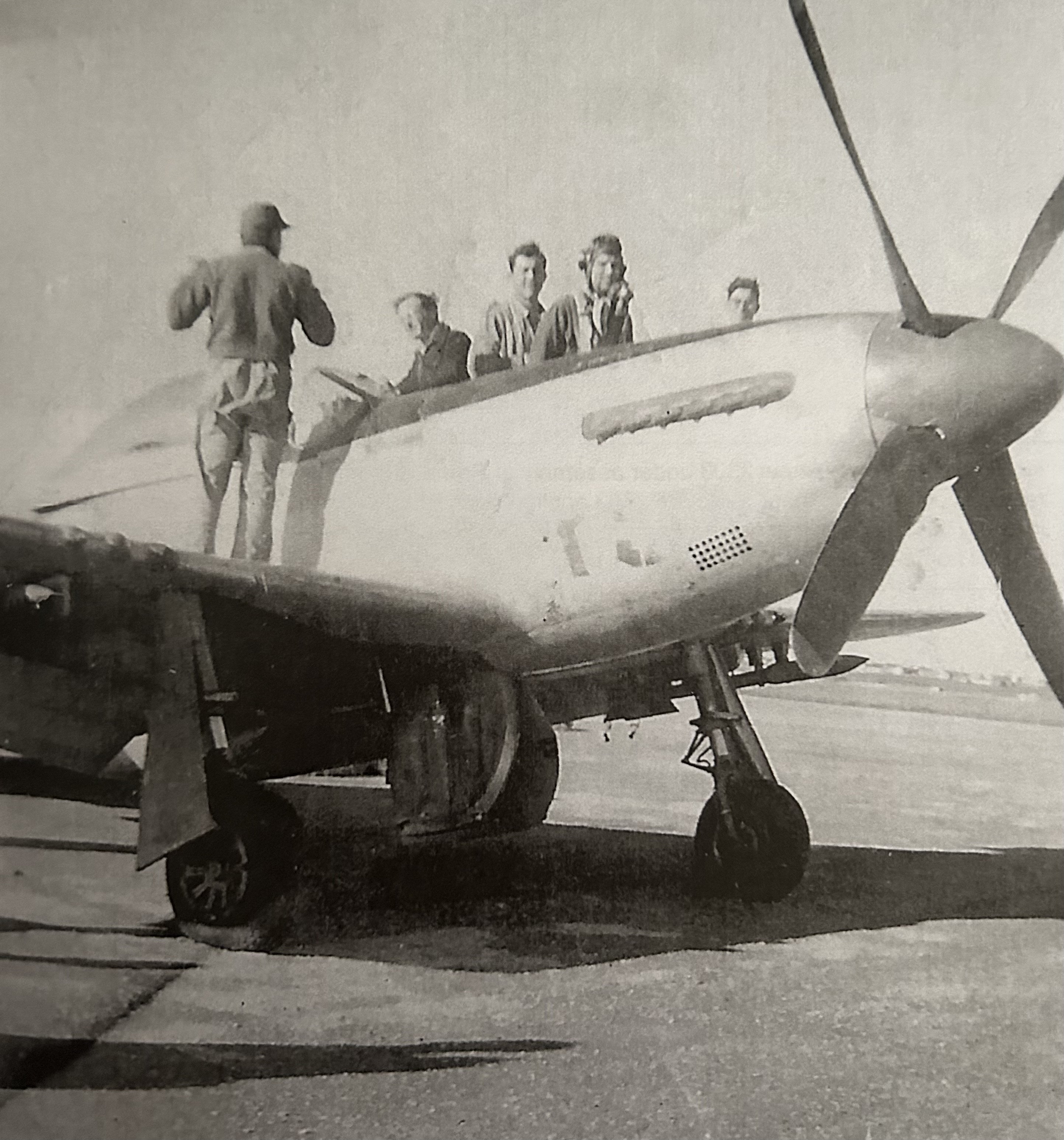
The first pair were reported as completed and painted with identification markings on October 20th, ready for service entering 101st squadron. These aircraft were numbered D.190 and D.191 respectively. Both had small lettering initially, but would receive larger lettering in December until they were renumbered and a new paint standard was established. They both also had an identification stripe painted on the tail, with a Blue stripe on the middle with white borders just as thick. D.191 was unique in that it did not have the rudder striped or a red spinner for some time, sporting both completed unpainted. Both mustangs did have and retain their anti-glare black paint over the engine.
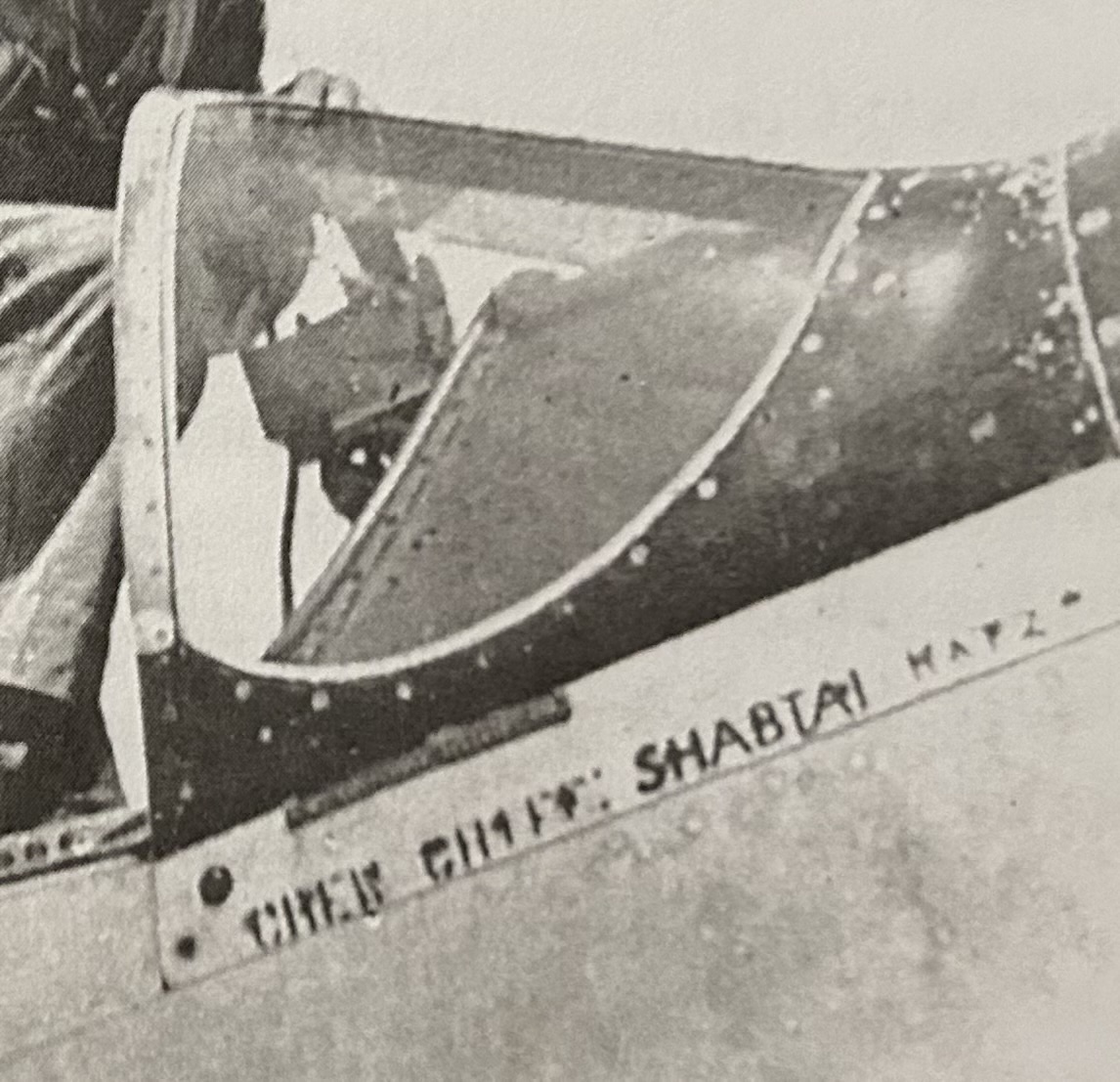
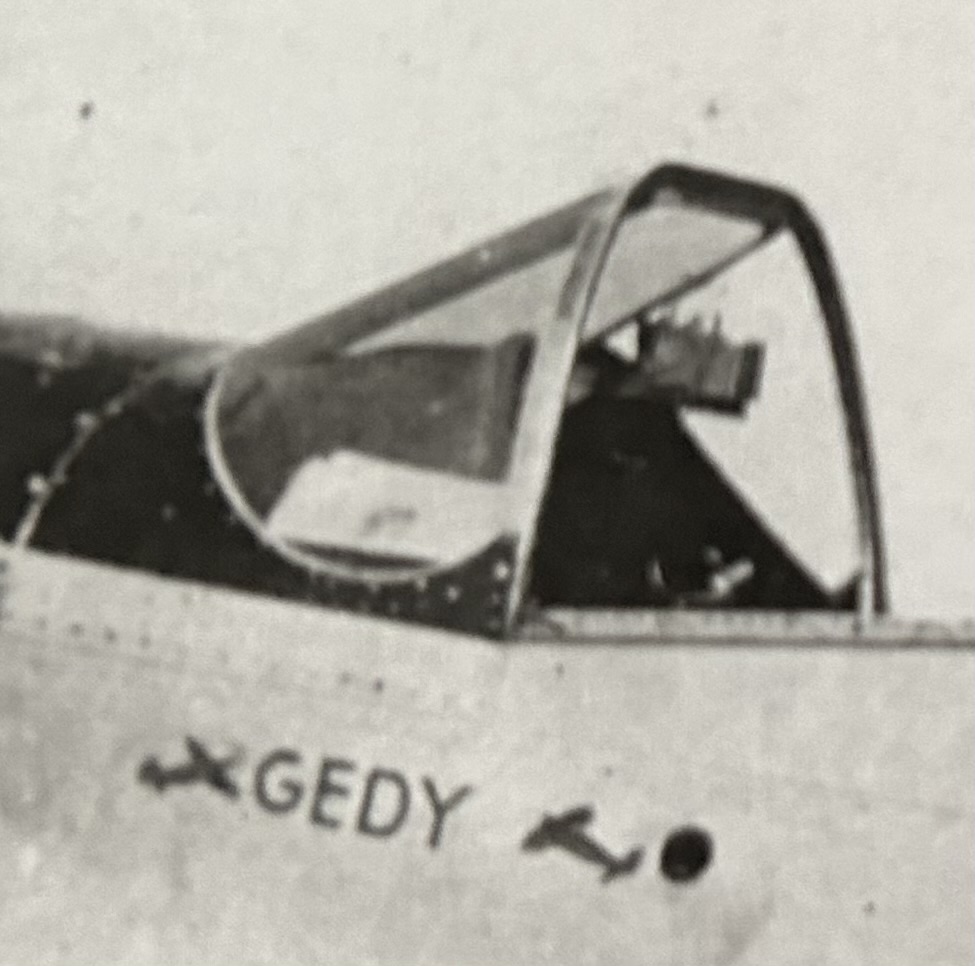
Markings on the sides of D.191 and D.190. D.190 is top two, D.191 is bottom two.
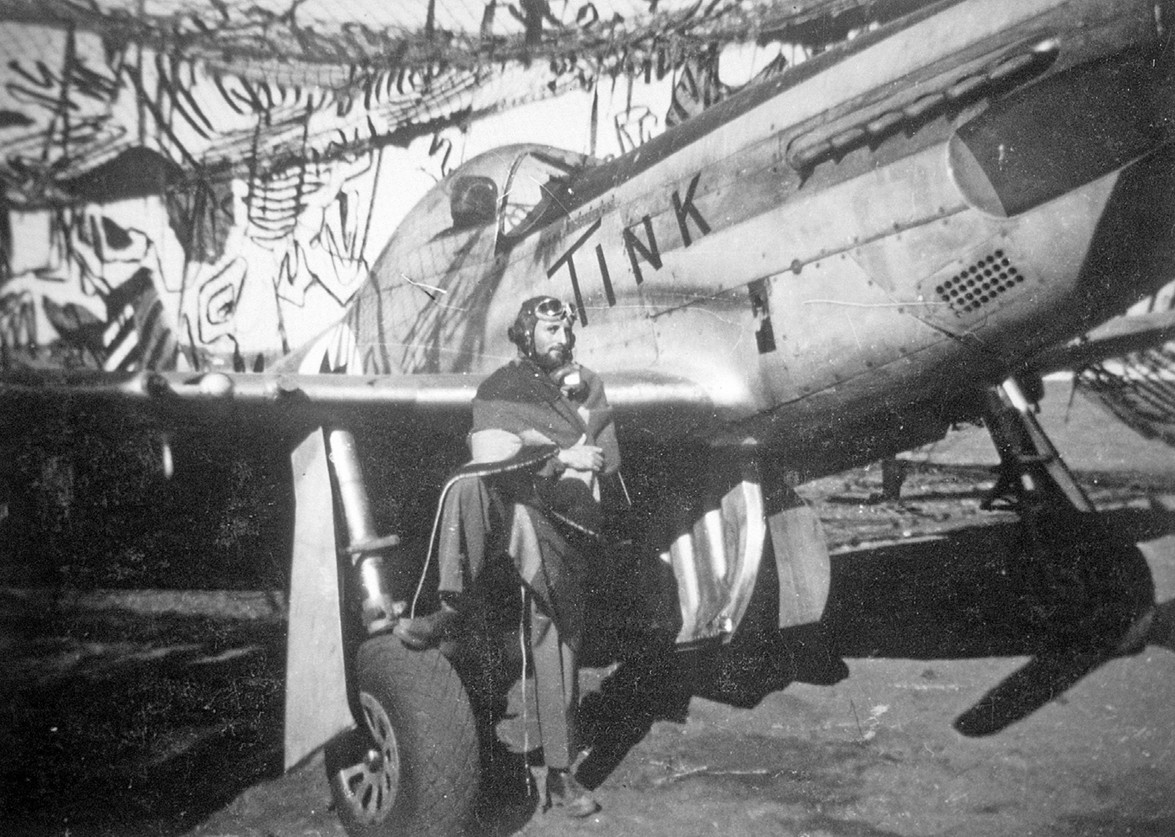
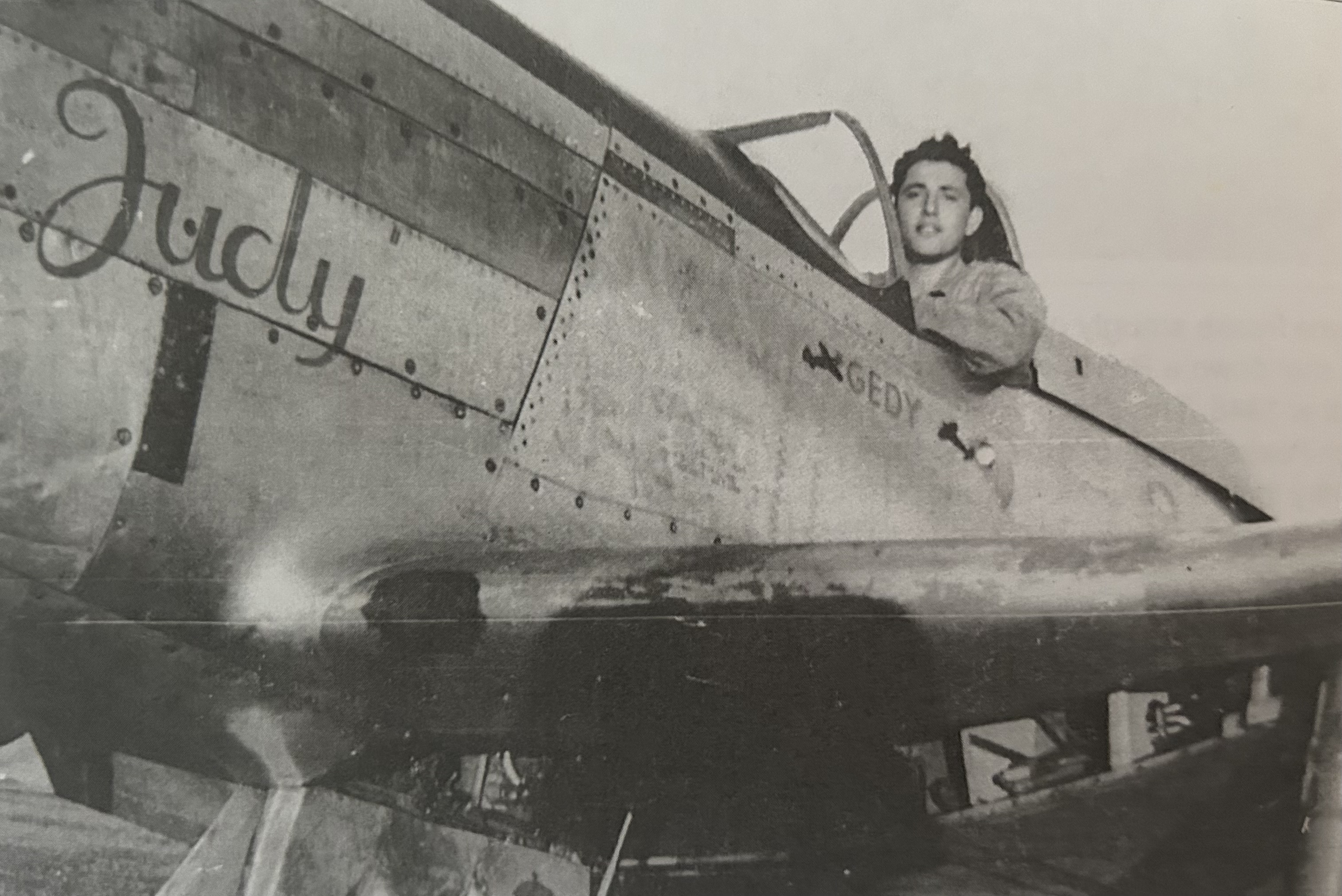
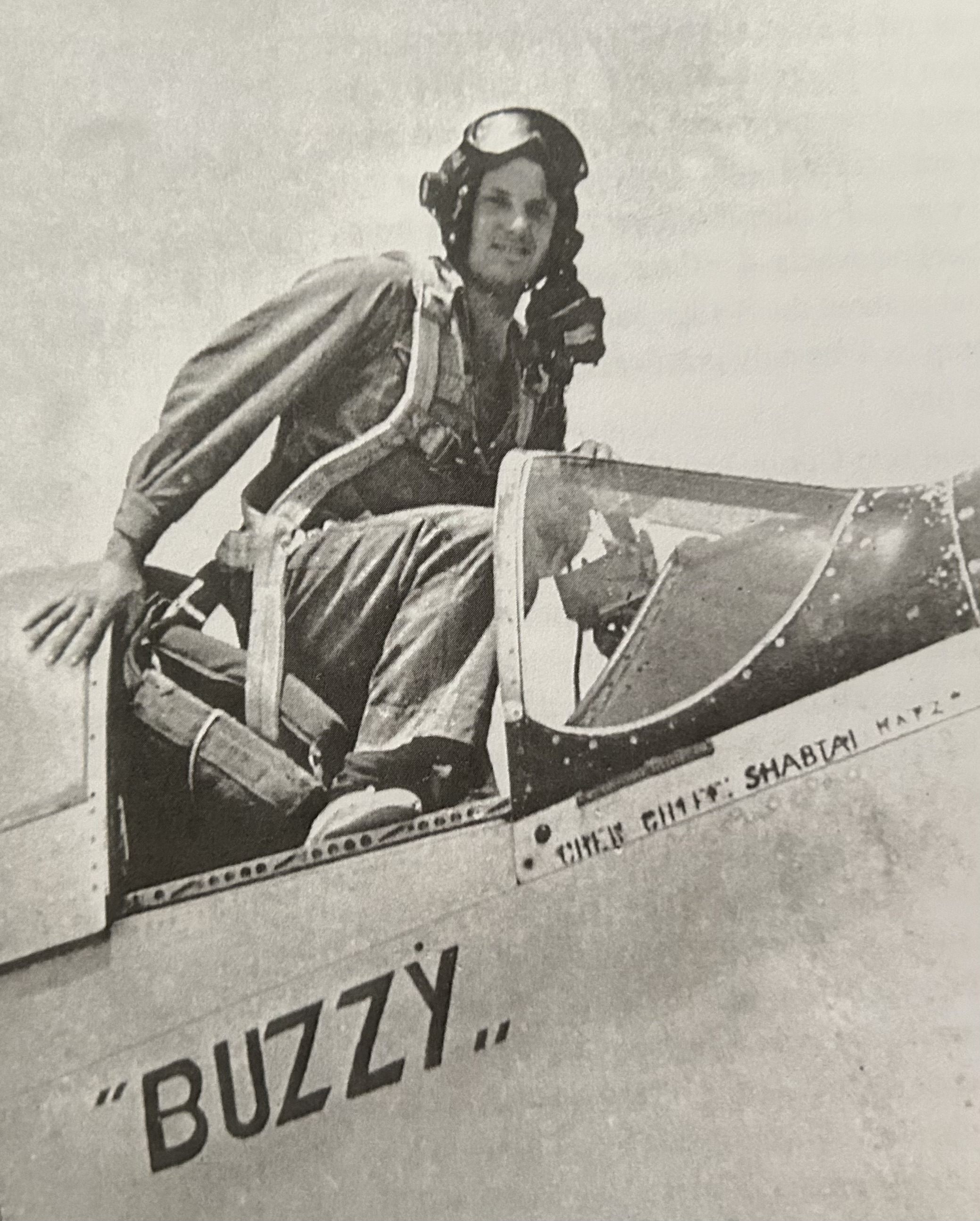
D.190 had a “TINK” text on its right side, and a “ZULU” on its left. D.191 had a “Judy” and “GEDY of its left side, and a “BUZZY” on its right. Before they received numbering and were “completed”, the artist who notoriously made the chalk marking on the IAF roundel on a S-199 (which is actually found on a skin ingame) also made another marking on one of the P-51s , which didn’t last long and was gone by the time the identification markings were applied. Another chalk design was on D.191 and was a Donald Duck design, which lasted some time. This faded away or was removed by the time the aircraft received larger lettering.
Chalk Donald Duck drawing and writing on D.191’s IAF roundel, and the chalk love note previously on one of the mustangs.

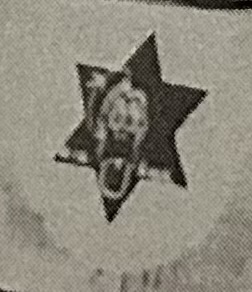
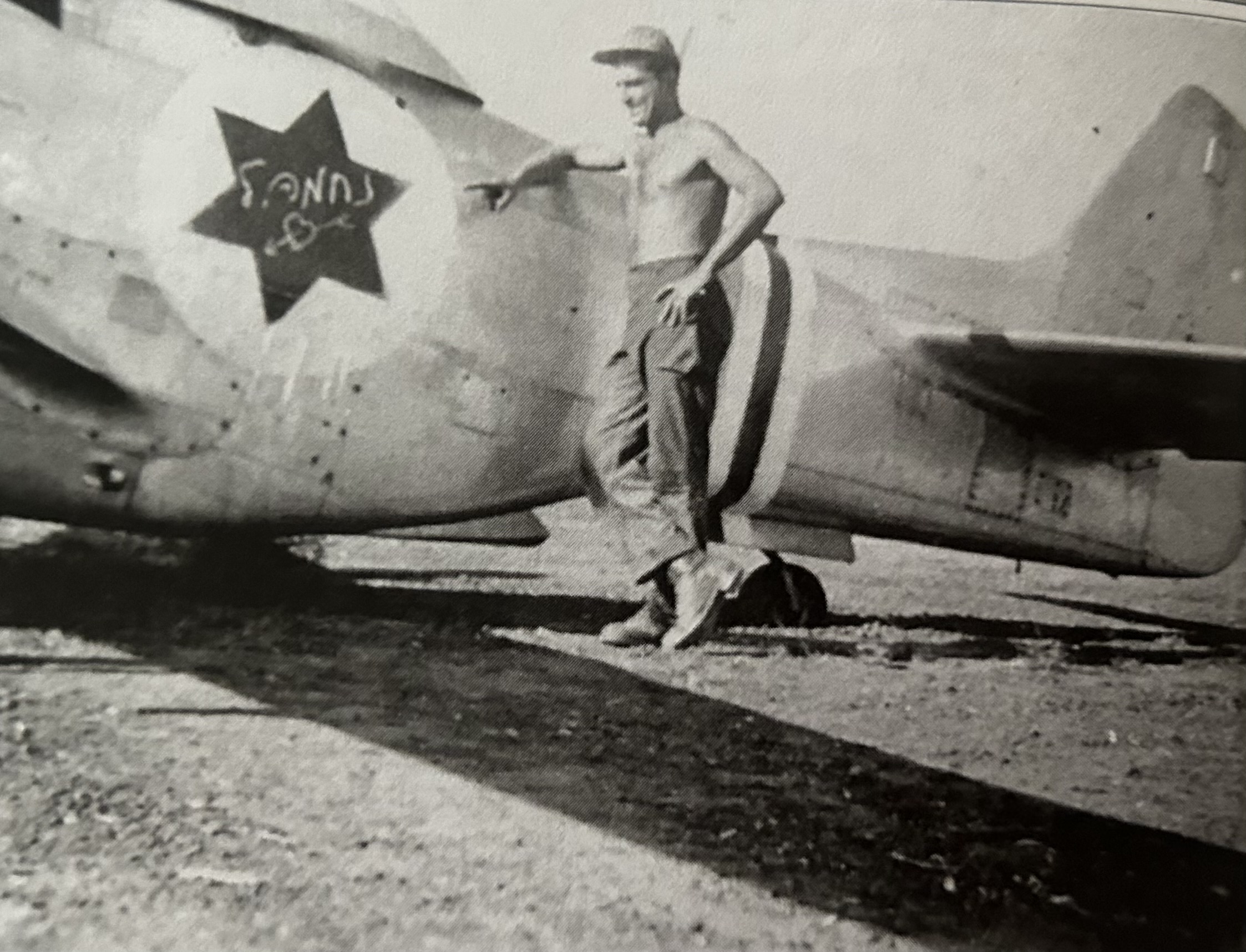
The first known combat mission took place on October 18th with D.190 for visual aerial reconnaissance. Despite there being a truce in effect from July 18th, small skirmishes continued and the truce was somewhat ignored. During this time, these aircraft encountered Spitfires and Sea Furys, and Mosquitos, but the first dogfights and kills would come later.
D.191’s different text sizes. When it got larger text its spinner was now red and its rudder received stripes.
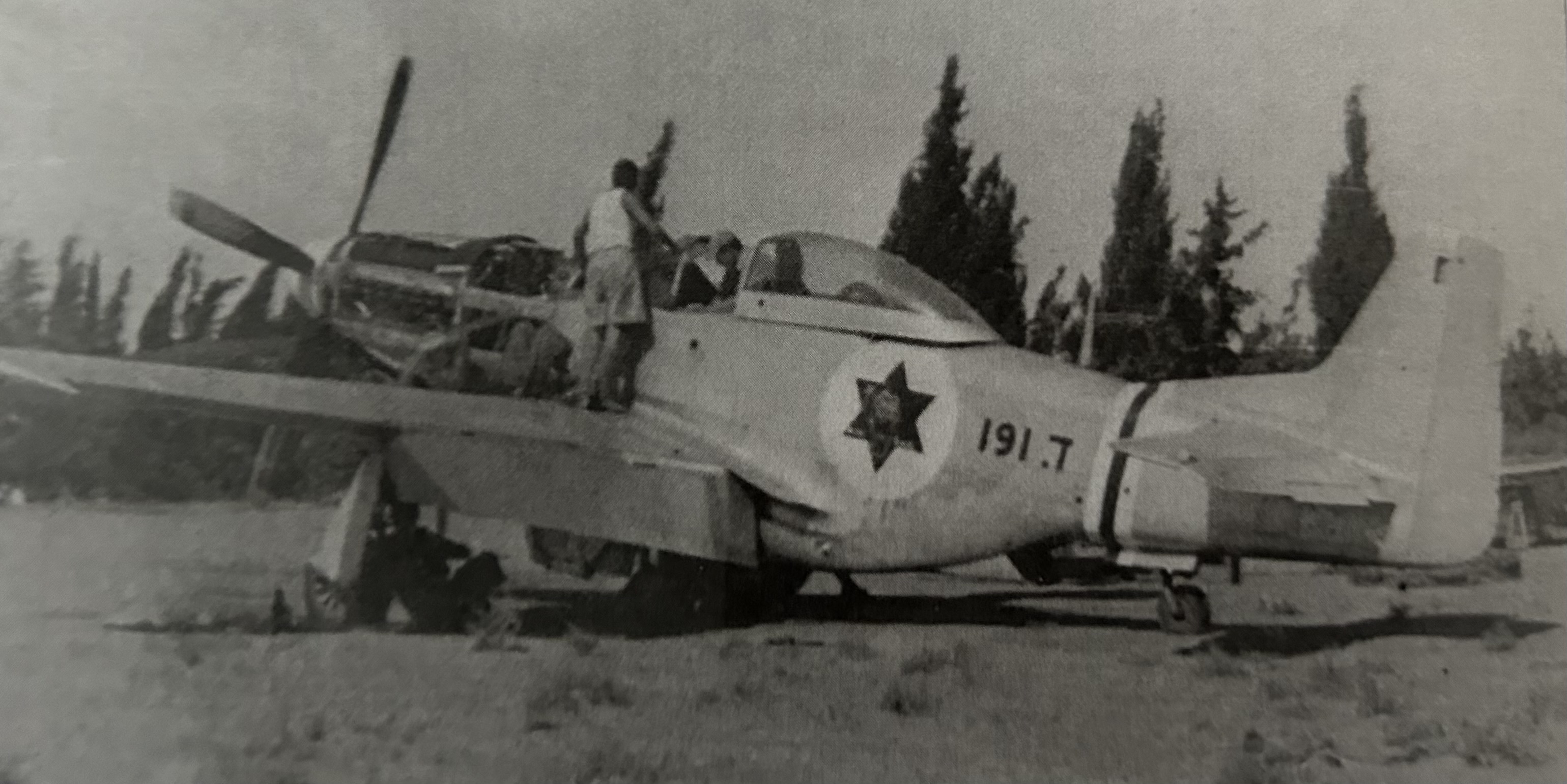
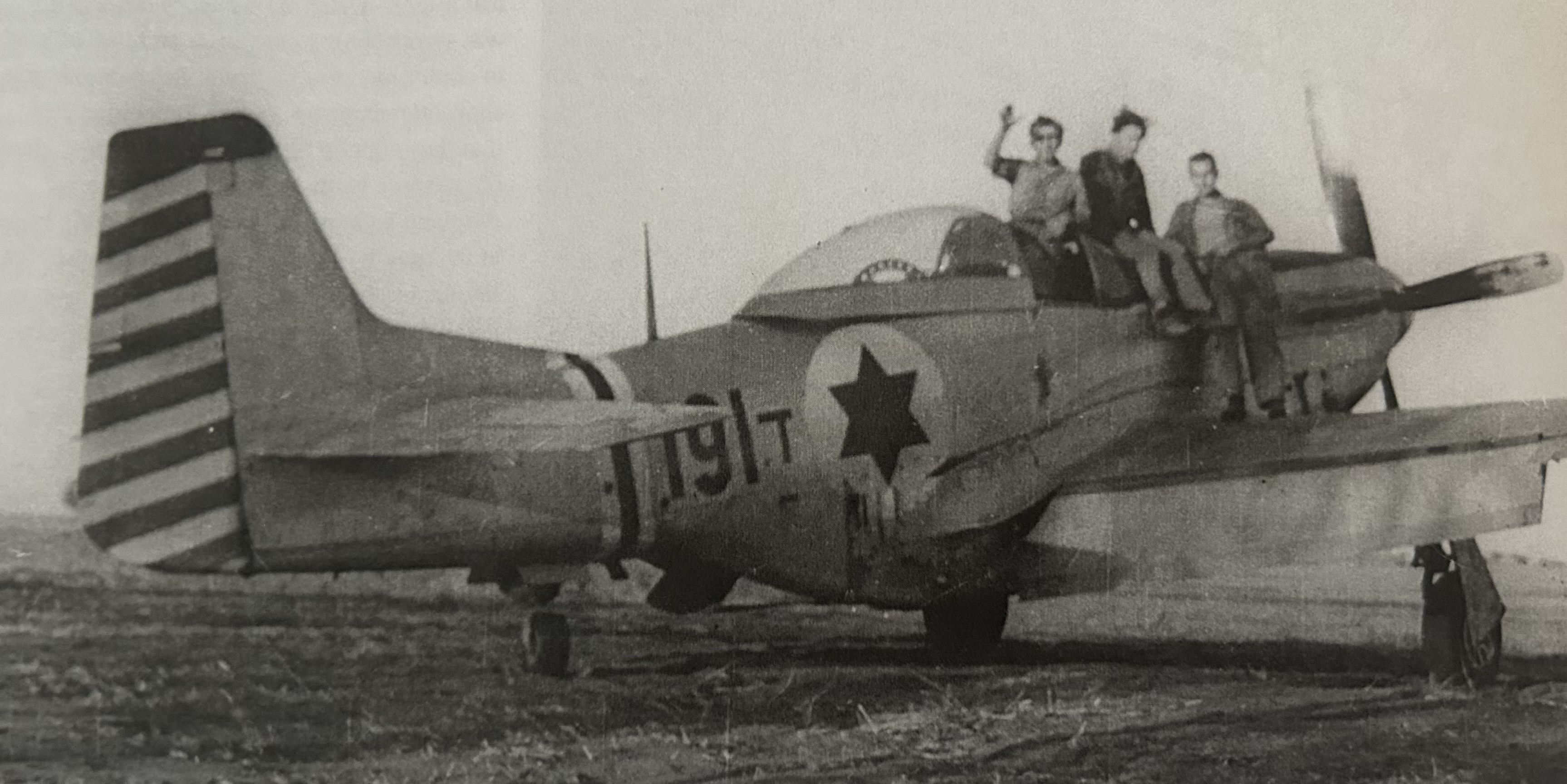
On November 4th both mustangs shot down an Egyptian C-47 as it began its landing approach, causing it to retract its gear and continue the final approach for a belly landing, technically downing their first aircraft. On November 20th, D.190 shot down a reconnaissance RAF DH.98 Mosquito PR Mk.34 of No.13 Squadron where the pilot died and the aircraft crashed into the sea, marking the first fighter on fighter kill. Amazingly the Mosquito was shot down with only 45 rounds of 50-caliber ammunition, as upon firing the guns jammed due to faulty ammo and mechanical issues.
The “TINK” text is fading on D.190 and the Chalk Donald Duck on D.191 has vanished.
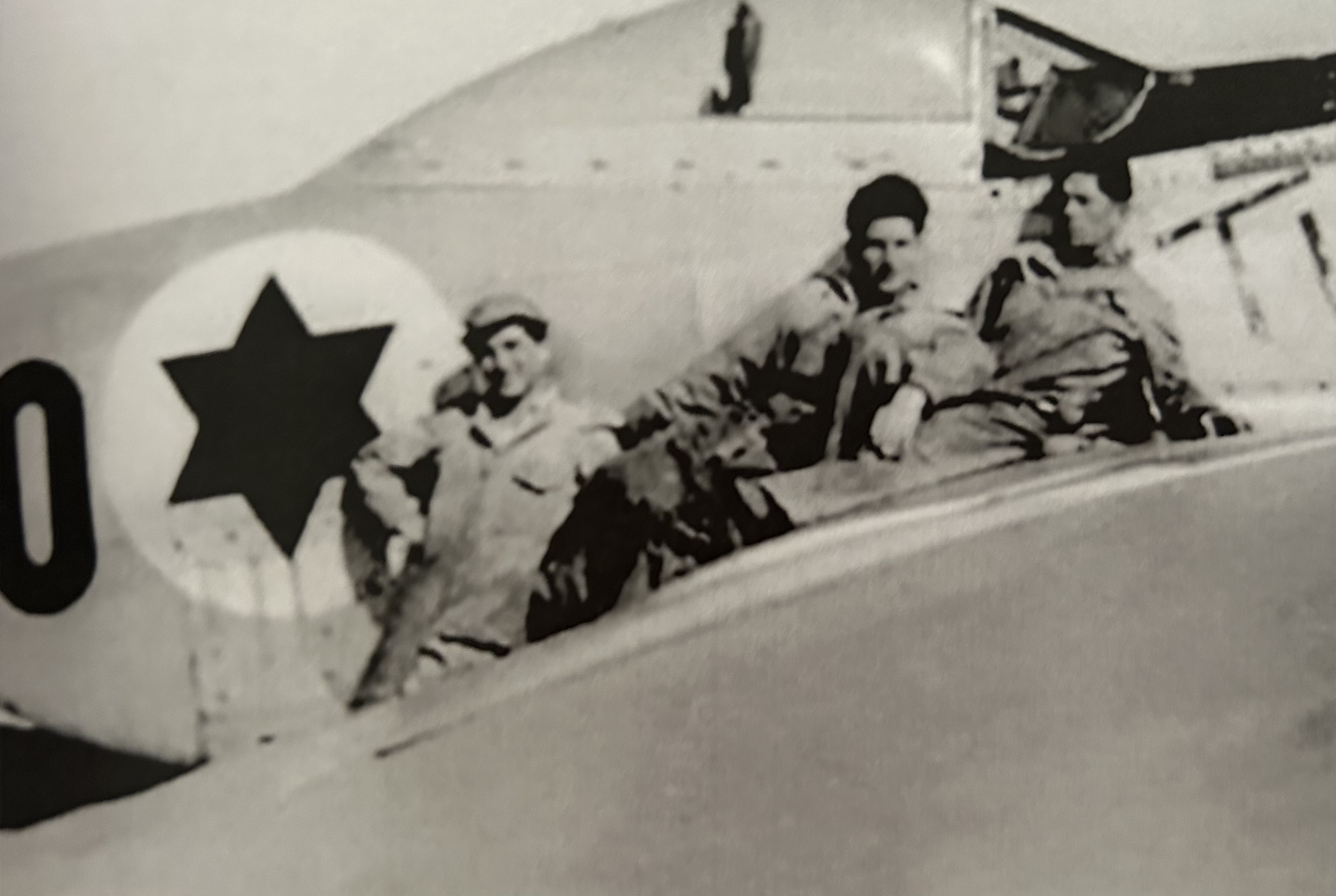
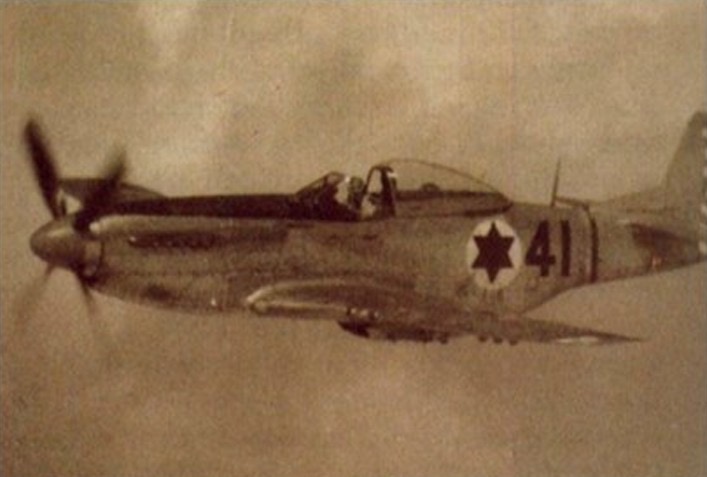
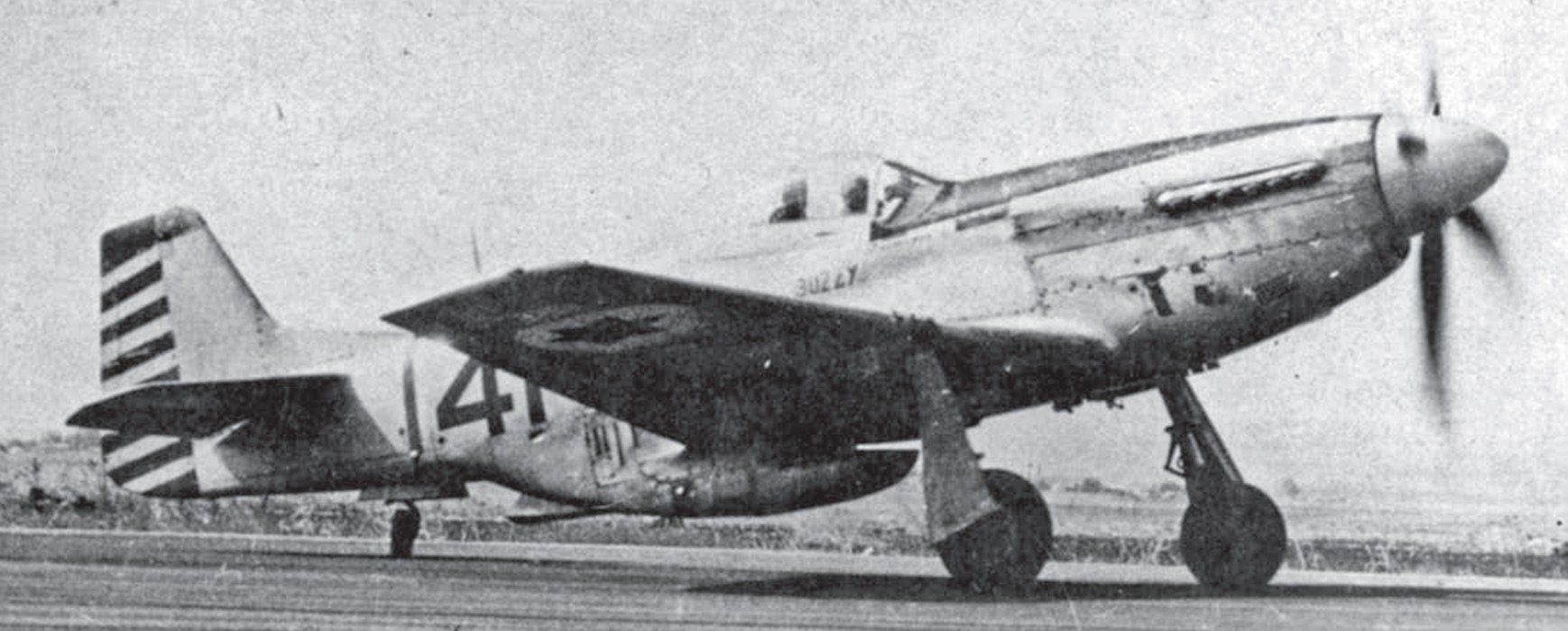
Sometime in December they were officially re-designated and referred to with new IAF numbers: D.190 being Mustang No.2301, and D.191 being Mustang 2302 respectively. It was likely around this time that they sported two new identification markings as well that didn’t quite line up with their new radio signs: 2301 was painted as No.40, and 2302 was painted as No.41. On January 5th of the new year, 2301 saw some action. This time alongside Boris Senior in a spitfire they engaged 3 Macchi C.205Vs that were preparing to dive bomb. A dogfight ensued in which 1 enemy fighter left for home, the second took hits and was presumed downed, with the 3rd taking hits and observed having crashed.
One of the mustangs in a hangar, undergoing maintenance or repairs.
On January 6th, 2302 used 6 rockets for the first time (after having them installed either that day or the day prior) and deployed them against a lone truck with no apparent results from 5 fired rockets. It then strafed it killing 2 men, and later blew up another truck on the same road. On January 7th both mustangs spotted fighters while escorting Harvards but lost them. They then later spotted Macchi C.205Vs in which one was shot multiple times and reported to have gone down. A ceasefire went into effect later that day, and it actually held, bringing an end to the war with armistice being signed between multiples countries during the months to follow. In time to follow, the caps on the gun ports were removed, additional ordinance options became available and used, and the likely got standard US gunsights to replace the German ones.
Mustang D.191 became IAF No.2302 and Radio number No.41.
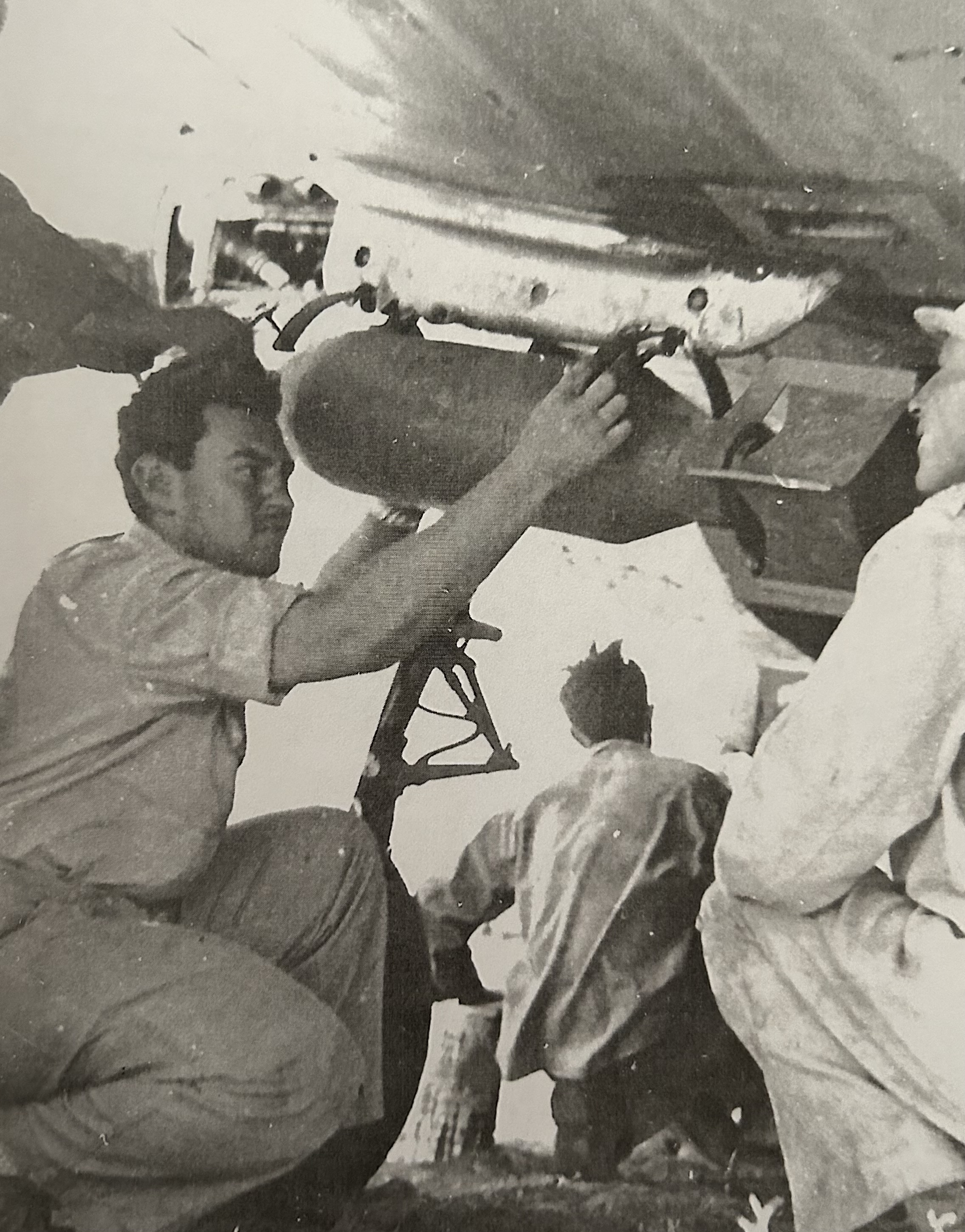
During the conflict these aircraft reportedly used “70lb” bombs, US made 100lb bombs, US made 150lb bombs, as well as up to 6 rockets (the “AR” rockets ingame). The were observed using 250lb and 500lb bombs after that, but I don’t know if they had access to them during the conflict. Although IAF mustangs never used 1000lb bombs, the IAF had them and used them on B-17s, so them being found on the Mustang ingame is a compatibility thing I’d assume, but again I don’t know if the IAF had the during the conflict. All 3 other mustangs acquired from Schwimmer went into IAF service in the time to follow the end of the conflict, entering similar configurations to the standards of the mustangs in service at their time of introduction.
D.191 with rockets, and 100lb bombs being loaded onto a mustang.
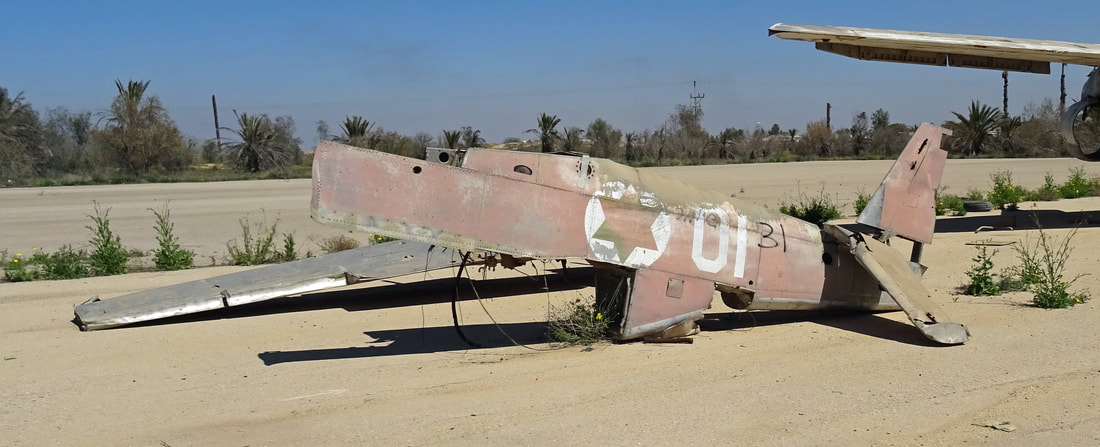
Both mustangs went on to serve with the IAF for some time with 2302 making it to April 5th of 1951, and 2301 surviving all the way to the end of the IAFs years with the mustangs. Mustang D.190, or No.2301 still exists to this day, the first and one of the last. However it didn’t fare all too well with time, and as of today only the tail remains which is in storage at the Israeli Air Force Museum to the day.
The sad fate of what remains of 01.
In Short:
These two P-51D examples in the early years of the IAF were not only rich with history, but uniquely differ from existing P-51D-20 aircraft due to modification made to make them serviceable for a desperate Air Force. They had a 33% reduction in firepower compared to other P-51Ds, bringing them in line with earlier P-51 variants found ingame. They uniquely used an inferior German Revi 16B Reflector Gunsight, and its ordinance capabilities were much more limited than normal P-51Ds.
Depending on how gaijin adds it, it could act as a much inferior P-51D in the tree being called a “1948”/“1949” or “Early” variant, allowing it to sit at a BR just below it with other earlier mustang variants ingame. The following could allow for this:
- It has 4 guns, not 6.
- It used low quality ammunition during the war, as it was only what was available. Gaijin could give this aircraft “earlier” belts that are less effective.
- It could be without a G-suit, IAF pilots didn’t have access to this luxury until the 1950s when they tested the Meteor’s G-suit in the P-51s.
- It’s heavier than the P-51C series, but has the same engine, wingspan, and fuel capacity. It should have the worse P-51D WEP performance option present.
- It would handle compressing and high speed control better than the P-51C series.
- It has worse ground ordinance options than the P-51D series.
- It has a worse cockpit gunsight (Really only matters for sim).
Specifications:
(Click to Show)

Operating Country: Israel
Type: Single-Seat Fighter Aircraft
Crew: 1 Pilot
Wingspan: 37.04ft.
Length: 32ft 3in.
Height: 13.67ft.
Powerplant: Packard (Rolls Royce) V-1650-7.
Power Outputs: 1,490hp on max throttle, and 1,630hp on War Engine Power
Climb Rate: 18m/s
Max speed: 698km/h
Service Ceiling: ~41,900ft
Range: ~1,155mi (without drop tanks)
Empty Weight: 7,635lbs
Fully Loaded: 12,100lbs
Electronics and Systems:
(Click to Show)
- Radar: None (some P-51D variants received a rearward tail mounted AN/APS-13 radar that would light up a small light on the dash if it detected anything within 3km behind it, this is modeled on the IAF P-51D-20-NA and more but is non functional ingame. No IAF mustang ever seemingly had this.)
- Gunsight: German Revi 16B Reflector Gunsight.
Armament:
(Click to Show)
- 4x 12.7mm/.50 caliber M2 Browning Machine Guns. The 2 most outward guns have 270 rounds of ammunition each, while the 2 most inward guns have 400 rounds each. 1340 rounds of ammunition in total.
- Up to 2x US “70lb” Bombs.
- Up to 2x 100lb AN-M30A1 Bombs.
- Up to 2x US “150lb” Bombs.
- Up to 6x AR Rockets. (Only 6 rails were applied, 5-inch HVARs were not used at this time seemingly)
Sources:
(Click to Show)
“P-51 Mustang in Israeli Air Force Service 1948-1960” by Alex Yofe and Lawrence Nyveen, published December 15th, 2025. ISBN 10: 0977462730, ISBN-13: 978-0977462735.
https://www.jewishvirtuallibrary.org/north-american-p-51d-mustang
North American P-51 Mustang - Wikipedia
North American P-51D Mustang | Military Aviation Museum
Thank you for taking the time to read my forth and likely final Israeli Mustang suggestion! Special thanks to Yoyolast for going over and sharing information with me that helped make this suggestion possible! I hope y’all have a wonderfully blessed day and I’ll see ya in my next suggestion!