for a tank that has officially never existed its aphe should be nerfed. removing it from the game is a start but it will keep dominating its br alongside the l39za/art by users who grinded it, japans 6.0-8.0 is unmatched unless your team has a tank with heatfs to take out the ho-ri production or good enough of a shell/gun but even then by the time one is killed then they spawn in a l39 and destroy the enemy team. its gotten to a point where whichever side has japan in 7.0 br wins the game by a landslide at least in my personal experience. sure they have weak side armor but any knowledgable player in a ho ri would use the urban maps streets to always face the enemy.
1 Like
source for nerfing?
1 Like
if only there were official sources on the ho-ri type 5 cannon gaijin just made up numbers and called it a day
then prove why it should be worse than it currently is.
if youre saying its bad then maybe its just user error it has good mobility really good frontal armor and a very good gun and shell that basically one taps any american tank at its br and probably russian and german ones but i dont play those countries so idk
you’re claiming it should be nerfed then providing no evidence for it
theres no evidence of the ho ri ever existing so anything related to the thickness of its frontal armor or how its gun and shell performs is just completely unknown, it shouldnt have ever been added to the game in the first place but here we are
Womp womp
Notice that the gun is nerfed in game, actually the gun should have a semi-automatic reload like the Chi-Ri
19 Likes
900m/s but ingame it says 1000 m/s for velocity so yeah gaijin kinda did make up numbers and also it says 150mm of penetration at 1km when ingame it has 180-200
Would be hell of irony if Gaijin, when it comes to remove a vehicle, improve it after a few weeks or month. Aparently the germans were capable of making a turret mockup have the equivalent of 60 mm of steel armor—Flakpanzer 341 having its turret armor improvement was a joke in my opinion. I’m expecting some similar treatment for the Ho-Ri Production, if not the Ho-Ri Prototype as well.
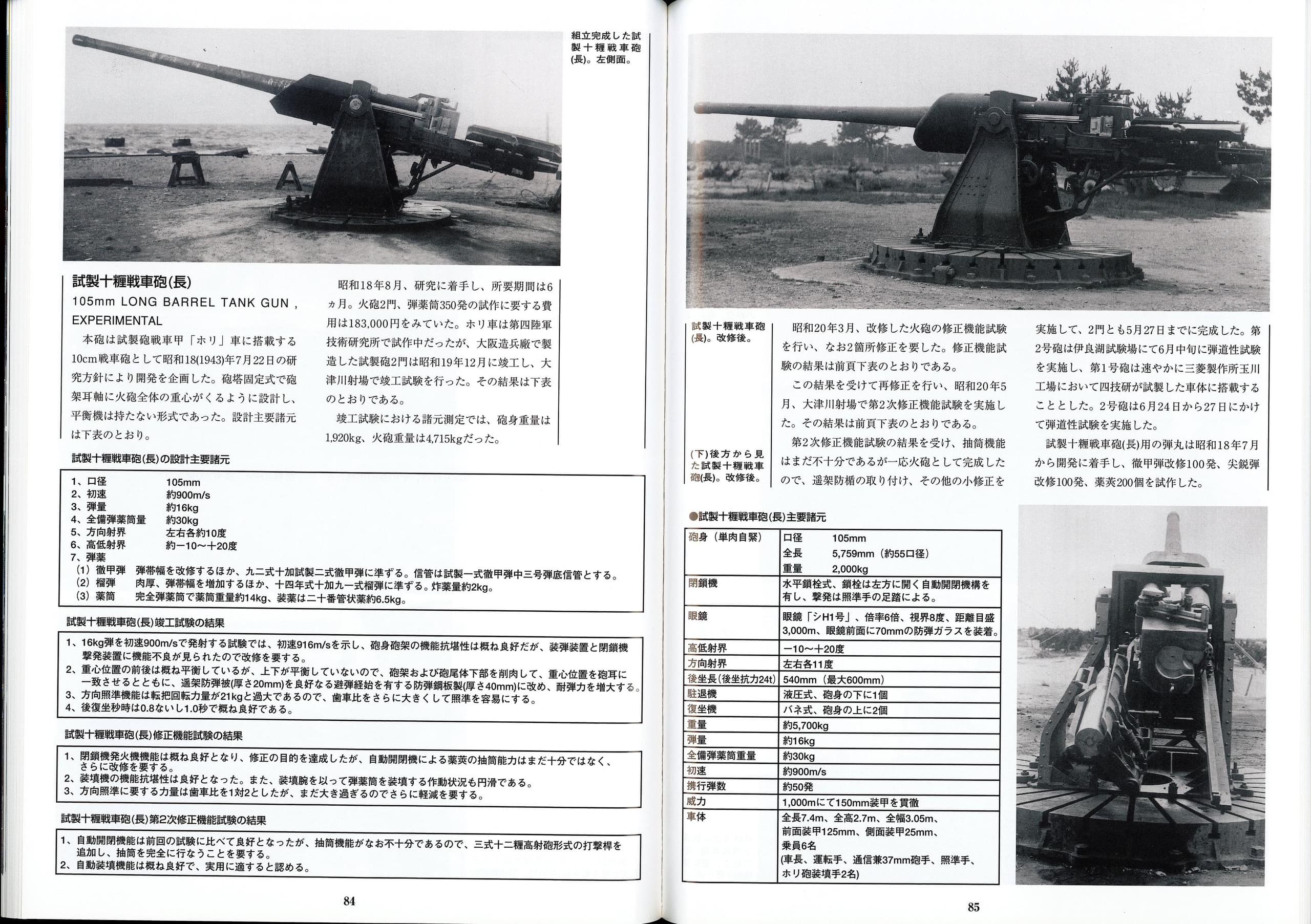
Translation :
Experimental 10cm Tank Gun (Long)
105mm LONG BARREL TANK GUN, EXPERIMENTAL
This gun was planned for development under the research policy of July 22, Showa 18 (1943), as the 10cm tank gun to be mounted on the experimental gun tank Type A “Ho-Ri.” It was of fixed-turret type, designed so that the center of gravity of the entire gun assembly would rest on the trunnion of the gun mount, and it had no equilibrator mechanism. The main design specifications are shown in the table below.
Research began in August, Showa 18, with a planned duration of 6 months. The budget anticipated for the trial production of 2 guns and 350 rounds of ammunition was 183,000 yen. The Ho-Ri vehicle was under trial production at the 4th Army Technical Research Institute, while the two experimental guns were manufactured at the Osaka Arsenal, completed in December, Showa 19, and underwent completion (acceptance) trials at the Otsu River firing range. The results are shown in the tables below.
In the measurements taken during the completion trial, the barrel weight was 1,920 kg and the total gun weight was 4,715 kg.
Main Design Specifications of the Experimental 10cm Tank Gun (Long)
| Item | Specification |
|---|---|
| 1. Caliber | 105mm |
| 2. Muzzle velocity | approx. 900 m/s |
| 3. Shell weight | 16 kg |
| 4. Complete round weight | approx. 30 kg |
| 5. Traverse | approx. 10° each side |
| 6. Elevation | approx. −10° to +20° |
| 7. Ammunition | |
| (1) Armor-piercing shell | Based on the Type 2 experimental armor-piercing shell for the Type 92 10cm gun, with a modified driving band width. Fuze: base fuze No. 3 for the Type 1 armor-piercing shell. |
| (2) High-explosive shell | Based on the Type 14/Type 9 10cm high-explosive shell, with increased wall thickness and driving band width. Explosive charge approx. 2 kg. |
| (3) Cartridge case | Fixed (complete round) ammunition; case weight approx. 14 kg; propellant charge: approx. 6.5 kg of 20-mm tubular powder. |
Results of the Completion Trial of the Experimental 10cm Tank Gun (Long)
- In firing tests of the 16 kg shell at a muzzle velocity of 900 m/s, an actual velocity of 916 m/s was recorded. The functional durability of the barrel and mount was generally good, but malfunctions were observed in the loading mechanism and breech firing mechanism, requiring modification.
- The front-to-rear balance of the center of gravity was roughly even, but the up-down balance was not, so the lower part of the mount and breech ring were to be machined down to bring the center of gravity in line with the trunnion. Additionally, the gun shield (20 mm thick) was to be changed to armor plate (40 mm thick) with better ballistic deflection characteristics, to increase resistance to enemy fire.
- Because the traversing handwheel required an excessive turning force of 21 kg, the gear ratio was to be further increased to ease aiming.
- Recoil time was 0.8–1.0 seconds, which was considered generally satisfactory.
Results of the Functional Modification Trial of the Experimental 10cm Tank Gun (Long)
- The breech firing mechanism became generally satisfactory, achieving the purpose of the modification, but the case-extraction capability of the automatic opening/closing mechanism was still insufficient and required further modification.
- The durability of the loading (rammer) mechanism was good, and the operation of loading the round using the loading arm was also smooth.
- The gear ratio for traverse aiming was changed to 1:2, but this was still considered too heavy and required further reduction.
Results of the Second Functional Modification Trial of the Experimental 10cm Tank Gun (Long)
- The automatic opening/closing function improved compared with the previous trial, but the case-extraction mechanism was still insufficient, so a striking lever of the type used on the Type 3 12cm AA gun was to be added to ensure complete extraction.
- The automatic loading function was generally good and judged suitable for practical use.
(Caption, top of page 84): The fully assembled Experimental 10cm Tank Gun (Long). Left side view.
Page 85
(Caption): Experimental 10cm Tank Gun (Long), after modification.
(Caption, lower image): Rear view of the Experimental 10cm Tank Gun (Long), after modification.
In March, Showa 20 (1945), a functional trial of the modified gun was conducted, and two more correction points were noted. The results of this functional modification trial are shown in the table on the previous page.
Following this, a further round of modifications was carried out, and in May, Showa 20, a second functional modification trial was conducted at the Otsu River firing range. The results are shown in the table on the previous page.
Based on the results of the second functional modification trial, the case-extraction function was still not fully adequate, but the gun was judged essentially complete as a weapon. Accordingly, minor corrections were carried out, including fitting of the mantlet/shield mount and other small items, and both guns were completed by May 27. Gun No. 2 conducted ballistic trials at the Iraiko firing range in mid-June, while Gun No. 1 was promptly sent to Mitsubishi’s Tamagawa Plant for installation on the vehicle hull that had been trial-produced by the 4th Army Technical Research Institute. Gun No. 2 underwent ballistic trials from June 24 to 27.
Development of ammunition for the Experimental 10cm Tank Gun (Long) began in July, Showa 18: 100 rounds of modified armor-piercing shell and 200 cartridge cases were trial-manufactured, along with 100 rounds of pointed (sharp-nosed) shell (modified).
Main Specifications of the Experimental 10cm Tank Gun (Long)
| Item | Specification |
|---|---|
| Barrel (single-layer, autofrettaged) | Caliber: 105mm |
| Overall length: 5,759 mm (approx. 55 calibers) | |
| Weight: 2,000 kg | |
| Breech mechanism | Horizontal sliding-wedge type; the breech block opens to the left via an automatic opening/closing mechanism. Firing is by the gunner’s foot pedal. |
| Sight | Sight “Shi-H1”; magnification ×6; field of view 8°; range scale to 3,000 m; a 70 mm bulletproof glass panel fitted in front of the sight. |
| Elevation | −10° to +20° |
| Traverse | 11° each side |
| Recoil length (with recoil resistance of 24t) | 540 mm (max. 600 mm) |
| Recuperator (recoil brake) | Hydraulic; one unit, beneath the barrel |
| Counter-recoil mechanism | Spring type; two units, above the barrel |
| Weight | approx. 5,700 kg |
| Shell weight | approx. 16 kg |
| Complete round weight | approx. 30 kg |
| Muzzle velocity | approx. 900 m/s |
| Ammunition carried | approx. 50 rounds |
| Penetration | Penetrates 150 mm of armor at 1,000 m |
| Hull (vehicle) | Overall length 7.4 m; overall height 2.7 m; overall width 3.05 m; |
| frontal armor 125 mm; side armor 25 mm; | |
| crew: 6 | |
| (commander, driver, radio operator/37mm gunner, gunner, and two Ho-Ri gun loaders) |
7 Likes
159mm at 1500m in-game;
Here, it says that a full penetration have been done at 1500m. It matches.
As for the pentration value, it is not ‘made up’ but is calculated from the componement, weights, amo type, …
Based on avaible data, we can see that most things were based on the type 92.
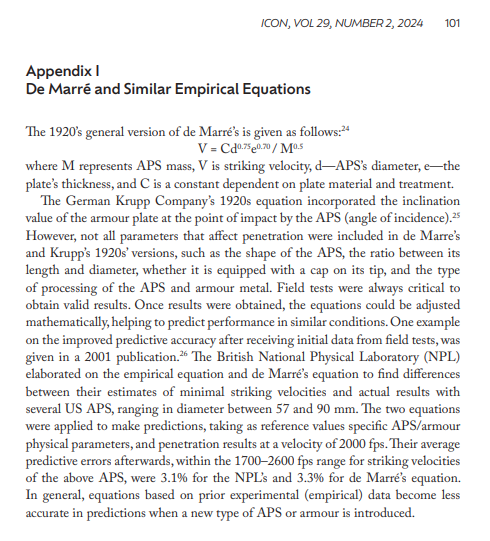
ICON: Journal of the International Committee for the History of Technology 29, no 2 (2024): 88–108
by Yoel Bergman, Tel Aviv University
Not a joke lol.
4 Likes
really it should be structural steel armour. or wood.
1 Like
The main argument used is “hurr durr L-39ZA/ART” which has no direct correlation to the balancing of Ho-Ri Prod, and somehow the vehicle – Ho-Ri Prod – was at that BR for years now but became problem now because of the broken plane (which is moving up in BR anyway, not to 8.0 tho where it should be instead).
Another half of the argument is thing being paper vehicle to begin with. That’s true. But values are not exactly right not because they are made-up/fake but because there are 2 guns: the 105mm Type 5 (found in Prod version), and the 105 mm Experimental High Velocity (found in Prot version), and the 900 m/s value is that cannon of Ho-Ri Prot, which litteraly uses the gun in question. Idk where the 1000 m/s value comes from for Type 5 gun, but given the round is documented enough and is the same in both guns, there is no way to nerf it unless there are other sources or estimations based on other info.
1 Like
How ironic considering that the gun system of the Ho-Ri is the most real and documented item of the vehicle
2 Likes
The Ho-Ri Production’s gun is fictional, which is one of the reasons atop basically the entire tank being fictional, aside from its silhouette resembling the slanted mockup, being removed.
Gaijin just arbitrarily elongated the normal 10 cm gun to create the “105 mm Type 5 cannon” used by it. The 1,000 m/s velocity was the planned velocity for the actual gun, which only achieved 916 m/s in practice. There’s no nerfing the APHE aside from making the velocity realistic, but that’s why they’re being removed from availability.
The “105 mm Experimental High Velocity cannon” is accurate, though. There’s no changing that one.
1 Like
Which is modelled in the vehicle, just not used. That said, this poster(Not you, the original poster). Is a good example of: Unsure how to fight the Ho-Ri and decide that nerfing it so he can win is a better approach.
It has been mesured to be around 916m/s. This being said, it is refered as ‘around’ that, mainly because at the time (1944), there wasn’t any good technology to prove this. Since the very same document is refering to a 1500m shot after, we could think that they took the time with high speed camera and made a average speed on this distance. So I think that the speed at the end of the barrel is closer to 1000m/s than 900m/s.
Maybe in-game it is indeed better at longer range; the game uses a constant drag and not a quadratic formula (change with speed, which should be the one), shells usually loses a bit speed quicker.
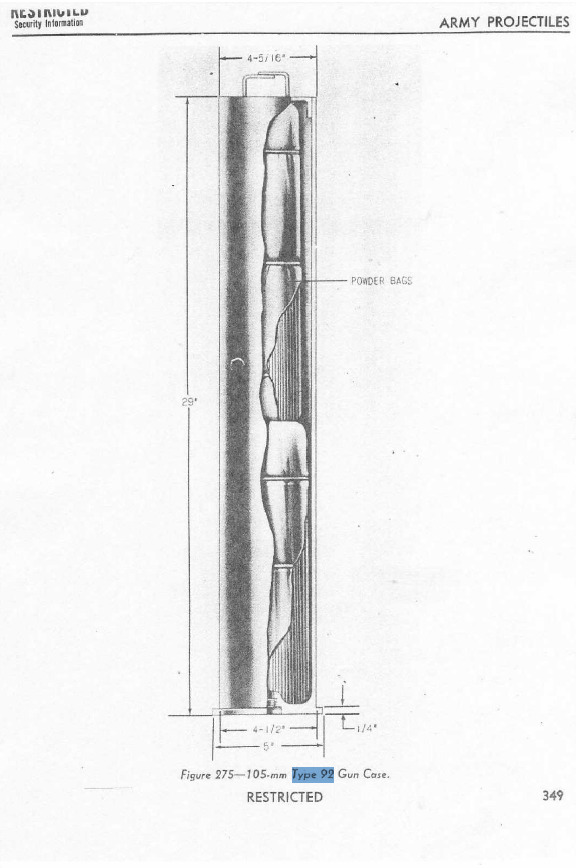
And they proably calculated it with the weight of the shell, and the ammount of TNT used in other 105mm canon, the Type 92 being the only high speed 105mm used by them; and with reports from the WW2 can estimate the energy given by the explosive charge.
here it is (they probably have other sources)
2 Likes
this tank should not even be in war thunder
1 Like
In my opinion it deserve to be there as much as the Ostwind II and Zestorer.