these information i provide could be wrong and 100% right this topic just talks about fw 190 d13 / d12 / d11 / d9 engines & performance % data !
if you have better feel free to share them !
does anyone have data for fw 190 D13 or info about engines ?
Fw 190 d13 should have jumo 213F-1 or am missing anything?
irl images of engines
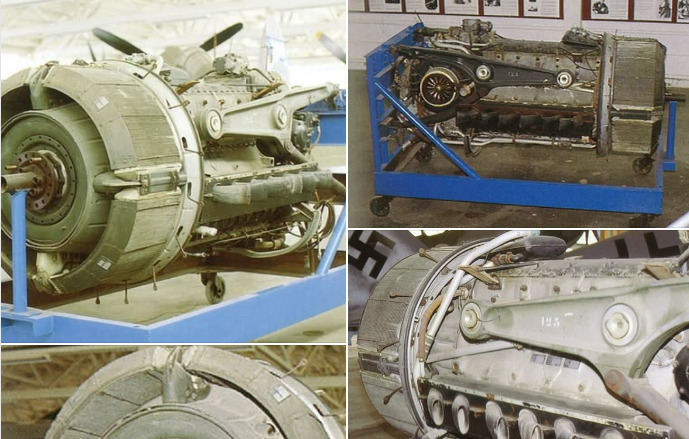
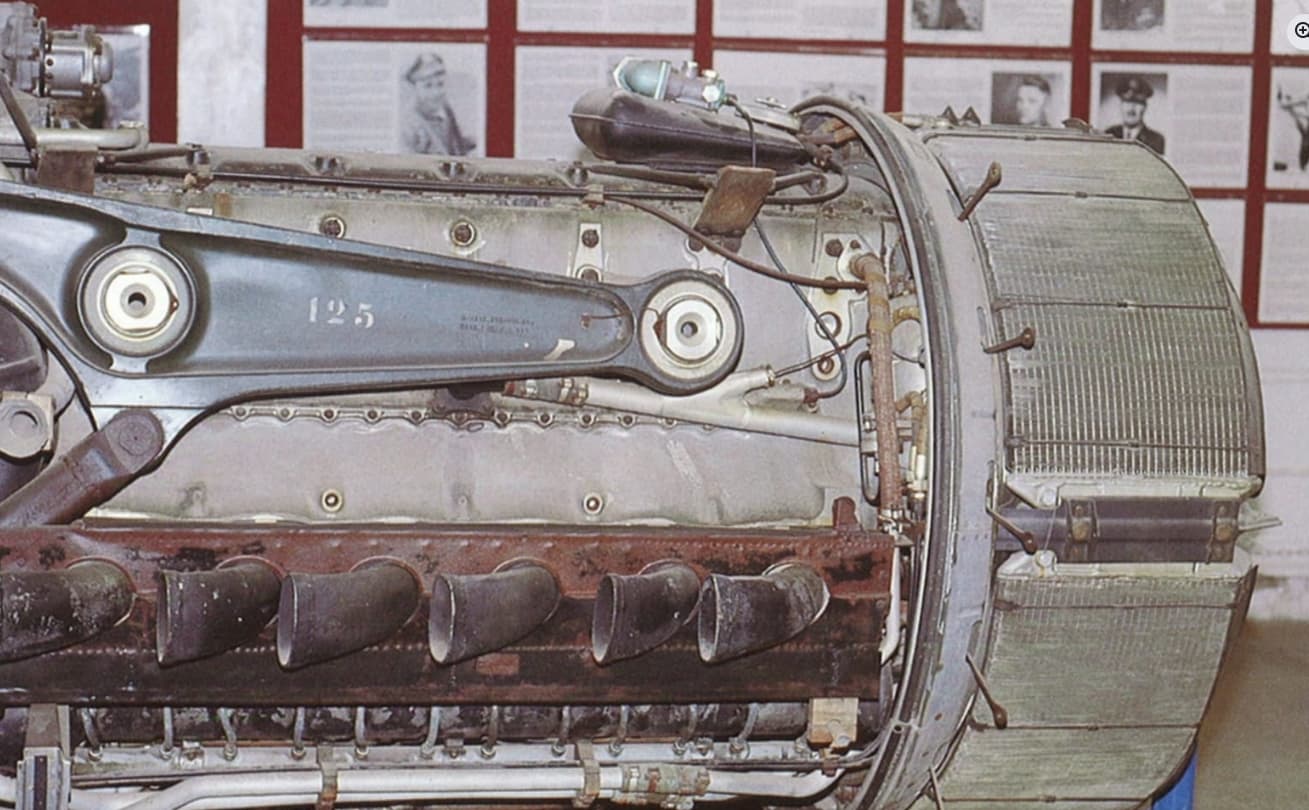
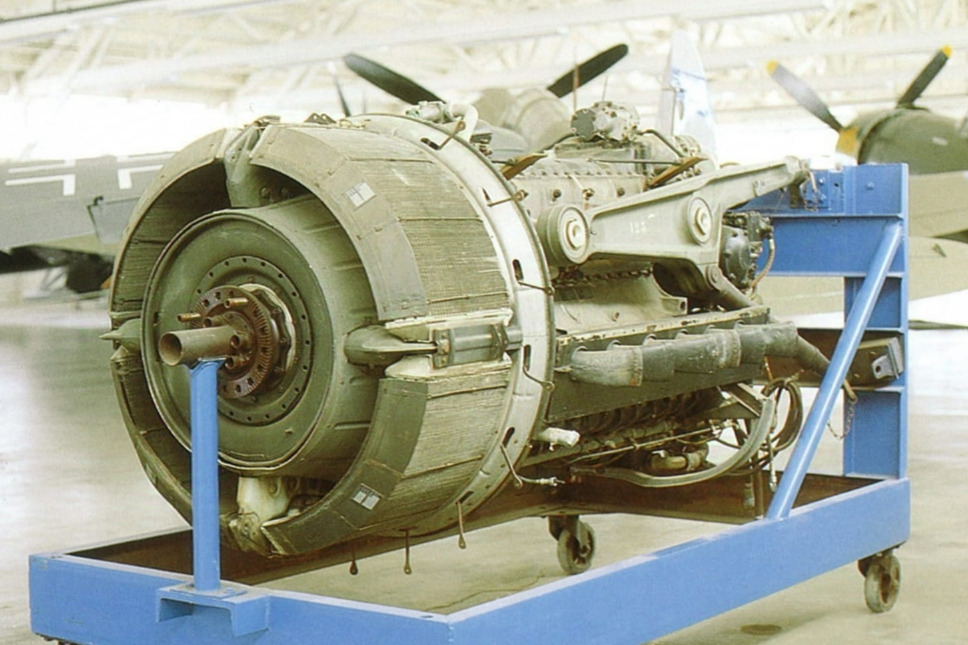
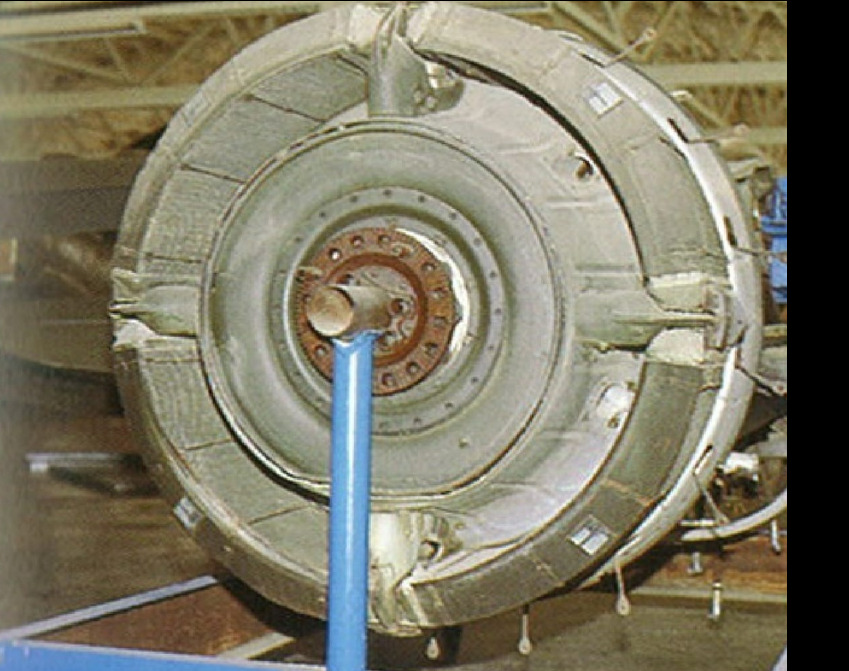
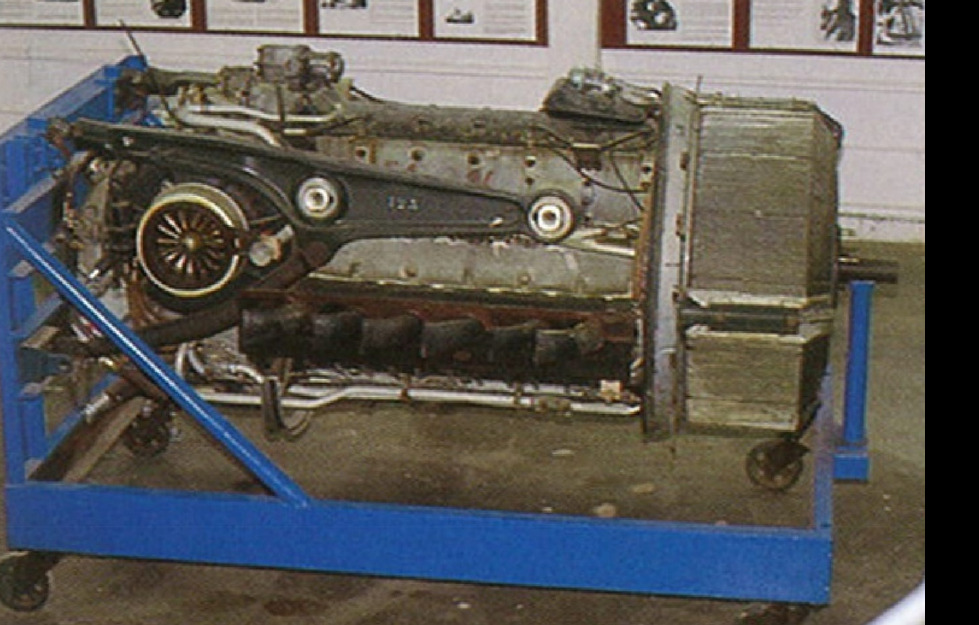
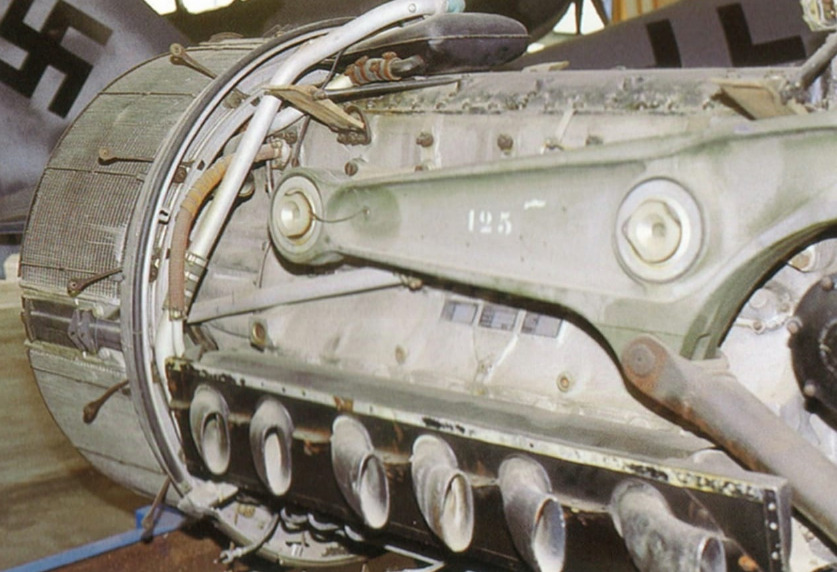
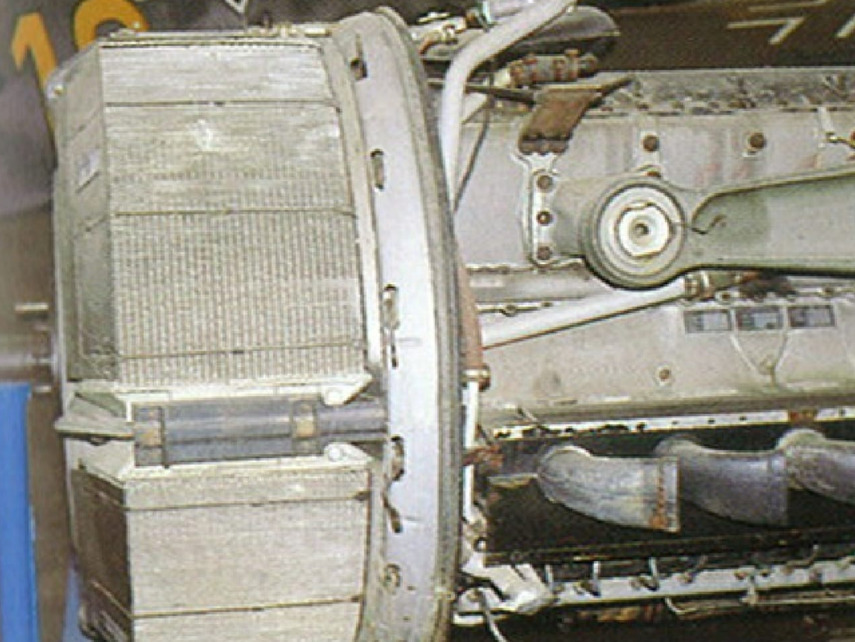
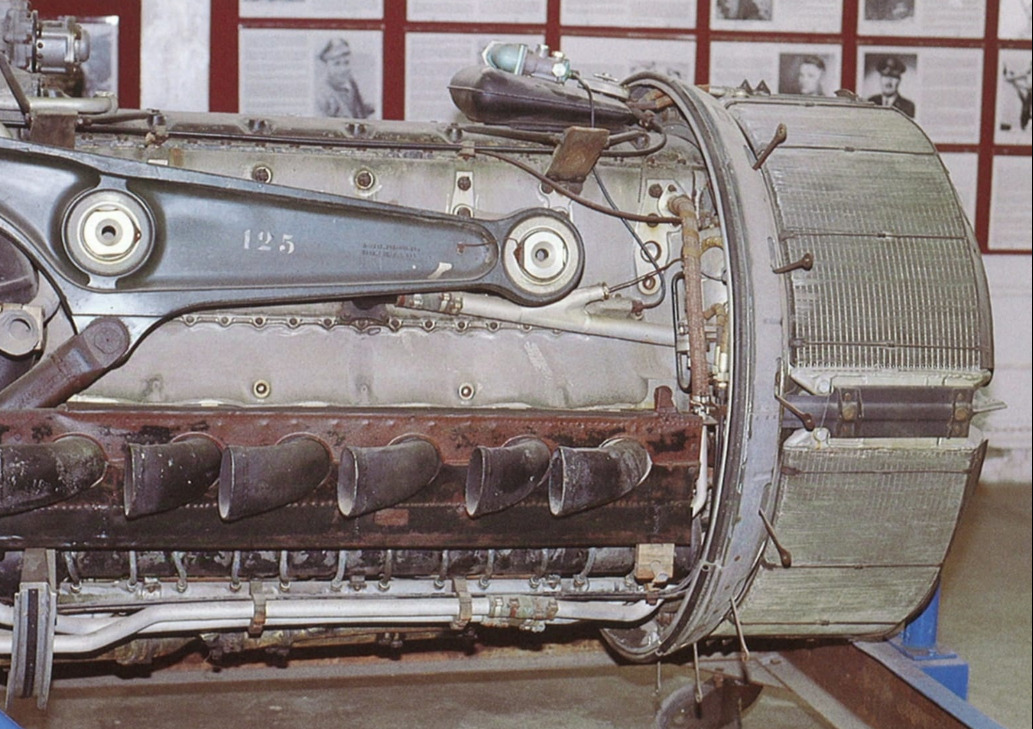
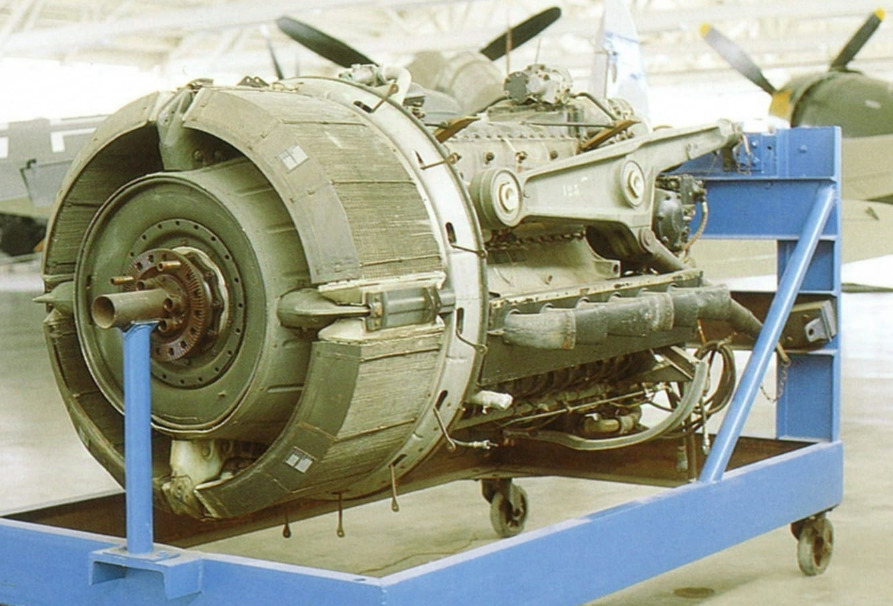
the radiator is the type used on the Ta152 and a few Ju388 but not the Fw190 D13 !!
.
that’s data for fw 190 and ta 152
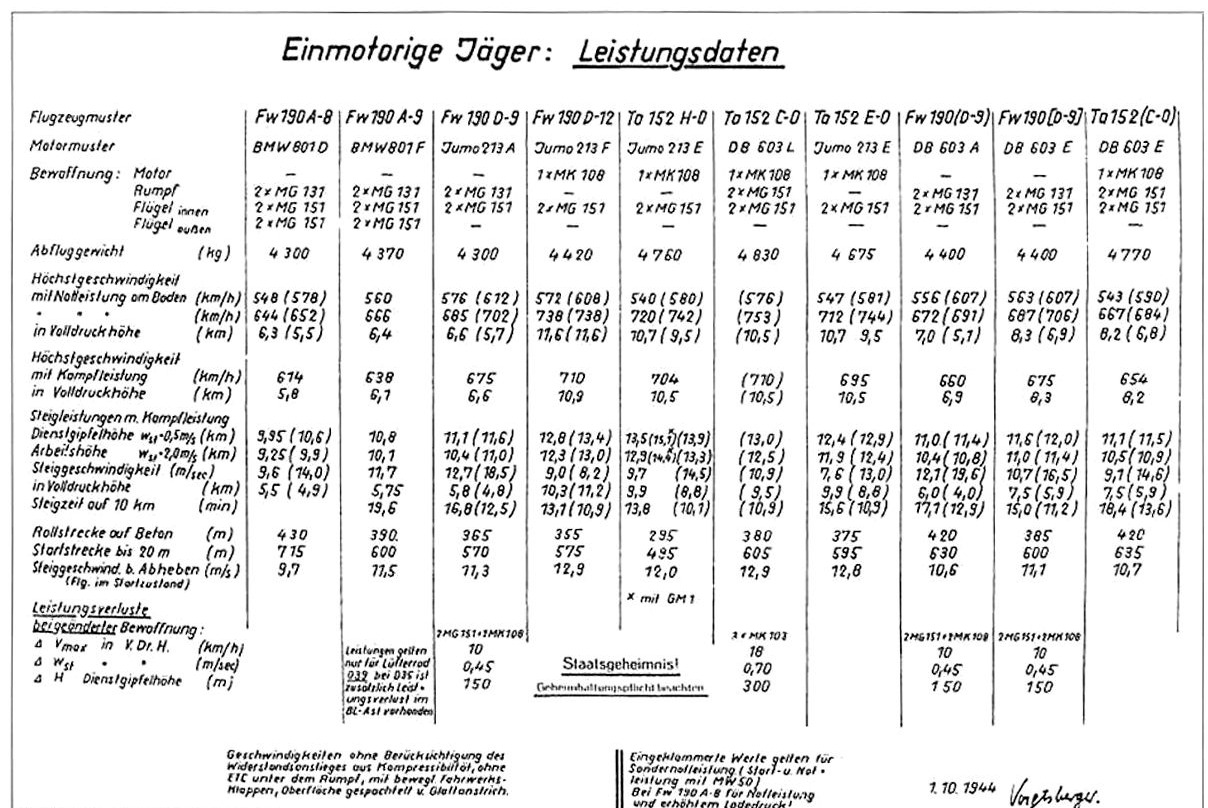
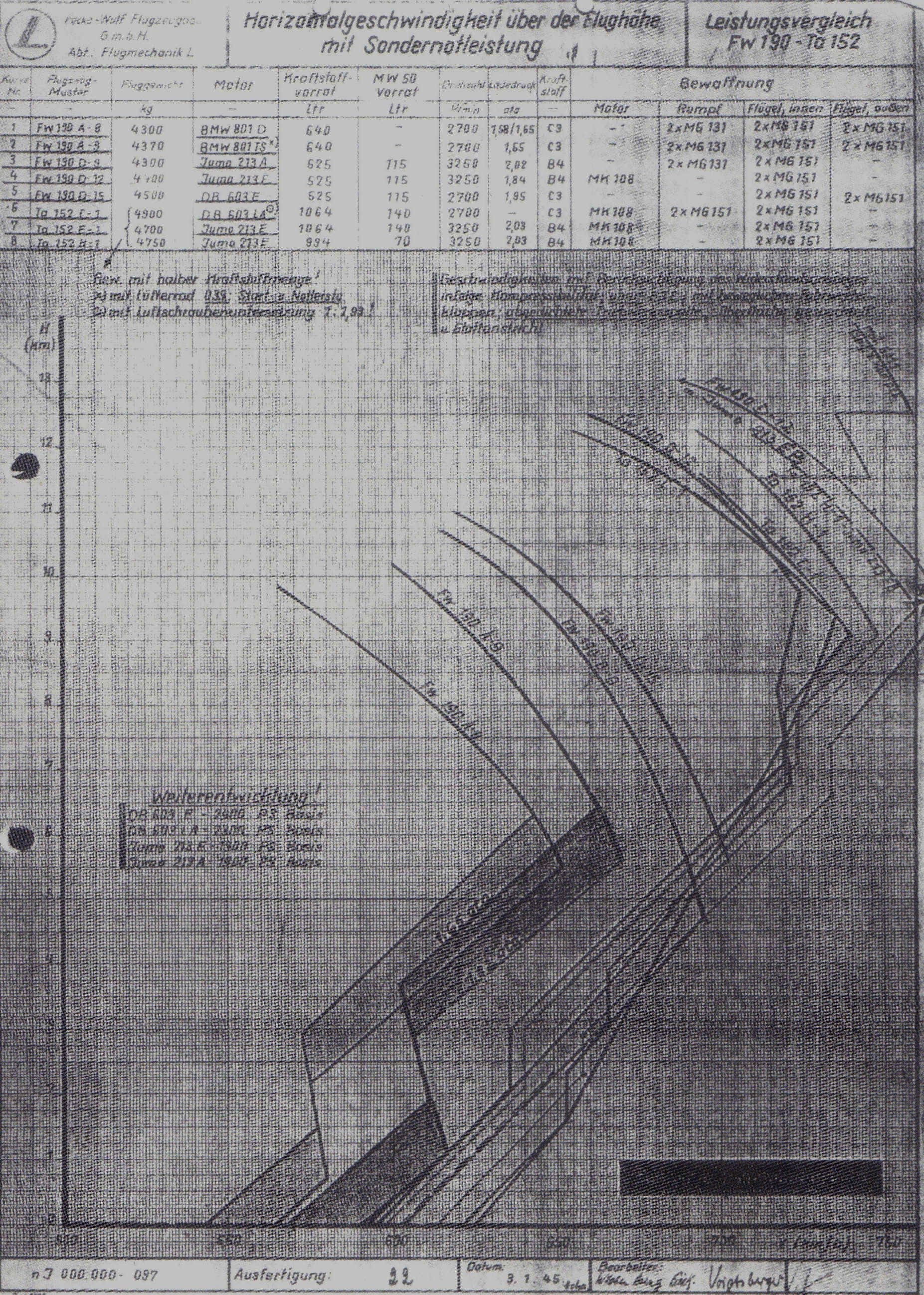
i took this data image from ProgramTheta !
fw 190 d13 in game
in game fw 190 d13
Max power (WEP): ~2,052 hp
Cruise power: ~1,730 hp
Boost system: MW 50 methanol-water injection
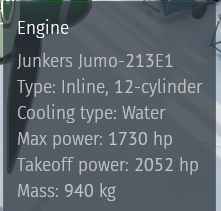
but the engine could reach more !?
~2,050–2,250 hp with MW 50 boost
if these extra hp get added will help the plane a little bit in dog fights !
am trying to find books with data about the fw 190 d13 engines good source to bug report it
sources:
Jerry Crandall – Yellow 10: Story of the Ultra‑Rare Fw 190 D‑13
Jerry Crandall – Focke Wulf Fw 190 Dora D‑9/D‑11/D‑13
Stephan Draminski – Focke‑Wulf Fw 190 D: D‑9/D‑11/D‑13/D‑15 Models (Topdrawings #26)
i found these info
 that’s fw 190 d9
https://ww2aircraft.net/forum/attachments/fw-190d-9-performance-pdf.619382/
WWII Fighter Performance
WWII Fighter Performance
First of all, this topic has been one of the most heated debates since it was first discussed during WWII. The data presented is based on continuing research.
The complex structure of aircraft and the manufacturing process, whether during a war time environment or not, makes each example somewhat unique, if not structurally but also from a performance standpoint due to structure finish, alignment, control surface and power plant rigging. Most aircraft manufacturers will only guarantee their published performance numbers within around 2 to 6 percent from one copy to the next even for modern aircraft. Atmospheric conditions, aircraft weight, field maintenance / rigging and operational abuse are also factors that need to taken into consideration.
The source of information can be more or less subjective than others and some information can be misrepresented as the numbers for the “type” as a whole. An example would be “P-51” without a reference to which sub-type of either “A”, “B”, “C” etc. and what external or internal variations or modifications existed on the particular aircraft being presented. Performance tests conducted by manufacturers, allied and well as axis, frequently are based on an aircraft that has been prepared for testing by smoothing the surface of the aircraft by various means which may include filling, sanding and polishing as well as properly rigging all flight controls and systems and these tests are conducted, typically by experianced test pilots. Also, the handling qualities and actual turn radius’s are rarely measured but are compared, one type against another, by pilots of varying ability and skill.
With this in mind W.W.II aircraft data, for ALL nationalities, should be taken as general guidelines and not absolutes. One aircraft will always be better or worse than the next, even of the exact same type, and this is verified from reading commentary of both combat and test pilots, of verying ability and experiance with these types of aircraft
If anyone has any additional information or data that you would like share or add to this page, or if you see any errors, please let me know.
The D-9’s that the U.S.A. and England had in it’s possession were reportedly equipped with additional boosting systems (MW-50, etc.) but detailed performance analysis has eluded me from these sources. Interestingly, the D-13 that the US had in their possession had MW-50 and GM-1. I do not know is the U.S.A. did any flight tests with the D-13 but flights of some extant, with at least 3 or 4 Fw190D-9’s, has been refered to in various literature and documents. The flight testing done by the British included the use some of additional boosting systems and give a completely different view, compared to U.S.A. testing, of this fine aircraft.
The Fw190D-9
The following values are the most commonly used figures, for maximum speeds, in most publications from western sources and match captured manufacturers "Focke-wulf" test charts of a Fw190D-9 under Takeoff-Emergency power, using B4 / 87octane fuel, with a Jumo 213A-1 in May 1944. I suspect that the below figures are maximum speeds, with MW-50, of U.S.A. testing.
This gave the following speeds:
357 mph / 574 km/h (sea level)
397 mph / 639 km/h (10,830 ft / 3,300 m )
426 mph / 685 km/h (21,650 ft / 6,600 m )
397 mph / 639 km/h (32,800 ft / 10,000 m )
An early Dora with a stock Jumo 213A, without any modifications was not much of an improvement over the the Fw190A-8 except for somewhat better high altitude performance. The first production Dora’s soon received a field modification of a non-standard, low pressure, MW-50 installation “Oldenburg system” and a system referred to as “Ladedruckssteigerungs-Rüstatz” which increased power output of the Jumo 213A from 1750 to 1900PS without an additional boosting agent such as MW-50 or GM-1 up until the first of 1945 when production high pressure MW-50 kits, compressor modifications and C3 fuel were prevelant in D-9’s.
The addition of a “Ladedruckssteigerungs-Rüstatz” increased output from 1750 to 1900PS by allowing an increased maximum boost pressure , without an additional boosting agent. This could be used below 5000m and with the addition MW-50 gave an Emergency output of 2100PS. In addition, this enabled the previous “Emergency” power setting to be maintained for 30 min on the deck and the “Climb and Combat” power setting (1620PS) to be maintained indefinitely. This “Rüstatz” was in use with III/JG54 in October '44 and was in wide spread use with three other Jagdgeschwader by December '44.
From what I have read in one publication, 1 PS-Pferdestaerke is equivalent to approximately 0.986hp. Others have stated that 1 PS equals 1 hp.
There are 5 speed curves represented on captured Focke-Wulf Flugzeugbau G.M.B.H. graphs available from the Smithsonian Institution. I have included additional tables for the use of GM-1 not represented on the
graphs from the Smithsonian but verified from U.K. documents. There is no known evidence that specifically states that GM-1 was used on the D-9 operationally but it was certainly possible since system and performance tests were accomplished… All these graphs and numbers are for a Fw190D-9 at it’s normal loaded combat weight ( 4,270 kg ) which includes; (2)MG131 (13mm) and (2)MG151/20 (20mm) guns along with the ETC 504 ordnance rack. It is probable that this aircraft was also “prepared” for testing but I have not been able to find comparable performance charts to verify this.
I have Fw190D-9 charts of testing done at Rechlin of series production aircraft that is completely stock, no modification to engine ( 1750 PS maximum ) or airframe as well as charts for a series production D-9 with the Ladedrucksteigerungs-Rüstazt ( 1900 PS maximum ).
The charts and performance presented on this web page present the very best performance, I believe, of a Fw190D-9 at normal gross weight with a ETC 501 ordnance rack with my best explanation of what the various power settings represent.
Power setting Translations;
1) Start -u. Notleistung - Takeoff & Emergency
Emergency power (i.e. take off or emergency) The Jumo 213 A-1 had a normal takeoff power of 1285kw (1750PS). A power output could be achieved, through a conversion kit, of 1395kw (1900PS) with increased boost pressure up to flight altitudes of 5000meters. The past takeoff performance (1750PS at ground level) could now be used for 30 minutes, and combat performance (1620 HP at ground level) became certified for continuous duty. This is the first sufficient measure to be corresponded that met the desires of the pilots for increase in output. With the “Ladedruckssteigerungs-Rüstatz” this becomes 1900ps, sustainable for 10 minutes.
2) Sonder - Notleistung - Special Emergency
I believe this power setting is similar in principle to the Fw190A using “Erhöhte Notleistung” with C3 injection. That is, bleeding of the airline of the blower to induce a petrol surge and use it as a charge cooler. The setting was the same as in the A-8. There was a button, or lever, on the control panel to open the valve. To summarize, it was a petrol injection in the eye of the blower. It had the effect of allowing increased boost by its charge-cooling effect. It could only be used at full speed and 3,250 rpm. It was usable for 10 minutes, This power curve is listed with C3 fuel. I do not yet have a power curve to verify engine output in this configuration but it would be greater than 2100PS based on the speed and climb curves.
After the use of this Special Emergency power, no form of Emergency power could be used for at least five minutes
3) Sonder - Notleistung mit A Lader als Bodenmotor
Special Emergency power with compressor as the base-engine I am not really sure what this means.
I have viewed a chart that lists a similar power setting with a Ladergang which I believe is a special low altitude compressor gear. This appears to be an additional engine/compressor modification. I have no idea how many aircraft actually had this “power egg” or blower gear but the chart lists it’s use. I have speculated that the Dora “Red 13” of JV44 may have had one of these engines/ compressors. I do not have a engine power curve for this setting but based on the numbers it must have produced a significantly higher power than 2100PS at low altitude. This may be the 2240PS power setting?
4) Sonder - Notleistung mit Ladedruckerhoehung mit MW50 u. 1.8 ata. Special Emergency Power (with MW50) 2100PS at 3,250rpm, MW-50 at 150 l/h and B4 at 800 l/h.
Maximum power with MW50 was 2,100 hp at 3,250 rpm and was not to be used above 16,500ft. (around 5000 meters). In any case, the RAE tested the Jumo 213 A-1 with MW50, and at 21,000ft the engine
produced 1680 hp instead of the 1600 hp. At that altitude the output is the same whether you are using Takeoff & Emergency or Special Emergency power. This power setting was to be used for 10 minutes then 5 minutes at normal power before used again. The The Jumo 213A engine power chart also shows a dashed line at 2,240PS.
5) Steig - u. Kampfleistung-Climb & Combat
This could be maintained for 30 minutes with a stock Jumo 213A. With the “Ladedruckssteigerungs-Rüstatz” this power could be maintained indefinitely. Combat and Climb power covers the same principle as in any other plane. This is similar to what the UK documents have found: 1680 ps @ 3000 rpm.
engine types
Jumo 213AG (single stage 2 speed supercharger) this unit unit had the single stage two speed supercharger optimised as “boddenladder” ie supercharger to increase power not compensate for speed. This unit achieved 2250hp, nevertheless it had good performance at all altitudes. This unit is associated with the 2240hp often mentioned.
Jumo 213E (two stage intercooled 3 speed supercharger ) never saw service as the engine was optimised for C3 fuel and the anticipated shortages of C3 fuel forced the development of the Jumo 213E1, however a version of the Jumo 213E known as the Jumo 213F without the sizeable intercooler (probably housing cooling only)
Jumo 213E1 (two stage intercooled 3 speed supercharger ) which could use B4 fuel + MW50 + GM1. Used on Ta 152H and some Ju 88G7, Ju 88S3 and Ju 388 (test)
Jumo 213F (two stage non intercooled 3 speed supercharger) and interim version for the fw 190D13 Used on Fw 190D13. I believe had higher Compression Ratio but required C3 fuel to achieve same power as Jumo 213E1 due to minimal intercooling.
Jumo 213F1 (two stage non intercooled 3 speed supercharger) used a pump to inject MW50 instead of the less reliable supercharger pressurisation test flown on Fw 190D11 and intended for Fw 190D13
Note the difference between a Jumo 213F0 and Jumo 213F1 was that the F1 had a high pressure pump driven MW50 system whereas the F0 had only a supercharger blown low pressure system. Also different are that the F1 (like the E1) has a strengthened supercharger spline since 3rd gear tended to destroy the shaft when engaged on the F0 and E0 engine.
so the point of this post is !
does the fw 190 D13 have 2250 hp with boost?
does the dw 190 d13 use the right engine type?
thanks for reading !