Introduction
The Marketplace and event vehicles have become a core part of War Thunder’s long-term experience, both as a progression path and as a motivation for players to participate in events.
This topic is not intended to accuse or attack, but rather to open a constructive discussion about recurring concerns observed by the community regarding event design, vehicle pricing, and market stability.
1. Vehicle Devaluation Caused by Recent Additions
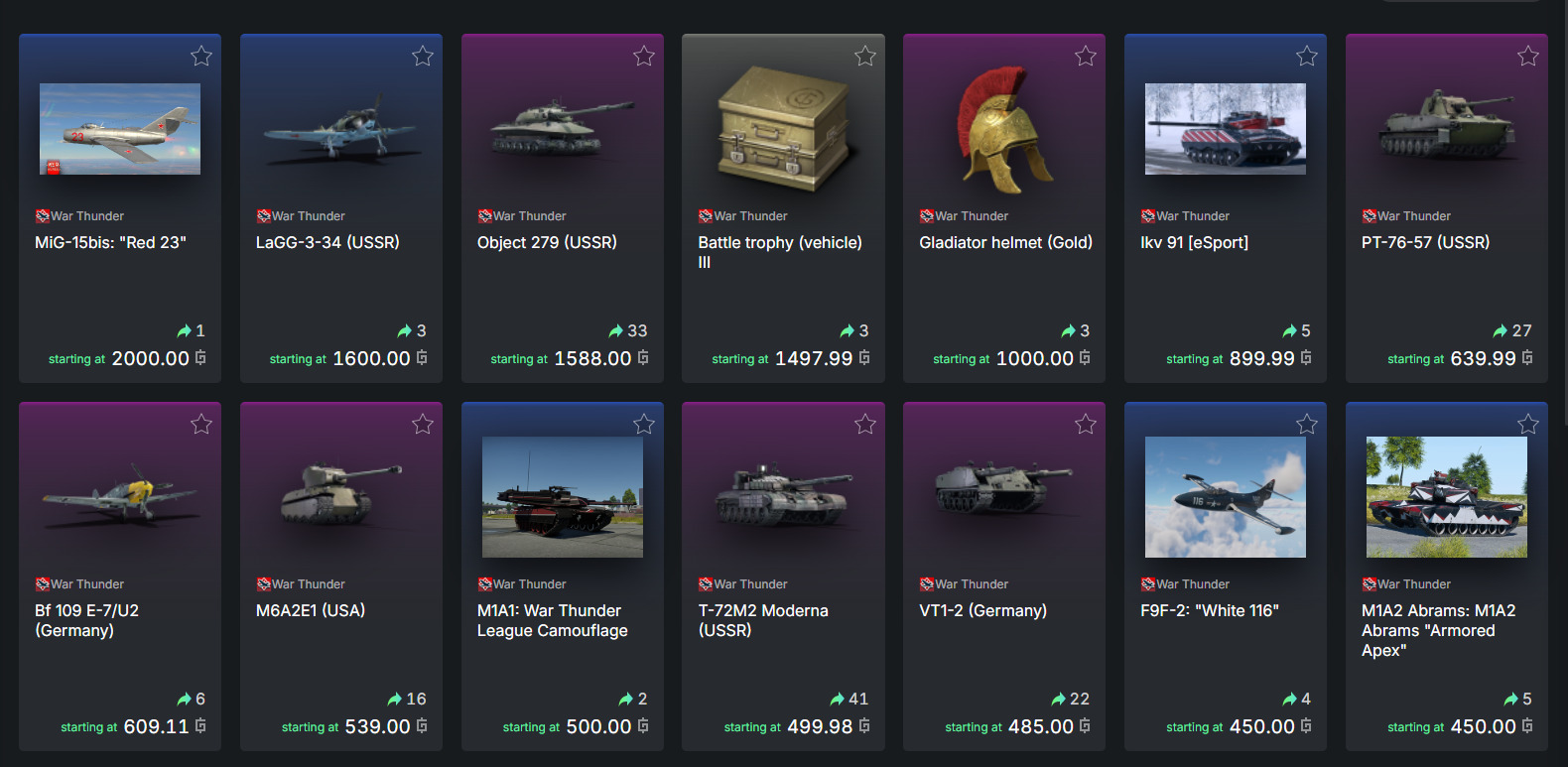
A recurring issue noticed by many players is the sharp loss of value of certain event vehicles after the introduction of similar vehicles in recent updates.
When a newly added vehicle:
- Fulfills the same role
- Has comparable or superior performance in same BR
- Is more easily accessible ( tech tree or premium ) ----> BMPT/72
The older event vehicle can become heavily devalued, sometimes dropping below 20 USD on the Marketplace.
After the Marketplace Tax is applied, the seller may end up receiving only 15–16 USD, despite having invested a significant amount of time completing the original event.
This raises an important discussion point :
- Is the time investment required by some events still proportional to the potential return, considering the risk of future devaluation caused by new additions during the event and outside of them. ?
R. Obviously, for all players, it’s not proportional or even worth the effort anymore—especially when there’s no intention to sell the vehicle, but simply to collect it.
2. Events With Excessive Time Requirements
Another major concern is the time cost of current events.
Recent events often require:
- Strict daily participation ----> 2 days
- A high number of matches -----> 40 kills -/= 60 matchs… with luck in top tier !
- Little flexibility for casual or semi-active players
While commitment is expected in events, many players feel that:
- Events start to feel more like an obligation than entertainment —> Second Job
- Fatigue outweighs motivation
- The final value of the vehicle does not justify the time invested in 70% of cases
This directly impacts player willingness to engage in future events and may reduce long-term participation.
3. Potential Influence of Automated Accounts (Bots) on the Marketplace
A sensitive but frequently discussed topic within the community is the possible presence of automated accounts influencing the Marketplace.
Certain observed patterns raise reasonable concerns:
- Large volumes of listings within short timeframes
- Repeated listings at very specific price points
- Near-instant reactions to small market fluctuations
If automated accounts are active, this could:
- Artificially push prices downward
- Increase selling pressure on regular players
- Amplify losses caused by the Marketplace tax
This point is not presented as an accusation, but as a concern regarding economic integrity, which may benefit from discussion and transparency with community !
** My suggestions for this Discussion**
Without calling for radical changes, but they’re still necessary to be discussed in the topic :
- Better predictability regarding how future vehicle additions may affect event vehicle value
- Clearer communication about anti-bot measures in the Marketplace, like they do with banned players’ accounts.
- Adjustments that protect player effort without harming economic stability
Conclusion
The Marketplace and events are complex and important systems.
Maintaining their stability is essential, but so is player trust in those systems.
An open discussion about time investment, expected returns, and market integrity could be beneficial for both the community and the game’s long-term development.
I am interested in hearing other players’ perspectives, as well as any clarification the team may be willing to provide.
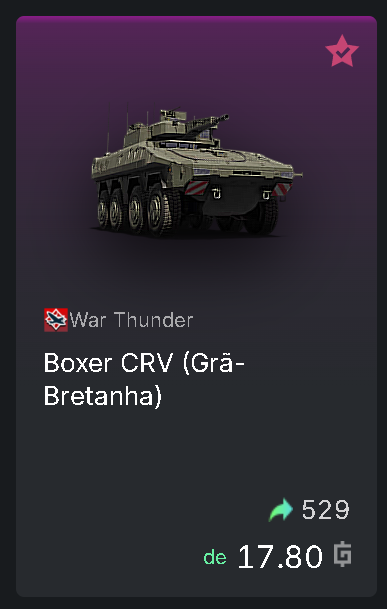
I’m opening this discussion because I completed all three event vehicles, invested a lot of time, and now one of those vehicles is being heavily affected by a recently added vehicle both as a premium pack and in the tech tree which pushed its price down to under $19.
It’s disappointing that, even knowing a new update vehicle could interact so drastically and negatively with an event vehicle to the point of dropping it below the market’s usual ‘floor’ price it was still released during the event.
I don’t know if this was intentional or not, but they should be more responsible toward the community that focuses on specific areas of the game.
About this point
What the graph implicitly suggests
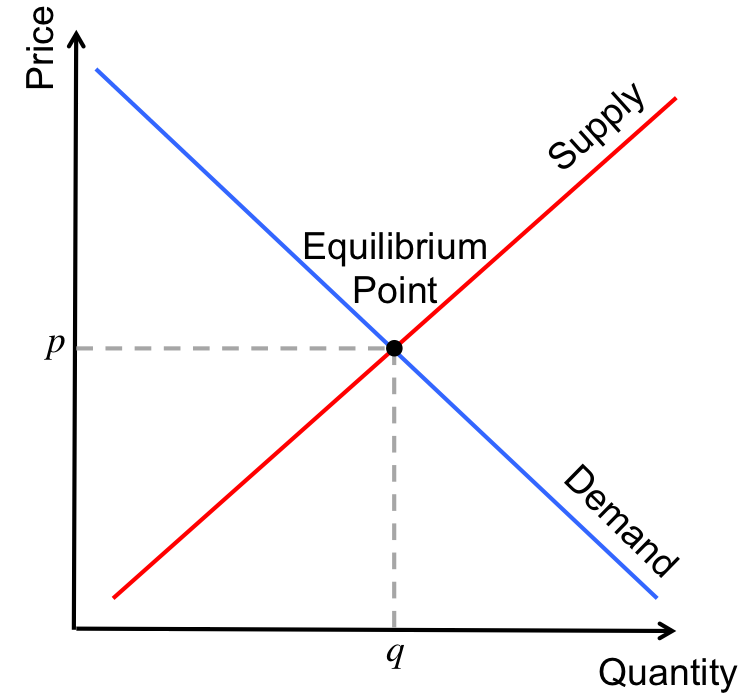
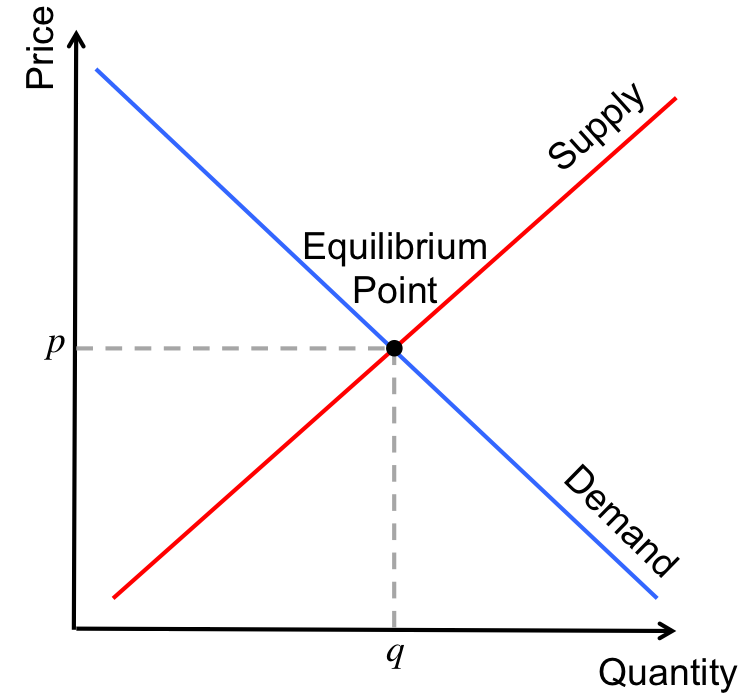
The graph represents the classic supply and demand model:
- Blue line (supply): the higher the price, the more sellers enter the market
- Red line (demand): the higher the price, the fewer buyers remain
- The intersection defines a “fair” equilibrium price
- The dashed lines indicate that the market naturally adjusts toward this point
In other words, the graph implies that:
“The final price is determined organically, solely by player behavior.”
Precise ? — > NO !
why this does not fully apply to War Thunder
Based on the points discussed in the topic, this model does not accurately represent War Thunder’s event vehicle Marketplace.
1. Supply is not free (the supply curve is artificially constrained)
In the graphical model, any seller can enter the market if the price is attractive.
In War Thunder, this does not occur, because:
- Supply depends on time-intensive event completion
- Only a limited number of players are able to finish events
- Market entry is restricted by design, not by economic choice
As a result, the supply curve does not respond freely to price changes, as shown in the graph.
2. Demand can collapse without sustaining an equilibrium
The graph assumes demand decreases gradually.
In practice and in the reality described in my text shows a different behavior :
- A newly added vehicle may fulfill the same role — > During the event, like what happened.
- It may be stronger or more accessible ---- > As it’s happening and being noticed.
- This can rapidly destroy demand for the older event vehicle
In this case, the demand curve shifts sharply downward, breaking the assumed equilibrium.
The result is :
- Prices falling below 20 USD
- After the market tax, sellers receiving 10–15 USD — > Resulting in no purchase being worth the time invested
- Time invested in the event not being reflected in the final price
3. Automated accounts distort the intersection point
The graph assumes that :
- Each point on the curve represents independent human decisions
The discussion directly challenges this assumption:
- Bots may list large volumes
- They react almost instantly to small price changes
- They continuously push prices downward
This forces prices below the natural equilibrium, something that does not exist in a healthy market like the one shown in the graph.
4. Time cost is not included in the model
The graph completely ignores a central factor in War Thunder:
- The time invested in events has no direct influence on price
- The market does not price effort, only liquidity
- Burned-out players sell quickly, accepting losses before the vehicle’s value drops even further.
This creates a structural imbalance:
high production cost ( time ) + low net return.
Conclusion of my counterpoint
Based on the discussion :
- The graph assumes a free market —> When in reality, it isn’t.
- War Thunder’s Marketplace is a design-constrained economy
- Supply, demand, and price do not adjust naturally ---- > Especially when a much stronger vehicle gets added, making the event vehicle expensive to grind because it has to face this ‘new’ vehicle.
- The “equilibrium” shown in the graph may not exist in practice
The final price reflects :
- Artificially limited supply
- Demand shocks from new additions
- Post-event selling pressure
- Possible automation effects
Rather than a fair-value equilibrium.
In other words, the chart used by anyone as an argument is useless. That completely ends any other responses I need to give regarding this chart.