RAF '46 secret weapons
1 Like
I got an alert that someone linked my South African Ju 86 here but it has vanished… :/
3 Likes
Its okay he probably found the way to that suggestion ;)
2 Likes
I was talking with a dude about my apparently dumb barrier for entry for Copy and paste, I said that if even a single machinegun is changed im all in, anything 1:1 is a yuck, he linked me to the Ju-86 suggestion.
Nice work on it btw
2 Likes
Thanks! Much appreciated.
Stop the verbal insults; if you can’t argue subjective just leave it.
Thread cleaned up.
4 Likes
Sweet
2 Likes
Aye, was just pointing out that as a type, it does have some relevance to the US.
Issue is your argument that a WWII aircraft which achieved no confirmed kills during the war is irrelevant is silly.
Once your argument is generalized and applied outside of WWII aircrafts, even you seem to recognize how flawed it becomes, which is dead giveaway of how silly it is even to you.
Saying that the F-22 comparison is unburdened by context misses the point entirely, because were simply applying your own logic to other aircraft. Selectively changing the rules depending on the era or the aircraft does not suddenly make the argument stronger.
The comparison to the F-22 was not made because anyone here believes F-22 and WWII aircrafts are directly comparable in technological context. It was made to demonstrate a very simple point you appear to have overlooked: an aircraft does not need a confirmed kill to possess historical significance. That was the entire nuance behind the comparison.
Your argument that WWII is a closed conflict is also irrelevant here. Criteria for adding vehicles to WT should be based on consistent general rules. You cannot argue that “only aircraft with confirmed kills are historically relevant,” but then arbitrarily abandon that rule the moment it comes to post WWII planes.
And even without bringing up the F-22, there are plenty of WWII aircraft that would fail your proposed standard while still being historically interesting or important for other reasons. None of the Swedish WWII aircrafts for example would end up being added.
That is ultimately the problem: your argument simply is not very good, and instead of acknowledging its weaknesses, you doubled down on it.
I was also told one of your most played aircrafts is Homare. I havent checked myself but if its true yapping around “night fighter mozzie cant be added since no confirmed kill” while exclusively flying a damn prototype aircraft is hypocrisy.
4 Likes
You managed now the 2nd time to ignore the fact that the whole package plays a role - the concept of various factors leading to a general assessment but naming just one in a short reply is no rocket science; ignoring this now two times in a row is just proving my point.
-
The US produced and used several hundreds of thousands of aircraft in WW 2 - and used 16 (out of ~150 of all versions) of mostly Canadian built Mossies as an interim (until P-61 delivered) night fighter for the last 6 months in the ETO - and scored a single kill in total.
-
Everybody claiming that the suggested NF Mossie would have any historical relevance for the USAAC/USAAF is not acting in good faith - same as creating the narrative that i would create a special rule set being applicable for all suggestions.
-
As you failed now two times to understand the multi-layer concept of argumenents a way easier example might by helpful:
- Imagine a drag race between a stock VW Beetle and a modern supercar. You can argue the whole day why the Beetle has no chance - pointing out that the Beetle has two flat tyres is enough to end a long discussion.
Final remarks:
Describing ideas of others as “silly” just because these views does not fit to your own view on things is a clear sign of the absence of abstract thinking. “Silly” would be to write down two times the same nonsense (like posts #17 & #49) just changing the wording slightly and ignoring everything which might invalidate your pov.
Trying two times in a row to construct a narrative reducing the discussion to a single point (kill numbers) ignoring others (despite i repeated them and described them easy to understand) makes clear that you are driven by something else - the US Mossie is just a vehicle for other things.
So you don’t want a very cool 3.7 fighter aircraft? Well it’ll probably go down to 3.3 when Americans get a hold of it.
1 Like
As soon as you are married you learn quite fast the difference between “i want” and “i get” - from my pov we will get this thing sooner or later.
I have a great idea
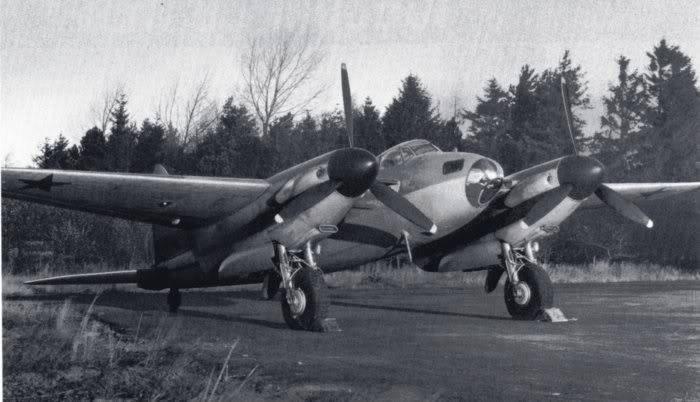
2 Likes
was it modified?
if nay = yuck
It does look like a unique variant (glazed nose but no “belly”)
A B mark IV of which only one was ordered and tested, no? It was unarmed and didn’t have the bombing racks. Crashed and was written-off.
Please correct me if it is otherwise.
I was joking but there’s a few additions like this so I don’t believe it would particularly bar it from the game.
Funny enough I already have a post written up for this aircraft. I just don’t have it submitted and probably won’t.
I am trying to broaden my understanding of your argument as fairly as I can. I am going to exclude the ‘no copy-paste’ point because that was not included in your original argument. If you attempt to insert anti-copy-paste remarks later, after I have already addressed your initial points, I am going to ignore them. As I understand it, the significance of the development to the operator’s aviation history is largely irrelevant in this discussion.
Your original assessment was based on the unit’s performance with the night fighter platform, according to this:
If the unit performed poorly with the night fighter, then it has no historical relevance and this prospective addition should not be considered for War Thunder at all. That is what I initially understood your argument to be. Again, the significance of the aircraft’s development does not appear to matter in your argument.
An interesting choice of words you used in your second edit to describe a unit with zero or very few confirmed air-to-air victories was ‘pathetic.’ That immediately suggested to me that you may have some kind of bias against it.
So then, would you also agree that the following night fighters, comparable to the Mosquito NF.30, have ‘pathetic’ combat records and are therefore irrelevant to the operator’s aviation history?
Italian Dornier Do 217 J
According to those suggestions, a unit of Italian Do 217 night fighters achieved only one confirmed kill while losing one aircraft of its own from 1942 to 1943, up until the armistice. A total of 12 Do 217s were delivered to Italy, enough to equip a single full night fighter group. The quantity of airframes and the timeframe of service were very similar to the history of the American Mosquito NF.30.
For the record, the Do 217J was Italy’s first true dedicated twin-engine night fighter to enter operational service and establish an operational combat record. Three Bf 110Cs were also later delivered to Italy for night-fighting duties, but the Bf 110C itself was not originally designed as a dedicated night-fighter variant.
I have no doubt that, by your own standards, you would also consider the Italian Do 217J to have had a ‘pathetic’ combat record and therefore no historical relevance to Italian aviation history during World War II, correct?
Douglas P-70 Nighthawk
Would you also agree that the Douglas P-70 Nighthawk, a suggestion I personally made, with its limited service history and only two confirmed air-to-air victories, had ‘pathetic’ combat records and therefore no historical relevance to American aviation history during World War II?
Focke-Wulf TA-154
Would you also agree that the Focke-Wulf Ta 154 Moskito, produced in numbers comparable to the American Mosquito NF.30, which saw limited service and achieved no confirmed air-to-air victories in the night-fighting role, had ‘pathetic’ combat records and therefore no historical relevance to Luftwaffe aviation history during World War II? Yet, it is already in the game.
Swedish Mosquito J30
I can safely extend your argument to the Swedish Mosquito J30 as well.
According to this suggestion, would you also agree that the Swedish Mosquito J30 night fighter, despite its high accident rate, short service life, and zero confirmed aerial victories, had ‘pathetic’ combat records and therefore no historical relevance to Swedish aviation history? Yet, it is also in the game.
Final Remarks
I have presented the relevant examples above: World War II-era night fighters with limited operational records. I genuinely want to know your assessment of them because I am curious how your standards apply to those aircraft as well. Remember, I am intentionally setting aside the anti-copy-paste argument and the significance of technological development to aviation history, because neither of those points appeared in your original argument.
I also want to explain why I think the American Mosquito NF.30 achieving even a single night-fighting kill is impressive enough to merit historical relevance, while also broadening the perspective behind that point.
First, throughout the entirety of American World War II aviation service, only a single squadron ever operated the Mosquito NF.30, and only in relatively small numbers within the European theater.
Second, the unit operated the aircraft only during the final months of the war, beginning in December 1944 and continuing until May 1945. That gives the type roughly six months of operational service before the war ended, right?
Yep, you said that:
Small correction as well: this was in the MTO, not the ETO, since the unit was based in Italy and operated within the Mediterranean Theater.
By that stage of the war, the Axis situation in Italy had already deteriorated severely. The operational environment simply did not provide the American unit with many opportunities for aerial interception, especially during nighttime operations. The crews often had little choice but to conduct intruder missions against enemy airfields and attack targets of opportunity on the ground. The fact that the unit managed to score an aerial kill at all before Axis night operations in Italy effectively collapsed in 1945 is noteworthy in itself. The operational situation in Italy during 1945 was completely different from the far more active night air war over Western Europe between 1942 and 1944.
Third, I think it is important to recognize how extraordinarily difficult night fighting actually was during World War II. Primitive airborne interception radar, darkness, poor weather, limited visibility, and the general chaos of nighttime operations made aerial combat exceptionally difficult even for experienced crews, let alone pilots and radar operators in their early twenties. Night combat engagements were comparatively uncommon, especially for Allied night fighter units.
Axis night fighters from 1942 to 1944 often had more opportunities to score victories because RAF Bomber Command and Soviet bomber forces frequently operated in formations during night raids. Under those conditions, radar operators could detect large bomber streams far more easily. Allied night fighters generally did not enjoy the same abundance of interception opportunities later in the war, since Axis nighttime operations were more limited and less concentrated.
Taking all of this into account, along with the fact that the Mosquito NF.30 represented a unique aircraft type within USAAF service, I believe there is sufficient historical relevance to justify the addition.
I would agree if you had argued that the Mosquito NF.30 was only a relatively small footnote in American World War II aviation history. However, claiming that it had no historical relevance at all is dismissive toward the personnel who actually operated the aircraft in combat conditions.
I could have simply not yapped this much and have ignored your “not historically relevant” argument entirely, especially since Gaijin itself clearly does not use historical pretext as a strict requirement for implementation.
Instead, I chose to address your point seriously by providing counterexamples and contextual reasoning because I genuinely hoped you would reconsider the argument in light of night-fighting conditions and comparable aircraft already represented in the game.
I did this because I am sincerely hoping you would recognize the counterargument with the relevant examples I provided to your “not historic relevancy” thesis and reassess what you just said:
Depending on your response to these counterarguments, I reserve the right to stop engaging in serious discussion on this topic.
If your reasoning had simply been, ‘I do not want more copy-paste aircraft,’ then I would consider that a legitimate reason, somewhat. However, extending the argument into claims of ‘no historical relevance’ is where I strongly disagree, especially when aircraft such as the Ta 154 and the Swedish Mosquito J30 already exist in the game despite similarly limited operational records.
Side notes
Beeschurger made a comment:
I took the liberty of looking up your service records. I am appalled to learn that your top five aircraft are as follows:
- 1.) B7A2 (Homare 23) (one-off prototype)
- 2.) SM.92 (one was constructed)
- 3.) Swedish B18B (several produced, but never saw combat action because of neutrality)
- 4.) B7A2 (was supposed to be deployed overseas but was instead reserved to operate from land bases in mainland Japan)
- 5.) Swiss C-3604 (several produced but never saw combat action because of neutrality; used only to deter air trespassers)
How am I supposed to take you seriously after you said this? I am not stat-shaming you; I was just curious to see your top-played aircraft, that’s all. And your stat record would have undermined your subsequent point:
Yes, I know you said fighters with kill records, but your top five played aircraft (bombers and attackers) have no official air-to-air kill records in real life, not even any official combat records for the Swedish B18B and Swiss C-3604. Even if the B7A2 and SM.92 were deployed in combat areas of operations, I have looked up their operational history, and they achieved no significant or notable combat records. The S.M.92, being a heavy fighter in real life, is classified as an attacker in the game.
Why should I take you seriously when the Mosquito NF.30 in American service achieved a single air-to-air victory, while those top five played aircraft in your in-game service record achieved zero air-to-air victories? Especially the S.M.91 as a heavy fighter in real life!
I am not allowing you to insert your “anti-copy-paste” or “sim battles identification issues” remarks to deflect this, as they are not stated in your original argument unless you retract your “they are not historically relevant” thesis.
As you can see, aircraft with no notable combat records have made it into the game because the point of the evolving game is the inclusion of combat aircraft throughout aviation history. No, the historical matchmaking argument does not hold up in standard Air RB matches since it includes Sweden, China, and the Swiss subtree.
To me, it is almost as if combat record and pilot effectiveness are not relevant in the game, because we are playing the game to simulate those aircraft and what they are capable of achieving in-game in terms of air-to-air kills, even if those aircraft failed to achieve them in real life.
I hope you respond to this part anyway, because this is probably the last serious dialogue I will engage in further.
7 Likes
So the argument against the American mosquito is because it had a short service life?
As I understand it, along with the fact that it had only one air kill, yes, before anti-copy-paste remarks were introduced in his additional edits/posts.
They’ll find any reason to deny and cope about a certain leased or captured vehicle. Use my suggestions as an example.
There’s more than enough reason for this to get added.
1 Like