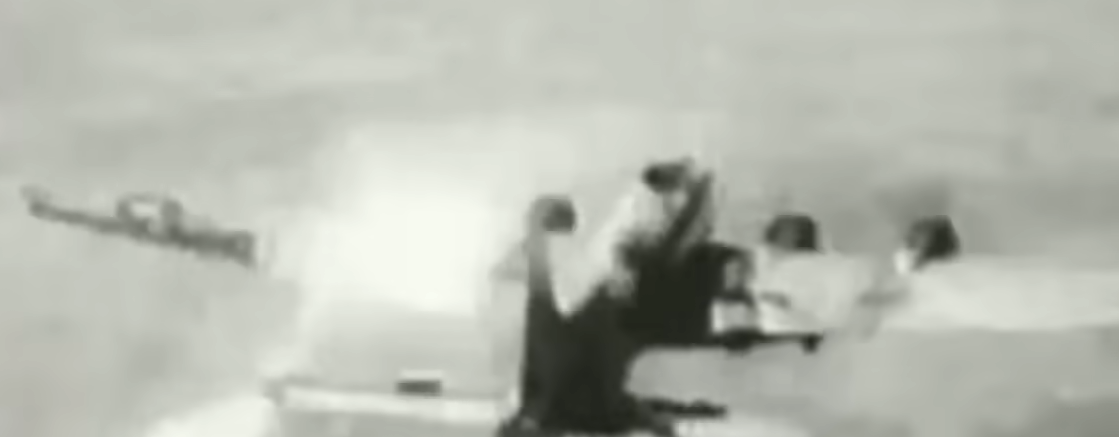
Yes it’s confirmed Me 163 gun camera footage, and probably the only in existance right now.
Even the argument of the rounds being slow falls apart from this piece of footage because here the rounds are even slower. As expected from MK 108s. MG 151s are no speed demons but, from my opinionated assumption, the tracers in the Bf 110 G-2 clip are far faster.
And to be more specific, the tracers in the Bf 110 G-2 clip start off faster but then seem to slow down a lot. Which is exactly what is expected of MG 151s, their mineshell becomes subsonic at just 500 meters.
In a previous thread, I did get AI sloppinators to create an equation to determine the hole that would be punched and peeled into whatever aicraft skin thickness vs tnt filler of a shell assuming surface detonation, accurate to within 10%, I made a few illustrations too of what “mk108” hits would look like
When have I ever been against realism? That’s just a personal attack for the sake of it. And here I thought we were having a good discussion.
Again what is so wrong by an initial 10-15% reduction? Going 0-100 is more biased if anything, which is seemingly what you desire.
You’d be surprised what a 10% difference might make
There are things to consider such as brandgranaten, incendiary rounds.
These don’t have much high explosive content however the British note that their blast effect is still quite substantial nonetheless. (in this gif, the round hits the angled plate on the right, pierces through, then explodes)
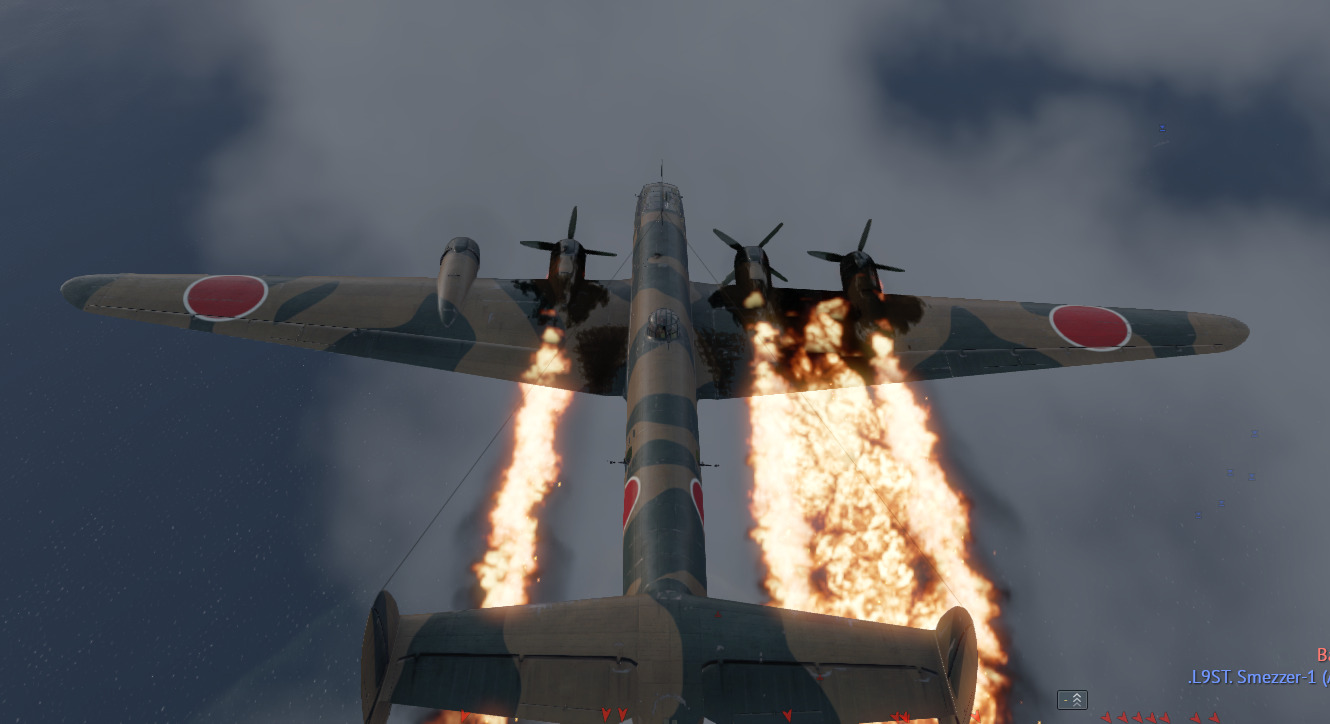
They dealt much less aerodynamic damage (breaking of the skin of the wing) and substantially more structural damage, to the point that a single brandgranate round did manage to do straight up structurally lethal damage to a Halifax in testing, even if they don’t set fires.
The reason for this is that the round just spews a thermite-like incendiary compound everywhere when it explodes which, I imagine, kind of just melts the plane from the inside.
that too, see you also have to consider mine shells have a stronger effect on smaller enclosed spaces due to, well, a blast going off in an enclosed space blasting the skin OUT. Example being that test vs what was it, a spitfire tail? tiny vs a b17 wing, right?
I wasnt going to try and task anything to calculate that, too many variables, I just wanted to see how big of a hole a surface detonation would make vs x material at x thickness vs x tnt filler, because when you start adding all those other things, its not just the skin you need to calculate for, its the aircraft, wether that section already has holes to “vent” out overpressure, hell, how high the damn thing is in the sky and how thin the atmosphere is… Too much
When you said that 10-15% would suffice. Based on the video i posted alone, 10-15% less rounds hitting, still without taking off the wing doesn’t sound all that realistic
Merely an observation based on what you said.
Assumptions about what i want? Im up for resuming good discussions but i would hope that you don’t assume things about me going forward.
I have stated over and over and over again in this thread that i do not want bombers to become as fragile as they were.
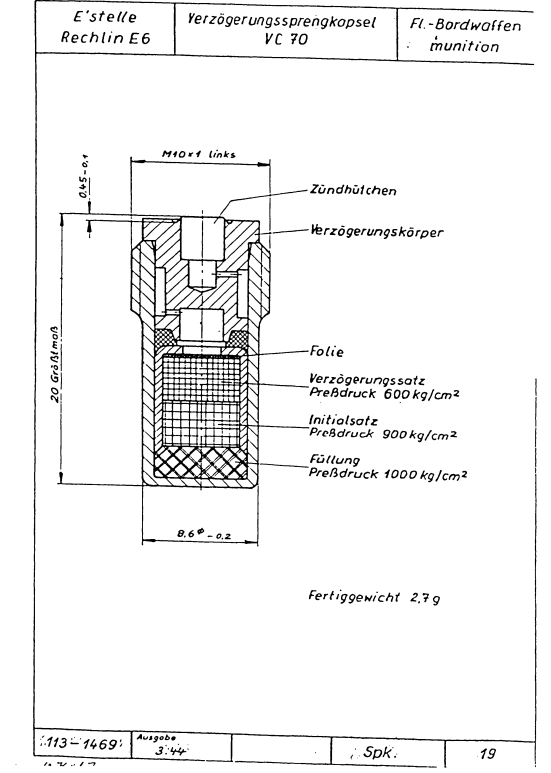
Every document I’ve checked on the construction of these rounds says that MK 108 mineshells use the VC 70 “Verzögerungssprengkapsel” (Delay blasting cap).
This is a booster charge that creates a delay on the main detonation after the fuse is triggered. It does so by having a teensy tiny charge right where the image says “zündhütchen” (percussion cap), which causes the “Verzögerungskörper” (Delay element) to combust, due to being an Aluminium-Copper-Magnesium alloy. Once it has combusted fully it reaches the main booster charge which causes it to ignite, which then ignites the main charge of the high explosive mine shell.
The delay distance caused by the VC 70 is stated to be 0.75 +/- 0.25 m.
Verzögerungssprengkapsel VC 70
However, since the British in their tests talk about the 30mm HE having “surface detonation”, it makes me think that maybe not all MK 108 HE rounds used this, even though they were meant to.