Its very difficult for me to interpret this as I don’t speak Russian and the translations don’t really explain much, can you explain how it proves that
The fact that the presence of textolite instead of air has a significant impact on the barrier’s durability.
I also disagree with you that the distance between the 80mm and 20mm plates in the T-72/64, which you’re discussing, is small.
In fact, it’s 105mm, which is extremely large, both relative to the preceding plate (the optimal distance between steel plates is considered to be approximately equal to the thickness of the front plate) and relative to the shell diameter.
I’m not participating in the specific discussion; I simply wanted to point out that for some reason you’re greatly underestimating the textolite (it’s not even the textolite itself that’s important, but the material used instead of air, which has a lower density than steel) and the distance between the plates in the T-64/72.
challenger 2 thread
looks inside
chieftain’s L15A3 performance
1 Like
2 Likes
TLDR: A 1976 Russian paper states that in the three layer (Steel - Texolite - Steel) array layout, texolite does not provide any significant protection against kinetic energy rounds (115mm APFSDS was directly tested). Instead, they state that it should only be used to protect against CE threats or other dangers such as radiation.
So I’ve had a read over the full article which is available on BTVT, keep in mind im reading a translated version so I could be misinterpreting things.
The paper does indicate the texolite (glass-textolite/fiberglass laminate) referred to as STB is an upgrade over using purely air spacing for combatting APDS projectiles (this never mentions AFSDS to be clear).
The paper states that STB (texolite) has reasonably good protection values for it’s weight, however, at higher angles the value of the texolite becomes diminished and instead it relies more on the impact of the texolite on the surrounding steel to stop the projectile. Don’t get me wrong, the paper does seem to indicate that at high angles texolite can be effective, but it indicates that it mostly benefits from being layered between repeated steel layers rather than the configuration we see in the T72 or T64 which is just:
Steel - Texolite - Steel
The test rigs used in the study were a mix of texolite (STB), steel and air repeated.
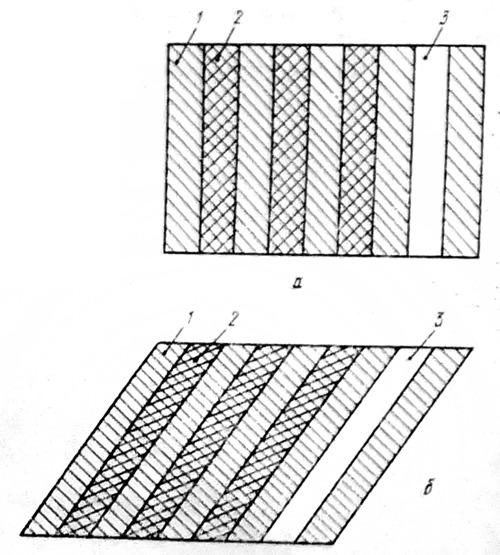
Therefore this study may be a bit more relevant for the T80U that uses two texolite layers and three steel layers, rather than the early T72 and T64 which have one texolite layer.
Essentially, at higher angles purely having texolite on it’s own is not necessarily going to provide impressive kinetic energy projectile protection, you need to supplement the texolite in layers with steel as its effect relies on the steel in the array significantly at high angles.
The paper also states:
“The results of testing barrier models at α = 60°, while clearly reflecting the general pattern of resistance changes depending on the physical and mechanical properties of the fillers, also observed in full-scale tests, yield resistance coefficients that are higher than those obtained in full-scale tests.”
So the paper authors themselves state that their model overestimates the effectiveness at high angles, so we need to take that into account when applying this to T-Series tank armour arrays which are highly angled typically.
They also state:
“This circumstance indicates the insufficient strength of the model core material, which is particularly noticeable under conditions of intense alternating loads to which the core warhead is subjected during successive penetration of barrier layers at high impact angles. Therefore, data corresponding to α = 60° should be considered in the context of research into the relationship between the resistance of composite armor and the properties of fillers, rather than as absolute values.”
In short, the values for texolites protection at high angles (60 degrees) from this paper are not really very valuable as they admit themselves they are overestimated and that the projectile they used was insuffcient in it’s strength. It’s difficult to really tell if this lower density test projectile would interact with the texolite in the same way that a properly produced high strength APDS or APFSDS round would.
HOWEVER, I found another paper that actually does discuss this armour layout and the results are quite interesting.
О. И. Алексеев & И. И. Терехин, “О некоторых закономерностях, определяющих защитные свойства трехслойных преград при обстреле сплошными оперенными бронебойно-подкалиберными снарядами”, Вопросы оборонной техники, Series XX, Issue 63, 1976.
https://btvt.info/5library/vop_1976_vld_t64.htm
This paper utilised a fin stabilised sub caliber projectile (APFSDS) of the caliber of 115mm for the testing.
The targets that were fired at were angled at 60-70 degrees, comparable to the T64-T72 frontal array.
The armour arrays were either:
-
Steel Armour - Texolite - Steel Armour (Listed as 3 layer)
-
Steel Armour - Air - Steel Armour (Listed as 2 layer)
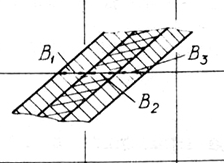
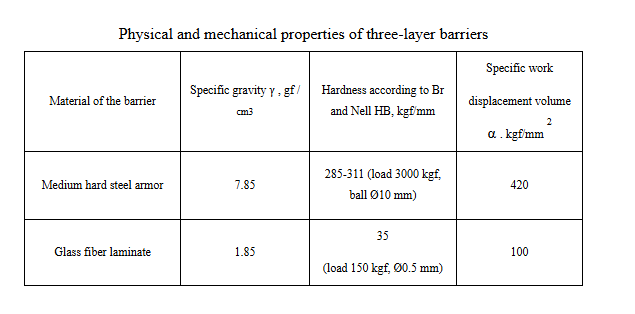
This arrangement with texolite is identical to the arrangement used in the T64 or T72.
Their conclusions were:
“The middle fiberglass layer has little effect on the projectile resistance of the three-layer barrier.”
“The use of a middle layer of fiberglass or any material with similar mechanical properties in three-layer armor does not provide a significant effect on projectile resistance and can only be advisable if this layer improves such properties of the barrier as resistance to cumulative projectiles, radiation resistance, explosion resistance , or any other properties of the barrier.”
This test is a lot more reliable than the other tested you linked as they actually fired proper 115mm projectiles at these arrays, unlike the “mockup” projectiles that the other authors themselves admitted were of poor quality.
Therefore, from this study they themselves conclude that texolite in a three layer array is NOT effective against kinetic energy penetrators, in this case 115mm APFSDS. Instead, it’s use should only be reserved for combatting cumulative projectiles (HEAT), radiation, explosions etc… Specifically, not against kinetic energy projectiles.
Considering that this is the exact layout that the T72 and T64 use, I think it is safe to apply it to them.
This is not relevant to the Challenger 2 anymore, so I won’t keep going on this, but I think this does prove that texolite in the T72 and T64 specifically does not provide any meaningful KE protection.
8 Likes
As I mentioned—and as your article also confirms—it is not the textolite itself that affects durability, but rather the overall presence of a backing for the steel sheets.
The question here is whether to attribute the additional resistance to the steel or to the textolite: without the textolite, the steel lacks support and chips off more easily, but without the steel, the textolite offers no protection.
This is the paradox of composite armor and the reason why attempts to calculate the resistance of a specific layer are rather questionable.
В трехслойных преградах сопротивление стеклотекстолита прониканию снаряда несколько возрастает за счет дополнительного стального подпора.
При испытании трехслойных преград, в которых за стеклотекстолитом устанавливается тыльный стальной броневой лист, наблюдается резкое возрастание υ пкп с увеличением толщины тыльного броневого листа в направлении обстрела свыше 55- 60 мм (20- 25 мм по нормам). Приращение υ пкп на единицу добавляемой толщины в этом случае в 2—3 раза больше, чем за счет соответствующего увеличения толщины однослойной стальной броневой преграды. Поэтому при увеличении толщины тыльного листа сверх некоторой величины трехслойная преграда при одинаковом весе с однослойной начинает превосходить последнюю по стойкости. Это является следствием того, что по тыльной броне действует деформированный снаряд, частично разрушившийся в первом стальном слое и потерявший не только скорость, но и первоначальную форму головной части. Вид корпуса снаряда после пробития первой стальной преграды горизонтальной толщиной 214 мм , прохождения слоя стеклотекстолита толщиной 280 мм и удара по тыльной стальной плите толщиной 53 мм показан на рис. 3.
It’s easy to confuse the strength of the textolite itself with its effect on the strength of other layers.
Certainly, it’s more effective in five-layer barriers (a fact that, for some reason, is often overlooked), but it also has an impact on three-layer barriers, just as a spaced barrier does.
Incidentally, it’s important to note (as this article does) that the early T-72/64 tanks used an unfortunate (though in some respects successful—but for different types of projectiles) 80-20 steel distribution ratio, whereas the optimal ratio is approximately 50-50.
So in this part they are testing either (STEEL - TEXOLITE - NO PLATE) vs (STEEL - TEXOLITE - STEEL).
Yes, they do conclude that this three layer arrangement when adding the backing plate gives the armour array a disproportionate increase in protection.
However, directly afterwards they say:
"A barrier without a middle fiberglass layer, consisting only of two steel plates spaced at the same distance from each other as in three-layer barriers, exhibits increased resistance depending on the thickness of the rear plate, as does a three-layer barrier with a middle fiberglass layer. "
So this seems to indicate that the array’s disproportionate increase in protection comes predominantly from having a spaced backing plate of relatively high thickness, rather than the texolite really doing anything impactful.
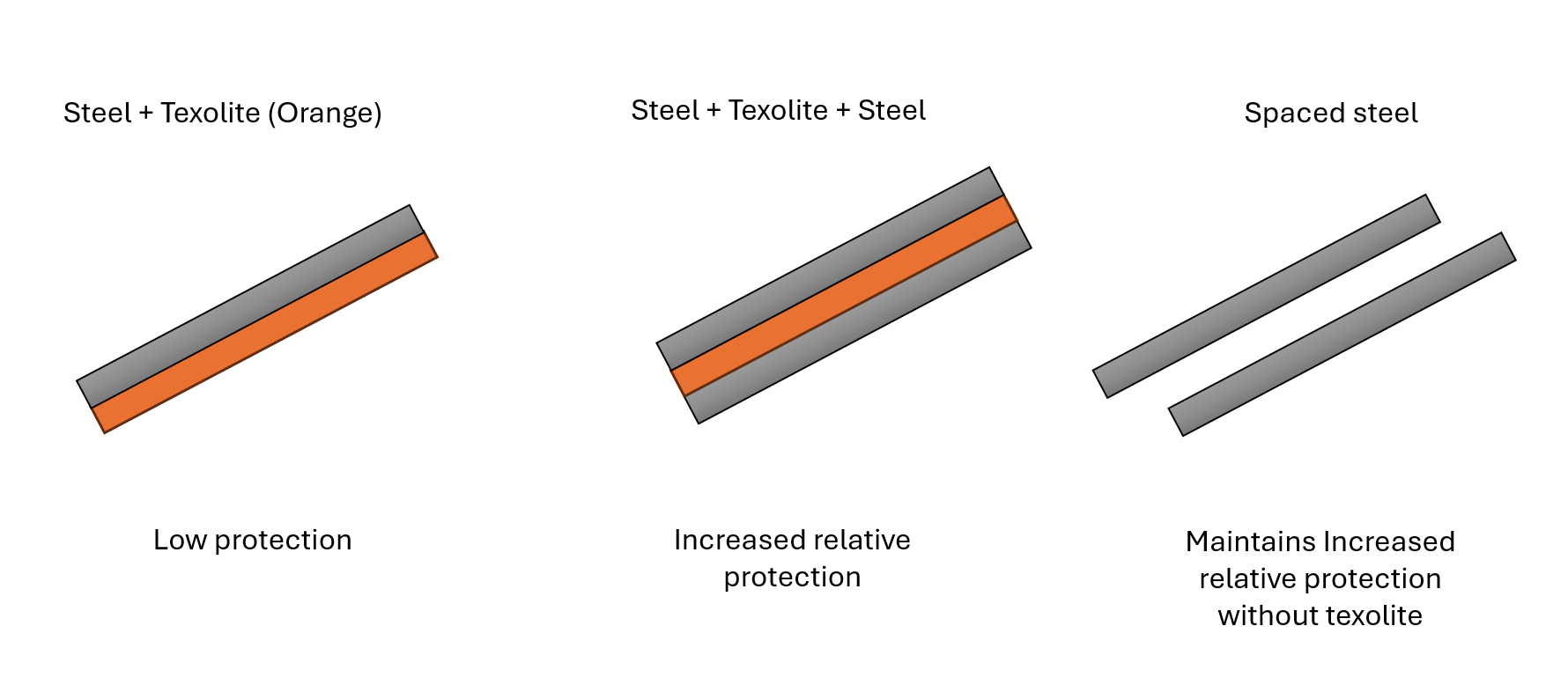
Essentially, you could entirely remove the texolite from the T64 or T72’s array and it wouldn’t really lose a significant level of KE protection as it is actually the spaced backing plate that increases its protection. Which agrees with what they say at the end, that the three layer texolite arrays do not provide significant KE protection, only CE protection.
The 1987 paper has it’s issues, such as the fact that they specifically state that their model overestimates texolites effectiveness at high angles (60 degrees) and the model projectile they used was of “insufficient strength” which may have impacted it’s performance in the testing.
However, I think from both it’s safe to conclude that it is likely texolite is pretty ineffective UNLESS it is arranged in repeated layers with steel armour, which is not the case in the majority of Russian MBTs especially not the T72 or T64.
The findings of the 1987 paper however may apply to some other Russian MBTs with more layers of steel/texolite (e.g. some T80s)
3 Likes
That looks amazing, I assume this is a mod?
Well, yes, of course, the impact isn’t huge in the case of three-layer barriers.
But the steel backing and spaced structure definitely make a non-zero contribution that shouldn’t be discounted.
Even 10-15% isn’t zero.
Of course, the most effective and significant way to increase resistance to kinetic projectiles is to increase the steel thickness.
Here’s an interesting source you might find useful.
Really good documentation on the T-72A’s firing test (okay, it’s a bit off topic compared to what you were discussing, but still).
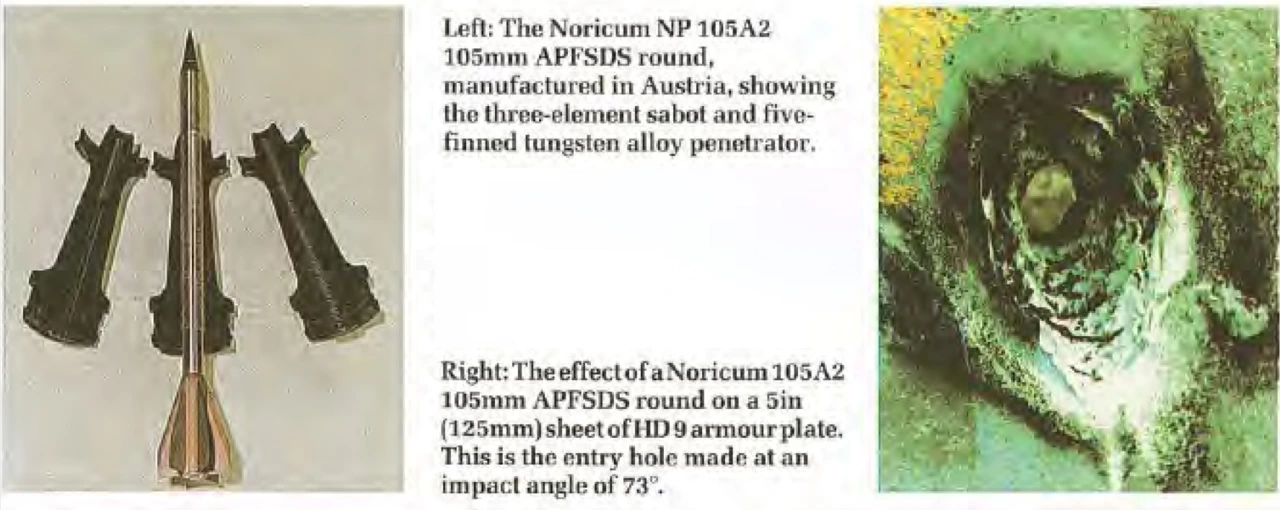
I found very little information about the NP105A2, but there is some information that it penetrated 125mm at 73 degrees with some margin.
I just wanted to clarify this it seemed that you were claiming that texolite itself provides significant KE protection in the T72 and T64, which it appears isn’t the case. However, in specifically designed arrays with repeating layers yes it may be possible for texolite to provide a meaningful increase in KE protection, although I’m not really sure these have ever been used in Russian tanks.
If anything this seems to indicate that the layout of Chobham armour with repeated steel and plastic layers would be more ideal.
Thanks, I will take a look :)
1 Like
No, you misunderstood me.
I meant that in composite barriers, it affects the overall protection due to the support of the steel sheets and the change in density. I wrote about this at the very beginning.
It’s just that, based on the dialogue, you wrote that its presence and spacing between layers can be ignored, although both factors will have some impact. Moreover, the overall difference can determine whether penetration occurs or not.
It’s a long story, but probably not.
There are a number of studies on the overall resistance of armor with different numbers of steel layers and the spacing between them at a given impact angle.
For large angles of around 60 degrees, a structure of three steel layers is optimal.
Their thickness and spacing must also be designed in a specific way, usually no less than one and a half times the diameter of the projectile’s core.
So, a very large number of layers can also be detrimental if they become too thin.
All i want to see is the tank become more playable as at the moment it’s rather annoying suffering from constant breach shots due to the lacking of armour around that area, everything else wrong with the tank is manageable but the constant breach breaking is just unnecessary due to the lack of armour that it should have
4 Likes
There is ONE, and i mean ONE Memory i have of a Challenger Armor buff, and it was years ago, Not long after the T-72Turms was added.
Which made the Challenger 1’s turret Immune to 3BM-42 at even point blank. Guess what got reverted less than a week after the update dropped.
1 Like
This post was flagged by the community and is temporarily hidden.
1 Like
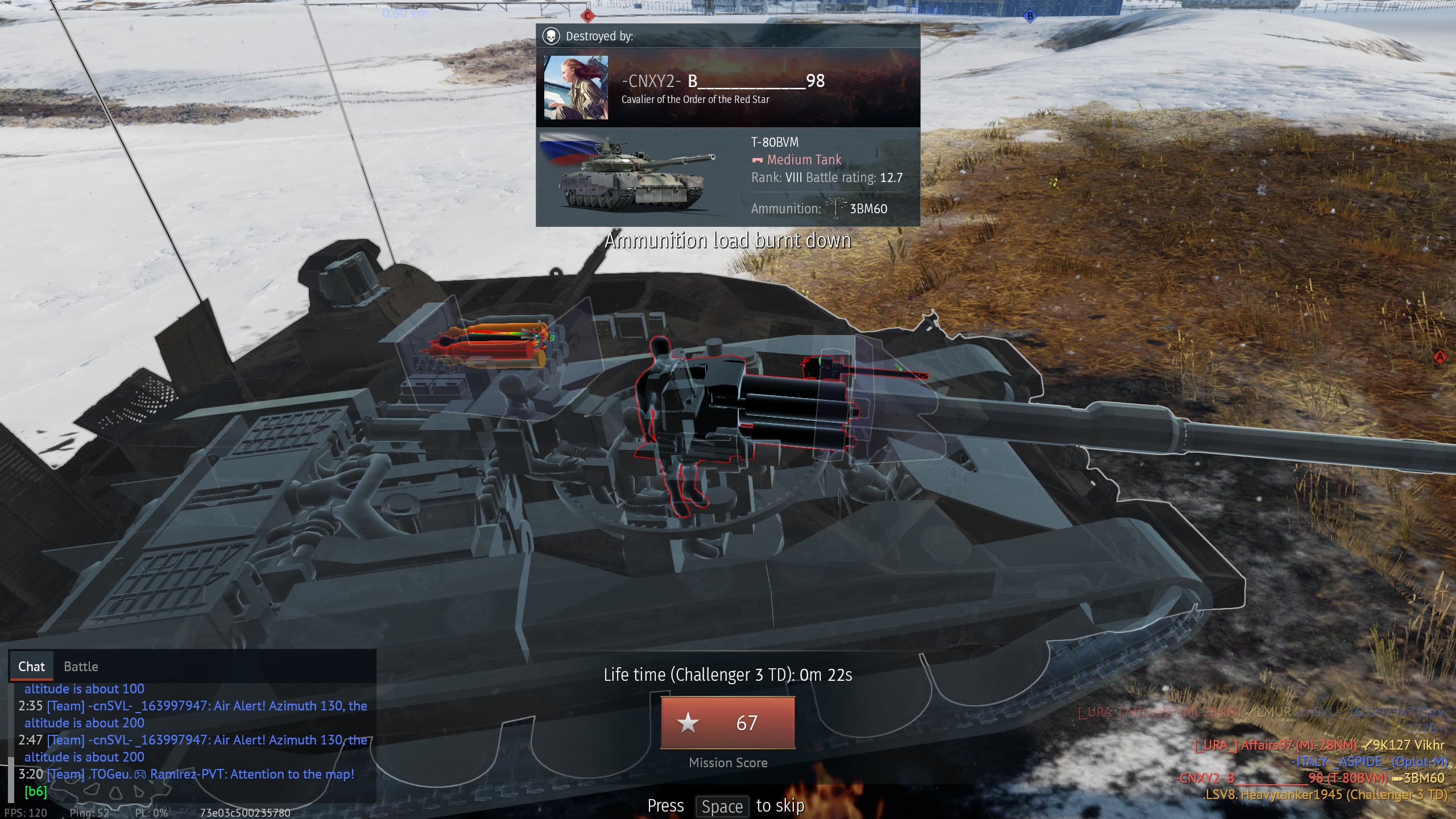
Chally TD can get crew wiped through gun forehead as I’ve said many times.
Aus SEPV3 KEW2 also can’t pen the T-series at angled front tracks → it got stuck at the sacrificial side spall liner.
They also can and will shoot back even when the dart hit the empty carousel
If you don’t die, your turret basket will most likely disabled
T-series are purposely calibrated to 2-1 trade shots and survive while your teammates also vibing and chilling to make the match end early.
1 Like
man there are some cry babies around, Every time i say Russian Garbage someone flag spams it until the bot hides it.

5 Likes
I might be able to really name a few that potential flagged your post
However, that doesnt matter anymore.
1 Like
Me when I have to use a tank with a 7 sec reload at top tier.
