[Citation Needed]
Just because you claim it performed well (relative to it’s peers?) doesn’t magically make it so.
This is just cope and dismissal of anything that doesn’t suit your pre-established beliefs.
I’m going by authoritative sources, not simply the opinion of a random person on Quora or Reddit. There’s multiple accounts and sources that all point in the same direction: The Challenger 2 was an inferior product but chosen for industry reasons.
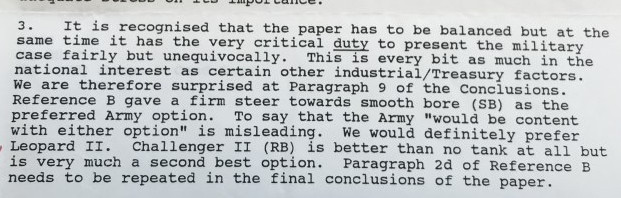
That’s why you go by the facts and not the subjective opinion of whomever happened to produce the study.
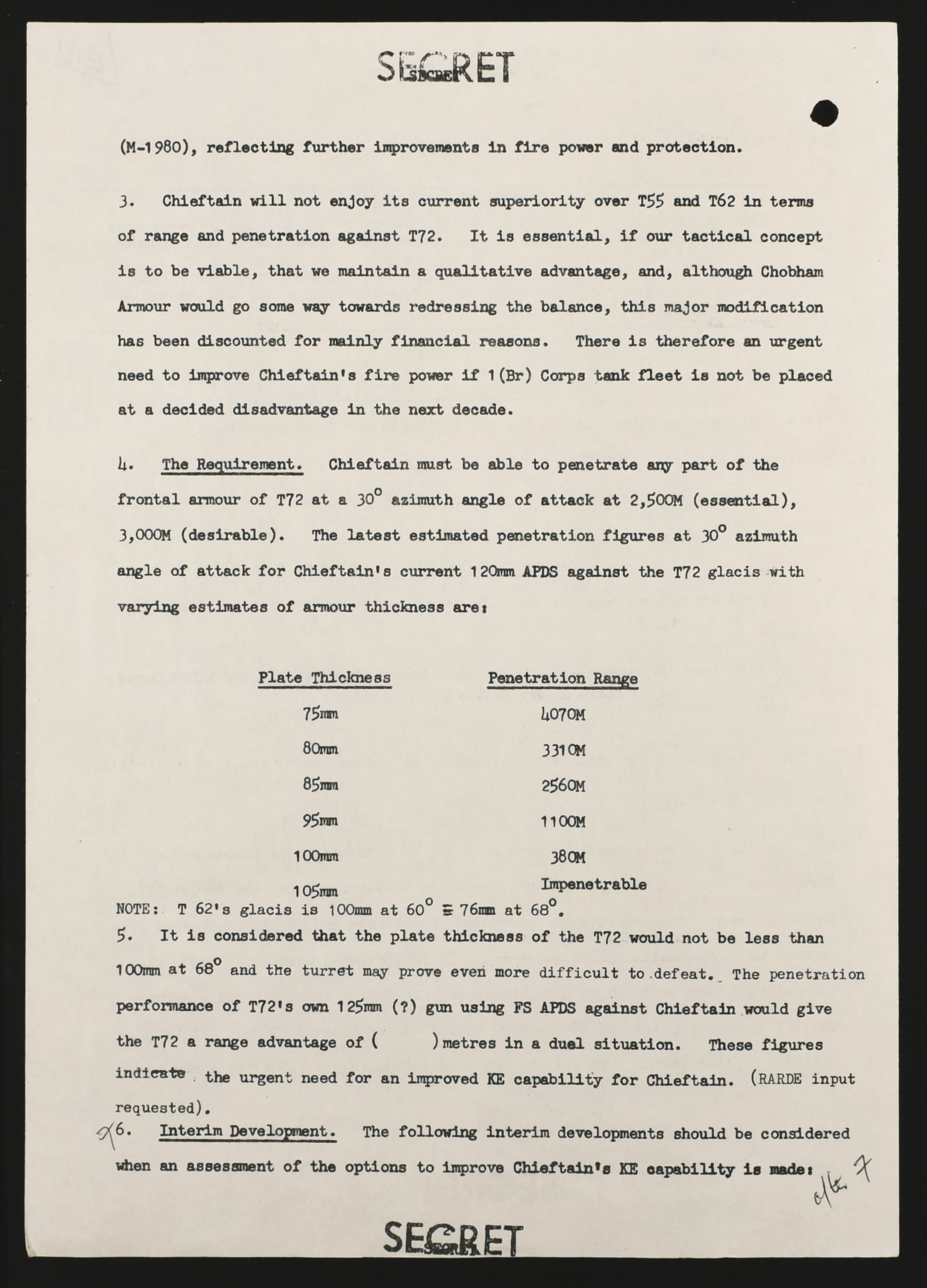
Chieftain possessed 250-275mm of frontal armour (against both KE and CE attack) according to British documents, it was introduced in the mid/late '60s when the T-64A had also entered service with around 315mm of protection for it’s glacis and 450mm against CE threats, the turret possessed 410mm vs KE and 450mm vs CE threats.
Spoiler

During the Iraq-Iran war, T-62’s armed with the 115mm gun frontally knocked out Chieftains through their turret fronts, even the thickest portions of the Chieftain could not resist a gun that was already fielded in massive numbers before the Chieftain even entered service, and that also being a gun which was inferior to the T-64A’s 125mm gun which entered service the same year the Mk.3 did.
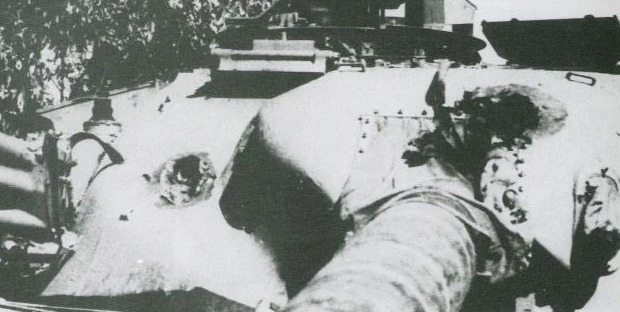
The British estimated they stood no chance of defeating the T-64/T-72 Glacis at any distance(!).
Spoiler
The T-64A’s glacis composed a 80mm RHA plate - 105mm Glass reinforced textolite - 20mm RHA backplate, this combination exceeds 100mm.
It took Britain an absurdly long time to develop and field a capable monobloc APFSDS round, only by the early/mid '80s did L23 enter service, and by that time the Soviets had already started fielding applique HHA plates to combat newly developed 105mm APFSDS rounds, that same applique armour would’ve significantly reduced L23’s ability to combat T-72’s.
By the time L26 entered service Kontakt-5 was already being mounted and once again provided immunity to L26 for the areas covered by Kontakt-5, as well as the entirely of the turret cheeks for both T-72B’s and T-80U’s.
So, we’ve got a tank that has utterly abysmal reliability and readiness rates, it’s the heaviest NATO tank in threatre and what’s it got to show for it? It still is unable to frontally defeat it’s primary Soviet threat (T-72) and it’s armour is fully vulnerable to both KE and especially shaped charge threats at any frontal arc.
Exactly, they wanted something significantly better (MBT80) but were stuck with the Challenger 1 for again, industry, political and lack of foresight reasons.
The Challenger, just like it’s Chieftain predecessor, suffered from very poor readiness figures:

54% for the Challenger 1 (Operation Granby) fleet, yet you’re telling me it did oh-so-well during Desert Storm? Whilst the M1A1’s were rolling around with 80-90% readiness figures?
I knew this was gonna pop up, it’s inevitable with any discussion around British tanks.
I’ve never seen a single convincing argument that says any other peer of the Challenger could not have made the same shot.
In fact, the Challenger consistently performed poorly during comparative trails, including CAT '89 where it even got smoked by Canadian and Belgian Leopard 1’s, let alone Leopard 2’s belonging to the Dutch and German armies.
CAT '89:
Spoiler
The opportunity to even engage a enemy MBT at such extreme ranges almost never occurs, that’s why you don’t see many instances of vehicles achieving such feats, not because they’re physically incapable of doing so.
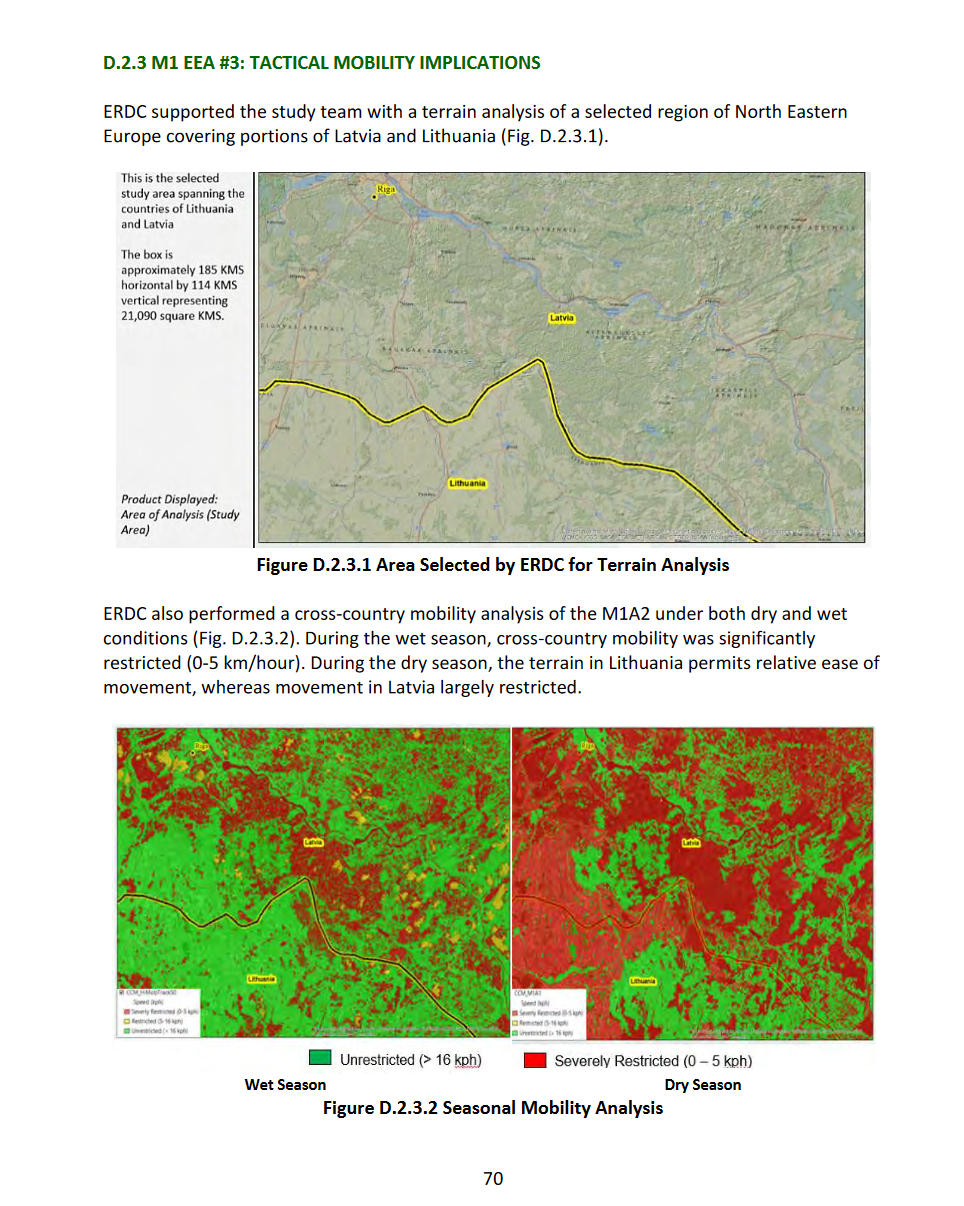
The fact that you’re being dismissive of this point is quite telling. The interviews I’ve seen have crews consistently remarking that it’s weight is a obstacle to it’s employment.
What good is an MBT when it cannot be deployed where it needs to be due to it’s excessive weight?
This is a lesson the Americans are also learning:
Spoiler
The brief period in which the Challenger 2’s were utilized in offensive operations immediately saw the catastrophic loss of these vehicles. One of which was left barely recognisable (non-isolated ammunition stowage FTW), the other completely engulfed in flames. (Refer to the video linked above).
The simple fact of the matter is that once again, the Challenger 2 has proven it’s not any more survivable than it’s peers and quite standard means of engaging tanks were immediately effective at taking out these Challenger 2’s.
So what’s the point of it’s significant weight when it does not provide superior protection over it’s peers?
And yet I’ve seen statements from crews claiming they prefer the T-64A due to it’s 125mm HE-F round which serves as the more lethal long-range fire support shell. Tanks are now largely utilized as fire support vehicles from range, so the T-64’s serve that purpose just fine.