TLDR: The challenger 2 is really bad in game at the moment, its much bigger, heavier, slower, with worse ammunition than all other tanks at the same or similar battle rating. Its nothing like the moving bunker its known the be in real life. To fix this, gaijin should either up armour it by readjusting the effectiveness of Dorchester or lower its BR (Which would create another plethora of issues). It’s a case of, we cant prove it, but we all know it. So this is a logical approach using known numerics, doctrine, history, and Gaijins own system.
- Rework the challengers armour
- Leave it, its british
Before beginning, I want to clarify that this perspective comes from extensive gameplay experience with multiple top-tier MBTs and IFVs, including the German Leopard 2, Russian T-series (Admittedly from other trees and playing on friend’s accounts), Chinese MBTs, and the Challenger 2 line. This post is therefore not based on limited exposure to a single vehicle, but on comparative gameplay across several nations at similar battle ratings.
I don’t touch on the French Leclerc and Italian Ariete as they are both broken in their current state.
There have been previous discussions regarding the Challenger 2’s armour representation, but none recently that address its current state in War Thunder’s top-tier environment. As such, this post is intended to revisit the topic in light of ongoing gameplay behaviour that appears unchanged, especially with the addition of vehicles like the BMPT. This is not a bug report, but a discussion focused on armour representation and balance consistency to try and get the Challenger series back in fighting action, considering the top tier META of run and gun (Spoiler, it can do neither).
In-game, the Challenger 2 — and now Challenger 3 — appears to underperform in frontal survivability when compared to contemporaries such as the T80BVM, Leopard 2A7V, STRVB+, T90M, M1A2 SepV2, BMPT etc at the same, or even a lower BR. The purpose of this discussion is to examine whether the current modelling of Dorchester composite armour is being represented consistently relative to other MBTs, or even NATO MBTS within War Thunder.
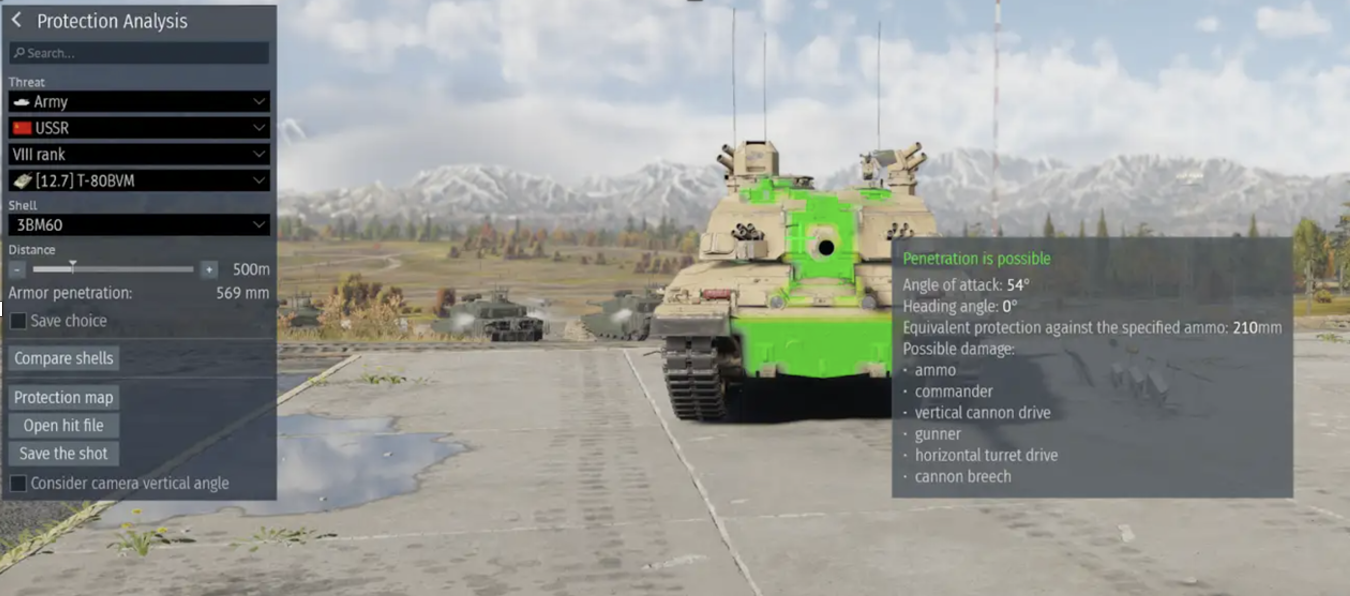
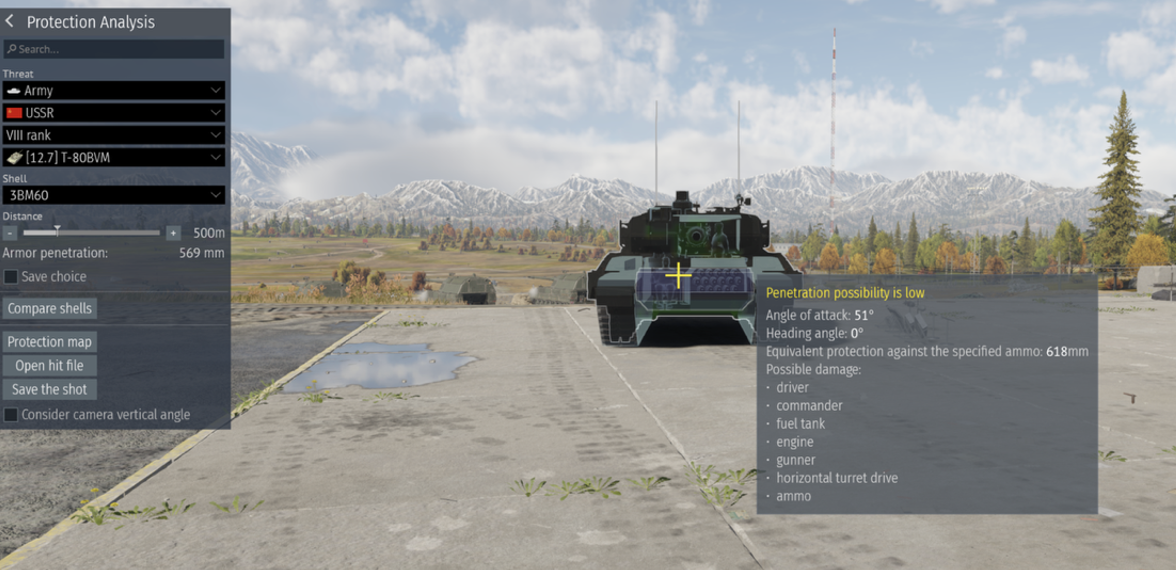
While precise armour specifications remain classified, in-game performance provides observable and testable outcomes. When comparing the Challenger 2 to other MBTs at equivalent BRs, notable differences in frontal protection emerge. For example, the gun breech. At 500m with the 3BM60 round, Slightly right of the gun barrel on the breech, the Challenger 2 has… 210mm of armour. It is completely knocked out from a single shot as the Commander, Gunner, vertical and horizontal drive, breach, and even the ammo is all knocked out. This would cause the vehicle to be ammo racked and die, and even if the ammo didn’t cook off you are missing half your crew, can’t replace your gunner for at least 25 seconds, and your repair is nearly a minute.
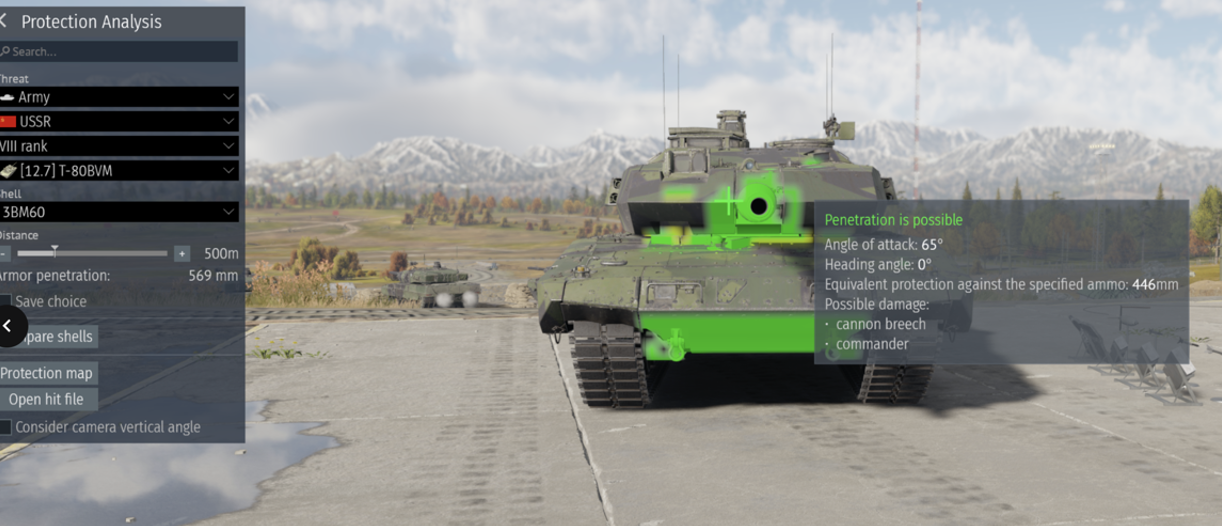
However, under the same conditions (Slightly right of the gun), the Swedish STRVB+ resists the same ammunition, with 446mm of armour. That’s a 230mm difference, and only the Cannon breech and the commander are knocked out, allowing the tank to safely drive away with three crew members remaining.
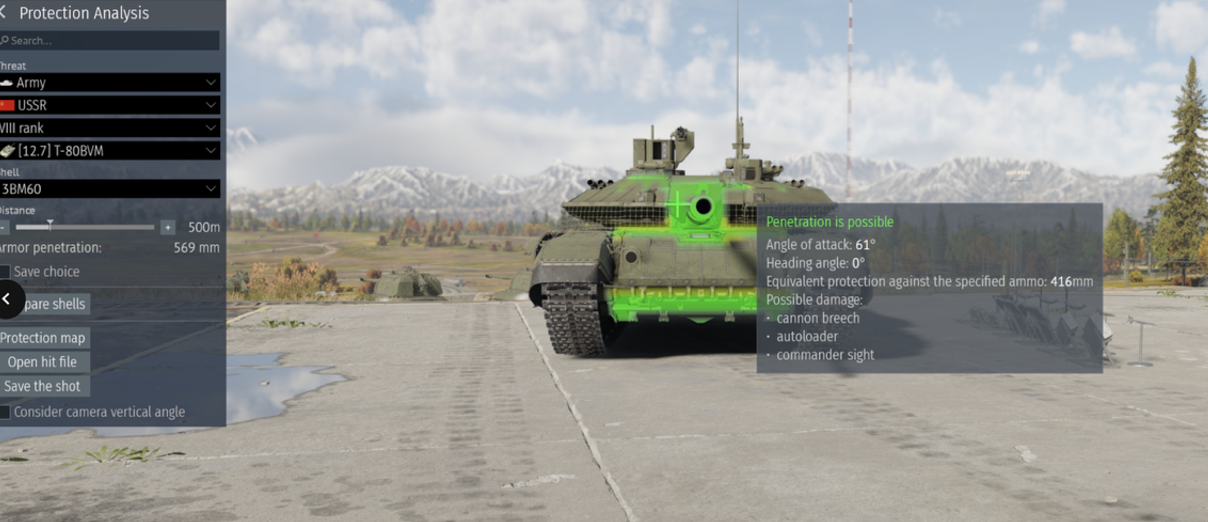
Again, same story with the T90. At the same distance with the same round, the T90 has 416, and only has its breech and autoloader knocked out, not even losing a crewmember.
Same story with the German leopard 2A7V, it doesn’t even have a guarantee to penetrate, and the only damage is to the breech. Keep in mind all the tanks mentioned above can face the Challenger 2 as they are at the same BR.
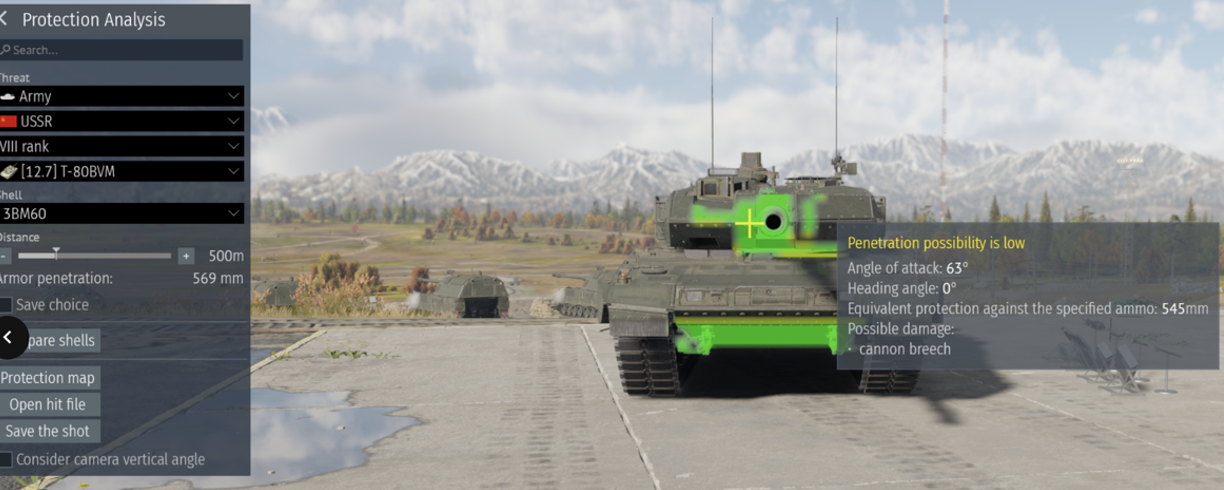
Same story yet again, with the Chinese Al Khalid which is at a Lower BR than the Challenger. Only the breech and commander, with 409mm of armour.
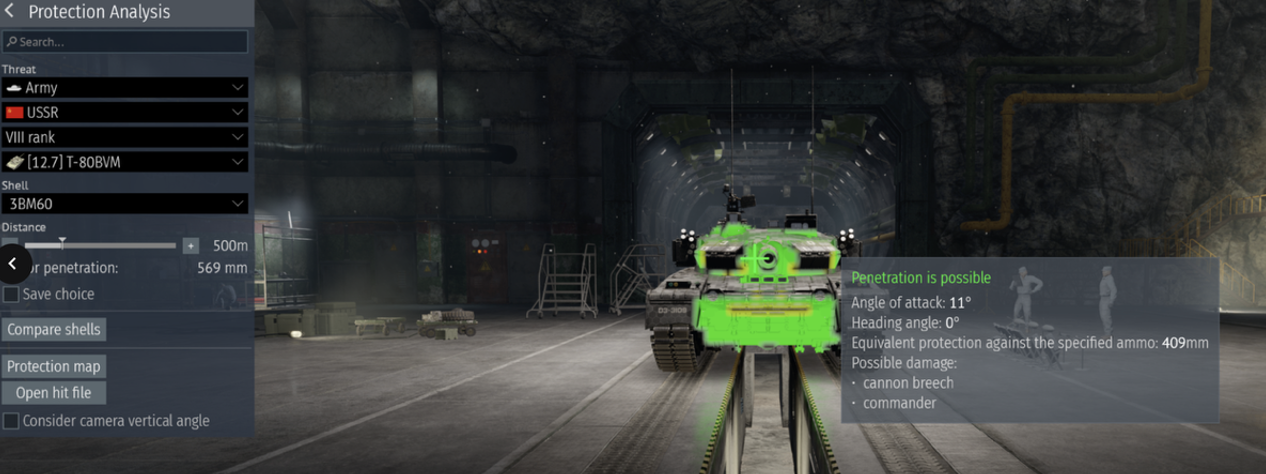
Now, lets compare the upper and lower front plates on these tanks.
For the Challenger, a shot to the upper front plate will go straight through the composite armour and kill ¾ crew members meaning you die instantly. On top of that, if you somehow survive your horizontal drive will be damaged or destroyed so you can’t return fire. (In this screenshot I think I put it right on the bit where the composite ends but test it yourself it still goes through in a lot of places).
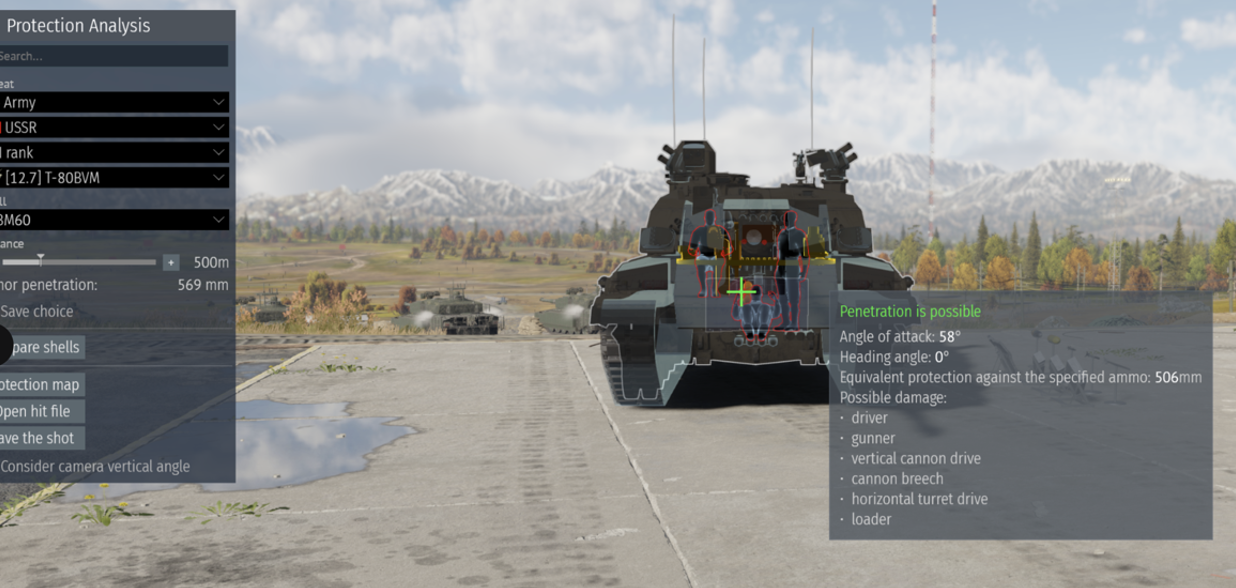
Lets compare this to tanks at the same BR.
The American M1A2 SepV2, ricochet.

The Russian T90M? Nothing, doesn’t even Pen.
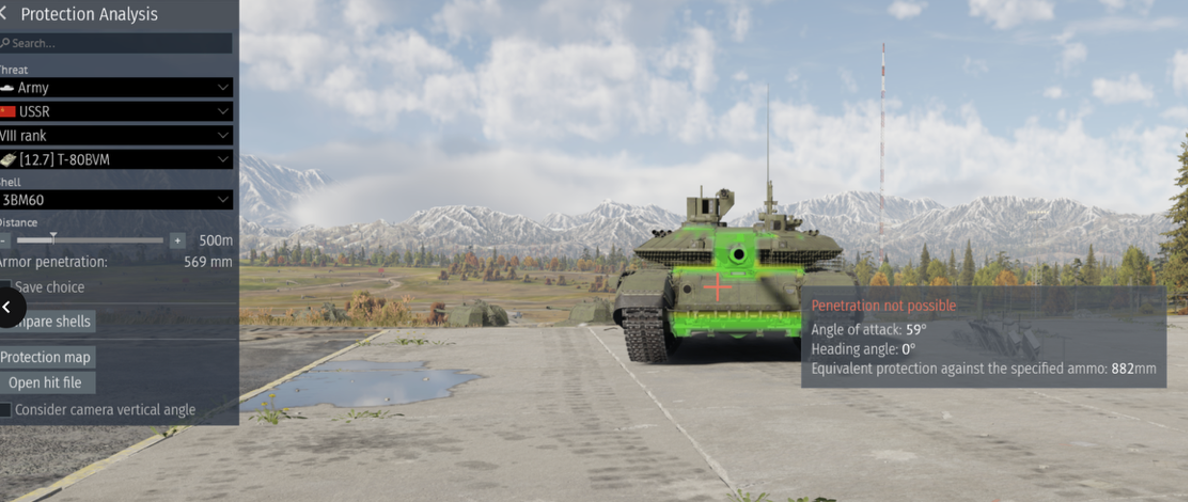
German Leopard? Says it might penetrate, but on a simulated shot it doesn’t.
But, surely the Challenger must have some redeeming qualities if not its armour, right?
Nope, it doesn’t. Lets look at the stat cards.
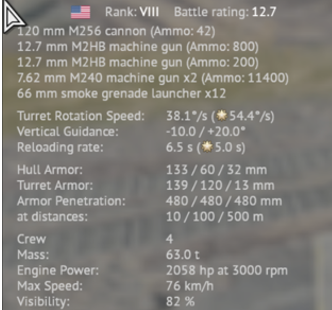
American M1A2 Sep V2 12.7
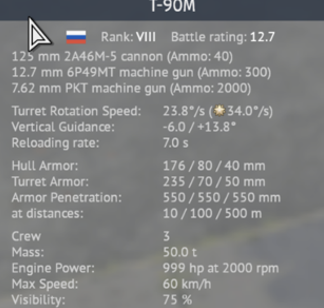
Russian T90M – 12.7
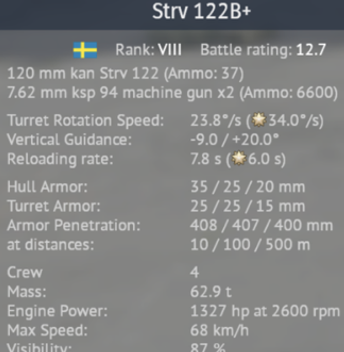
Swedish STRVB+ - 12.7
Chinese Al Khalid – 11.7
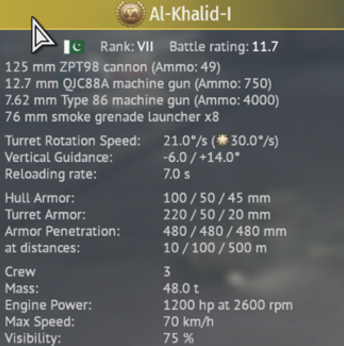
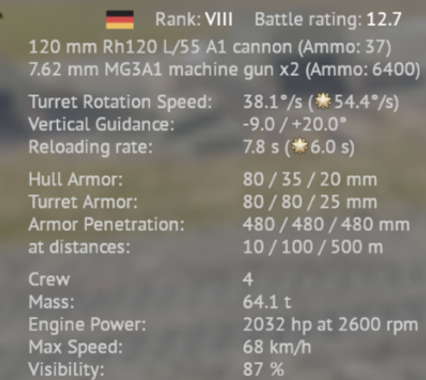
German Leopard 2A7V – 12.7
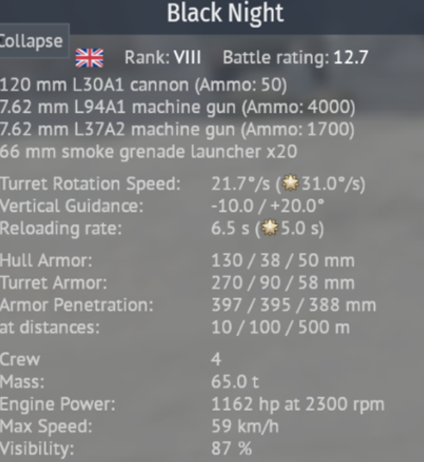
And finally, the British Challenger 2 (BN variant) – 12.7
Lets list the key stats in order from best to worst.
Speed: M1A2 - 76kmph, Chinese Al Khalid – 70kmph, STRVB+ and Leopard 2A7V tied - 68kmph, T90M – 60 kmph, last place is the Challenger at 59kmph.
So the Challenger is the slowest of them all, and even worse than that the Challenger doesn’t have proper regenerative steering like it doesn’t in real life, so it turns extremely slowly and takes a longer time to accelerate than all the others.
Round penetration (Highest APFSDS or another round if applicable) at 500m: T90M – 445 but it also gets an ATGM with 850, Leopard 2A7V – 641, M1A2 – 621, STRVB+ - 577, Al Khalid at a lower BR – 566, Challenger 2 – 558.
The Challenger has the worst round out of them all, with the lowest pen. Even the tank that fixes this, the Challenger 3, has the same armour issues (And is missing APS and ERA/NERA, which has been suggested and rejected) and is a side grade at best, as you sacrifice the reload for more penetration.
Weight, this is relevant later I swear: Al Khalid – 48t, T90M – 50t, STRVB+ - 62.9t M1A2 – 63t, Leopard 2A7V – 64.1, and unsurprisingly the Challenger 2 at ~65t (There are more variants with ever so slightly different weights, but all the above issues apply).
Max Turret traverse: M1A2 and Leopard 2A7V – 54.4/s, T90M and the STRVB+ - 34/s, Challenger 2 – 31/s, Al Khalid – 30/s.
So the Challenger 2 has, the second to worst rotation speed of them all, and its only better by 1 degree a second which is negligible. This is on top of the fact that some variants are of a higher BR than the last place.
Approximate size: The Challenger 2 has the largest profile on the battlefield by a decent margin. You are more than a metre longer than the next largest MBT, and a lot taller than your competitors.
Reload (Aced if applicable): Abrams and Challenger 2 – 5.0s, Leopard 2A7V and STRVB+ - 6.0s, T90M and Al Khalid – 7.0s.
This used to be the only category where the Challenger shined (The Japanese did it better anyway), but now that other tanks have received non-historical reloads, for “Balancing” it is now only about 1 second ahead if most others MBTs, if not the same reload. This seems like a lot, but with a round that pens ~100mm less than your contemporaries you would probably need to get off two where as your armour is so bad they only need to get off one.
So, to summarize what I’ve just said – The Challenger 2 has the worst Speed and Round penetration, it is the biggest tank on the battlefield, and it weighs the most, and your reaction time is limited because your turret traverse is on par with tanks lower BR than it. So, you are slow, weakly armed, and an easy target.
Although Dorchester’s exact composition and thickness are classified, multiple official and semi-official sources indicate that it represents an evolution of earlier Chobham-based armour arrays. Parliamentary Defence Committee transcripts reference Challenger 2’s armour as providing improved protection compared to previous designs, and MOD press releases describe continued emphasis on frontal survivability. While these sources do not provide numerical values, they suggest that Dorchester was intended to offer enhanced protection in key frontal zones relative to earlier systems.
And, I have emailed some people, who would likely be considered experts, myself. I emailed, Anthony Tucker Jones, a former tanker who operated Challenger 2s himself, and Nicholas Moran, a former American national guard officer who specializes in armoured warfare. What they said was quote ‘I have no basis upon which to make even a numerical estimate of effectiveness of either armour or ammunition’ (unsurprisingly) but that it was ‘As good as can be’ and ‘Expected to defeat likely targets from 125mm guns’. Of course Gaijin cannot verify this but I may be able to attach screenshots later.
From an in-game survivability perspective, the gun breech and mantlet area is a critical zone across all MBTs. In the Challenger 2, this area is currently more vulnerable to frontal kinetic penetrations than comparable regions on vehicles such as the Leopard 2, especially given the size of the gun breach. Hits in this location frequently result in crew knockouts, ammo cook offs or immediate loss of combat effectiveness for a minute+. Under similar engagement conditions, equivalent hits on other MBTs often result in more limited internal damage. This discrepancy may indicate that the armour or internal survivability modelling in this area is undervalued.
A similar issue can be observed with the upper frontal plate. The UFP is a primary engagement surface in hull-down or long-range engagements, yet in-game it can be penetrated by rounds that comparable MBTs at the same BR frequently resist. Given that Challenger 2 entered service later than several of its peers, this behaviour appears inconsistent with expected generational improvements present elsewhere in the game.
While the lower frontal plate is a weaker area on most MBTs, the Challenger 2’s overall mass, internal layout, and emphasis on crew survivability suggest that its LFP may currently be performing below a reasonable relative baseline. Adjustments here could improve consistency without removing a known tactical weak point.
War Thunder already models classified systems such as composite armour, ERA, and APS using estimated values to achieve reasonable balance and consistency. Given that the Dorchester Lvl 2 is an evolution of Chobham and that Challenger 2 entered service later than several comparable MBTs, it appears inconsistent for its frontal armour to perform noticeably worse in similar engagement scenarios. In-game observations reinforce this concern, particularly regarding turret cheeks, the breech area, and the UFP, which are penetrated under conditions where vehicles like T90M and STRVB+ often resist the same ammunition.
And remember how I said weight would be relevant later? Here it is. The Challenger 2 has the reputation of being the most armoured tank in service, and not without reason. It has notably survived 70+ RPG shots, only one has ever been lost to direct tank fire and that was from another Challenger 2, only 2 have been destroyed in Ukraine and that was from Drones and an abandoned one being repeatedly struck by Kornet missiles until it was destroyed, and it has engaged in Peer on Peer combat in Ukraine and come out victorious. It is also the heaviest tank on the block, because British army doctrine dictates that Challengers should be made to protect the crew at all costs, and be used in hull down fortified engagements. It should only make sense that the Challenger has good armour to match the doctrine and weight. In game, it seems like lighter, fast, and smaller tanks are more well armoured, have better armaments and better tech than the Challengers. Think, T90M or T80BVM.
Another user also created a post asking for it just be looked at, so I will steal a bit of their information and put it here as well (I also knew about these myself but I’ll just credit them)
- The Challenger 2 is officially described as being protected by “second-generation Chobham composite armour (Dorchester Level 2), proven highly effective in operational service.” This is stated on the official British Army website.
- The Challenger 3 , as confirmed in a MOD press release dated January 16, 2024, features a “next-generation modular armour system providing enhanced protection against modern anti-tank threats.”
I believe potential solutions could be as follows: Make upgrades to the effectiveness of the Dorchester Lvl 2 armour against KE and CE penetrators to all variants, and add some composite to the breech as well, the breech is absolutely huge compared to other MBTs, because there is very likely composite armour present in such a weak spot of the turret. The UFP should remain the same in terms of Dorchester present, but the effectiveness of it should be readjusted, and Dorchester should be present in the lower front plate to some degree (Probably no more than 300mm, putting it on par with other MBTS). This would allow some variants of the challenger to go up to 12.0/12.3 to create better lineups, especially if the Ajax with the Javelin gets added (Please!!), and would allow Britain to stay competitive in the current meta of speed and firepower, of which it has neither.
To fill the void left, I would suggest tanks like the Indian Arjun, Indian Ajeya, moving the Bishma from squadron to tech tree, adding some other commonwealth nations tanks etc, as Britain definitely has the options available. Especially adding more nations tanks would encourage people to play Britain, as there is more variety at the top or their home country might be represented more (Worlds biggest country, India, I’m looking at you).These are actually tanks that have all been suggested before, and I would actually love to see myself.
Alternatively, I suggest lowering all variants BR so that the “Weak” MBT cant face other contemporaries, however this would create issues as a Modern MBT would be facing tanks without Gen 2 thermals, proper fire control systems or proper APFSDS-T rounds.
[Briefly] Regarding Challenger 3, public information indicates the introduction of an upgraded armour package alongside increased use of NERA, ERA, and the Trophy APS system. Public photos of all three of the previously mentioned exist so Gaijin could implement it, they just choose not too. While these elements are already covered in separate suggestions, they are relevant to the broader discussion of survivability and armour representation for the Challenger line as a whole.
Likely FAQ or comments:
Read this, it might have some responses to common arguements
“Oh, but, the challenger entered service a long time ago its bad now!” Yes, it may be true that older Challengers entered service then, but it has received many upgrades and updates since then. The Dorchester armour itself is on its 4th generation/upgrade, and probably more as it isn’t publicised much.
“Chobham armour is outdated now!” Sure the original one is, but Chobham isn’t just one armour it’s a family concept of armour, for example a much older version of it was shared with the Abrams tank, but the Abrams likely doesn’t have any of what the challenger has, and vice versa. The armour is constantly evolving, so is the tank.
“Secrecy means we cant prove anything” Well sure, that’s probably true, but in game at least we could move it down in BR seeing as its objectively worse in every way. And, using logic and the little information we have we can assume that the Challenger 2 is likely very armoured because British doctrine dictates that it must be used in a defensive way.
“It hasn’t faced any peer on peer combat, it hasn’t proven itself!” Yes this is again, mostly true. However older/outdated version of the challenger were used in Iraq and have been donated/used in Ukraine, and have actually seen some peer on peer. And also, lack of action doesn’t make it bad. British doctrine is designed to use tanks as little as possible in aggressive situations.
“The UK tank industry is small so the Challenger is bad!” Actually, for a while the UK spent disproportionate amounts of money on tanks vs the rest of the army. And in fact, the British are generally credited with inventing modern composite armour and setting the golden standard, and a lot of tank designs among NATO allies are based off that.
How Would I compare it?
If I had to guess, seeing as after the Iraqi war the British updated all their Challenger 2s, they are probably (armour wise) better than or on Par with the M1A2 sepV3 or the Leopard 2A7V/2A8. Don’t get me wrong, those are still better tanks because they have more firepower and manoeuvrability/speed, but armour wise I think the challenger 2 would be on Par, and the challenger 3 would be better. This is simply because British doctrine dictates it be strong for defensive positions, and that it just weighs do much.
Overall, the intent of this post is to encourage discussion on whether the Challenger 2’s current armour and survivability modelling is consistent with other top-tier MBTs at similar BRs. Community feedback on turret, breech, and UFP performance — as well as suggestions for balanced, gameplay-friendly adjustments — is welcome, infact encouraged.