- Yes
- No
Introduction
The development of the Centurion began in 1943, as a response to the immediate threat posed by German heavy tanks, such as the Panther and Tiger. British tank doctrine at the time relied on cruiser tanks for mobility and infantry tanks for protection, but neither could effectively match German armour in both firepower and survivability. Interim, improvised solutions, such as the Challenger and Sherman Firefly were adopted, but a purpose-built solution was needed. To address this, the General Staff issued specifications for a new heavy cruiser tank, designated A41, which combined thick, sloped armor with a 17-pounder gun, and, potentially most importantly, abundant capability for future upgrades. The earliest designs and prototypes, designated P1 - P-15 (later only P1 - P10), incorporated a Polsten 20mm cannon as a secondary armament for engaging lightly armored vehicles and infantry. Vickers-Armstrong was chosen to lead the project, and despite wartime resource constraints, the first prototype was completed in early 1944.
Production of the first ten prototypes was carried out under wartime urgency, with the goal of deploying them to mainland Europe. By February 1945, these vehicles were undergoing final assembly. The Polsten 20mm cannon, initially included for additional firepower, was mounted in the turret but was later deemed unnecessary and removed in subsequent versions. By April 1945, the first six Centurion prototypes were shipped to Belgium for field trials, but with the war in Europe ending in May, they did not see combat. The remaining four were completed shortly thereafter and used primarily for evaluation and refinement of the design. Despite some thing issues, this field testing proved to be a resounding success, and soon after an order was placed for 800 tanks, the first 100 of which were to be A41*, or Centurion Mk 1.
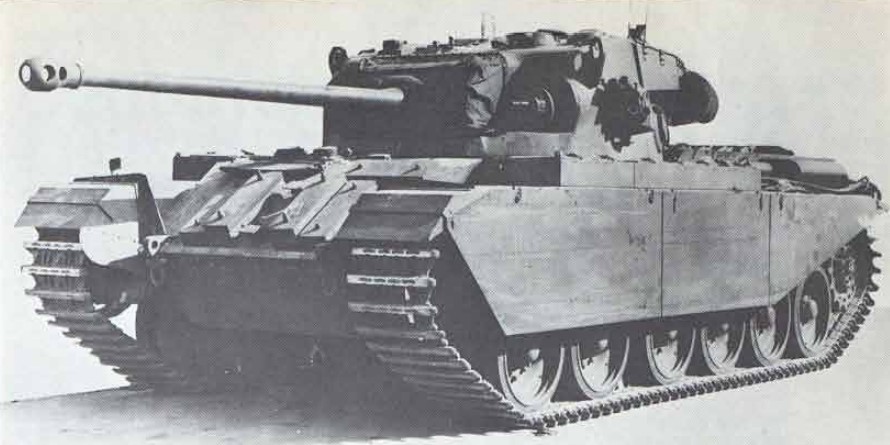
The tank being discussed in this suggestion is a Centurion Mk 1 equipped with add-on plates bolted on to the upper front glacis. This vehicle, constructed in the mid-late 1940s, was used for trials and testing for the performance of a heavier Centurion, in preparation for the anticipated increased weight of the Centurion Mk 2. The trials particularly focused on the impact of the additional weight on the suspension, roadwheels, and drivetrain. The Centurion Mk 1 (Heavy) seemingly performed sufficiently, with the Centurion Mk 2 being adopted into service with no marked decrease in reliability, and only a slight reduction in top speed.
In game, this would provide and additional Centurion Mk 1 for the British line-up, and, in my opinion, would still be suitable for 6.0. Although the ballast will provide additional armour for poorly-aimed shots, significant areas of the hull are not covered by it, and the turret weakspots still remain. Increasing the weight to (approximately) that of a Centurion Mk 2 will also reduce the mobility somewhat, so this vehicle would serve as more a unique sidegrade to the Centurion Mk 1, instead of a direct upgrade.
Specifications
Spoiler
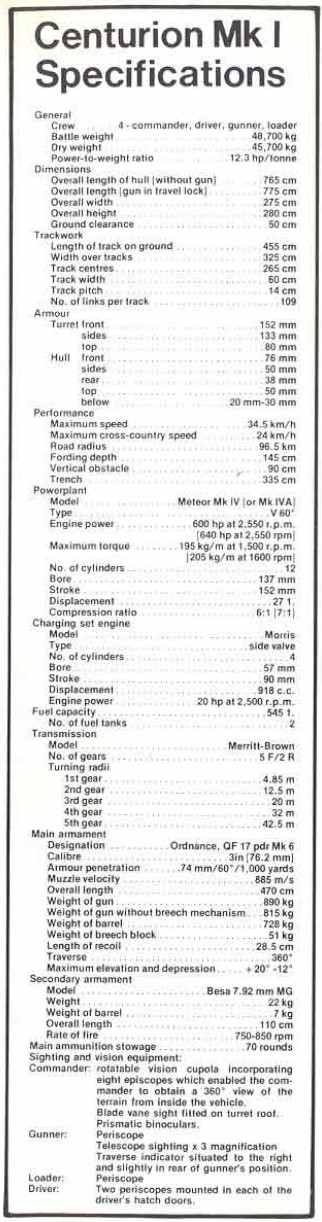
(+approximately 2 tons to the vehicle weight, with a small decrease in top speed as a result)
Images
Spoiler
Sources
Spoiler
The Centurion Tank, Bill Munro
Centurion Universal Tank 1943-2003, Simon Dunstan
CENTURION in action, Stephen Dunbridge
The CENTURION TANK in Battle, Simon Dunstan