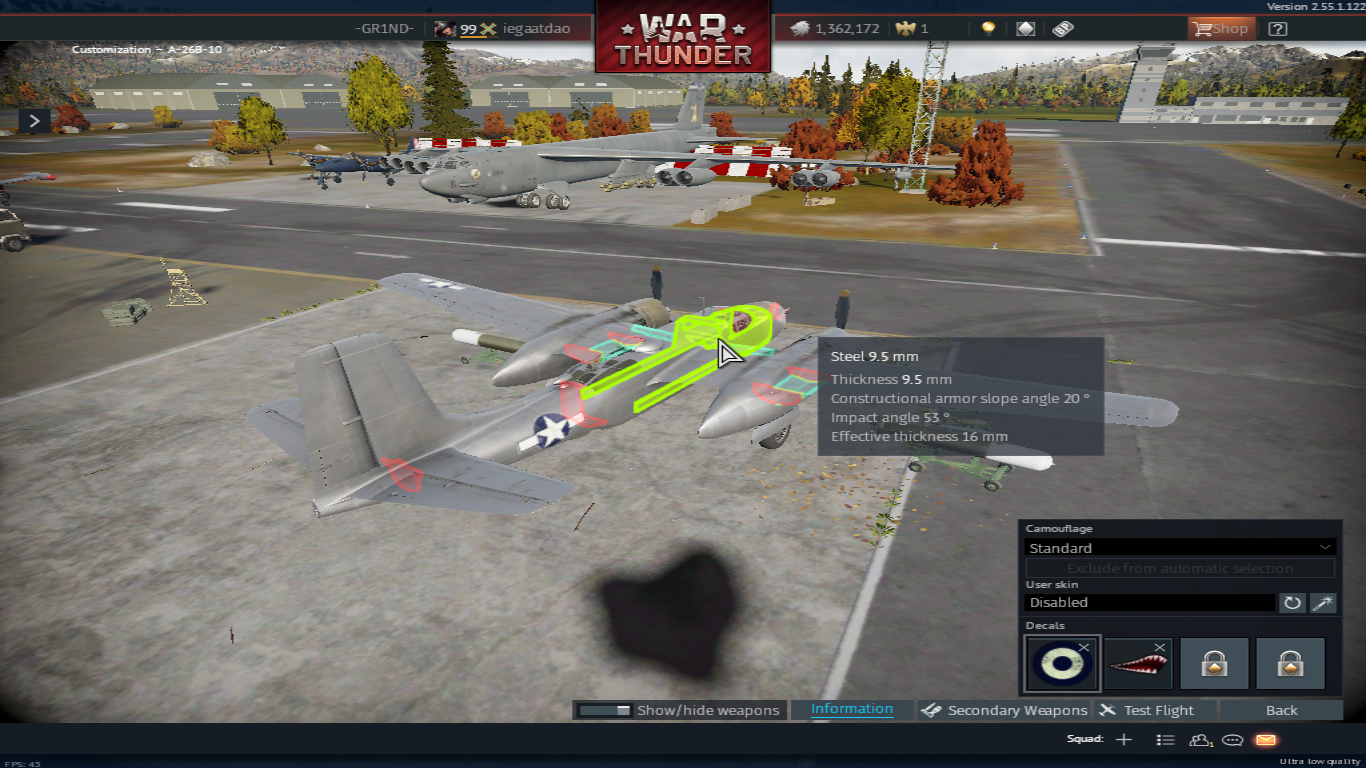
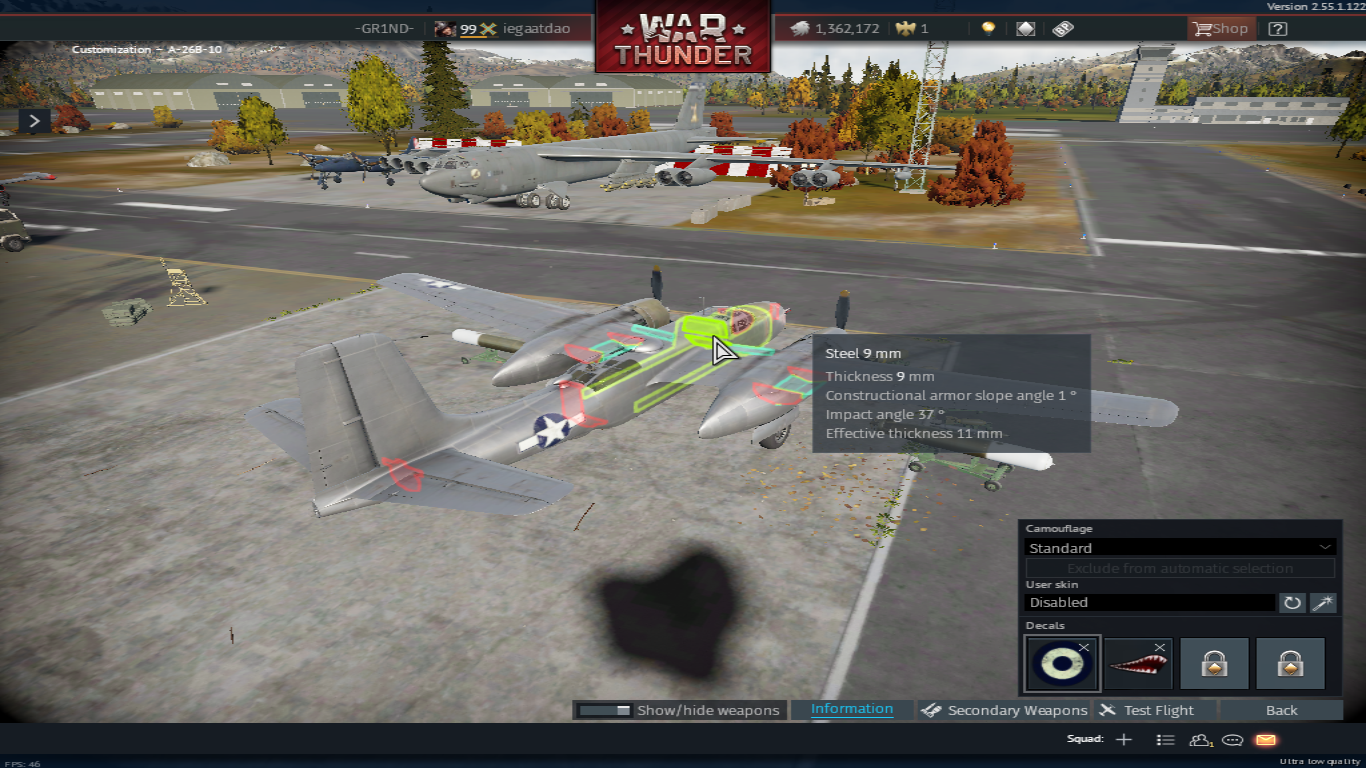
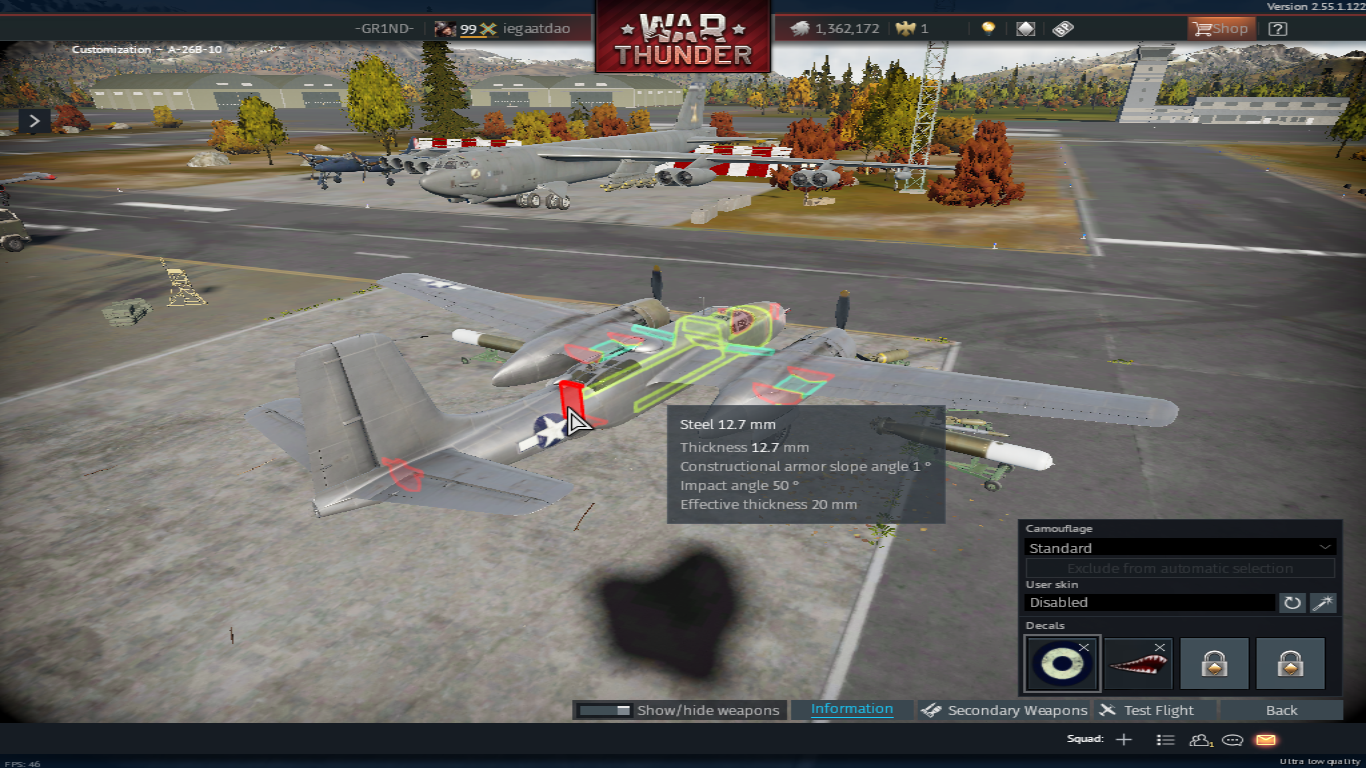
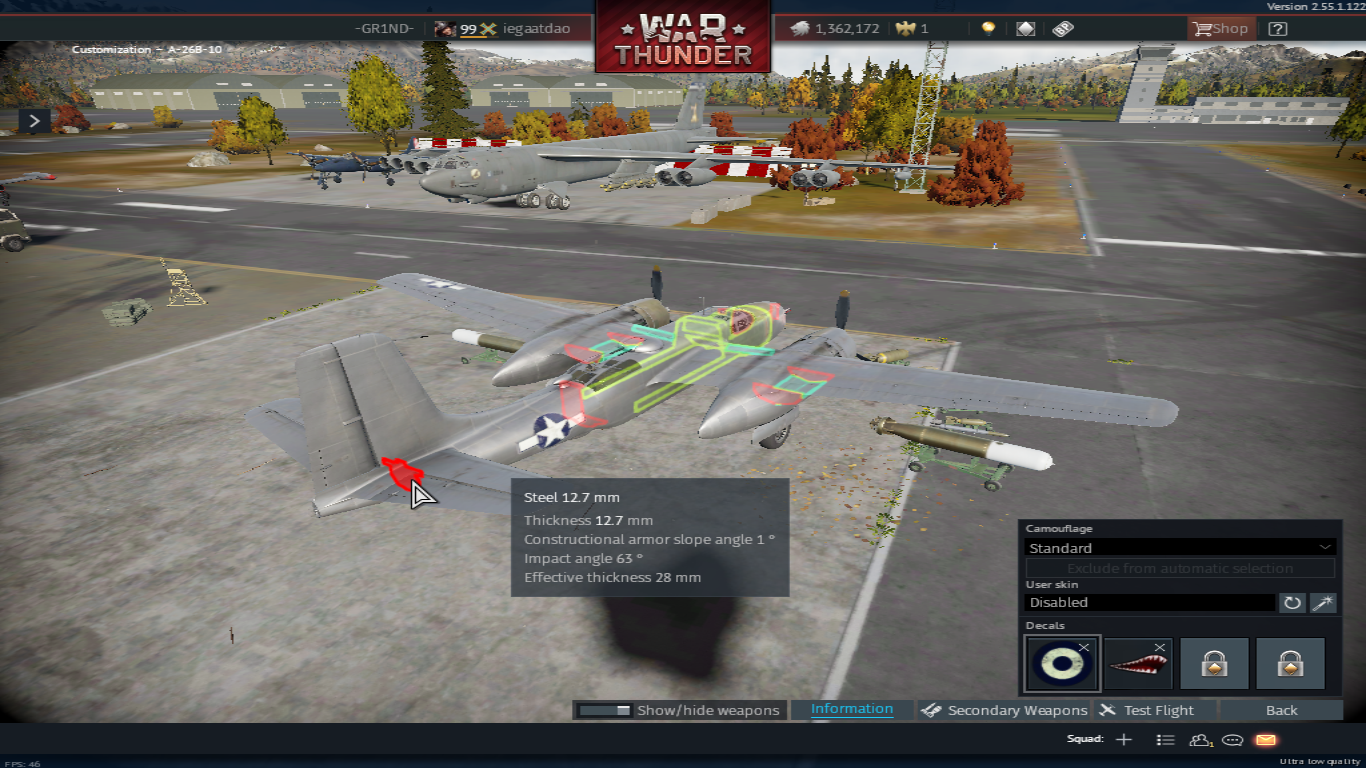
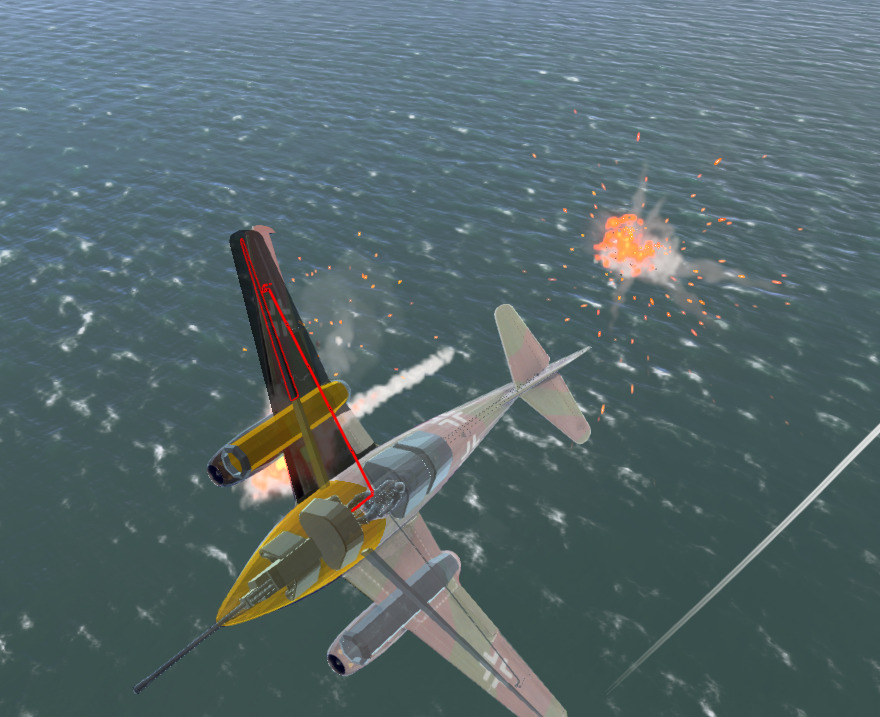
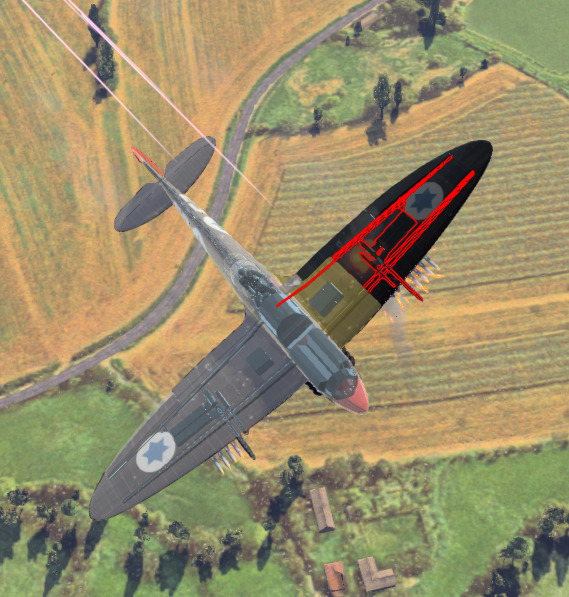
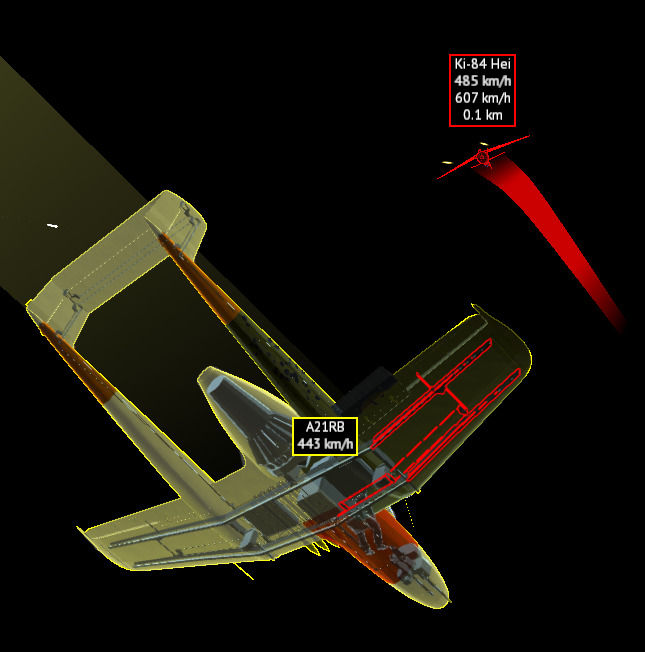
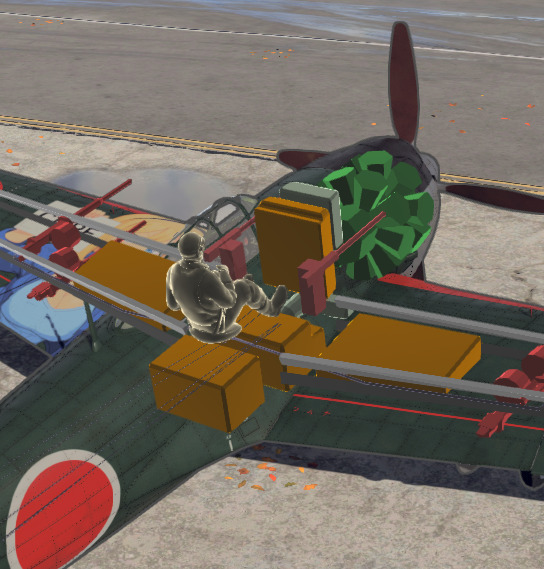
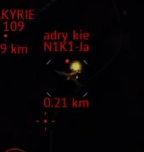
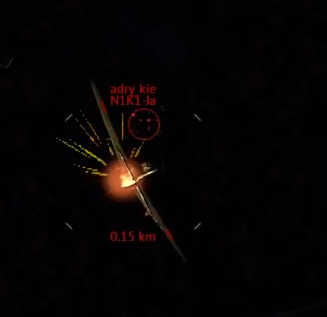
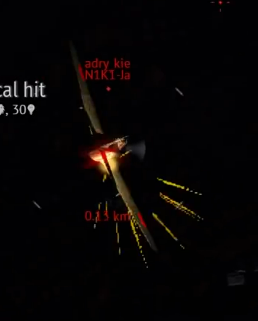
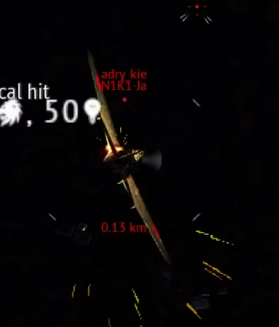
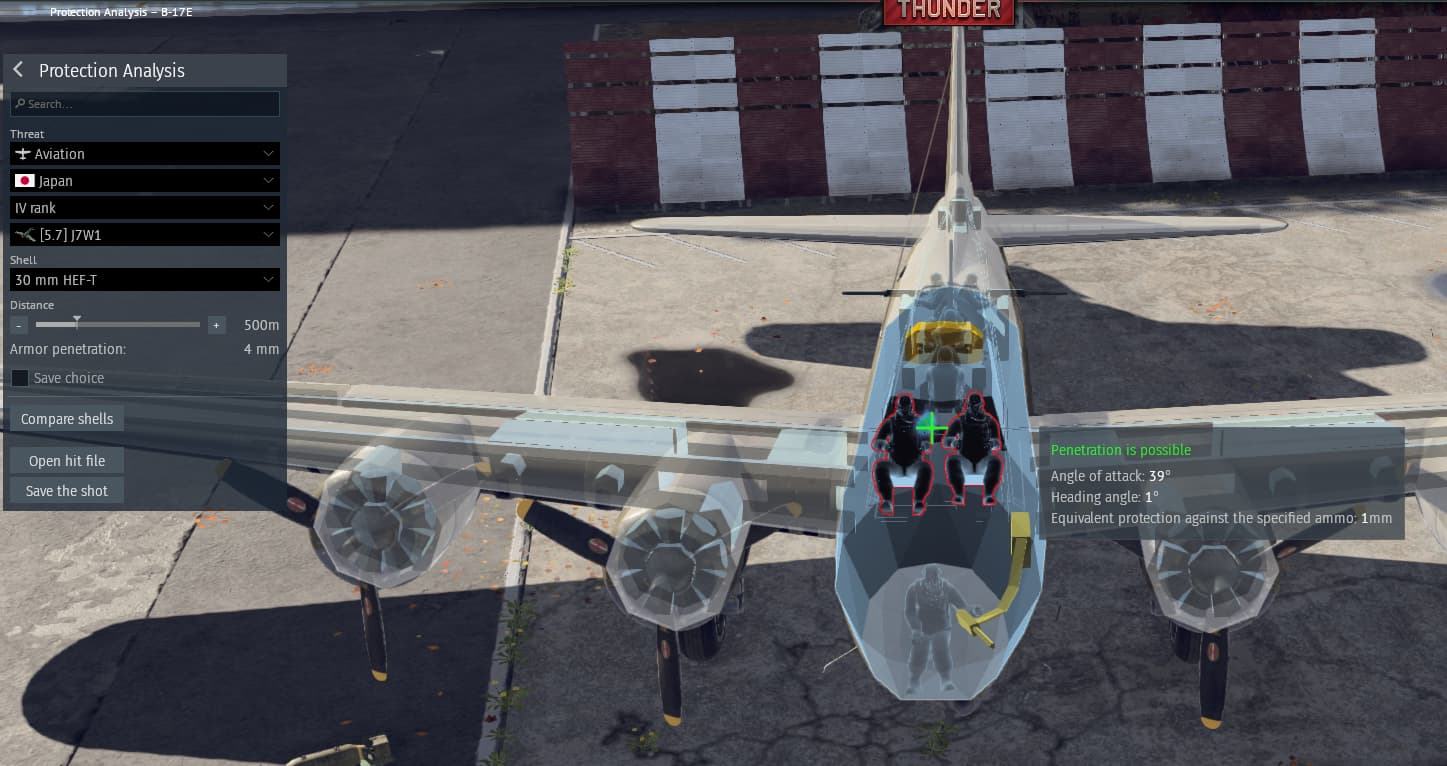
Except with the way that aerodynamic modeling is implemented in the game causes anything short of black damage to basically only result in small reduction in top speed. Removing control surfaces often times is more important than whatever skin damage your plane takes in the game.
For instance how much worse do you think a P-47 would lose in real life if a ShVAK went perpendicular through the middle of the fuselage behind the pilot? How do you think it compares to the game?
In real life it will fare far worse than in-game. There’s actually an extremely obvious reason for this as well.
True, I believe more smaller holes should produce a lot more drag by disturbing the air a lot more, I’ll give you that.
If the ShVAK user took default belts (which I would predict would be the best one, followed by armored targets belts) AND pilots actually start dying (Im also annoyed by said stuff), a single AP-I round from +400m would pen the 9mil armor plate, (currently only at 300m).
I did find 2 points to your credit, 9mil isn’t a lot, I saw some 12.7mil thick armor float around some aircraft.
Second points is that I-16 type 27, DOES NOT RECIEVE AP-I, ONLY TRACERS AND FI-T.
I-16 would actually die.
Yet the Type 5s are right there, on more aircraft, with the same RoF, better range and damage.
one hit from Ho-155 HEF:
I dunno man, definitely doing more damage than Ho-5s. And way more than your MK108s.
It’s 5.7 right now with good guns. Why would it be 5.3 with unusable guns?
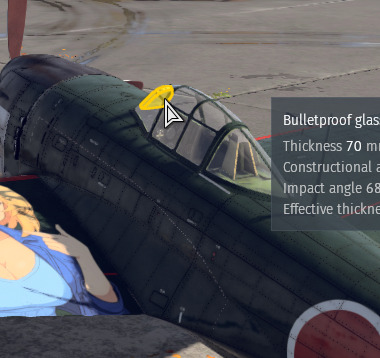
Let’s go back to that DEFYN video. One of the planes he is shooting at is the N1K1-J. It has no armor aside from bulletproof glass in the front. It has several fuel tanks, including in the wings. This is not a tough aircraft.
Spoiler
All those hits right in the ring roots and center of the fuselage, and the enemy isn’t dead, isn’t on fire, isn’t flatspinning, and has dived away to safety. Incredible gameplay.
Balance should never be done based on who can cry hardest. That alone has made me even MORE against any cannon nerfs.
Explosives aren’t everything, fragmentation is a huge source of damage.
It would literally move even higher because it’d be one of the few planes that can shoot someone down in one pass.
LOL
By the way, this plane lost 400hp overnight a couple years ago. Huge nerf. Flies very little like it did before, with much lower climb, acceleration, and sustained turn rates.
It’s still the same BR.
In fact I can’t recall a single time in recent memory where a japanese fighter moved down in BR, and guns have been all over the place while I’ve been playing.
It has horrendous players. I was playing the 5.7 A6M5 Otsu very recently and I could not get to most 3Us before they died.
Except the argument that has been made in this thread is to the effect that shots directly from the rear should not penetrate with ShVAK because of the following;
It is over-performing in terms of armor penetration.
The game does not account for bullets tumbling; which is why when I presented clip of ShVAK firing directly from rear of FW-190 and doing negligible damage that it was acceptable.
So here is essentially the situation that we have in regards to ShVAK. All killing mechanisms that result in control surface detachment / wing detachment should be removed from the game for this shell because it is not realistic. The only way to get a kill should be from killing the pilot, damaging the engine and causing it to crash, damaging the cooling system and causing a crash, or from a lethal fire.
But allegedly to accurately implement that the damage of ShVAK needs to be reduced to never detach a wing or tail.
Fragmentation or explosive damage should also have negligible effects on control cables unless they are direct impacts.
The in-game incendiary fire chance is far too high for ShVAK, M20 AP-T, Berezins, etc. So that further needs to be reduced. This is especially true for planes with self-sealing fuel tanks. Also it can be argued that fires should not cause wings to fall off like they currently do in-game.
We can take it a step further and make the argument that engines should not be “1 shot” by ShVAK either; this is especially true of radial engines which can take shots to individual cylinders and function at reduced power. So that degree of realism should be taken into account as well.
Also it is perfectly realistic for an F6F to fly home without any wings because it has a large horizontal stabilizer that can function as a wing.
Why do you think is at 5.7 instead of 6.0? Same with P-51h which should be at 6.7.
Look an actual upside (should still come down after it)
Because all 20mil are frags, no difference from fragmentation of high explosive shell and a fragmentation shell, its just a fancy tag, and instead of making a separation, both shell types were turned into beffed up mine rounds.
Balance has been done due to tantrums, ShVAK was a way too suboptimal cannon? Yes
Was the FI-T round too weak? Yes, it didn’t even cripple aircraft when that is what a fragmentation round should do by punching 100 tiny hole and getting everywhere.
But the tantrum was “ShVAK can’t deal explosive damage!”, so the FI-T was turned into a fuselage destroying weapon instead of a module damager and crippling tool and the tantrum stopped.
Everyone happy since now they have to use 10% less neurons when selecting a belt. Balance out the window (Russian aircraft had lower BRs for a reason).
Would a tumbling round deal more damage than a non tumbling one?
I’d imaginea tumbling bullet would leave a larger hole in a radiator, but engines not so sure.
Pilots would have it worse by a 1000% for sure.
The problem is that I don’t want an artificial exception in code for 1 cannon, as far as I can take it is basically “below x amount of filler = no removal of sections” But I want to avoid it.
Mineshells use a thinner casing made from drawn steel in order to get enough strength out of less material. There is less fragmentation possible because the casing around the explosive charge is much thinner.
Because it quite literally did minimal damage. You must have seen all those hits on a plane with no armor at all that failed to do any damage, even to the unprotected pilot.
Which you can see in-game since it goes both ways, there is no difference in fragmentation from both shells, if anything only caliber determines fragmentation and same rule applies, explosive = fragmentation.
Let me set my views on each shell type
fragmentation = more spread out damage, with fragments able to damage unarmored modules and create more drag, does reduced damage vs spars / engines, area of effect is bigger.
high explosive = concentrated damage, will damage spars as normal and deal extra damage to unarmored modules, however the area of effect is smaller.
AP = deals massive damage to modules but requires direct hits
I = Fire (duh), should at least be able to pen an unarmored fuel tank (it barely can, worse if sub 20mil since it can’t even pen fabric) and have a chance to start an engine fire.
SAP = penetrates skin, deal massive damage to modules, but reduced damage to spars / engines
APHE = SAP with AP benefits, but requires the fuze to actually work.
Curently high explosive and fragmentation have been fused and then cranked up.
The armor penetration would be significantly less. And because ShVAK shouldn’t detach tails or destroy control cables then it would be useless from rear aspect.
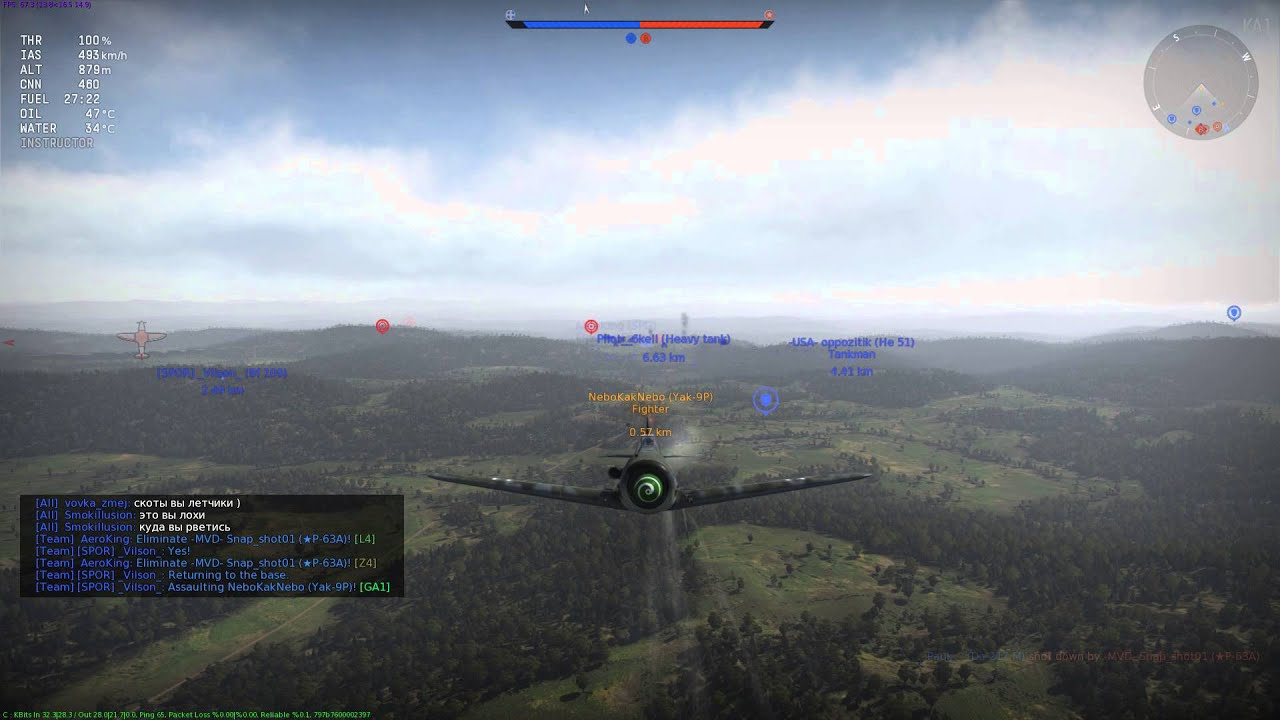
This is the clip that Kiwi was saying was accurate earlier. Look at all of the damage and what it does. Literally nothing.
That is whant I want to avoid, ShVAK and similar cannons should be toned down to represent the filler, but not completely destroy it, make it so “fragmentation” part does frag, because in that clip is it simply using explosive power.
Except the argument that has been made is that the clip is accurate because the fragmentation would just get absorbed by the armor plate and that the tail section of the FW-190 doesn’t have fuel tanks or anything particularly vulnerable to fragmentation damage. So therefore the situation where 190 can just keep flying straight is permissible.
This is specifically in relation the the clip that I posted. Basically ShVAK should not do any damage from the rear unless it is lucky to get a fuel leak or a fire.
My point is not that it can kill. My point is that it’s not a magical 1-shotting weapon, far from it.
If I can still not get reliability with 1-shotting people, give me 20mm. Type 5 is of course muxh better than Ho-155, but they still suck compared to f.e. US 20mm.
30mm Type 5 only advantage is a bit of range in some cases.
Now, we have Soviets with lower velocity 23mm and 37mm. Both are pointless when Shvak exists.
I’ve said it a lot of times, I’ll say it again: why the only differences between 20mm are ROF and ballistics?
Why we can COMPLETELY ignore the shell construction/damage due to "balance’, but there’s no issue with German cannons having crap range/ballistics because they were designed with maximum damage in mind.
In such case give me a fictional 108g FI-T with 7g of HA41 at 760m/s and lets be done with it, because that’s exactly what would have been designed if 7g of HA41 could 1-shot single engine fighters.
Enough hits will eventually cause enough structual damage for the aircraft to not be able to fly anymore, or even break apart.
Make enough holes or fire from close enough range against an unware target and you might even fire right through the holes you just made in the airframe.
Of course this isn’t modeled but it’s also not modeled that 20mm API will destabilize after impact and most most likely hit a plate sideways with reduced armor penetration.
Unless this is modeled, the API will always be kill pilots from cloes range, just punching through the pilots armor.
A 20mm is obviously going to be more lethal, as the damage caused to fuel tanks is much bigger.
At 400 yds:
M20 API-T: 40.4g, 566m/s, 1.17g IM-11 Flash powder (modifier 1.0) → 40% chance for single hit fire
At 800yds: 20% chance
20mm OZT: 96g, ~575m/s, 4.13g A-IX-2 (modiffier 0.5) → 66% chance for single hit fire
At 800yds: 41% chance
Of course they are not really directly comparable, since the M20 penetrates through the airframe while the FI-T shell explodes on impact. Most likely it will not have the same effective range inside the aircraft but it will cause more damage to a fuel tank than a single .50cal.
The closer it gets the more damage to the fuel tank and the more damage to the fuel tank, the more sever the fire is going to get.
You also have a higher chance to damage a tank with fragments than with direct hits from a .50cal.
A modifier of 0.5 for aluminized RDX might be too high but for comparison:
The early OZ shell contained 2.8g GTT explosive mixture and 3.2-3.4g Incendiary composition, similiar to flash powder.
This was later replaced with 5.6g A-IX-2, aluminized explosive (74% RDX, 23% aluminum, 4% wax), very similiar to what was used in 20mm Mineshells after they replaced the PETN with HA 41.
So the original OZ shell contained more aluminum, contained oxidizer and was inside the reinforced bottom part of the shell, which most likely made it a more effective as an incendiary shell than just using A-IX-2.
Most likely this was done to simpify production.
On th other hand, the shell would fracture into more fragments and 20mm API also existed to direclty hit components inside the aircraft. And even though the incendiary effect would most likely only occur after striking an armor plate, it it could still cause lethal fuel leaks that could be ignited by other incendiary rounds striking the area.
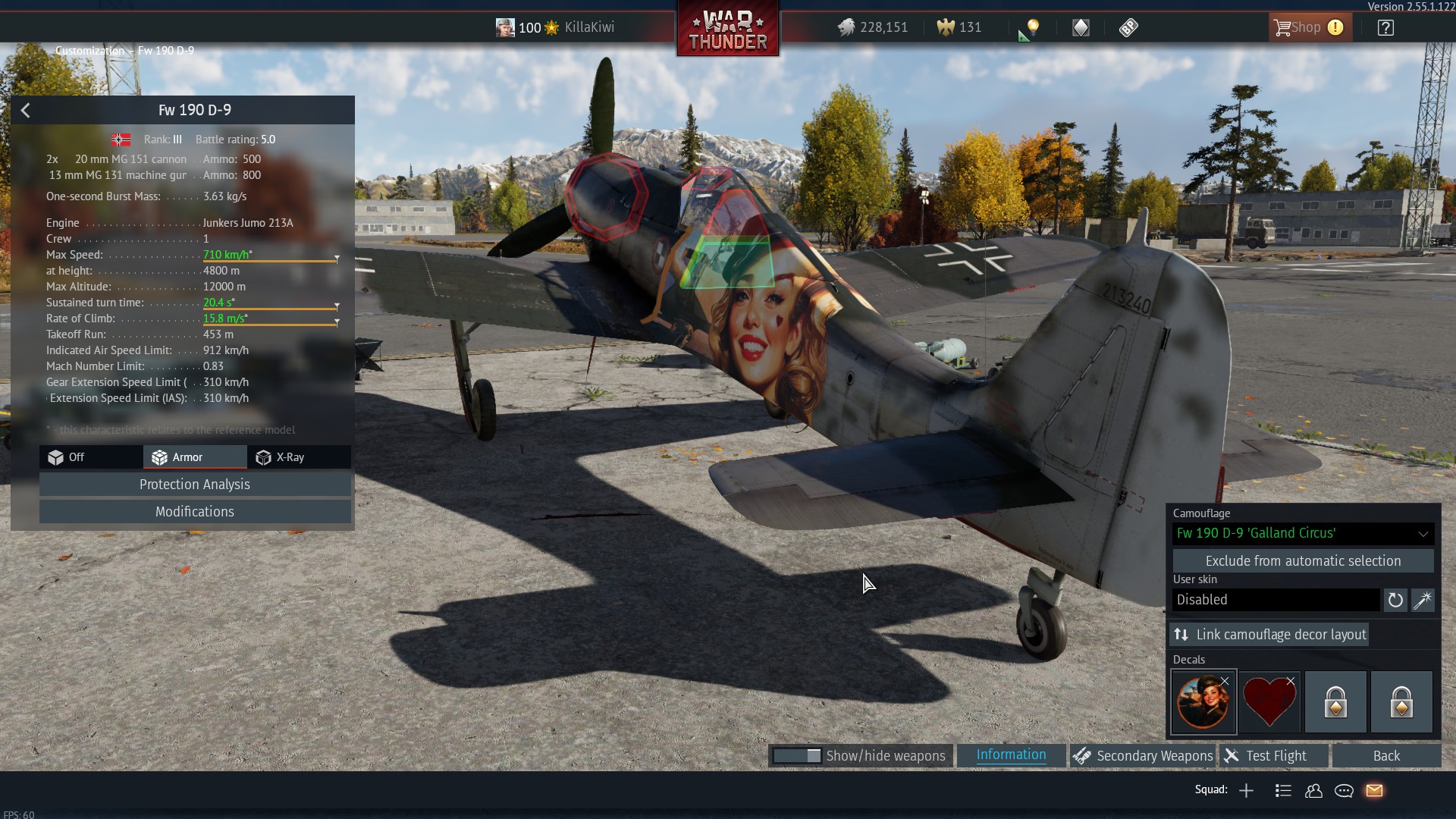
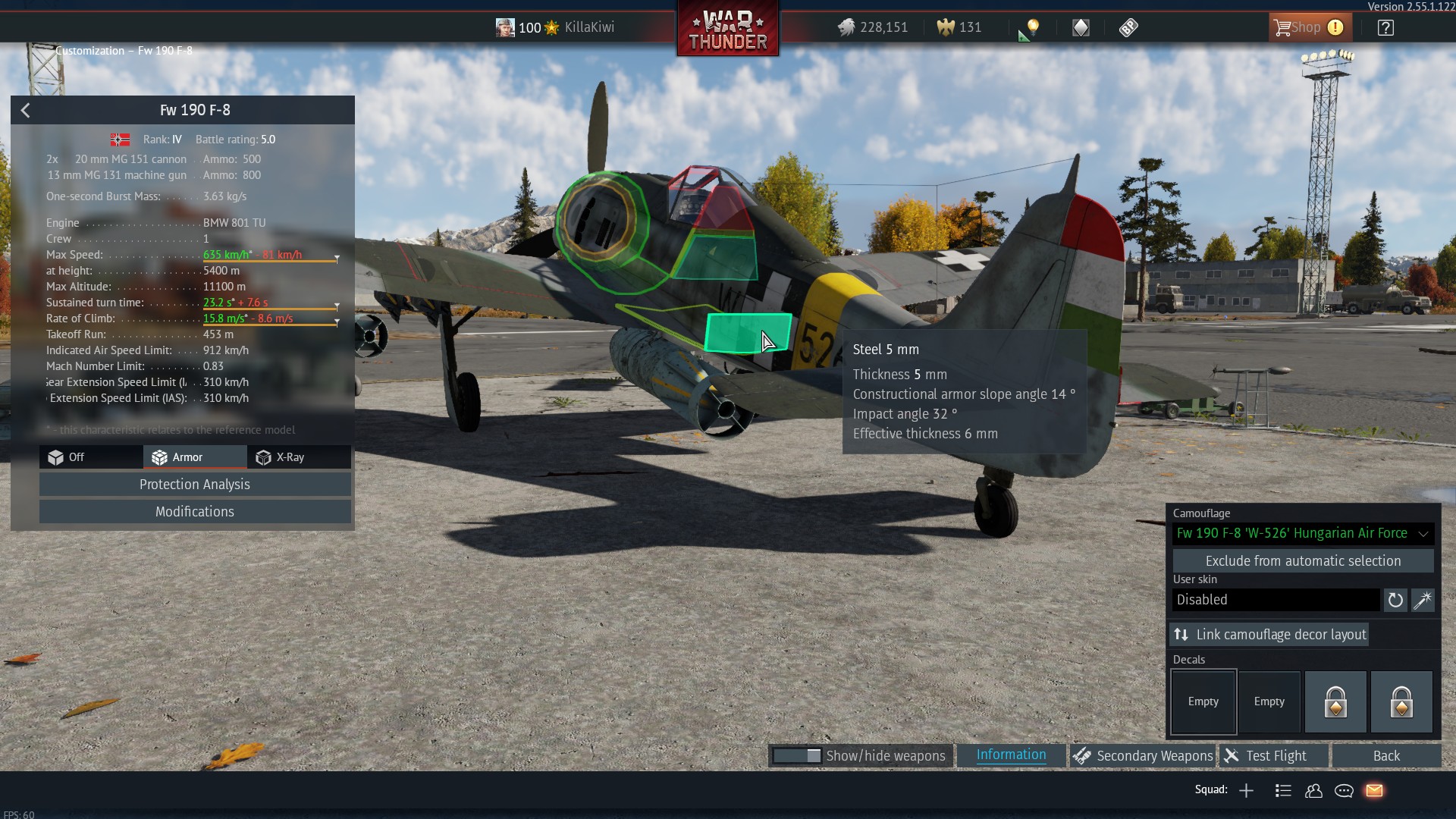
Fw 190s also had the armor protecting their fuel tanks removed. Previously they had the same layout as on the F-8.
So the fuel tank on the Fw 190 is now always vulnerable by attacks from behind.
Engines should be more reslient in general. Right now every hit takes away a certain amount of HP but of course the actual damage would depend on impact angle and what part was hit.
You can have your engine melted in seconds even from LMG fire, which isn’t all that realistic.
Only 25% of hits against the Bf 109 engine from the front will cause delayed lethal damage. None are going to cause immediate lethal damage.
Only 11.3% of the engine hit by a .50cal is going to result in immediate lethal damage.
But it also shows that hits to the bullet proof glass are going to disable the fighter momentarily until repaired.
That is my point though. More “accurate” damage by your estimation is planes taking even more rounds to destroy. There are basically no circumstances where ShVAK should kill pilot from direct rear. That is supported by your claim of previous clip being accurate by your estimation or that getting fuel tank fire would be lucky.
So would ShVAK be more or less likely to cause fires than it currently does? Would it be more or less effective in causing fires than current M20 API-T in the game?
So should every cylinder of the engine require a direct hit to disable? P-47 should take how many hits to the engine? One per cylinder?
“Realistically” head-on kills should only be possible with cannon equipped planes. But only certain (German) cannon equipped planes.
Basically German planes should be able to glide back to their airfields under most circumstances found in War Thunder and should basically never be shot down unless it is a full sized EC map like Dover Strait.
It simply makes no sense from a gun point of view.
You can have 4 20mm and will to the same job as two 30mm but with the benefit of carry more ammo.
So what’s the point?
Why have a 37mm cannon when you can just have a 20mm Vulcan that will laserbeam cut through any plane?
It simply makes no sense to have this lethal of structural damage when the main damage component would be fragmentation.
Explosive shells are literally AHEAD that release fragments instead of subcaliber payload.
The principle is the same. Make it more likely to damage components inside the aircraft.
They even trade higher muzzle velocity and likelyhood to hit for the destrutive power of explosive and incendiary effect.
But my Ho-155s are onetapping even jets. There’s lots of 50mm 262s at this BR and 20mms don’t always kill them in one hit, even if you have four cannons.
This should change, but we should also NEVER have a case where someone can sit in front of your guns and keep flying unopposed.
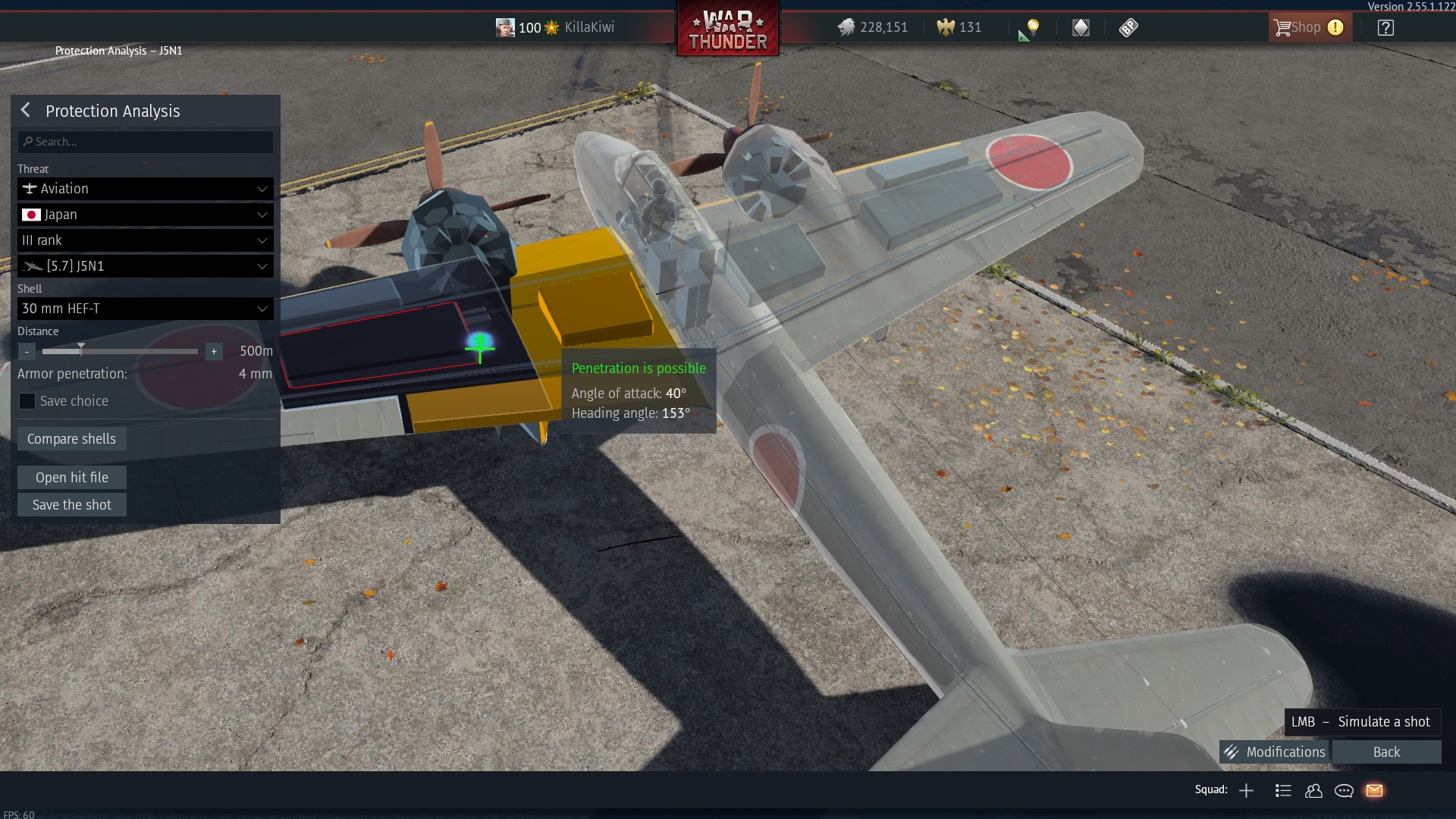
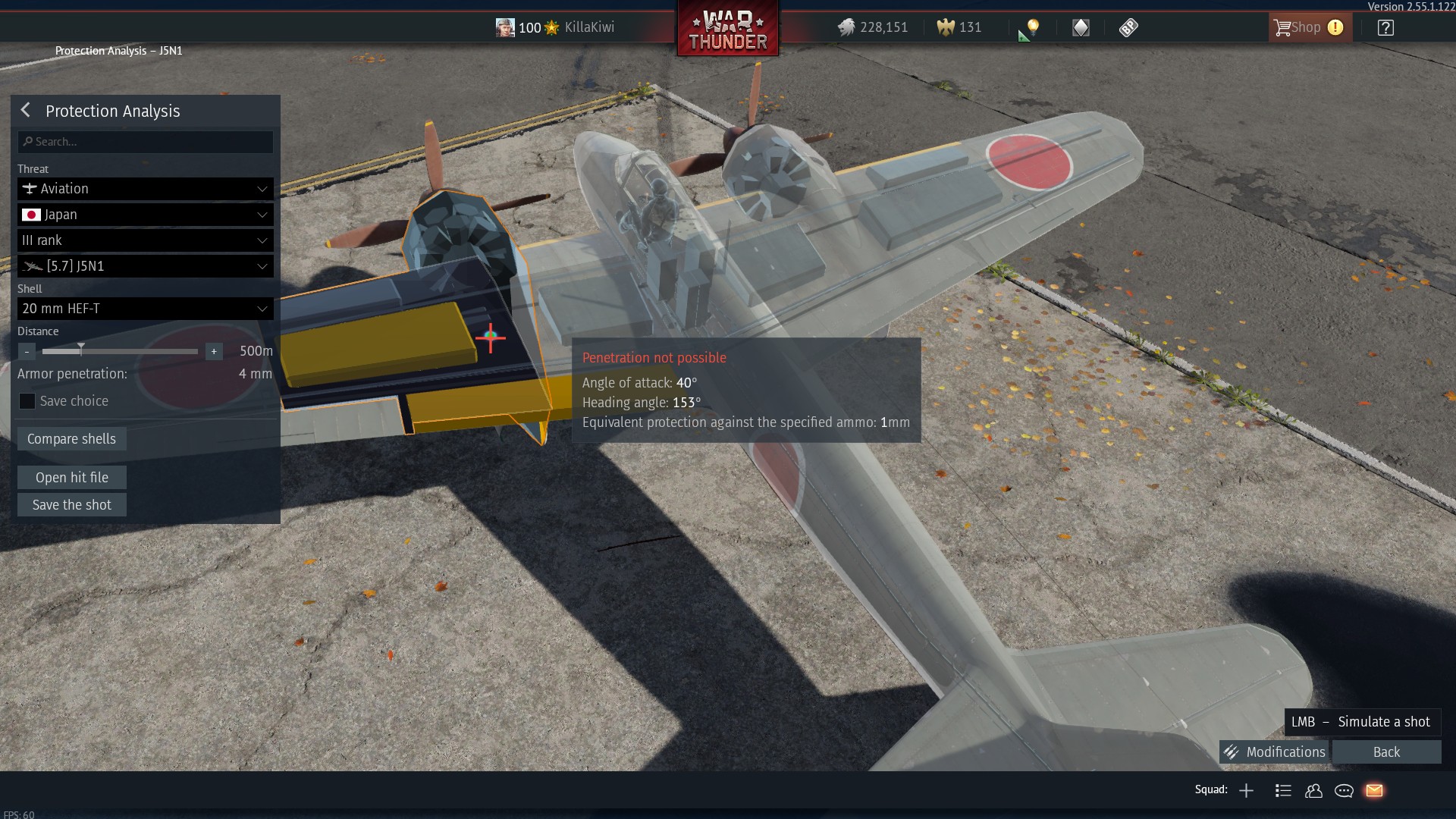
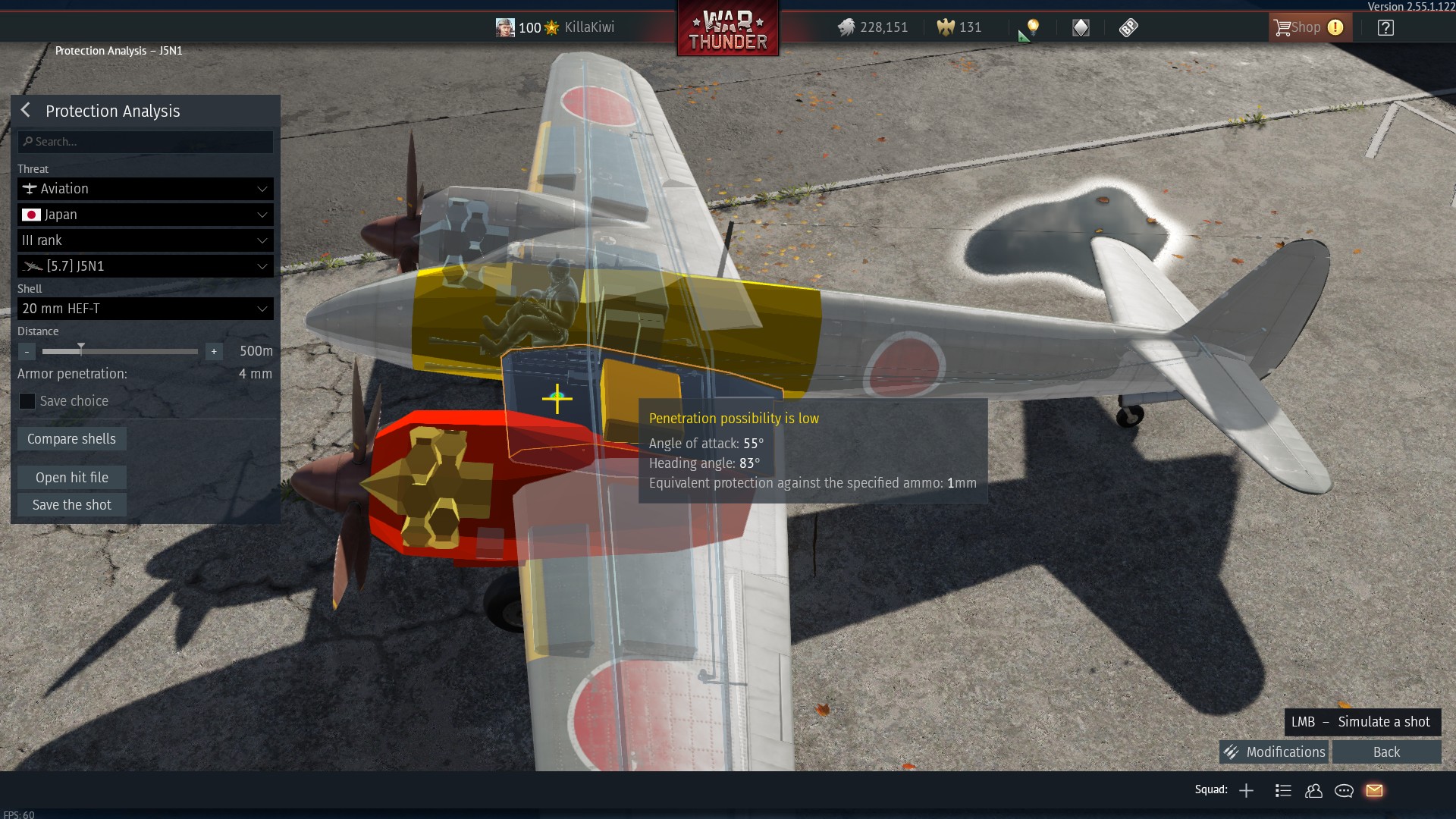
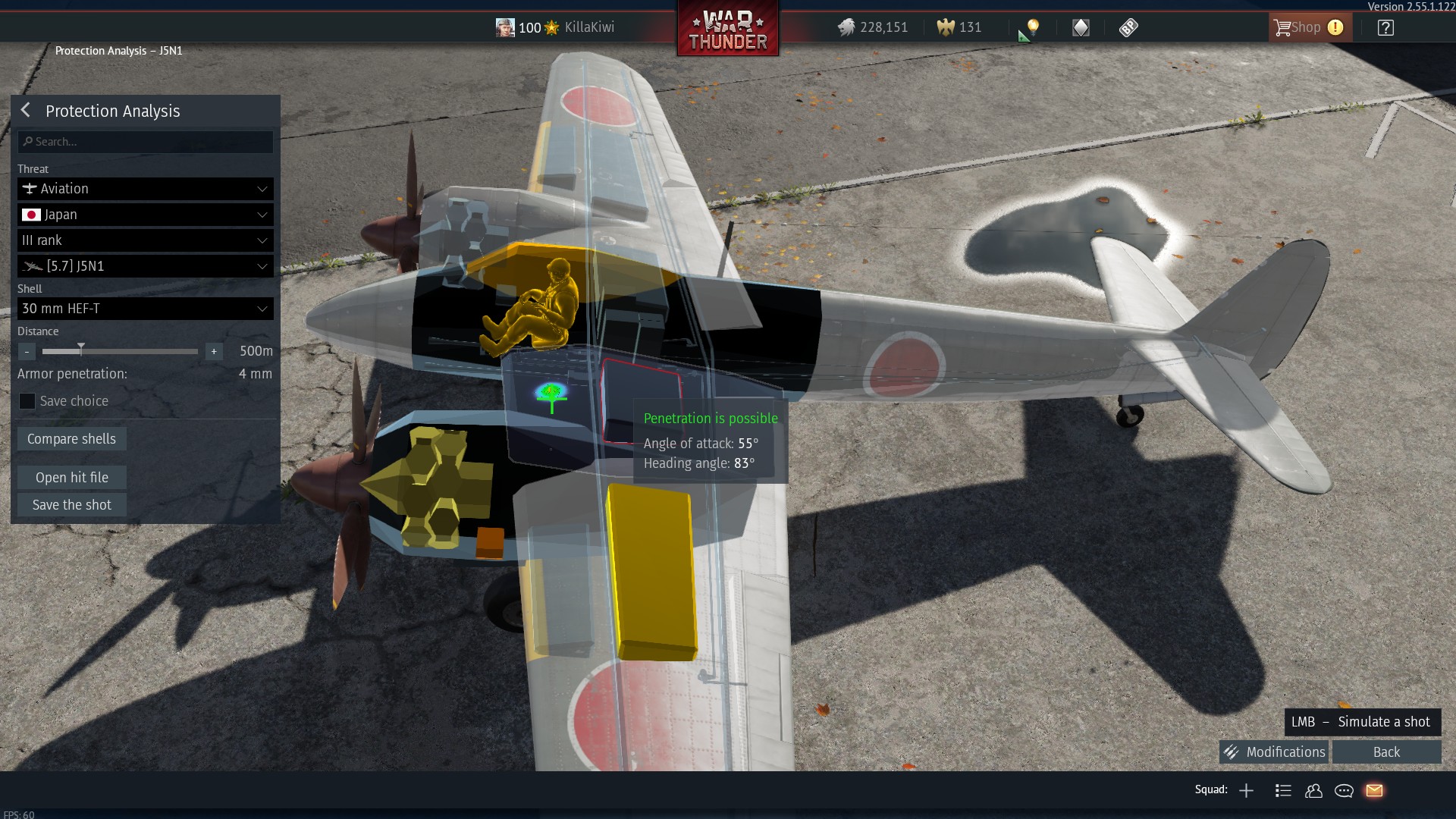
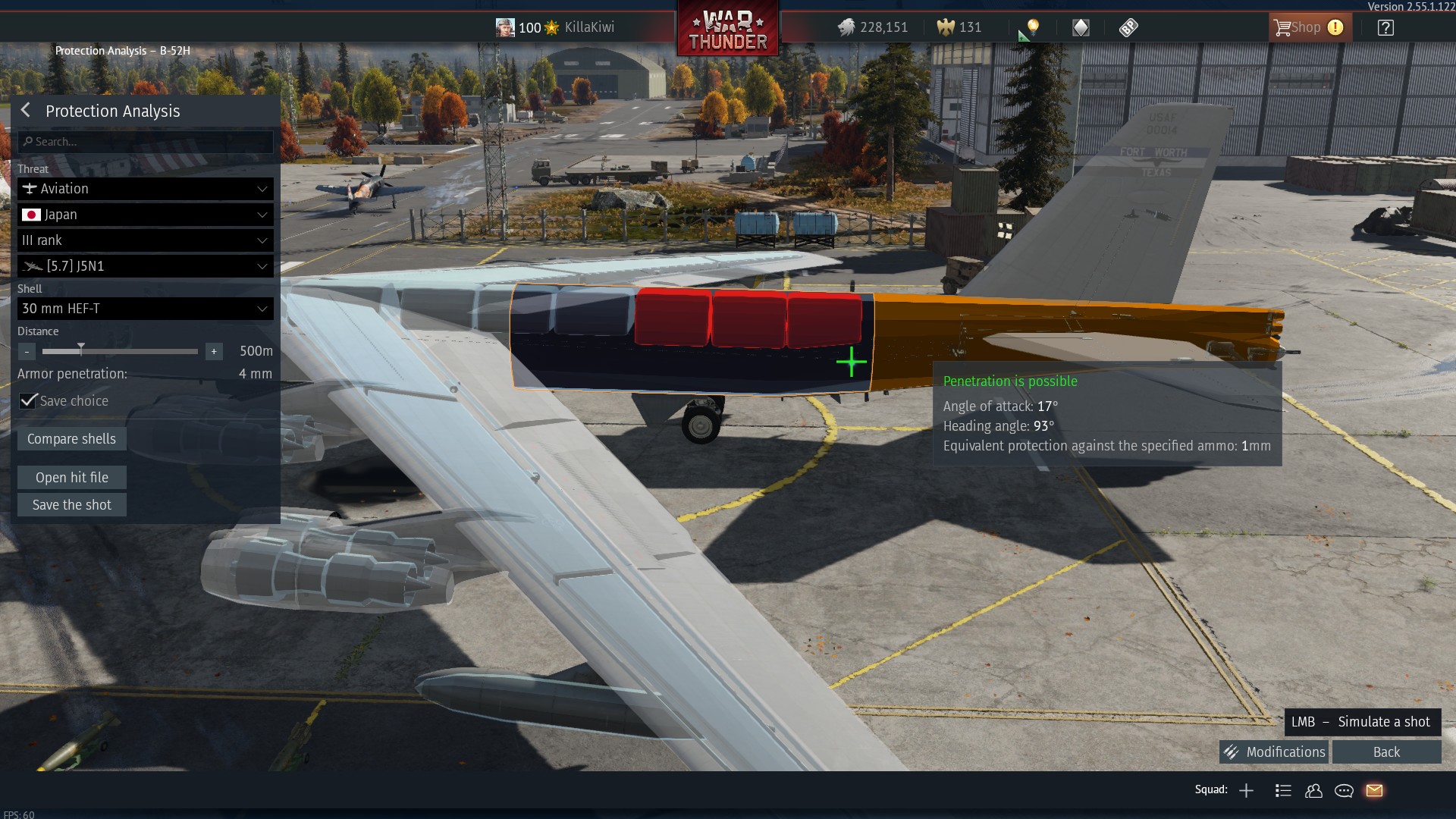
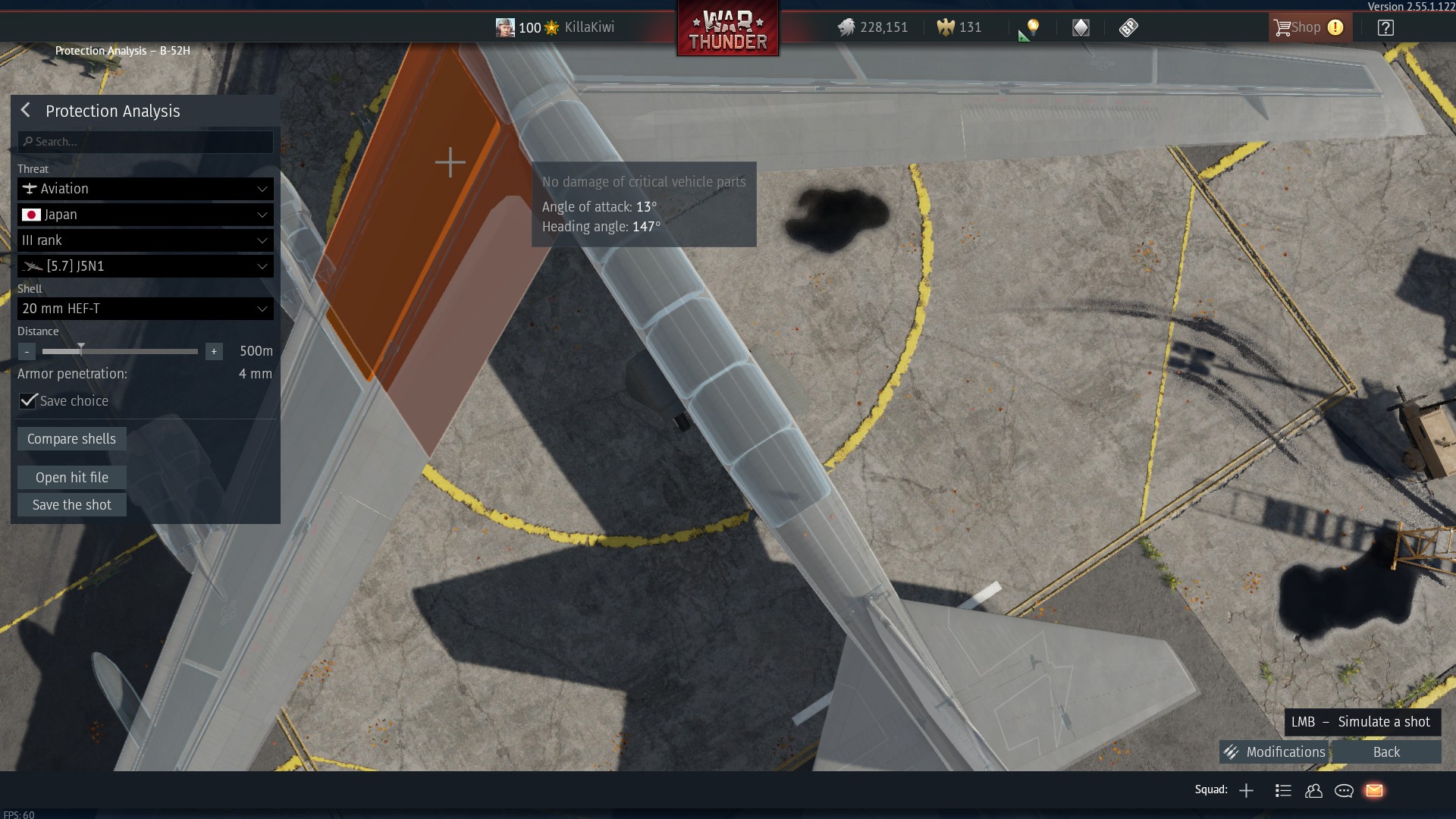
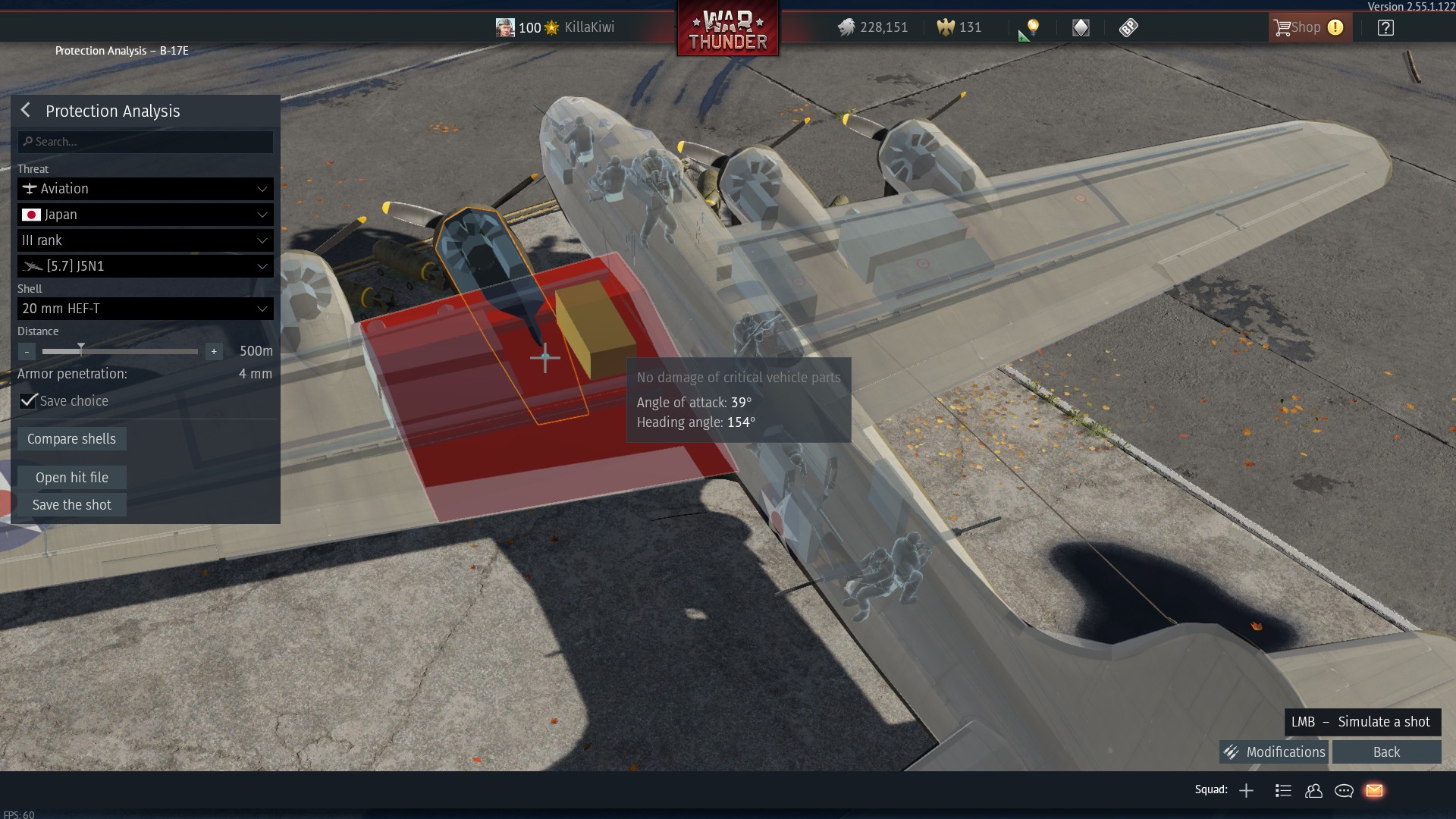
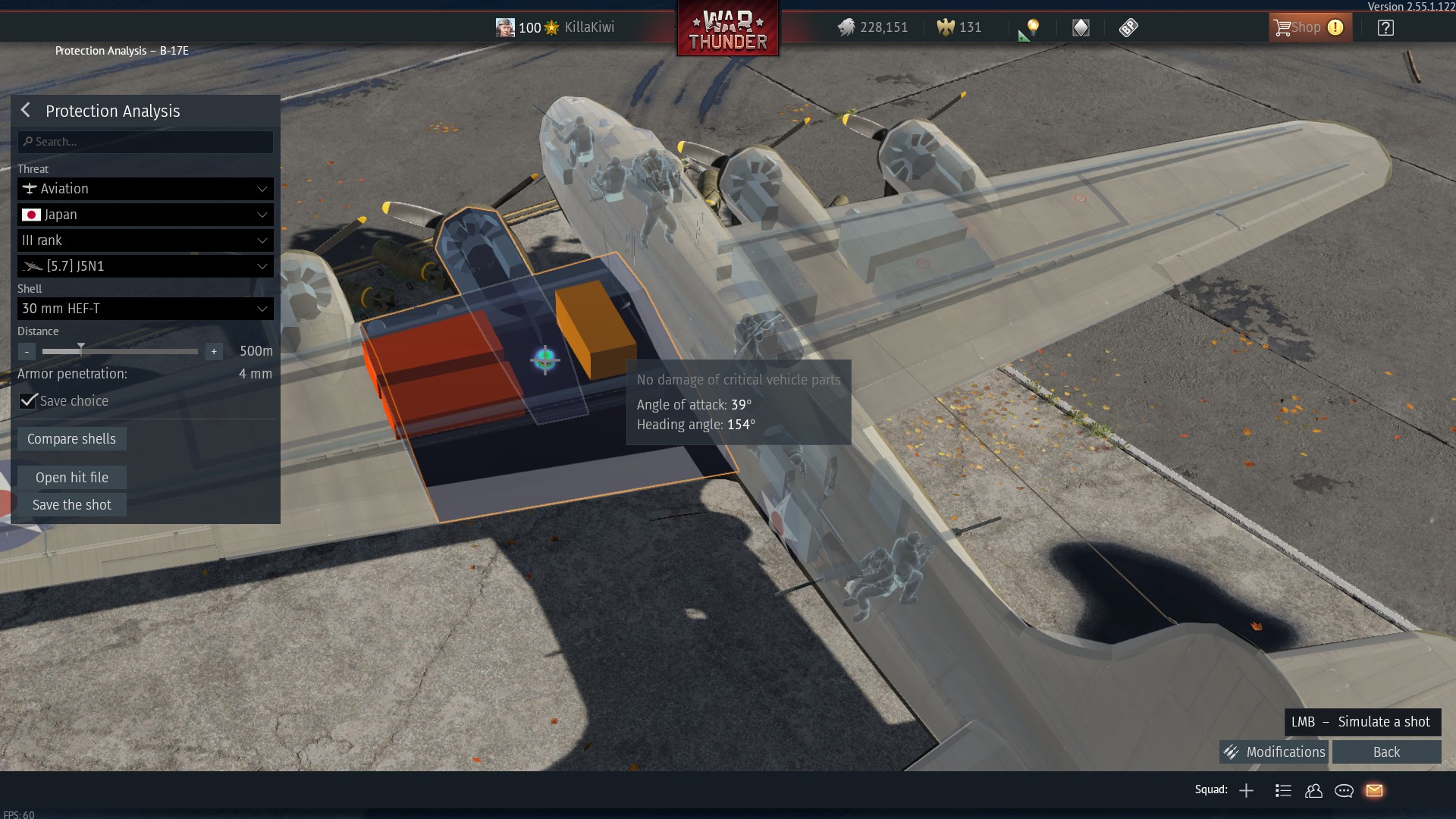
How does it not? 20mm did not black out the wing section and did not damage the fuel tanks next to it. 30mm did both. Against the J5N it even reached over, blacked the center fuselage, and damaged the pilot.
In the case of the only two fighters that carry the Ho-155, you do so in addition to the 20mm cannons. There is no downside.
In the case of the Type 5, there is only one premium plane with just two of them, and it is lower than the models with four 20mm cannons. The J7W1 has four and you’ll notice it does not struggle with shooting down things if you can actually get your nose on target.
The benefit is that I hit someone once and they’re basically out of the fight already. By the way I’m only using Japan as reference because I have experience with them, and they offer the greatest variety of 30mm cannons in fighters instead of saddling you with the terrible MK108.
Menawhile, the 30mms cannons that offer “no benefit” over 20mms: