British Weapon Systems - Technical data and discussion

Maybe with EF.3 and its ELS but not on the GR’s.

I’d say the problem isn’t flight performance, but that the inertial guidance, after losing signal, is complete garbage. Plus, the relock doesn’t work.

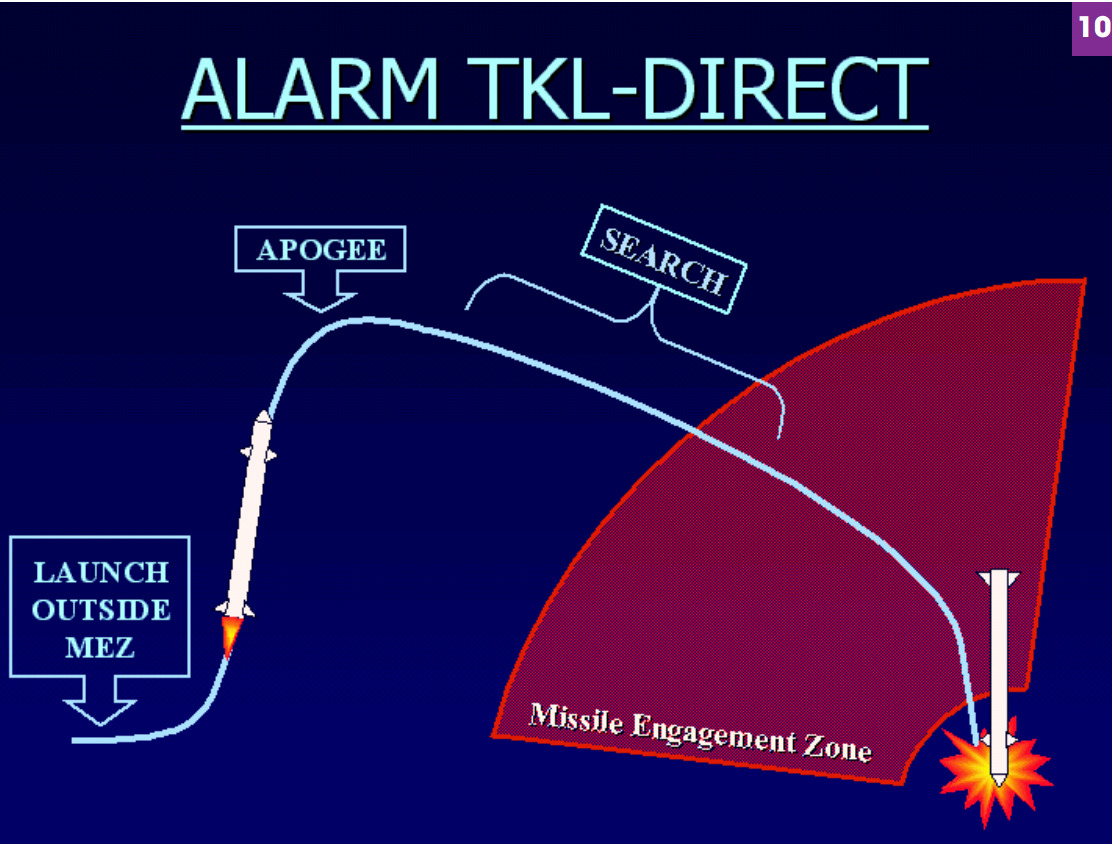
Is ALARM not supposed to have a direct mode and a “top attack” mode depending on distance?

I haven’t tested it out yet so I may be wrong, just thought i’d ask based on what you said

The HARM should (sort of, depends on which mode(s) are modeled), and have a Self-Protection mode where it auto cues up a launch based on RWR returns when fired upon.

I think Kobes just means a mode where it doesnt loft at all and just flies straight at the target

1 Like

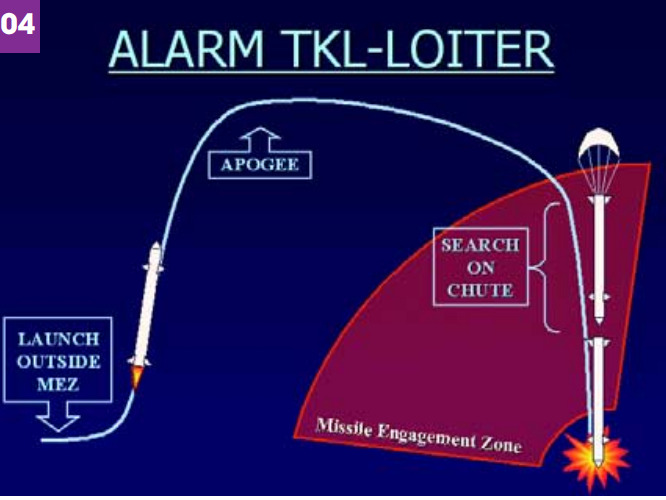
The direct mode is what we have now, so missile dives down early, instead of going above the target position and loitering.
There is no direct direct mode, where missile flies in a straight line to the target.

ALARM Anti-radiation missile. Finally, the numbers are filled in (Fig. 1). Equipped with inertial navigation and proximity fuze, operating in the same frequency band as the 88A model. Its destructive capability is not an issue, but its propulsion allocation and trajectory design are truly mind-blowing. The boost phase + cruise phase propulsion consists of 42 kN × 0.7 s plus 2.825 kN × 52 s. In terms of allocation, rather than being an anti-radiation missile, it resembles more of a Non-Line-of-Sight (NLOS) air-to-ground missile. After launch, the missile attempts to climb at a steep angle of 35 degrees to a cruise altitude of 12,000 meters. Due to the excessively weak thrust-to-weight ratio during the cruise phase, when launched from low altitude, its climb speed only exceeds Mach 1, making it very vulnerable to interception. Additionally, because the designed dive angle reaches up to 50 degrees, if you launch it at close range at high speed (i.e., “ghost head” maneuver), the missile will trigger its dive late. With a maximum load factor of only 5G and without reducing speed, it won’t be able to pull down sufficiently, instead flying just tens of meters above the target’s head without effect (Fig. 2). Currently, if launching M1 close to the ground, one must fire from beyond 5 kilometers for the missile to possibly descend and hit the vehicle… Absurd.

Its distinctive feature is a third propulsion phase delivering 7.13 kN·s of impulse, utilizing a dual-pulse mechanism triggered when the missile’s speed drops below 450 m/s to accelerate terminal penetration. However, because the first two phases burn in sequence, this third stage cannot ignite until 55 seconds after launch, rendering it effectively useless in actual combat scenarios. While the total impulse, drag characteristics, and seeker performance are fundamentally sound, issues with trajectory planning and thrust allocation make the system akin to an acrobat—likely requiring significant redesign; otherwise, it remains impractical for operational use.

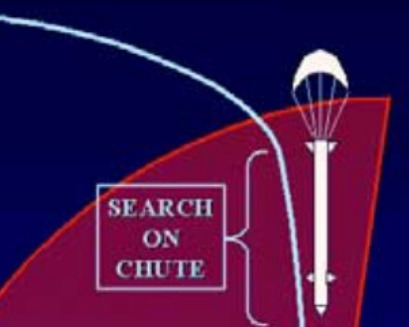
This is likely an intermediary set up for further development of the post parachute deployment terminal kick motor.

Which, does not exist irl.
There is no post parachute motor.

A beautiful wish, but snails are not Santa Claus.

After my quick testing

ALARMS seem useless at close range, as you guys have already said, they just fly over the target rather than arcing down to hit it. This would be pretty easy to fix by just changing the guidance trajectory and making them a bit more manuverable.

Their speed is pretty medicore, not awful but not good.

Their range is pretty insane though, firing from ~mach 1 at low alt I hit an ADATs from 25-30km away, it did take a while to get there though

Just hit a TOR from 30km, firing at mach 1 from only 500 meters above the ground. It missile came right from above him from around 12km altitude. I can see that being very hard to intercept as it’s in the blind spot of most SPAA, although something like a Pantsir could engage it as it approaches and climbs.

So where does it get the energy from? The control surfaces can’t be that good to the point where the intent was to be to be able to regain control solely from Gravity.

As far as we know, it relies purely on the speed it gains from falling down.
Not like it would matter that much, it should be above the target in that phase.

Why is that absurd, ALARM has a fixed loft to maximise its range. That its correct. It isn’t designed to be used close in, its a stand off weapon.

1 Like

image

6 Likes

WE NEED THE CLIMB TO BE BETTER
The climb as of right now is too shallow
image

Would certainly explain the loft, then.

How do I use ALARM?!?
Consult the instructions.

image

6 Likes

tbf thats abit more than 35 degrees…

1 Like

Instructions unclear, MEZ not explained
AI did not help

image

1 Like