isnt that for export ? i know some have limited tech
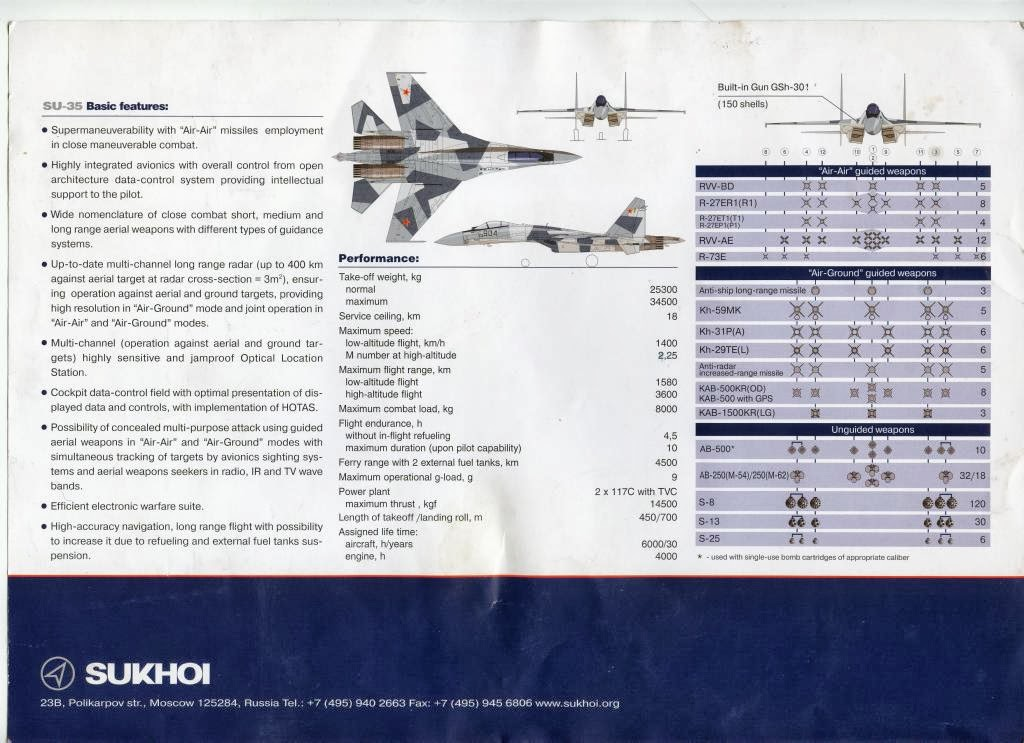
honestly have no clue about whether some of them are limited for export or not, because I have a pic of another brochure that still shows the R-37 on pylons 4,12,11,3 but then one inbetween the engines on 1/2 so
1 Like
yeah, but we can say its 6 for now.
unless everyone goes with paper loadout, gaijin way.
1 Like
I would like to see the BVR event and the Bullet Hell event converted into permanent game modes. Can just make them only available on weekends or on specific days each week, so these modes could serve as a purpose to help players to understand and learn their aircraft’s strengths and weakness, as well as spade aircraft with greater flexibility, rather than being forced into the usual chaos of standard Air RB matches.
+1 for initiative.
1 Like
Can always trust gaijin to cook up the most abysmal loadouts possible
3 Likes
Added F-15EX to 🇺🇸.
Again, the complete list of aircraft isn’t 100% guaranteed to be in the game by the time this is (or if) it’s implemented. Just something for the devs to work with (most of the airframes already exist in-game, which is good).
One more thing:
Would you like to see this in-game?
- Yes
- No
0
voters
To ensure this event maintains a true beyond-visual-range distance and does not simply devolve into a furball, I think a modified frontline mechanic should be added.
Instead of the lines meeting in the centre (like it does in every Air Battle, regardless of mode), we should place a 20–30 km no-man’s land buffer between the two teams. So basically, red line and blue line with roughly 20-30 km space in between. Within this space, AI-controlled SAM/SPAA systems would be active. As for suggestions… I think ItO 90M (for NATO + friends’s side of the map) or Pantsir-S1 (for Russia/China side of the map) would be fine? Both of their engagement range is 20 km. If it is simpler, the current ItO 90M is fine for both sides.
The rules of the buffer zone:
- Engagement: If any player enters this 20–30 km gap, the AI systems will immediately engage them.
- Tracking: If a player retreats out of the zone back toward their side, the SAMs stop tracking once they are clear of the boundary.
- Focus: Since this is a BVR-only event, aircraft would be restricted from carrying bombs, rockets, or (if it’s implemented by then) anti-radiation missiles. This ensures players cannot simply destroy the air defences to close the gap.
Note: as for the latter, if in a future implementation anti-radiation missiles becomes available then they can be allowed alongside other missiles.
This creates a physical stand-off distance, forcing players to actually fight at the 40–80+ km ranges these missiles were designed for, rather than just rushing the centre of the map.
2 Likes
+1, an interesting new event with more possible fighters
Its 6 r37m.
Could I recommend that:
- The spawns be 400km apart
- The aircraft be free for all to use, so you don’t have to unlock them
- Take off from airfields and carriers
- Smaller teams of players as a whole to
Most of the things I suggest are more aimed at gaijin themselves
players who are new to top tier or premium warriors could skew the results of the event badly
1 Like
Like ME! I’m just joking, I have played up to 14.0 in my Kfir C.10. But maybe there can be 2 events cause I really want to fly the the all the top tier jets, I love them all, but I also haven’t gotten close to rank 6 in air, so I don’t know if I want to go all the way to top tier, I just want to know if they are worth it to grind a TT
maybe locking it to people with at least rank 8 non-premium jets
Not a bad idea, hopefully they don’t include event vehicles as premiums
Half expected this to be sarcasm, but if it’s not and you’re 100% serious, the game is limited (at the moment…) to a map size of up to 131 x 131 km, so wouldn’t really know where the remaining checks notes 142,839 km2 will go?
If you’d like… but the majority of missiles hurtling at you (or even fired by you) needs high altitude and speed to be effective. And do remember, multipath in this event wouldn’t be the same as multipath in regular games. To put it into perspective, you could basically be touching the treetops and on some maps you won’t even be below 60 meters (for reference, multipath effect in this event will work at 10 meters).
Just thought you should know. The less time it takes you to get up to speed and/or altitude the safer (and better; for your missiles) it is for you.
iirc, past events like SEAD the aircraft were like ‘default’, so everyone could already take part. I don’t see why this should/would be any different. And like @quartas121 said previously, there is the chance that results from the event could be skewed, but IMHO I don’t think it’ll matter that much once people start getting used to every new mechanic (lower multipath, faster missiles with better seekers, etc.) after a handful of games.
Hmmm… this goes without saying. You can’t exactly stuff a map filled with missiles like these with 16 people on each team and expect to have a fun time 😅
Sure, I’d say… we’ll start conservative: 8 v 8 format? We could go lower (and thus, decrease waiting times for games) to about 4 v 4, 5 v 5 or 6 v 6 at the most. Me personally, I feel 5 v 5 is the perfect amount on a map this size, but the others I wouldn’t object to.
2 Likes
To get used to better missiles and lower MP in a reasonable amount of time means the players would have to already have some experience with current fox 3’s
1 Like
What about on both opposite corners of the max size workable map?
That’s the point. You need to be good as an interceptor as well as a good long range fighter, with air spawns, the MiG 31BM would absolutely dominate with R-37Ms
Yeah ig you’re right
I think the recommended 6v6 is good, maybe even 8x8.
For this event I do think we will need to be able to make custom presets for the aircraft before you spawn, so you can have more or fewer missiles than the standard presets. That was something I hated with the F-4E during the SEAD events
This is the most likely solution, so yeah.
Probably, but it would also be one of the many planes to die from enemy fire as well. Its speed is a double-edged sword.
Custom presets can’t be made while in a match and like the earlier SEAD event we were presented with default preset for weapons we could use. I expect it to be the same for this event.
I believe I should make a reply/post about the different kinds of missiles that would be on offer in this event. Not only would it be helpful, but if anyone wanted to “well, ackshually” me with facts (especially as it pertains to Russian/Chinese missiles) that would be most welcome.
Meteor
This is (or rather, will) be the most hated BVR missile, second to potentially the R-37M and probably equally disliked missile as the MICA EM overall.
Why? Because with this missile it introduces 1 of 2 new propulsion systems to be introduced to War Thunder: ramjet propulsion.
There are a multitude of ways it could be implemented, but if I could guesstimate its implementation?
I would suggest it be implemented in such a way that the higher it flies, the slower the acceleration from the ramjet. Think of it like a sort of “altitude-acceleration” multiplier, specifically for any ramjet-powered missile. It would still be deadly up to 10 000 meters, however if launched that high (and when it lofts up to higher altitude), the acceleration from the ramjet itself should be a slow, gradual one from its ‘starting’ speed, which would be around Mach 3 anyway. It will be slow accelerating at high altitude, but will hit a higher terminal velocity (its stated Mach 4.5 top speed) over time. As for the rate of acceleration after the initial rocket booster… I think a gradual increase in speed of about 18 km/h a second at high altitude, which would put it at Mach 4.5 after about a minute (give or take a few seconds).
Even at low altitude, the ramjet isn’t a magic ‘infinite speed’ machine. When it turns, the Induced Drag will still cause the missile to decelerate, potentially quite noticeably if the target pulls a hard break-turn. However, unlike a solid rocket which stays slow, the ramjet provides a ‘thrust floor.’ Once the turn is completed, the engine will work to push the missile back up to its cruise speed, preventing the target from ‘bleeding’ the missile dry.
Oh right, before I forget: one of the more important stats about this missile is that according to multiple sources, it would very likely have a maximum overload of about 35 G, same as an AMRAAM.
PL-15/17
These are Chinese-made missiles that also introduces a second, new type of propulsion system to War Thunder: dual-pulse propulsion.
In very, very simple terms: they have two separate rocket-boost phases. There is the initial rocket boost phase after you launch at a target and then sometime later (probably when the seeker goes active, or ‘pitbull’) the second rocket boost phase starts.
This will by far be the easiest propulsion system to implement IMO as it’s only a matter of deciding when the second rocket boost phase starts (whether through publicly available technical data) or timing it with seeker activation as suggested earlier.
Unlike the Meteor, its acceleration in the terminal phase will be sudden and leave you little time to dodge or run away with both being made difficult by its AESA seeker + dual-pulse propulsion combination.
For the PL-17 specifically, I want to guesstimate that the boost phases will be longer/more gradual than the PL-15, similar to the current AIM-120C-5 boost off the rail. Of course, if there is evidence to the contrary I would welcome this.
The PL-15 has an estimated max range of 200-300 km (this is probably closer to 160 - 200 km for a manoeuvring target though) with a confirmed max overload of 40 G.
AIM-174B
A great missile, based on the currently used RIM-174 in the US Navy, but strapped onto a Super Hornet.
This missile differs slightly from the RIM-174, as it does not have the primary rocket booster of the RIM-174 whose purpose was to get it up to speed from a standstill before the “main” motor (which is present on the AIM-174B) takes over.
The RIM-174B has a range of around 240 km and that’s from mostly a standstill. The range of the AIM-174B at the best possible guesstimate I can give, would likely be around 200 km at normal operating speeds of the F/A-18E. It would still clear the maps in War Thunder no problem, however it would lack the “starting energy” due to low launch velocity from the Super Hornet. Like I have said elsewhere, kinematically in a straight line it would be similar (give or take, it still suffers from a lower max speed) in performance to the Fakour-90 launched from F-14 IRIAF aircraft.
As details on its onboard seeker are scarce, one would assume similar performance to AMRAAM seekers if implemented today. As for its maximum overload, since it’s based on the RIM-174, it is likely around 25-30 Gs.
R-37 and R-37M
These right here are the mother, father, hell, even God of all BVR missiles in the present day.
The R-37 on its own is a pretty hefty BVR missile, once scoring a hit on a target 300 km away (in a test environment). The R-37M improves on that monster of a missile by including a jettisonable rocket booster, extending its maximum range to 400 km. For all intents and purposes: three things in life that are certain: death, taxes, and a R-37/R-37M.
As for seeker details, I’m pretty sure it goes active at 40 km which for a Mach 6 missile that’s pretty much 16 km anyway.
As for how it will be implemented in War Thunder… take the Fakour, give it a ton more thrust with a longer burning motor (iirc, it burns for at least a minute? or close?), a higher maximum overload (35 G) and a better seeker and you’ve birthed the R-37 (and R-37M if you strap an additional booster motor on)
Again, any and all “well, ackshually” will be appreciated if possible.
Israeli I-Derby ER
This missile uses the dual-pulse propulsion system, according to Rafael. It has a maximum range of 100 km.
Unlike other advanced missiles… it uses a PD seeker that relies on software to ‘cheat’. Think of it as having the Look-Down power of a PD radar but the jamming resistance of an AESA. It’s the ultimate hybrid—it physically moves its seeker head to track you (Mechanical), but its digital ‘filters’ make it nearly immune to being fooled by Chaff or Jammers. In-game this seeker could be modelled to be as good or better than the current MICA EM and if/when ECM/ECCM gets introduced this missile would be one of the best at fighting it.
Japanese AAM-4B
Officially, this is the first missile ever to have an onboard AESA seeker. Alongside the previously mentioned I-Derby ER, it would be one of the hardest missiles to fool with electronic jamming.
It has a maximum range of 120 km, using a familiar boost-sustain propulsion system. The maximum overload here is likely in the 30 - 35 G region.
(SORRY for the short part here, I’m still collating sources and the like about this missile in particular)
Indian-made Astra Mk.2
Official estimates put its max range at about 200 km with it using a dual-pulse propulsion system. Earlier variations of the missile utilised a mechanical onboard seeker, but later iterations are now reported to be planned to implement an AESA seeker. It is also expected to have at minimum 35 G maximum overload and potentially up to 40 G.
AIM-120D-3
The AIM-120D-3 represents the pinnacle of the AMRAAM family, featuring a massive hardware overhaul under the Form, Fit, Function Refresh (F3R) program.
While it retains the classic 7-inch diameter to fit internal bays, it introduces a new, classified rocket motor (likely featuring high-energy propellant and refined grain) that, when combined with superior GPS-aided lofting logic, extends its effective range to 160 km (approx. 86–100 nm).
Unlike the “brute force” of a ramjet, the D-3 uses an advanced digital core with 15 new circuit cards to “smartly” manage its energy. This allows it to arrive at the target with enough kinetic speed to pull a 40 G maximum overload in the terminal phase.
Its seeker is essentially “software-defined,” (similar to I-Derby ER) using agile algorithms to filter out modern DRFM jamming, making it the most reliable “smart sniper” in the US inventory.
If reading all those words aren’t your thing, here’s a table to make it… easier to read:
| Missile | Propulsion | Speed | Range | G-Load | Primary Gimmick |
|---|---|---|---|---|---|
| Meteor | Boost + Ramjet | Mach 4.5 | 200 km | 35 G | Throttled Ramjet; maintains max energy for massive No Escape Zone (NEZ) |
| PL-15 | Dual-Pulse | Mach 5 | 200-300 km | 40 G | AESA seeker; terminal boost phase. |
| PL-17 | Dual-Pulse | Mach 6 | 400 km | 30 G | Ultra-long range “AWACS Sniper” with thrust-vectoring; terminal boost phase. |
| AIM-120D-3 | Boost-Sustain | Mach 4.5 | 160 km | 40 G | Digital core refresh; software-defined ECCM |
| R-37 | Boost-Sustain | Mach 6 | 300 km | 35 G | Hypersonic interceptor |
| R-37M | Boost-Sustain + Jettisonable Booster | Mach 6 | 400 km | 35 G | Jettisonable booster; “God” of all BVR missiles. |
| R-77M | Dual-Pulse | Mach 4.5 | 192 km | 40 G | Russian AESA; terminal boost phase |
| I-Derby ER | Dual-Pulse | Mach 4.5 | 100 km | 50 G | PD seeker with AESA-like ECCM capability. |
| AAM-4B | Boost-Sustain | Mach 5 | 120 km | 35 G | First ever onboard AESA seeker; advanced ECCM. |
| Astra Mk.2 | Dual-Pulse | Mach 4.5 | 200 km | 40 G | AESA seeker; terminal boost phase. |
| AIM-174B | Boost-Sustain | Mach 3.5 | 200 km | 30 G | Near-space enthusiast. |
Edit: Added it in the main post
2 Likes
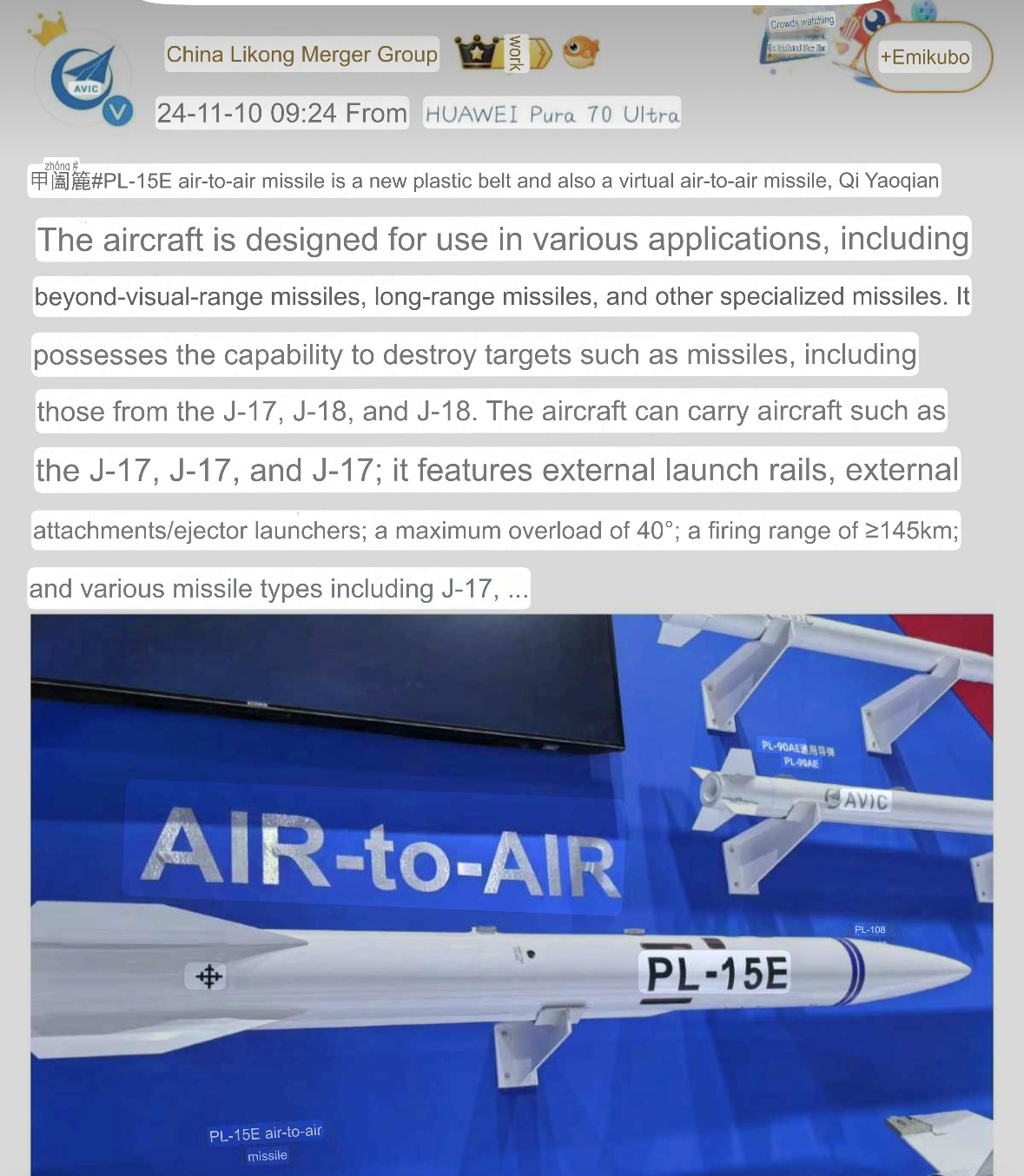

Nah aim 120 d3 gets a new motor, the normal one doesn’t though afaik.
@quartas121 which one was which again
3 Likes