I believe I should make a reply/post about the different kinds of missiles that would be on offer in this event. Not only would it be helpful, but if anyone wanted to “well, ackshually” me with facts (especially as it pertains to Russian/Chinese missiles) that would be most welcome.
Meteor
This is (or rather, will) be the most hated BVR missile, second to potentially the R-37M and probably equally disliked missile as the MICA EM overall.
Why? Because with this missile it introduces 1 of 2 new propulsion systems to be introduced to War Thunder: ramjet propulsion.
There are a multitude of ways it could be implemented, but if I could guesstimate its implementation?
I would suggest it be implemented in such a way that the higher it flies, the slower the acceleration from the ramjet. Think of it like a sort of “altitude-acceleration” multiplier, specifically for any ramjet-powered missile. It would still be deadly up to 10 000 meters, however if launched that high (and when it lofts up to higher altitude), the acceleration from the ramjet itself should be a slow, gradual one from its ‘starting’ speed, which would be around Mach 3 anyway. It will be slow accelerating at high altitude, but will hit a higher terminal velocity (its stated Mach 4.5 top speed) over time. As for the rate of acceleration after the initial rocket booster… I think a gradual increase in speed of about 18 km/h a second at high altitude, which would put it at Mach 4.5 after about a minute (give or take a few seconds).
Even at low altitude, the ramjet isn’t a magic ‘infinite speed’ machine. When it turns, the Induced Drag will still cause the missile to decelerate, potentially quite noticeably if the target pulls a hard break-turn. However, unlike a solid rocket which stays slow, the ramjet provides a ‘thrust floor.’ Once the turn is completed, the engine will work to push the missile back up to its cruise speed, preventing the target from ‘bleeding’ the missile dry.
Oh right, before I forget: one of the more important stats about this missile is that according to multiple sources, it would very likely have a maximum overload of about 35 G, same as an AMRAAM.
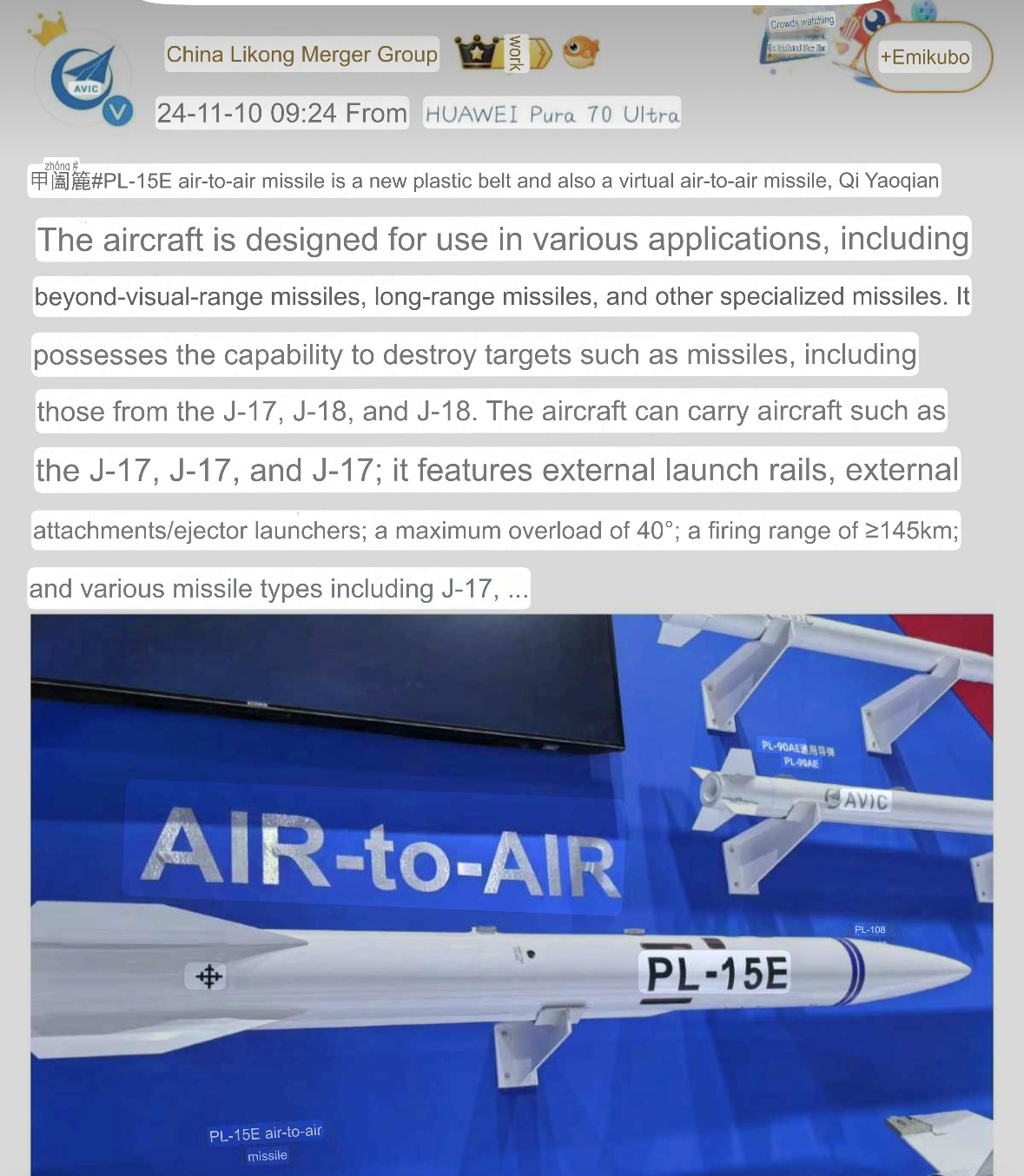
PL-15/17
These are Chinese-made missiles that also introduces a second, new type of propulsion system to War Thunder: dual-pulse propulsion.
In very, very simple terms: they have two separate rocket-boost phases. There is the initial rocket boost phase after you launch at a target and then sometime later (probably when the seeker goes active, or ‘pitbull’) the second rocket boost phase starts.
This will by far be the easiest propulsion system to implement IMO as it’s only a matter of deciding when the second rocket boost phase starts (whether through publicly available technical data) or timing it with seeker activation as suggested earlier.
Unlike the Meteor, its acceleration in the terminal phase will be sudden and leave you little time to dodge or run away with both being made difficult by its AESA seeker + dual-pulse propulsion combination.
For the PL-17 specifically, I want to guesstimate that the boost phases will be longer/more gradual than the PL-15, similar to the current AIM-120C-5 boost off the rail. Of course, if there is evidence to the contrary I would welcome this.
The PL-15 has an estimated max range of 200-300 km (this is probably closer to 160 - 200 km for a manoeuvring target though) with a confirmed max overload of 40 G.
AIM-174B
A great missile, based on the currently used RIM-174 in the US Navy, but strapped onto a Super Hornet.
This missile differs slightly from the RIM-174, as it does not have the primary rocket booster of the RIM-174 whose purpose was to get it up to speed from a standstill before the “main” motor (which is present on the AIM-174B) takes over.
The RIM-174B has a range of around 240 km and that’s from mostly a standstill. The range of the AIM-174B at the best possible guesstimate I can give, would likely be around 200 km at normal operating speeds of the F/A-18E. It would still clear the maps in War Thunder no problem, however it would lack the “starting energy” due to low launch velocity from the Super Hornet. Like I have said elsewhere, kinematically in a straight line it would be similar (give or take, it still suffers from a lower max speed) in performance to the Fakour-90 launched from F-14 IRIAF aircraft.
As details on its onboard seeker are scarce, one would assume similar performance to AMRAAM seekers if implemented today. As for its maximum overload, since it’s based on the RIM-174, it is likely around 25-30 Gs.
R-37 and R-37M
These right here are the mother, father, hell, even God of all BVR missiles in the present day.
The R-37 on its own is a pretty hefty BVR missile, once scoring a hit on a target 300 km away (in a test environment). The R-37M improves on that monster of a missile by including a jettisonable rocket booster, extending its maximum range to 400 km. For all intents and purposes: three things in life that are certain: death, taxes, and a R-37/R-37M.
As for seeker details, I’m pretty sure it goes active at 40 km which for a Mach 6 missile that’s pretty much 16 km anyway.
As for how it will be implemented in War Thunder… take the Fakour, give it a ton more thrust with a longer burning motor (iirc, it burns for at least a minute? or close?), a higher maximum overload (35 G) and a better seeker and you’ve birthed the R-37 (and R-37M if you strap an additional booster motor on)
Again, any and all “well, ackshually” will be appreciated if possible.
Israeli I-Derby ER
This missile uses the dual-pulse propulsion system, according to Rafael. It has a maximum range of 100 km.
Unlike other advanced missiles… it uses a PD seeker that relies on software to ‘cheat’. Think of it as having the Look-Down power of a PD radar but the jamming resistance of an AESA. It’s the ultimate hybrid—it physically moves its seeker head to track you (Mechanical), but its digital ‘filters’ make it nearly immune to being fooled by Chaff or Jammers. In-game this seeker could be modelled to be as good or better than the current MICA EM and if/when ECM/ECCM gets introduced this missile would be one of the best at fighting it.
Japanese AAM-4B
Officially, this is the first missile ever to have an onboard AESA seeker. Alongside the previously mentioned I-Derby ER, it would be one of the hardest missiles to fool with electronic jamming.
It has a maximum range of 120 km, using a familiar boost-sustain propulsion system. The maximum overload here is likely in the 30 - 35 G region.
(SORRY for the short part here, I’m still collating sources and the like about this missile in particular)
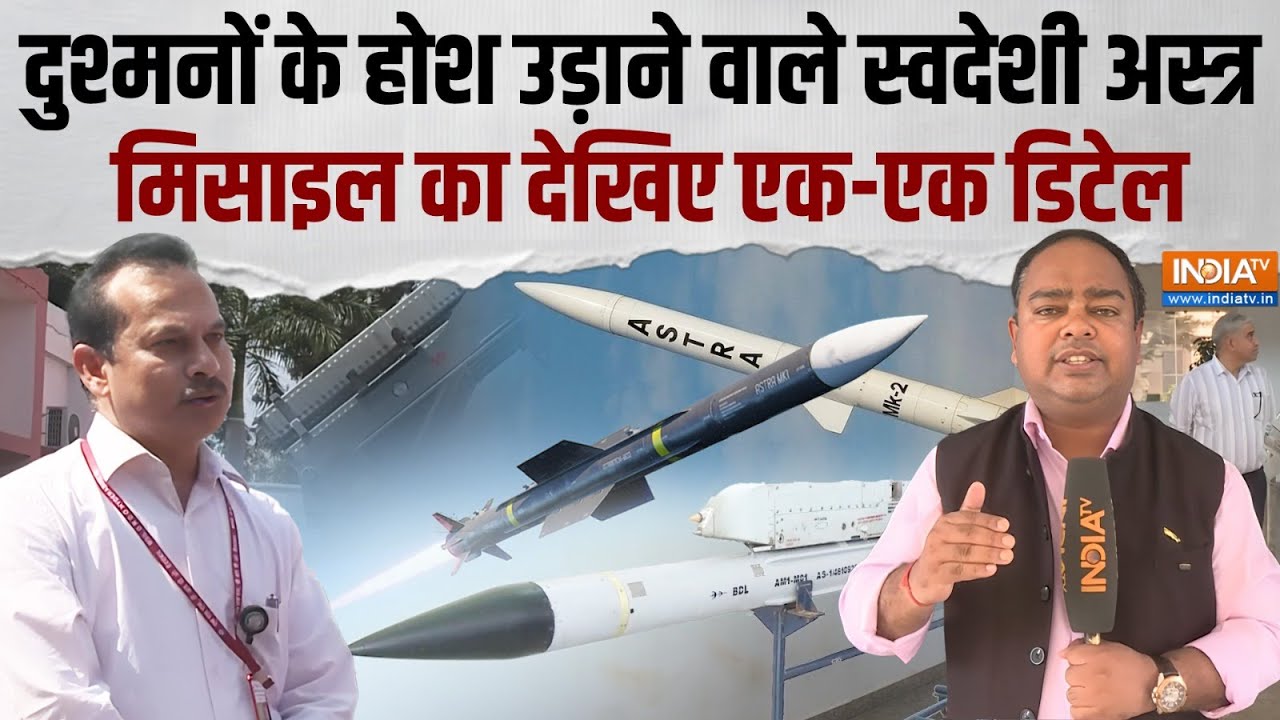
Indian-made Astra Mk.2
Official estimates put its max range at about 200 km with it using a dual-pulse propulsion system. Earlier variations of the missile utilised a mechanical onboard seeker, but later iterations are now reported to be planned to implement an AESA seeker. It is also expected to have at minimum 35 G maximum overload and potentially up to 40 G.
AIM-120D-3
The AIM-120D-3 represents the pinnacle of the AMRAAM family, featuring a massive hardware overhaul under the Form, Fit, Function Refresh (F3R) program.
While it retains the classic 7-inch diameter to fit internal bays, it introduces a new, classified rocket motor (likely featuring high-energy propellant and refined grain) that, when combined with superior GPS-aided lofting logic, extends its effective range to 160 km (approx. 86–100 nm).
Unlike the “brute force” of a ramjet, the D-3 uses an advanced digital core with 15 new circuit cards to “smartly” manage its energy. This allows it to arrive at the target with enough kinetic speed to pull a 40 G maximum overload in the terminal phase.
Its seeker is essentially “software-defined,” (similar to I-Derby ER) using agile algorithms to filter out modern DRFM jamming, making it the most reliable “smart sniper” in the US inventory.
If reading all those words aren’t your thing, here’s a table to make it… easier to read:
| Missile |
Propulsion |
Speed |
Range |
G-Load |
Primary Gimmick |
| Meteor |
Boost + Ramjet |
Mach 4.5 |
200 km |
35 G |
Throttled Ramjet; maintains max energy for massive No Escape Zone (NEZ) |
| PL-15 |
Dual-Pulse |
Mach 5 |
200-300 km |
40 G |
AESA seeker; terminal boost phase. |
| PL-17 |
Dual-Pulse |
Mach 6 |
400 km |
30 G |
Ultra-long range “AWACS Sniper” with thrust-vectoring; terminal boost phase. |
| AIM-120D-3 |
Boost-Sustain |
Mach 4.5 |
160 km |
40 G |
Digital core refresh; software-defined ECCM |
| R-37 |
Boost-Sustain |
Mach 6 |
300 km |
35 G |
Hypersonic interceptor |
| R-37M |
Boost-Sustain + Jettisonable Booster |
Mach 6 |
400 km |
35 G |
Jettisonable booster; “God” of all BVR missiles. |
| R-77M |
Dual-Pulse |
Mach 4.5 |
192 km |
40 G |
Russian AESA; terminal boost phase |
| I-Derby ER |
Dual-Pulse |
Mach 4.5 |
100 km |
50 G |
PD seeker with AESA-like ECCM capability. |
| AAM-4B |
Boost-Sustain |
Mach 5 |
120 km |
35 G |
First ever onboard AESA seeker; advanced ECCM. |
| Astra Mk.2 |
Dual-Pulse |
Mach 4.5 |
200 km |
40 G |
AESA seeker; terminal boost phase. |
| AIM-174B |
Boost-Sustain |
Mach 3.5 |
200 km |
30 G |
Near-space enthusiast. |
Edit: Added it in the main post