- Yes
- No
Welcome to the ASM-3A suggestion. Feel free to give an complement informations or correct me (with sources, please) in the comments, I will gladly add or edit the main post.
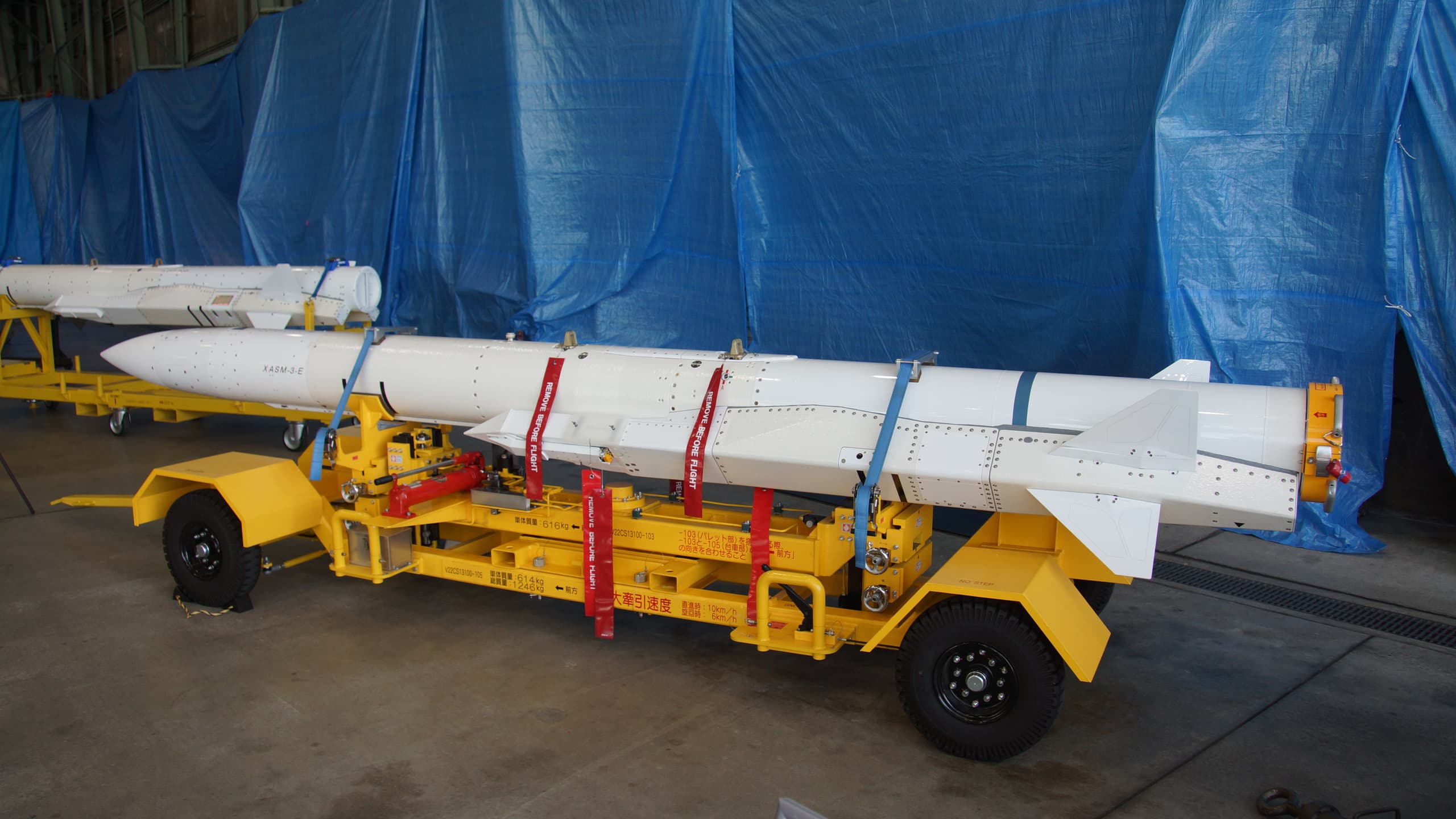
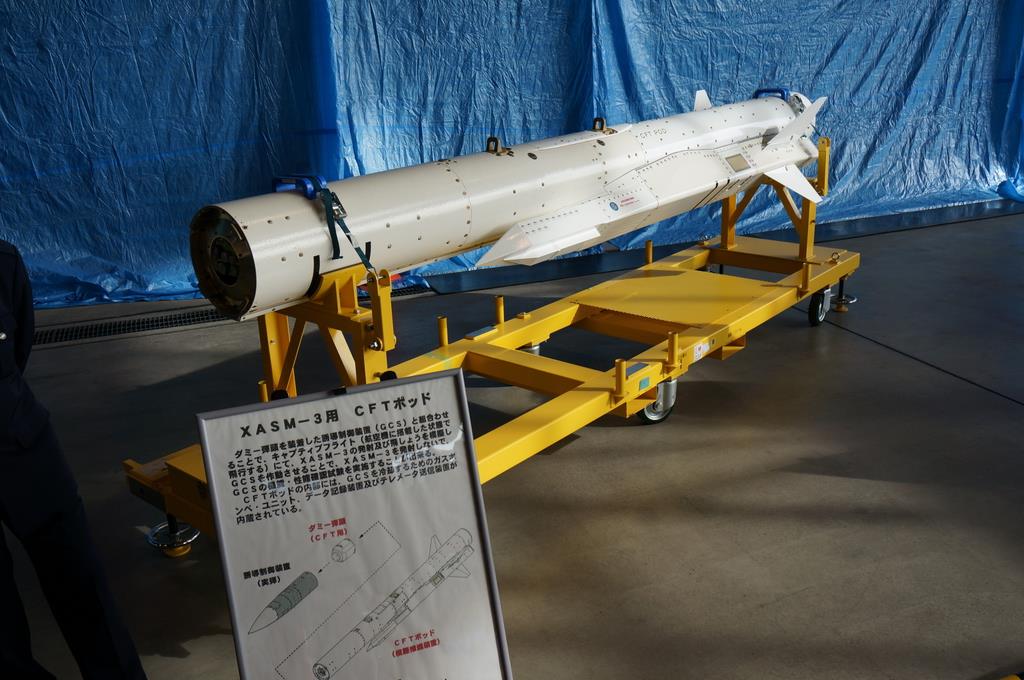
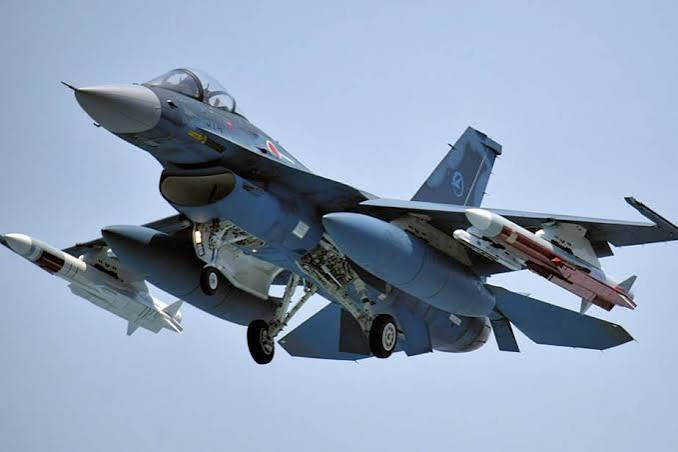
The ASM-3A is a currently used anti-ship missile comparable to the russian Kh-31 added in the ‘Heavy Cavalry’ update. With a slighty longer profile and a .5 mach difference, it is very close to it; but the ASM-3A can be as well an ARM, by using it’s mothership RWR (currently, only the F-2A), giving a unique Japanese missile in-game.
history and conception
The ASM-3 was born from Japan’s growing concern over the balance of naval power in East Asia after the Cold War. During the 1990s and early 2000s, the rapid expansion of the Chinese Navy pushed Tokyo to modernize its anti-ship capabilities beyond the already aging ASM-1 and ASM-2 missiles.
In 2003, Japan officially launched the development of a new indigenous high-speed anti-ship weapon under Mitsubishi Heavy Industries, designed specifically to penetrate increasingly advanced naval air-defense systems.
Unlike the precedent ASM-1 and 2, the XASM-3 (prototype of the ASM-3) would be mainly worked around supersonic speed, a ramjet, better range, and with a reduced RCS (Radar Cross Section). Powered by an integral rocket-ramjet engine, the missile can exceed Mach 3, making interception extremely difficult for shipborne defense systems.
The missile was primarily developed for the Mitsubishi F-2, giving the Japan Air Self-Defense Force a long-range maritime strike capability.
Its development also reflected Japan’s strategic geography: defending the Ryukyu island chain and the waters surrounding the disputed Senkaku Islands.
Early testing intensified during the mid-2010s.
In 2015, Japan announced plans for live-fire trials against the retired destroyer JDS Shirane, and by 2017 footage of successful launches had been released publicly.
However, despite the missile’s impressive speed, Japanese defense planners considered the original 200 km range insufficient against modern Chinese naval air-defense bubbles (such as the Type-055 and 052D destroyers). Several reports suggest that concerns regarding the missile’s insufficient range were raised by JASDF pilots themselves.
As a result, mass production was temporarily delayed while an improved long-range variant was developed.
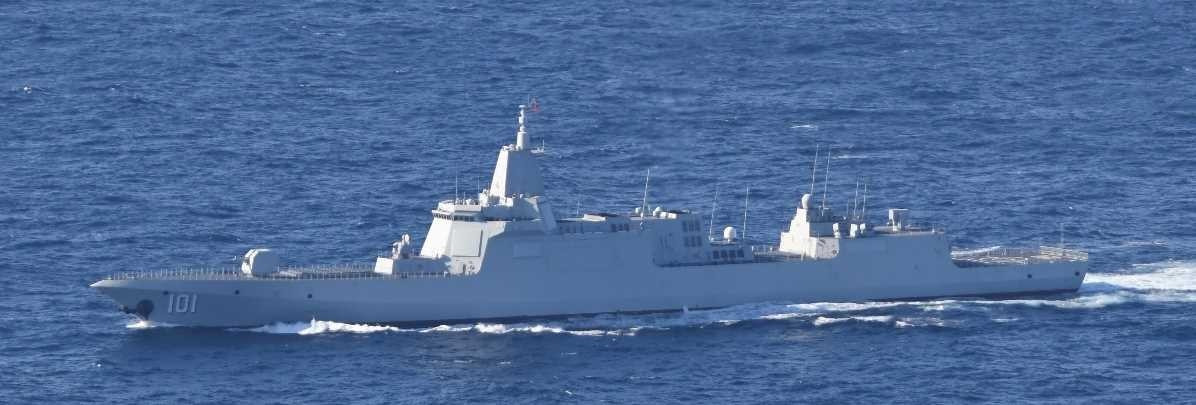
Type-055 stealth destoyer from the Chinese people’s army.
This led to the creation of the ASM-3A, an enhanced version with an estimated range of 220Nq (400+km) while retaining its Mach 3+ velocity. This version is currently being produced while awaiting the next-generation ASM-3 (改).
A further improved version is currently under development, for a better range, and better speed. It will probably enter service with the 3B nomination, but as in the current developement, it is named ASM-3 (改) ( ASM-3 Improved).
Today, the ASM-3 represents one of Japan’s most advanced indigenous missile programs and symbolizes the country’s gradual shift toward stronger deterrence and long-range strike capability in the Indo-Pacific region.
Versions of ASM-3’s :

first came the XASM-3, prototype with 200km range. Upgraded range version : ASM-3A (in production currently), and serves as a replacement before the production of the ASM-3 (Kai) (改, ‘Kai’ means ‘Improved’.)
caracteristics
Outside
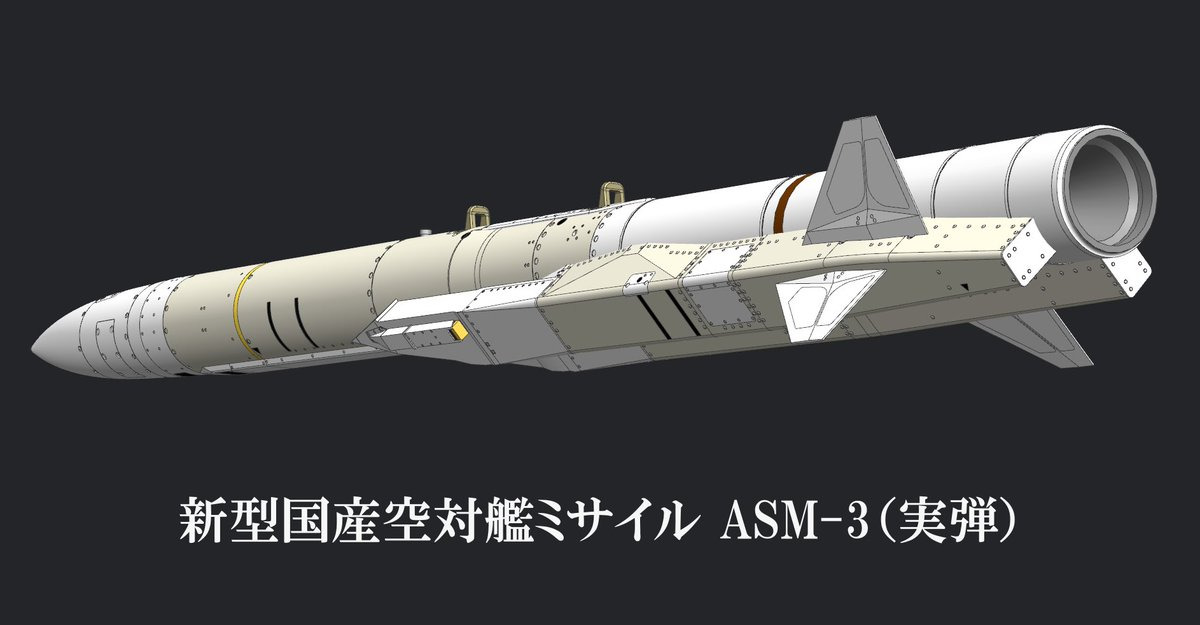
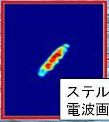
The ASM have been worked on, with not only a supersonic shape, but as well as composite materials and a minimised RCS.
The ASM-3 shape is very different from it’s older brothers ASM-1 and 2: both weren’t made to be supersonic, nor in the optic of reducing the radar detection of them.
For the improved versions, with the use of composite materials, 3D prints and more modern electric systems, gained 200km of max range with a loss of weight and more room for fuel.
But even tho 3 different version exist, none of the 2 first have changed drastically the dimension of the missile, to keep the operational use on the F-2 Viper Zero.
Dimensions will be given in stats.
Seeker and flying path
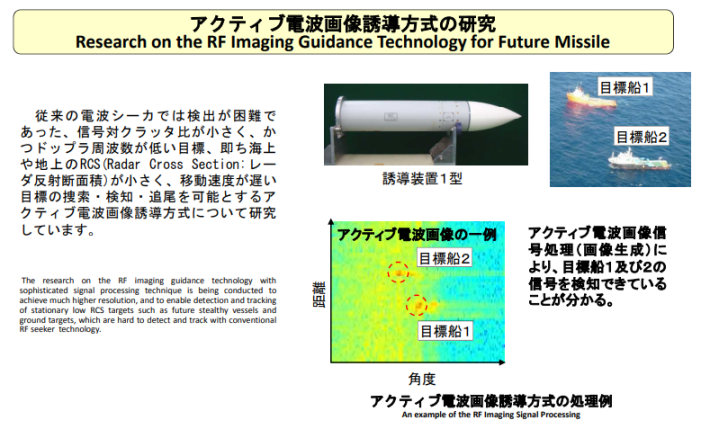
The ASM-3, and 3A are equiped with the same tracking sytem. It is a combinaison of multiples guidances. At launch, way out of anyone’s radar range, it will fly with a combinaison of inertial and GPS guidance (IOG+GNSS)+ mid-course correction given by the mothership or an allied radar in a joint strike, while it’s active radar will scan for it’s designated target.
Then, as the target is locked by the AESA radar, it will enter the terminal homing. if the active radar is jammed, a secondary passive radar can be used to guide the missile toward the source of the jamming, using ‘Home-on-jam’.
It have as well the possibility to attack coastal targets or enemy bases with the GPS system, making it as a makeshift cruise missile.
The ASM-3 and variants can as well use the mothership RWR to be used as an anti-radiation system.
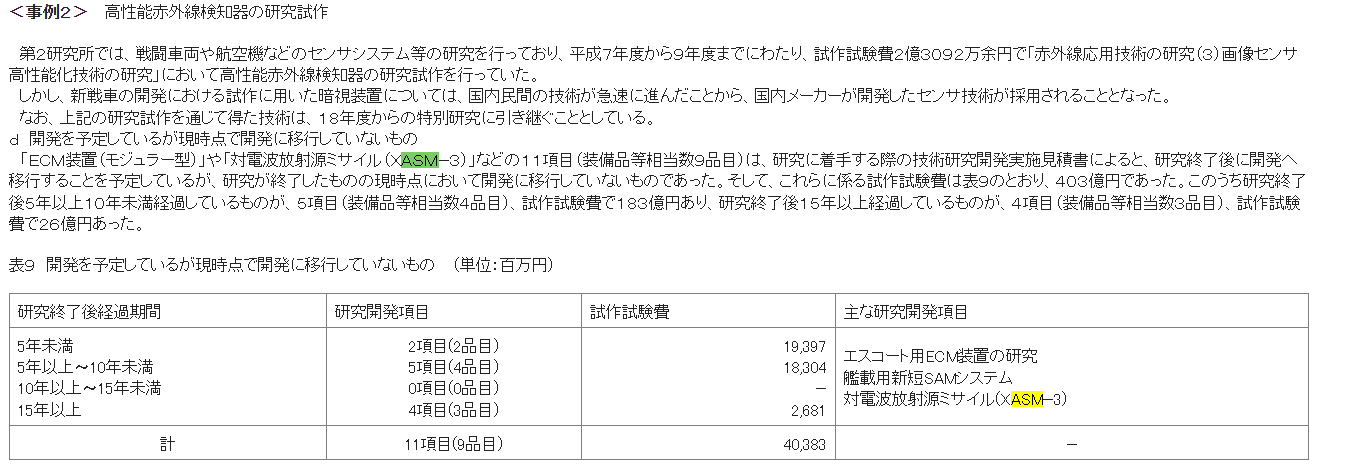
refered as an anti-radiation missile by the Japan goverernement in official documents for the public.
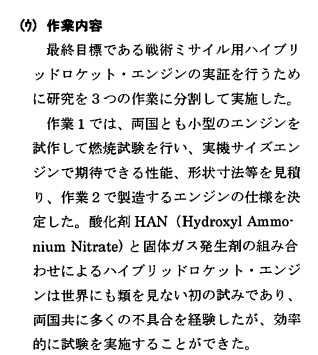
装備品等の技術研究開発の実施状況について | 平成16年度決算検査報告 | 会計検査院
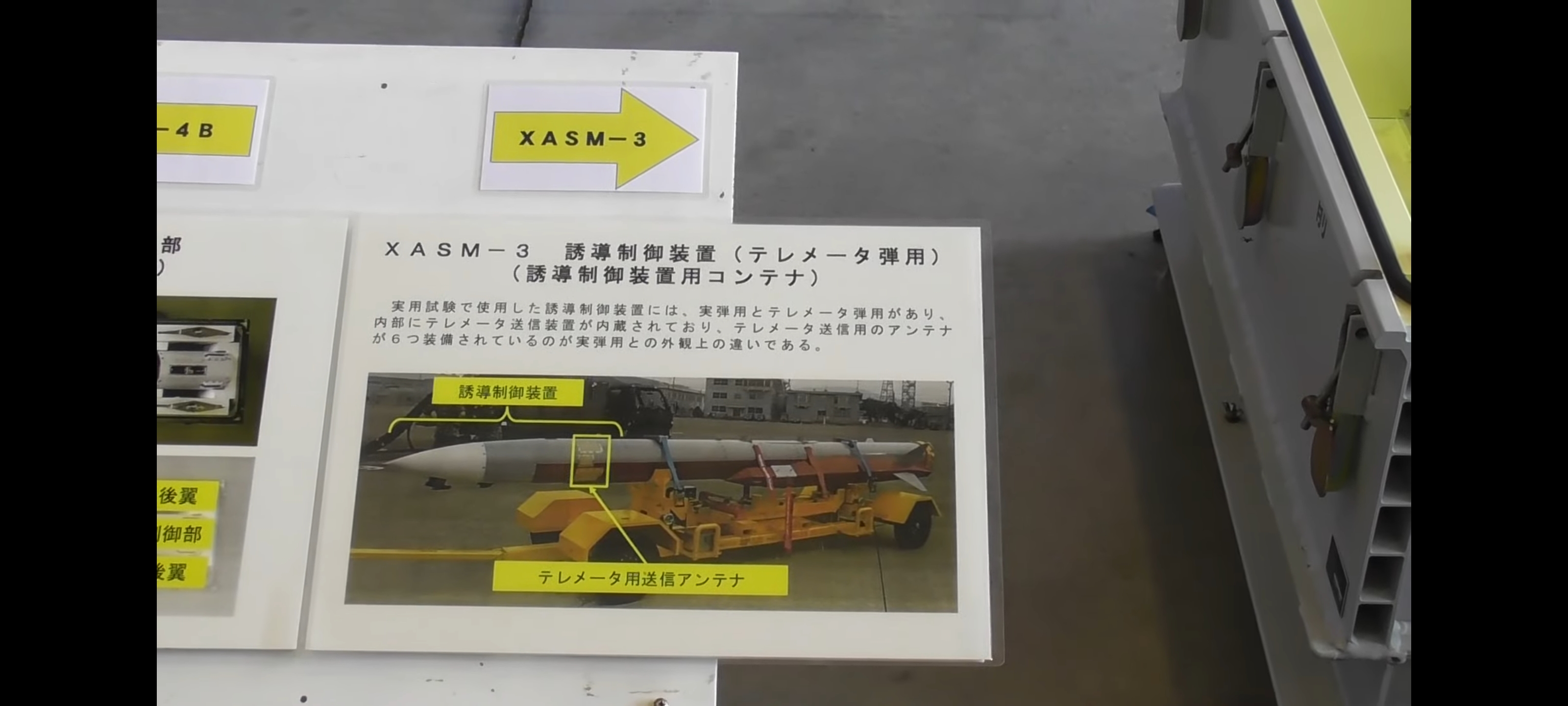
The active radar seeker used in the XASM-3 and ASM-3A is a derivation of the AAM-4B AESA seeker. If I refer to the already passed to dev suggestion of the AAM-4B, the autonomous range of the radar would be 1.4x the range of the AAM-4, making it 22.4km (based on the in-game statcard.)
Complete guidance: IOG, GPS , ARH, PRH, ARM, HOJ.
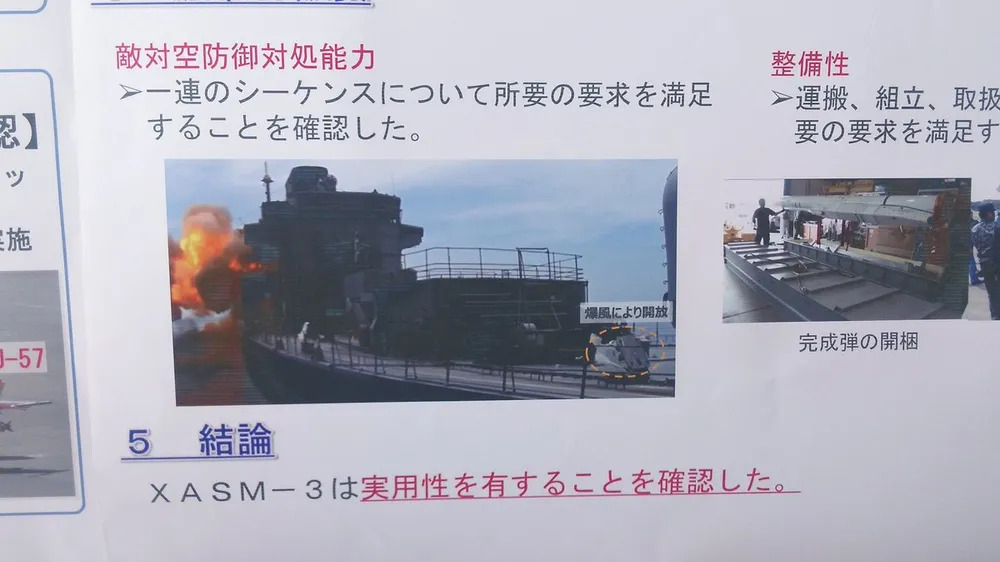
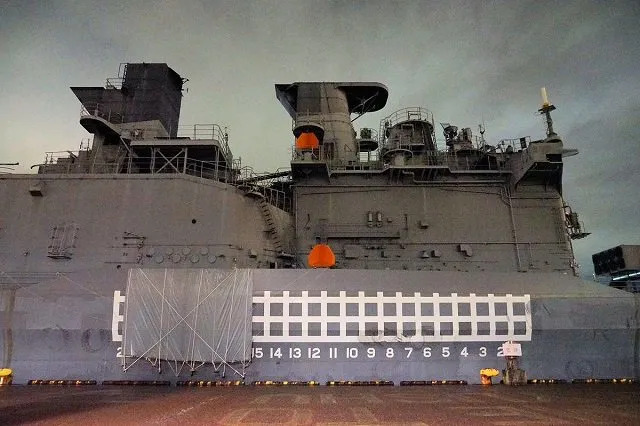
We can see were the ASM-3 from the test firing hit. With the relatively small hit, covered, we can understand that the test wasn’t about the warhead, but just for the guidance and kinetic penetration
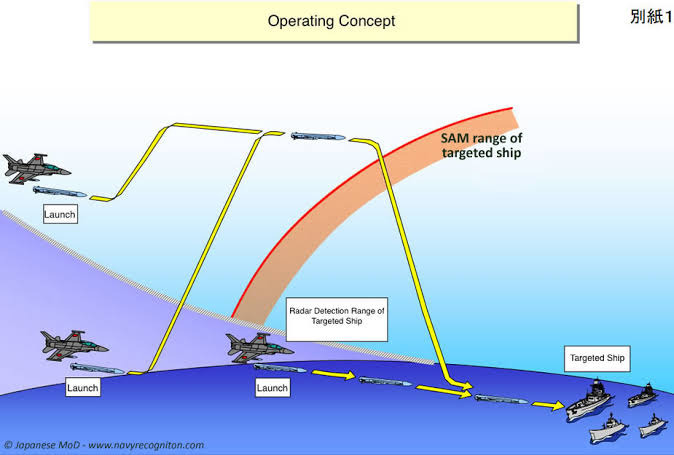
From this image, it can be seen that the ASM-3’s flight profile is assumed to be in the following three ways.
- Low-altitude launch-low-altitude cruise sea skimming (Lo-Lo-Lo)
- Low-altitude launch-high-altitude cruise sea skimming (Lo-Hi-Lo)
- High-altitude launch-high-altitude cruise sea skimming (Hi-Hi-Lo)
It’s natural to think that each of these flight profiles has a separate range, all of which are important design points.
propulsion
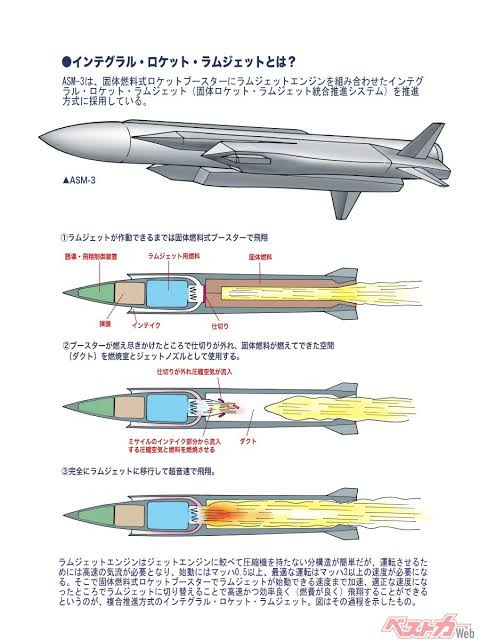
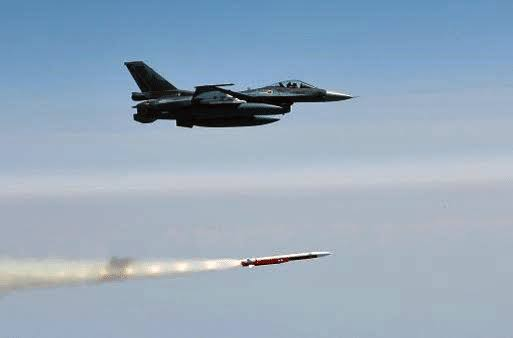
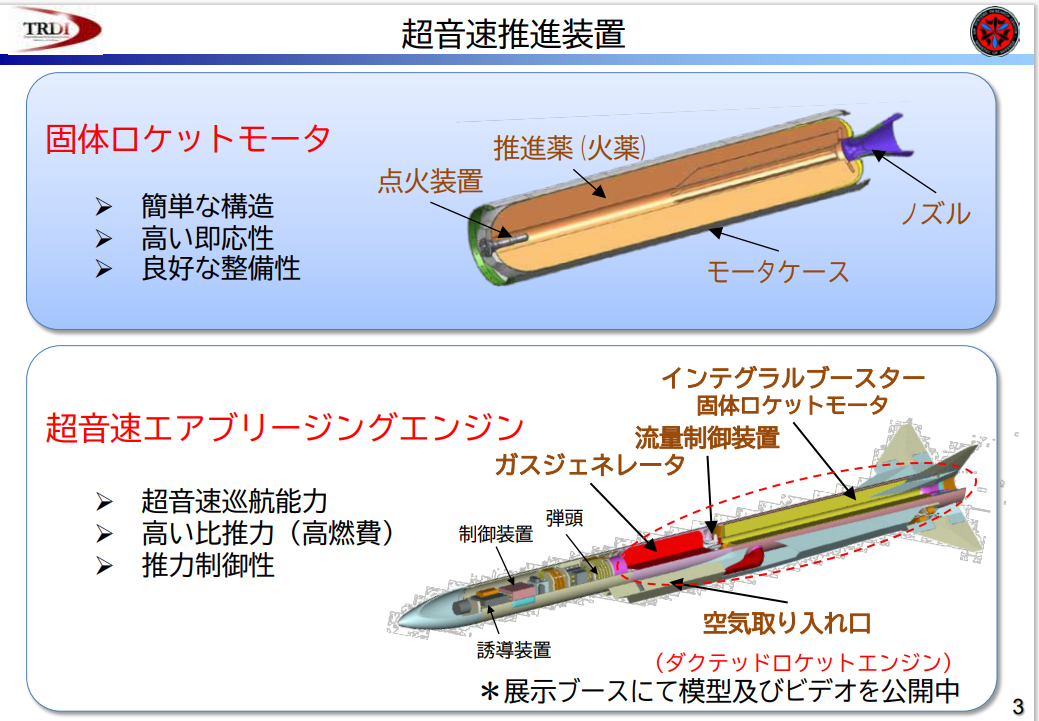
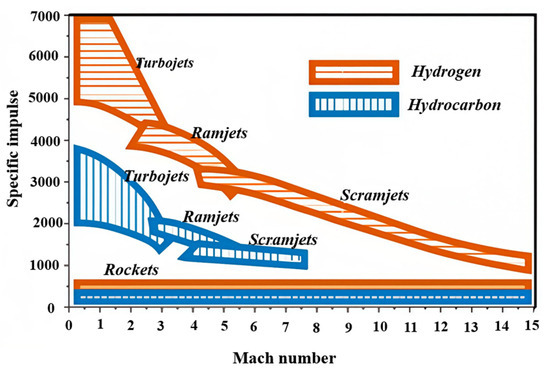
The ASM-3 and 3A uses the same engine, a liquid fuel for the initial boost phase, followed by injection into the same rocket chamber to continue combustion as a ramjet.
The only difference in term of engine is the 3A would have a better fuel efficiency, making it a bit faster, and less fuel-consuming.
This gives it a top speed of mach 3+, and a range of 200km for the ASM-3 and later on, on the production variant ASM-3A, 400km of range.
A improved ramjet will be for the next improved ASM-3 (Kai), but making it hypersonic with a max speed for mach 5+, and with a range of 1080 nautical miles (~2000km). Those range would be achieved by the combinaison of F-2 and 5th gen jets, in a joint strike.
warhead and other informations
The ASM-3 and 3A have the same warhead.
The warhead weighs about 200kg, composed by a nozzle fuze, a precursor shaped charge (HEAT) followed by an armor piercing HE (SAP), with a combined explosive of 150kg. This combined with a gigantic kinetic energy (=1/2 mass*speed²) of the mach 3+ speed and weight of the whole missile.
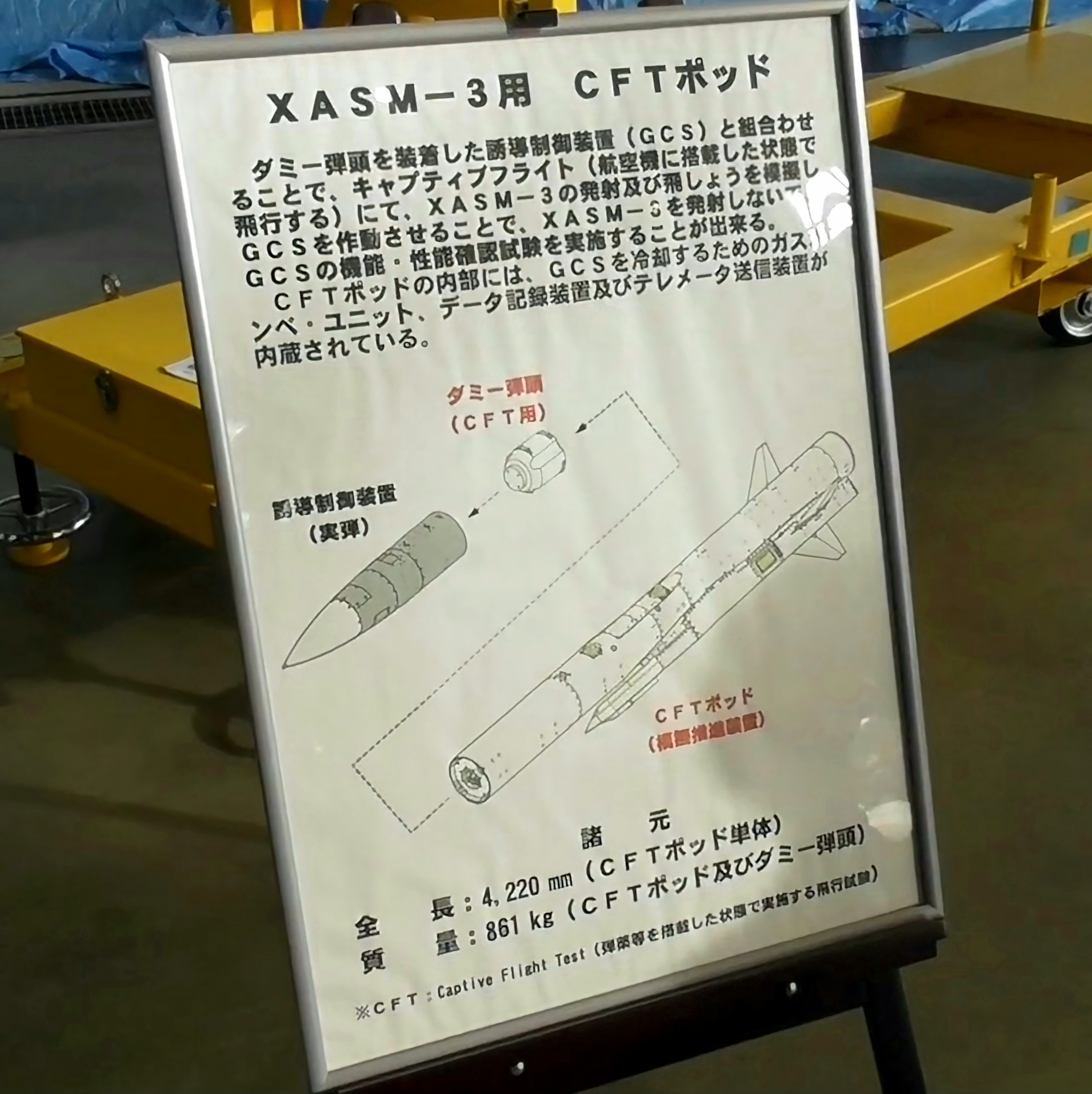
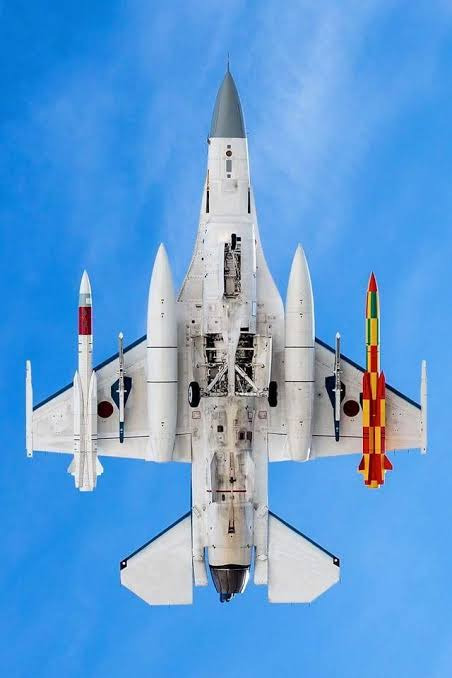
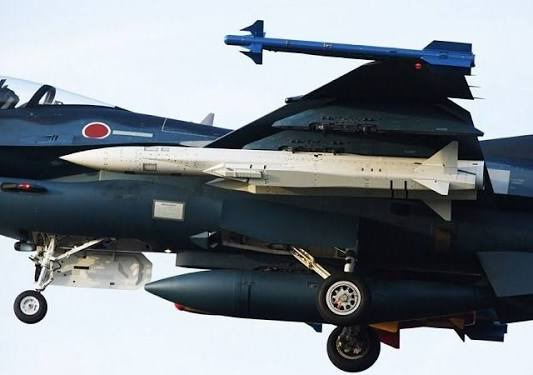
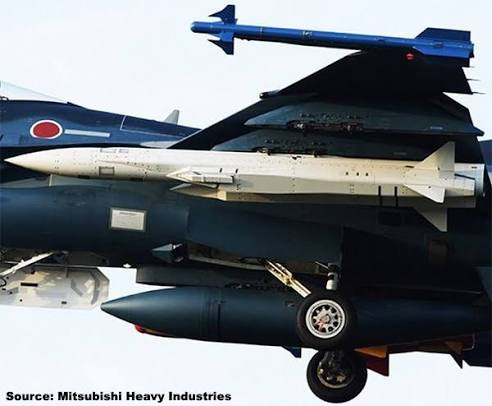
The F-2 can carry up to 4 of them, as shown into those 2 pictures:
Up: the XASM-3 is mounted on the extreme side pylon, under the wings.
Down: the ASM is mounted on the middle pod of a wing.
Energy delivered, and comparison with the ASM-2:
ssing Kinetic Energy: E= 1/2 m v² :
| Parameter | ASM-2 | ASM-3A |
|---|---|---|
| Mass | 940 kg | 528 kg |
| Impact speed | Mach 3 (≈1029 m/s) | 1150 km/h (319.4 m/s) |
| TNT | 191.9 kg | 90.9 kg |
| Kinetic energy | 498 MJ | 26.9 MJ |
| Explosive energy | 803 MJ | 380 MJ |
| Total energy | 1,301 MJ (1.30 GJ) | 407 MJ (0.407 GJ) |
- Kinetic energy: 18.5× higher for the ASM-3A.
- Explosive energy: 2.11× higher than the ASM-2.
- Total impact energy: 3.19× higher than the ASM-2.
ASM-3A: stats and how it would act it War Thunder
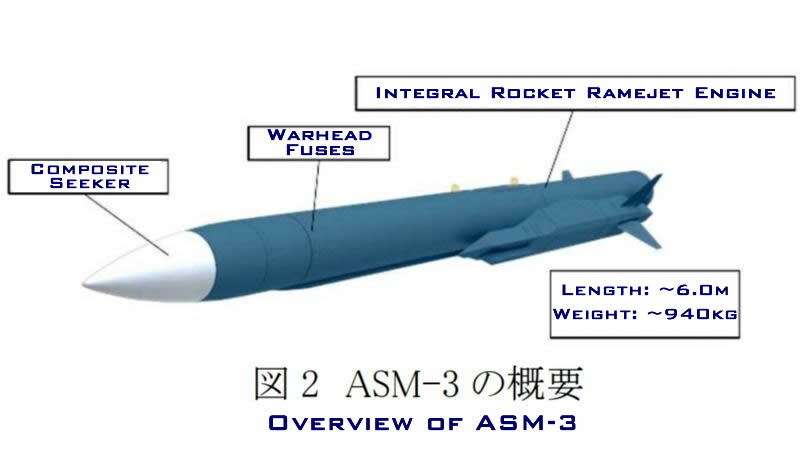
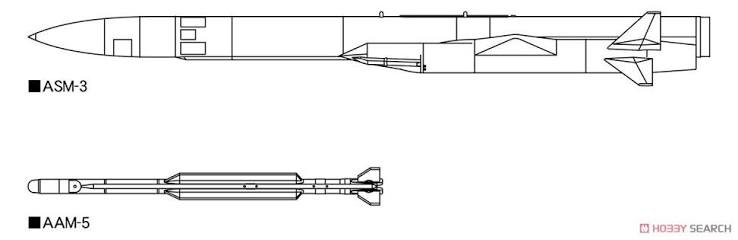
length:About 6000mm
full width:950mm
diameter:350mm
weight:940kg
cruising speed:Mach 3+ (3700+ kph)
maximum flight duration (rough calculus) : between 450-480 seconds (7.5-8min)
Update : No Data link (DL) for the XASM-3, ASM-3A, but will be added in the ASM-3 (Kai).

In War Thunder, the ASM-3A and variants would act as an ultra-modern anti-ship missiles, giving Japan a unique missile and a native missile. The gameplay would be pretty close to the Kh-31. The modern JASDF is specialized in the defense of island and seas, that needs to be reflected in-game. This missile has been thought to be superior to any existant missiles, since Japan cannot face China’s army in term of amount and budget; therefore, the japanese defense forces need to have weapons that can be multi-role and hard to counter. This is why it feels modern, not only compared to any anti-ship missiles, but as well as in general. Those will make you able to hit in ARB the sea targets without having to cross too much the enemy lines, en engage futurely added (as of 6-6-2026) more advanced carrier with their armada.
The ASM-3A can be used IRL as a joint attack missile, or a cruise missile. In War Thunder, the joint-attack capability is far from being added; so it wouldn’t exist. And as for the cruise-missiles, maybe we could de-activate the GPS coordonance given by the SNIPER pod, so the missile won’ t work as a JDAM or any GPS guided anti-tank armament. Or if it does, give it a large radius of dispersion, making it hard to use against single anti-air; but just enough to hit with a 100% rate a base in air battles.
sources
装備品等の技術研究開発の実施状況について | 平成16年度決算検査報告 | 会計検査院
ASM-3 - NamuWiki
https://www.globalmilitary.net/compare/missiles/asm-3-vs-nsm/
Missiles antinavires
ASM-3 - Wikipedia
https://web.archive.org/web/20180920115203/http://www.tokyo-np.co.jp/s/article/2018091901001908.html
千葉銀鳩の備忘録 : 【軍事】国産超音速対艦ミサイル『ASM-3』の射程距離について
CMO-DB - Command Modern Operations Database

Thank you for reading this, please feel free to add/correct me as I said in the introduction. I hope you liked it, and it will make it’s way in War thunder pretty quickly, since I love doing anti-ship in sim battle.