then tell me why i can put 10 20mm hei-t shells in the wingroot of a spit and it will just turn back to its base sometimes
and dont even get me started about how little dmg the german 15mm deal since the 20mm buff
then tell me why i can put 10 20mm hei-t shells in the wingroot of a spit and it will just turn back to its base sometimes
and dont even get me started about how little dmg the german 15mm deal since the 20mm buff
?
I was talking about IRL
i didnt realize that, sorry
If only damage models worked like that instead. Reducing max G-tolerance before catastrophic failure rather than the earlier linked video where I burst like 1 second in my F4U-4 and the Ki-84 loses its wing.
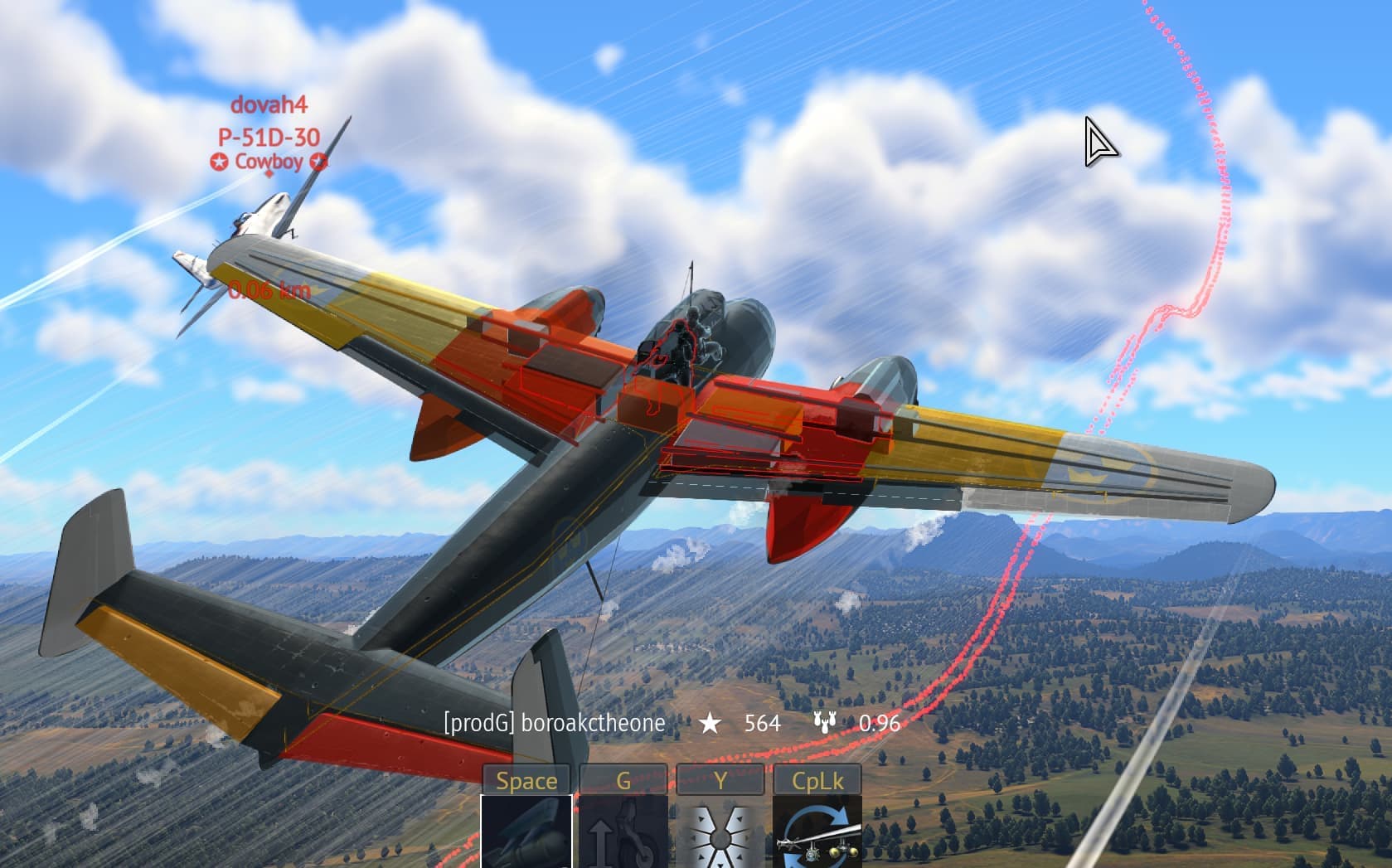
parked on this dude with .50s. He survived, was able to make it back to base, only getting intercepted by an ally as hail mary because he was the last enemy left
It depends on what gaijin Programs as a part to break. The empennage and wings will snap easily. It gets more complicated with twin engine fighters or jets. Especially ESPECIALLY some of the earlier jets. the Seahawk is a really wonky DM as the fuselage is blended in with the wings super far out so you have where nose mounted cannons will just smack the fuselage, turn it black. Which helps make it extremely draggy but you need to hit the wings or tail. Of course, that’s if you have a belt of pure HE of which no plane really has. You usually have a mixture that helps with a few AP rounds.
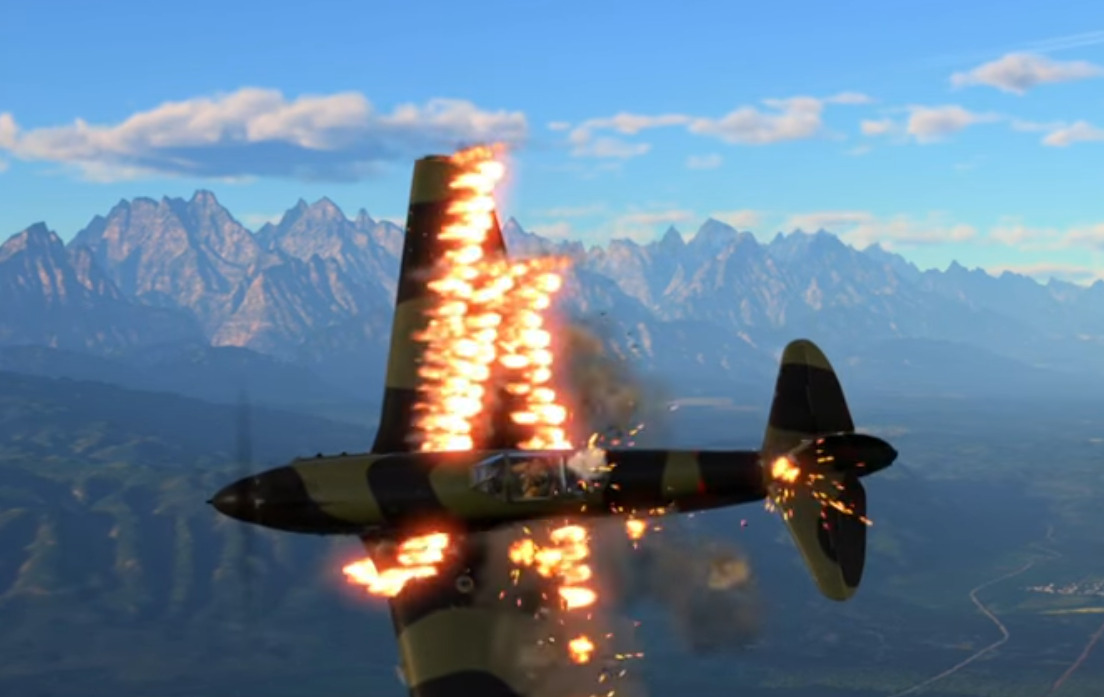
When a Yak-3 ran away from me in my AD-2. I put two hits on the empennage his whole tail just split off him.
Read the paragraph right afterwards as well.
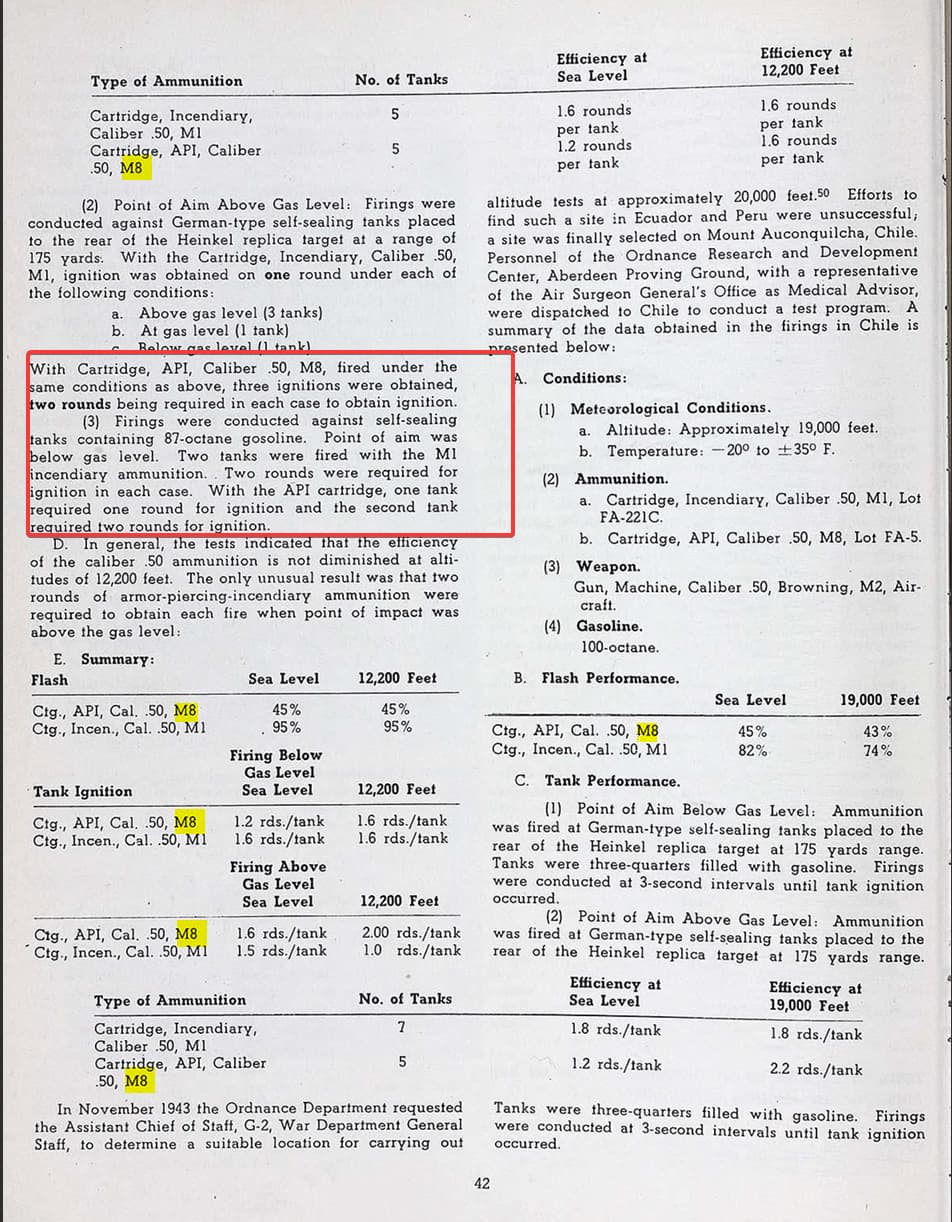
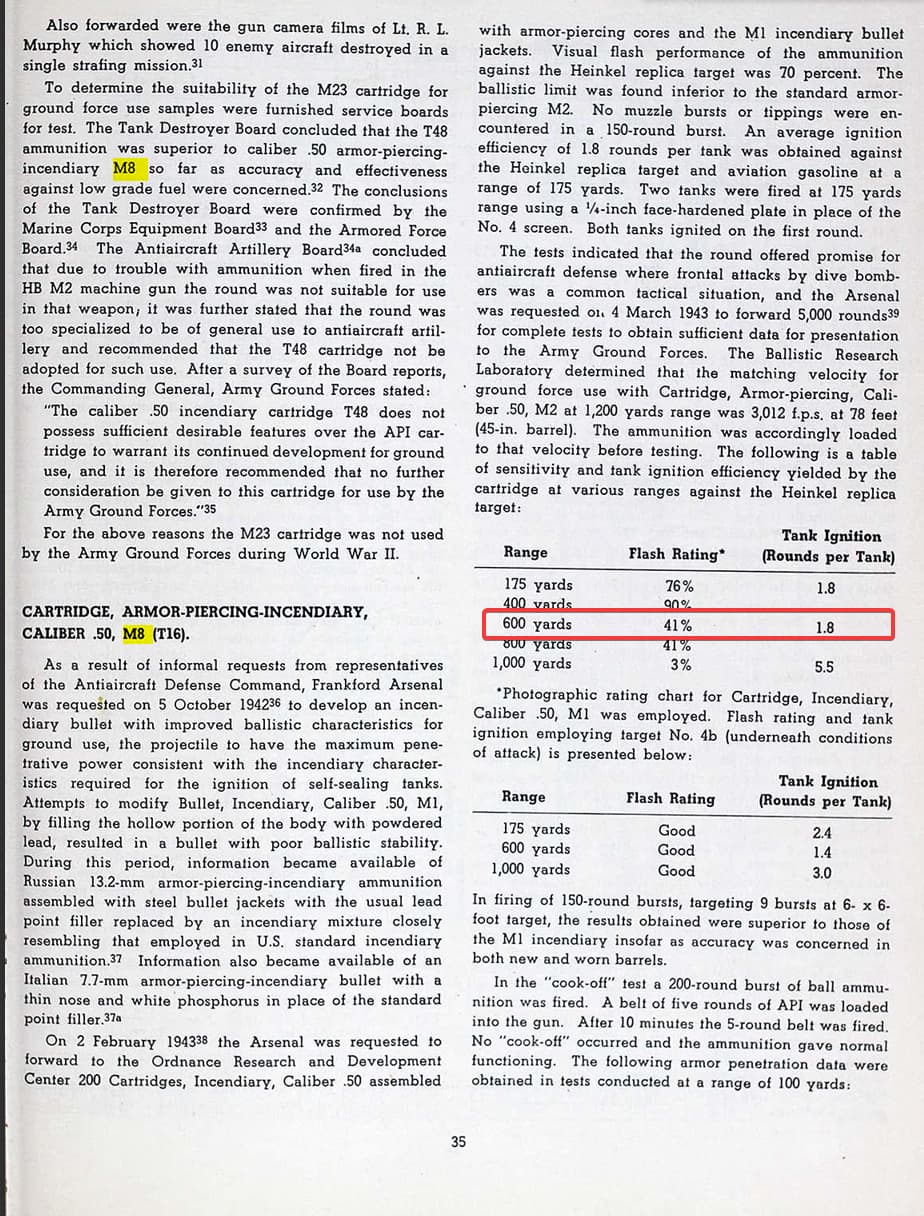
Weapon Vulnerability Report confirms the number and these ignitions were done with a slave engine to provide wind gusts to simulate the aircraft flying.
The range of these test firings is 500 yards
The first image is single shot ignition chances. An airframe with a fresh undamaged fuel tank is used each time.
The first value is rounds fired at the airframe. The second value is the rounds that penetrated the fuel tank and the third is how many of those rounds lit the fuel tank.

As you can see, the number jumps significantly higher even for the B-25.
If you take the numbers and average them:
For the P-38 it averages to 1.4 rounds
For the B-25 it averages to 2.4 rounds.
If you average both together, it’s practically at 2 rounds.
These averages line up very well with the Small Arms book. Especially so for the B-25 as the main testing medium of these rounds in the Small Arms Book were models of a He-111 wing with a self-sealing fuel tank. They also tested on other models as well, such as Japanese aircraft. Of which they noted any differing behaviors in the those models.
I decided to take another look at U.S. .50 accuracy.
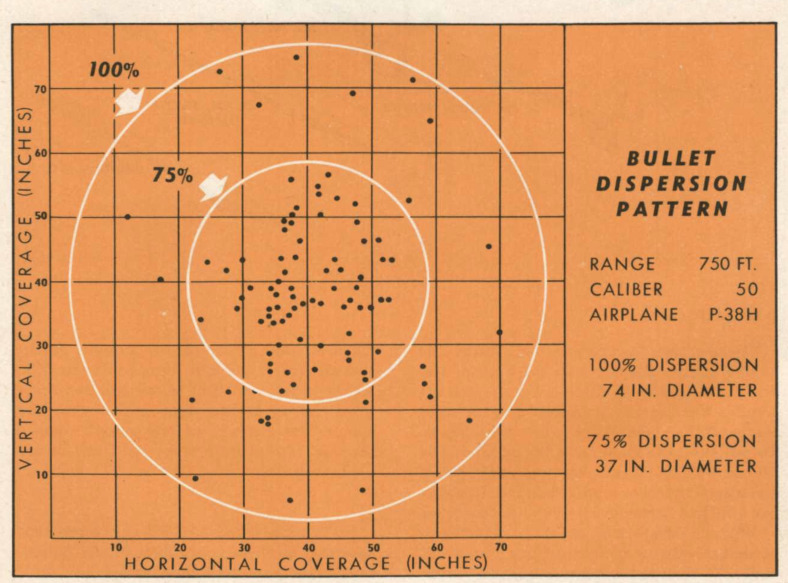

This was from the 1950’s right here.

100% 8 mil
75% 4 mil
Using the dispersion chart.
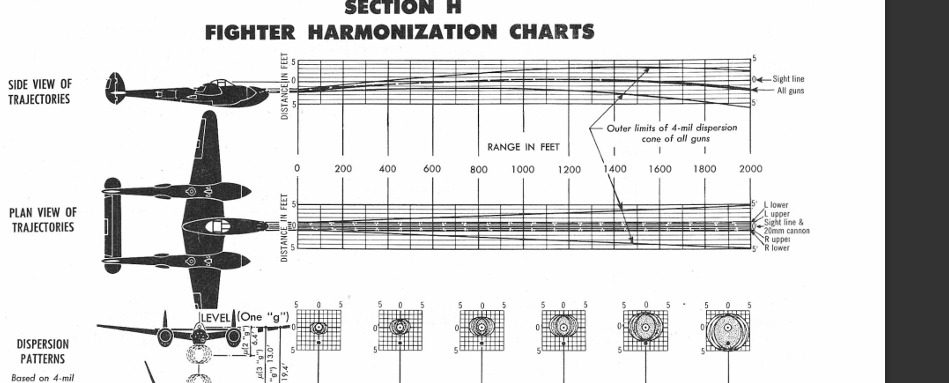
and what we have in game.
2000 feet is around 609 meters away
Testing with .50 accuracy mod turned off.
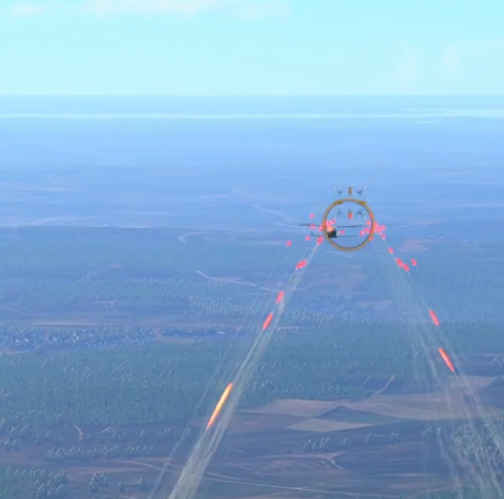
This shot 657 yards (I forgot to switch it back lol.) yards away. Which is almost to a T exactly 600 meters. What does this mean? You can simulate closely what the chart says via removing the accuracy modification.
all 100% of rounds would be in that 8mil circle. 75% of those rounds would be 4 mil.
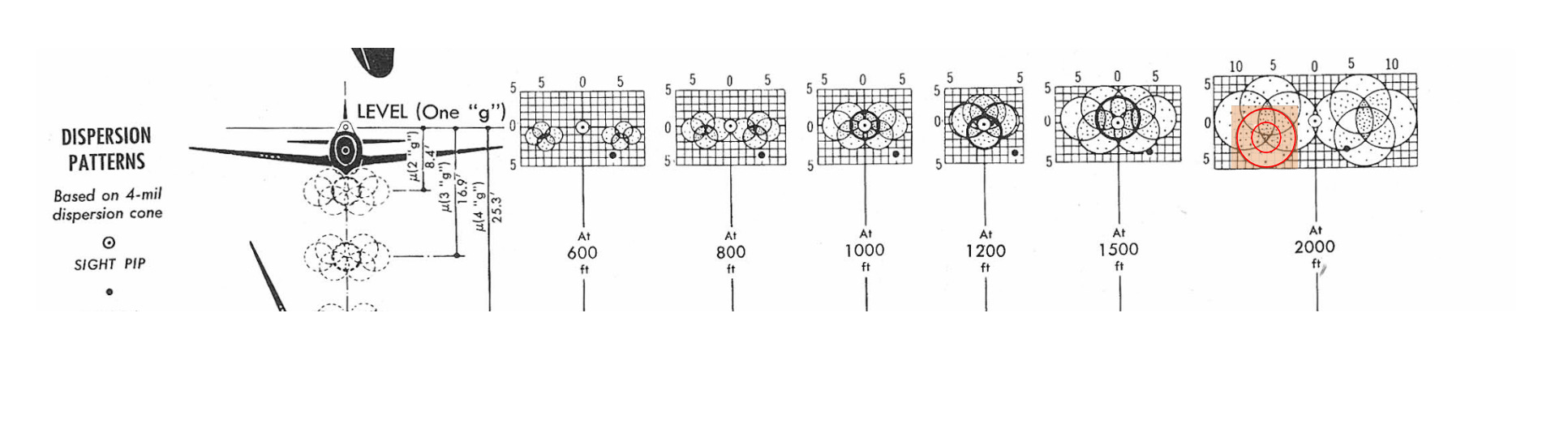
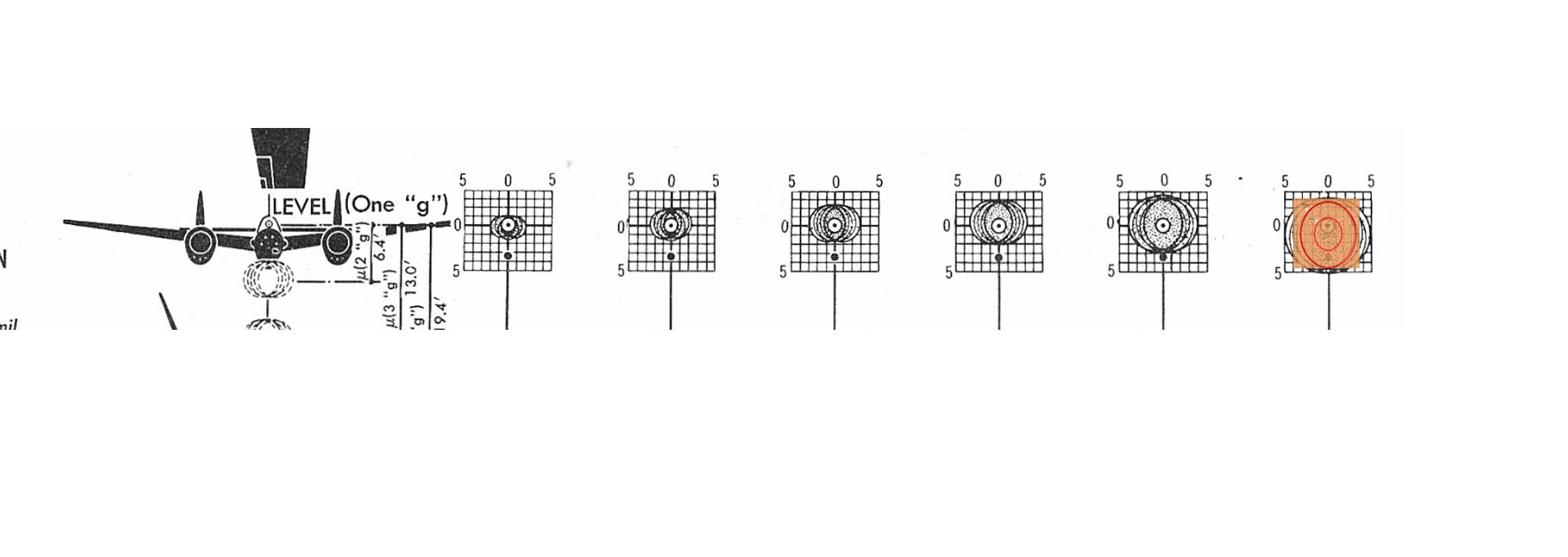
So 75% of these rounds would be in that smaller circle.
all 100% would be in that larger circle.
So you would have areas of dense concentration but also areas where you would flyers where they could intersect with one another.
At 1200m 1.2km It would basically mean that the 8mil circle where the P-47 is shown is the hitting circle.
Edit: Ignore all that I said right here. the circles are actually the 4mil dispersion cones. So gaijin doesn’t really need to attenuate much.
If they make the main accuracy like what it’s like without the accuracy mod, then the guns are actually performing almost one-to-one to how they should IRL in terms of accuracy.
Well, good to know.
So I can remove them on all planes to simulate their historical accuracy :)
I‘m probably also the only person who puts them at 300m convergence.
Omg. They AGAIN introduced the freaking “spars block kinetic rounds” bug.
I just went into a flight mission, firing against He 111 H-3s with a C.R. 42 with 12.7mm API-T and didn’t cause a single fire. Couldn’t even kill the engines.
Instead I had to pump 15-30 rounds into the spar for the wing to snap.
It’s no wonder setting fires with .50cals become rare compared to just snapping wings.
I talked about that exact issue when I was trying to test .50s on the He-111 in my bug report. I had to use the Bf-110 as a surrogate as it offered direct unrestricted access to the fuel tanks.
Yeah. I wanted to use the Bf 110 in the first place but then ended up with the He 111.
I now tested the Bf 110 and it took around 10 hits to set the fuel on fire. Firing with just one MG at times.
So as expected, the fire chance of guns seems to have been nerfed quite heavily, since there were times where 1-3 .50cal would cause a fire.
You can have it SOMETIMES light up fuel tanks easily. Like on the Bf-109 F-4. But the amount of one shot fires I got pales in comparison to the amount of times like in the video provided where you’re hitting multiple times and you’re not doing much.
Yeah F-4s light up pretty fast using 12.7mm Berezin API-T. Often just one hit is enough from behind.
But maybe it’s due to the round kiling the pilot which lights the AI plane on fire automatically or something.
With Berezin API-T, Bf 110s also seem to take anything from 1-10 to light them on fire. Even though it felt more consistent than with Breda-Safat API-T. So I was thinking the fire chance might be related to the damage inflicted.
Universal belt, F4U-1A (AP-I/AP-I/AP-I/T/I). Made 3 passes: Pass 1 I barely nicked his tail. Pass 2 I didn’t hit any fuel tanks. Pass 3 I hit his engine. Uploaded above is the engine shot causing immediate fire.
(notice that although his wing is yellow, i did NOT hit the fuel tank:
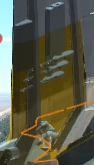
)
Regarding 0.50 cals:
In this replay 5 kills with 0.50 cals (universal belt - 3.3 UK Hellcat 2.7 - 3.7 game):
Gaijin Entertainment - Single Sign On
Kill #1 - I-185 - 3 hits and exploded
Kill #2 - P-47 - 2 hits and engine fire - burned down
Kill #3 - MiG 3 - 3 hits and engine fire - burned down
Kill #4 - P-39K - 3 hits and immediate crash
Kill #5 - Il-4 - 2 hits and engine fire - burned down
Between #4 & 5 i caught an ai Il-2 - 3 hits and dead…
Number of individual hits taken from battle summary. 65 ping, 0 PL, CIS server
From my pov no buff needed…
btw
saber hit all of your fuel tanks, yet no fire ever broke out?

IRL It’s mostly due to kerosene and fuel tank placement that stops fires on jets from happening as often.
It’s easier to look at props. Especially when gunning down Mosquitos or Pe-8s. I’ve shot up their entire wings and did damage to the fuel tank and no fire. But if you hit one little engine it’ll go up easier. In reality, due to movement within the aircraft, the sloshing of the fuel should exacerbate many of the issues that can be observed when a fuel tank is struck especially as it enriches the ullage as the aircraft flies around.
Honestly at that point. For props, just use Universal. Most of the damage comes from the m23 incendiary round, so it’d be better if Gaijin just changed the ammunition belt to be accurate.
For Late-war belts, should be: API-T, I, API-T, I, API-T
Mid-war: API, I, API, I, T
Early-War AP, AP, I, I, T.
We’ve had this conversation super far back:
Replays don’t work as evidence besides showing the raw damage to an aircraft because tracers don’t line up with a live match. You need raw footage.
I’ve used stealth belts and looked at sensor view for the “Tracer fire” and the rounds go way shorter than what shows up in the live match.
Hits appear to mean more like burst.
Otherwise I would get like 50-100 or more hits per aircraft, using a Spitfire with 8 LMGs.
Probably it counts damage within 0.1s that didn’t destroy any component as hits.
Made a report about incendiary bullets
https://community.gaijin.net/issues/p/warthunder/i/UPY5AVA9rNtR
And then gaijin makes it where it basically does nothing to fuel tanks. You’re going to run into the same issues when people were begging gaijin to add damageable modules to tanks. They add it in in the worst way possible.