- Yes
- No
- North Korea sub-tree in China
- United Korea tech tree
- Other
- I said no
≪주체포≫
1983년식 170mm 자행평사포 ≪주체포≫

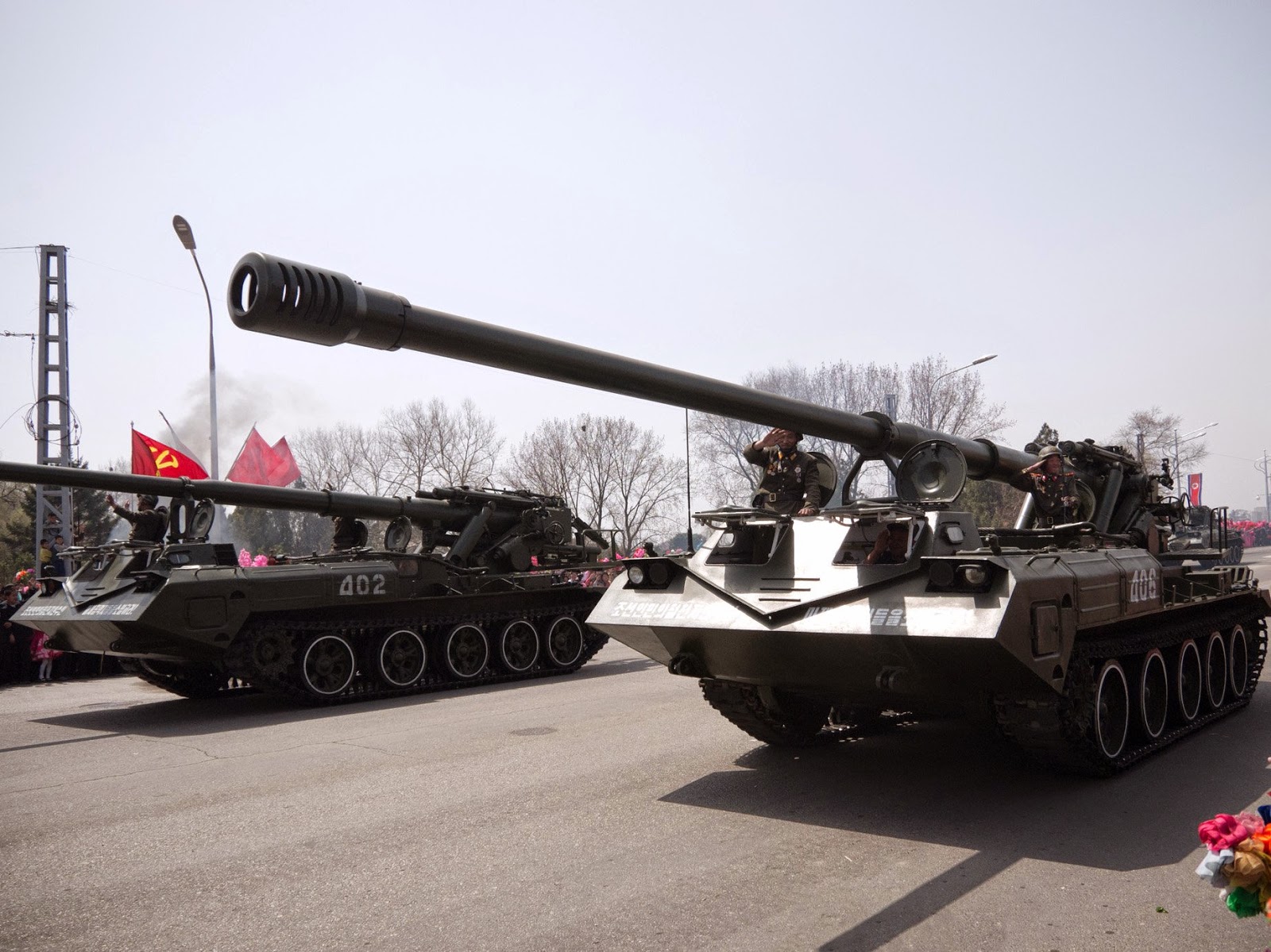
TL;DR: SPG based on the Ch’ŏnma (T-62) chassis, armed with a massive 170mm L/70 cannon
History
During the Korean War, the Korean People’s Army (KPA) was primarily equipped with T-34-85s, alongside SU-76 SPGs. These were used to great effect at the start of the war, but were very quickly outmatched by UN / US armoured vehicles. The SU-76s remained in service after the war, alongside smaller numbers of SU-100s, and even smaller numbers of ISU-122s — likely obtained from the Chinese PVA. The KPA was also armed with very large numbers of towed artillery (and MRLs), which, prior to the 1970s, constituted virtually all of the country’s artillery. In the late 1960s and well into the 1970s, the KPA underwent a large-scale modernisation program. Part of this program surrounded the development of self-propelled artillery, which was sorely lacking from the KPA’s arsenal.
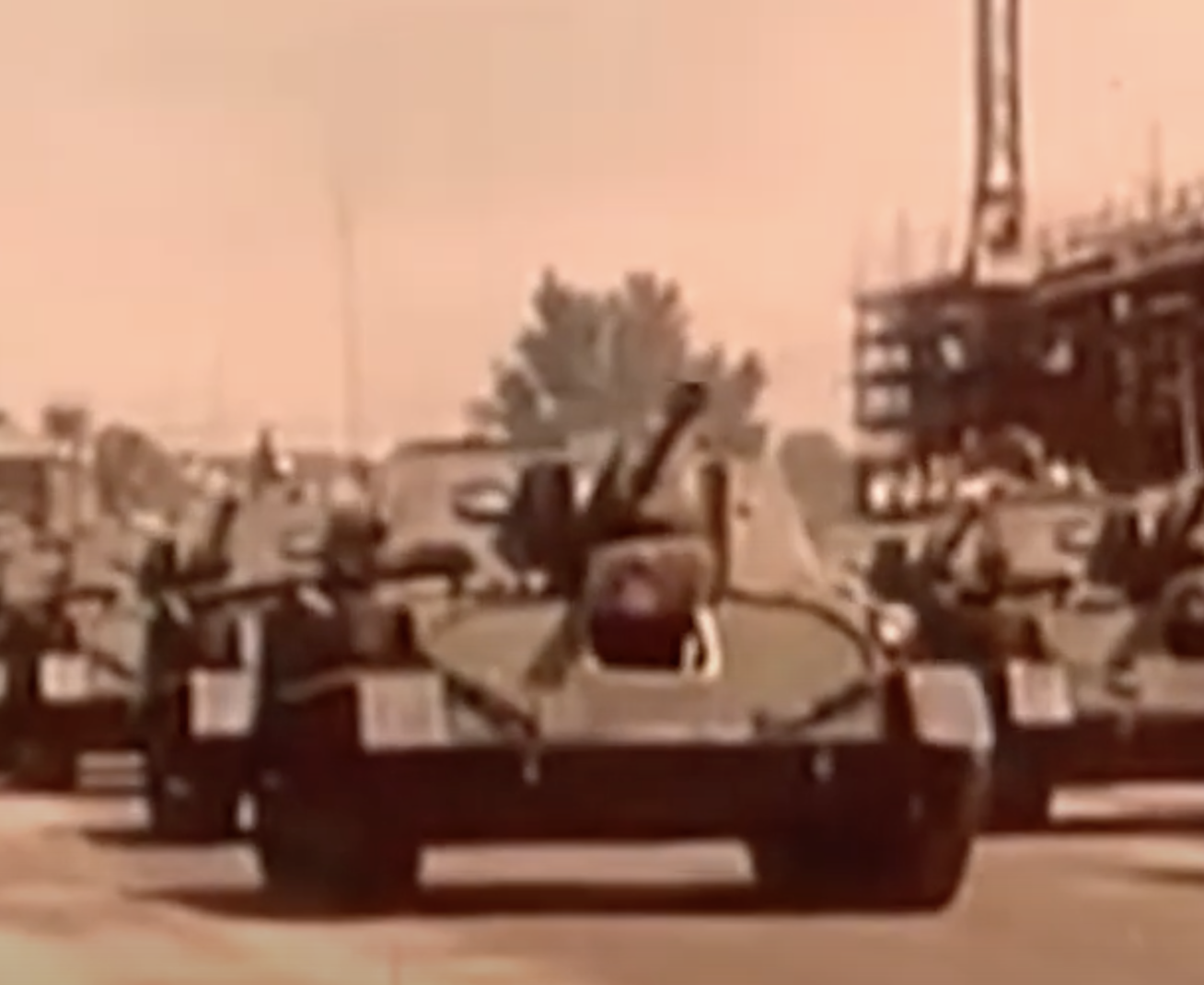
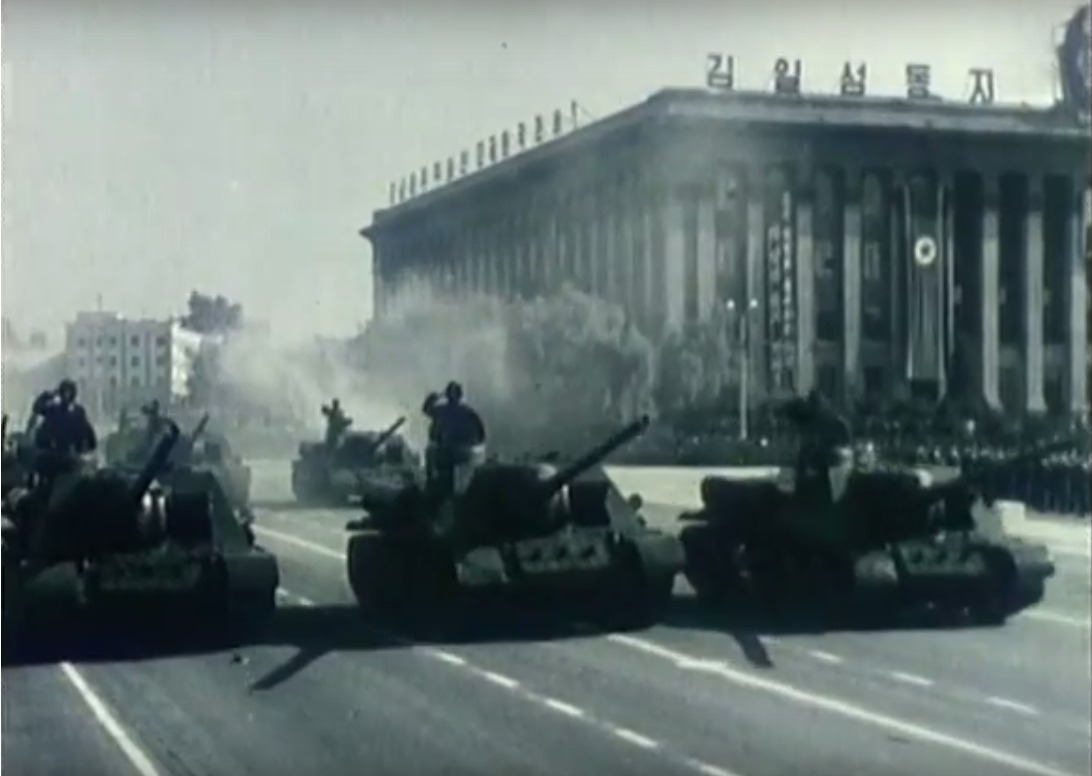
1. SU-76s and; 2. SU-100s during parades
The first attempts at this were made in the late 1960s, when a 152mm D-20 and modified 130mm M-46 (with the muzzle-brake of the SM-4-1) were mounted on a Soviet ATS-59 artillery tractor chassis. These did not enter production, but did pave the way for a number of very successful designs. Production began in earnest in the 1970s, with the development of five separate SPGs (alongside a few other vehicle types, including tank destroyers and SPAA) on the aforementioned ATS-59 chassis — these are collectively called the Tŏkch’ŏn (Tokchon) by the US DoD, although this name does not appear to official. Along with the ATS-59-based SPGs, a number of vehicles were constructed on the hull of the 323 — North Korea’s domestic APC, developed from the Chinese Type 63 (YW531A) around 1973.

SPGs at the KPA Exhibition of Arms and Equipment in Pyongyang. The five vehicles along the front row, from closest to camera to furthest are the: 1972 152mm SPH; 1978 122mm SPG; 1974 130mm SPG; 1973 170mm SPG (Chuch’ep’o); 1983 170mm SPG (Chuch’ep’o)
While these designs were fairly standard, and could certainly hit targets from a large distance (>20km in some cases), North Korea was also developing a much more ambitious design. Supposedly first built in 1973 (or potentially entering service in 1973), this monstrous SPG carried an immense 170mm cannon on a T-54/55 chassis. The official KPA designation is 1973-model 170mm self-propelled level-fire gun ‘Chuch’ep’o’ [1973년식 170mm 자행평사포 ≪주체포≫]. The Chuch’ep’o (literally meaning ‘Chuch’e [Juche] gun’) was first identified by the US DoD in 1978, and was given the name M1978 ‘Koksan’.
Note on Naming Scheme
North Korea split their self-propelled guns into three main categories:
- Self-Propelled ‘Direct-Fire’ Guns [자행직사포], e.g. the 100mm-armed ATS-59- and 323-based vehicles
- Self-Propelled ‘Level-Fire’ Guns [자행평사포], e.g. this vehicle, and the 130mm ATS-59-based SPGs
- Self-Propelled ‘Curved-Fire’ Guns [자행곡사포], e.g. the 1978 122mm SPG, the 1972 152mm SPG, and the Chuch’e 107 155mm SPG
I have chosen to translate them as follows:
- Self-Propelled ‘Direct-Fire’ Guns → Tank Destroyer (TD). A more literal translation would be Self-Propelled Anti Tank Gun (SPATG), but this is not commonly used
- Self-Propelled ‘Level-Fire’ Guns → Self-Propelled Gun (SPG)
- Self-Propelled ‘Curved-Fire’ Guns → Self-Propelled Howitzer (SPH)
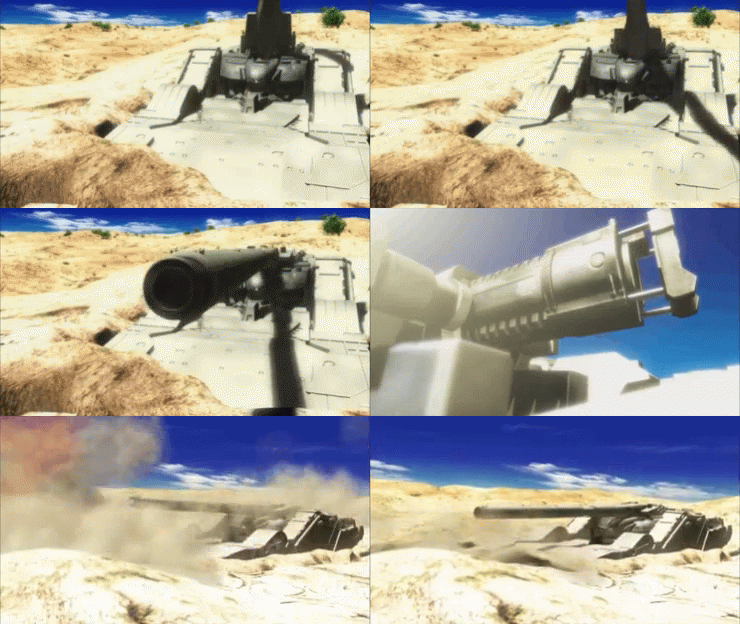
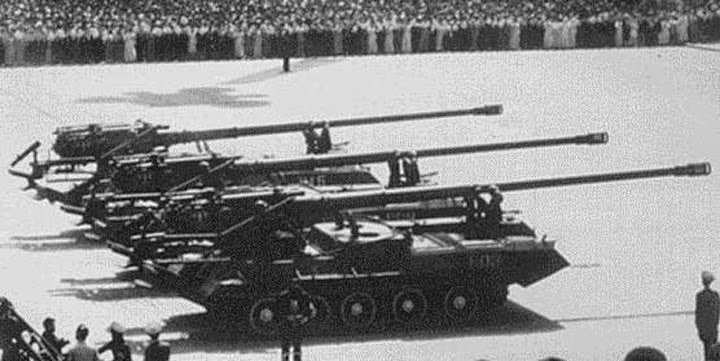
The Chuch’ep’o carried a giant 170mm cannon on a modified T-54/55 chassis. The exact variant of the base vehicle is unclear, but I personally suspect it is a T-54/Type 59, given that this is the only variant for which production lines are available (modified Type 59s were produced under the name ‘68’ from, according to North Korea, 1968). While in travel, the gun is mounted centrally, but is slid back along rails when firing. The 170mm cannon has long been estimated to have a range of 43km, and up to 53km when using rocket-assisted projectiles.
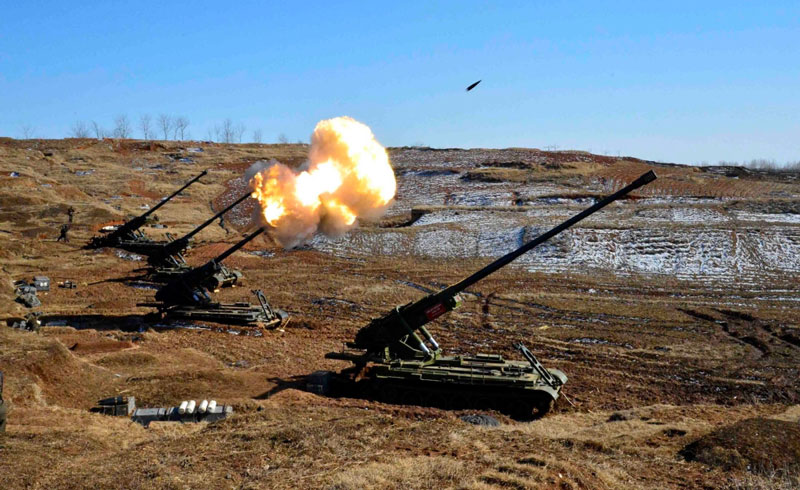
1973-model Chuch’ep’o during firing exercises
The origin of the 170mm cannon is unknown. Some have speculated that it was dervied from the German WW2 17 cm K 18 in MrsLaf, which would have been passed to North Korea from the USSR. Others believe it may have been derived from the Japanese WW2 Type 96 15cm cannon (L/52), which would have been obtained directly from North Korea after Japan’s surrender. It is also possible that the cannon was developed independently.
Initial production of the Chuch’ep’o was slow — by 1986, 13 years after production began, North Korea had only deployed six battalions of twelve SPGs (72 total) (roughly 5–6 per year, if produced at a constant rate). This has been hypothesised to indicate that production of the cannons was slow and complicated, especially likely if it was designed domestically. However, by this point, North Korea had already begun production of a second, improved variant. At least two prototypes were built in the late 1970s, and by 1983 (once again, according to North Korea), production had begun of the 1983-model 170mm self-propelled level-fire gun ‘Chuch’ep’o’ [1983년식 170mm 자행평사포 ≪주체포≫]. This vehicle was first seen in 1989 by the West, and correspondingly given the name M1989.
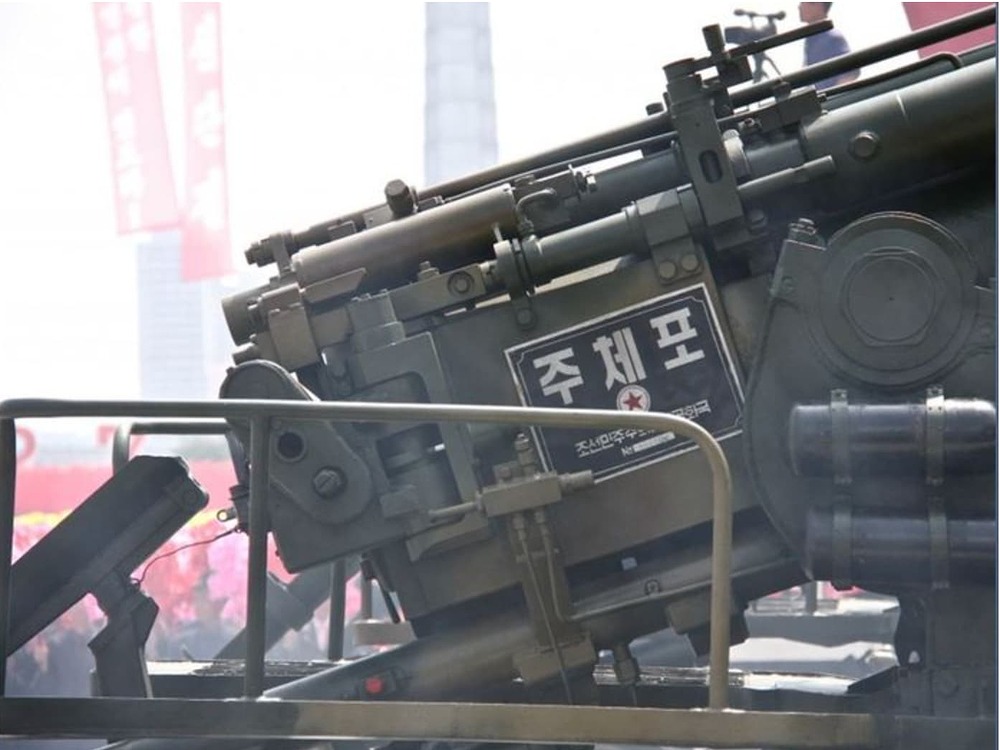
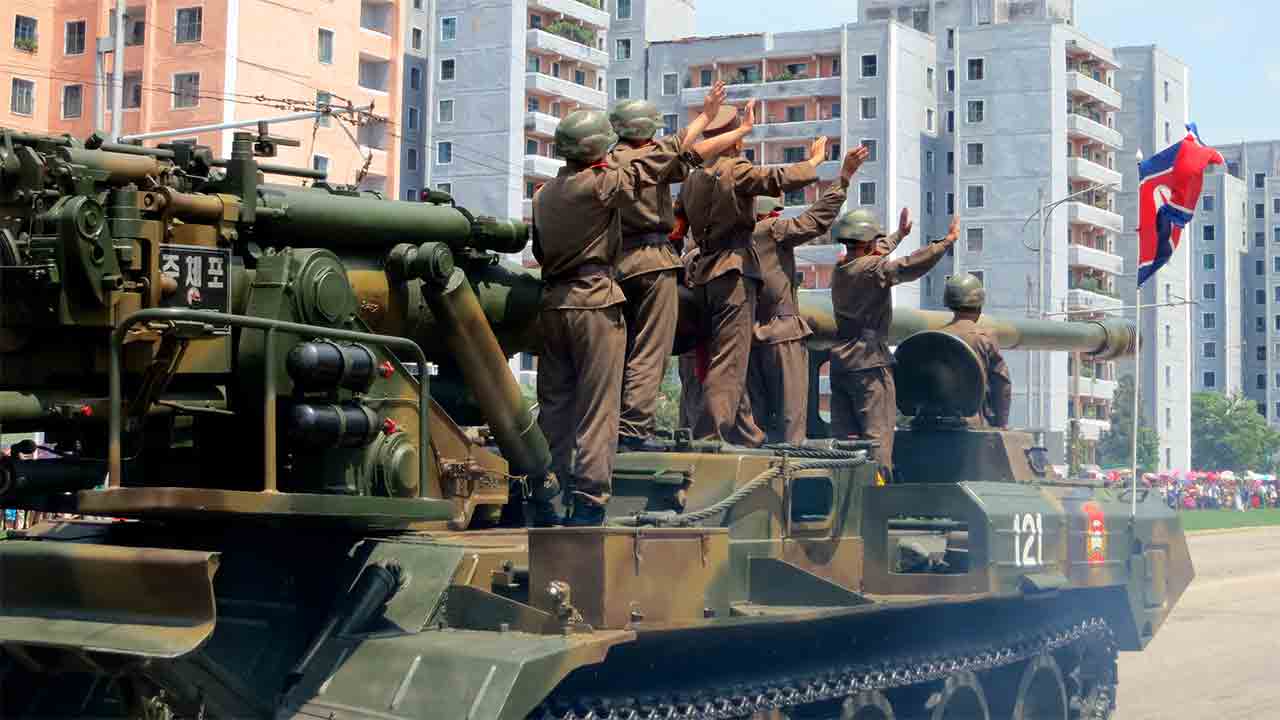
The nameplate on a 1983-model Chuch’ep’o, reading 주체포 (Chuch’ep’o)
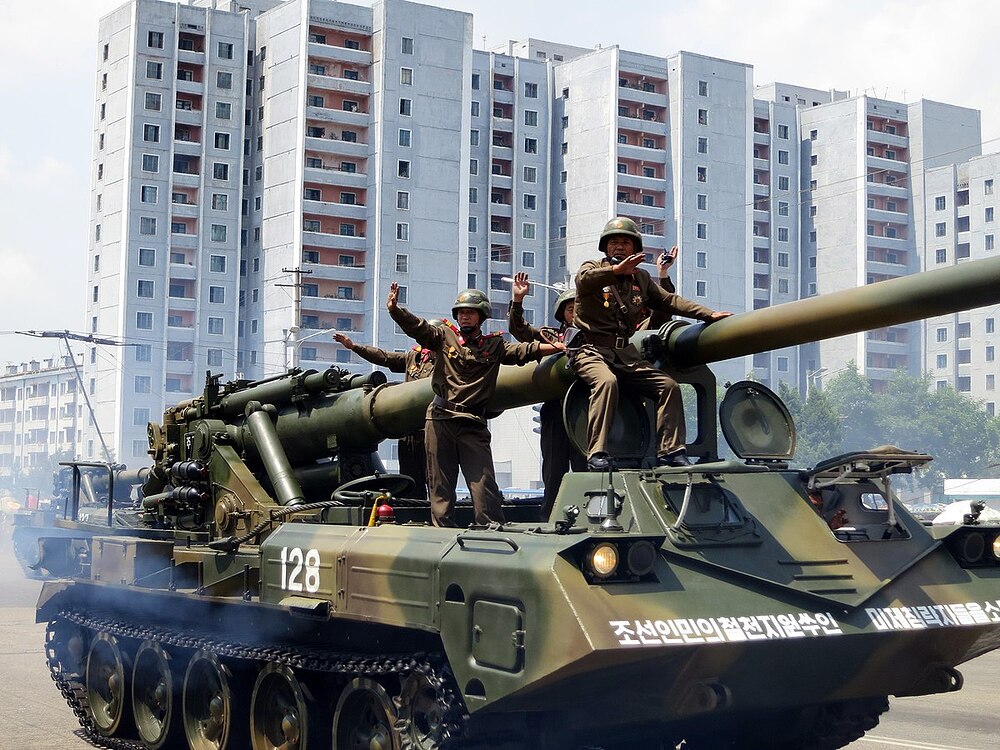
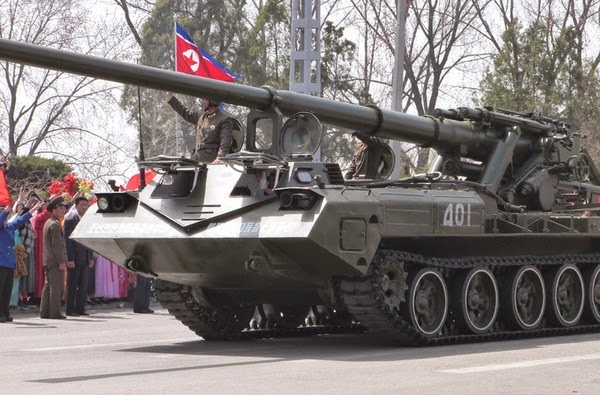
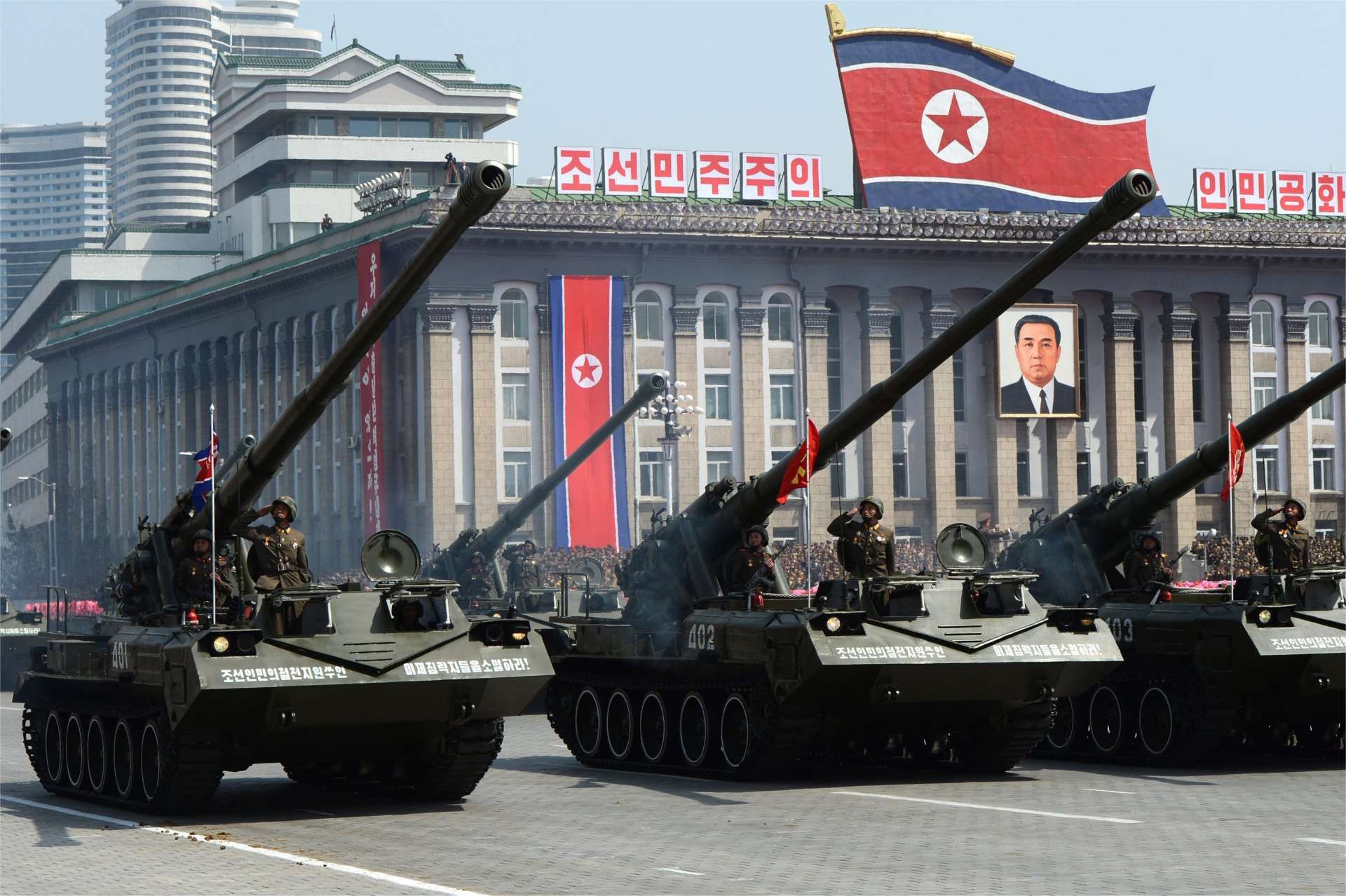
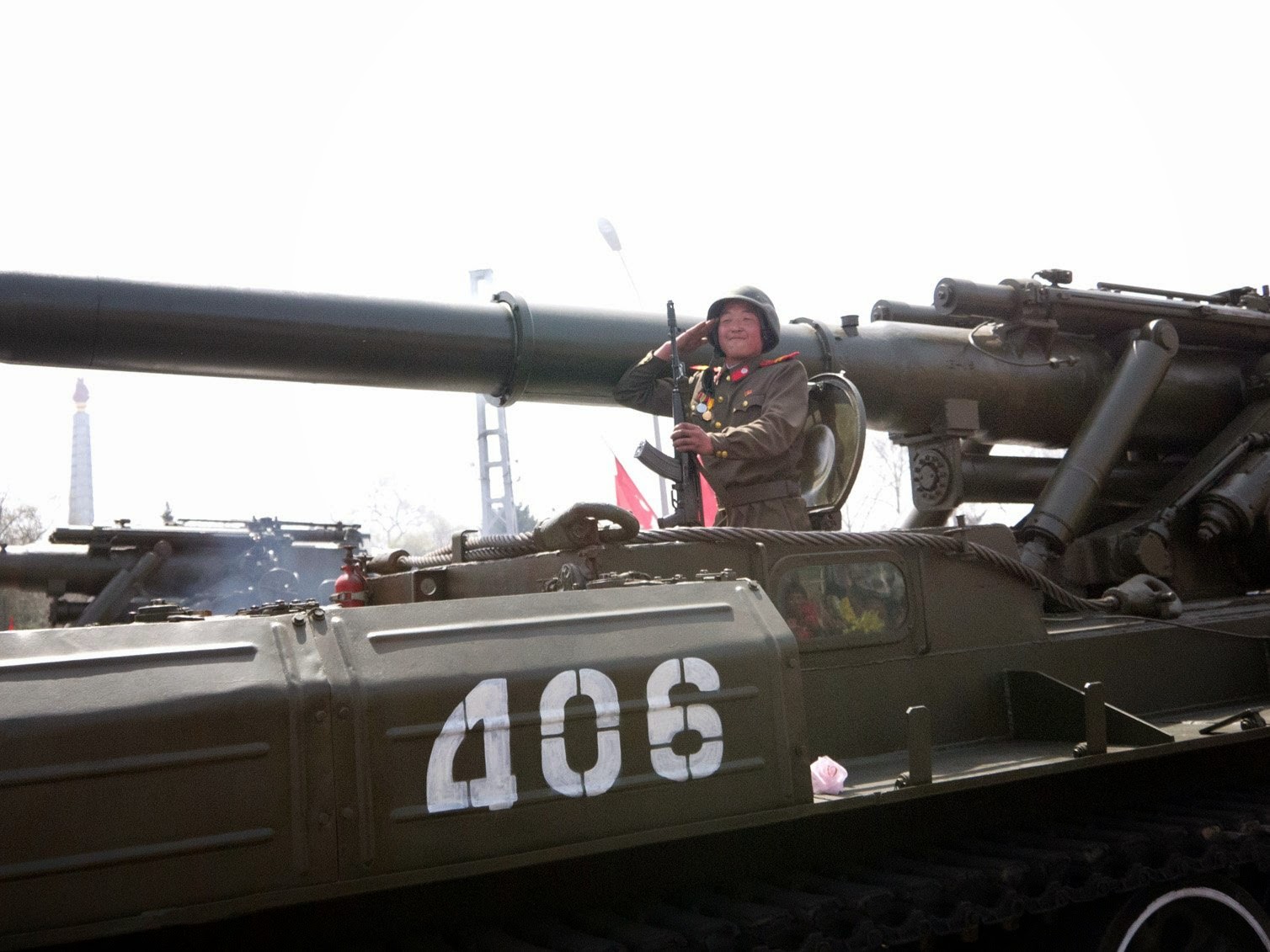
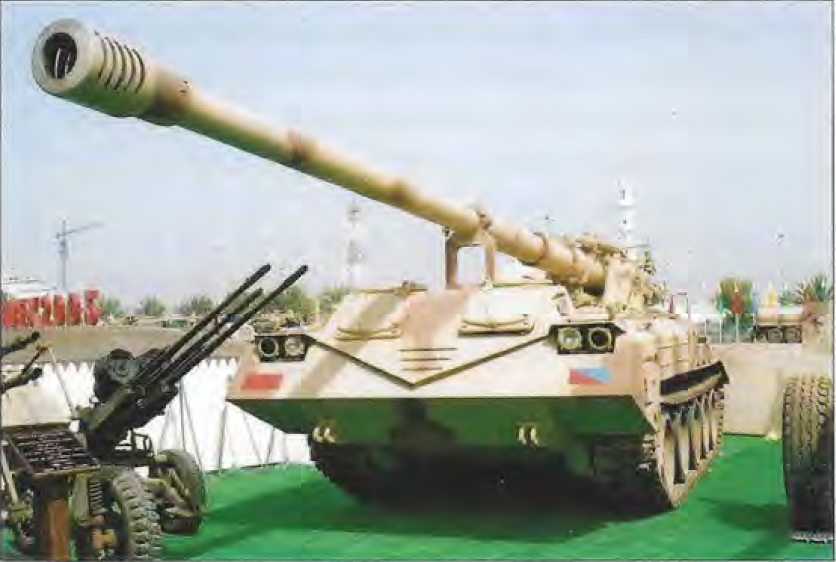
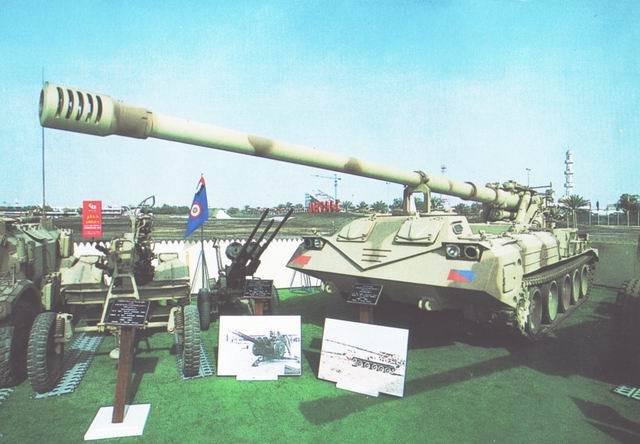
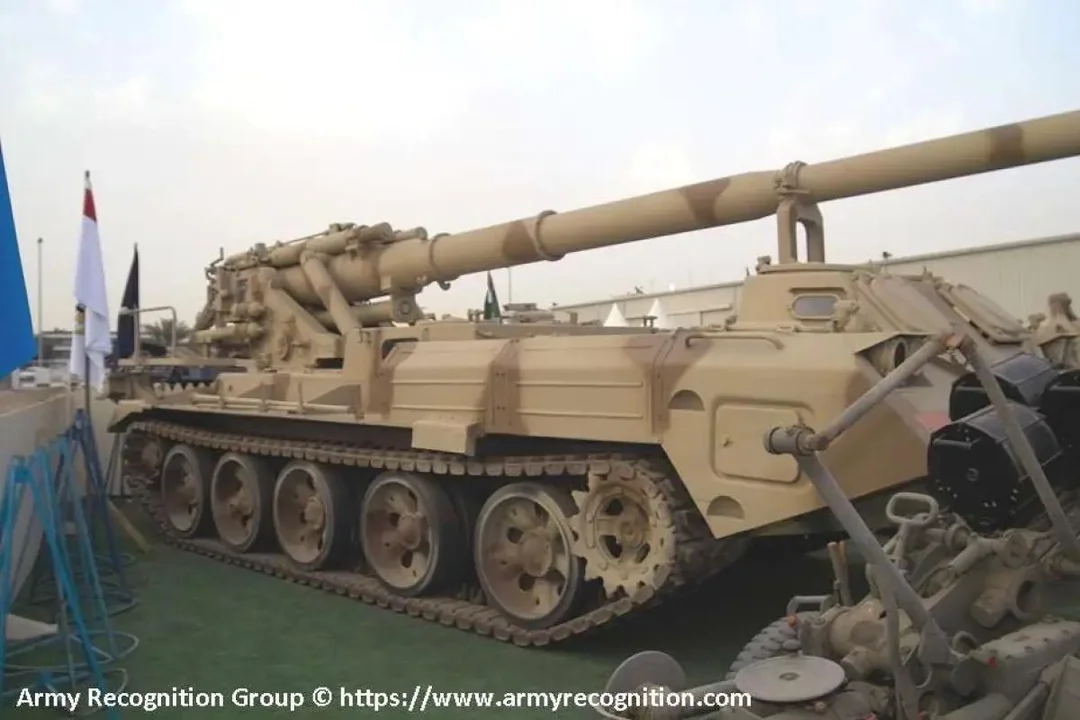
The 1983-model was substantially modified from the 1973 variant. The older T-54/Type 59 chassis was traded for a Ch’ŏnma (T-62) chassis, but reversed, with the engine moved to the front. The hull was also lengthened at the front for a proper crew compartment, and the gun was mounted at the rear at all times — in a very similar configuration overall to the Soviet 2S7 Pion. The cannon also received a new double-baffle muzzle brake, although the function is unclear — both variants remain in service today. The breech also appears to have been slightly changed, indicating some overall improvements. Most importantly (for the game), the 1983 model can carry 12 rounds on board, unlike the 1973-model, which can only carry two. The exact number produced is unknown, but is estimated to be over 400.
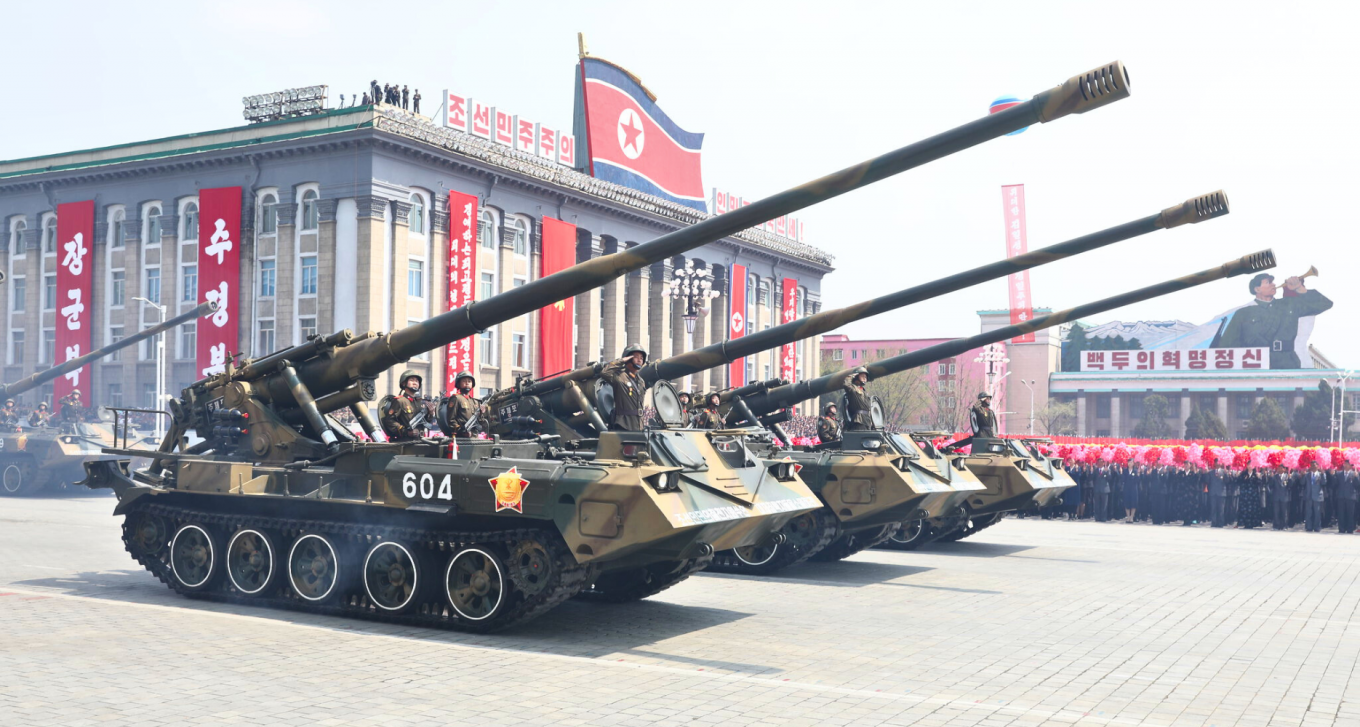
1983-model Chuch’ep’o during the 2018 parade celebrating the 70th Anniversary of the Foundation of the Republic
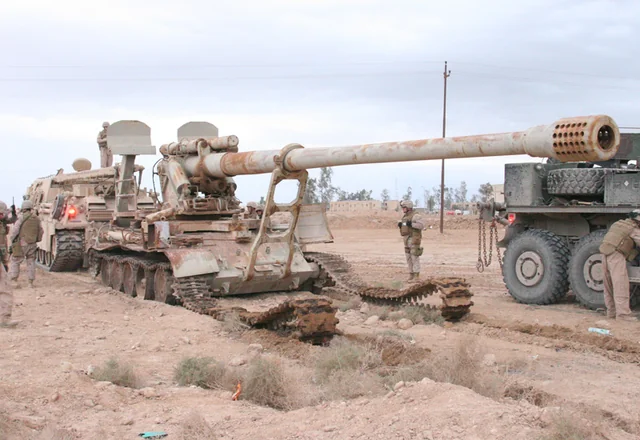
Surprisingly, the 1973- and 1983-model Chuch’ep’o’s were exported, and have seen active service during a number of different conflicts — something that few North Korean vehicles can claim. The first country to receive them was Iran in the 1980s, which received limited numbers of the 1973-model. They saw service during the Iran-Iraq War (1980–1988). Notably, at least one was captured by Iraqi forces, displayed in Iraq after the war, and was analysed heavily by the US. Iraq also developed their own vehicle, heavily based on the 1973-model Chuch’ep’o, armed with an even larger 180mm S-23 cannon on the chassis of the BLG-60 bridgelayer (itself derived from the T-55). This sole prototype was captured by US forces in 2003 during the Iraq War.
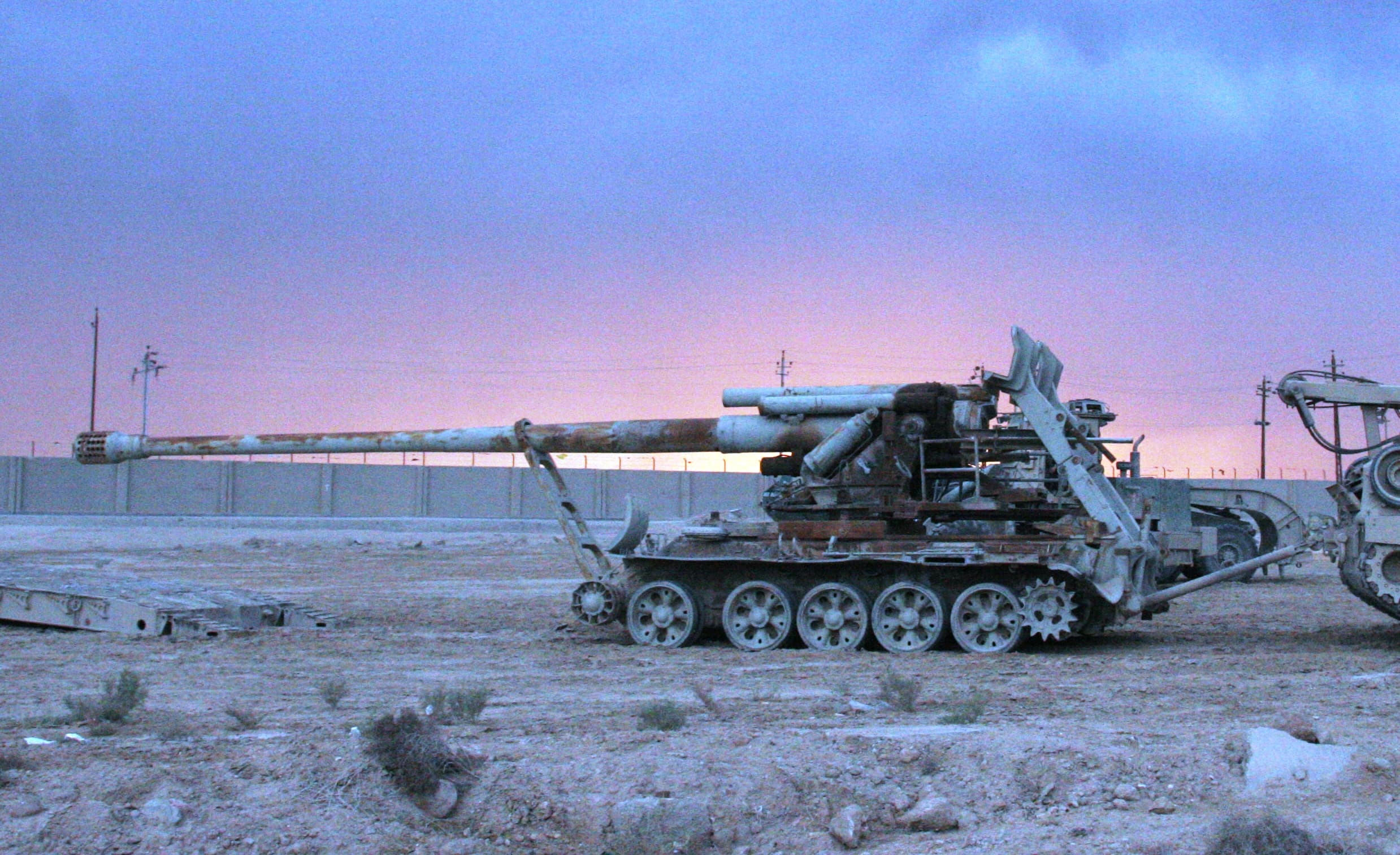
The Iraqi BLG-60 armed with a 180mm S-23, being towed by American forces
The 1983-model Chuch’ep’o was also advertised for export, notably being seen at IDEX 2005 in the UAE, alongside other North Korean weaponry. It did not see any customers, however, until much more recently. In November 2024, the first Chuch’ep’o’s were seen being transported by train from the Russian Far East across to Russia’s western border with Ukraine, for use in the ongoing war. Since then, footage has emerged of the confirmed operation of the Chuch’ep’o by the Russian Armed Forces, and the confirmed destruction of a number of vehicles. The exact number sent is unknown: estimates range from 50–200.
Characteristics
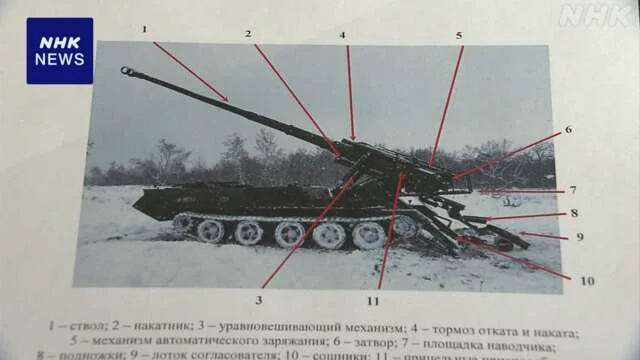
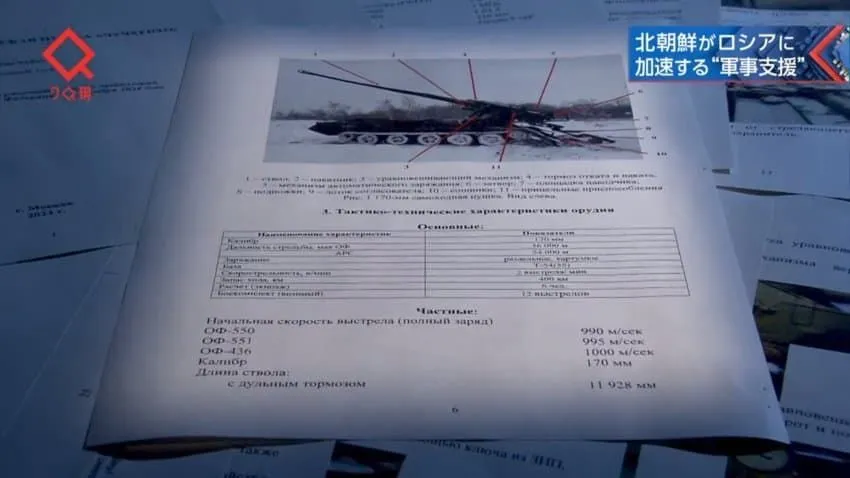
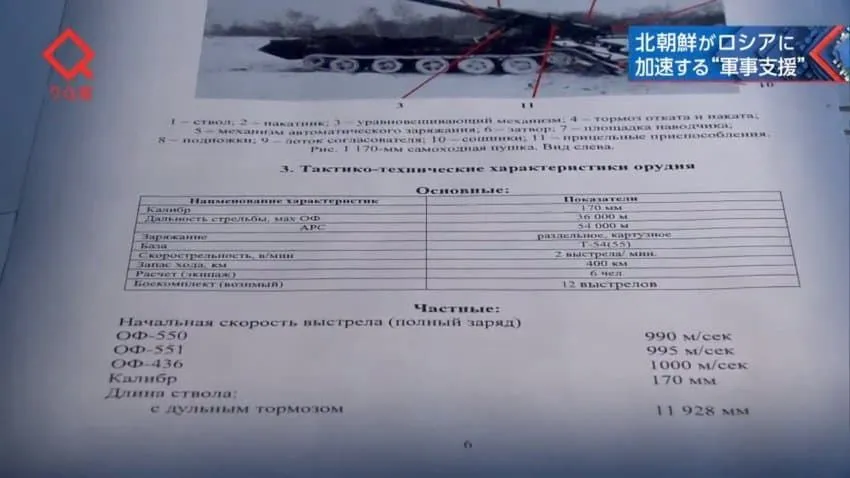
The 1983 170mm SPG (hereafter just referred to as Chuch’ep’o — not to be confused with the earlier variant of the same name) is armed with a massive 170mm L/70 cannon (designation unknown). According to a North Korean manual, translated into Russian, the cannon fires three main rounds: OF-550, OF-551, and OF-436. They have a muzzle velocity of 990m/s, 995m/s, and 1000m/s respectively. Their maximum range is 36km, although rocket-assisted projectiles reach 54km. Any other details about the rounds, such as explosive mass, are unknown. 12 rounds are carried on board. While estimates typically give a rate of fire of 1–2 rounds / 5 minutes, the same manual claims 2 rounds / minute. The main cannon has very limited horizontal traverse, and the gun elevation / depression is unknown.
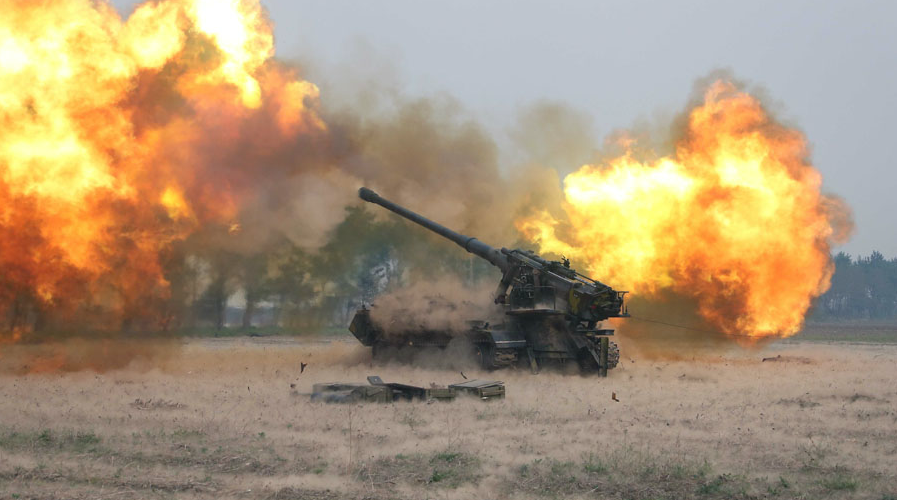
1983-model Chuch’ep’o during firing exercises in 2014
The Chuch’ep’o, despite using the T-62 / Ch’ŏnma chassis, is thinly-armoured. The gun has no protection or gunshield of any kind. The hull has been heavily modified and armour values are unknown, but the new cabin at the front appears to be very thin, highly unlikely to resist anything more than small arms fire. The side armour may remain the same (80mm @ 0°), although it is also plausible it has been reduced in thickness to save weight.
The Chuch’ep’o presumably retains the same 580hp V-55V engine from the Ch’ŏnma. The Chuch’ep’o has been estimated to weigh around 40t, and thus has a power-to-weight ratio of 14.5hp/t. It likely has the same top speed of 50km/h forwards and 8km/h in reverse.
Conclusion
The Chuch’ep’o is one of the most iconic North Korean vehicles, and would be an excellent addition to the game in a future United Korea Ground Forces Tech Tree. While it would be great to have it as a researchable vehicle, it would be largely impractical in-game, with a huge size, highly limited horizontal gun arc, and long reload. It would, however, be a perfect candidate for a Dreams Come True event vehicle similar to the Sturmtiger, likely at a BR of around 6.3.
Specifications
Armament
- 170mm L/70
- 12 rounds
- Ammunition
- OF-550 HE
- 990m/s
- ?mm @ 0°
- OF-551 HE
- 995m/s
- ?mm @ 0°
- OF-436HE
- 1000m/s
- ?mm @ 0°
- OF-550 HE
- Vertical Guidance
- ?°
- Horizontal Guidance
- ?°; highly limited
Armour
- Hull
- UFP: ?mm
- LFP: ?mm
- Sides: 80mm @ 0° (estimated)
- Rear: 45mm @ 16° (estimated)
Mobility
- Speed
- +50km/h / -8km/h
- Weight
- ~40t (estimated)
- Engine power
- 580hp, ~14.5hp/t (estimated)
Other
- Crew
- 6
Images


Sources
Spoiler
The Armed Forces of North Korea — On the Path of Songun. Stijn Mitzer and Joost Oliemans.
https://www.jajusibo.com/20138
- This author grossly over-exaggerates the capabilites of North Korean equipment, but has visited the KPA museum in Pyongyang and — seemingly accurately — reported the names of vehicles / equipment
Korean Manual, translated to Russian: 北朝鮮が供与「チュチェ砲」“ロシア語のマニュアル”が存在 両国の軍事協力の深まり示す | NHKニュース
Images
North–South Korea: The Artillery Race. An Intelligence Assessment
Chuch'e p'o (M1978 Koksan) - Tank Encyclopedia
DPRK history: the 170mm self-propelled gun in the Iran-Iraq War | NK News
Inconvenient Arms: North Korean Weapons In The Middle East - Oryx
Ukrainian HIMARS Strikes North Korean Artillery Systems in Kursk Region