- Yes
- No
- North Korea sub-tree in China
- United Korea tree
- Other
- I said no


TL;DR: North Korean domestically-produced SPH, armed with a domestic 152mm cannon based on the D-20, on an artillery-tractor (Tŏkch’ŏn) chassis
History
During the Korean War, the Korean People’s Army (KPA) was primarily equipped with T-34-85s, alongside SU-76 SPGs. These were used to great effect at the start of the war, but were very quickly outmatched by UN / US armoured vehicles. The SU-76s remained in service after the war, alongside smaller numbers of SU-100s, and even smaller numbers of ISU-122s — likely obtained from the Chinese PVA. The KPA was also armed with very large numbers of towed artillery (and MRLs), which, prior to the 1970s, constituted virtually all of the country’s artillery. In the late 1960s and well into the 1970s, the KPA underwent a large-scale modernisation program. Part of this program surrounded the development of self-propelled artillery, which was sorely lacking from the KPA’s arsenal.
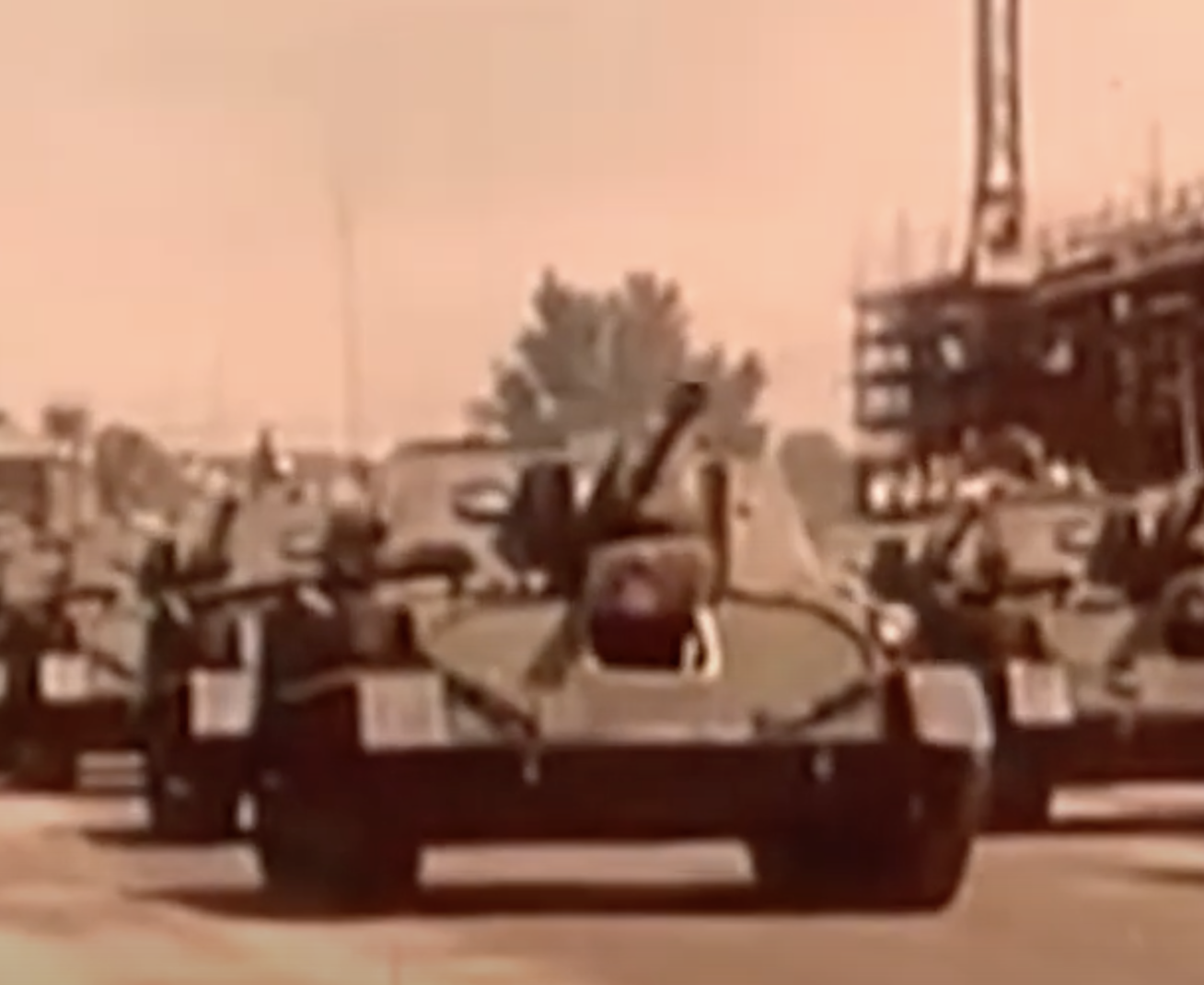
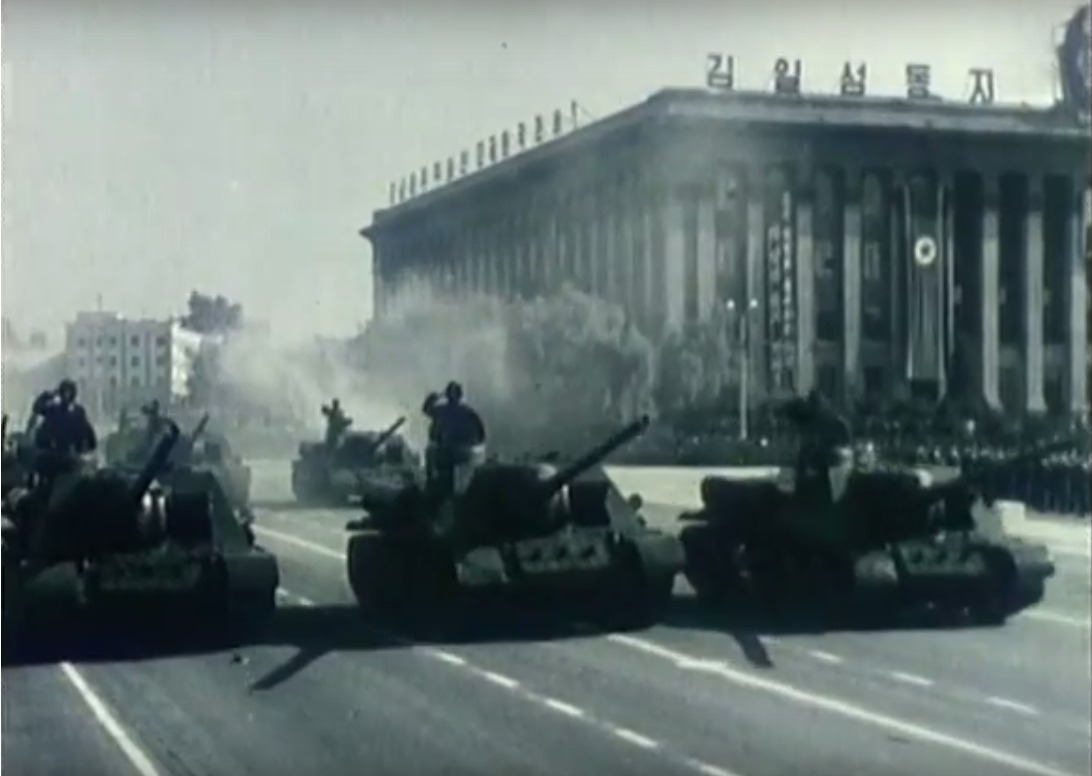
1. SU-76s and; 2. SU-100s during parades
The first attempts at this were made in the late 1960s, when a 152mm D-20 and modified 130mm M-46 (with the muzzle-brake of the SM-4-1) were mounted on a Soviet ATS-59 artillery tractor chassis. These did not enter production, but did pave the way for a number of very successful designs. Production began in earnest in the 1970s, with the development of five separate SPGs (alongside a few other vehicle types) on the aforementioned ATS-59 chassis — these are collectively called the Tŏkch’ŏn (Tokchon) by the US DoD, although this name does not appear to official. The first vehicle was first built in 1972, and was armed with a domestically-produced 152mm howitzer, based on the Soviet D-20, but fitted with a new muzzle-brake. The second was built in 1974, and was armed with an open-turreted 130mm M-46 (modified as above). The third was likely built around the same time (1974–75), and armed with the same 130mm M-46 cannon, but without a turret. The fourth was built in 1978, and armed with a domestic 122mm cannon, based heavily on the D-74. The fifth was built sometime in the 1980s, and was armed with the same 152mm howitzer as the first type, but in a fully-enclosed turret.

SPGs at the KPA Exhibition of Arms and Equipment in Pyongyang. The five vehicles along the front row, from closest to camera to furthest are the: 1972 152mm SPH; 1978 122mm SPG; 1974 130mm SPG; 1973 170mm SPG (Chuch’ep’o); 1983 170mm SPG (Chuch’ep’o)
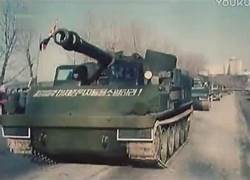
The focus of this suggestion is on the first vehicle in the series. The US DoD ascribes the name ‘M1974’ (and sometimes ‘M1977’) to this design. The official KPA designation is 1972-model 152mm self-propelled howitzer [1972년식 152mm 자행곡사포] — for brevity, I will refer to it as the 1972 152mm SPH. The 1972 152mm SPH entered production in 1972, and is one of the most numerous SPGs in the KPA’s arsenal. It is frequently seen in artillery exercises — hundreds have been produced, if not more, although precise numbers are unavailable. Unlike some of the other ATS-59-based SPGs and tank destroyers, the 1972 152mm SPH has never been seen with MANPADS.

1972 152mm SPHs during firing exercises
Note on Naming Scheme
North Korea split their self-propelled guns into three main categories:
- Self-Propelled ‘Direct-Fire’ Guns [자행직사포], e.g. the 100mm-armed ATS-59- and 323-based vehicles
- Self-Propelled ‘Level-Fire’ Guns [자행평사포], e.g. the 1974 130mm SPG, and the 170mm-armed Chuch’ep’o
- Self-Propelled ‘Curved-Fire’ Guns [자행곡사포], e.g. this vehicle, the 1978 122mm SPG, and the Chuch’e 107 155mm SPG
I have chosen to translate them as follows:
- Self-Propelled ‘Direct-Fire’ Guns → Tank Destroyer (TD). A more literal translation would be Self-Propelled Anti Tank Gun (SPATG), but this is not commonly used
- Self-Propelled ‘Level-Fire’ Guns → Self-Propelled Gun (SPG)
- Self-Propelled ‘Curved-Fire’ Guns → Self-Propelled Howitzer (SPH)
Characteristics
The 1972 152mm SPH is armed with a domestically-produced 152mm howitzer. This cannon is visually very similar to the Soviet D-20, other than the new muzzle brake. While specifics aren’t available, the cannon is likely to have the same characteristics. As such, it would have access to a variety of shells, including OF-540 HE, with 5.9kg of explosive mass, able to penetrate 49mm @ 0°, as well as 3OF25 HE and 3OF25 (PF) HE-VT, with 6.6kg of explosive mass (10.1kg TNTe), able to penetrate 62mm @ 0°. It can also fire BR-540 APHE and BR-540B APHEBC, capable of penetrating 170mm and 171mm respectively @ 0° @ 10m (BR-540B has better angled performance). It can also fire BP-540 HEAT, penetrating 250mm @ 0° @ 10m. All of these rounds are fired at a muzzle velocity of 600–680m/s. The number of rounds carried is unknown.
The howitzer typically has a rate of fire of 5–6rpm. This is likely to be reduced on the 1972 152mm SPH, as the crew typically operate the howitzer (partially) from outside the vehicle, and the actual space around the gun is limited. The gun is mounted in a standard gun-shield, and has limited traverse. If mounted the same as the standalone howitzer, it could elevate from -5° to +63°, and traverse 58° total (+29°/-29°). 4–6 crew are seen travelling in the vehicle during parades.

Crew seated outside behind the vehicle with ammunition during exercises
The 1972 152mm SPH is based on the ATS-59 chassis, but the superstructure has been heavily modified. The cab has been removed and replaced by sloped armour, with the driver’s position appearing to have been lowered slightly. The hull has been opened up in the rear 2/3rds of the vehicle, with the 152mm mounted centrally, and with thin armoured plates surrounding it. The thickness of the armour is unknown, and unlikely to resist much more than small arms fire. Occasionally, it has been seen — like with most other vehicles in this family — with (presumably bullet-proof) glass windows for the two crew members in the hull.
The ATS-59 is fitted with an A-650 V12 diesel engine, producing 300hp @ 1700rpm. It is impossible to verify if the engine fitted to the 1972 152mm SPH, and other ATS-59-based SPGs, is the same, although it seems likely. The exhaust and engine deck appear to be unmodified. The ATS-59 has a top speed of 39km/h. It weighs 13.5t — unladen. Like most other details, once again, the weight of the SPGs is unknown. A rough calculation would put the weight at around 20t, given the weight of the cannon (~5.7t), ammunition, and modifications to the hull. This would give the vehicle a power-to-weight ratio of roughly 15hp/t.
Conclusion
The 1972 152mm SPH would be an excellent addition to a future United Korean tech tree, as a low-tier SPG. It has near identical firepower to vehicles in-game like the 2S3M (and the ISU/SU-152, which don’t have access to the better ammunition), a probable higher rate of fire, but no armour and relatively poor mobility. It would be analogous in some ways to the M44 — give or take — and as such would go at a BR of around 4.0, depending on its ammunition selection.
Specifications
Armament
- 152mm D-20 (mod.)
- Unknown ammunition capacity
- Ammunition
- BR-540 APHE
- 170mm @ 0° @ 10m
- BR-540B APHEBC
- 171mn @ 0° @ 10m
- BP-540 HEAT
- 250mm @ 0° @ 10m
- OF-540 HE
- 49mm @ 0°
- 3OF25 HE
- 62mm @ 0°
- 3OF25 (PF) HE-VT
- 62mm @ 0°
- BR-540 APHE
- Vertical Guidance
- -5°/+63°
- Horizontal Guidance
- 58° (-29°/+29°)
Armour
- Hull
- Unknown — likely <10mm all around
- Gun Shield
- Unknown — likely <5mm
Mobility
- Speed
- 39km/h
- Weight
- ~20t (estimate)
- Engine power
- 300hp, ~15hp/t (estimate)
Other
- Crew
- 4–6
Images



Sources
Spoiler
The Armed Forces of North Korea — On the Path of Songun. Stijn Mitzer and Joost Oliemans.
무장장비관 견문록(1) ‘불새’를 쏘는 ‘무적의 첨단전차’:자주시보
- This author grossly over-exaggerates the capabilites of North Korean equipment, but has visited the KPA museum in Pyongyang and — seemingly accurately — reported the names of vehicles / equipment
152mm D-20 | Weaponsystems.net
- Shell data