- Yes
- No
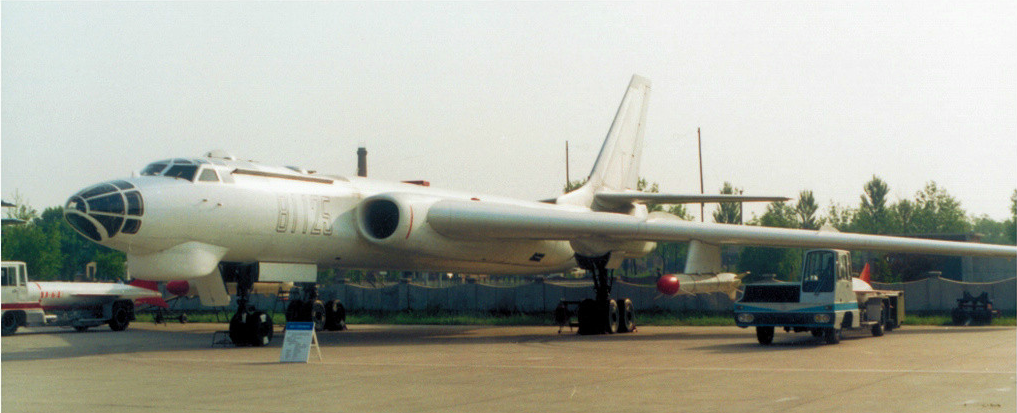
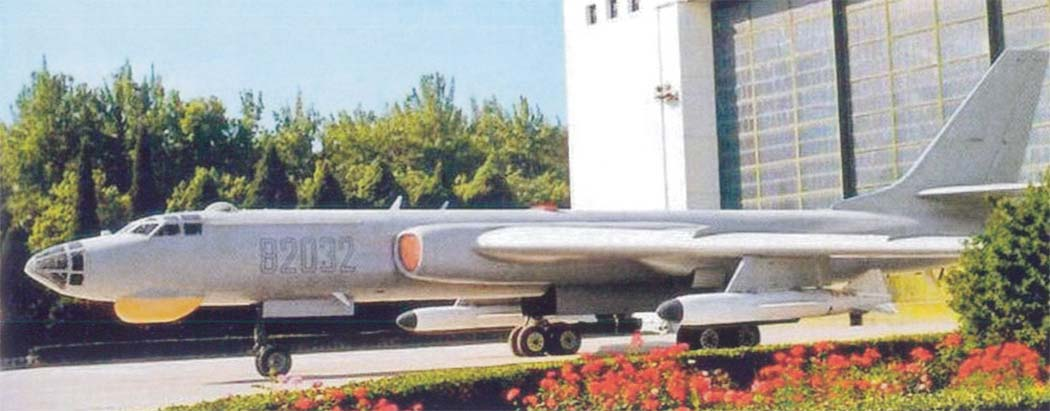
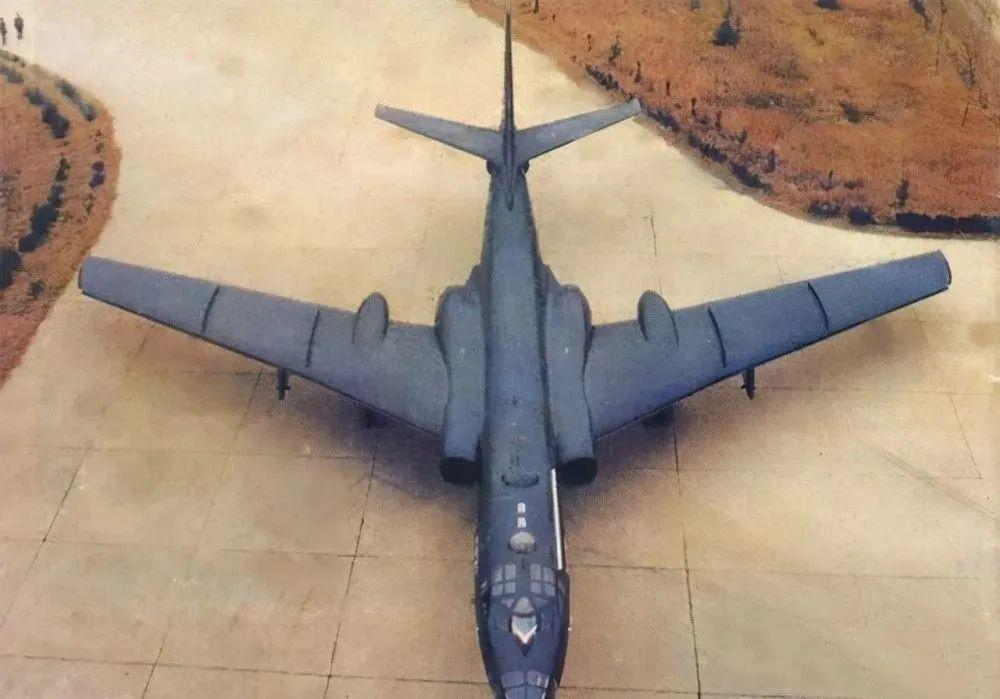
Today, we will introduce the Chinese H-6D, an improved variant of the H-6 bomber. Developed in response to the Navy’s requirements for long-range combat capabilities, the H-6D was selected as it was the only aircraft in China at the time capable of performing such missions, and was modified into a bomber platform capable of carrying air-launched anti-ship missiles.
Spoiler
In 1965, the Chinese Air Force formally submitted a request to the Central Military Commission (CMC), stating that the current fleet of H-6 bombers could only perform high-altitude bombing missions and were no longer capable of safely conducting ground attack operations under the threat of surface-to-air missiles. Therefore, it requested the arrangement for the research and development of air-to-ground or air-to-ship missiles. In the documents submitted by the Air Force, technical indicators were also specified, namely the range should not be less than 150 kilometers, and the weight should not exceed three tons.The Central Military Commission attached great importance to this matter and immediately arranged relevant preparatory discussions. After repeated deliberations, they decided to modify the shore-based launched HY-2 anti-ship missile into an air-to-ship missile (Project Code: 371). In October 1966, a review meeting for the 371 Project plan was held in Beijing, where the overall design and tactical technical indicators were determined.However, due to the influence of the “Cultural Revolution,” the research was halted in 1969. In December 1973, the Party Committee of the Navy reported to the CMC, requesting the continuation of the development of anti-ship missiles for the H-6 aircraft. However, progress was very slow during the chaotic later period of the “Cultural Revolution.”
The resurgence of the H-6D and its associated missiles can ultimately be attributed to the naval battle of the Xisha Islands. During the 1974 conflict, the Chinese navy discovered that neither the Q-5 nor the H-5 torpedo bombers in its arsenal had sufficient range to reach the combat zone. To address this critical gap as quickly as possible, the navy demanded the continued development of the H-6D and its matching air-to-ship missiles. On September 7, 1975, with approval from higher authorities, the development of the H-6D missile weapon system was resumed.
In April 1977, the new missile was officially named the Eagle Strike-6 (designated YJ-6) air-to-ship missile. On August 29, 1981, the No. 01 prototype of the H-6D successfully completed its maiden flight. The H-6D was equipped with an HL-6D (Type 245) search radar mounted under its nose, designed for detecting and tracking large naval and ground targets. This radar provided 360-degree all-aspect detection capability and integrated three major functions: an automatic navigation and fire control system, missile attack guidance, and semi-automatic conventional bombing. From 1981 to 1984, the H-6D underwent numerous flight tests and missile launch trials, including telemetry missile launches, navigation system evaluation, and live-fire targeting (including two-missile salvos). In December 1985, the H-6D aircraft was officially delivered to the Naval Aviation Force for operational service.
The H-6D is the first and, to date, the only variant of the H-6 family to achieve export.
Spoiler
In December 1985, the H-6D entered service with the Chinese Naval Aviation, granting the Chinese navy its first beyond-visual-range anti-ship strike capability. Its deployment also drew attention from international buyers, particularly the Iraqi military, which was then locked in a stalemate during the Iran-Iraq War. In 1986, an Iraqi military delegation visited China, hoping to purchase H-6D long-range bombers. Given the international community’s focus on the Iran-Iraq War, China politely declined Iraq’s request for such an offensive weapon.
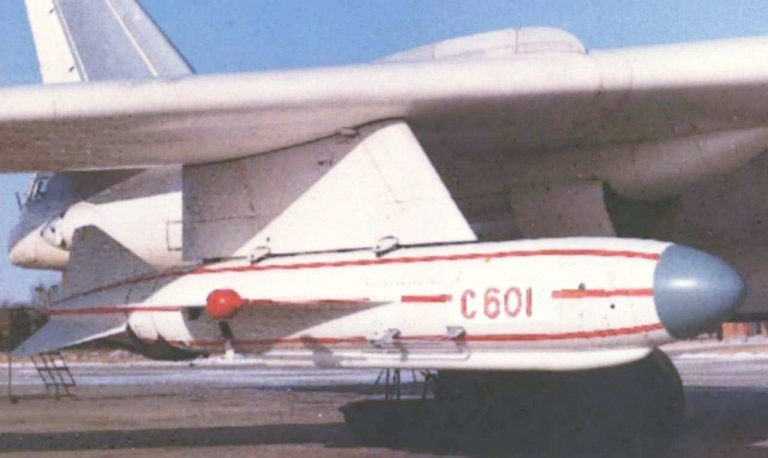
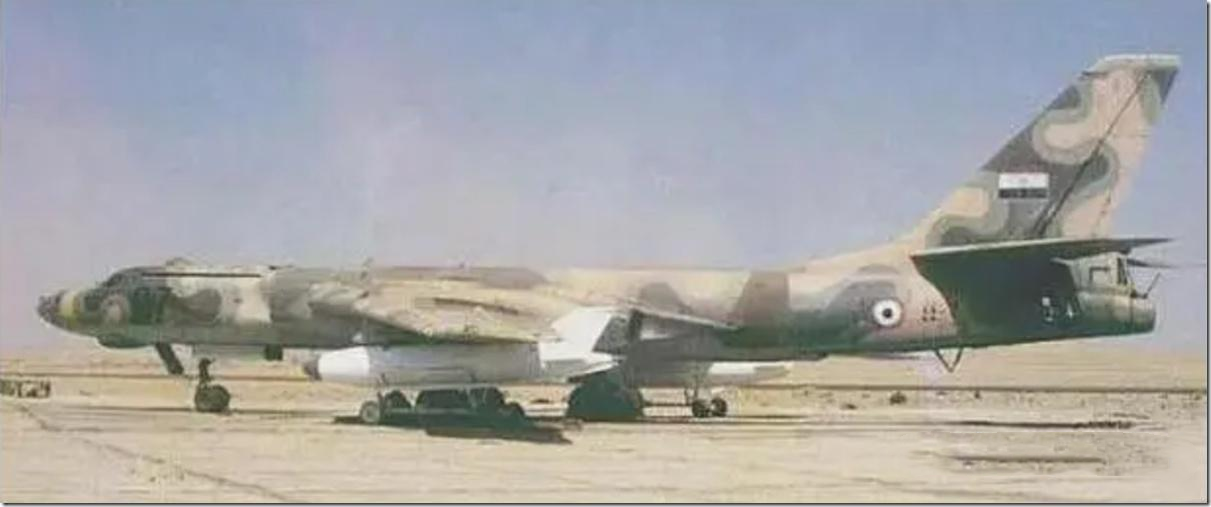
Undeterred, the Iraqis devised an alternative approach: they transferred $200 million directly to Jordan, asking Jordan to purchase four H-6D bombers and 50 C-601 missiles on their behalf. In 1987, four brand-new H-6Ds were painted in deep green camouflage and marked with Jordanian Air Force identification numbers for delivery. Iraqi Tu-16 bomber pilots, operating under the guise of the Jordanian Air Force, traveled to China and eagerly took delivery of the four H-6Ds.
By the end of the Iran-Iraq War, Iraqi H-6Ds had sunk or damaged a total of 14 large vessels during the “tanker war.” After exhausting all 50 C-601 missiles in combat, Iraq was unable to replenish its stock from any other source. Apart from one H-6D shot down by an Iranian F-14 fighter on February 25, 1988, the remaining three H-6Ds were destroyed by U.S. forces during the First Gulf War in 1991.

Two “Jordanian Air Force officers” pose in front of a Jordanian Air Force H-6D awaiting delivery at a domestic airfield. Note that its black-appearing paint is actually deep green camouflage.
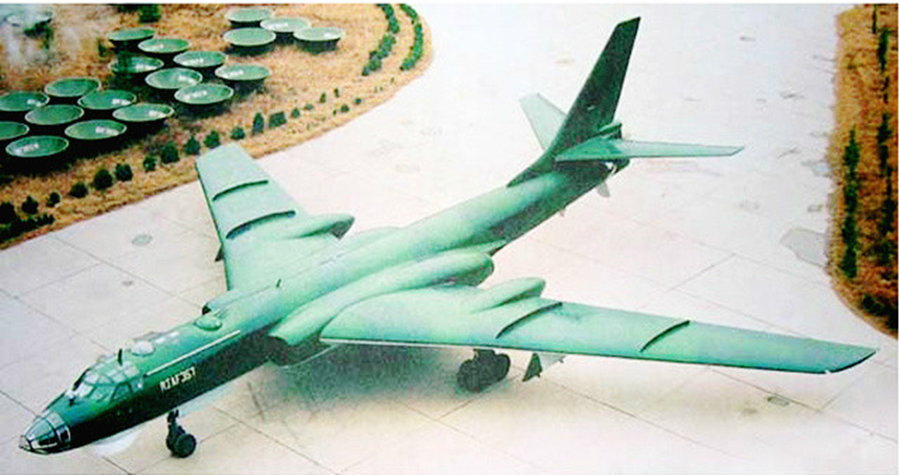
A photo of an H-6D awaiting delivery, clearly showing its deep green camouflage and the marking “RJAF (Royal Jordanian Air Force) 357” (the same H-6D as in the image above).
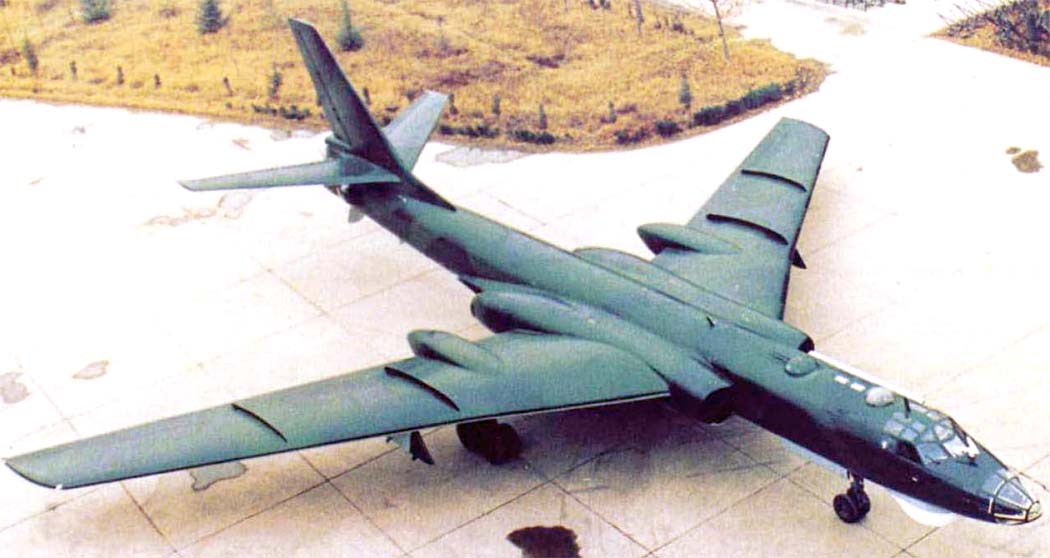
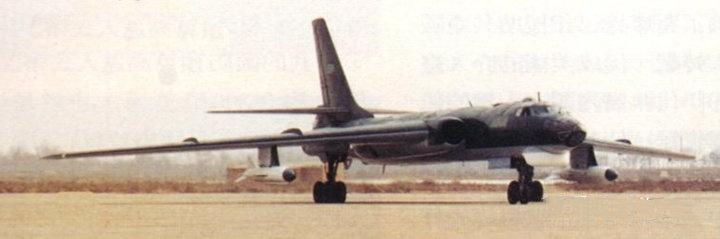
A “Royal Jordanian Air Force "H-6D armed with two C-601 anti-ship missiles.
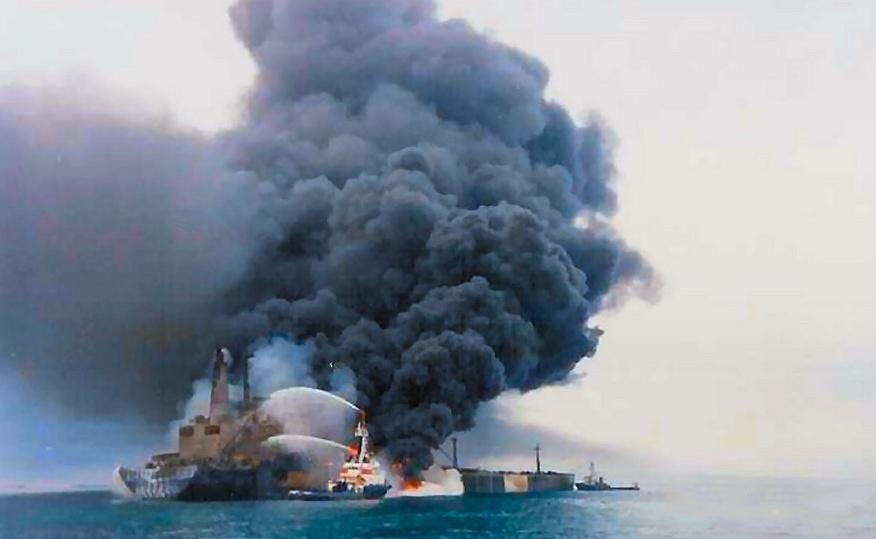
The tanker “Aga,” hit by a C-601 anti-ship missile fired from an Iraqi B-6D, burst into flames and was subsequently abandoned.
Spoiler
The H-6D primarily served as an anti-ship missile carrier while retaining its original combat capabilities. Due to the installation of a large search radar under its nose, the fixed cannon on the right side of the fuselage was removed. Instead, a missile pylon was added under each wing (with reinforcement of the forward beam at the missile mounting positions), allowing each wing to carry one Eagle Strike-6 (YJ-6) air-to-ship missile. The airborne fire control system of the H-6D centered on a fire director. The HL-6D (Type 245) bombing radar was used to search for targets. Once a target was detected, the fire director automatically calculated the firing angle relative to the target’s bearing based on the heading gyroscope and provided the necessary lead angle. Since air-launched missiles are influenced by the aircraft’s attitude, a heading and attitude system along with a gyro-stabilized platform for the fuselage and wings were essential to determine the missile’s initial launch attitude. This ensured that after release, the missile could automatically adjust its flight based on the target parameters set by the fire director, preventing it from plunging into the water.
The H-6D was equipped with a navigation system integrating three automatic navigation functions, which interconnected an inertial navigation system, fire director, autopilot, Doppler radar, and heading and attitude system. It could automatically calculate attack parameters. The aircraft featured an all-weather autonomous inertial navigation system, linked with the Doppler radar and autopilot, enabling high-precision automatic navigation. The aircraft had a total of 27 fuel tanks, utilizing a grouped fuel supply system to feed the engines. A highly sensitive temperature-sensing alarm and fire suppression system was installed in the fuel tank compartments and engine nacelles, operable manually by the pilot. The fuel tanks were filled with inert gas.
The later improved variant of the Xi’an H-6D could also be equipped with two C-301 or four C-101 supersonic anti-ship missiles. The total production of the H-6D was fewer than 30 units.
Spoiler
Basic Data
-
Crew: 6
-
Length: 34.800 meters
-
Wingspan: 34.189 meters
-
Height: 9.850 meters
-
Wing Area: 167.55 square meters
-
Mean Aerodynamic Chord: 5.021 meters
-
Main Wheel Track: 9.775 meters
-
Maximum Level Flight Speed: 1,050 km/h
-
Cruising Speed: 786 km/h
-
Service Ceiling: 12,000 meters
-
Range: 4,300 km
-
Maximum Range: 6,000 km
-
Empty Weight: 38,750 kg
-
Normal Takeoff Weight:72,000 kg (with 2 YJ-6 missiles)
-
Maximum Takeoff Weight: 75,800 kg
-
Maximum Landing Weight: 55,000 kg
-
Normal Bomb Load: 3,000 kg
-
Maximum Bomb Load: 9,000 kg
-
Engines: 2 × Xi’an WP-8 turbojet engines (licensed copy of the Soviet RD-3M-500), each with a maximum thrust of 9,316 metric horsepower.
Spoiler
- 4 × 23‑mm 23‑ZHB cannons , mounted in movable turrets on the upper fuselage and tail section.
- Internal bomb bay capable of carrying conventional bombs, with a normal load of 3,000 kg and a maximum load of 9,000 kg.
- Anti‑ship missile options :
- 2 × C‑601 subsonic anti‑ship missiles;
- 2 × C‑301 supersonic anti‑ship missiles;
- 4 × C‑101 supersonic anti‑ship missiles.
Performance Comparison of the Three Missile Types:
| Characteristics | C-601 | C-301 | C-101 |
|---|---|---|---|
| Designation / Type | YJ-6, air-launched subsonic anti-ship missile | YJ-3, land-based supersonic anti-ship missile | YJ-1, supersonic anti-ship missile |
| Dimensions | Length: 7.36 m, Diameter: 0.76 m, Wingspan: 2.4 m | Length: 9.385 m, Diameter: 0.76 m, Wingspan: ~2.24 m | Ship-based: Length 6.5 m; Air-launched: Length 7.5 m; Diameter: 0.54 m |
| Weight | 2,440 kg | 3,400 kg | 1,500 kg |
| Speed | Mach 0.9 (subsonic) | Mach 2.0–2.2 (supersonic) | Mach 2.0 (supersonic) |
| Range | Max 150 km | 130 km | 45 km |
| Warhead / Lethality | Warhead: 380 kg. | warhead : 500 kilograms. | 300 kg semi-armor-piercing warhead. |
| Propulsion | Liquid-fueled rocket engine | 2 ramjet engines + 4 solid-fuel rocket boosters | 2 ramjet engines + 2 solid-fuel rocket boosters |