- Yes
- No
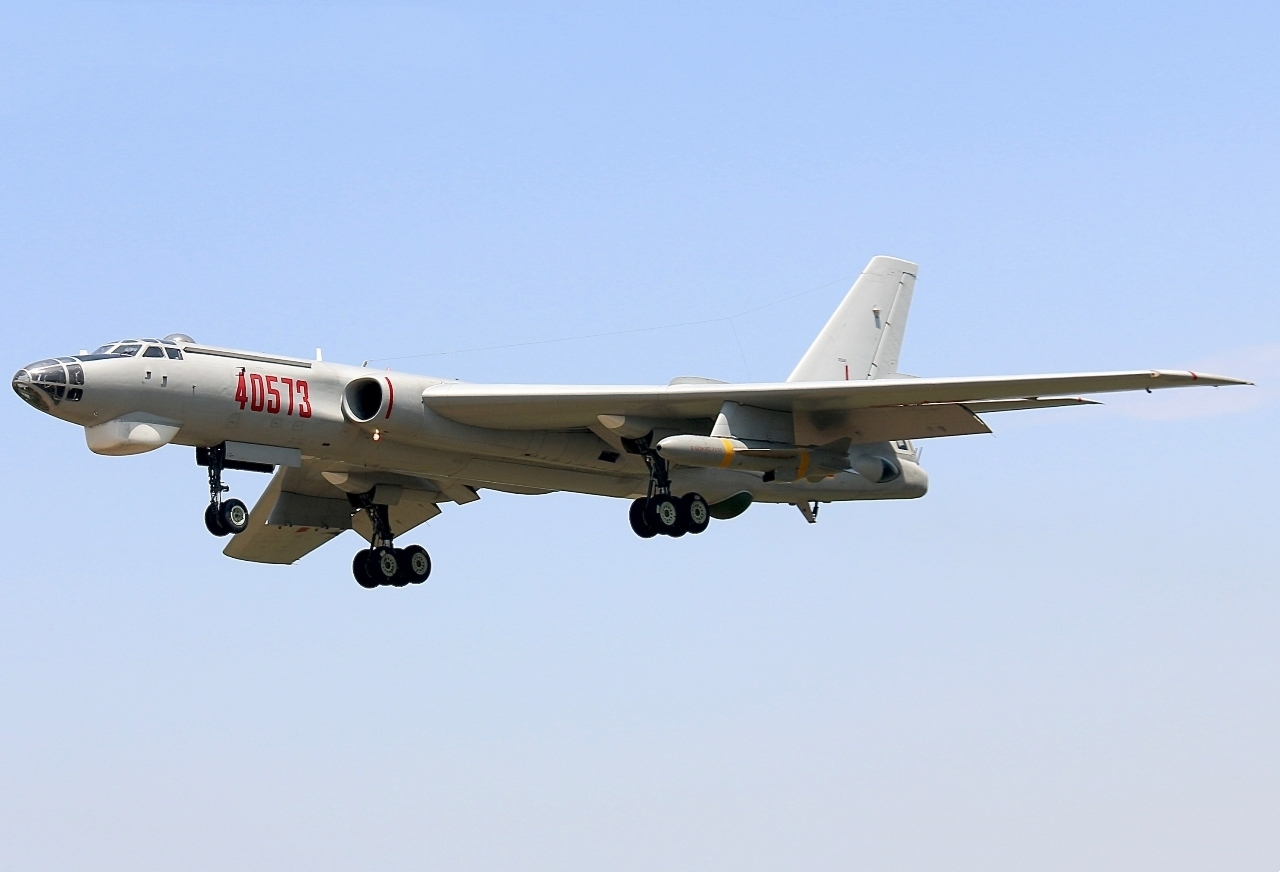
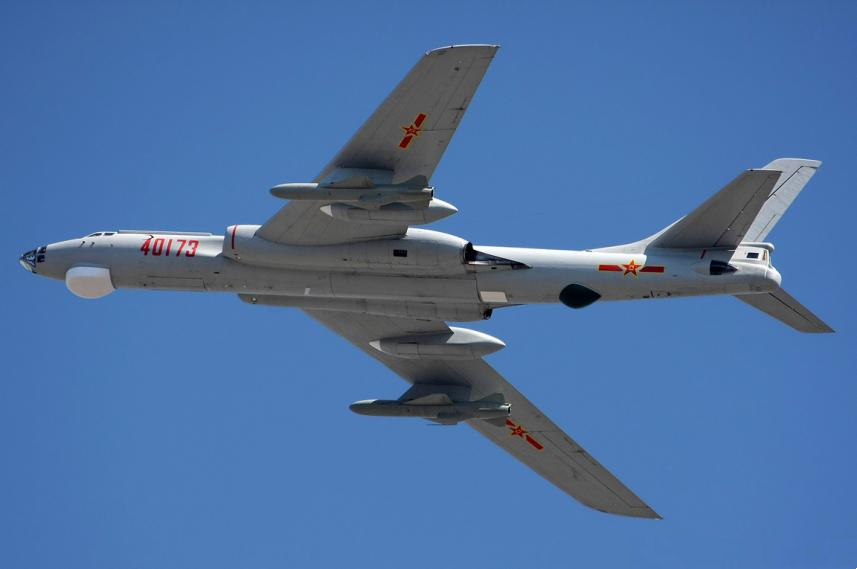
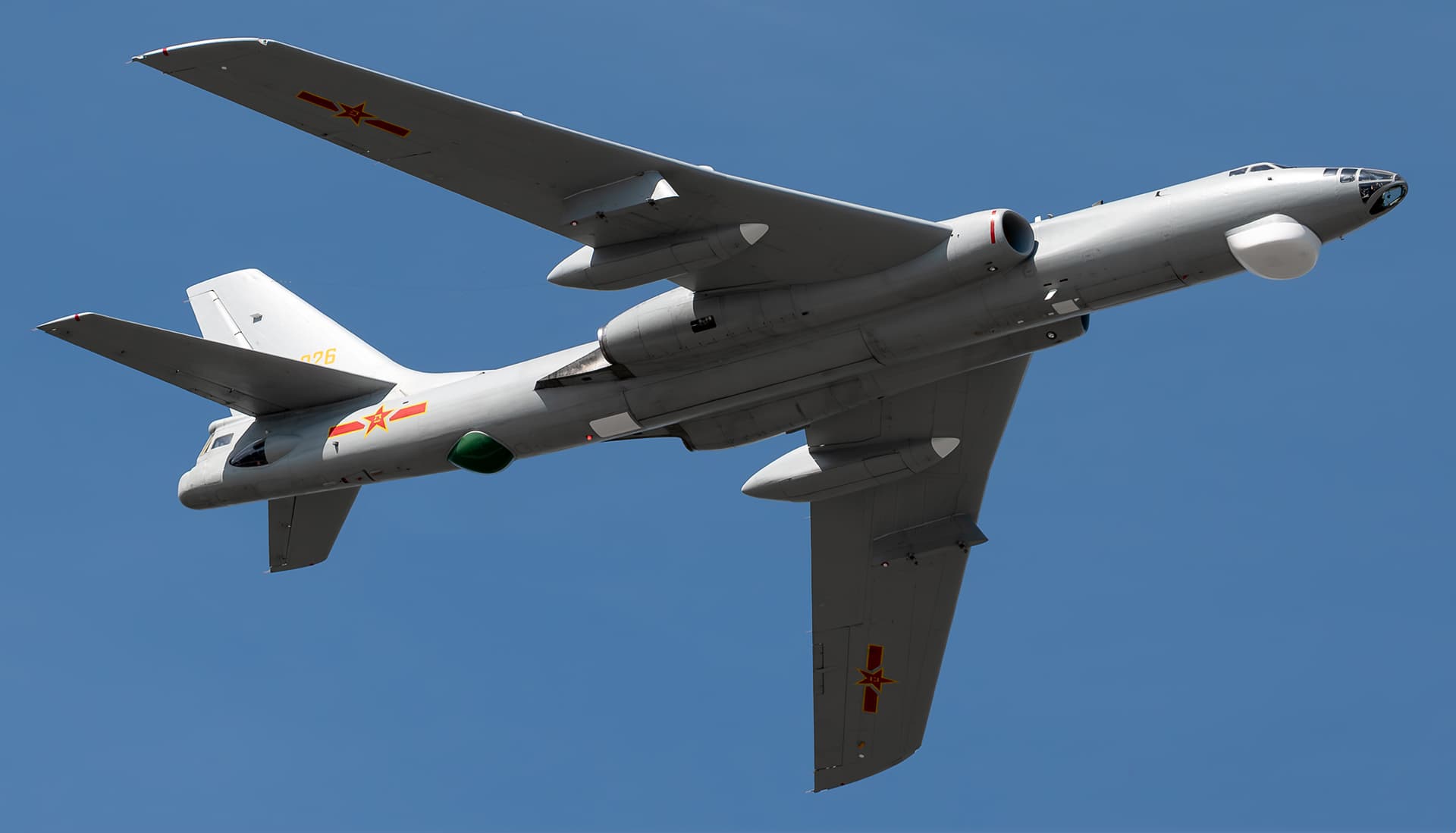
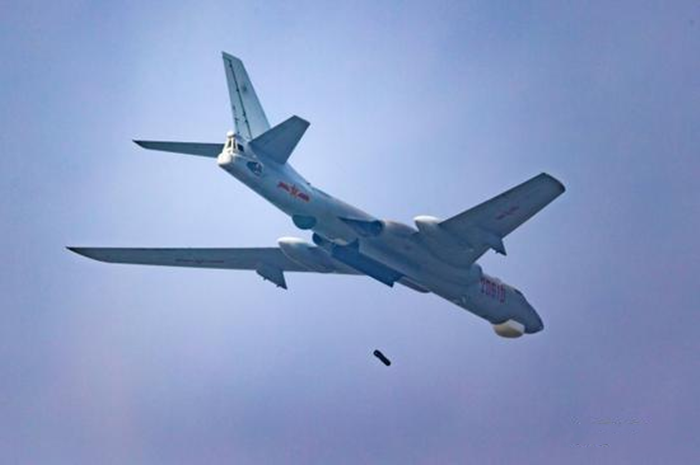
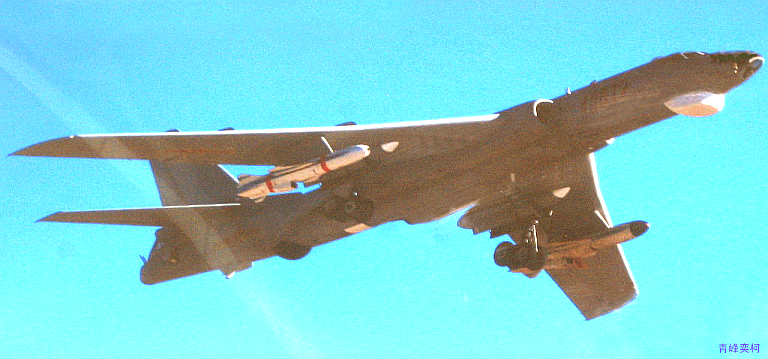
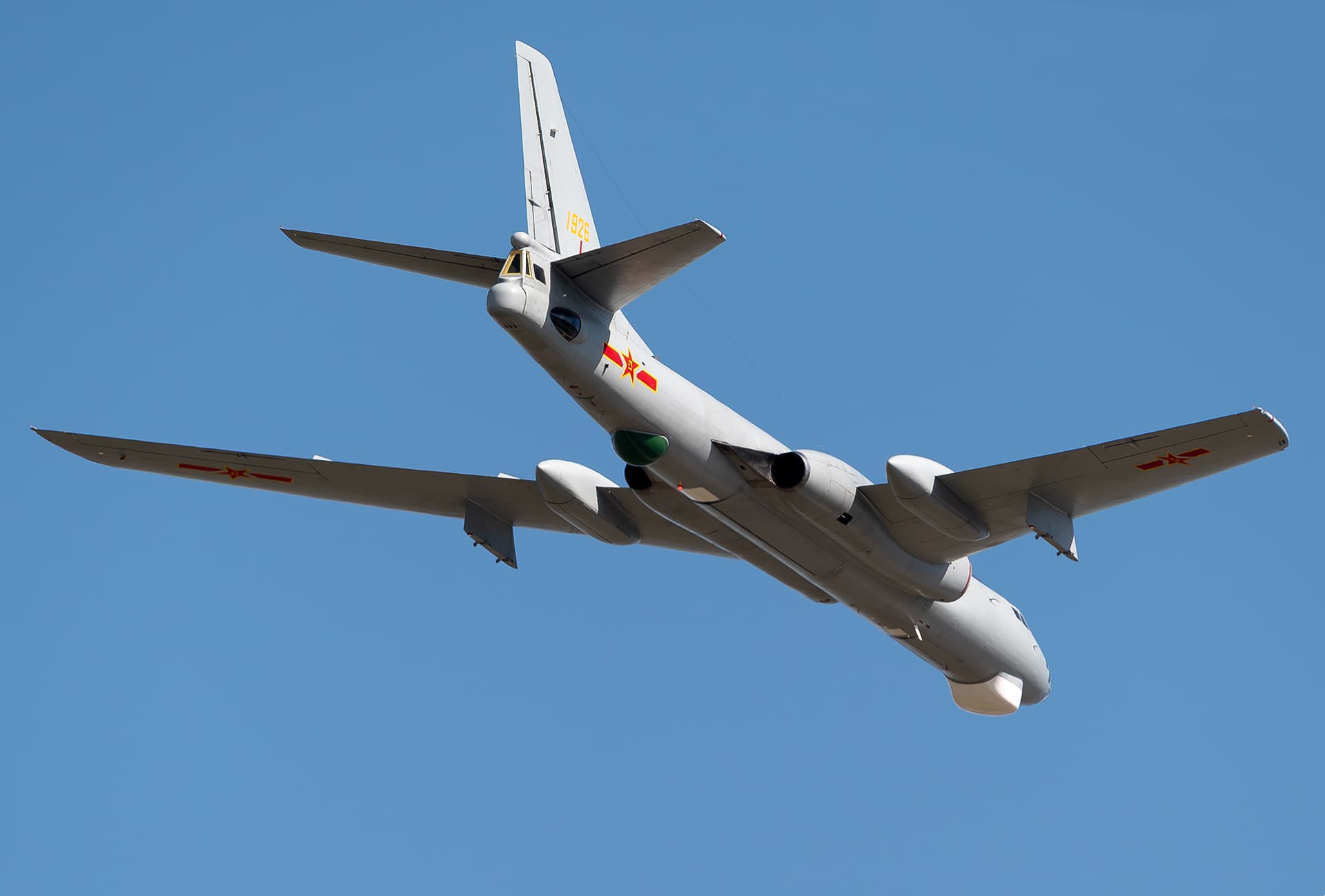
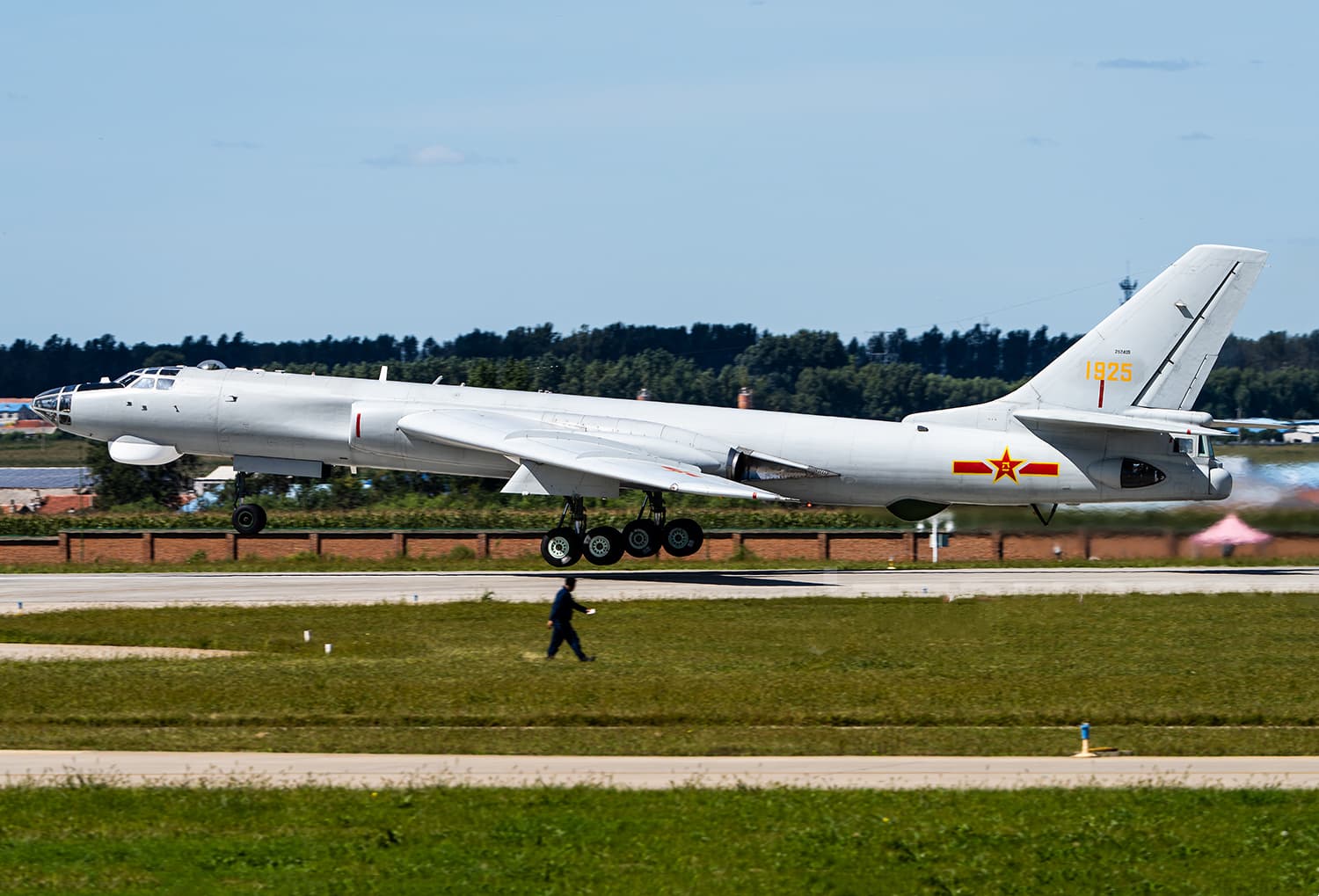
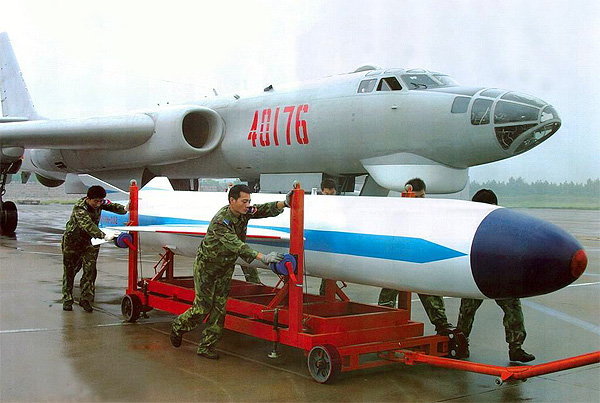
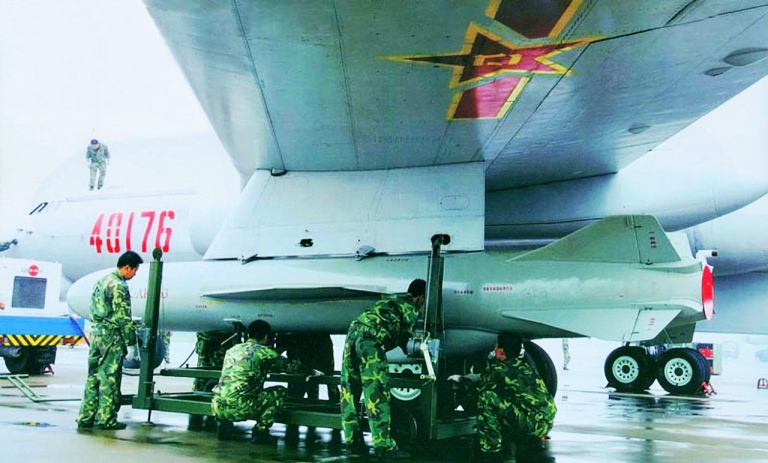
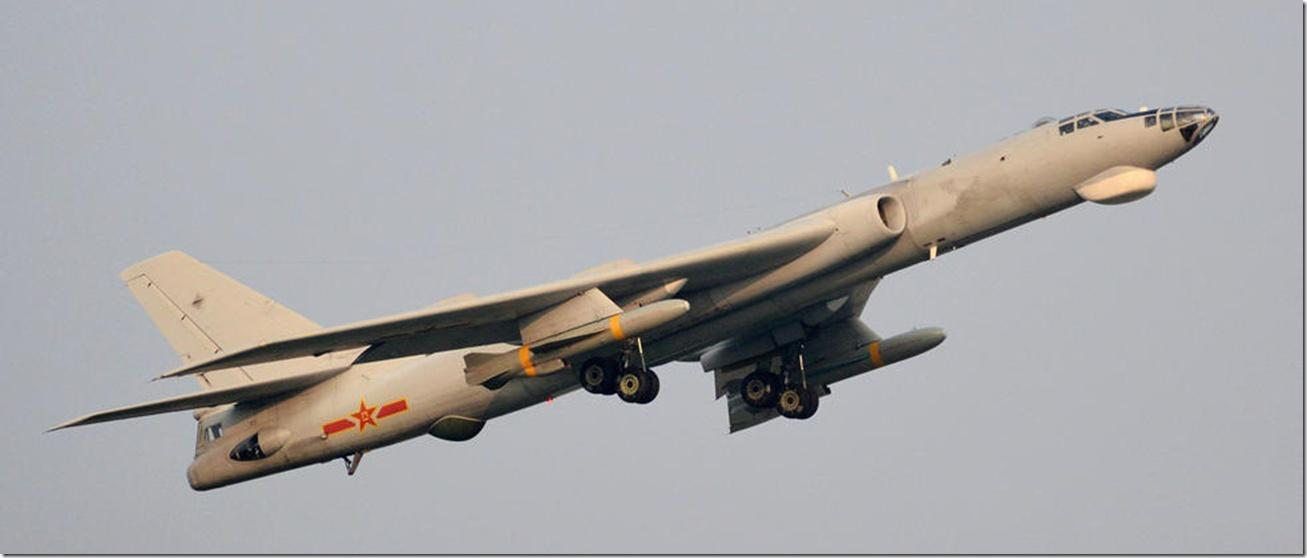
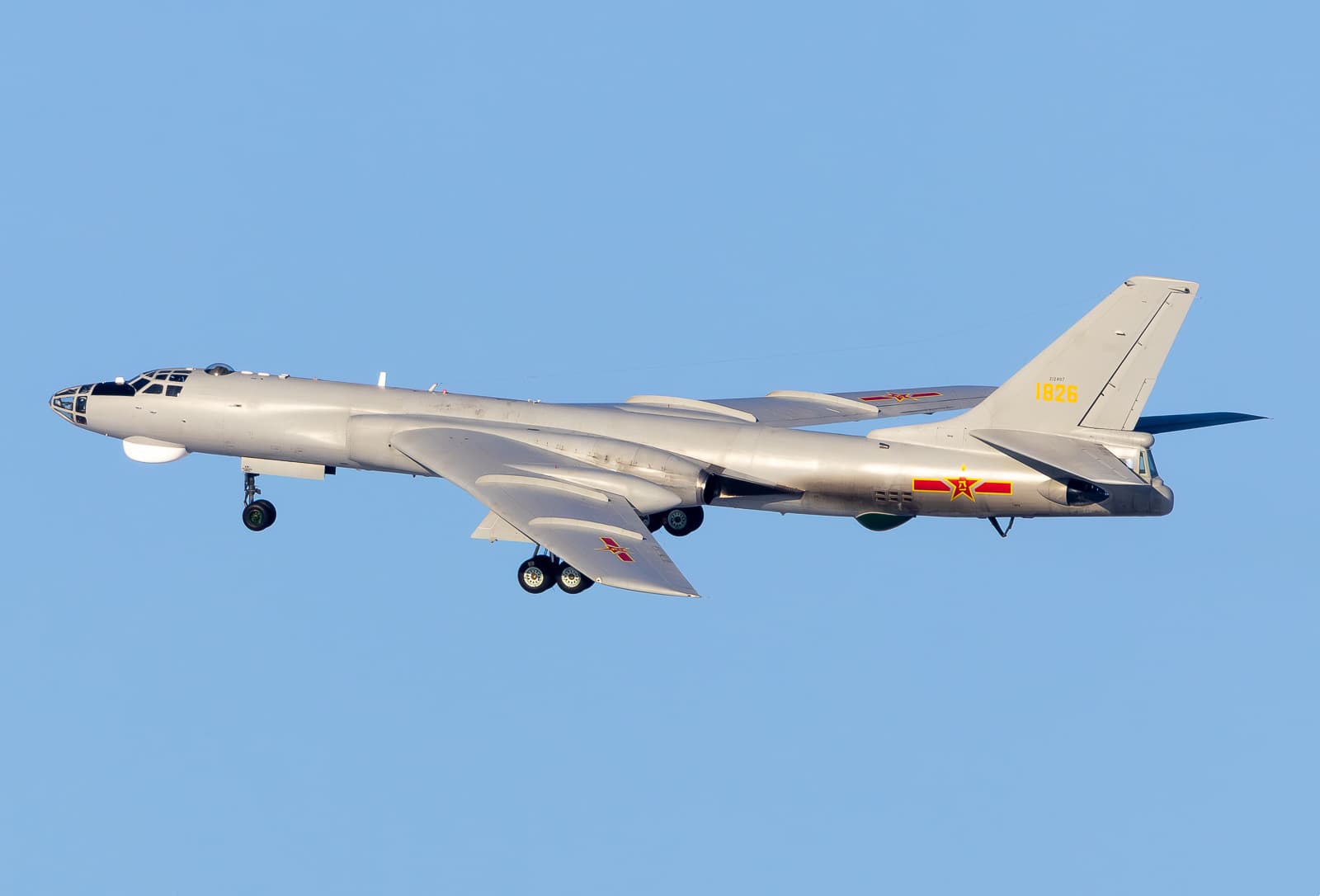
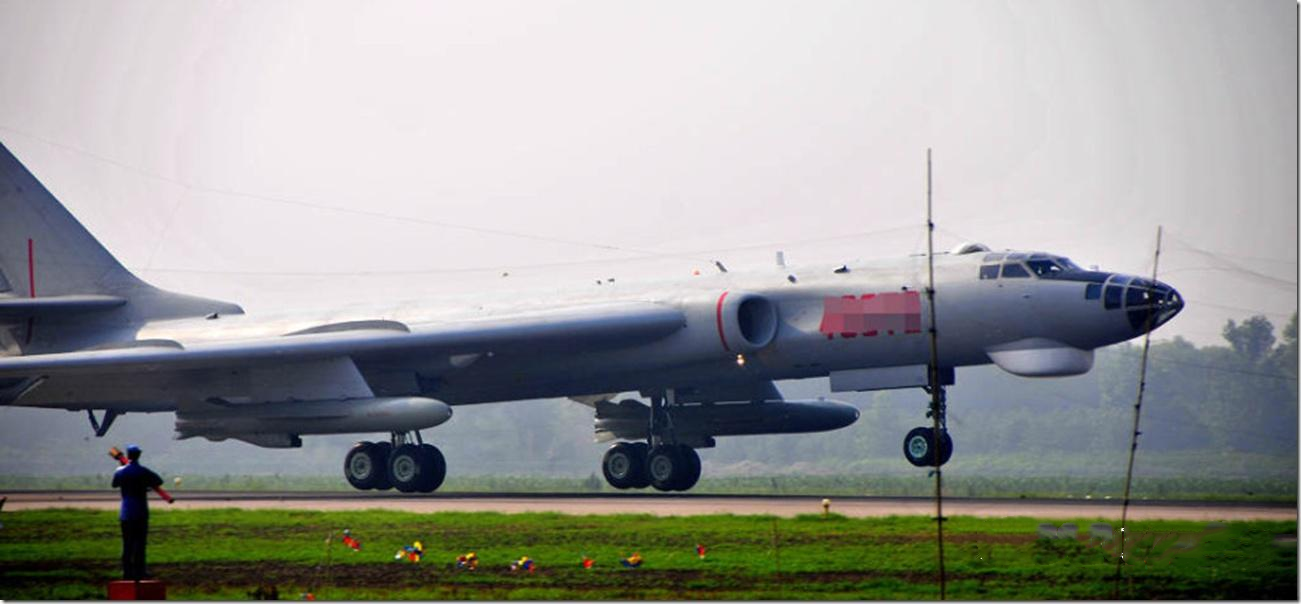
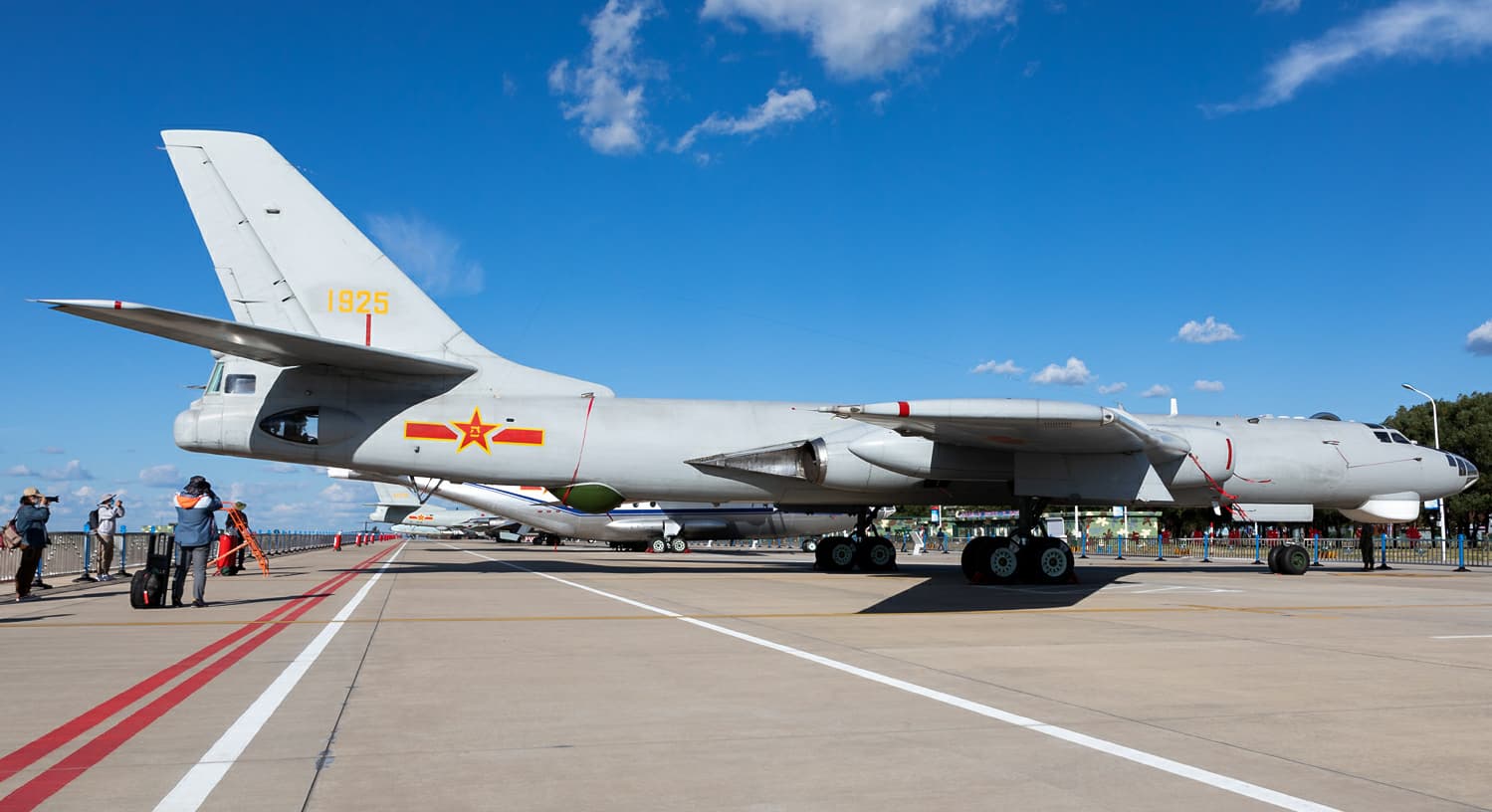
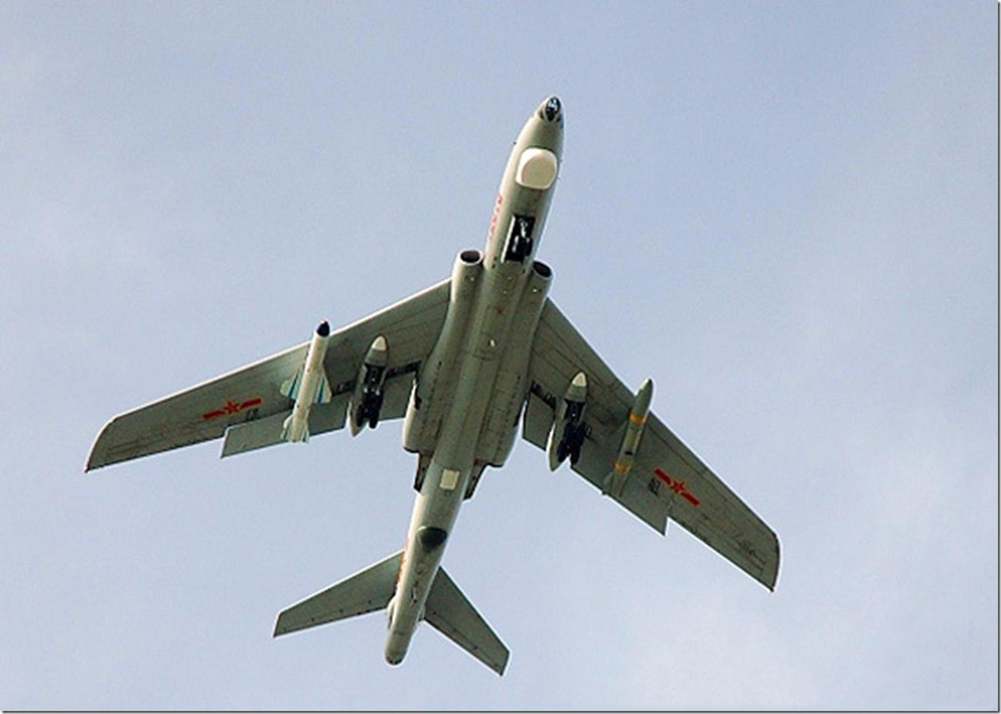
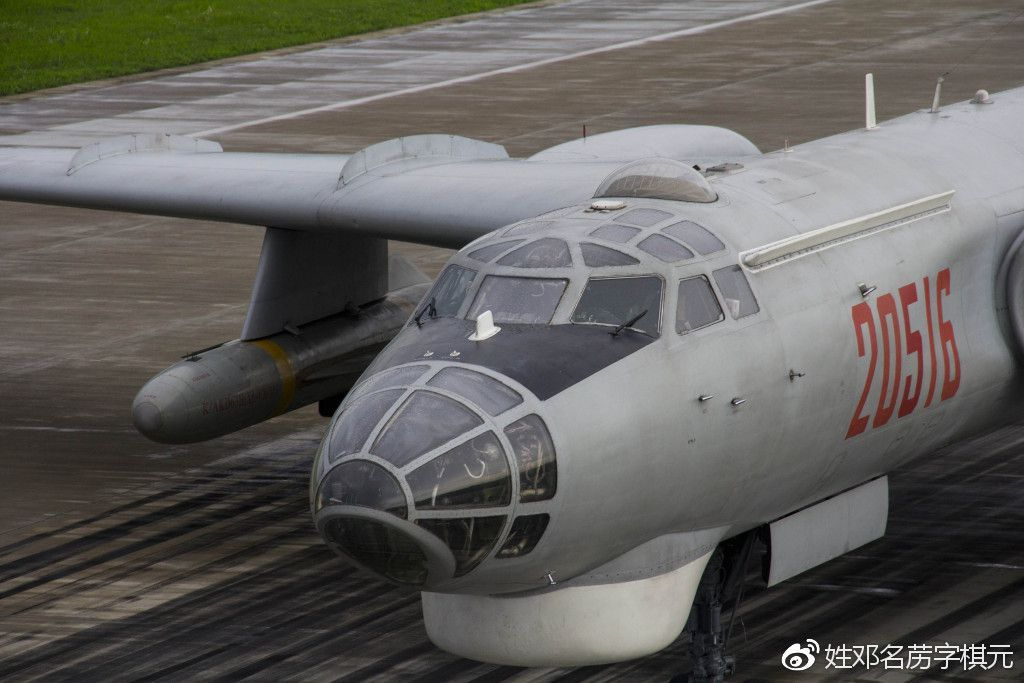
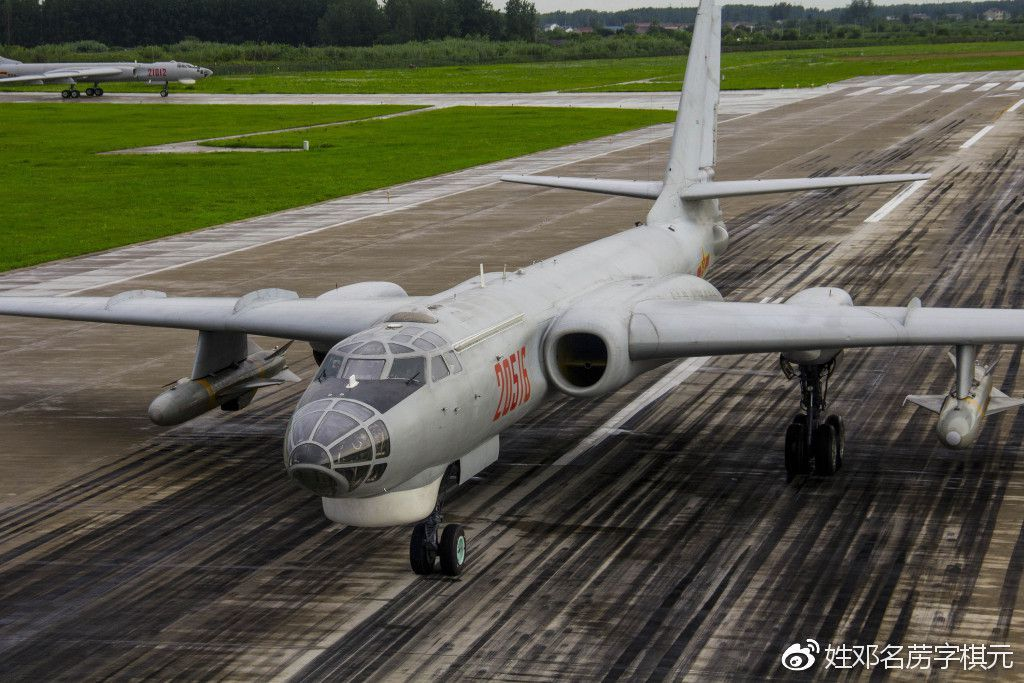
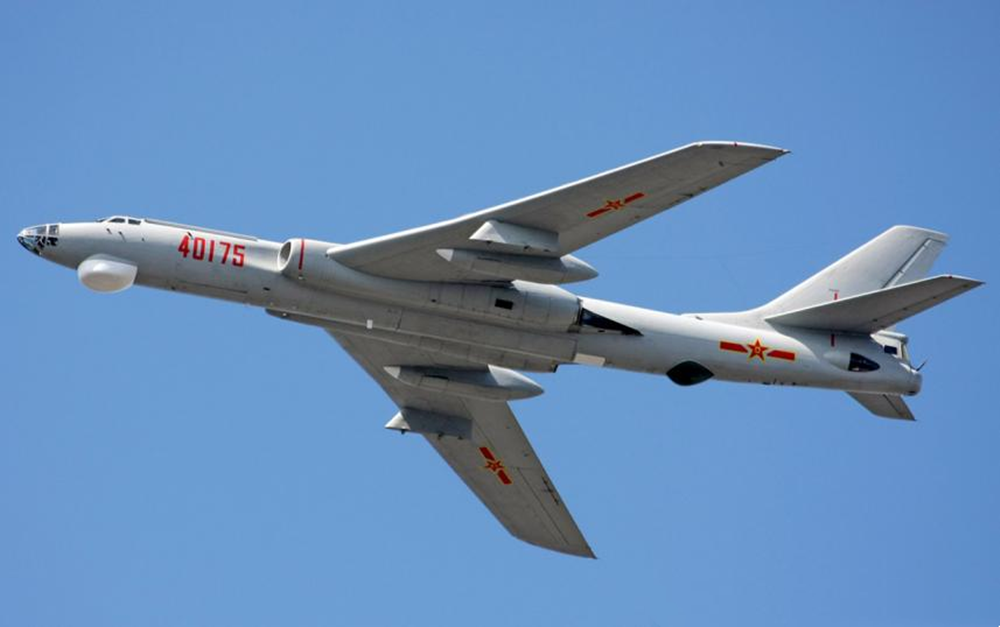
The H-6H is a bomber in China’s arsenal with standoff precision strike capability. In the 1990s, to accommodate the Yingji-63 (KD-63) air-launched cruise missile, China conducted specialized upgrades on the existing H-6 bomber. Compared with earlier H-6 variants, the airframe underwent no major structural modifications. The upgrades primarily included a pulse-Doppler radar, electronic warfare systems, fire control, and navigation systems. The aircraft is capable of carrying two KD-63 air-to-surface missiles, which employ a “man-in-the-loop” guidance mode combined with television guidance. To support this capability, a prominently protruding radar housing was installed under the nose, and a data link pod was mounted beneath the tail section. All defensive cannons were removed, though a small number of variants retained the tail gun. These modifications transformed the H-6 from a traditional bomber platform into a long-range precision strike platform.
Spoiler
In the early 1990s, due to the failure of the domestic development of the (Xi’an H-7) strategic bomber, the People’s Liberation Army (PLA) remained entirely reliant on the H-6 series of bombers. As a derivative of the Soviet Tu-16A aircraft, whose origins date back to the first half of the 1950s, the H-6 was considered outdated by the 1990s. China subsequently attempted to negotiate the purchase of modern supersonic bombers and rocket carriers—specifically the Tu-22M3. However, Russia ultimately refused to sell these aircraft to China. Consequently, the PLA had to pursue new modifications and upgrades to the existing H-6 bomber.
In the late 1990s, the Xi’an Aircraft Factory began modifying the H-6 to meet the needs of the PLA as an aerial platform for delivering new long-range precision strike weapons.
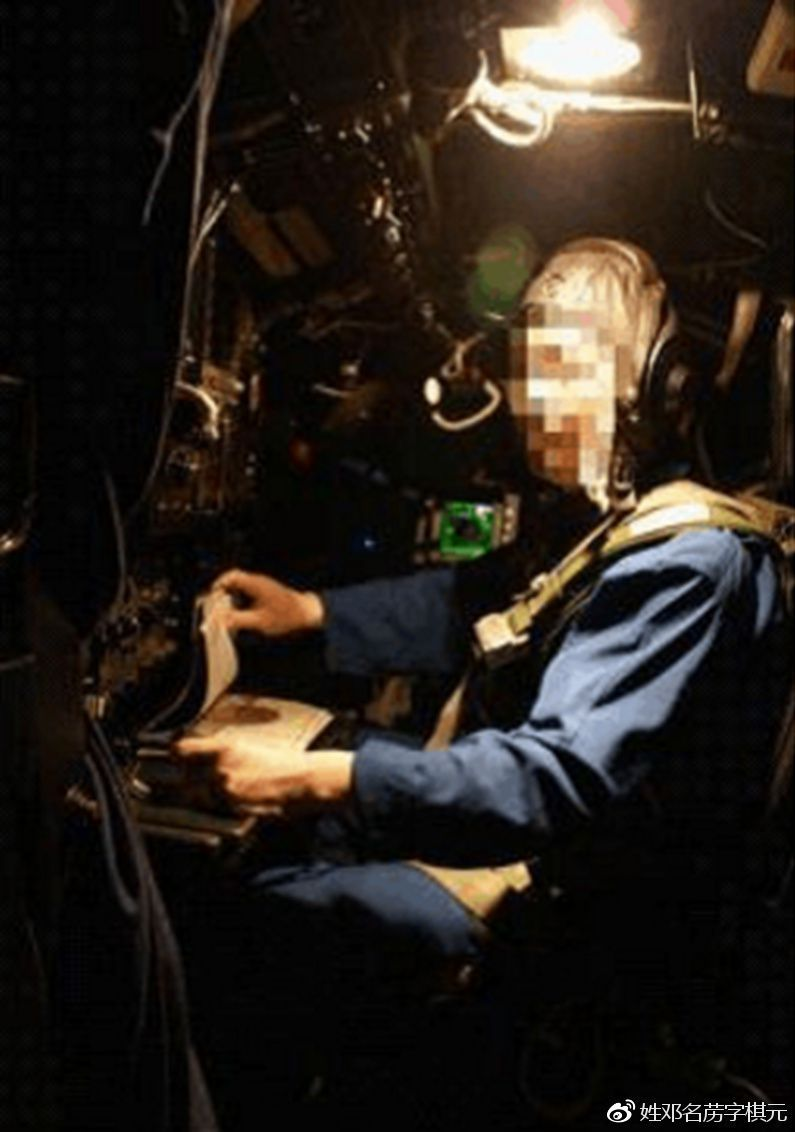
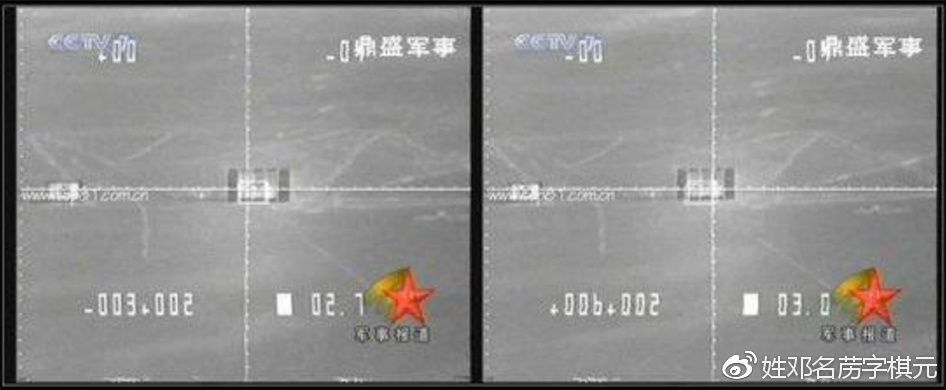
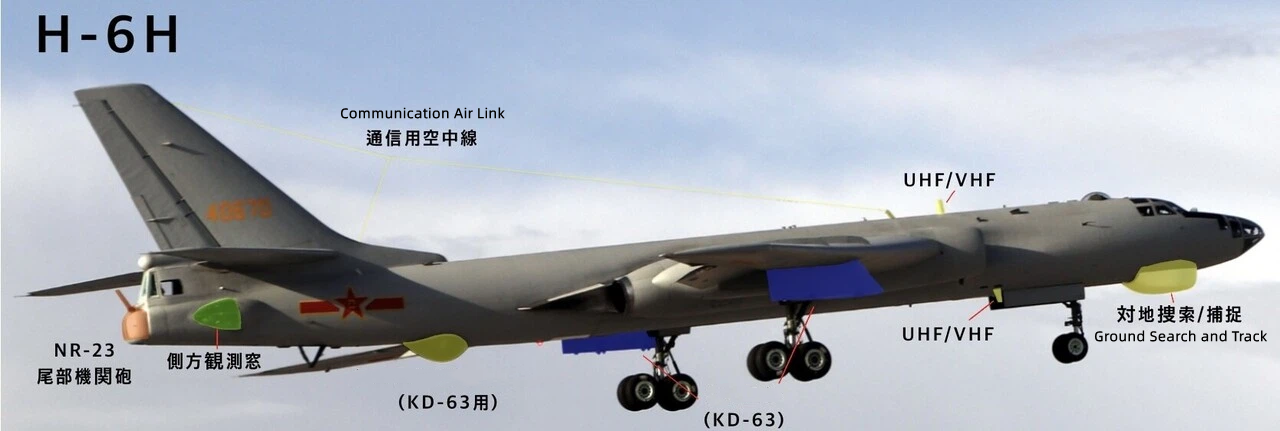
The upgraded aircraft featured enhanced avionics and data link systems. All 23mm defensive cannons were removed (though a few models retained the tail gun), replaced by electronic countermeasure equipment and flare launchers (distributed along the rear fuselage). A prominent semi-circular radome was added under the nose, housing a large ground-search radar with terrain-following capabilities for detecting and tracking large ground targets. This enabled low-altitude penetration missions in complex terrain conditions A semi-circular radome was installed on the rear underside of the fuselage, containing a guidance data link antenna used to receive television images transmitted by missiles and send commands. Multiple antenna housings on the belly and rear fuselage supported two-way missile communication, enabling “man-in-the-loop” guidance for the YJ-63 missile—a core feature of the system. During the terminal phase of flight, the missile’s TV seeker would transmit real-time footage back to the H-6H via the data link. Weapon operators in the cockpit could then identify and lock onto targets on their screens, remotely guiding the missile to complete the final attack. However, a significant drawback existed: the YJ-63 was highly dependent on the mother aircraft. If the mother aircraft was attacked, the missile would be unable to carry out its mission.
Due to the enlarged nose radome blocking the landing and taxi lights, the taxi lights were relocated to positions below the engine intakes, one on each side.
The aircraft made its first flight in early 1998 and entered mass production in 1999, primarily serving in the Air Force’s bomber aviation units. The total size of the Chinese Air Force’s H-6 bomber fleet is estimated to be around 200 to 231 aircraft. Specifically, approximately 62 H-6H bombers were produced (according to some sources, though unconfirmed), and all of them have now been retired.
Spoiler
Radar:
A Type HL-6D(245型) search-and-guidance pulse-Doppler radar is installed under the nose for detecting and tracking large ground targets, as well as guiding anti-ship cruise missiles。
A data link pod is mounted under the rear fuselage to receive television images transmitted from the missile and send command signals.
Avionics:
Integrated second-generation automated navigation and bombing system, including a Doppler radar, bombing radar, optical bombing sight, heading and attitude system, radio compass, radio altimeter, computer, and autopilot.
Defense Systems:
Equipped with an identification friend-or-foe (IFF) system, real-time warning system, active jammer, and twelve decoy infrared/rapid-bloom countermeasure launchers (six on each side of the rear fuselage, located along the slender forward keel line of the vertical stabilizer).
Ejection Survival System:
Each crew member is provided with an ejection seat. During ejection, the navigator ejects downward, the second navigator downward, the tail gunner downward, the tail radio operator downward, the co-pilot upward, and the pilot upward.
Spoiler
- Crew: 5 (Pilot, Co-pilot, Navigator, Bombardier, Tail Gunner/Radio Operator)
- Length:34.800 meters
- Wingspan: 34.189 meters
- Height: 9.850 meters
- Wing Area: 167.55 square meters
- Maximum Level Flight Speed: 1,014 km/h
- Cruising Speed: Mach 0.75 (approx. 786 km/h)
- Service Ceiling: 13,100 meters
- Combat Radius: Approx. 1,800 km
- Maximum Range: 6,000 km
- Normal Bomb Load: 3,000 kg
- Maximum Bomb Load: 9,000 kg
- Maximum Takeoff Weight: 75,800 kg
- Normal Takeoff Weight: 72,000 kg
- Fuel Capacity: 33,000 kg (internal)
- Takeoff Run: 1,670 meters
- Landing Run: 1,655 meters (without drag chute) / 1,050 meters (with drag chute)
- Engines:2 × Xi’an WP-8 turbojet engines, each with a thrust of approx. 93.1 kN
Spoiler
- 2 × 23mm tail turret cannons for self-defense (retained on some variants)
- 250 kg / 500 kg / 1,500 kg / 3,000 kg high-explosive aerial bombs
- 2 × YJ-63 missiles
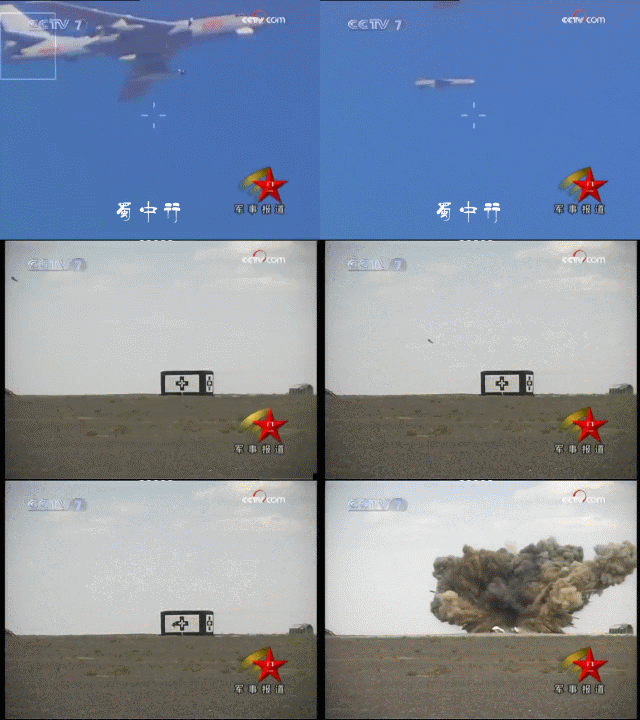
Addition of terminal TV guidance control for the YJ-63