What you’re asking for it missile to compare own seeker with info received from launching aircraft, in event there’s discrepancy, use aircraft info. And that is absent from the game, while BVVD merely recites current datalink implementation.
Missile flying with IOG, even with STT/AESA TWS updates is still not very accurate. It can fly close enough to trigger proxy fuse, but doesn’t mean it will.
Easy. onboard IOG. When the missile loses track of the target, it automatically flies to the expected interception point. The target in the video stayed on course so the missile simply flew to its expected position and locked again.
Once again, if that was true, it would mean that maintaining a hard lock would make even the AMRAAM un-avoidable, yet we’re not seeing that in-game in the slightest. MICA is so stupid strong even on the Mirage 2000 because the seeker of the missile itself is excellent. If what you said was true, AMRAAM fired off the F-15C GE would be better at tracking than the MICA from Mirage 2000, except it’s not.
Hard lock/Single Target Track does exactly the same job as TWS, maintain datalink.
However if you’ve switched from TWS to STT, then you’ve shot yourself in the foot as this kills datalink channel.
In mentioned Migan video, whether he would have got proper STT then launch missile or maintain TWS track as he did, outcome would be the same, should F-15 repeat exact same maneuvers.
Check the clip of the rafale killing him right after at 04:15. The Rafale stops looking at him with its radar, yet the missile still has the IOG+DL mention. If your logic was sound, it should only be written IOG then, no?
Except it doesn’t because that’s just simplified writing in the replay. Its onboard IOG doing the work and exactly why you should change direction when notching as to not follow your expected path.
The missile only need a micro second locking you again to update its IOG flight path.
You mean MICA that juggled between TRK and IOG+DL as seeker was briefly losing track?
There are no Rafales with mechanical radars, so radar “main beam” can look elsewhere and TWS will continue updating as long as target remains detectable and within radar gimbal limit.
Check where the rafale is pointing by the end, my dude. The youtuber plane is well out of gimbal limit yet the missile code is still ‘IOG+DL’ before going into the final track.
Anyway, I’m off. I’ll try to test it further tomorrow in matches.
Quite frankly this is whats needed with the ability to force it to follow the host radar similarly to how the datalink SARH missiles do
Regardless of how datalink is currently modelled through all the missiles ive used none of them are reliable with host aircrafts datalink more often than not even while holding a perfect TWS track the missile will fall back to its own radar and track chaff instead
Datalink SARH still can be decoyed. Its hard as hell, but doable. And as stated before, datalink for ARH comes into relevancy only in rather specific scenario, not counting BVR launches.
Imma be real ive never had a SARH datalink get notched/chaffed usually the only reason they get decoyed off is because my actual radar lost lock which is like okay fair enough
Neither the R-27ER or AIM-7P whenever i fire them infact i usually prefer using either of those over a fox 3 for most targets as when i fire them at a target i can more or less guarantee the kill
(less so with the Aim-7 since it can be barrel rolled but you get what i mean right?)
Plus it just makes me feel better as if the missile misses in those cases its clearly obvious why
Meanwhile with fox 3s it honestly just gets so aggravating getting a perfect launch off with one and the target can just decoy it off the second the missile radar goes active
from the migan ef2k video
thats an amraam getting datalink well after going active.
here the missile despite missing is still getting datalink and it actually reaquires later
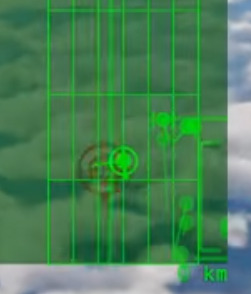
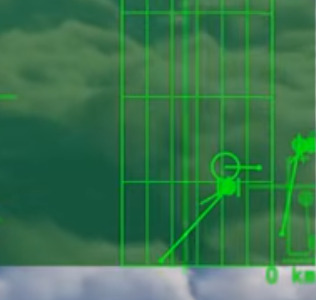
Okay I tested it and checked sensor replay. You’re right. It gives the impression that radar doesn’t guide properly in terminal datalink because even if the radar is properly locked to the plane in narrow TWS, the missile locks on to the chaff in tracking mode instead of following the plane in IOG+DL and that takes authority over the plane’s radar.
@Panocek@Macron-Spokesman You two were right. The sensor replay does make a difference between IOG+DL and only IOG. I fired a test amraam and immediately turned away, the missile indication writes IOG only.
Pretty sure the current mechanics are purely for balance and counter play otherwise if we went full real, nearly all missiles fired inside the MAR would hit at high altitude.