Development History
Excerpt from my A-1J suggestion (development history of the Skyraider)
"The Douglas AD/A1 Skyraider is most famous for being one of the most rugged aircraft of the mid-20th century. It earned this nickname because it could carry a massive amount of weapons—sometimes more than its own empty weight—and stay over a battlefield for hours to protect soldiers on the ground. Even as faster jets were being built, this tough propeller plane remained a legend for its ability to withstand moderate volumes of gunfire and keep flying, making it one of the most respected and long-lasting combat aircraft in history.
The development of the aircraft began in June of 1944 when the U.S. Navy sought a high-performance replacement for its carrier-based bombers. Chief Engineer Ed Heinemann of Douglas Aircraft famously performed a comprehensive redesign of the prototype, the XBT2D-1, during a single overnight session in a Washington, D.C. hotel room. By prioritizing weight efficiency and structural simplicity, Heinemann created a platform that was significantly more capable than its heavier competitors, ensuring the design’s selection for production just as World War II was drawing to a close.
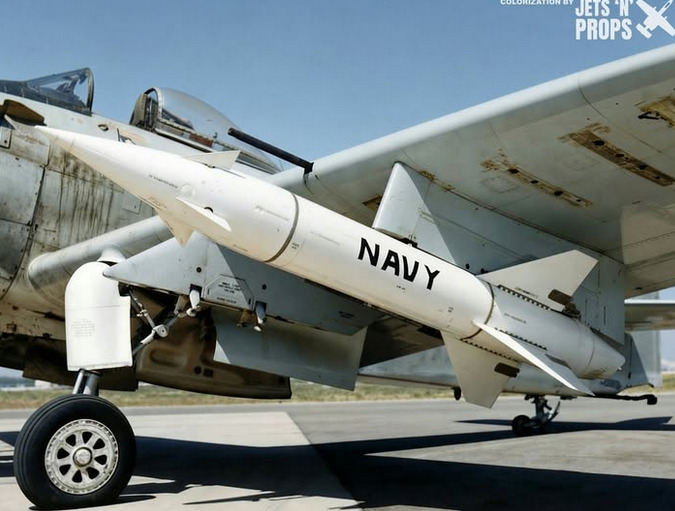
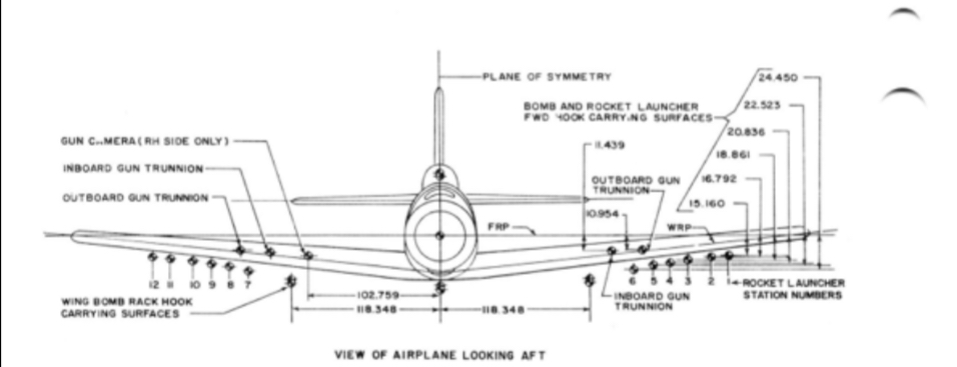
The aircraft was engineered around the Wright R-3350 Duplex-Cyclone radial engine, an 18-cylinder unit that produced up to 2,700 horsepower. This propulsion system was the core of the Skyraider’s performance, allowing it to lift a wide variety of munitions across its fifteen external hardpoints. With a maximum external load capacity of approximately 8,000 pounds, the Skyraider possessed a strike capability that rivaled the four-engine heavy bombers of the previous decade, all while maintaining the agility required for carrier operations.
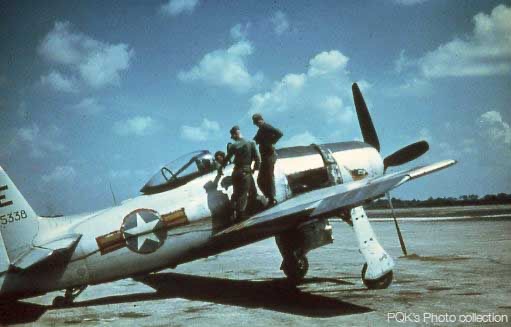
Entering service in 1946, the Skyraider—initially designated as the AD series—found its first major combat role during the Korean War. While early jet aircraft of the era were limited by high fuel consumption and fragile engines, the Skyraider’s piston-engine design allowed for the extended loiter times necessary for effective close air support. A hallmark of its Korean service occurred in 1951, when Skyraiders successfully destroyed the Hwacheon Dam using torpedoes, a feat of precision that conventional high-altitude bombing had failed to achieve.
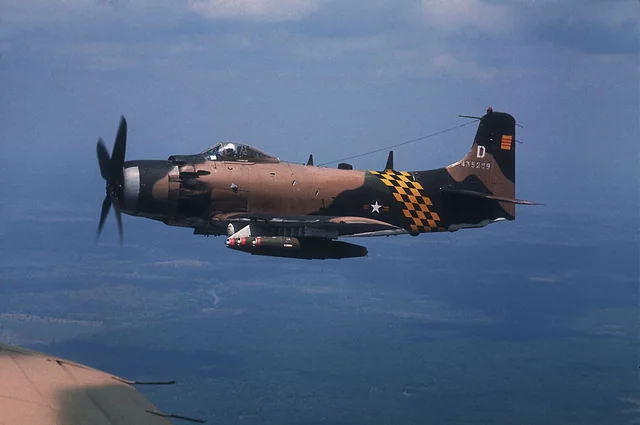
During the Vietnam War, the Skyraider transitioned into a specialized role within the U.S. Air Force and Navy, specifically supporting Search and Rescue (SAR) operations. Flying under the callsign “Sandy,” these aircraft provided a protective screen for rescue helicopters. The Skyraider’s ability to fly at low speeds and altitudes allowed pilots to accurately suppress enemy ground positions with its four 20mm cannons and external gun pods, such as the SUU-11B/A. Its reputation for durability grew during this period, as the aircraft frequently returned to base despite significant damage.
The Skyraider also maintained a notable international presence, serving as the primary strike aircraft for the South Vietnamese and French Air Forces. In the Algerian War, French pilots found the aircraft’s radial engine and simple maintenance requirements ideal for operating in austere desert environments. Despite the technological gap between the propeller-driven Skyraider and modern jet fighters, the aircraft recorded two air-to-air victories against North Vietnamese MiG-17s, proving that its heavy armament remained a threat even in the jet age.
While the single-seat variants are the most iconic, the Skyraider’s versatility was further demonstrated by the AD-5 (later redesignated A-1E) “widebody” variant. This version featured a side-by-side seating arrangement for a pilot and co-pilot, along with a large internal compartment that could be reconfigured for various specialized missions. This design allowed the Skyraider to serve as an electronic countermeasures platform, an airborne early warning station, or even a multi-passenger transport, showcasing an adaptability that few other combat aircraft of the era could match.
From an engineering perspective, the Skyraider was meticulously optimized for the high-stress environment of carrier-based dive bombing. One of its most distinctive features was the set of three massive, hydraulically operated fuselage dive brakes—located on the sides and bottom of the airframe—which allowed pilots to maintain steep, controlled dives without exceeding the aircraft’s structural speed limits. Additionally, its robust landing gear and hydraulically folding wings allowed the large aircraft to operate safely from the cramped decks of naval carriers, ensuring it remained the Navy’s premier strike asset well into the 1960s.
The Skyraider’s legacy is also inseparable from the unique “Spad” culture of its pilots, who often took pride in their aircraft’s perceived antiquity compared to modern jets. This legendary status was immortalized in October 1965, when a decommissioned ceramic toilet was mounted to a wing pylon and dropped over South Vietnam by VA-25. This “bomb” was a humorous tribute to the aircraft’s “flying dump truck” reputation and the milestone of dropping six million pounds of ordnance, cementing the Skyraider’s place in military folklore as a machine that was as rugged as it was versatile.
By the early 1970s, the U.S. military began retiring the Skyraider, gradually replacing it with subsonic jets such as the A-7 Corsair II. However, the operational success of the A-1 directly influenced the requirements for the next-generation attack aircraft. The design of the A-10 Thunderbolt II, with its focus on pilot protection, high payload, and long loiter times, is widely considered the spiritual successor to the Skyraider, carrying its tactical philosophy into the modern era of close air support."
VNAF History
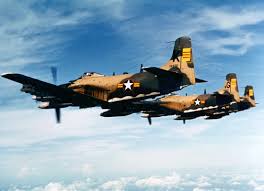
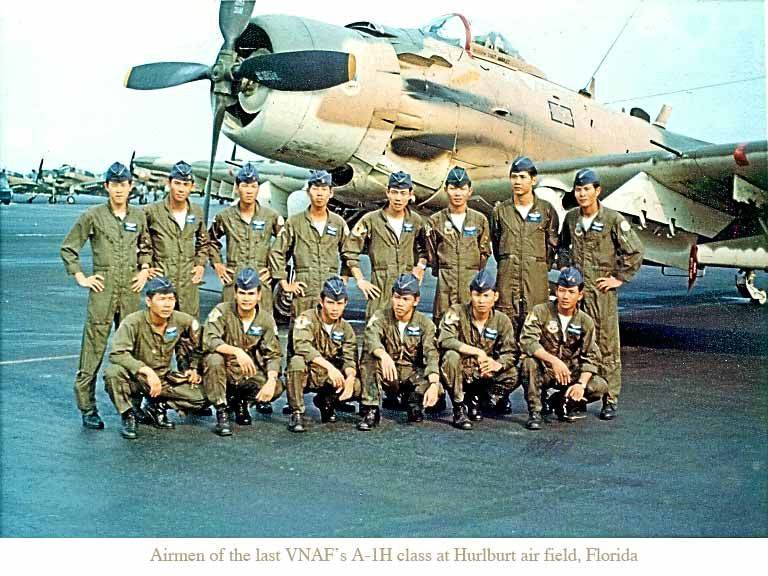
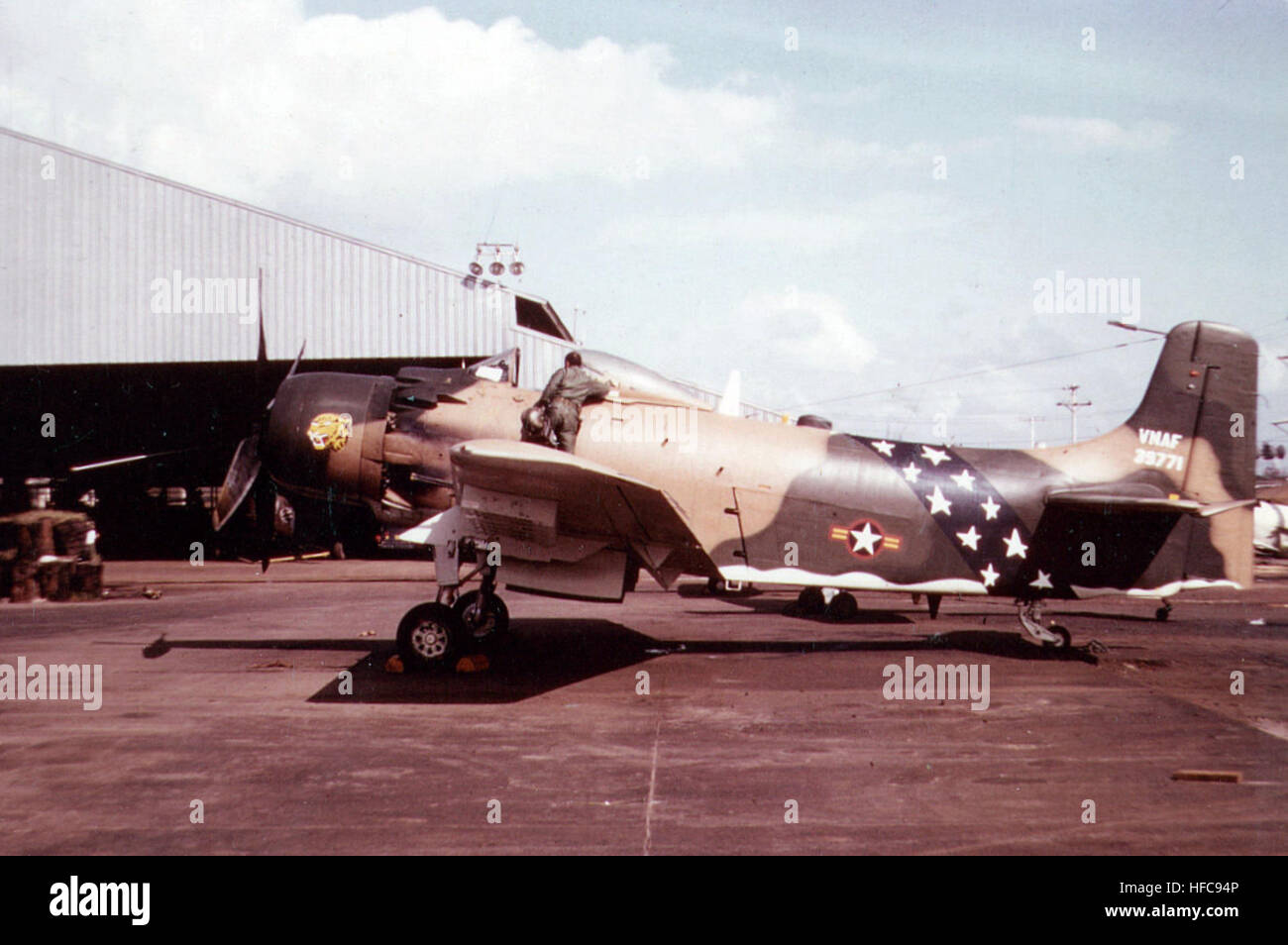
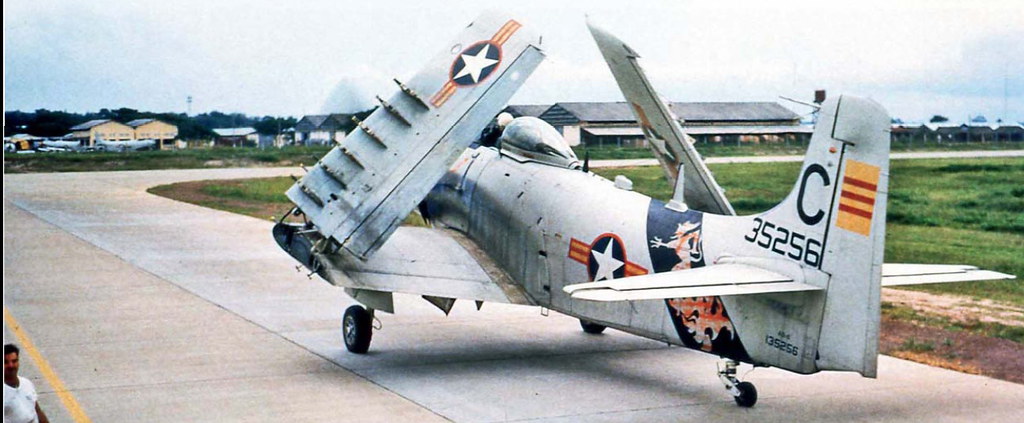
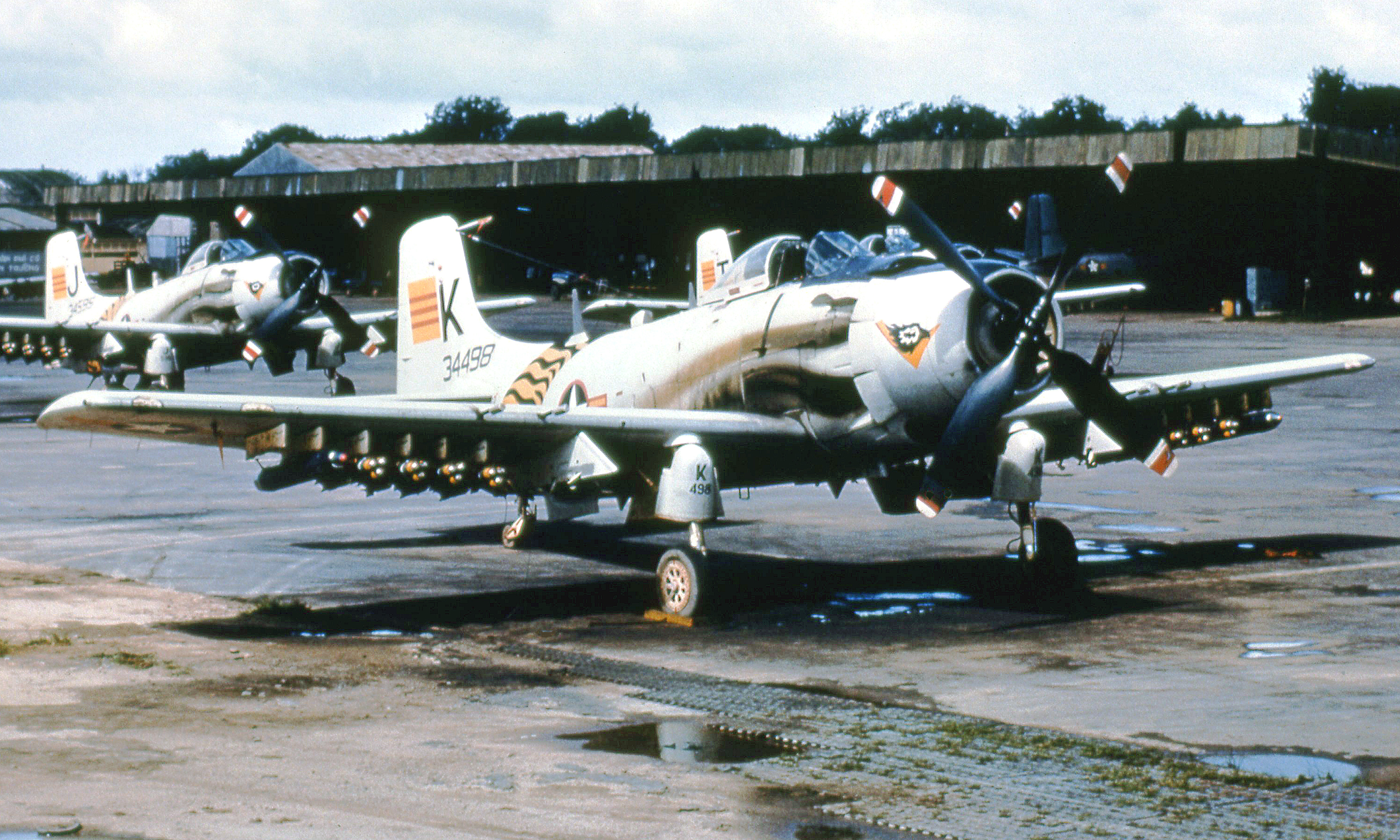
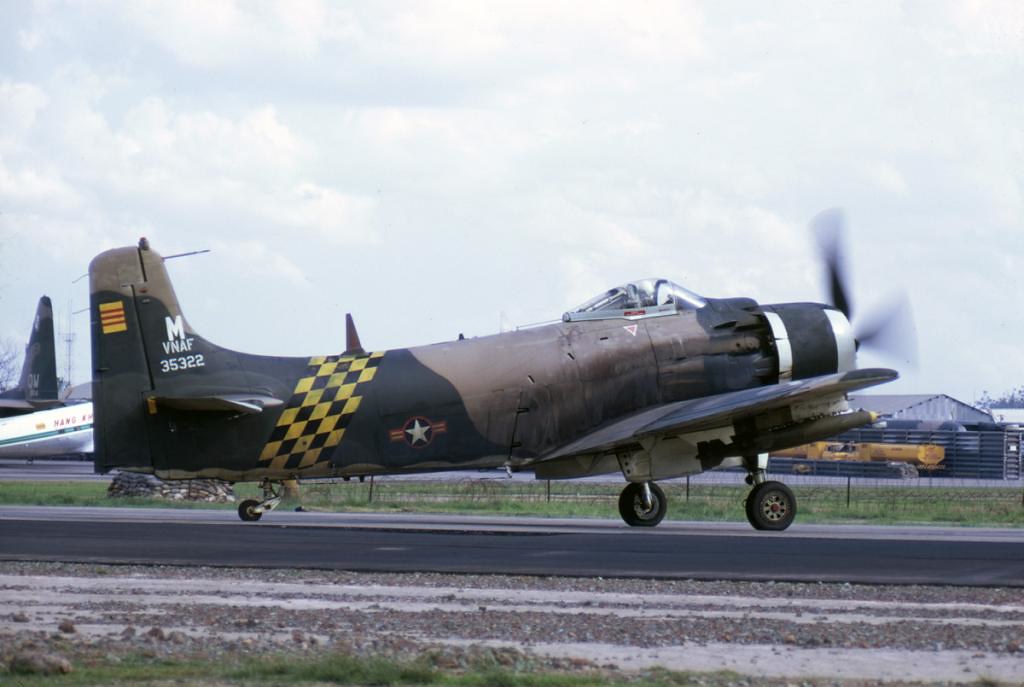
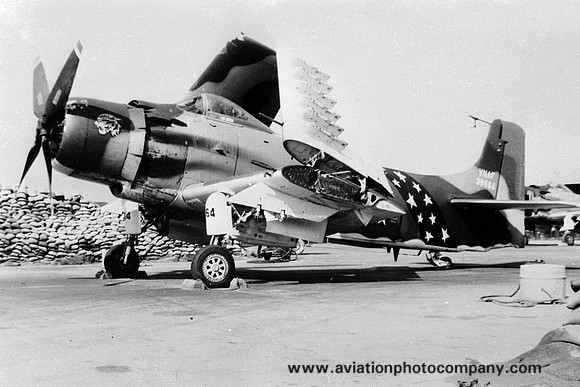
The A-1H was the most produced Skyraider and saw combat in the Vietnam war with both South Vietnam and the US., The Aircraft were distinguishable from their US counterparts via markings and pilots as the ones operated by the VNAF flew with their Emblem that consisted of a recolored USAF emblem and generally also featured a small South Vietnam Flag on the tail. Due to a lack of primary source records, there is little official information on the usage of the A1H by the VNAF; however, there is plenty of visual evidence along with secondary information.
Based on the information I could gather, the A-1H saw combat during most of the NVA’s major offensives and held them back as much as possible.
At the Siege of An Loc, VNAF Skyraiders were used to halt North Vietnamese (NVA) armored columns. Pilots utilized M47 and M116 napalm canisters to create thermal barriers, often targeting the external fuel drums of T-54 tanks to trigger secondary explosions. The aircraft’s ability to perform steep-angle dives—stabilized by its three hydraulically operated dive brakes—allowed for the precise delivery of 500 lb and 1,000 lb General Purpose bombs into entrenched NVA bunker complexes. This precision was critical in the dense canopy of the Central Highlands, where friendly and enemy positions were often separated by less than 100 yards.
The Skyraider saw a significant decline in effectiveness due to the introduction of the SA-7 MANPADS (Man-Portable Air-Defense System). The threat posed by these heat-seeking missiles forced VNAF pilots to abandon their preferred more accurate low-altitude delivery method, which degraded the accuracy of their unguided rockets and bombs. To counter this, combat profiles were adjusted to higher release altitudes, and pilots began carrying high-drag ordnance to maintain some semblance of precision. On the final day of the war, April 30, 1975, A-1Hs conducted desperate defensive sorties over Saigon’s Tan Son Nhut Air Base. Despite the logistical collapse, a significant number of airframes then successfully executed a tactical withdrawal to U-Tapao Air Base in Thailand, concluding one of the longest continuous combat usage of any single-engine piston aircraft in the 20th century.
As of now, I have discovered the following aircraft operated by South Vietnam:
135256 of the 514th Bien Hoa AB (1964)
137564 of the 524th FS, Nha Trang AB (1966)
139802 of the 516th FS Da Nang AB (1966)
134610 of the 83rd SAG Bien Hoa AB (1966)
135281 of the 518th FS Bien Hoa AB (1965)
137569 of the 520th FS Binh Thuy AB (1966)
137570 of the 524th FS Nha Trang AB (1968-69)
134488 of the 516th FS Da Nang AB (1970)
135340 of the 514th FS Bien Hoa AB (1971)
139703 of the 514th FS Bien Hoa AB (1970)
139690 of the 83rd SAG Bien Hoa (date unknown)
139608 unit and base unknown aircraft was transferred to the VNAF in 1972 from the USAF
All VNAF A-1s were put into storage in 1974
11 combat capable A-1Hs escaped to Thailand in 1975 in during the fall of South Vietnam, several more non combat capable aircraft also escaped to Thailand number unknown.
Stats
Amount procured: Exact number unknown
First introduced: 1965
Last flown: 1975
Length: 39 ft 3 in (11.96 m)
Wingspan: 50 ft 0 in (15.24 m)
Wingspan (Folded): 23 ft 10 in (7.26 m)
Height: 15 ft 8 in (4.78 m)
Wing Area: 400.3 sq ft (37.19 m^2)
Engine: 1 × Wright R-3350-26WB Duplex-Cyclone 18-cylinder radial engine
Horsepower: 2,700 hp (Takeoff)
Maximum Speed: 343 mph (552 km/h) at 20,000 ft
Cruise Speed: 195 mph (314 km/h)
Combat Range: ~1,300 nautical miles (2,400 km) with external fuel
Service Ceiling: 30,650 ft (9,342 m)
Rate of Climb: 3,230 ft/min (16.4 m/s)
Hardpoints: 15
Guns: 4x 20mm M3 (200 rounds per gun)
Max ordnance: 8000lbs
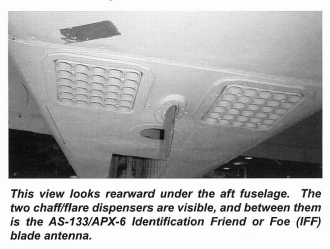
IFF: Yes
Radar: No (removed and plated over before vietnam)
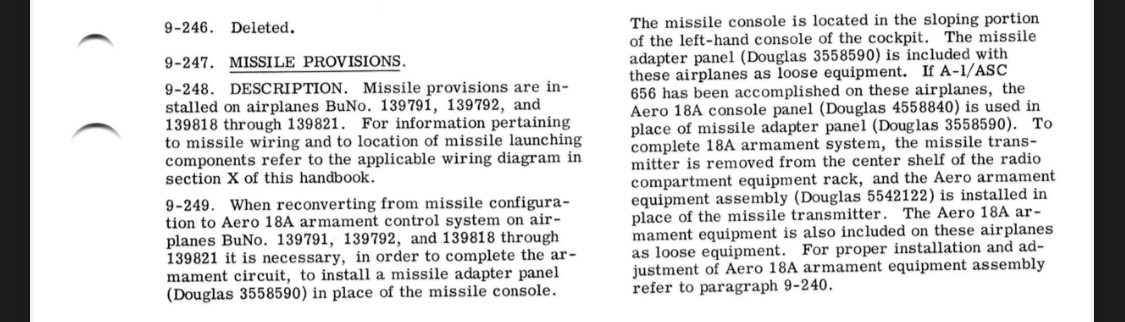
Countermeasures: yes provisions for 60 countermeasures as mentioned by the AH-1H/J maintenance instructions dated as August 1st 1972. Provisions for flares was included in the manual since it’s introduction in 1969.
Ordance: identical to the American version, except for the “special weapon.”
Details
 AM](https://forum-en-cdn.warthunder.com/original/4X/3/7/3/3737d50ab79d22898bead4846b9c9cabca3c10ce.png)
 AM](https://forum-en-cdn.warthunder.com/original/4X/e/d/b/edb71500aaa7b4ceb75667a0b1c1baa86ebf7b0f.png)
 AM](https://forum-en-cdn.warthunder.com/original/4X/f/a/5/fa518e9ba431b7446c477e48dcd1070ca3e5076d.png)
Sources
https://www.aahs-online.org/images/Navy_SAC/A-1H_J.pdf
https://www.afhistoryandmuseums.af.mil/Portals/56/Documents/Vietnam/vietnamese_af_1951-1975%20-%202.pdf?ver=2016-12-30-100851-297
A-1H | War Thunder Wiki

- yes
- no