- Yes
- No
TL;DR: Dutch Admiral, commander of East Indies forces, WWII submarine campaigner, postwar Navy chief.
History
History:
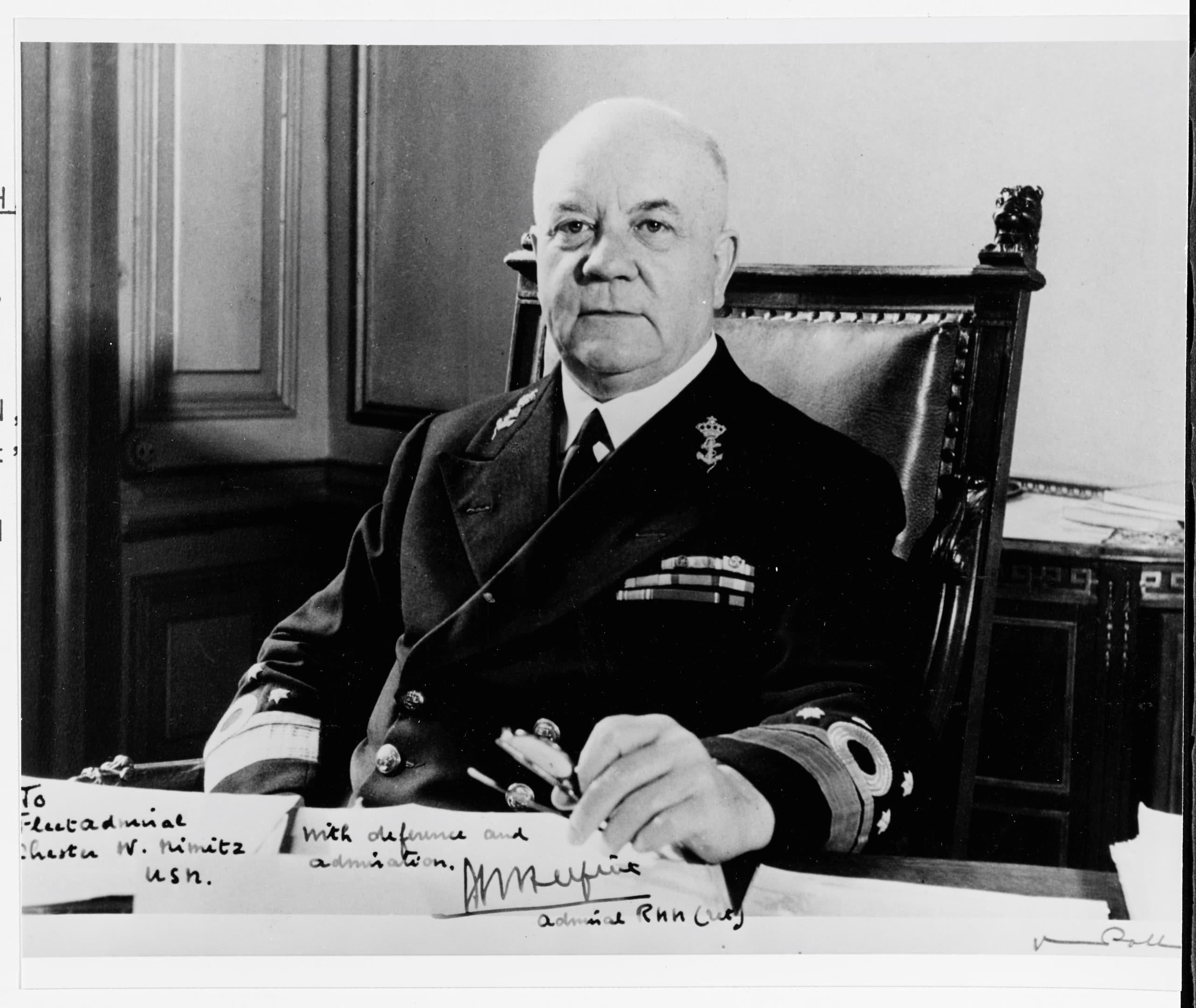
Conrad Emil Lambert Helfrich was born in Semarang, Dutch East Indies, on 11 October 1886, to a Dutch physician father and an Indonesian mother. He was educated at the Royal Naval Institute in Den Helder, where he graduated in 1907 as a torpedo specialist. He saw early service during colonial expeditions such as the 1908 Bali campaign, and in the 1920s became an instructor at the Higher Naval Military School.By the 1930s, Helfrich had become a respected officer in the East Indies. In 1931, he was made chief of staff of Dutch naval forces in the East Indies, later commanding the squadron there, and served as director of the Naval War College. In October 1939, just as Europe entered WWII, he was appointed Commander of all Dutch naval forces in the East Indies. Promoted to vice-admiral in August 1940, he prepared for the coming Pacific struggle.At the outbreak of the Pacific War in December 1941, Helfrich launched an aggressive submarine campaign against Japanese shipping. Dutch submarines under his command sank more enemy ships than the British and U.S. navies combined during those first months. This remarkable success earned him the nickname “Ship-a-day Helfrich” in the American press.In January 1942, the Allied command structure in the region was reorganized into ABDA (American-British-Dutch-Australian) Command. Initially led by U.S. Admiral Thomas C. Hart, Helfrich replaced him as commander of ABDA naval forces in mid-February. Determined to resist, he ordered aggressive attacks on Japanese invasion convoys. However, at the Battle of the Java Sea (27–28 February 1942), the Allied fleet suffered catastrophic losses, including the death of Rear Admiral Karel Doorman. The defeat destroyed much of the Dutch fleet, and ABDA was soon dissolved.Helfrich escaped Java in a Catalina flying boat on 2 March 1942, relocating to Ceylon (Sri Lanka). From there he coordinated the remnants of Dutch naval and air forces in exile. Later, he was appointed Commander-in-Chief of all Dutch forces in the East, combining army, navy, and air command, though the scattered state of Dutch forces made his role largely administrative.
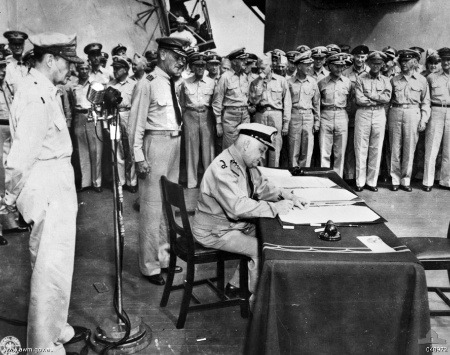
2 September 1945 – Signs Japanese surrender in Tokyo Bay aboard USS Missouri.At the end of the war, Helfrich was promoted to lieutenant-admiral. On 2 September 1945, aboard USS Missouri in Tokyo Bay, he signed the Japanese Instrument of Surrender on behalf of the Netherlands. Returning briefly to Java, he commanded Dutch forces during the politically turbulent early months of the Indonesian National Revolution, opposing compromises with nationalist leaders.From 1945 to 1949, Helfrich served as Commander-in-Chief of the Royal Netherlands Navy, overseeing its postwar reconstruction. He retired in January 1949, later publishing his memoirs in 1950. He died in The Hague on 20 September 1962.
A career overview
A career overview:
1886 – Born in Semarang, Dutch East Indies.
1903–1907 – Studies at the Royal Naval Institute in Den Helder; graduates as torpedo specialist.
1908 – Participates in Bali expedition.
1922–1927 – Instructor at Higher Naval Military School.
1931 – Chief of Staff, Dutch East Indies naval forces.
1935–1937 – Squadron commander and director of the Naval War College.
October 1939 – Appointed Commander of all Dutch naval forces in the East Indies.
August 1940 – Promoted to Vice-Admiral.
1941–1942 – Dutch submarines sink numerous Japanese ships; Helfrich nicknamed “Ship-a-day Helfrich.”
February 1942 – Assumes command of ABDA naval forces.
27–28 February 1942 – Allied fleet shattered at the Battle of the Java Sea.
2 March 1942 – Flees Java to Ceylon; assumes command of all Dutch forces in the East.
1942–1945 – Coordinates Dutch forces from exile; advocates continued resistance.
2 September 1945 – Signs Japanese surrender in Tokyo Bay aboard USS Missouri.
Late 1945 – January 1946 – Commands Dutch forces in Java.
1945–1949 – Commander-in-Chief of the Royal Netherlands Navy.
1950 – Publishes memoirs.
1962 – Dies in The Hague ('s-Gravenhage/Den Haag).
Decorations
Honours and Decorations:
- Knight 3rd Class of the Military William Order (1942)
- Order of the Dutch Lion
- Order of Orange-Nassau (multiple classes)
- War Memorial Cross
- Long Service Cross (XXX years)
- Mobilization Cross 1914–1918
- Allied awards (including U.S. and U.K. decorations for service in ABDA Command)
Gallery
Pictures:
December 1942 – Vice Admiral Conrad E.L. Helfrich (KCB), famously nicknamed “Ship-a-Day Helfrich” for overseeing the sinking of 54 Japanese ships in the first 54 days of the war, pictured at his headquarters in Colombo, Ceylon.
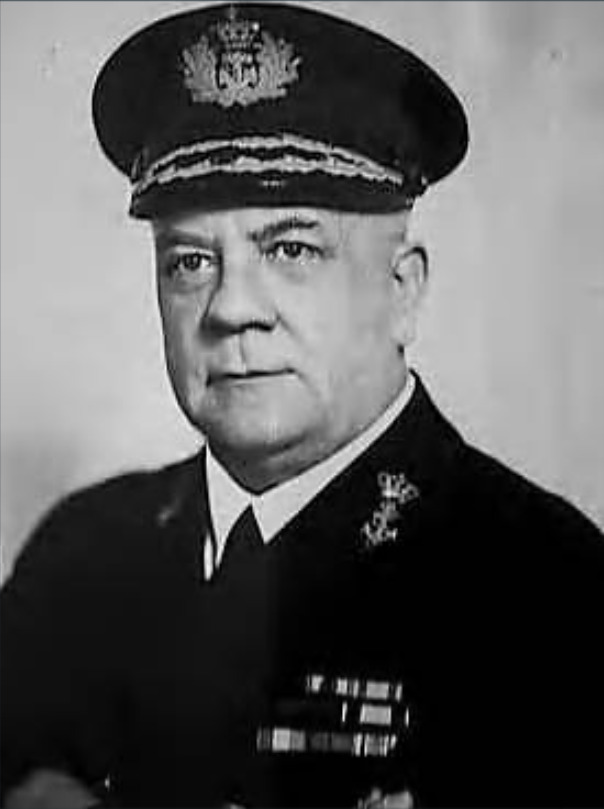
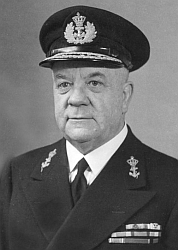
early 1940s Portrait.
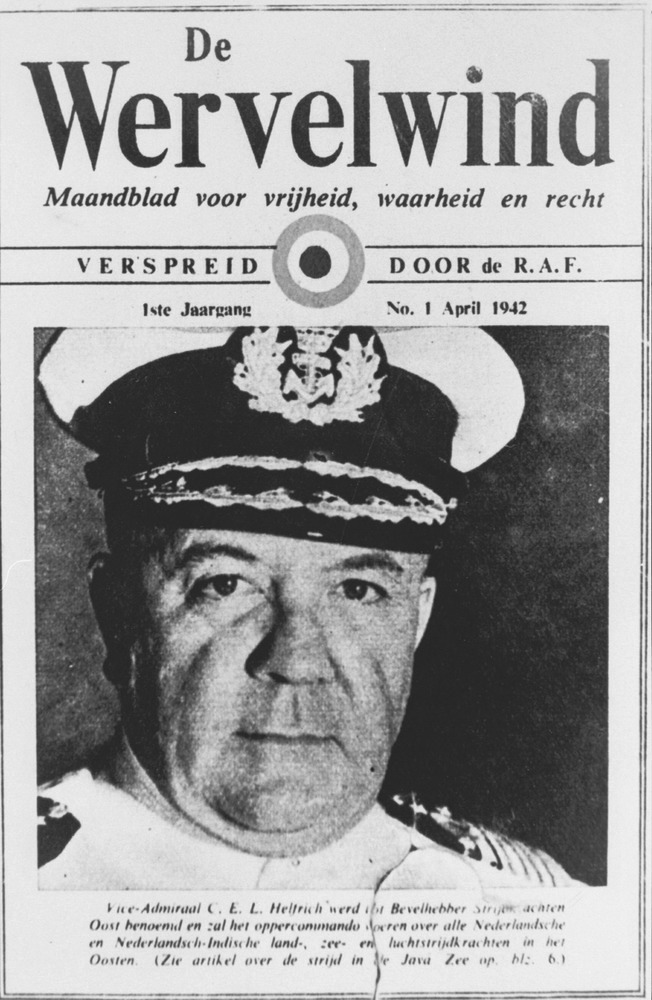
1 April 1942 – One of the most common forms of passive resistance in the occupied Netherlands was the distribution of photographs of Queen Wilhelmina and other members of the Royal Family. These images, often taken from American and British magazines, were reproduced in large quantities and sold for just a few cents. The proceeds were used, among other things, to finance the production of the first illegal newspapers. Shown here: an issue of De Wervelwind featuring Vice Admiral C.E.L. Helfrich.
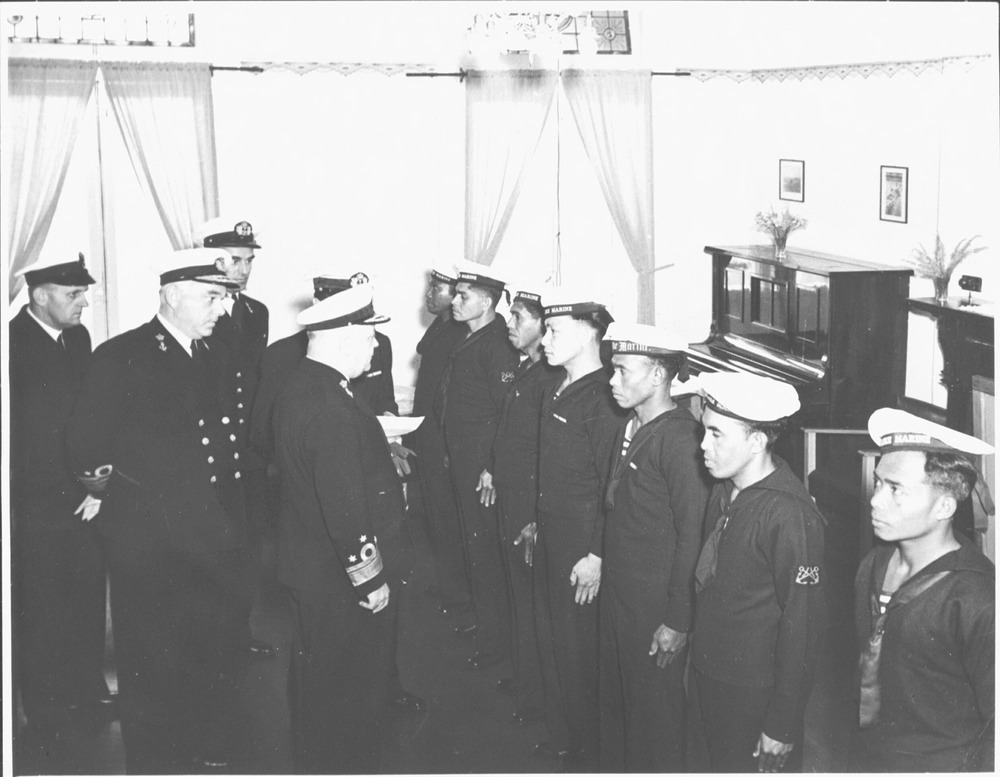
21 February 1945 – At the barracks of the Royal Netherlands Navy in Melbourne, Lieutenant Commander Tiel inspects a group of seven recently liberated Indonesian sailors and introduces them to Vice Admiral Conrad Helfrich. Vice Admiral Koenraad stands to the left of Helfrich.
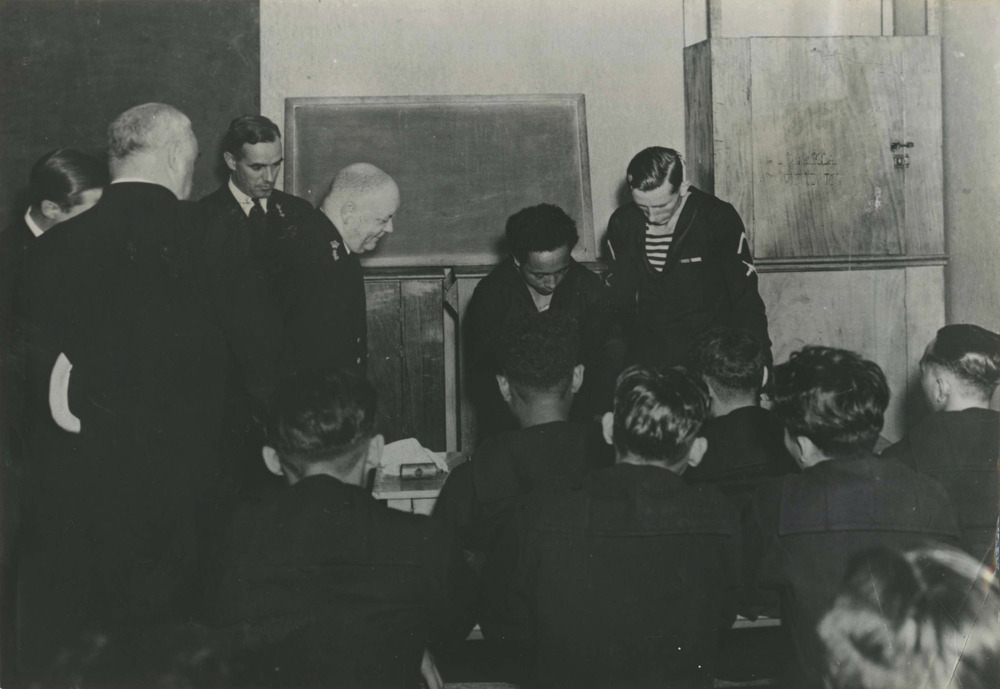
August 1945 – Indonesian sailors, who had been held as prisoners for three years under Japanese occupation, are welcomed back by Lieutenant Admiral Conrad E.L. Helfrich.
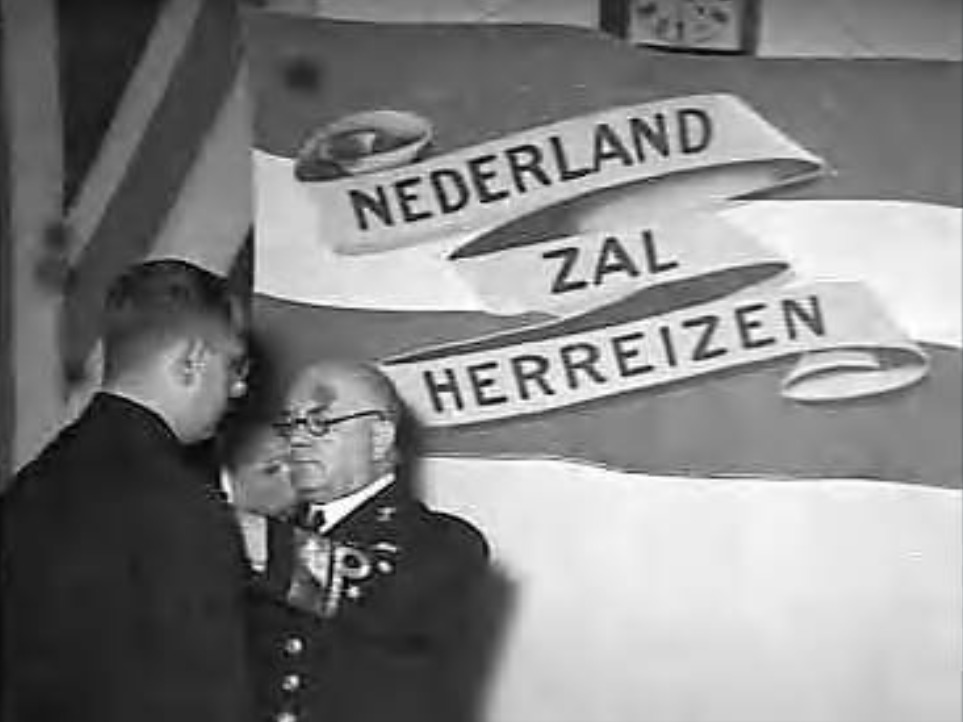
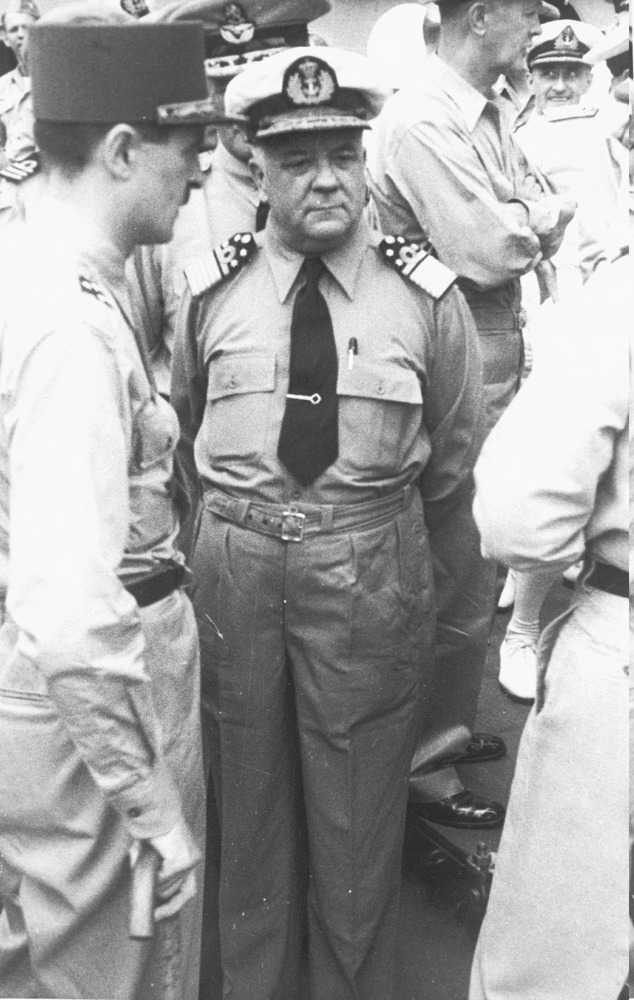
Vice Admiral Conrad Helfrich, Commander of the Netherlands East Indies Naval Forces, presenting decorations in an Australian port to two Chinese and four Dutch sailors from the tanker Ondina and the corvette Bengal. (Note: the painting in the background contains a misspelling of the phrase “Nederland zal herreizen” — The Netherlands shall rise again). Nationaal Archief2 september 1945: Rear Admiral C.E.L. Helfrich, Commander-in-Chief of the Netherlands Forces in the Far East talks with General le Clerc.
Sources
Sources:
Van Dulken, E. L. (Interviewer). (1955, August 15). Remembering the Second World War in the Netherlands: Historical sound from the 1950s – Part 5, Lt Adm Conrad Helfrich remembers the war in the Pacific [Audio interview]. Radio Netherlands Archives. Remembering the Second World War in the Netherlands: Historical sound from the 1950’s- Part 5, Lt Adm Conrad Helfrich remembers the war in the Pacific – Radio Netherlands Archives
Bosscher, P. M. (1986). De Koninklijke Marine in de Tweede Wereldoorlog. Deel 2: Indië tot en met 8 maart 1942. Franeker: Wever.
Camp Columbia. (n.d.). Conrad Helfrich: Commander-in-Chief of Dutch forces in the East. Retrieved August 23, 2025, from https://campcolumbia.com.au/conrad-helfrich-commander-in-chief-of-dutch-forces-in-the-east/
Encyclopaedia Britannica. (n.d.). Conrad Emil Lambert Helfrich. In Britannica.com. Retrieved August 23, 2025, from https://www.britannica.com/biography/Conrad-Emil-Lambert-Helfrich
Ph.M. Bosscher, ‘Helfrich, Conrad Emile Lambert (1886-1962)’, in Biografisch Woordenboek van Nederland . URL:http://resources.huygens.knaw.nl/bwn1880-2000/lemmata/bwn2/helfrich [12-11-2013]
Nationaal Archief. (n.d.). Fotocollectie Helfrich. Retrieved August 23, 2025, from https://www.nationaalarchief.nl/onderzoeken/fotocollectie/af9ba462-d0b4-102d-bcf8-003048976d84
Netherlands Navy. (n.d.). Admiral Conrad Helfrich. In Netherlandsnavy.nl. Retrieved August 23, 2025, from https://www.netherlandsnavy.nl/Men_helfrich.htm
Oorlogsbronnen. (n.d.). Conrad Helfrich – tijdlijn. Retrieved August 23, 2025, from https://www.oorlogsbronnen.nl/tijdlijn/960cdb4d-a8b5-43ac-978c-1758b6f65039
Pacific War Online Encyclopedia. (n.d.). Helfrich, Conrad Emil Lambert (1886–1962). Retrieved August 23, 2025, from http://pwencycl.kgbudge.com/H/e/Helfrich_Conrad_EL.htm
Wikipedia contributors. (2025, August 15). Conrad Helfrich. In Wikipedia. https://en.wikipedia.org/wiki/Conrad_Helfrich