- Yes
- No
Introduction
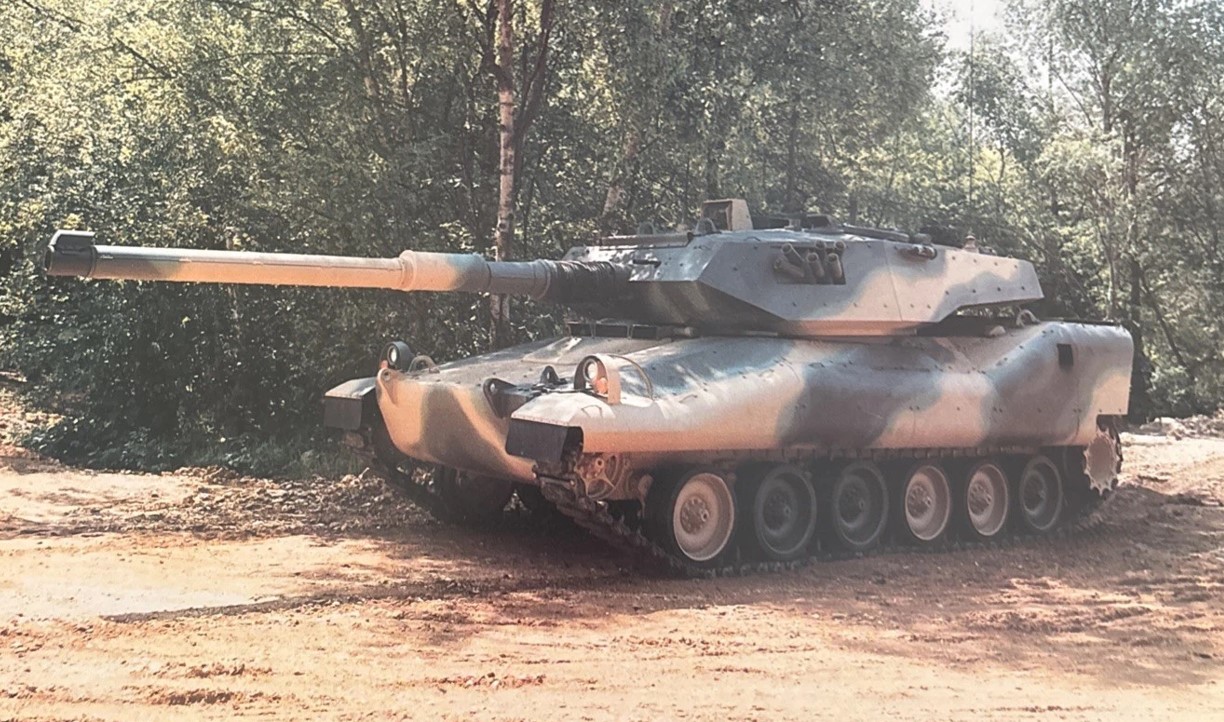
The VFM5 (also known as the Vickers FMC Mk.5) originated in the mid-1980s as a private-venture export project rather than a vehicle developed to meet a specific British Army requirement. The roots lay in the FMC Close Combat Vehicle-Light (CCV-L), which FMC displayed in October 1985 at the Association of the United States Army (AUSA). In 1985, Vickers Defence Systems partnered with FMC to adapt this concept into a more affordable and practical design aimed at export customers, particularly those forming rapid-response forces that needed a light, air-deployable vehicle with firepower comparable to a main battle tank, or those with a lower budget and unsuitable infrastructure for purchasing and operating western MBTs that were ballooning in price and weight.
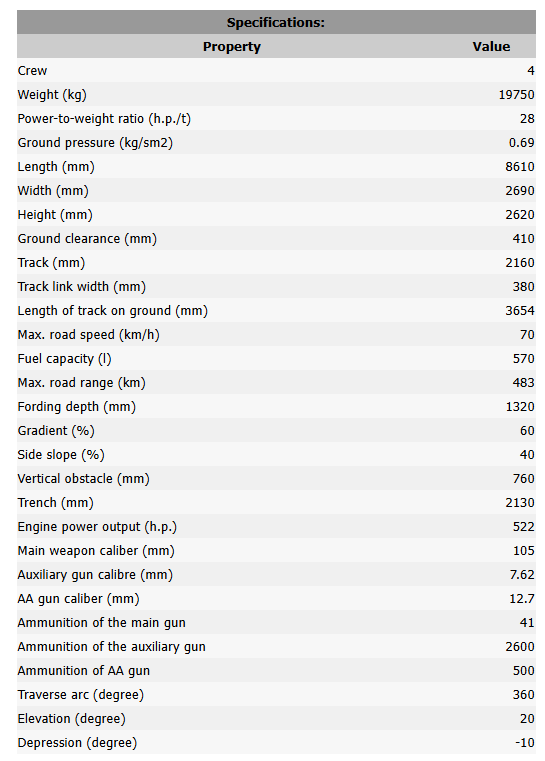
Design work emphasized low weight, high mobility, and strong firepower. The VFM5 used a welded aluminium hull and turret with applique high-hardness steel plates, keeping battle weight to about 20 tonnes so it could be transported by C-130 and C-141 aircraft. Unlike the CCV-L, which had a smaller crew and an autoloader, the VFM5 adopted a conventional four-man crew and manual loading to reduce complexity and cost. It was armed with a fully stabilised 105 mm gun compatible with British, German, or U.S. ammunition, supported by an all-electric Marconi fire-control and stabilisation system. The engine was a 552 hp Detroit Diesel 6V-92TA, giving a high power-to-weight ratio and road speeds of up to 70 km/h.
The first VFM5 prototype was completed in May 1986 and shown publicly later that year at the British Army Equipment Exhibition. Firing and mobility trials were completed in 1987, demonstrating that the vehicle met its design goals, and as of early 1993 it remained at the prototype stage and had not been demonstrated outside the UK. Although intended to attract foreign customers, interest never translated into orders. The timing proved unfavorable: only a few years after trials were completed, the collapse of the Soviet Union led to large numbers of inexpensive surplus armored vehicles entering the global market. Faced with this competition, the VFM5 failed to secure a buyer, and the project ended without entering production.
Now you may be thinking, we already have the VFM5 in-game, what’s this suggestion about? Well, the VFM5 we have in-game is modelled after the VFM5 prototype as fitted with the 105mm Low Recoil Force (LRF) cannon, designed specifically for lightweight vehicles and seen in-game on tanks like the VFM5, Vickers Mk 11, and Stingray. However, this isn’t the only cannon the VFM5 was trialed with - it was also tested with the venerable L7 105mm. In-game, the L7 and the LRF share identical performance, so you may once again find yourself asking - what is the point? Well, although the cannon remains the same, the VFM5 (L7 105mm) represents an opportunity for an additional tracked light tank in the British tree, at a different BR based on ammunition selection. It could either be lower, around 8.3-9.0 if only given HEAT and/or DM23, or higher, at 9.7 or 10.0, if DM63 was considered. Both of these BRs are places where the British tree could really benefit from some fast and hard-hitting firepower.
Specifications
Spoiler
Images
Spoiler
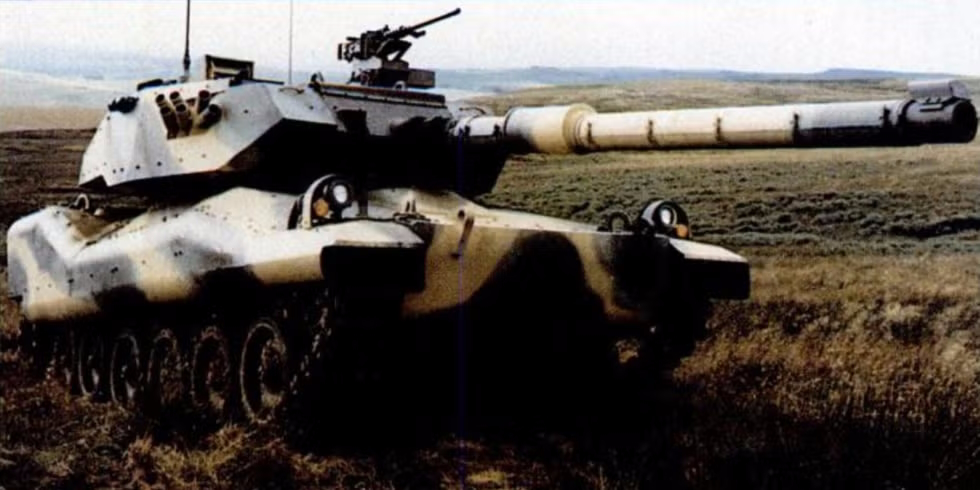
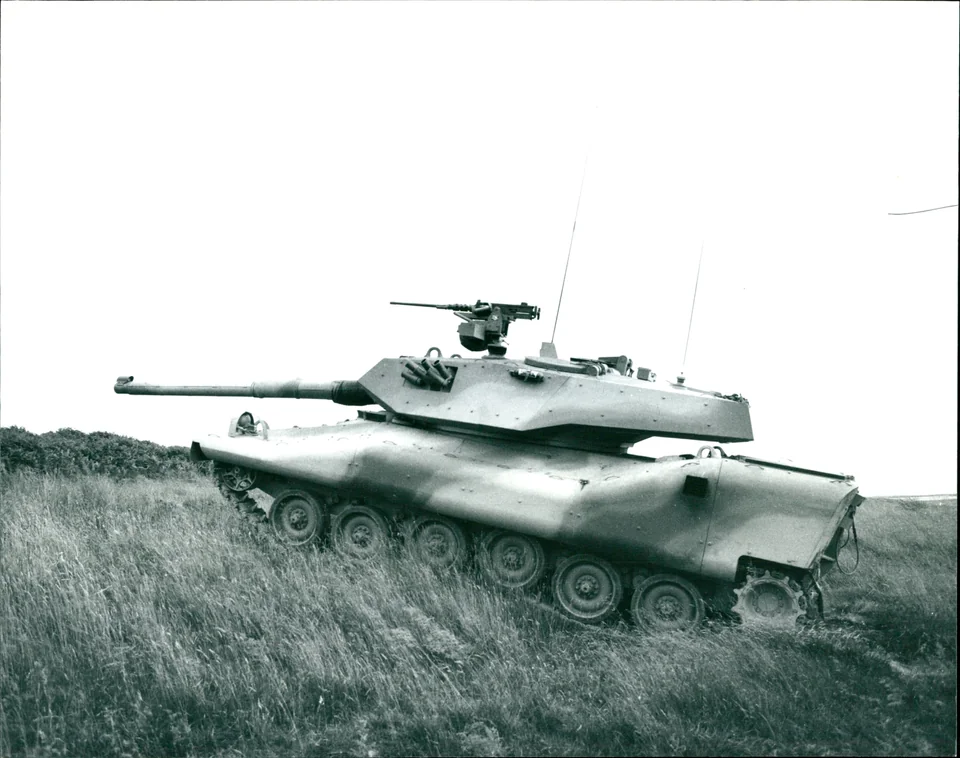
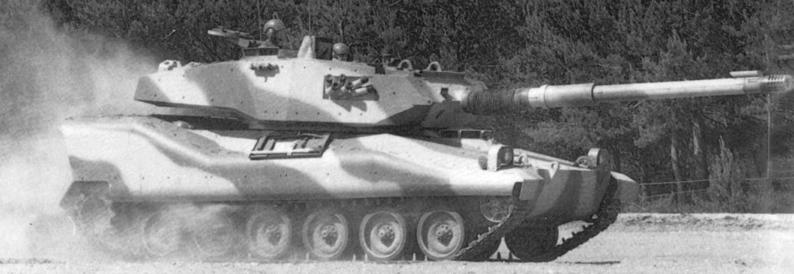
VFM5 with the 105mm LRF cannon. Note the difference in fume extractor and muzzle brake.
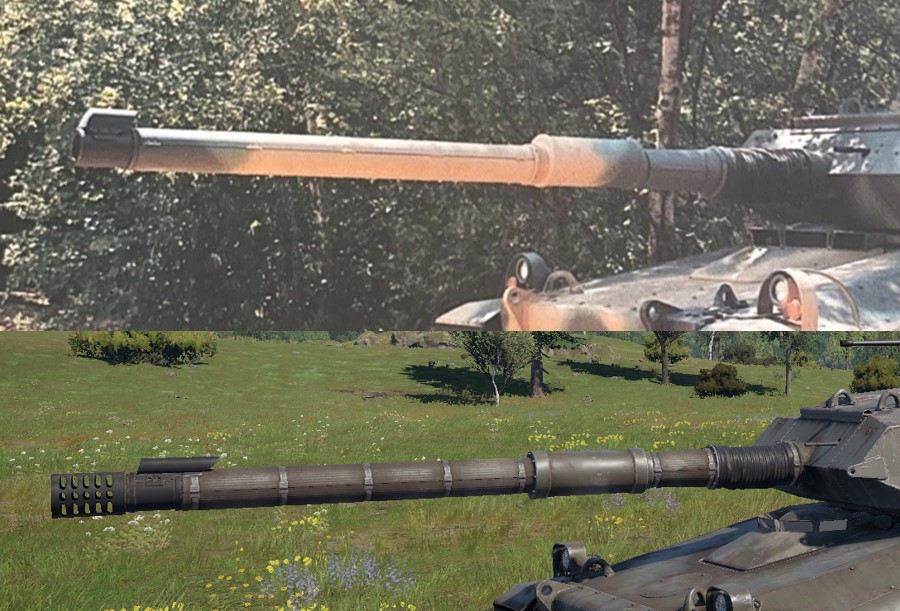
Comparison of the VFM5 as fitted with the L7 (top) and LRF (bottom).
Sources