- Yes
- No
Hello everyone and welcome to this new suggestion.
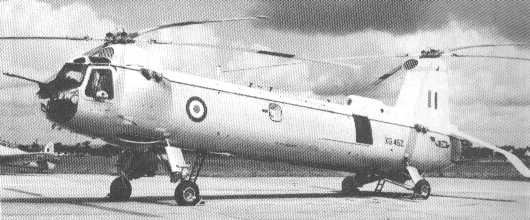
Today I’m presenting a new helicopter that served in the French armed forces: the Piasecki H-21C.
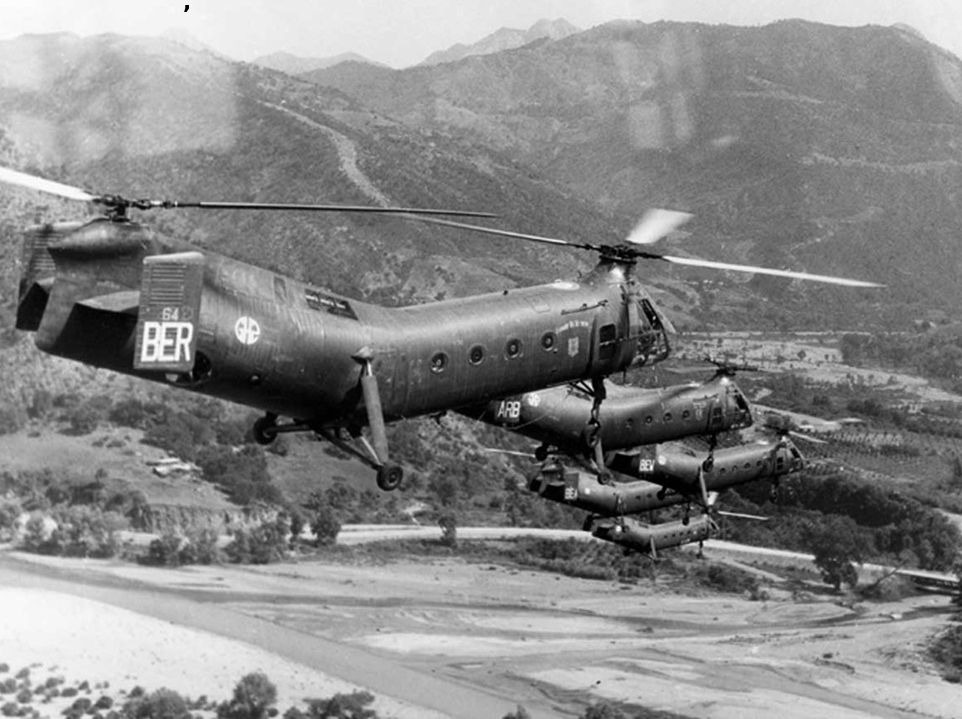
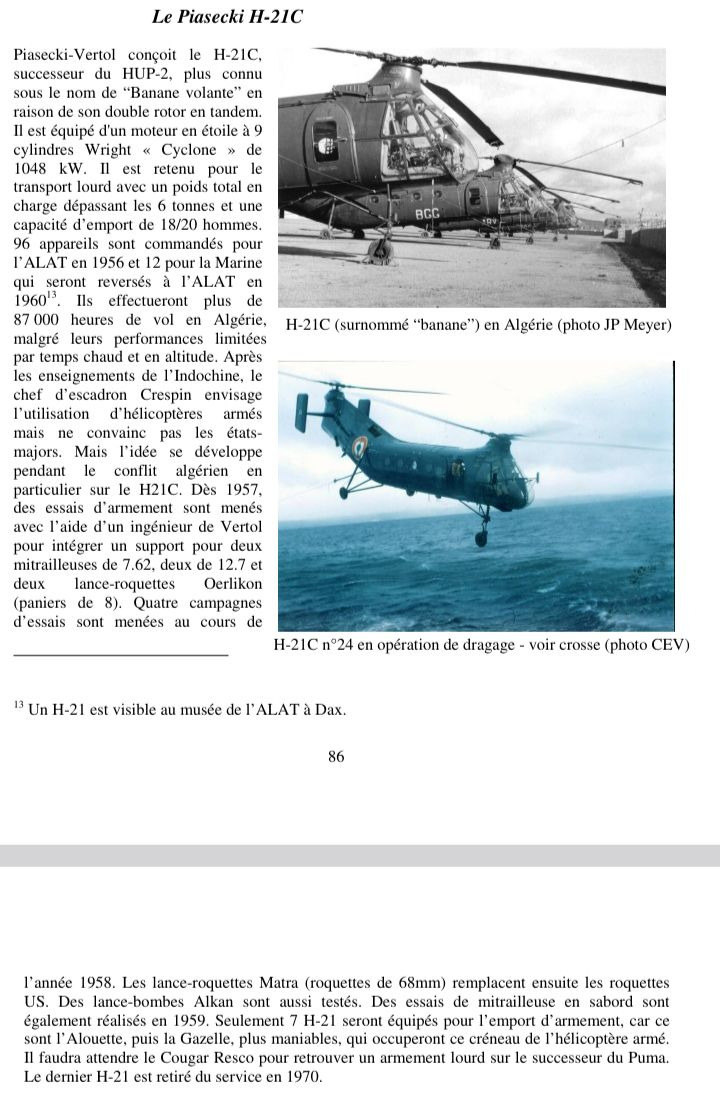
The Piasecki H-21C, also known as the Vertol H-21, is an aircraft developed by Frank Piasecki at the end of World War II. It made its first flight in the early 1950s and served in numerous armies around the world, with over 700 units produced. This aircraft, with its striking design, acquired many names, the most well-known in France being the “Flying Banana” due to its distinctive shape.
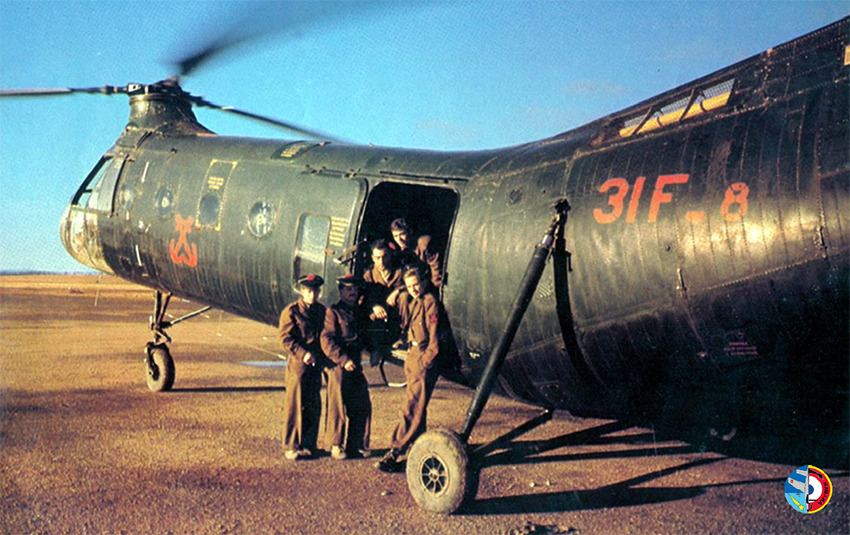
During the Algerian War, the French forces had various aircraft at their disposal, but these were all first-generation models and lacked the power to carry out all their missions. Therefore, the French General Staff turned to the H-21C, which was then one of the most modern helicopters in the world and also boasted a significant transport capacity. 108 aircraft (FR1 to FR108) were purchased from the United States, and an aircraft carrier was dispatched to transport them directly to the theater of operations. 88 H-21Cs were delivered to the French Army Light Aviation (ALAT), and 19 to the French Navy (the last one serving as a test aircraft). Within ALAT, all the aircraft were operated by Helicopter Group 2 (GH2) and participated in a large part of the operations in Algeria, demonstrating their robustness and effectiveness, which far surpassed other helicopters of the time. However, the aircraft also showed some weaknesses, particularly concerning its engine and its resistance to the desert heat. Following the war, the remaining H-21Cs were repatriated to France and used for various logistics missions within the country. It is worth noting that H-21Cs were used during various French nuclear tests in the Sahara. The last H-21Cs were withdrawn from service during the 1970s, after nearly 20 years of service.
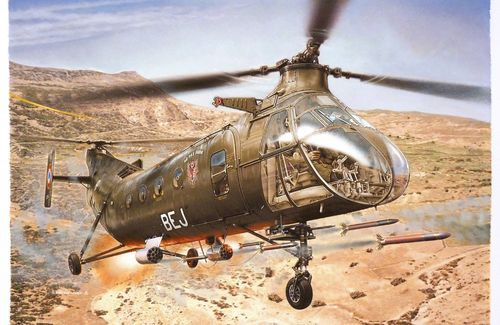
Initially, this aircraft was not designed to carry weapons but solely for troop transport. However, recognizing the need to defend the aircraft during missions in hostile territory, the French Army Light Aviation (ALAT) General Staff decided to arm the aircraft with various weapons. These included machine guns for self-defense, as well as heavier weapons such as bombs and rockets.
Characteristics
-
Length : 26.2 m
-
Width : 13.5 m
-
Height : 4.7 m
-
Mass :
- 3.63 tons (empty)
- 6.8 tons (max)
The aircraft is powered by a single Wright 1820-103 engine producing 1425 hp, allowing it to reach a maximum speed of 210 km/h and a range of over 450 km. It has a crew of two and can carry 20 passengers in its hold.

Weapons
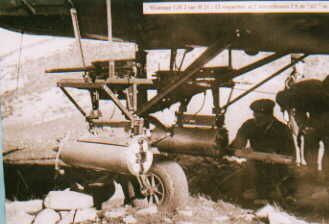
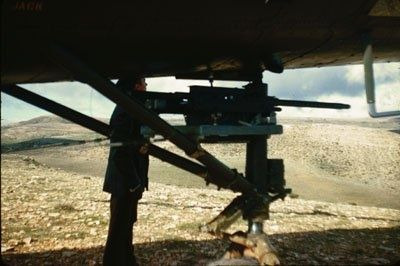
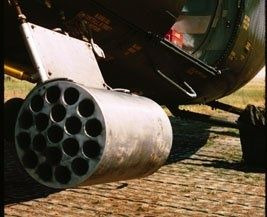
Since the integration of weapons was not initially planned for this aircraft, the French forces had to improvise their loadouts. For this reason, all offensive weapons are mounted on the rear landing gear. These include:
-
2 x rocket pods
- 2 x 8-rocket Oerlikon pod
- 2 x 19-rocket Matra pod
-
Machine guns
- 7.7mm machine gun
- 12.7mm machine gun
-
Bombs
- Alkan bomb rack (5 x 250lb bombs)
In-game, this helicopter would be an interesting addition to the French tree, providing a low-BR aircraft with weak combat capabilities but still able to do some damage, thus complementing the various aircraft already present.
Pictures
Sources
- academieairespace.com/wp-content/uploads/2020/05/helicomaero.pdf
- Présentation de l’hélicoptère VERTOL H-21C ALAT - ALAT.FR
- Piasecki H-21C Banane volante | Ailes Anciennes Toulouse
- Série Patrimoine (4) : Vertol H-21C – aeroVFR
- Piasecki H-21 Shawnee/Workhorse — avionslegendaires.net
- ImagesDéfense - Un hélicoptère de type piasecki Vertol H21 également surnommé “bannane volante” à l’arrêt sur une piste. [légende d’origine]