A 3D Decoration Set For Ground Vehicles
History
The concept behind the Humanitarian Daily Ration (HDR) developed from the U.S. military’s experiences distributing military field rations to civilians during the Second World War. One example was the Field Ration D, an extremely high-calorie chocolate bar originally designed to sustain soldiers in the field. Although these rations could provide emergency nourishment, they were far from ideal for feeding civilian populations. Later military rations, including the Meal, Combat, Individual (MCI) and the Meal, Ready-to-Eat (MRE), were also occasionally used for humanitarian relief, despite not being specifically designed for this purpose.
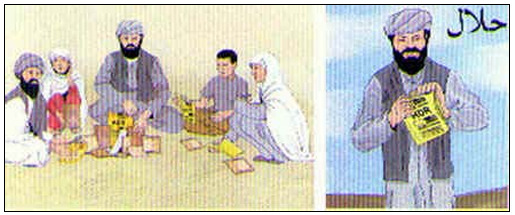
One of the major shortcomings of conventional U.S. military rations was their limited suitability for populations with different religious dietary requirements. Their ingredients could also present nutritional and digestive challenges for certain civilian populations, particularly during emergencies. These limitations demonstrated the need for a ration specifically designed for humanitarian assistance rather than military use.
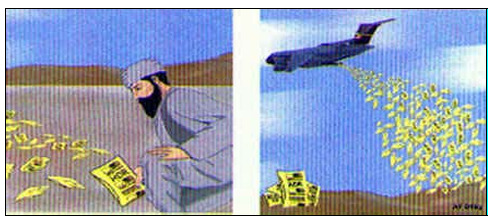
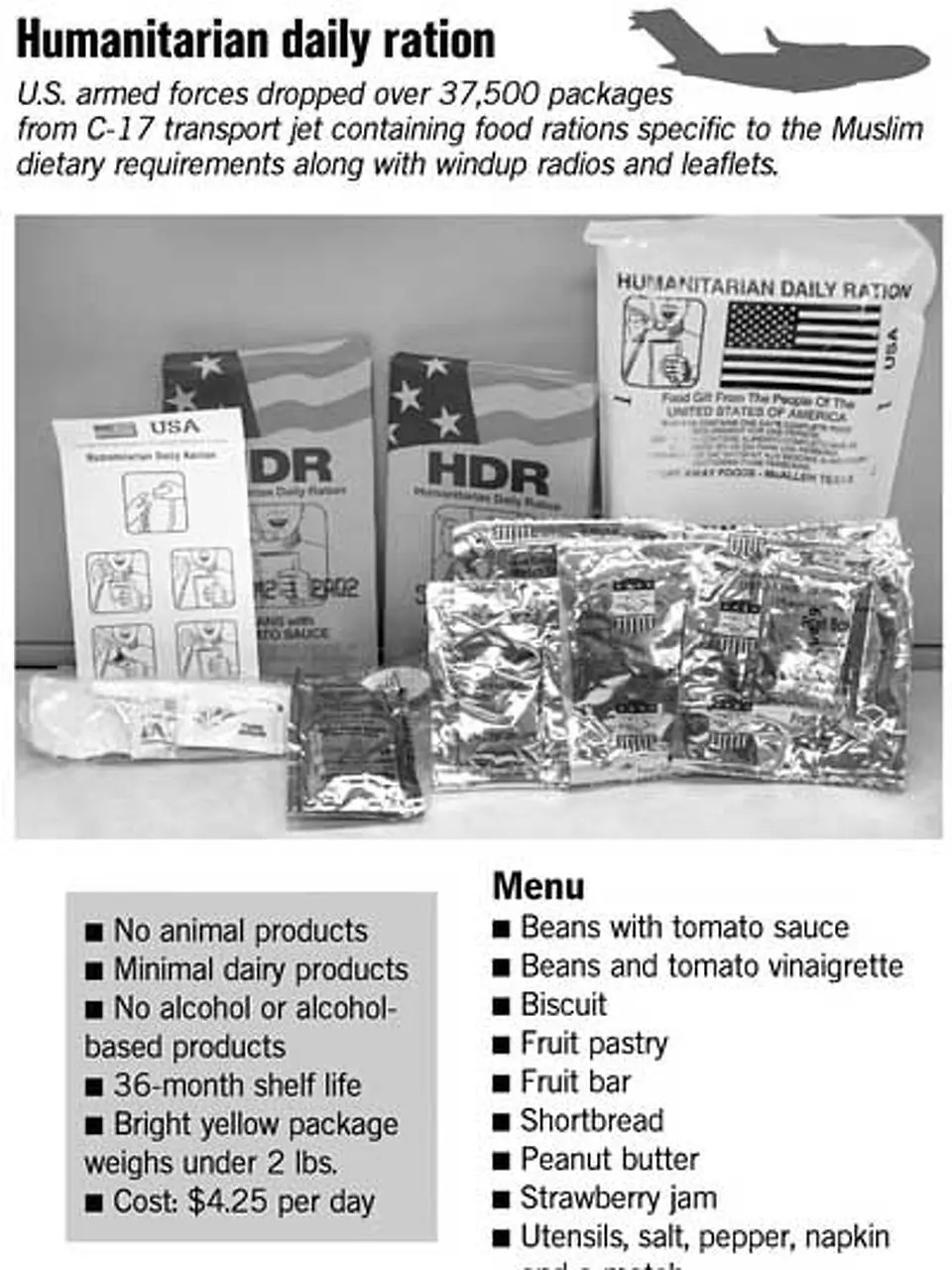
The Humanitarian Daily Ration was developed to address these challenges. Its primary objectives were to provide sufficient calories for an individual’s daily nutritional needs, accommodate a broad range of religious dietary requirements, minimize the potential for its components to be weaponized, withstand airdrop delivery, remain economical to produce, and maintain a long shelf life. The resulting ration was designed to be distributed efficiently to large civilian populations during humanitarian emergencies.
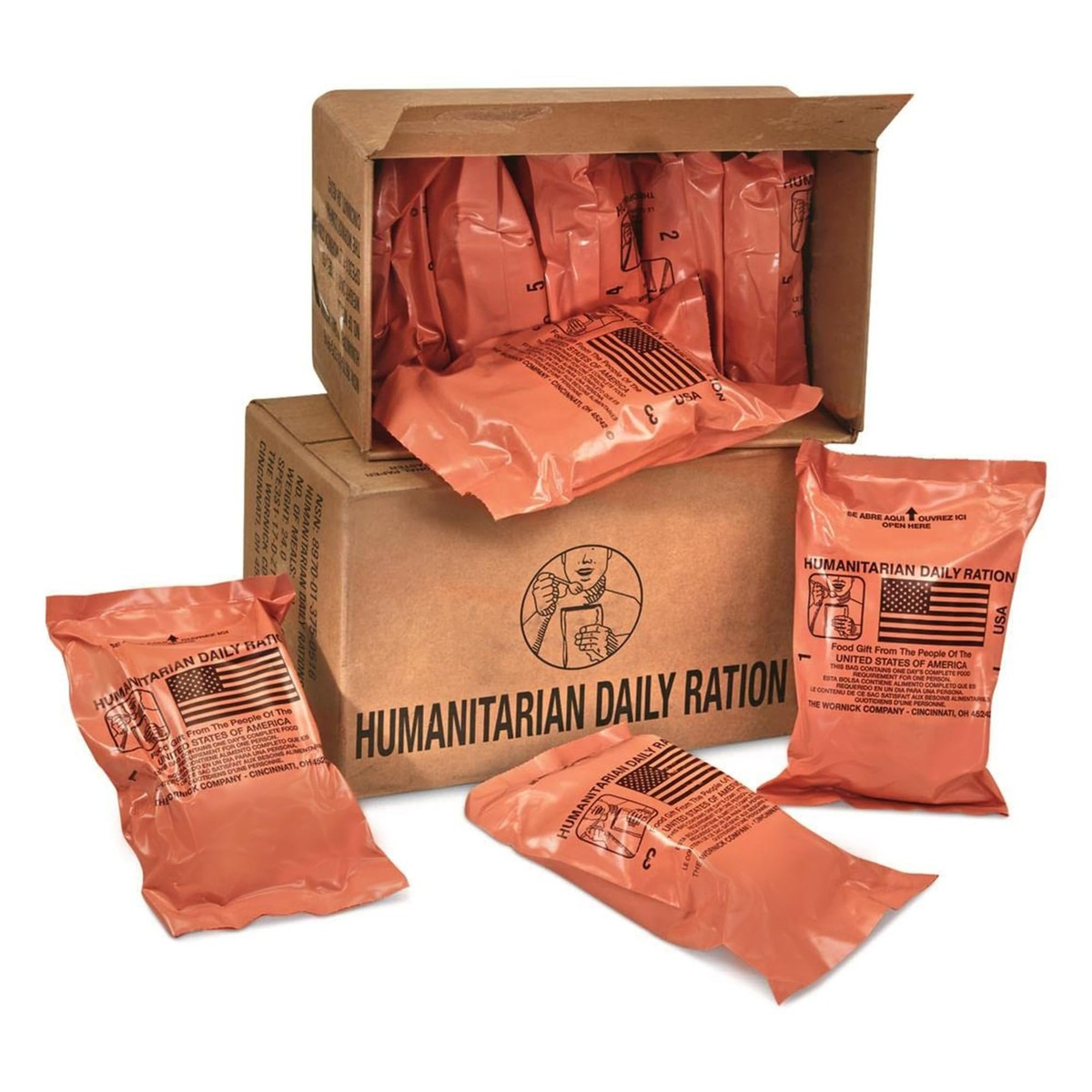
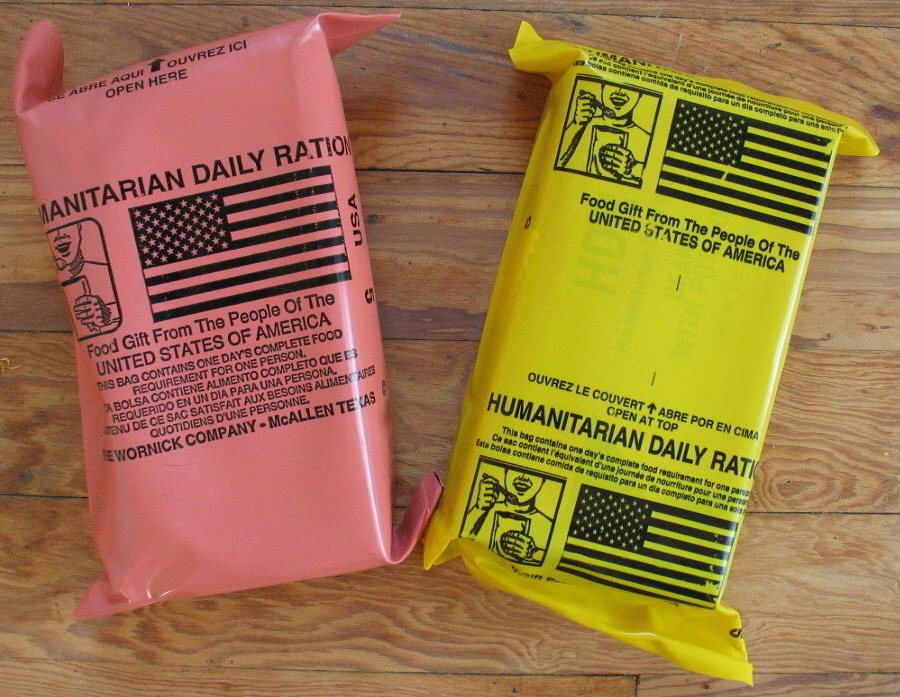
An important change involved the HDR’s distinctive packaging. Originally yellow, the packaging was changed to salmon pink to distinguish the rations from unexploded ordnance, particularly yellow cluster-munition submunitions. Although a lighter, United Nations-style colour scheme was considered, salmon pink was ultimately adopted to make the rations more readily distinguishable.
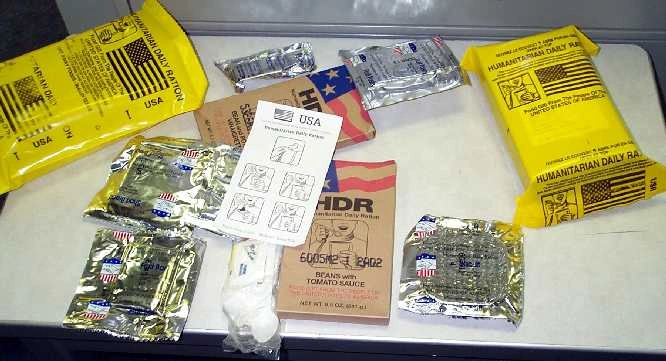
The Humanitarian Daily Ration shares several characteristics with modern military MREs, including the use of durable, multilayer plastic packaging and familiar food items such as peanut butter and crackers. However, the HDR was designed around the needs of civilian recipients rather than the operational requirements of soldiers. Its food components were selected with broad acceptability and ease of consumption in mind.
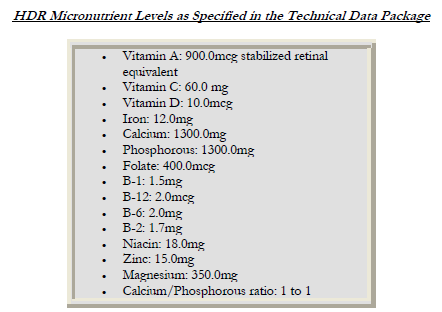
An HDR typically provides approximately 2,200 calories, compared with military MREs, which can provide substantially more energy depending on the ration and its intended use. Some HDR components have also been designed to accommodate younger recipients, including infants, although an HDR should not be considered a complete infant-feeding substitute. Unlike many military MREs, the HDR does not include a flameless ration heater. This omission reduces complexity and avoids introducing components that could pose additional safety concerns if misused however the packages can be heated.
The HDR has continued to evolve, with efforts to improve its suitability for diverse populations. Changes to ingredients and formulations have sought to broaden dietary compatibility and address common food sensitivities, helping humanitarian organizations provide emergency food assistance to as many people as possible.
The Humanitarian Daily Ration has been used worldwide in humanitarian relief operations, as well as within the United States during domestic emergencies and natural disasters. Its continued use demonstrates its success as an emergency food ration, fulfilling a role that many other specialized emergency rations have struggled to achieve. Beyond its practical importance, the HDR also represents an interesting and often overlooked aspect of post-Cold War history, highlighting the growing role of military logistics in international humanitarian assistance.
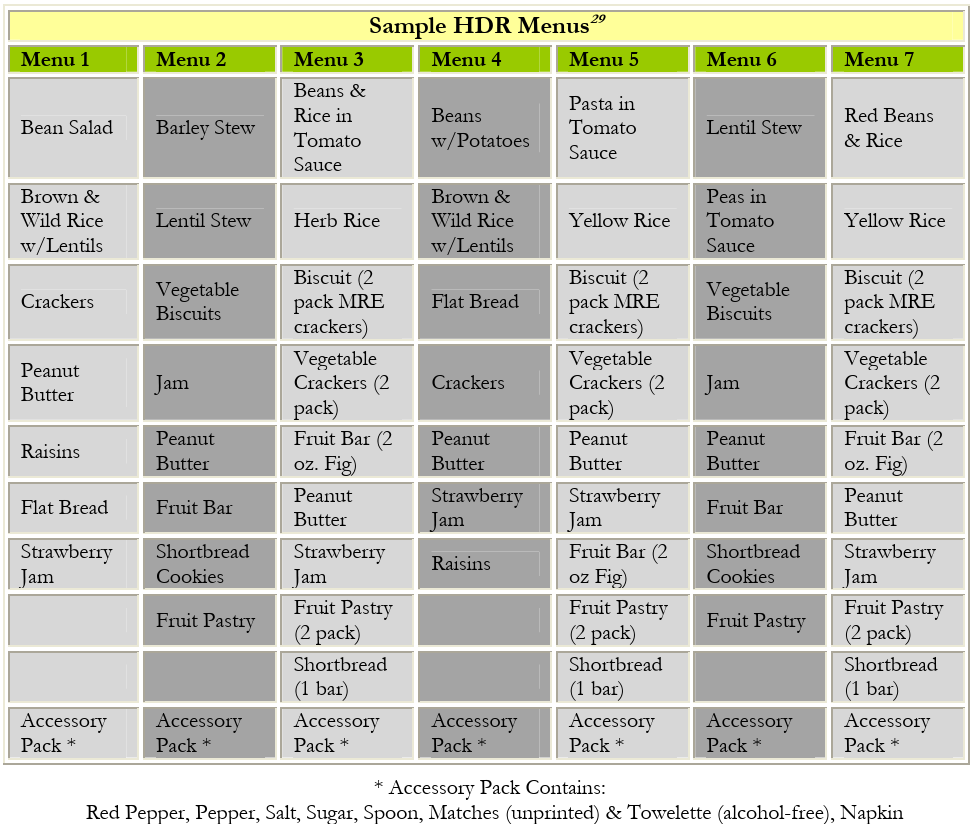
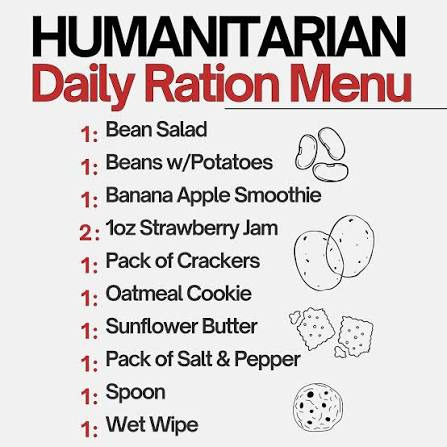
THE MENU
The 3D Decoration & Its Addition
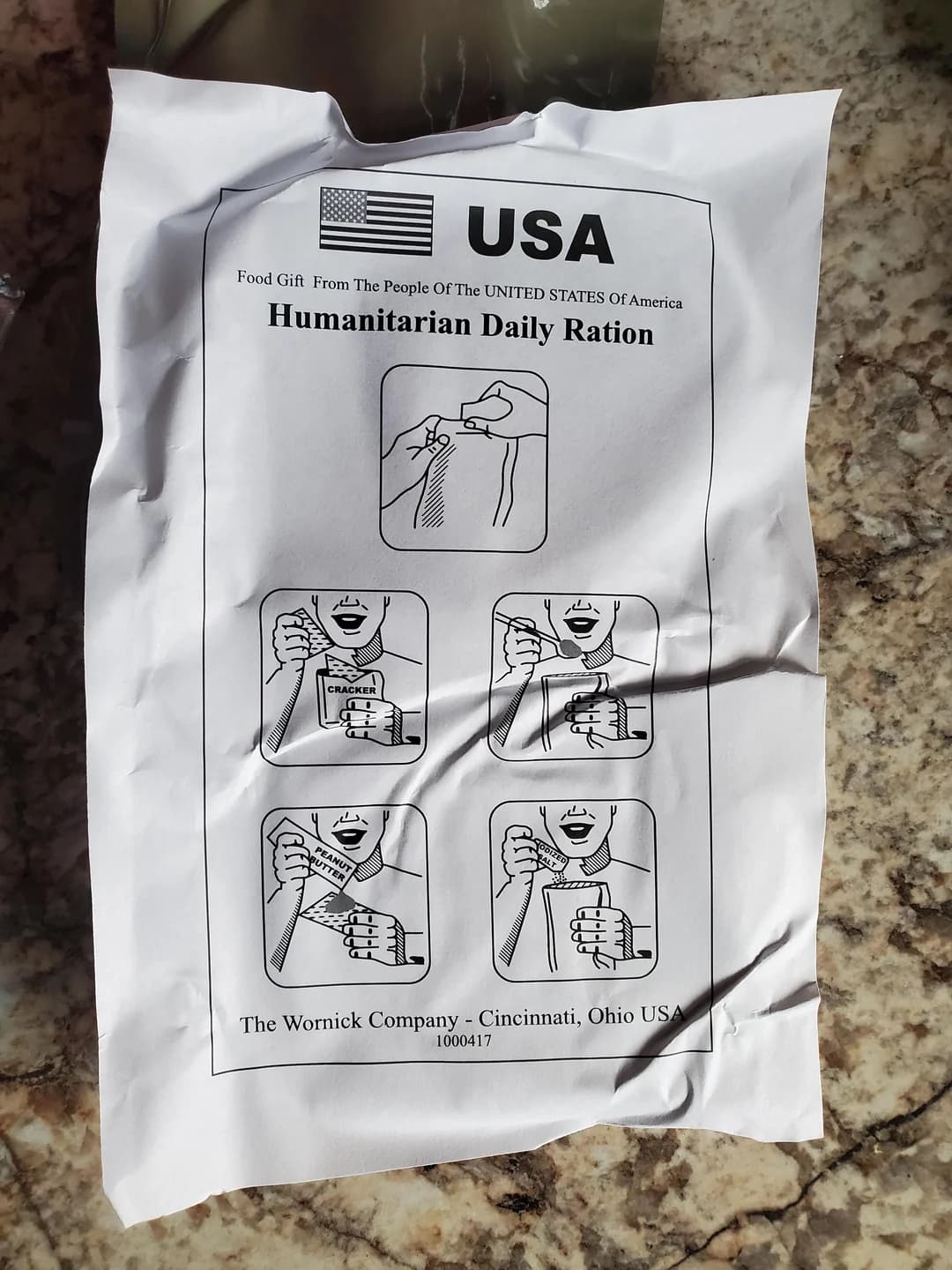
This 3D decoration could be offered as a set featuring a closed transport box, an open transport box displaying its contents, and individual yellow and salmon-pink Humanitarian Daily Ration (HDR) packages that players could scatter across their vehicles for additional customization.
Considering Gaijin’s interests and existing reward systems, this decoration set could be introduced as part of a charity event, included in a Battle Pass, or offered as a purchasable decoration pack.
Overall, the Humanitarian Daily Ration would make an excellent historical 3D decoration. Wherever the U.S. military operated, HDRs could follow by air, land, or sea, serving as a reminder of the humanitarian and logistical efforts that accompanied military operations around the world. The decoration would look excellent on the back of any modern vehicles.
Extra Images


Video
Lets Get This Out On A Tray... Nice!
- YES ✅
- NO ❌
- Charity Event
- Unlockable
- Battle Pass
- Code Event Unlock
- I Stated No ❌
References
Spoiler
https://www.mreinfo.com/other-us-rations/current-us-rations/humanitarian-daily-ration/
Humanitarian daily ration - Wikipedia
https://www.mreinfo.com/forums/viewtopic.php?t=3519
https://dl.tufts.edu/downloads/g158bt96p?filename=0p096k14h.pdf
Thank You For Your Time And For Reading This Decoration Suggestion!