History
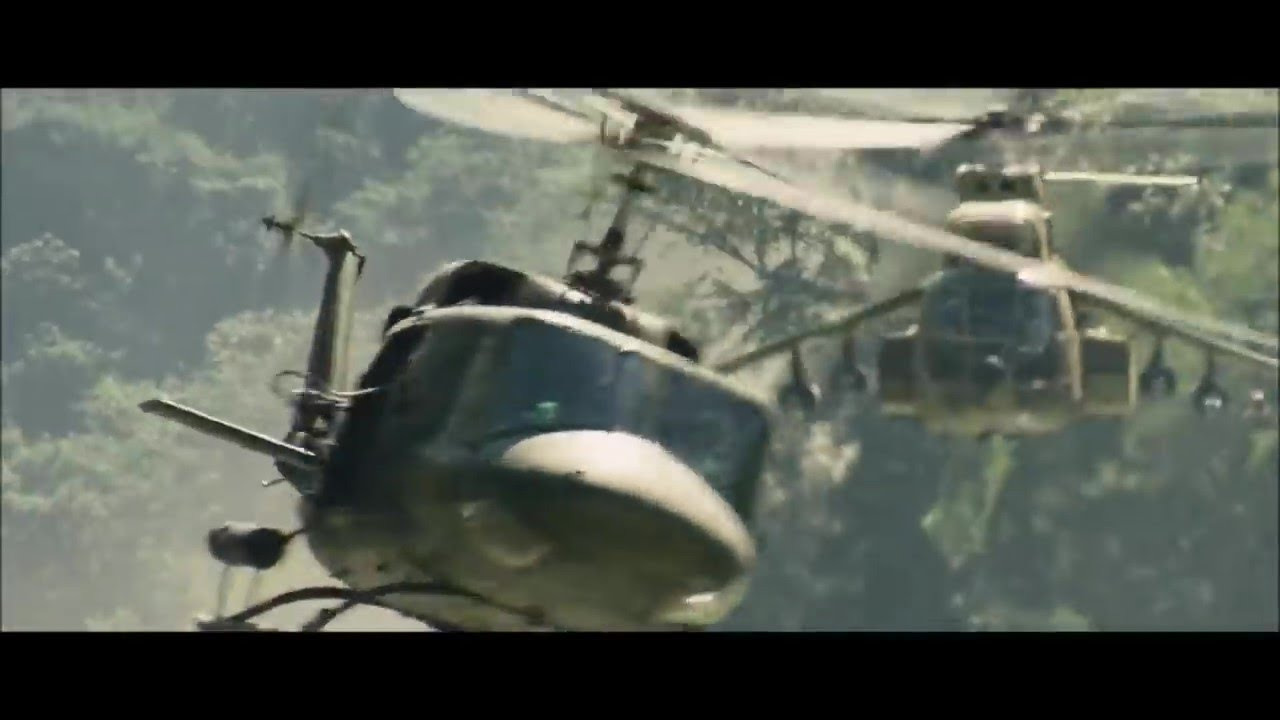
The UH-1 Huey’s story began in the mid-1950s when the U.S. Army identified a desperate need for a turbine-powered helicopter that could handle medical evacuation and general utility tasks better than the underpowered piston-engine models of the era. Bell Helicopter won the contract with their Model 204, designated the XH-40. This prototype first took flight in 1956, and used the Lycoming T53 turboshaft engine which provided a power-to-weight ratio that finally made the helicopter a viable primary tool for the battlefield.
By 1959, the first production models, designated HU-1A, began reaching the 101st Airborne Division. It was this original designation that led soldiers to refer to the aircraft as the “Huey,” a nickname so enduring that Bell eventually cast it onto the helicopter’s anti-torque pedals. While officially named the “Iroquois” in keeping with Army tradition, the world would know it only by its phonetic moniker. These early “A” models were primarily used for medevac, but they quickly proved that the age of the horse cavalry was being replaced by the age of the rotor.
As the conflict in Southeast Asia began to simmer, the Army realized the Huey needed more muscle, leading to the UH-1B. Introduced in 1961, the “B” model featured a more powerful engine and longer rotor blades to lift heavier loads in the humid, high-density altitudes of Vietnam. It was during this period that the Huey began its transformation from a simple transport into a lethal weapon. “B” models were often outfitted with external rocket pods and machine guns, serving as the first dedicated gunships to escort troop-carriers into hot landing zones.
The quest for improved performance led to the UH-1C, which entered service in 1965. While it looked similar to the “B” model, the “Charlie” was a purpose-built gunship designed to address the maneuverability issues seen in earlier armed variants. It featured the “Door-Hinge” rotor system, which used wider blades to improve agility and allow the helicopter to keep pace with the faster transport models it was assigned to protect. This was the peak of the “short-body” Hueys, optimized for agility and firepower rather than passenger capacity.
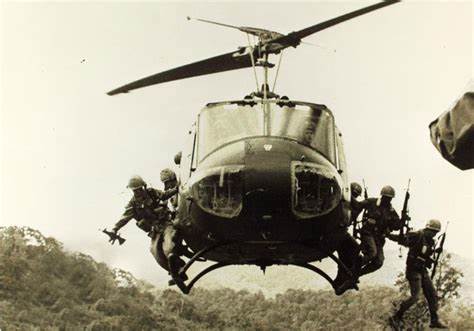
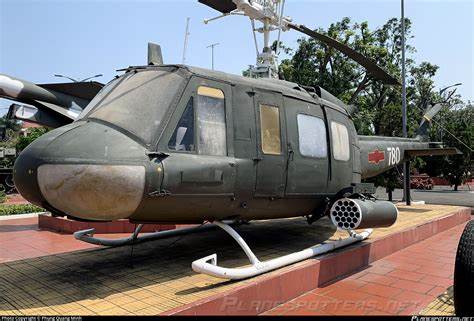
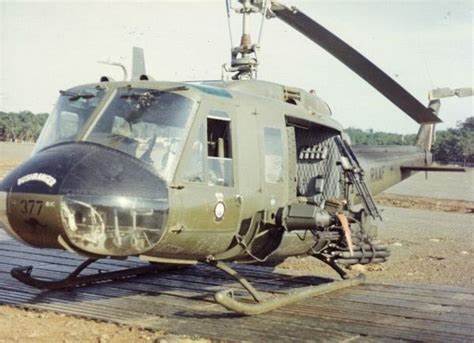
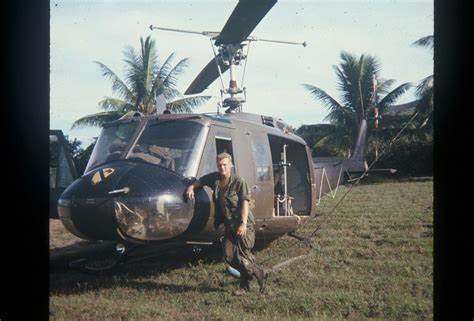
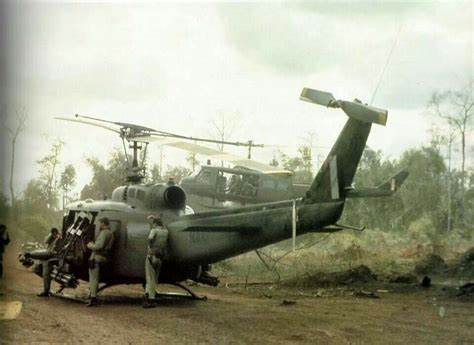
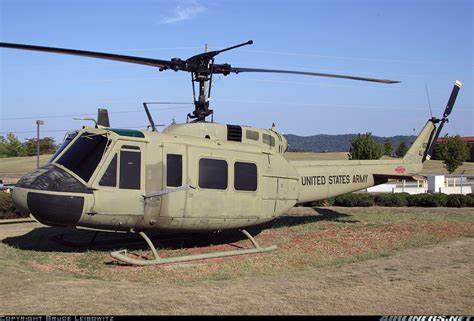
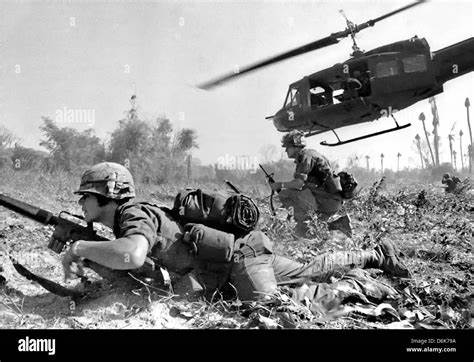
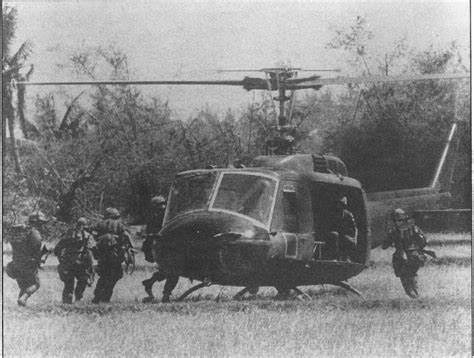
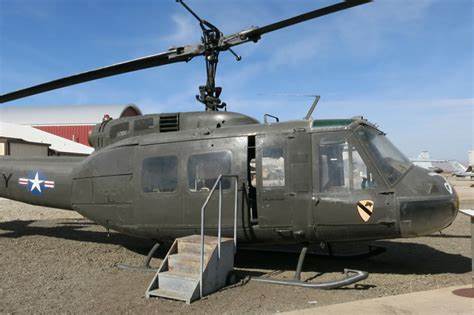
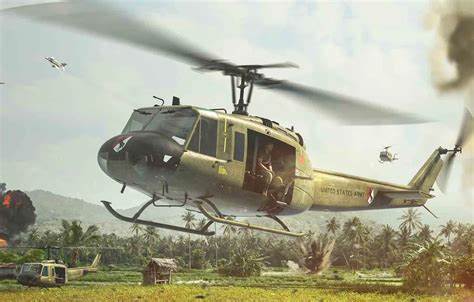
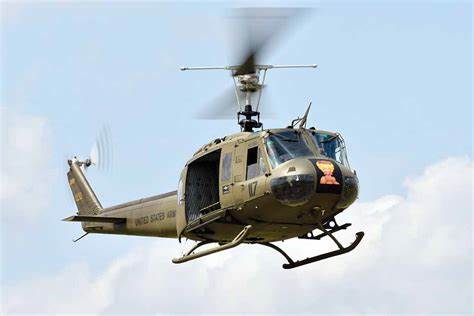
One of the most iconic Huey’s, arrived with the introduction of the UH-1D. Recognizing that the “short-body” Hueys couldn’t carry enough infantry to make air assault tactics truly efficient, Bell stretched the fuselage by 41 inches. This significantly increased cabin volume, allowing the “D” model to carry a full squad of 12 to 14 troops, plus a crew of up to four. The “D” model is easily distinguished by its larger side cargo doors and the addition of a second side window, creating the classic Huey that remains the image of the Vietnam War too many.
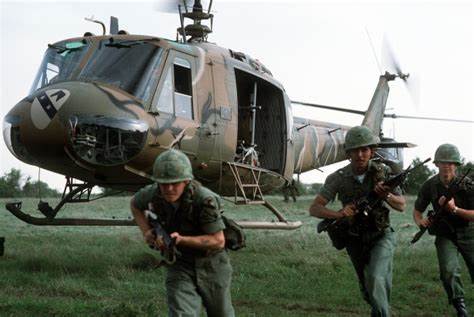
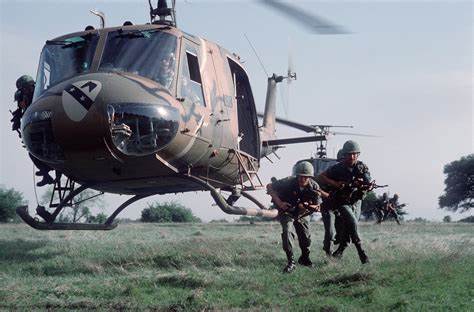
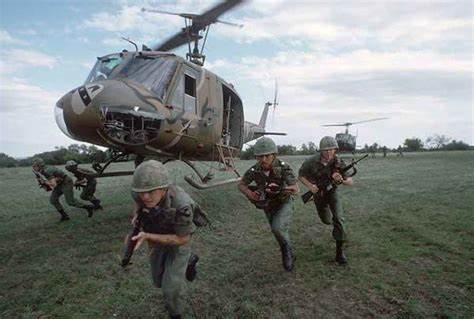
By the time the UH-1D became the standard troop transport for the 1st Cavalry Division, the concept of “Air Mobility” had been fully accomplished. The “D” model provided the lift capacity necessary to move entire battalions across jungle terrain in minutes rather than days. This model laid the groundwork for the later UH-1H, which would become the most produced version of the aircraft. Through these iterations, the Huey transitioned from a experimental medical taxi into the backbone of 20th-century tactical aviation, forever changing how wars were planned and fought.
The UH-1H is essentially the UH-1D. While they share the same stretched fuselage and iconic long-body , the primary distinction lies on the inside of the cowling. The H model replaced the D’s 1,100-horsepower Lycoming T53-L-11 engine with the more robust T53-L-13, pushing the engines power output to 1,400 horsepower. This power boost was important for operations in the hot environments of Vietnam, allowing the aircraft to maintain lift performance while carrying a full squad of soldiers. Beyond the engine and the required transmission upgrades, the two models are so visually similar that the vast majority of “D” models were eventually the two airframes identical. In addition they were retrofitted with the “H” engine, effectively making the UH-1H the definitive and most-produced version of the Iroquois family. All UH-1D’s that were not lost were upgraded to H standard; hence, the UH-1D’s operator’s manual was replaced by the H’s, while retaining the same TM number. This UH-1D upgraded to H standard is the one that I am suggesting to you today.
Stats
Crew: 2-4
Top speed: 138mph
Service ceiling: 14,000 ft
Maximum takeoff weight: 9500lbs
Fuel: 2 hours max
Engine: Lycoming T58-L-13 1400 SHP
Length: 57ft (overall) 41ft 5in (fuselage)
Width: 8ft 6.6in (at skids)
Height: 13ft 7.4in (overall) 6ft 8.13in (fuselage)
Main rotor diameter: 48ft
Rate of climb: 2,660 FPM
First flight: 1961
Delivered: 1963 to the 11th air assault division in Bennington, GA
Number produced: 2008
Retired: December 15, 2016 (modernized UH-1D upgraded to H standard)
Available weaponry
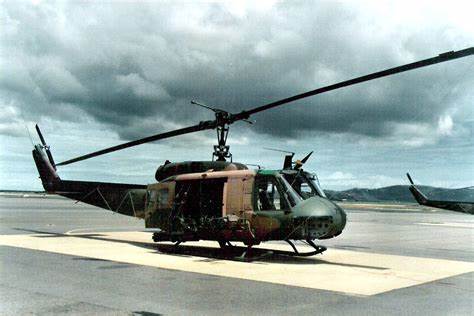
While an armed UH-1D was uncommon to see in US service, it wasn’t unheard of, as the UH-1D used the same mounting hardware as the UH-1B and the UH-1C, and actually, in some cases, utilized a second pair of mounting points to equip more weapons. (I have only seen the Australians do this, so it will not be included in this suggestion unless I find evidence of the United States doing it as well)
INNER PYLON:
XM-21 .50 gunpod
7x 2.75in FFAR rocket pod
19x LAU-3A 2.75in FFAR rockets pod
NOSE:
M5 nose grenade launcher
TAT-101 nose-mounted turret (2x 7.62mm M60D)
OUTER PYLON:
M6 subsystem (M60D)
XM16 subsystem (M60D)
XM20 subsystem
19x LAU-3A 2.75in FFAR rockets pod
OTHER (standalone):
AGM22 ATGM (SS-11)
20mm M61 Vulcan
48x 2.75in FFAR rockets XM3 subsystem
INTERNAL:
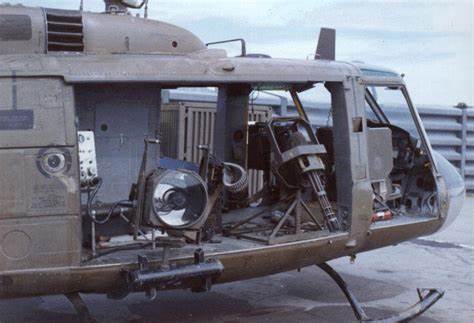
2x door gunners (M60D/ M61)
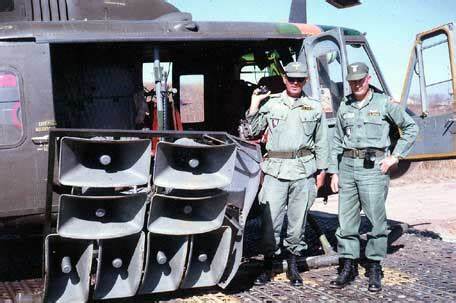
1x speaker (Operation Wandering Soul)

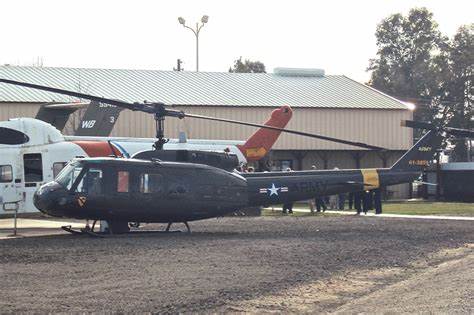
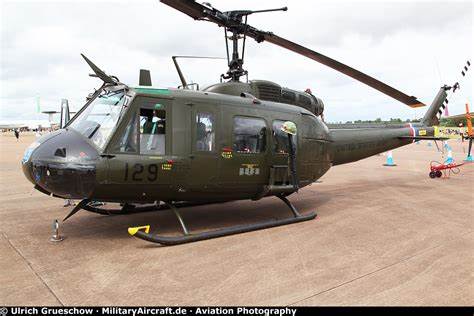
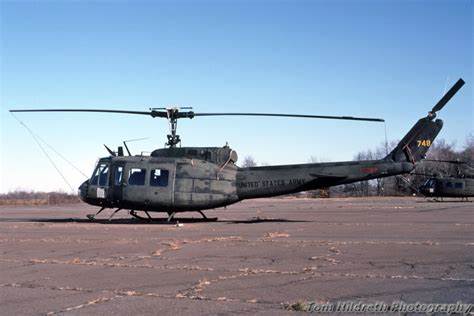
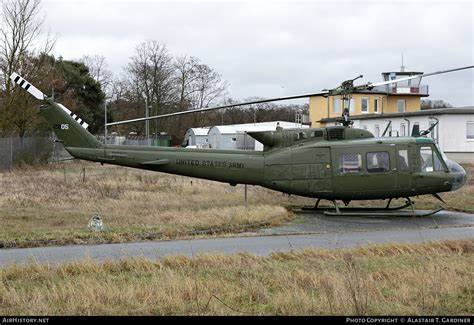
More images
Sources
The operator’s manual for the UH-1D is unfortunately not publicly available; however, the H does have one available.
https://dn710207.ca.archive.org/0/items/bell-uh-1-d-helicopter-1967/Bell_UH1D_Helicopter_1967.pdf
https://apps.dtic.mil/sti/tr/pdf/AD0488791.pdf
https://milviz.com/Online_products/Manuals/UH-1H_Flight_Manual.pdf
Arnold Defense™: LAU-131/A 7-Round Launcher
UH-1 helicopters retire from service at National Training Center | Article | The United States Army
Operation Wandering Soul - Wikipedia
- Yes
- No
WIP suggestion let me know about any grammar errors in case I miss them