- Yes
- No
- Event
- Tec Tree
- Battle pass
- Premium
- No
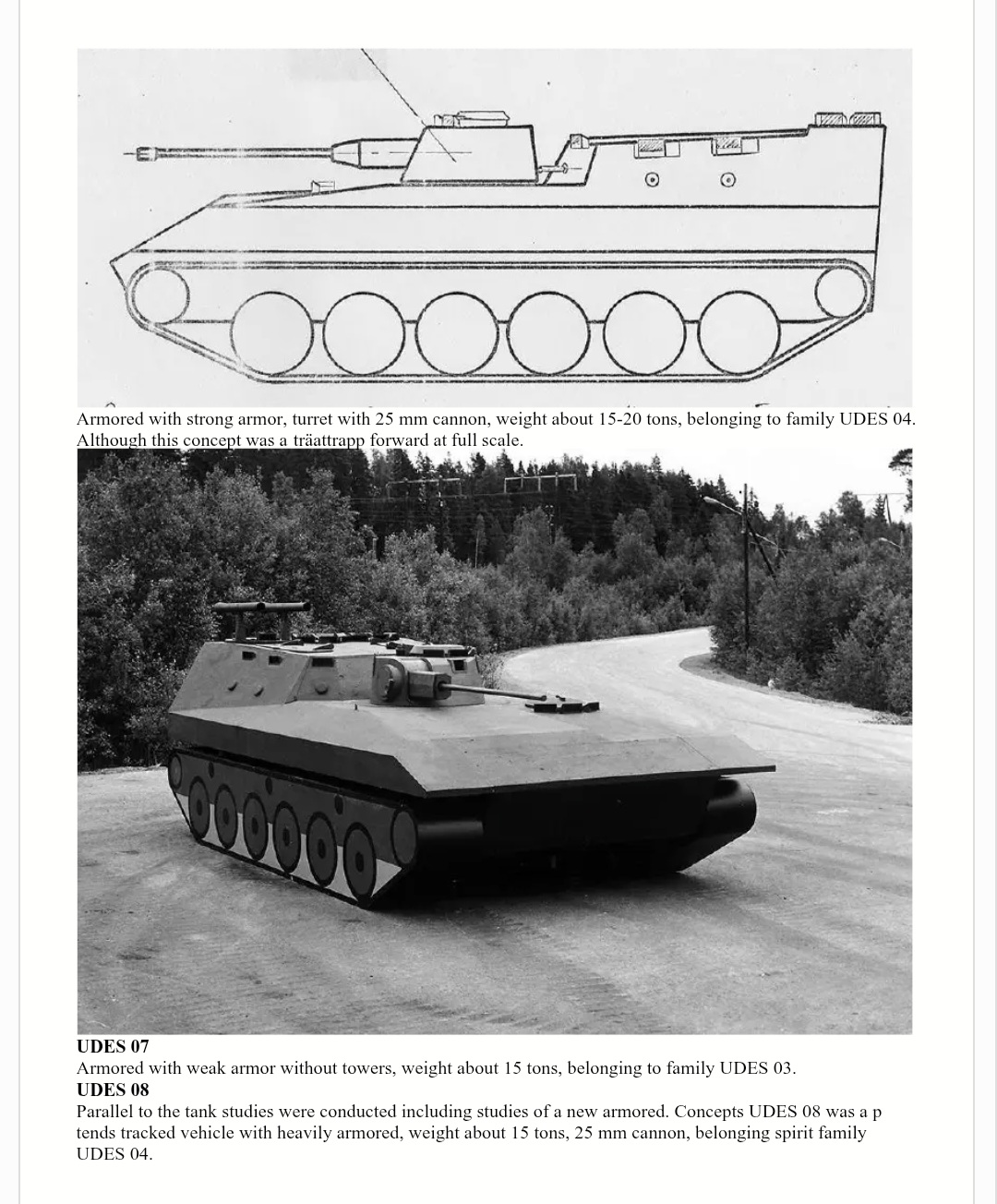
In the early 70s, the Swedish army was granted 1,8 million kronor (8 million USD) for the development of a light AFV family during the 1971-1975 period. As part of this project, the army set up a number of research groups. The most important of these were UDES, which was based at the Defense Materiel Administration (FMV), and headed by Sven Berge (the engineer behind the S-tank concept).The role of UDES was to gather, process and coordinate information regarding armored fighting vehicles. Which would serve as a technological-economical overview in that field. In practice the UDES group would develop and catalogue different conceptual alternatives for new Tanks, TD’s and APC’s. The funding behind the project was only half of what the army deemed necessary. Because of this FMV decided to outsource parts of the development to Bofors and Hägglunds, which were experienced with AFV development.
History and Development:
Spoiler
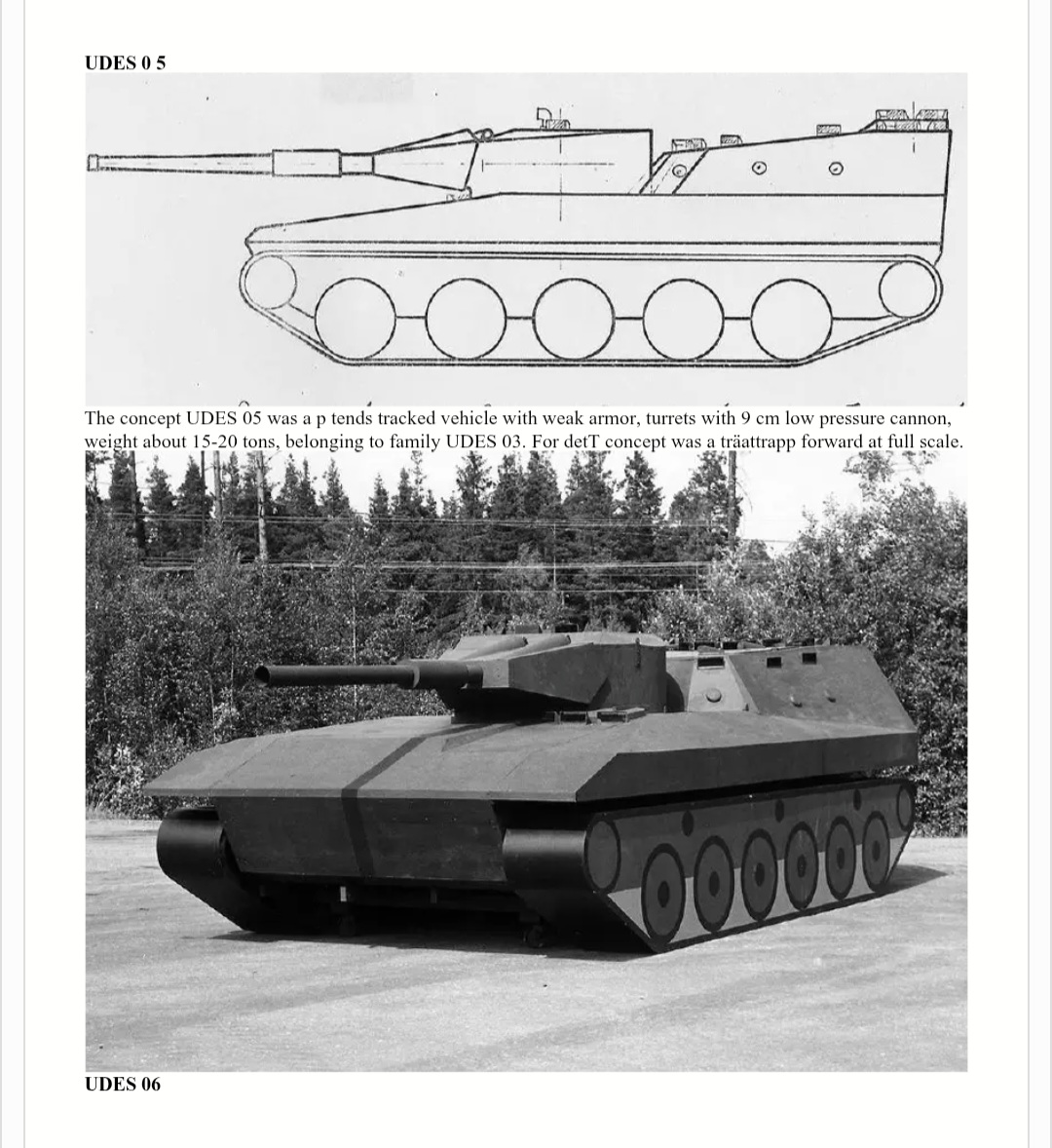
Initial studies focused on the development of a cheap tank in the 20 ton range that would be able to use interchangeable parts in the planned light vehicle family. To keep costs down, a large extent of the components used had to be existing and commercially available. A power to weight ratio of 30hp/t and a crew of two (later three) men was also a major requirement. Later on, these requirements would lead to three different lines of development including Turretless, Conventional and Remote turret vehicles.
Objekt 2013 A
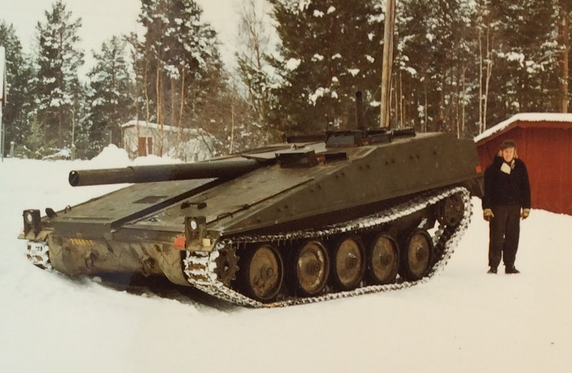
The first of these to be examined was a light turretless vehicle that had already been in development since 1970 under the name Objekt 2013 A. The vehicle was essentially a miniaturized Strv 103 but with one major difference, a gun capable of elevating and depressing independently of the hull. Its main advantage over a fixed gun design was easier movement in terrain and that it was possible to stabilize the main gun. The Vehicle was re-designated UDES 03 as per the naming conventions of the UDES research group.
Pbv 302 based test rig :
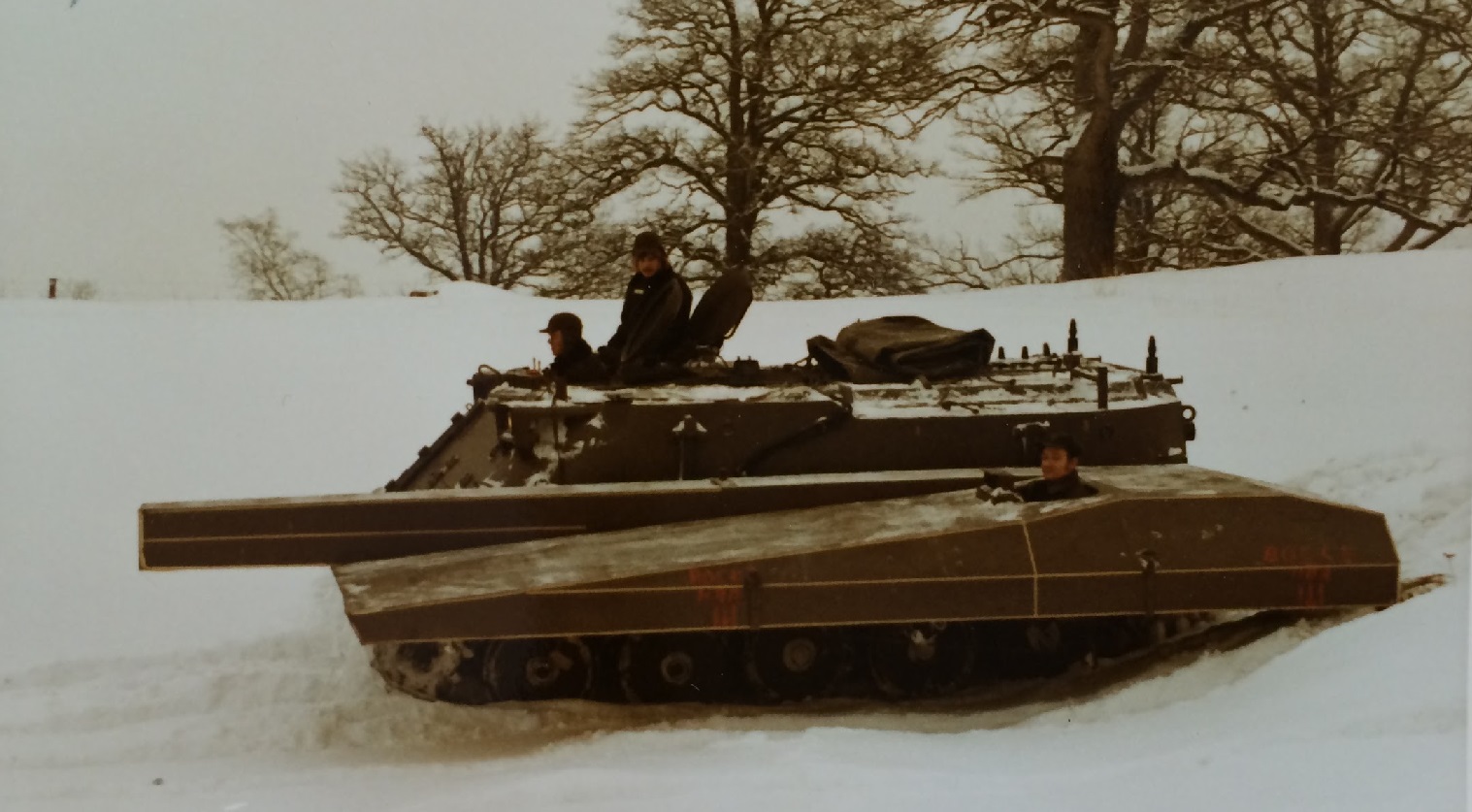
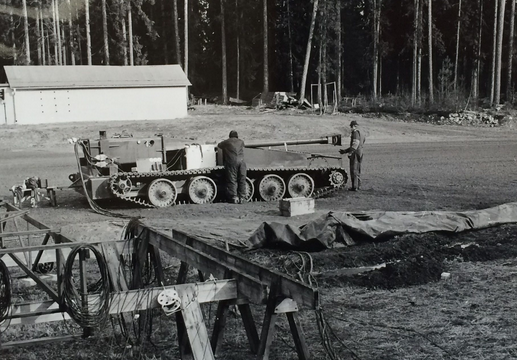
To test the concept, a wood mock up was fitted to the side of a Pbv 302 APC in early 1971. During the tests it was uncovered that the gun would block the field of view when elevated along with other potential problems. Still the results proved that the concept was viable and a order was made for two test rigs. Bofors would handle the construction and testing of a “shooting rig” for testing the main armament, and Hägglunds would do the same for a mobility test rig.
Shooting rig :
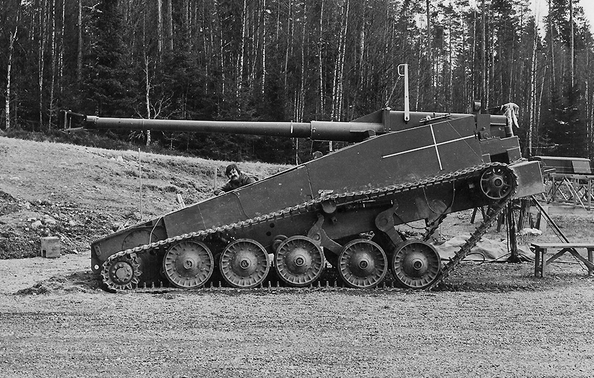
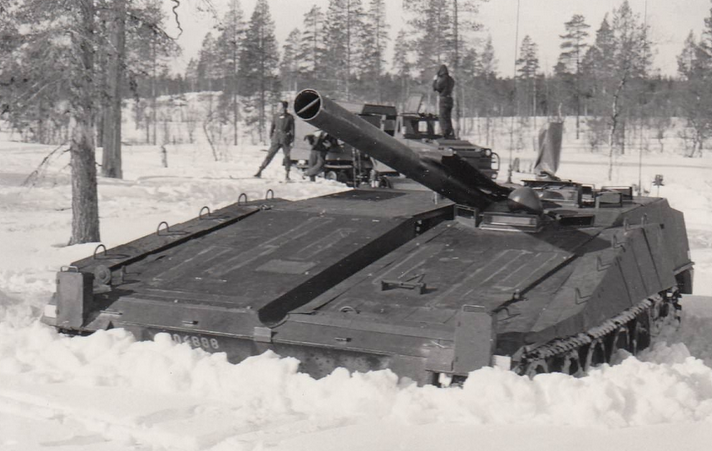
In 1973, both test rigs were finished and readied for testing. These prototypes made use of parts from the Pbv 302, such as the tracks and roadwheels although they were later refitted with more durable roadwheels. The shooting rig was externally powered by a electric powerplant and was armed with a cut down 105mm gun for testing. The tests found several faults with the design. The vehicle would regularly throw its tracks when aiming and tracking a target was almost impossible unless on hard terrain due to faults with the suspension.
Mobility rig :
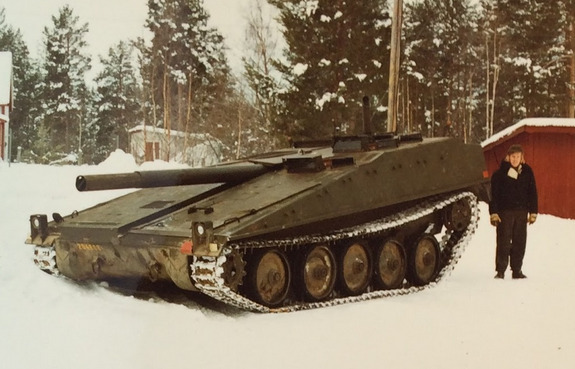
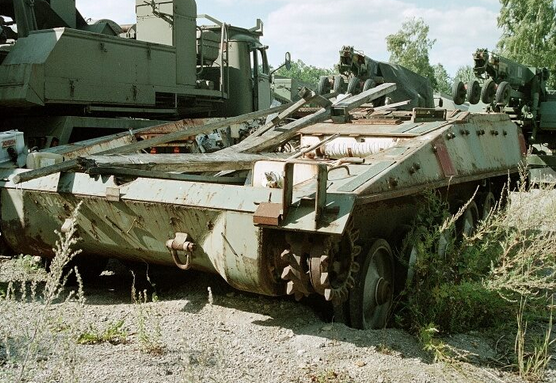
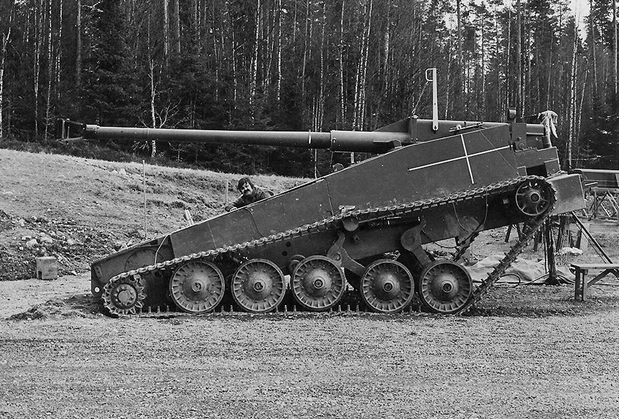
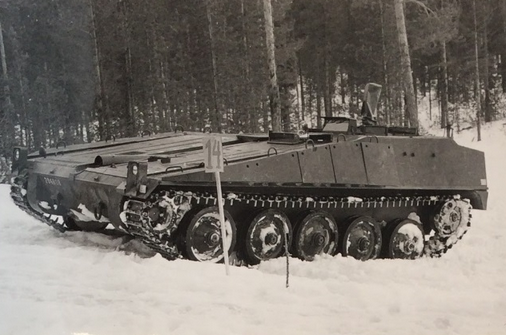
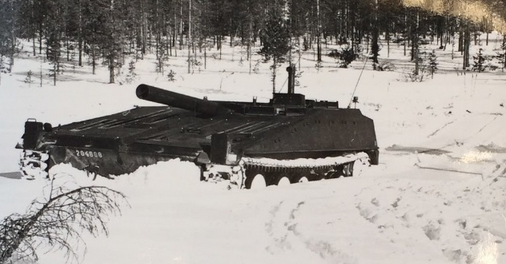
Comparatively the mobility rig was a more complete vehicle. Unlike the other test rig it was powered by a internal diesel engine. One of its stranger design elements was the exhaust which vented underneath the vehicle which was done to reduce the infrared signature. This 12 ton vehicle was used to test the terrain passability under different conditions.
Bofors proposals :
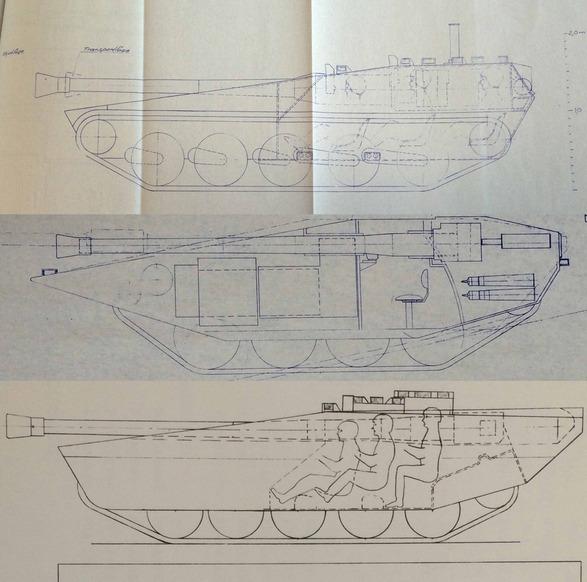
Based on the requirements set by UDES and data gained from the trials Bofors and Hägglunds, a number of proposals for both alternative developments and improvements to the vehicles were submitted.
Hägglunds proposals :
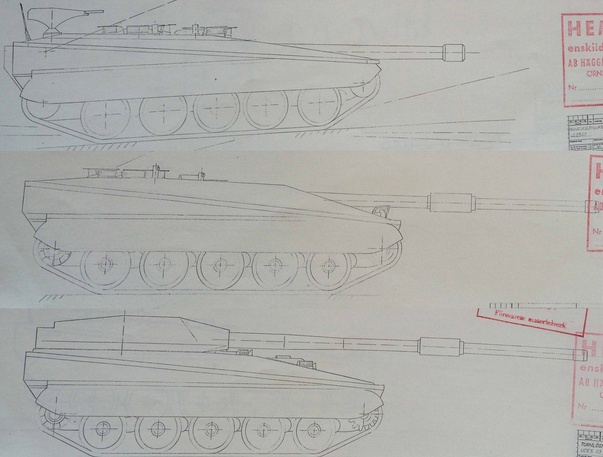
In may 1973, during one of the UDES group meetings it was suggested that a turreted alternative to the UDES 03 should be considered. The turreted design would have to be in the same price and weight range as the UDES 03 and use the same main armament. This turreted light tank would be called UDES 14. This would a shift focus away from the UDES 03 and its development was largely discontinued after 1973 in favor of turreted and later remote turret alternatives.
Legacy
Although the development of the UDES 03 was discontinued the experience gained from its test rigs would be used in the development of the CV90 armored fighting vehicle and the Strv 2000 project. The fate of the shooting rig is unknown, however the mobility test rig was last seen in the 1990s rotting away at a military scrapyard.
More Info about the gun / armor / stats:
Spoiler
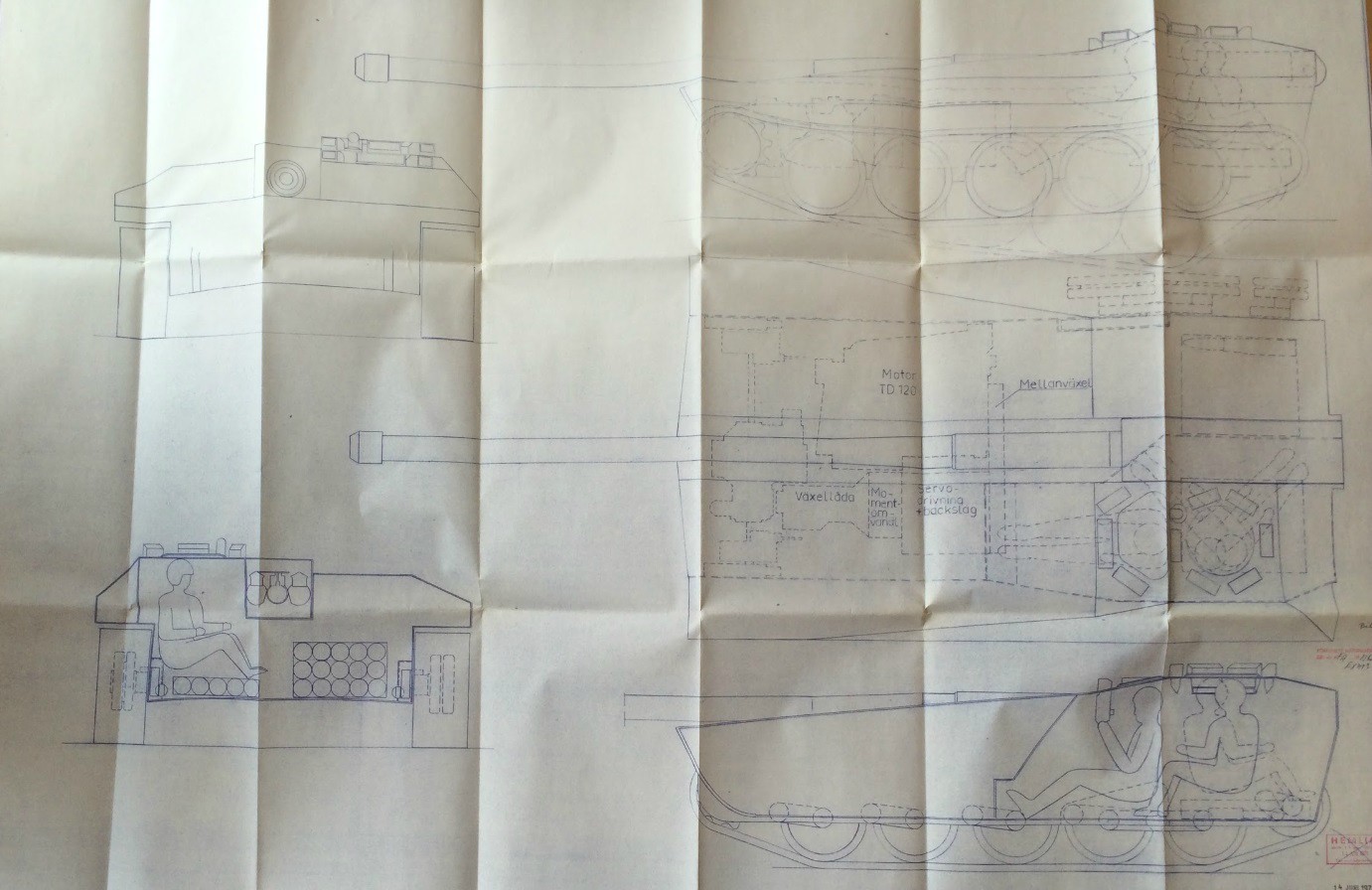
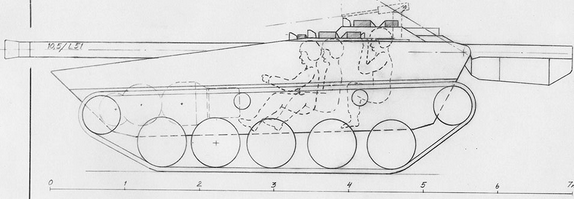
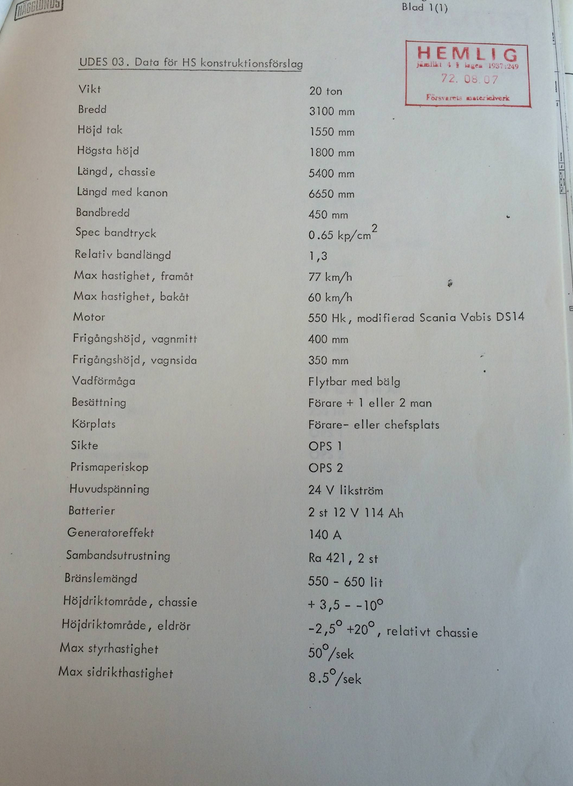
The UDES 03 was an attempt by FMV (Swedish Defense Materiel Administration) to create a cheap and light weight MBT to replace the Centurions then in Swedish service. Like the Strv 103 the UDES 03 would be a low profile turetless MBT with adjustable hydraulic suspension, which was used to elevate and aim the main gun. However the design was to incorporate some lessons from the Strv 103, for one the gun was not fixed to the chassis, allowing it to elevate to clear obstacles and also allowing for vertical stabilization. This also allowed the tank to raise its rear up to fire over obstacles which would otherwise be too tall to fire over. The tank was also substantially smaller with a height of just over 1,6 meters and weighing just 20 tons.
UDES 03 shooting rig in its elevated state
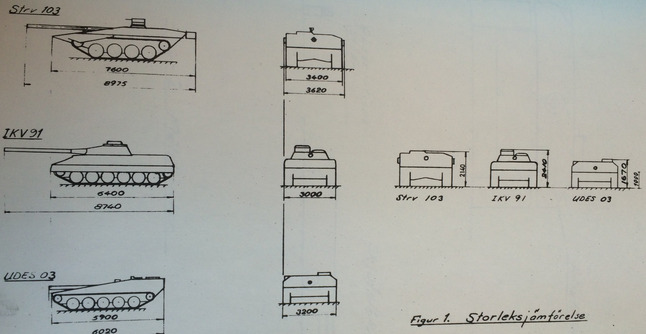
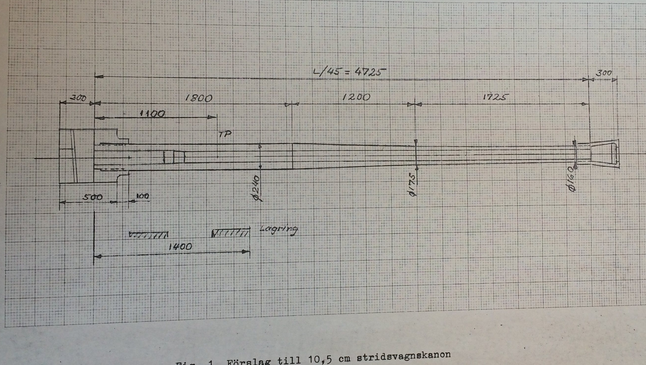
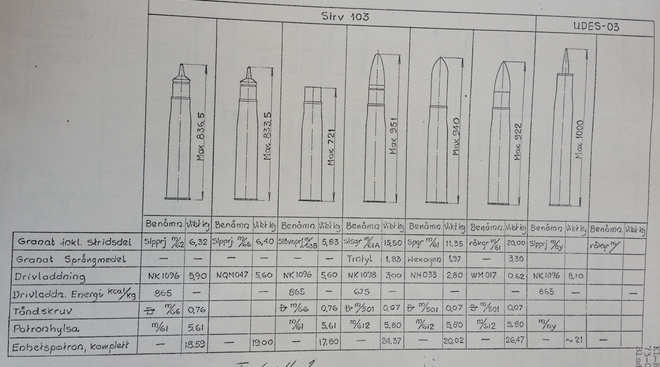
UDES 03 size comparison with Ikv 91 and Strv 103The UDES 03 was armed with a L7 gun shortened to a L/45 caliber length with a modified breech to take an increased powder charge. Despite its substantially shorter length It was estimated that this gun would be able to outperform the 105 mm L/62 gun of the Strv 103 at all ranges. In addition to existing L7 rounds a new APDS-FS and HE round would have been used. The secondary would have consisted of a stabilized 7.62 mm MG mounted on the commanders cupola, and in early versions at least by a 20 mm gun mounted in the hull.
Drawing of 105 mm L/45 main gun
UDES 03 round compared to Standard L7 rounds
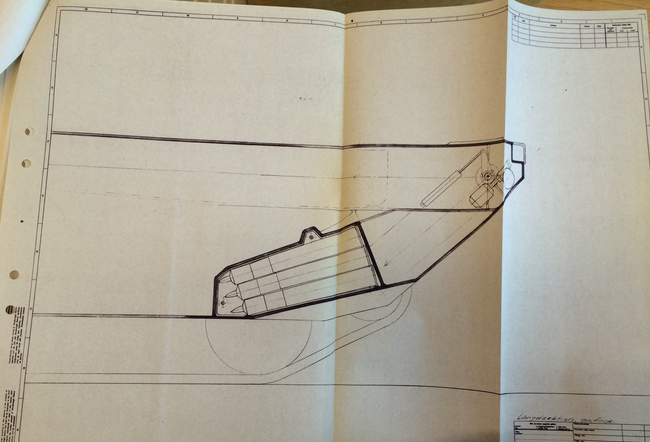
Like the Strv 103 the ammunition would have been stored in a single magazine located in the rear of the tank, however on the UDES 03 this magazine would have been equipped with blow off panels allowing for greater survivability than the strv 103 magazine.
Bofors proposal for UDES 03 improved magazine
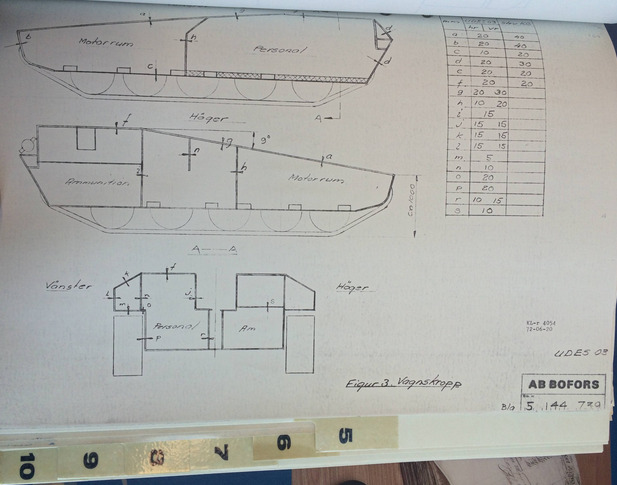
Most of the tanks survivability would have come from its low profile and high mobility. In order to keep the weight down to the 20 tons specified by FMV the actual armor protection was very thin, reaching a maximum thickness of only 20mm for areas other than the crew compartment, which still only had 10 mm more protection. However with the increased sloping of the armor the effectiveness was still comparable to that of the Strv 103. On the sides the tank retained the spaced side armor of the Strv 103 but with a reduced thickness and increased sloping.
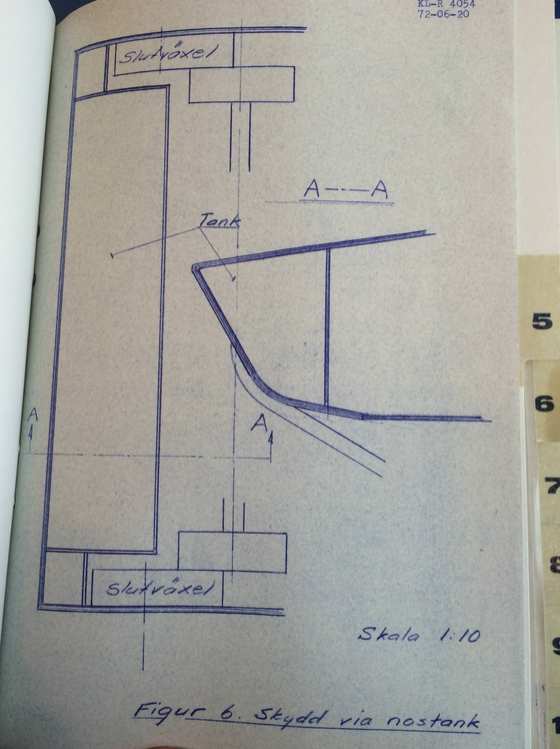
To reach as high a level of protection as possible the UDES 03 also made use of a armored fuel tank and had an increased thickness of the internal walls behind the engine compartment.
UDES 03 armor profile
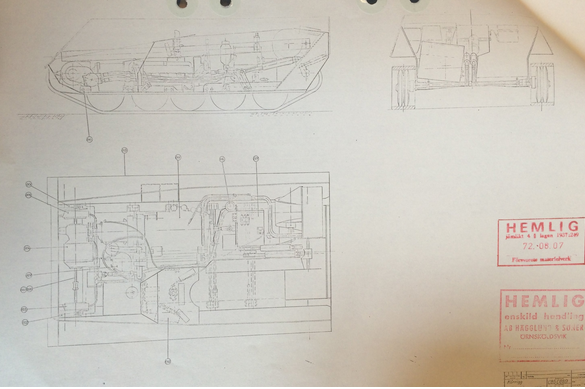
The armored fuel tankWhile the mobility test rig was powered by a modified 310 hp engine taken from the Pbv 302 apc, and the shooting rig had a electric engine the proper UDES 03 would have used the new 550 hp Scania DS14 Diesel engine (which would go on to be used on the CV90 AFV). However there were also proposals to use a gas turbine engine setup derived from the Strv 103, a German MTU engine from the leopard 1 or even a 4-R6 wankel type engine from Rolls-Royce. Depending on the engine and transmission used the power to weight ratio varied from 25 to 30 hp/ton and the top speed by 70 to 80 kph forward and 50-70 kph in reverse.
IRL images:
Spoiler
Specifications :
Spoiler
Soruces:
Spoiler
- Swedish war archives Stockholm
- Wiki Stridsvagn 103 - Wikipedia
- tanksencyclopedia
- Swedish acrhives press
Credit for @sp15
Thanks for Reading !