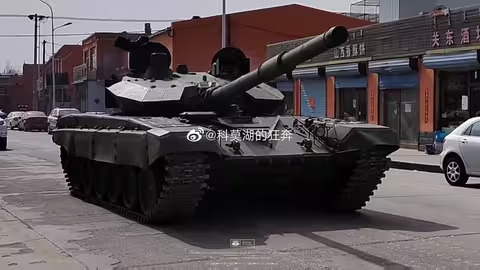
[Would you like to see the Type 64 (六四式) in the Chinese ground forces tree?]
- Yes, as a researchable vehicle
- Yes, as a squadron, event or premium vehicle
- No
0
voters
Type 64 (Object 172M-E/Ural-1) - The T-72 studied by China
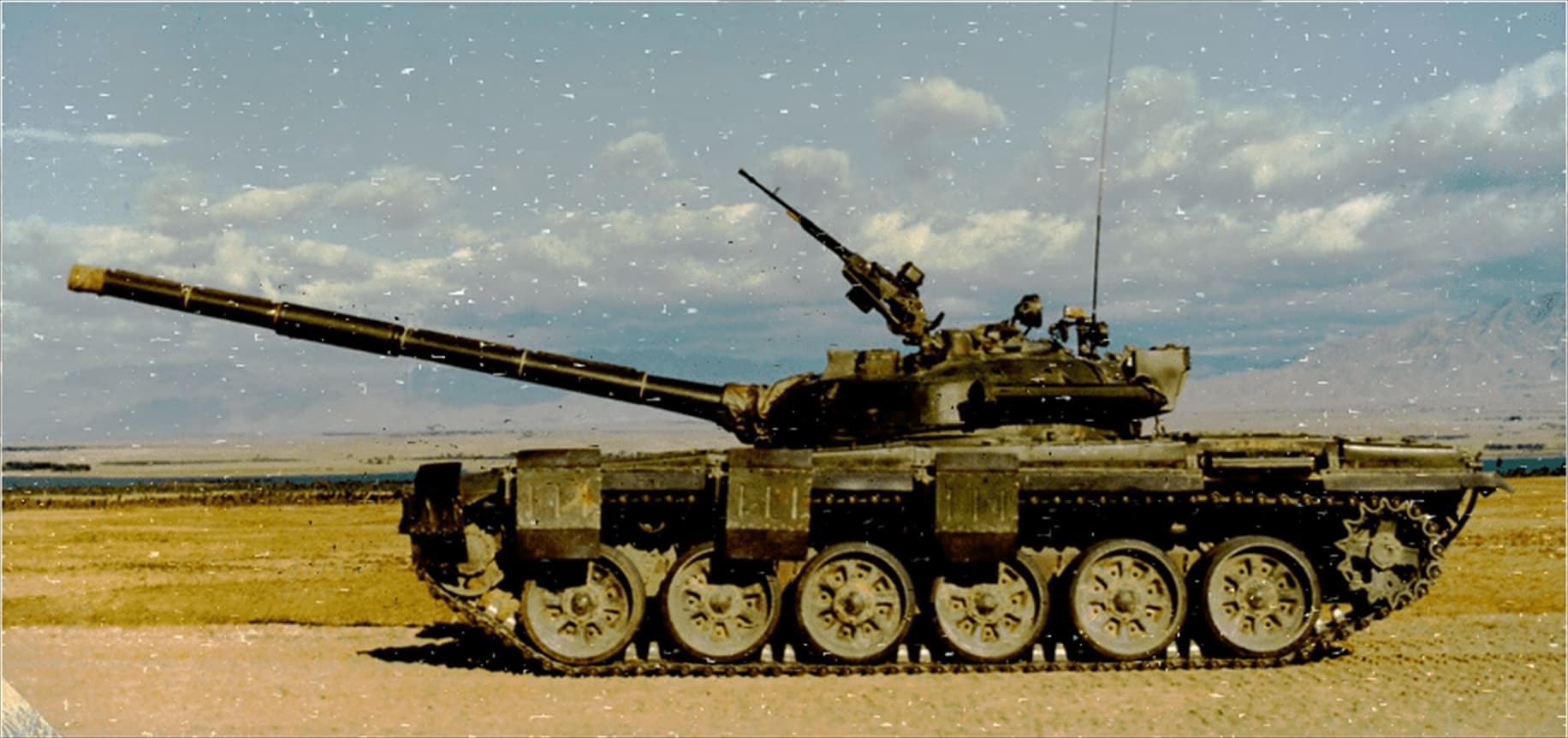
Hello everyone. Today I would like to suggest the Type 64 (Object 172M-E/Ural-1), the Soviet T-72 that was imported, reassembled, tested and studied in China. I hope you will find this vehicle and its unusual history interesting.
First of all:
- Please feel free to share more information or correct me if something is wrong
- Follow the forum rules while discussing
- Please, keep distance from Political discussions.
- Since it’s a rarely known vehicle and information on it is limited and often unclear, the accuracy of the information provided cannot be guaranteed. Also, this topic doesn’t represent any official point of view.
Basic Background
Spoiler
The Type 64 was an imported T-72 used as a technical study vehicle in China. In a published Chinese Academy of Engineering autobiography, tank engineer Wang Zherong wrote that from the mid-1970s to the mid-1980s he worked on the reassembly and testing of the imported “Type 64 tank”, analysed its design philosophy and technical characteristics, and supervised the compilation and publication of the three-volume Type 64 Tank Technical Description and User Guide. An official biography published by North University of China independently states that he led the Type 64 reassembly, testing and documentation work.
The surviving public record therefore establishes that an actual vehicle was handled and studied. It was not a blueprint project, a speculative Chinese T-72 copy or a vehicle that existed only in drawings. Chinese archival reporting further describes a work sequence involving reassembly testing, preparation for surveying, disassembly and measurement, and final reassembly.
Public secondary histories commonly connect the Chinese vehicle with Romania. Romanian military archives provide important context: a 1977 Romanian Ministry of National Defence report requested the import of 31 T-72 tanks, and the official Romanian military-archive journal Document records delivery of those 31 vehicles in 1978-1979.
The Type 64 Overall
Spoiler
The Type 64 was a Soviet-built T-72 studied under a Chinese internal designation. Its value is historical rather than industrial: it was not a Chinese production tank, but it became part of the technical research base from which Chinese engineers studied a compact three-man main battle tank, a 125 mm smoothbore weapon, an automatic loader and other modern Soviet design solutions.
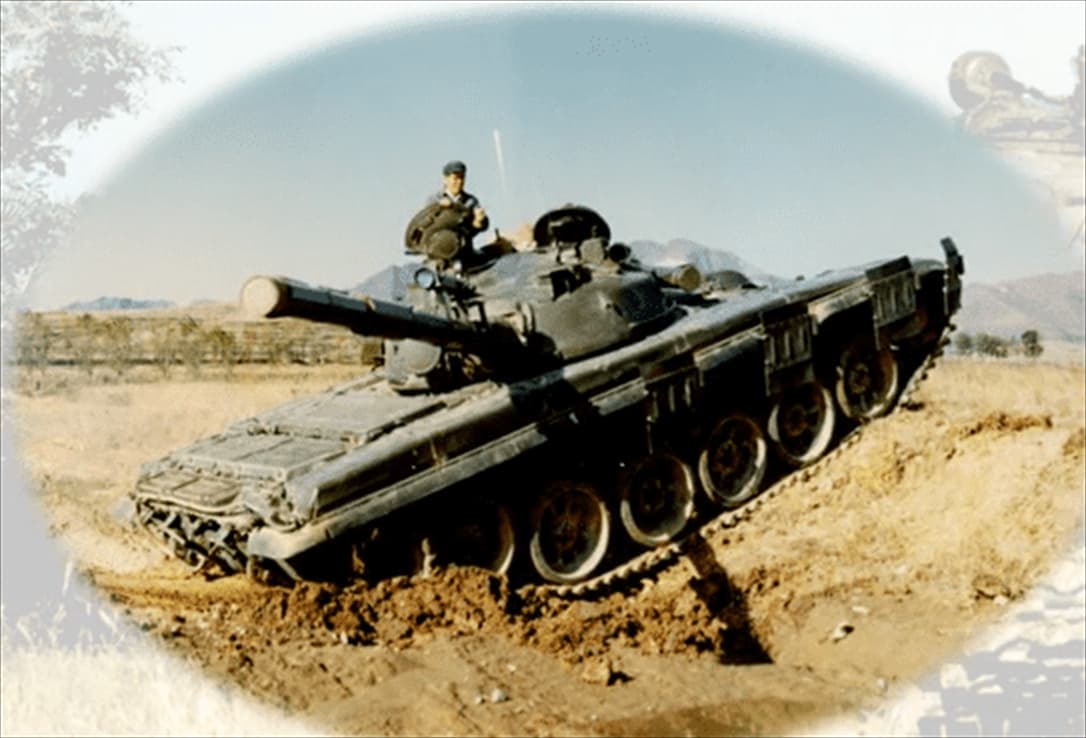
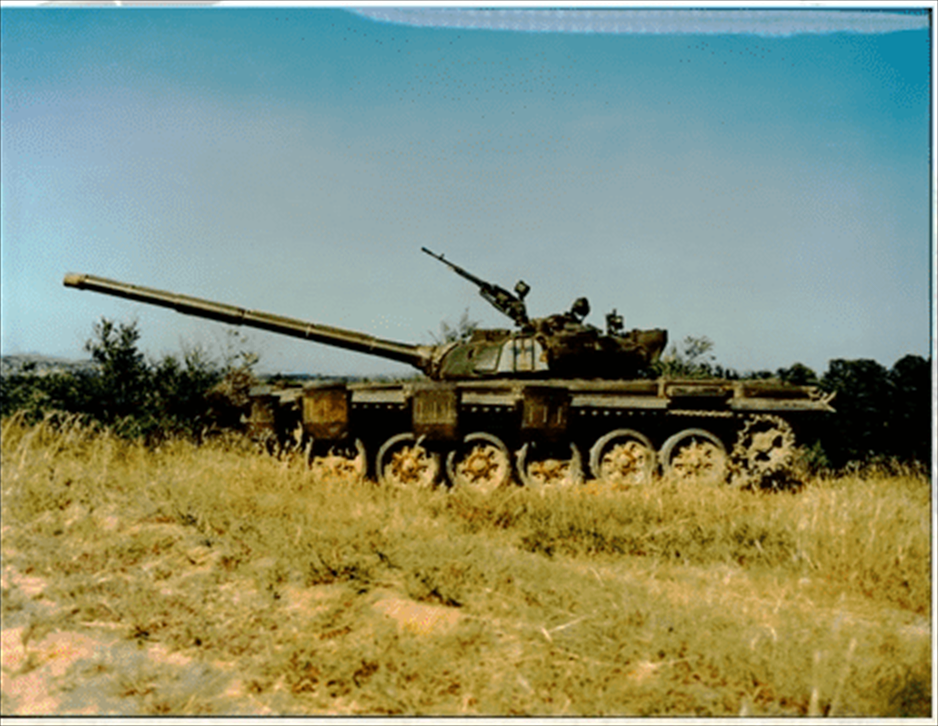
Period photographs show the vehicle with Soviet “gill” anti-HEAT side skirts and a thermal sleeve on the main gun. The gunner’s area appears to have TPD-2-49 coincidence rangefinder. Such a combination is technically plausible on an upgraded early T-72 turret, but the sight identification remains a photographic assessment until a Type 64-specific technical manual becomes public.
Together with the apparent monolithic cast-steel turret, TPD-2-49 coincidence rangefinder and gill-type side skirts, these features are considerably more consistent with an early export T-72 configuration such as Object 172M-E. The thermal sleeve, which is directly visible on the Type 64, should be retained as a vehicle-specific photographed feature.
In War Thunder, the vehicle could potentially fit around BR 9.0–9.3 act as a better T62 or a worse T72A. In Chinese tree, It can become an interesting event vehicle/premium vehicle which would add more variety to the Chinese 9.0–9.3 lineup.
What Is the Type 64? — Vehicle Identification
Spoiler
An earlier War Thunder forum suggestion identified the Chinese Type 64 as an Object 172M-1 E-4 and carried that suffix into the proposed vehicle. The newly recovered Chinese photographs do not support treating this identification as correct. This is a material issue rather than a cosmetic name change: an E-4 label affects the expected smoke system, side protection, ammunition stowage and armour model. A revised suggestion is therefore justified in order to represent the vehicle that China actually photographed and tested, rather than reproducing an unsupported configuration from the older post.
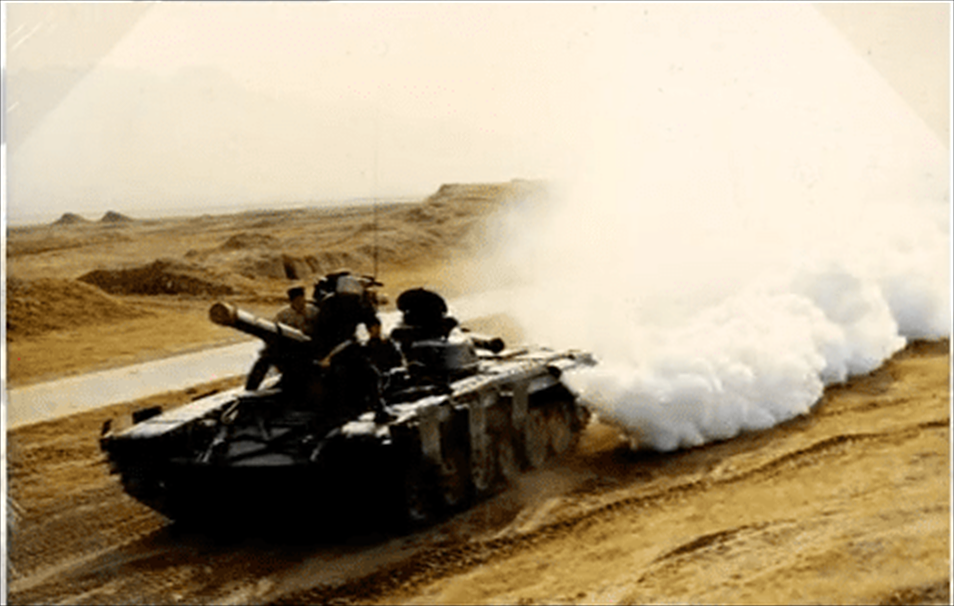
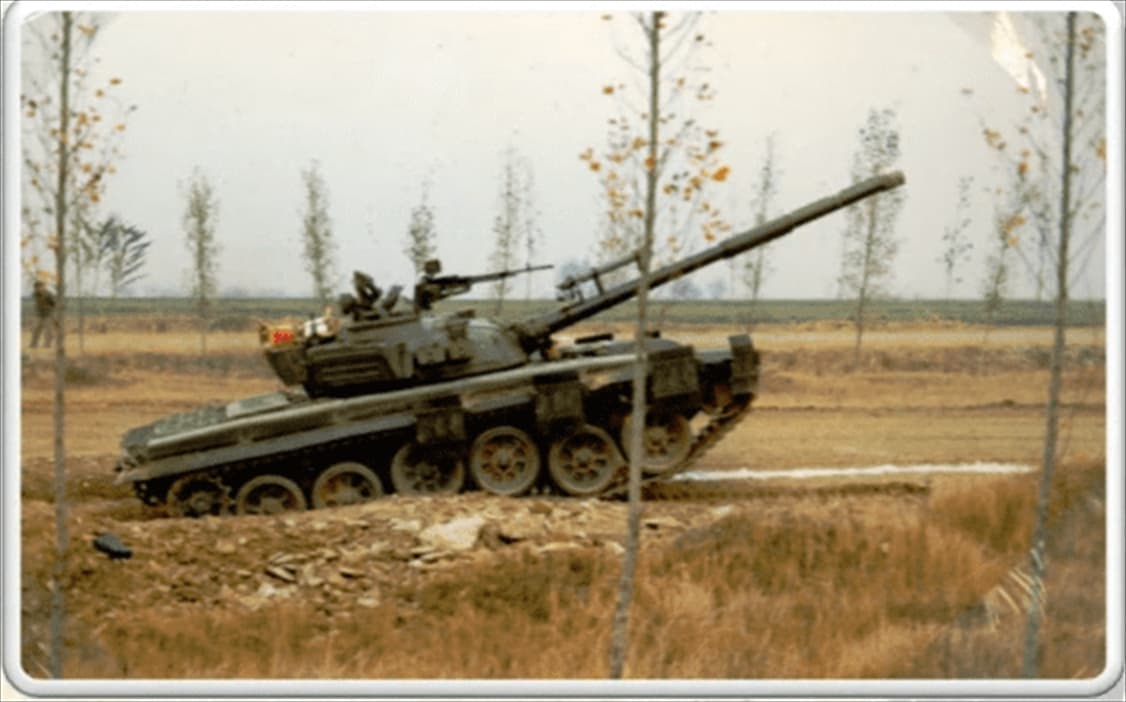
The starting point is the vehicle itself. Frames released by China’s First Research Institute of Ordnance identify the tank as the Type 64 and show it from the front, left side, above and rear-right. Across the surviving test photographs it carries Soviet gill-type anti-HEAT skirts, a thermal sleeve on the 125 mm gun and an NSVT heavy machine gun. No standard Tucha smoke-grenade installation or explosive reactive armour is visible in the documented Chinese test condition. However, some of these features desn’t match with the E-4, like gill-type anti-HEAT skirts and no smoke launchers; typical E-4 received a modern style skirts and possesses smoke launchers.
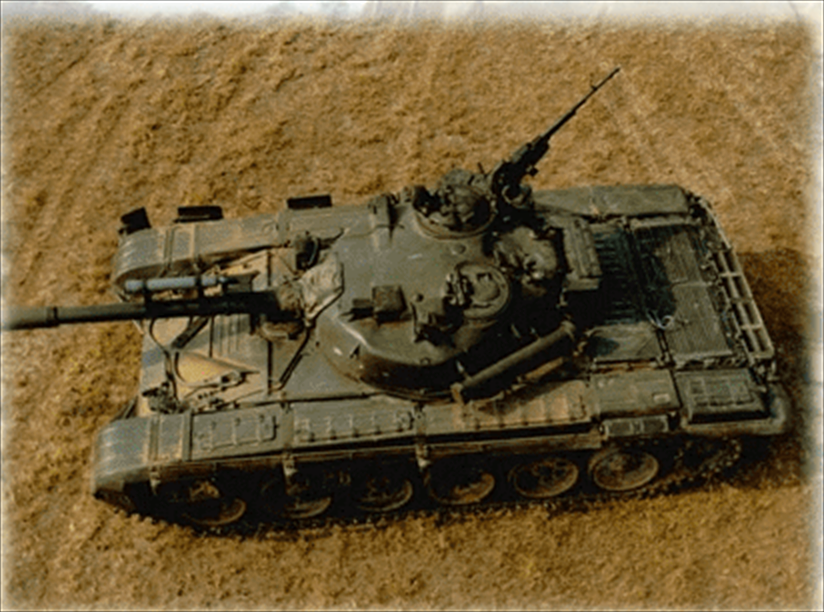
Official Chinese archival frame: top and rear-right views of the Type 64.
One feature is especially important and is more diagnostic than the thermal sleeve. The Type 64 retained the armoured protrusion and blanking cover at the position of the TPD-2-49 coincidence rangefinder’s second optical head. In a head-on photograph this appears on the viewer’s left, but it is on the vehicle’s right, on the commander’s side. The mature standard E-4 turret, laid out for the laser rangefinding sight, normally lacks this conspicuous second-rangefinder housing. The installed TPD-2-49 and a retained old housing therefore strongly supports Ural-1 produced between 1975-1977, rather than the standard E-4 named in the older suggestion.
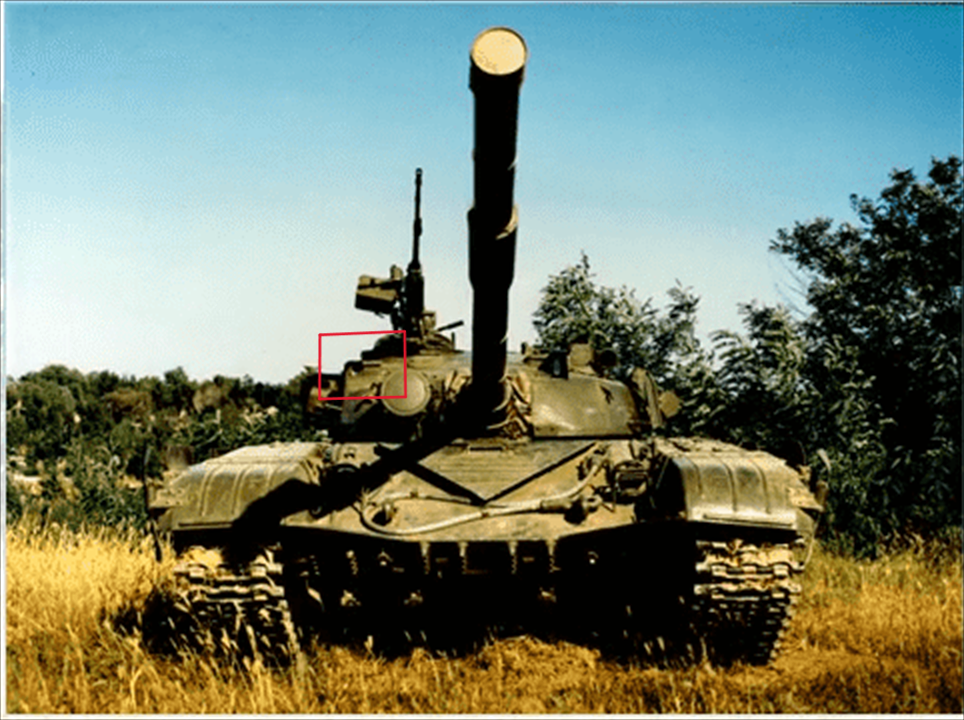
The circular blanking cover and armoured protrusion on the viewer’s left (vehicle right) mark the TPD-2-49 second optical head.
The practical difference between Obj 172M-E and E-4 can therefore be stated briefly. E is the earlier export Ural-1 configuration used here: it could retain the older TPD-2-49, and is modelled with a monolithic cast-steel turret, 39 rounds, gill skirts and no Tucha launchers. E-4 is the later, mature export package, normally without the old second-rangefinder remnant and with continuous rubber-fabric side screens, Tucha launchers, improved night equipment and 44 rounds. A thermal sleeve alone is not sufficient to identify E-4. On the Type 64, the retained old housing, turret shape, side protection and smoke-launcher state together exclude the standard E-4 configuration.
The timeline is also important. Romania’s documented order for 31 T-72s delivered in 1978–1979 is compatible with this early export generation. E-4 were produced after 1980, so it is more plausible that Type 64 is 172M-E rather than E-4. Although the surviving Romanian procurement documents do not record the transfer of a particular tank to China, numerous Chinese secondary accounts identify the vehicle as Romanian-sourced.
This proposal therefore identifies and models the Type 64 as an early export 172M-E/Ural-1 with a monolithic cast-steel turret: TPD-2-49 gunner sight, thermal-sleeved 125 mm 2A46 (D-81TM), 22-round AZ carousel with 39 rounds in total, gill skirts and no Tucha launchers. To avoid presenting a modelling identification as a Soviet designation quoted from Chinese archives, the vehicle title should remain Type 64 (六四式); 172M-E/Ural-1 describes its technical configuration.
- Proposed configuration: early export 172M-E/Ural-1
- Turret: monolithic cast-steel Ural type, without non-metallic filler
- Upper glacis: early Ural 80 mm steel + 105 mm glass-textolite + 20 mm steel array
- Sights: TPD-2-49 gunner sight; TPN-1-49-23 active-IR night sight
- Armament: thermal-sleeved 125 mm 2A46 (D-81TM), 2E28M two-plane stabilizer, 7.62 mm PKT and 12.7 mm NSVT
- Ammunition: 22 rounds in the AZ carousel, 39 rounds in total
- External protection: Soviet gill skirts, no ERA and no Tucha launchers; engine-generated smoke retained
- Qualification: 172M-E/Ural-1 is the modelling identification derived from the available evidence, not a Soviet data-plate designation yet found in the Chinese archives
Specification
- Proposed technical configuration: early export 172M-E/Ural-1
- Crew: 3
- Combat weight: 41 tonnes
- Dimensions: hull length approximately 6.67 m, width 3.46 m, height 2.19 m
- Main armament: thermal-sleeved 125 mm 2A46 (D-81TM) smoothbore
- Gun elevation: -6° to +14°
- Automatic loader: T-72 AZ carousel with 22 ready rounds; 39 rounds total
- Coaxial armament: 7.62 mm PKT, approximately 2,000 rounds
- Anti-aircraft armament: 12.7 mm NSVT, approximately 300 rounds
- Gunner's day sight: TPD-2-49
- Gunner's night sight: TPN-1-49-23 active infrared; no thermal imager
- Engine: V-46 family diesel, approximately 780 hp
- Upper glacis: 80 mm steel + 105 mm glass-textolite + 20 mm steel
- Turret: monolithic cast steel, without Kvartz/sand-rod filler
Sources
- Chinese Academy of Engineering - Wang Zherong autobiography (official PDF; Type 64 work on PDF page 2 / printed page 63)
- North University of China - official biography of Wang Zherong
- China News Service - biography and Type 64 research summary
- Romanian Military Archives, Document No. 4 (90), 2020, pp. 92-96 - Romanian T-72 procurement documents
- Uralvagonzavod history - Combat Vehicles of Uralvagonzavod: T-72
- USSR Ministry of Defence - T-72A Technical Description and Operating Instructions (online scan)
- Tankograd - T-72 Part 1
- Tankograd - T-72 Part 2
The Chinese designation and research programme are confirmed by official Chinese sources.