I just ask because the image I posted has that weld line further back than what’s depicted in game on the v3. If that weld line never moved it means Gaijin has had the model wrong the entire time.
1 Like
Similar to what Volujah said : “ There’s a weld line on the front of the hull for the V3 that the V2 doesn’t have. It genuinely change the profile of the LFP by making it more sloped.”
1 Like
Based on the previous model issues, the model is probably wrong. From everything I’ve read and seen, from real measurement to photometry to people using diagrams and pixel counting, the hull armor LOS hasn’t changed since the initial production M1’s
So assuming the NERA didn’t change until the SEP, that means there’s like 200mm of missing space, assuming the 101mm plate is behind the weld. If it is in front of the weld, there’s around 100mm of missing armor. I assume the 101mm plate is in front due to the declassified design of the original array. That means there’s probably a combination of RHA and DU behind the original 101mm plate in the v3.
Now all we have to prove is if it’s DU, how much could realistically fit without exceeding the 2.2 ton weight limit with the turret improvements added.
2 Likes
if you hover over a composite block in the xray viewer it gives you the thickness
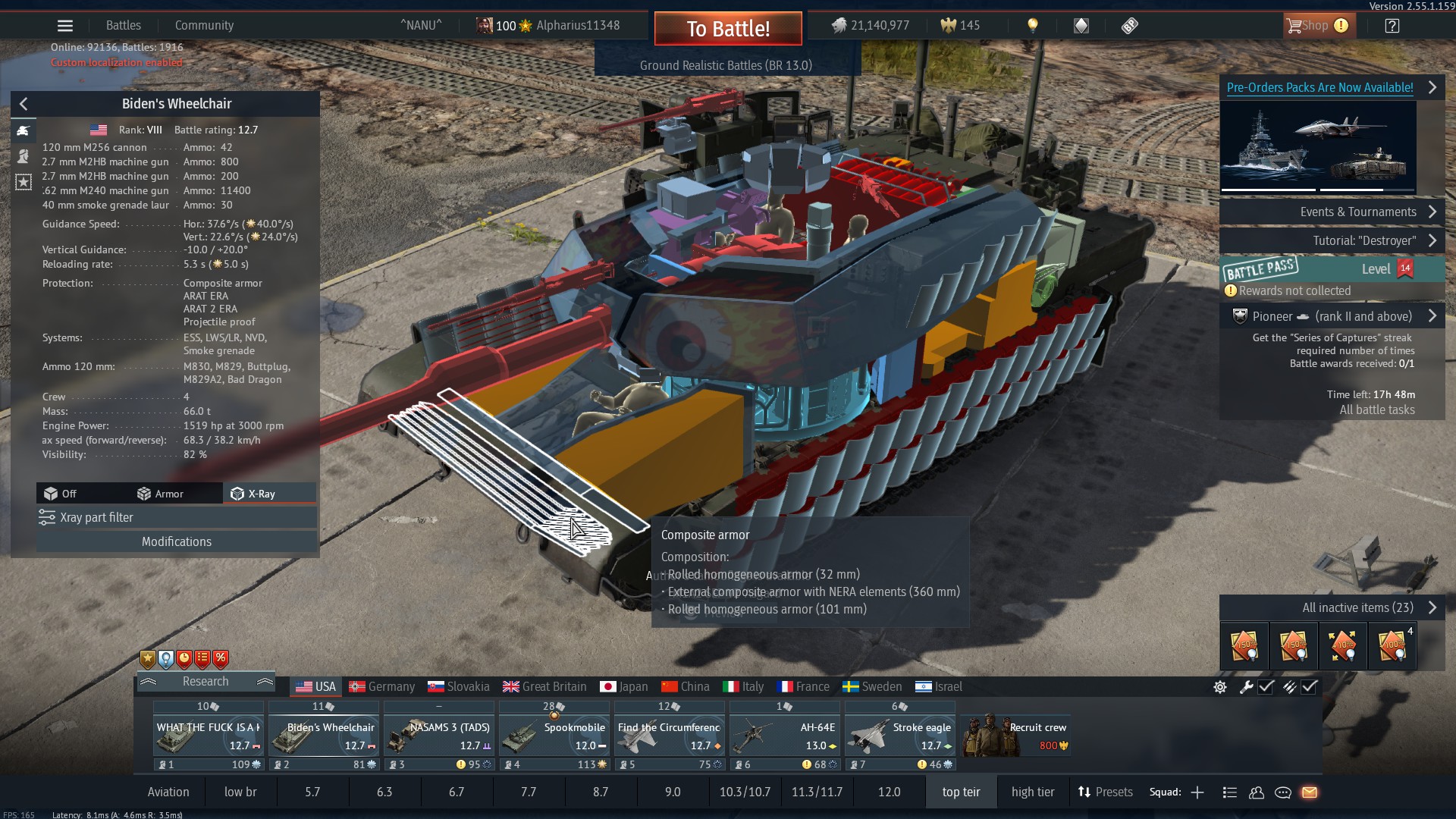
and summing up the three thicknesses only comes to 493mm, a lot of the discrepancy might come from the gap between the end of the composite and the backer plate in the visual model, but if so it shows that the composites of the array could expand further to provide more protection within the same footprint without even changing the effectiveness of the composite design
1 Like
The main question is if the 101mm plate is in front of or behind the weld. That’ll tell us how much space we get to work with.
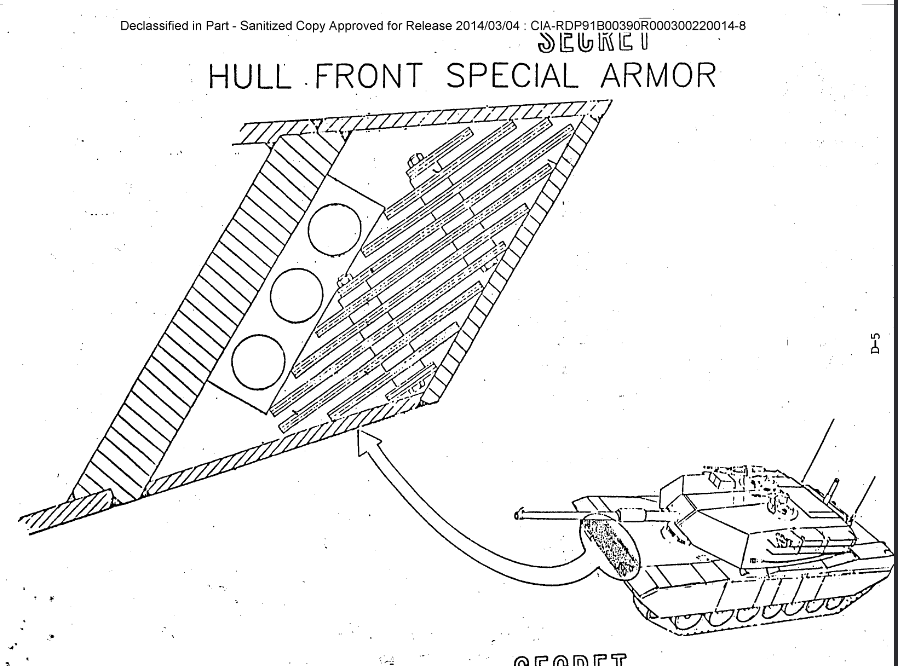
1 Like
Whats up with your vehicle names❓️
lang mod
The weld appears to be above the centerline of the backplate.
1 Like
turret and hull being listed together implies they recieved the same or similar upgrades, and since the IED and other underbody protection you keep mentioning is also accounted for, logically it means the hull recieved additional armor
1 Like
If that divot is supposed to represent the weld line, it means Gaijin has had the model incorrect for years. We know the measurement is 600mm. 50mm of the rear plate, X amount of NERA, and the 31.75mm plate in front. That “X” would equate to 518.25mm of space for NERA. If Gaijin’s 360mm figure is correct, that means there’s 158.25mm to work with for further upgrades. Now 158mm of DU would weigh close to 3000kg or something, which is completely impractical. Assuming 100mm of the space is missing NERA, a 50mm plate of DU in front of the 101mm plate would realistically fit within the weight constraints of the SEP v3.
2 Likes
Using gaijin’s notoriously inconsistent models for any measurement is probably not the best. Their modelers are very inconsistent with their quality and attention to detail. See F8F bearcat, Challenger 2 hull, list continues.
1 Like
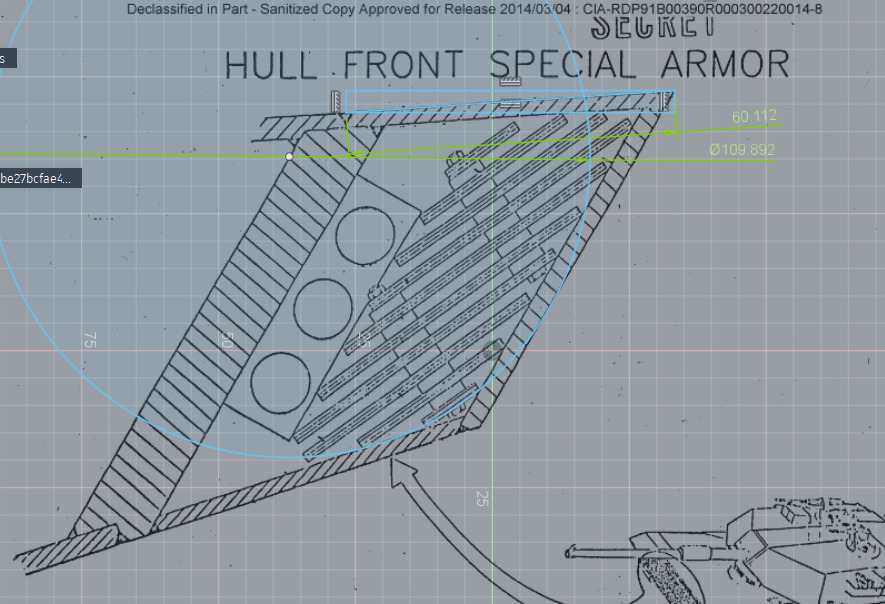
assumming the diagram is to scale and the divot is the weld line
given the 600mm measurment than the maximum thickness for the armor array would be ~550mm due to the angles involved, but its likely the diagram is not to scale
and even if it is 550mm then there is still a lot of space for improvement upon the current in game array
2 Likes
I know, which is why we now have undeniable proof their model is wrong. What I based my calculations on is what I knew at the time and had available.
1 Like
I will say though, it doesnt look like its too scale
They already accepted the bug report for the change in the weld line too, which means we might see more changes yet
1 Like
Excellent work gents.
The one thing we need to determine is how much DU could fit in the supposed gap that the NERA doesn’t fill without exceeding weight limits between models.
there isnt really a way to know
given that its not used as a metallic uranium, but a is likely a ceramic, along with the internal design of the composite armor probably still containing other materials and/or air gaps it is nearly impossible to know the density of the armor