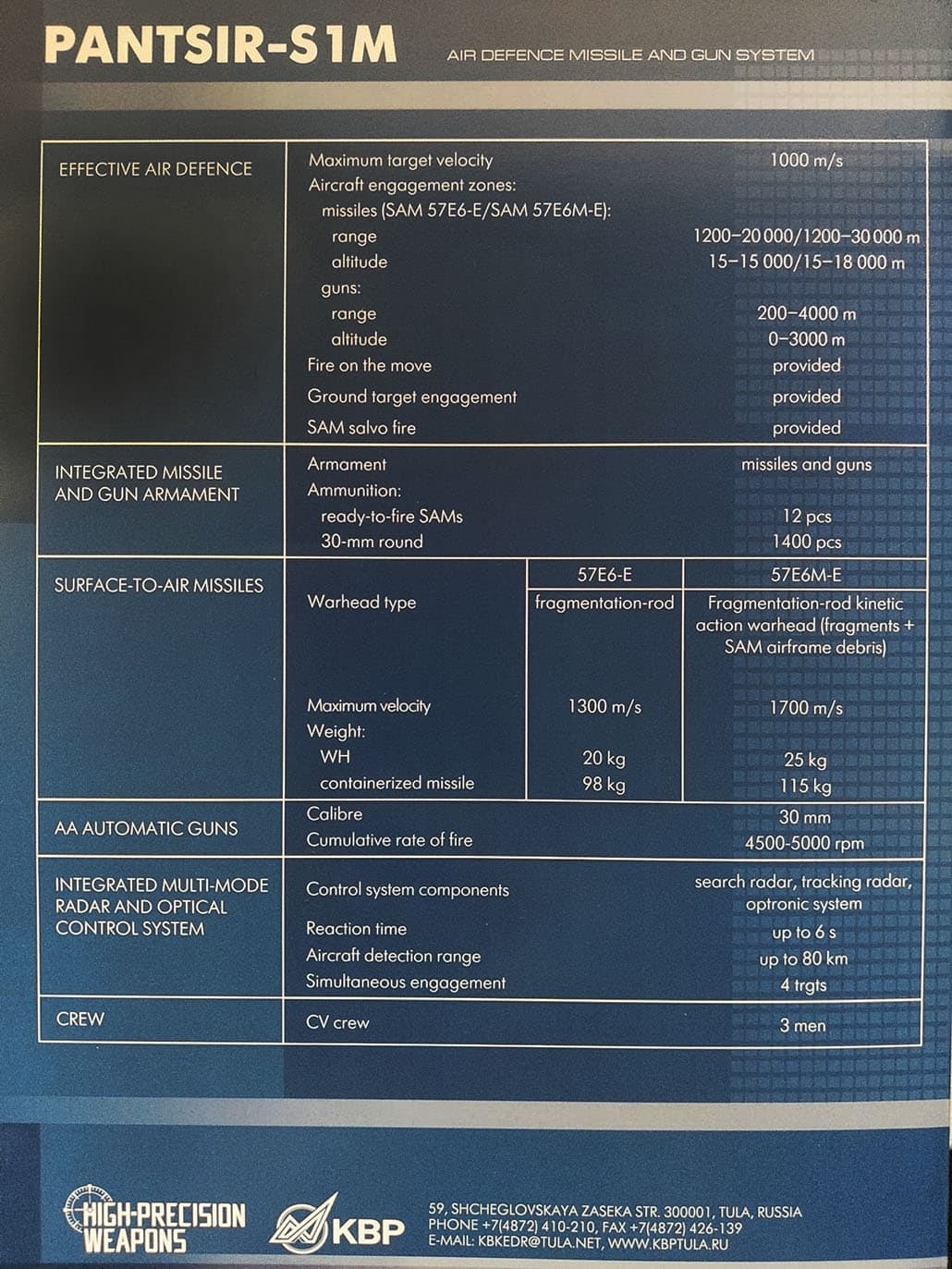
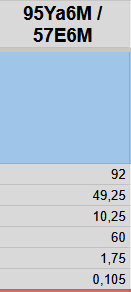
well as Alpharius pointed out, the formula is dependant on 3 input : the mass after burn, the diameter and the Cd :
=(H3 - H4 - SI(H5="-"; 0; H5)) / (H56 * (H6/2000)^2 * PI())
with
(H3 - H4 - SI(H5="-"; 0; H5)) = Total mass - first burn fuel mass - second burn fuel mass
and
(H56 * (H6/2000)^2 * PI()) = Cx x Surface area
From where i’m standing, they either overestimated the mass of the projectile after burn off, or the Cx they set in game is just too low
My suspicion is : they did not model stage separation properly and are using fuel mass to do so :
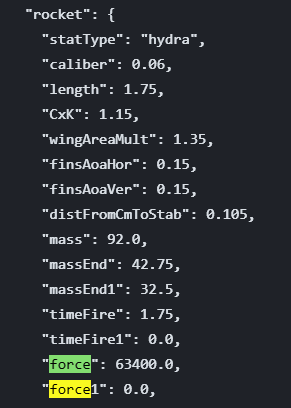
in the data sheet :
That means the second stage would be 32.5kg. Now when you consider TKB-1055 (middle) :
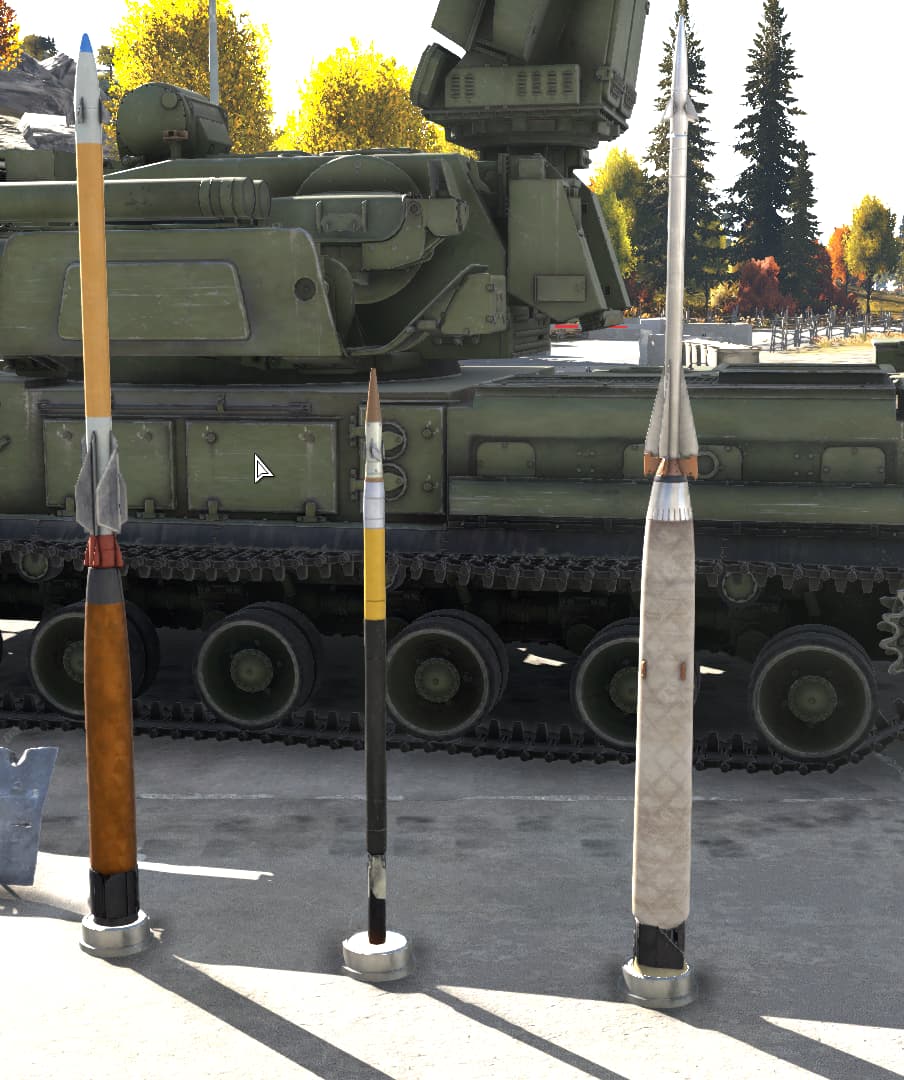
That 32.5kg all of a sudden becomes harder to believe, since the missile in the middle is 80mm in diameter, longer and weights only 18kg WITH fuel.
For comparison on Aster-30 (also 2 stage), the full mass of the booster is substracted when the first stage burns off :
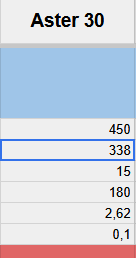
450-338 = 112, equal to the full mass of the terminal dart
All in all, i think the mass of the missile after both first and second stage burns off is largely overestimated
Just putting the value of TKB-1055 after burn off mass for reference, without changing any other value :
12.5/(1.15 * (60/2000)² * pi) = 3844
Now that’s still good, but far more reasonable and inline with other missiles