I have also noticed areas that require improvement regarding the thrust envelope of the WS‑10B engine:
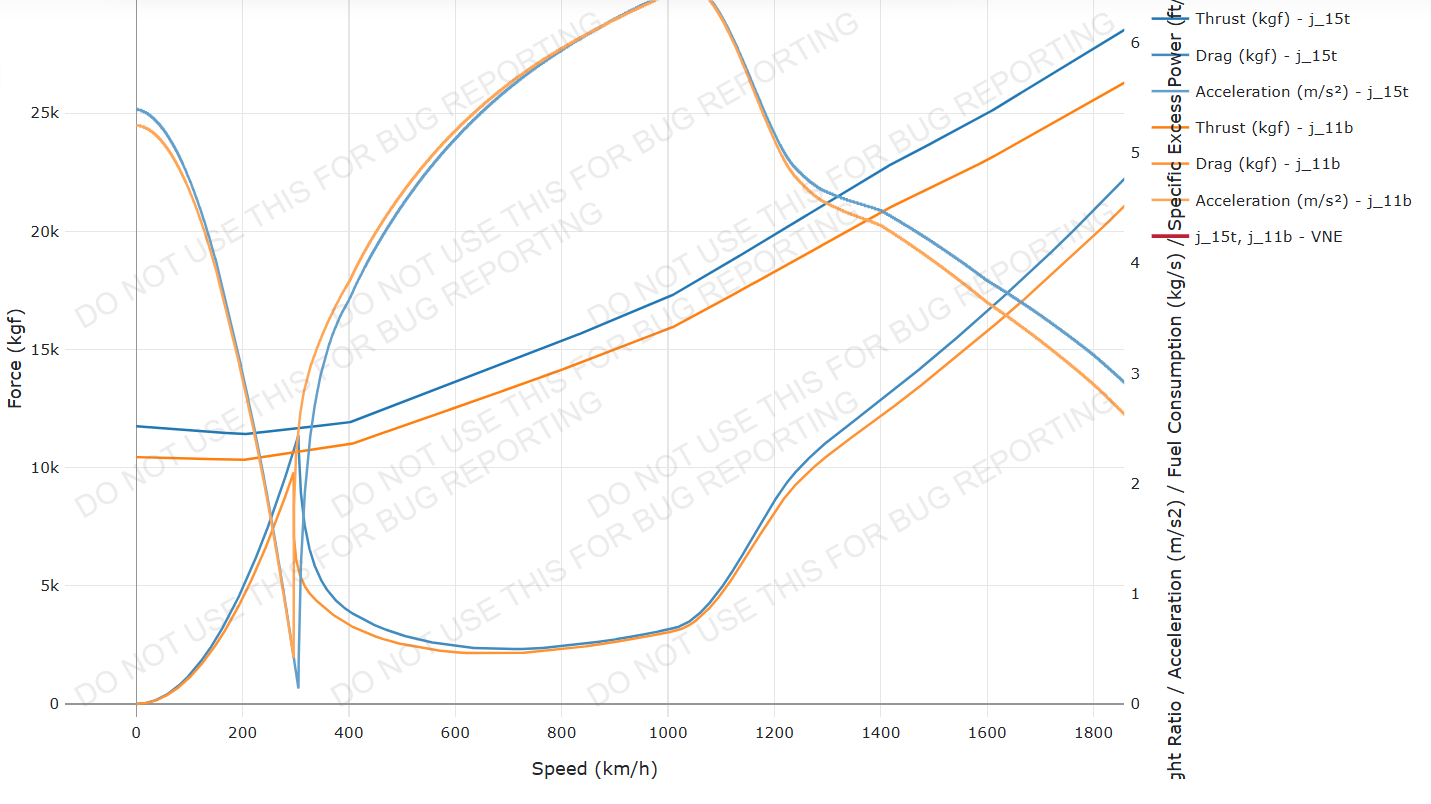
Based on the latest data from Test Server .21 on March 3 and the flight envelope of the WS‑10B engine, the ram thrust coefficient of the engine is lower than that of the WS‑10A at all altitude ranges, resulting in a significant difference in the growth rate of the thrust curve compared with the WS‑10A.I sincerely hope the game developers will check the relevant coefficients and adjust the thrust curve appropriately.Currently, in top‑tier fighter matches, the J‑15T ranks last in acceleration performance at high altitude and high speed, and I hope this issue can be taken seriously.
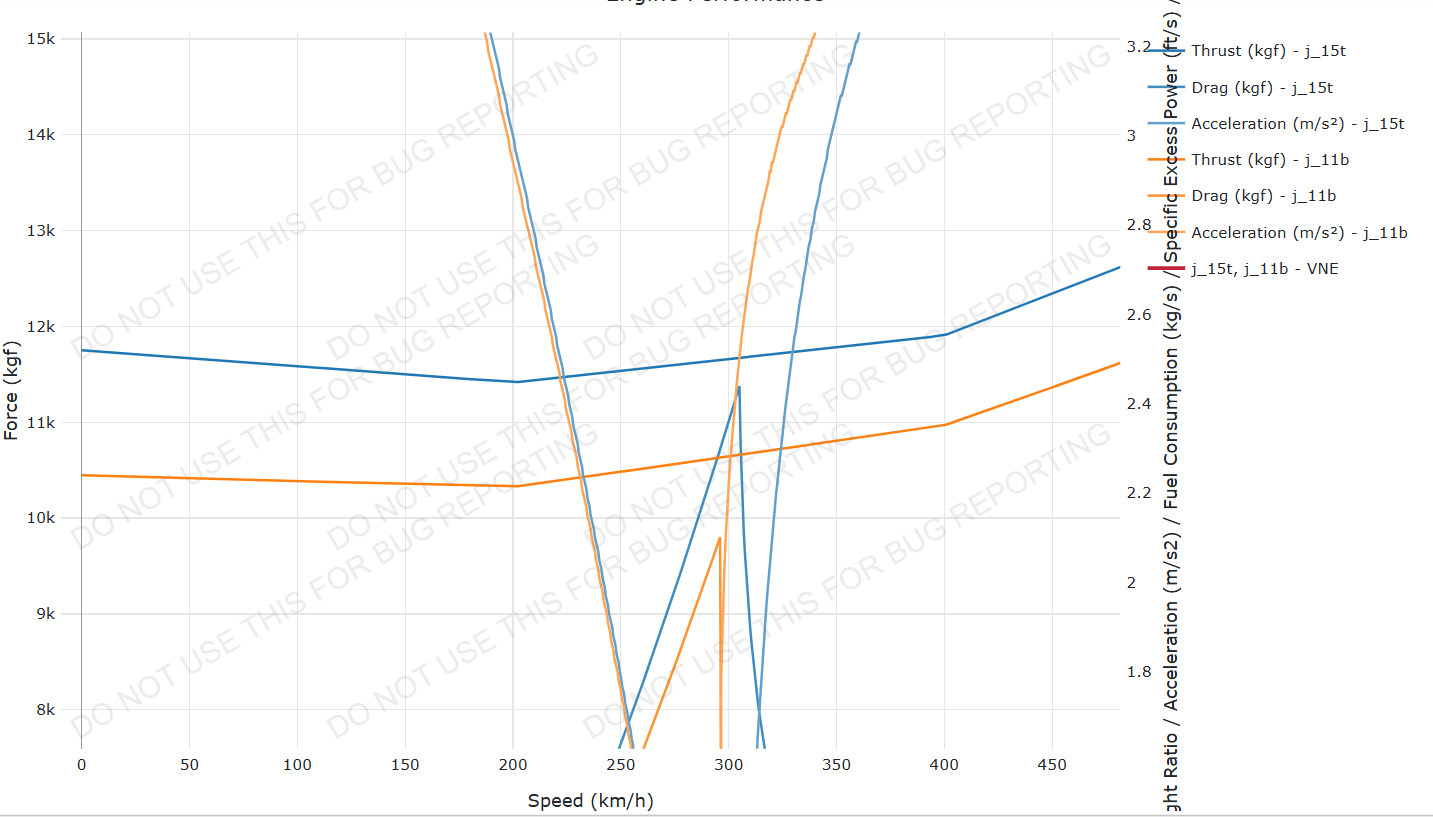
This problem is specifically demonstrated at an altitude of 7,000 meters:
At 0 km/h:Dual WS‑10B thrust: 11,750 kgfDual WS‑10A thrust: 10,447 kgfDifference: 1,303 kgf
At 400 km/h:Dual WS‑10B thrust: 11,915 kgfDual WS‑10A thrust: 10,968 kgfDifference: 947 kgf
The dual WS‑10B gains 165 kgf of thrust from the ram effect at this speed range, while the dual WS‑10A gains 521 kgf from the ram effect.Despite having higher static thrust and being more technologically advanced, the WS‑10B even exhibits lower ram efficiency than its predecessor, the WS‑10A.
This may seem insignificant, but the gap will be further widened at higher speeds, even in the supersonic range, resulting in only a small improvement of the WS‑10B over the WS‑10A at high altitude and high speed.This issue is equally evident at other altitudes and speeds, resulting in low actual usable thrust from the WS‑10B.
According to the developers’ usual practice, thrust curves are usually created by scaling up the previous model proportionally based on the static thrust values shown in the in‑game interface.In other words, the thrust curve coefficients of the WS‑10B should be consistent with those of the existing WS‑10A in the game at all altitudes and speeds.However, in the latest test server, the coefficient of the WS‑10B is significantly lower than that of the WS‑10A, leading to insufficient thrust at high altitude and high speed.Currently, the climb and acceleration characteristics of the J‑15T in these altitude and speed ranges are far below the average level of top‑tier aircraft.
I sincerely hope the game developers will attach importance to this issue.
At 7,000 meters, it is clear from the curve that the gap between the two is narrowest at 400 km/h. This lower ram ratio will carry over to higher speeds, making the actual performance improvement of the WS‑10B disproportionate to its static thrust increase.This problem is equally obvious at other altitudes and speeds.
Just because the number is in a Jane’s publication does not mean Jane’s was used as a source for the game. That’s not how evidence works.
Also, WS-10B has an in-game static* thrust to weight of 7.655:1, and an in-flight thrust to weight of 8.635 - 9.136:1.
Granted, this doesn’t matter because engine mass on statcards don’t impact the empty mass of aircraft in-game.
Ah, Alvisra, don’t tell me that Gaijin employees just randomly pulled the number 1795 kg out of thin air, and it just so happens to be exactly the same as the data from Jane’s.
Also, please don’t selectively report only the in-flight thrust-to-weight ratio of the WS-10B. Could you tell me what the ground thrust-to-weight ratio and in-flight thrust-to-weight ratio are for the AL-31FN3, AL-41F, and WS-10A? In the game, the weight of the AL-31/41 series engines is all around the 1500 kg mark, yet only the WS-10B weighs nearly 1800 kg. The improved AL-41F has almost the same weight as the AL-31 series, but the improved WS-10B has a drastically different weight from the WS-10A?
I certainly don’t mind Gaijin making reasonable estimates—what if the actual thrust-to-weight ratio of the WS-10B isn’t as high as Jane’s claims? But what’s with 1795 kg? Two engines add up to nearly 600 kg of extra weight! If we subtract those 600 kg from the in-game J-15T, its weight would be 17.7 tons, which is extremely close to real-world data.
Even if we set that aside—if Gaijin’s calculations aren’t that logical, why not just give it an average thrust-to-weight ratio? Setting it to around 8.1, similar to the AL-31FN3, would also make the WS-10B much lighter—1667 kg. What’s the meaning of 7.5?
Putting all these factors together with Gaijin’s selective use of sources, I can only reach a conclusion I really hate to say: Gaijin is deliberately nerfing the J-15T so that it won’t outperform the Su-30SM2. No, I’m not even asking for it to be “stronger”—I just want it to be “comparable”. Yet on the current test server, the J-15T is outclassed in every aspect by the Su-30SM2, with the only advantage being an extra MAWS. Is that worth a BR of 14.7? Right now, the J-15T is just a J-11B with two more PL-12s (the PL-12A has seen no performance changes to its propulsion besides adding GNSS), the J-10C’s radar, and half the countermeasure flares! A 13.7 BR plane with these minor tweaks bumped up to 14.7? I honestly don’t know whether to call Gaijin incompetent or intentionally malicious.
Yes. That’s exactly what I mean: We all know this kind of data is classified, so Gaijin has no choice but to use less precise sources for their in-game modeling. I certainly have no objection to Gaijin making reasonable estimates.
But why does Gaijin only cherry-pick certain data? If they’re going to use Jane’s data, then stick to it in full. What’s the point of intentionally using only parts of it?
Alternatively, maybe the figure of 8.8 is unrealistic. Even then, Gaijin could easily have chosen a value slightly higher than that of the WS-10A, or at the very least, a thrust-to-weight ratio similar to the AL-31FN3. That would be a normal, realistic estimation—balancing against real-world equivalents.
Instead, they’ve settled on a thrust-to-weight ratio of just 7.5 for the WS-10B, which looks like it was picked based on personal preference (or other hidden motives).
It’s not my job to prove Jane’s is right — it’s Gaijin’s.
Or rather, whether Jane’s is correct doesn’t even matter.
What matters is that they are cherry-picking data from Jane’s.
Here’s my take: I can totally tolerate Gaijin using inaccurate data —
but they have to be fair about it!
Why does Gaijin only pick the parts that hurt performance,
and never the parts that boost it?
Yes, I agree. OBVIOUSLY 1795kg is wrong(compared to the 8.8 thrust-to-weight ratio). I don’t know whether Gaijin is smearing WS10B DELIBERATELY or not. The fact is that a tremendous number of Chinese players are feeling insulted .
Gaijin should give us a fair result, the weight of WS-10B must be reduced!
Gaijin always doing this.There are three monsters in 14.7 and now they still want to add a fighter like F/A18 which is ‘reality’ that those unreal monsters in 14.7.This unfair to all players who do not have those monsters fighter at all.Not only to the J15T.I am done for it.They are really testing my patient.This is last one,make WS10B right so that J15T and J10C can have a fight with that three monsters in game or lost a player.I know gaijin don’t care about a single player Ieave or stay so am I,I don’t care about what they thinking.I want a result.
Such a low thrust-to-weight ratio is indeed against common sense in engine design. I would like to offer two suggestions to the game developers, and I sincerely hope you can read this comment:
Regarding the thrust envelope and weight issues of the WS-10B, I have two suggestions. First, to clarify: the WS-10B is an improved version based on the WS-10A. In the game, the WS-10A weighs 1520 kg, while the WS-10B is set at 1795 kg. Under the same engine calculation standard, based on the thrust improvement shown in the game, such a WS-10B design would be a failure in reality. The PLAAF would never accept or procure it, and the relevant personnel could even be held responsible for it.
Suggestion 1:If you believe the data source you use follows the unified weight standard applied to most engines in the game, i.e., keeping the WS-10B at 1795 kg, then we can reasonably infer that the WS-10B uses the CM56 core engine, which shares the same origin as the F110. With an increase of about 200 kg, Chinese engine designers must have added extra compressor stages and other structures to improve intake pressure and ram effect at high altitude and high speed. Otherwise, the PLAAF would not procure and equip it.Therefore, the WS-10B in the game should be given a high ram coefficient similar to the F110-GE-129 engine used in the F-16C Block 50, which is in the same weight class and uses the same core engine.
Suggestion 2:If you believe the thrust envelope coefficient of the WS-10B in the game should be the same as or only slightly better than the WS-10A, then under this premise, the improvement of the WS-10B should not result in excessive weight gain. Its weight should be close to the 1520 kg of the WS-10A.
A reasonable explanation is that there are different standards for engine weight measurement. Whether various components and accessories are included in the weight can directly lead to significant differences in engine weight data from different sources.
At the same time, it should be made clear that the thrust and ram envelope coefficient in the game is even worse than that of the WS‑10A, which is obviously illogical and unacceptable to players.
We hope you will take the sincere suggestions from players seriously.We would prefer the J‑15T to be added to the game with reasonable and realistic performance to attract more players to enjoy War Thunder together,rather than being introduced as an unfinished vehicle that leaves players completely uninterested.
I don’t understand. The Chinese player base is so large. Why is every new Chinese vehicle made this way, only to trigger another wave of protests within the Chinese gaming community?
Nowadays, whenever a new player joins the Chinese gaming community, they will always be advised by veteran players not to play the Chinese faction.
The Gaijin development team spends manpower and resources developing modern Chinese vehicles, yet they face unified rejection from Chinese players, who urge new players to choose other national factions through all channels.
This post explains the issue of the WS‑10B’s weight in great depth and with objectivity.
Honestly speaking, from my observation, most players do not approve of the current performance of the J‑15T on the test server. It neither meets the strength expected at its top battle rating, nor does it reflect its real‑life performance.
It is widely believed that with its current performance, the J‑15T is simply not worth players grinding a new tech tree for, nor is it worth adding to War Thunder. No one will buy a premium pack for it, except players who only collect aircraft models.
I truly hope the J‑15T can attract more new players to the game. However, the test server is about to close, and these reasonable changes, which would only take minimal effort, have not been implemented at all.
Regarding just the WS‑10B engine, there are only two logical solutions:
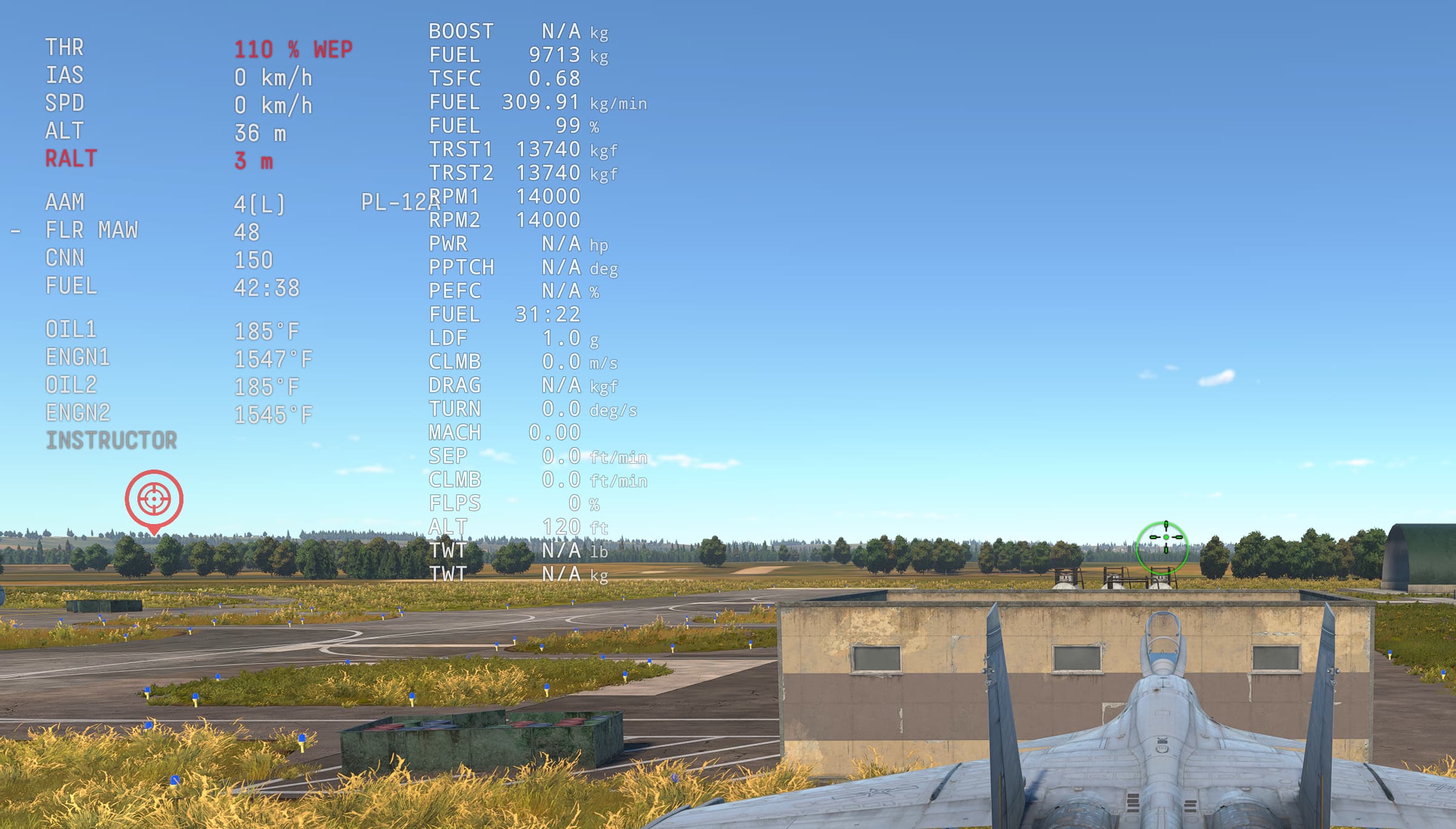
Either recognize that the engine weight is a data standard issue:Set the weight back to around 1520 kg, restore the static thrust to 13880 kgf, and ensure the thrust envelope coefficient is **not lower than that of the WS‑10A.
Or accept that the WS‑10B’s increased weight comes from improved components such as compressors:Adjust the thrust envelope coefficient of the WS‑10B to a level similar to the F110‑GE‑129, which shares the same CM56 core and has a comparable weight.
All the above changes are based on solid and reasonable real‑world evidence.As the test server is closing soon, I hope the developers will adopt these suggestions to help War Thunder develop better.
Gaijin double standards, selective use of the same source of information, I think it is what it is. A third-generation engine with a thrust-to-weight ratio of 7.5, hahaha, why do other engines in the game use Russian standard weight but WS-10B doesn’t?
The current J-15T is outclassed in every aspect by the Su-30SM2, which belongs to the same Flanker family with a three-surface configuration and the same class. It has a weaker engine, worse missiles, lower payload, an inferior radar, fewer countermeasure flares, and abysmal air-to-ground capabilities… Yet it’s still ranked in the same tier? How is that even fair? This is exactly what Gaijin wants.
Even the two-day delay of the test server opening was a scam. A bunch of excited Chinese players thought Gaijin was actually going to properly develop the latest Flanker in the world. They paid for the MKK bundle, only to find out they’d been deceived.
Yeah, that’s just how it is. Another harsh lesson for Chinese players: never trust a single word Gaijin says—watch what they actually do instead.
The WS10B engine in the game is even worse than the WS10A. It’s quite amusing to think that this useless engine is still being used in China’s most advanced J-16 fighter jets and early-model J-20 fighter jets.