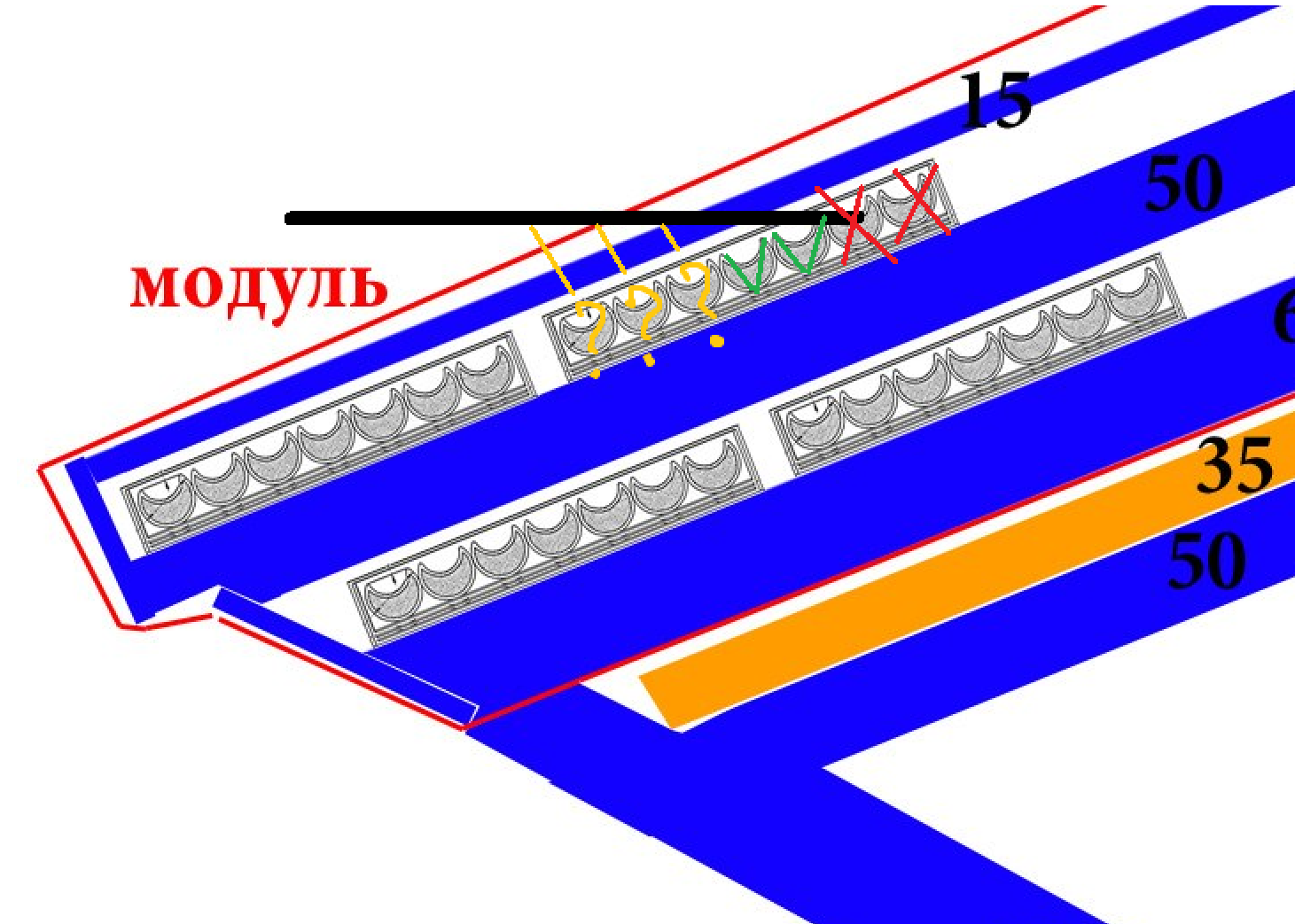
Incidentally, I’d like to point out that the presence of a “signal plate” completely contradicts the ERA’s design.
The principle and timing of its initiation have nothing in common with this scheme.
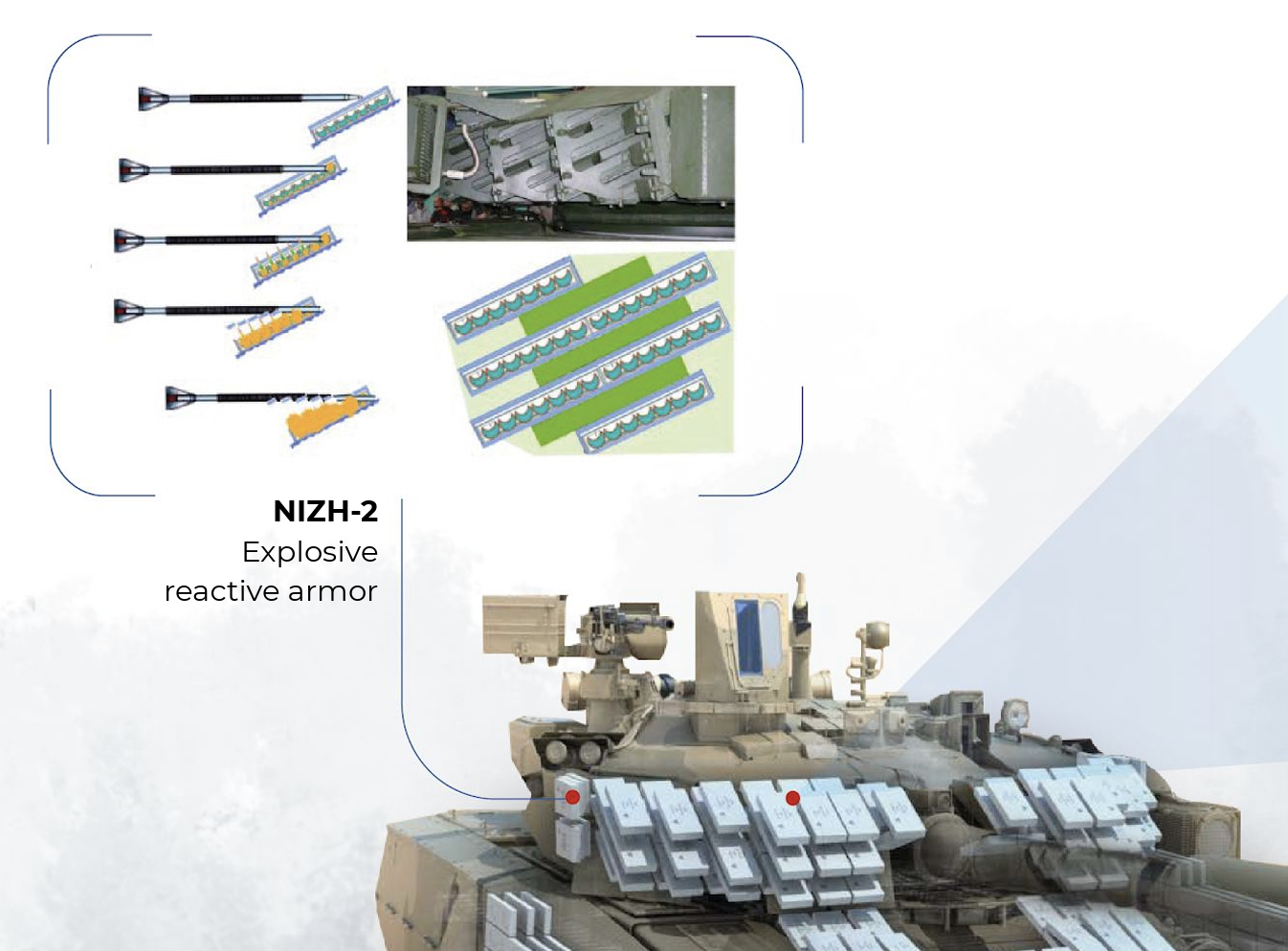
In the study, all charges are initiated simultaneously, well in advance, as the initiating plate is far away. This allows the shaped charges to form before the APFSDS approaches them. Furthermore, the impact site on the APFSDS is optimal.
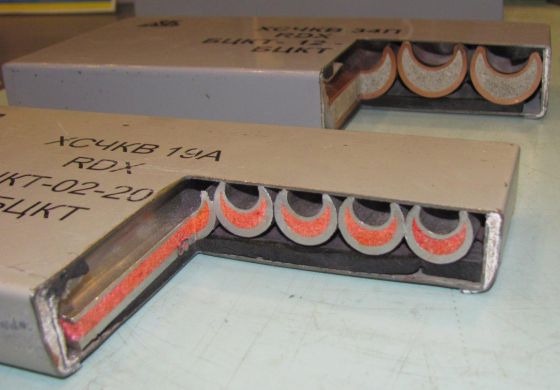
In the case of the Nozh, the charges initiate as soon as the APFSDS breaks one of the shaped-charge craters, penetrating the ERA. Thus, one or two shaped-charge craters are immediately damaged because their lining is compromised. The remaining craters then begin to initiate sequentially, and to reach the APFSDS, they must penetrate the 16mm cover above them.
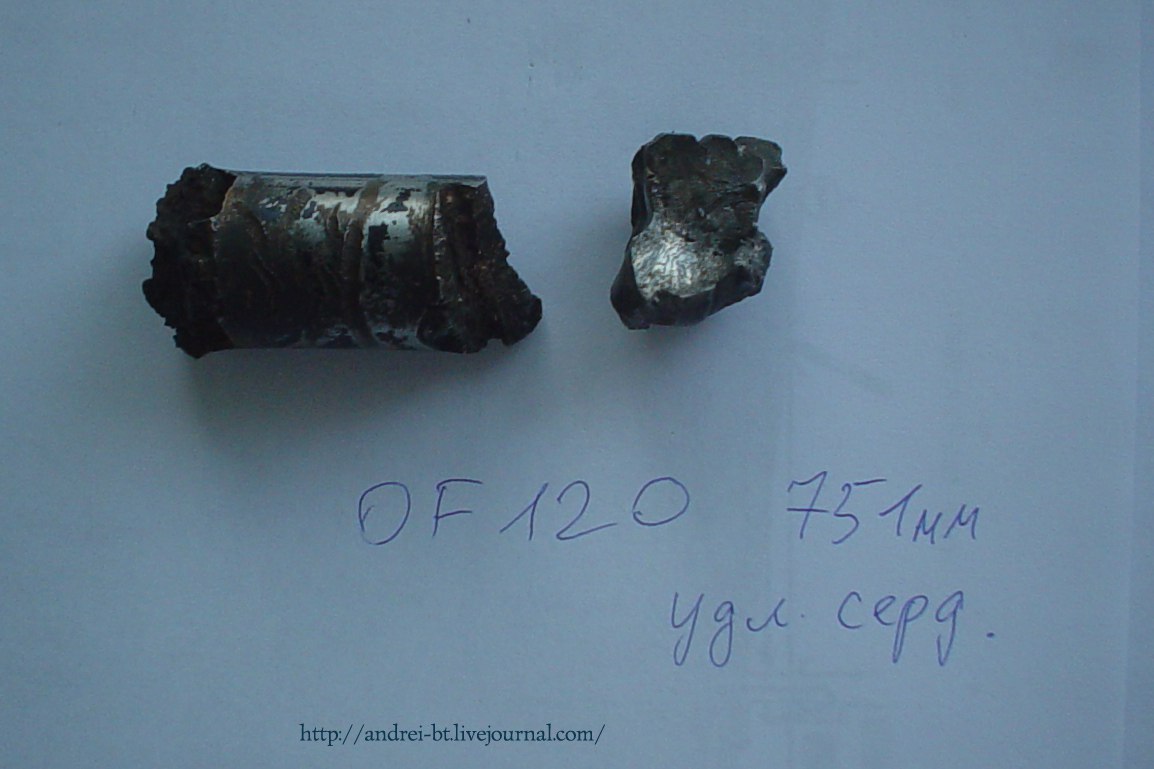
Penetration velocity of the LSC is Vp=Vj/(1+sqrt(Pt/Pj)) where Vj is the velocity of the copper jet which the paper stats is 5880 m/s, Pt is the desnity of tungsten and Pj is the density of copper. So Vp=2380 m/s. This is the speed in which copper is moving when it cuts the rod. If we say the rod is moving at 1500 m/s then Vp-1500=880 m/s while the rod is moving. A rod is typically 20 mm in diameter so at 30 degrees the copper jet needs to cut through about 25.4 mm. So 25.4 mm/1500 m/s=16.9 micro seconds which is how long the copper jet interacts with the rod. Multiply this by 880 to get about 25 mm. The exact amount to cut cleanly through. And even if at some angles or parts where the copper jet fails to cut through it all, cutting through more than 50% of the rod is enough to break it. And just to clarify it’s not “cutting” but its shearing the metal at gigapascals of pressure so the tungsten flows like plastic. So it gives a “flat” appearance
Yes the signal plate is more of to represent the use of LSC in something like APS. So the LSC would have bigger impact on not the nose but the part of the rod behind the nose as the LSC has more distance and time to reach it. And that’s the point to cut the rod, have the fragments be flat, and also more likely to tumble as the smaller the mass of the fragment, the more angular momentum it will have. And going through three stacks of Nozh would have more impact as the fragments get hit by more LSC and get smaller and tumble more.
The plate that is already structurally impacted by the rod, so the LSC is not going to have the same effort it needs to push through like an intact ERA plate. And a plate that’s a couple mm of steel, easy enough to pass through.
And also do note that the study’s LSC uses different mass of explosive charge and maybe different type of explosive. The LSC in the Nozh could flip more faster than the study’s LSC. Many simulation videos already show the copper folded when the rod hits Nozh: https://youtu.be/RyZOJtOQoaI?si=zyU-o-L5w5a5xO0q&t=28
Of course they can. The problem is, that’s a significant portion of their penetration.
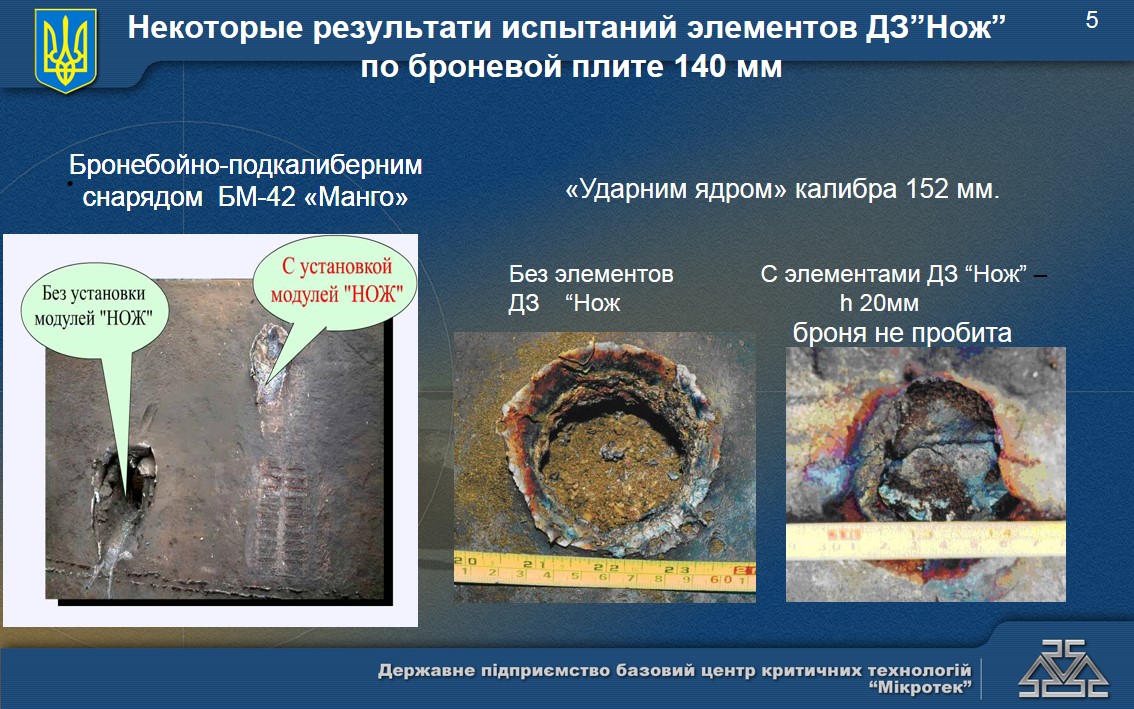
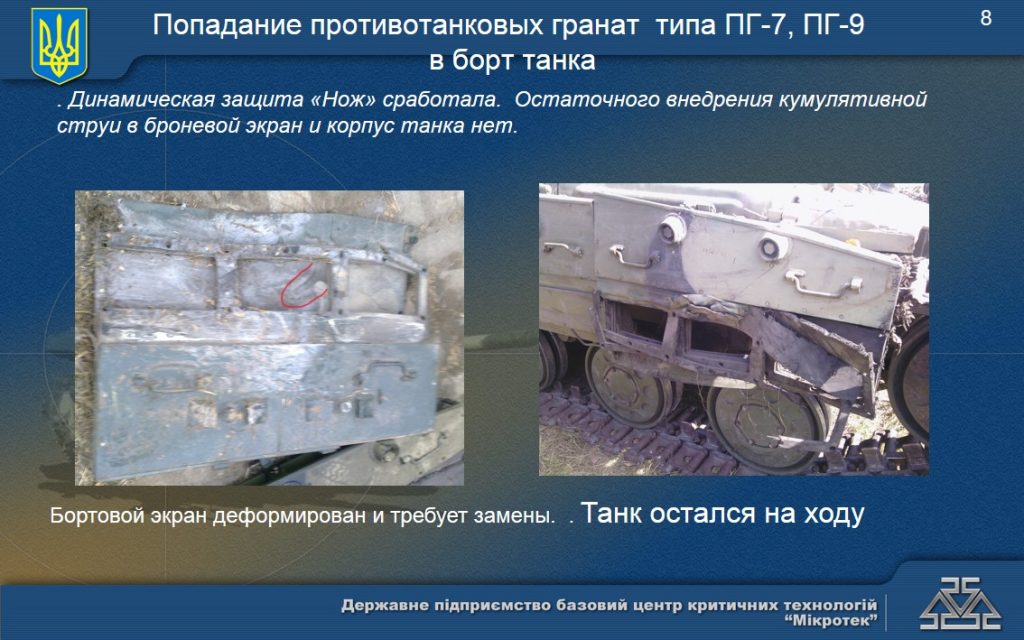
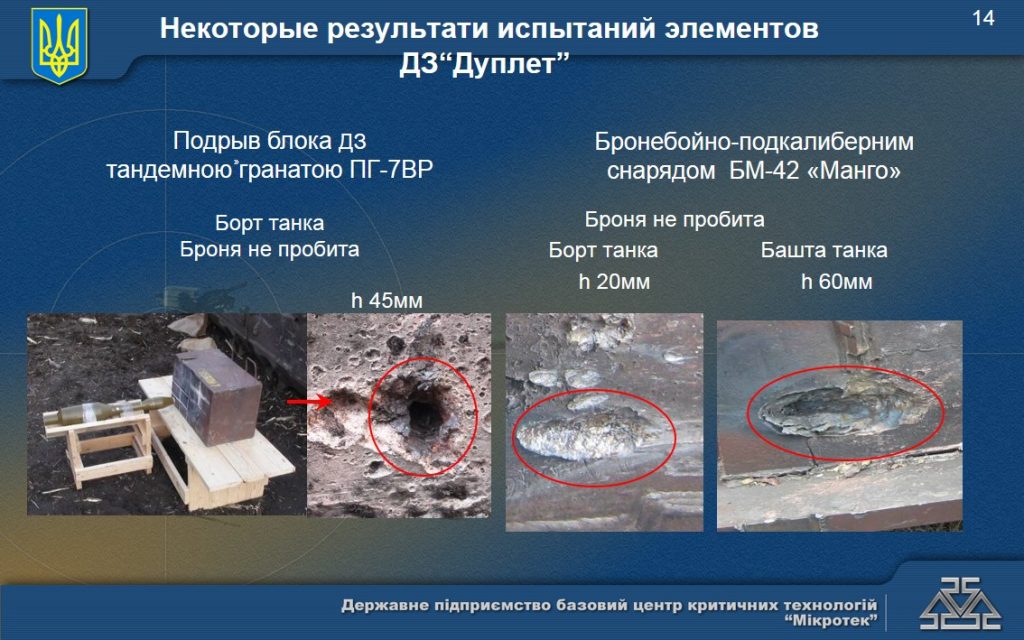
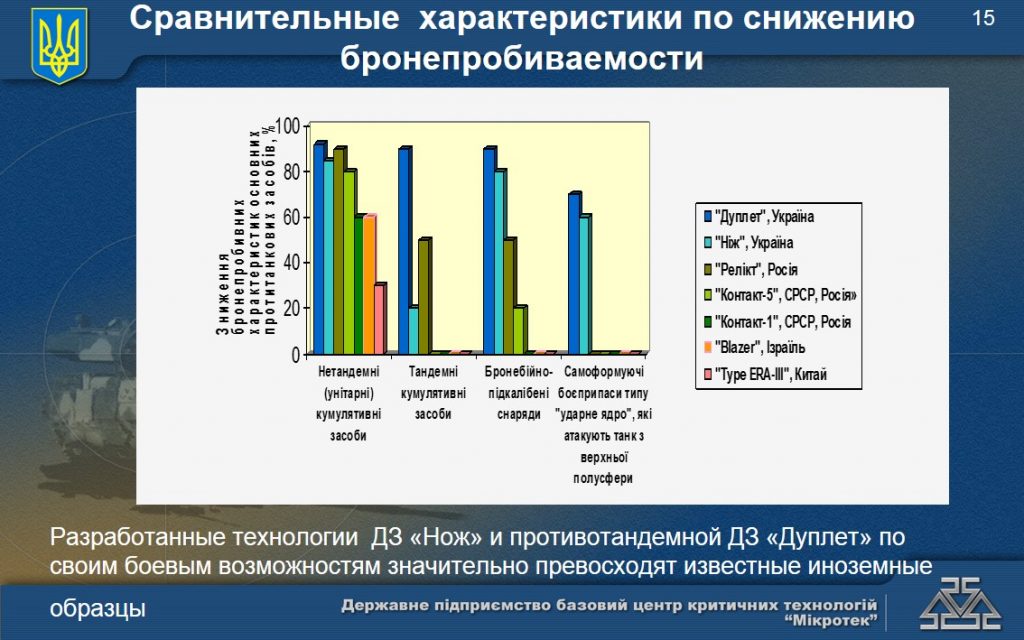
And when we’re talking about the second layer under the 50mm plate, I believe the effectiveness there is close to zero. (And Microtek thinks so too, when they write 80% for Nizh and 90% for Duplet.)
There is currently a bug where even ATGMs that should not penetrate the armour (red reticle in armour viewer) penetrate the tank. For example Oplot’s own GP-125 does not have sufficient penetration to penetrate the UFP but it penetrates anyways. A bug report was accepted and passed to the developers about this (I think) but we have not seen any fixes so far.
If you remember, we both did an analysis where due to the air gap between the ERA and 50mm plate of the second layer, the second layer was still close to 40-60% as effective as the first layer.
Its a lost cause in my opinion. Ukraine’s not focused on oplot and duplet when drones are mainstream and they’re just getting MBTs from NATO. There’s barely any official source for the oplot as they barely export and have no reason to publish anything about it. I talked with some people on telegram but no progress there as you know no one cares about the oplot anymore over there. I think imma try looking into thai’s facebook groups next
Also I do have a protection chart made by Thailand when they were trialing both the oplot and VT-4. Im checking to see if its credible. Also still looking for sources for the UAE trials of Nozh when apparently Leclerc’s F1 round got defeated. Don’t know if it was nozh or duplet yet, can u ask andrei?
Gaijin is incredible lazy when it comes to modeling things separately, there are many vehicles in war thunder that have several layers of armor modeled as “a single plate” let’s put it that way. This has been a severe issue, but most of the vehicle’s affected by this problem are in much lower tiers.
but now that the problem has reached top tier, people are finally seeing this problem that people who enjoy the ww2 era have been dealing with since ever, and i agree, it’s pure laziness when making the model, it’s something that could be easily fixed, because why consider 2 separate pieces of armor as 1??? It is inexcusable.