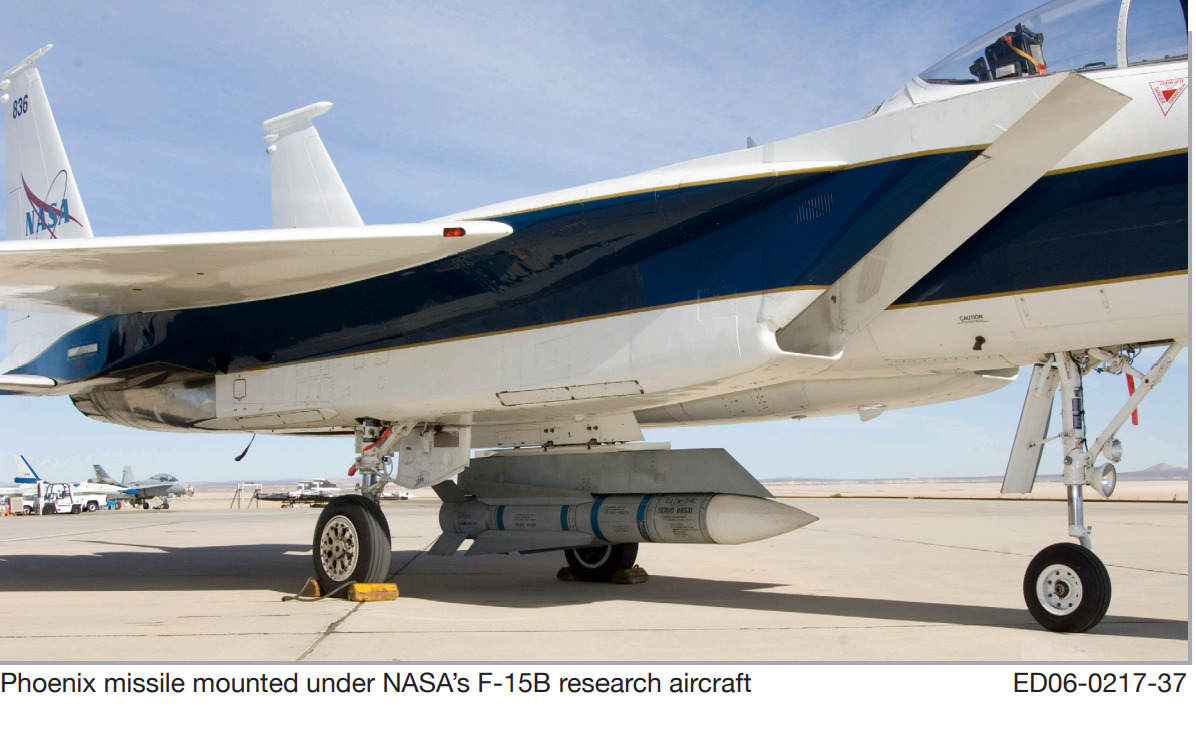
if aim54cs ever wind up being good enough i cant see why the 14b couldnt be 13.3 like the iraf. but right now we’re not at that point
The “accepted” status means that it MIGHT be taken into consideration, or it might not…
I was also happy two years ago when the fixes for the F-104S/G were given “accepted” status; unfortunately, to this day they still don’t have IRST or EEGS, which they should have had from the day they were introduced into the game.
Community Bug Reporting System (accepted 2024)
Community Bug Reporting System (accepted 2024)
“accepted” doesn’t mean much; “fixed” is the only status that really matters in the bug reporting section… Sad but true.
3 Likes
We know that, but considering it’s related to a flagship premium releasing right now and the update is still not out yet the chances are flat out increased.
7 Likes
Very cool, but since it’s a much more relevant plane, it’s more likely to be implemented
True, maybe something will come of it, but I think the F-14A/B has benefited the most from this whole affair—the A version will benefit from the upgraded AIM-54A, and the B version from the upgraded AIM-54C AND, FINALLY, the addition of the AIM-9M! :)
It would be really nice if an experimental F-14A-65-GR variant with AIM-120s on board were to appear in the future, for example, as a squadron-based aircraft on BR 13.3. Since they managed to introduce the YAK-141, I think there’s a chance for such an exotic F-14 variant :)
1 Like
The problem is that the F-14A-65-GR didn’t even fire 120A. It fired a prototype and not really guided it.
It was a fire and separation test. No electronics involved.
Ok still more valid than the azzpull yak-141 , but really … AWG-9 with AMRAAM won’t go well. And there was no APG-71 even in plans at 1981.
I mean…can’t they just fix the Phoenix correctly ? Because still the flight envelope of the missile is bullcrap.
At least at statshark , it can hit 5mach from a 25 km alt launch and 2500km/h launch speed , for a target at 100km (lofting behaviour etc) , the number is way unrealistic and that should be at max at 15-16km alt and 1,6-8 mach launch speed or something.
The alt/speed difference to go according to data is probably that the missile produces too much drag (since the density of air has a value in speed) .
1 Like
Iirc it was fired in STT
I’ve read that too.
But even then. AWG-9.
And the missile was YAIM-120A which is not exactly a production 120A. They can find info for that …and the plane would be kinda unique if anything.
But Knowing Gj it would give you a 120A /AWG-9 combo in 13.7 or something … and personally i wouldn’t be too interested in that.
Because it has a bad (not mediocre) radar for 13.0 …let alone 13.3.
The F-14D on the other hand probably could and should be 13.3.
I’m pretty sure there was in 1988 when the F14 did testing what I believe to be something like the CATM-120
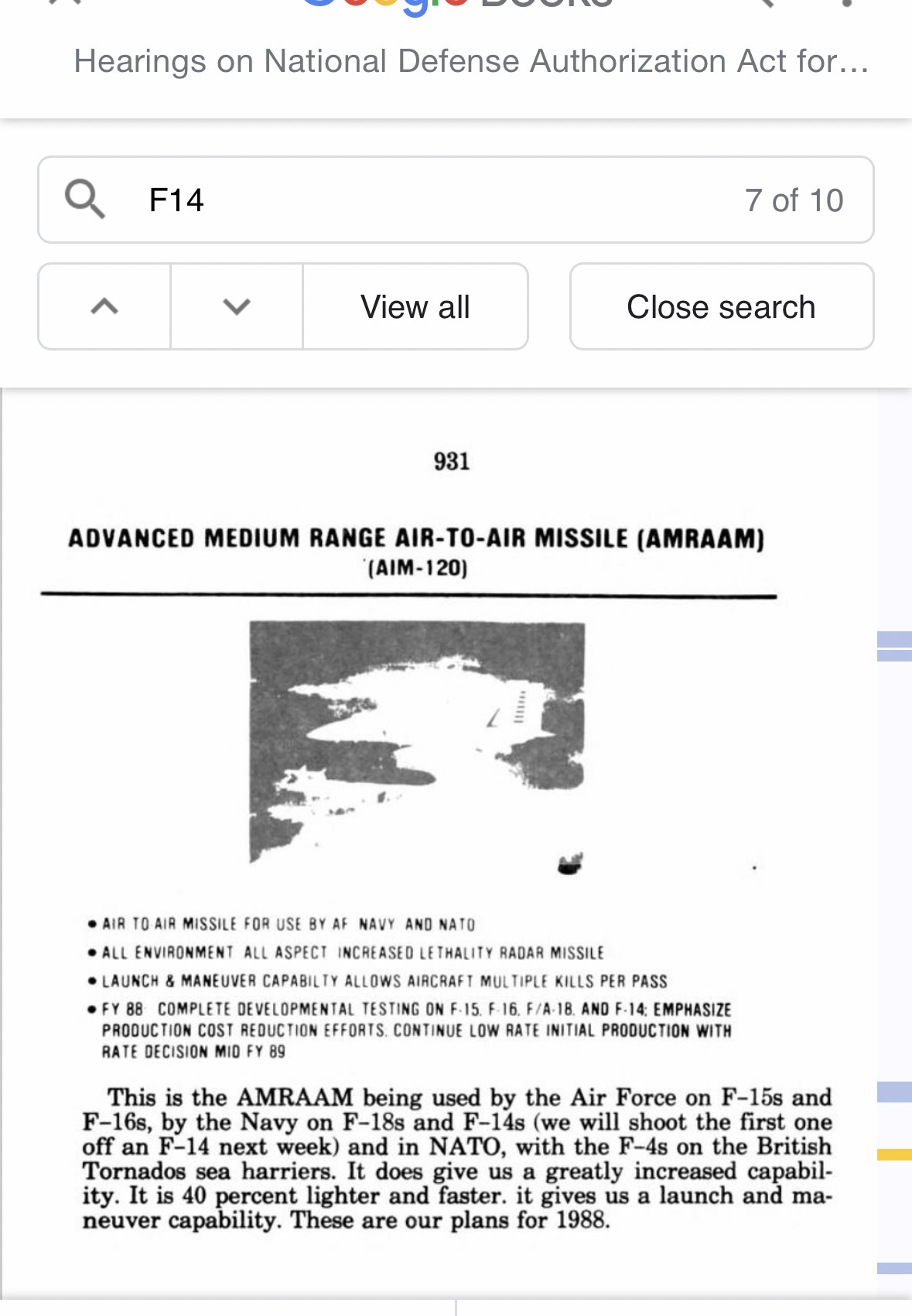



I think the f14D should get Aim120A,aim9m,aim7p, and aim54c+
1 Like
First tests of APG-71 were end 1987.
CATM-120 is shot simulator. Not physical shot.
YAIM-120A were the prototypes/pre-production models.
I’m not against it, however i don’t believe GJ would do it. Or they’d do something weird with it.
Still more believable than Yak 141 shooting missiles like in game…
I thought they had development models in 1986
supposedly what I’ve been told is because it’s a production vehicle it can’t get armaments it tested even if you prove that it can use them that only prototype vehicles can use tested armaments
To be fair the PSP upgrade for the AWG-9 (MPRF, Stream Raid, basically precursor to APG-71) was in development a couple years before the APG was deemed as the better option. They would be very similar in performance for this application though.
2 Likes
These reports getting denied due to being “prototype missiles” is annoying. I’m finding new sources that say the same thing when it’s in production! My findings so far:
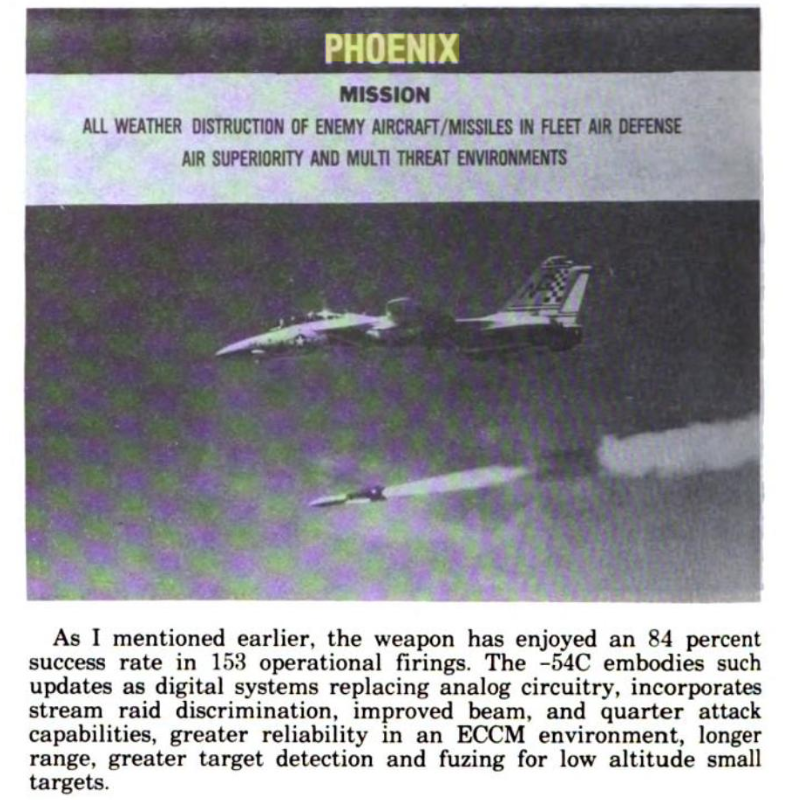
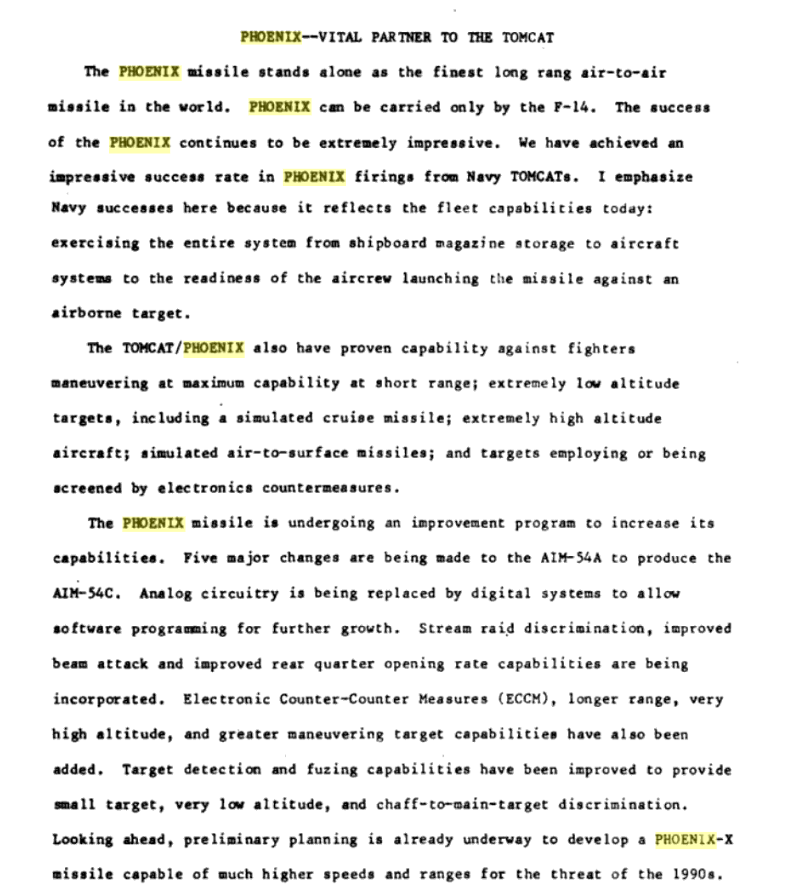
12 Likes
AIM-54C now:
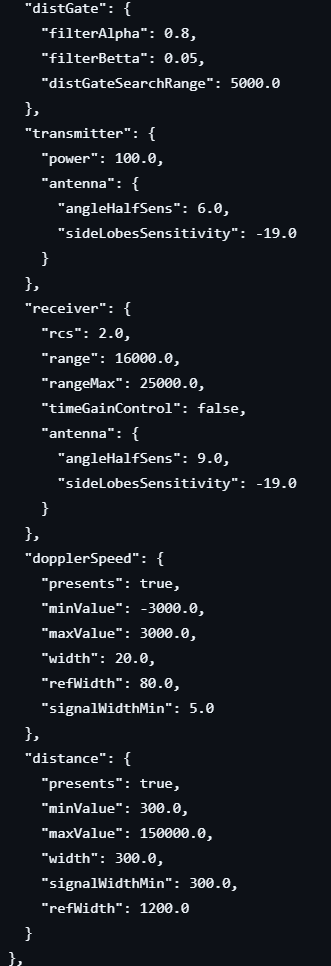
Have to test still how effective it is, also AIM-54A got it too?
Explain to me what am I looking at
Did they fix it’s speed ? Because on statshark it still can’t go over…4 mach at 15km alt launch.
It should be able to reach over 4 mach easily at that altitude.
TLDR: Previously, the Phoenix only had DopplerSpeedGate (not on the image, but it’s still there) and DopplerSpeed section. This mean it could only track targets based on speed, but now it has the corresponding range ones as well. So now it can track targets both in Speed and Range, giving it “all spect” capability.
Idk exactly how it works, but this is one of my theories based on real radar processing:
dopplerSpeed and and distance are basically govern what the seeker can see for speed and distance respectively.:
- “presents”, maybe just means that it is activated or not, or in other words ‘present’.
- The “minValue” and “maxValue” speak for themselves, those are the limits it can track within.
- “width” is the resolution, or bin size, of the measurment, so if two targets are closer together (in speed or distance) than this value, they may blend together. Lock transfer can happen here too.
- “refWidth”, I have honestly no idea, I need to do some more testing for this.
- “signalWidthMin” may be the resolution/bin size to which it can reduce to. The reason why distance signalWidthMin is the same as normal width is that range resolution is solely based on signal bandwidth (or pulse duration, but those are linked for a pulse radar). However doppler resolution is dynamic and depends on the coherent processing interval, the longer integration, the better the resolution. So I think, the longer a target is tracking coherently (so in straight lines, non maneuvering), the doppler resolution is allowed to shrink to, in this case, 5 m/s.
Then there is DopplerSpeedGate and distGate, these govern tracking gate parameters using the measurements from the dopplerSpeed and distance blocks.
- “filterAlpha” and “filterBetta” are the coefficients for a so called alpha beta filter. This filter is basically a simplified kalman filter. In short, it allows you to track a target by predicting where the target is going to be, and correcting it after using new measurements continuously. The coefficients determine how much it trusts each measurement.
- then we have the “…GateSearchRange”, I think this means that if track is lost, it looks within this range from the predicted state to look for the target. If a new target is found within this range, then the track is initialized on this new target.
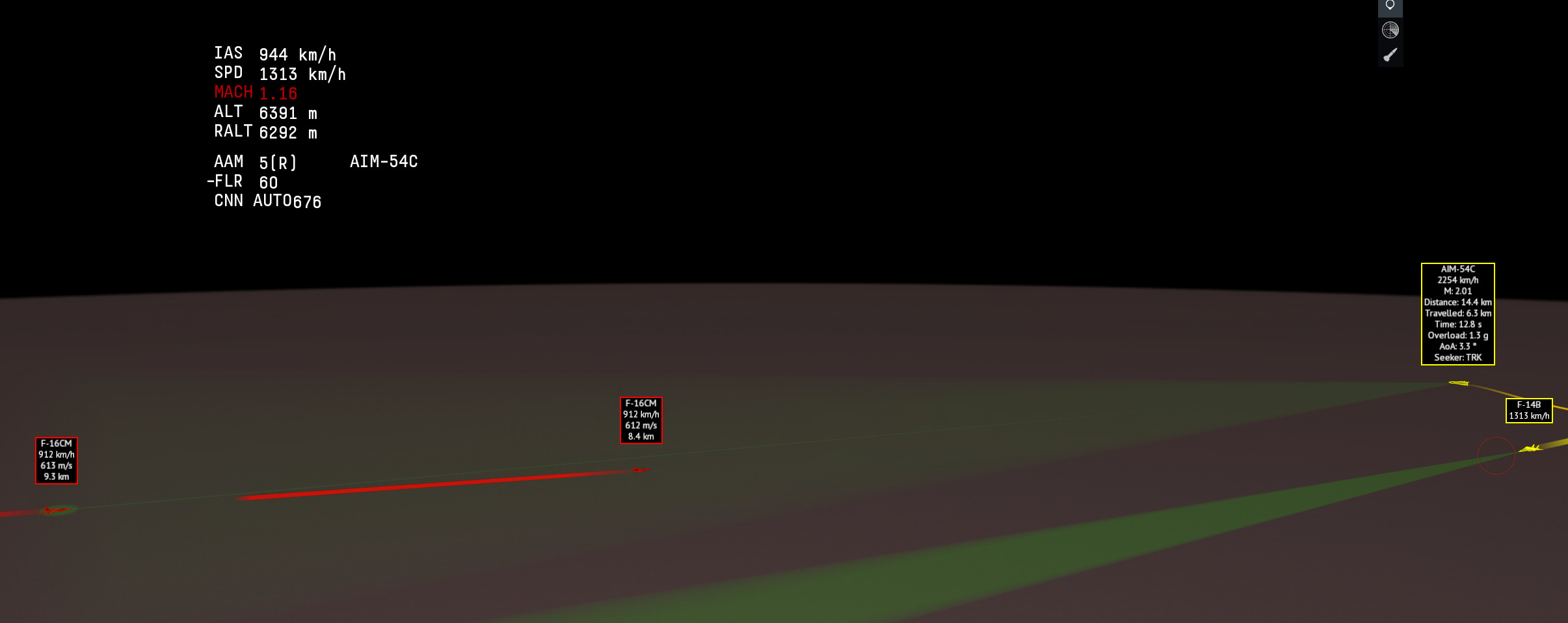
Previously it would have gone for the front target, but now it stays on the rear one:
6 Likes
Thank you. Thats very good news
1 Like