It never got a proxy fuse we both know that it never did
There is no photos of Swedish or Finnish RB28s with proxy. The only “sources” saying it does are poor translations that are talking about RB27 and RB28 together
It never got a proxy fuse we both know that it never did
There is no photos of Swedish or Finnish RB28s with proxy. The only “sources” saying it does are poor translations that are talking about RB27 and RB28 together
You are talking about a missile that has scarce documentation as a whole and stating things for certain
the SWAF only had 1 regiment of J35s by the time the computers were updated and that to this day will likely be classified under the 40 year rule
The RB28 started out as a licence built (by saab, bofors and ericsson) version of the GAR-2A/AIM-4C when the deal was made in 1959, and it’s fairly certain it was upgraded to AIM-4D standard by 1965 when it started being supplied to the swedish airforce. It’s possible it was upgraded on a later time to have a proxy fuse given that the swedish are known to make their own improvements, but i’ve come to doubt that given that visually there doesn’t seem to be any picture with a hint of where a proxy fuse would be or how it would operate, and that they didn’t make any effort to alleviate the strict 90 activation time limit of the missile, which is arguably a much more serious limitation than the lack of proxy fuse. They managed to simplify and speed up the procedure to ready the missile, but didn’t come with a way to cancel and restart missile preparation once the IR seeker is cooled and ready to fire, or even redesigned the missile rail and body to contain an extra supply of cryogenic coolant to keep the missile from running out (like how it was done on aim-9D and aim-9L, among others).
At this point, you’d probably need some internal document from ericsson explaining when and how a proxy fuse was added to the RB 28 for it to be considered true…
Yeah thats what i mean
its entirely possible they at least tried but saying for definite in its 40 years of service it never had one, especially with our general lack of first hand sources on it, is just wrong as you cannot know for certain anything
Okay, this bug report Is kinda of a big one, as it turns out that ALL pulse radar guided missiles in game (AIM-4F, AIM- 9C, AIM-26B, Flz.Lwf. LL 64/79, m511, m530, m530f, R-3R, etc ) lose lock within 150 meters of the target incorrectly. This issue particularly affects the AIM-4F because not being able to track in those final 150 meters can really make a difference for a missile with no proximity fuse, but given none of the above missiles are meta defining I wonder if this will even be fixed…
https://community.gaijin.net/issues/p/warthunder/i/Ihcydxz49hrw
There was a second upgrade, at least tested and fitted in some capacity, to RB28 around the same time the Rb27 was being upgraded but the details are scarce and it doesnt even say if it went ahead
Well well well, it seems the AIM-4A and AIM-4C have been added to the game files, so maybe there’s an F-101 or F-102 in the works (F-89H/J scorpion also possible, but seems unlikely). Most of the parameters seem accurate, but that only makes it more obvious that the 4F and 4G have yet to be revised.
I have recently discovered two additional photos from the F-106DeltaDart .com photo gallery showing an F-106A equipped with the production AIM-26 Falcon. The missile’s physical characteristics undeniably confirm that it is an AIM-26. Unfortunately, those photos are posted without captions or contextual information, but now we have legitimate evidence supporting the AIM-26 capability for the F-106A.
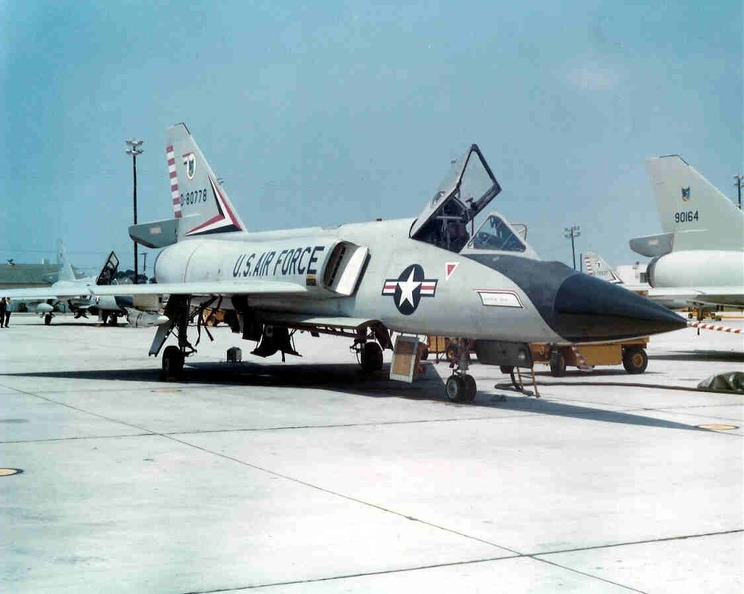
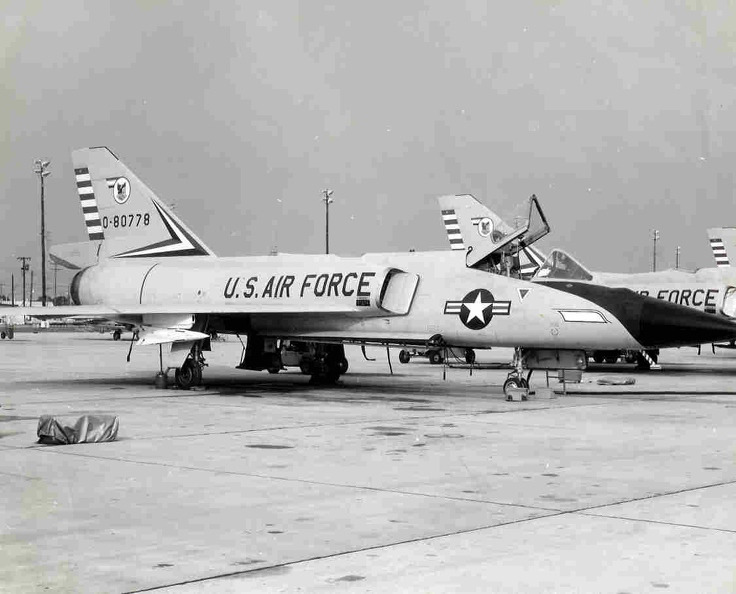
The airframe in the photos is 58-0778. This particular aircraft also received the post-1973 modifications, according to this image (you can see the AIM-26 Falcon on the aircraft).
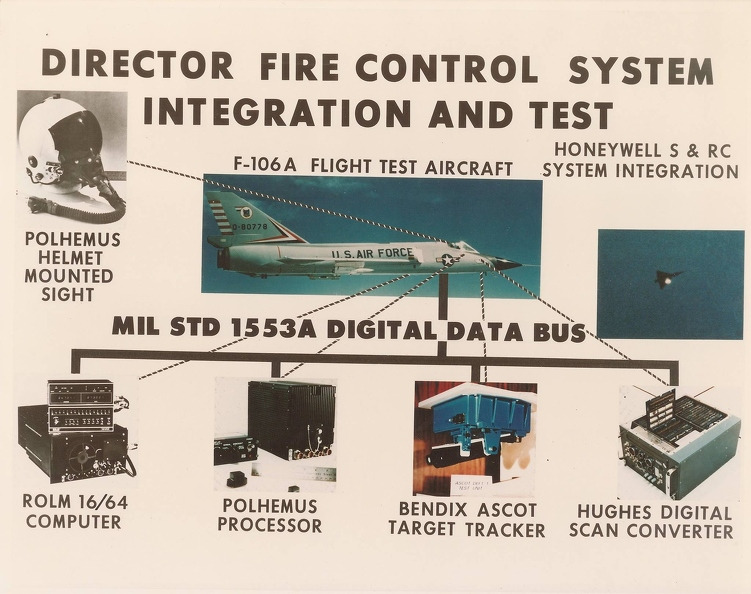
In addition, an F-106A was used to test the nuclear-armed AIM-26A Falcon as part of the Simplified High-Accuracy Guidance (SHAG) program, as reported in Aviation Week & Space Technology (January 20, 1975 issue). This article describes the employment of the AIM-26A by the F-106A in conjunction with the helmet-mounted sight system.
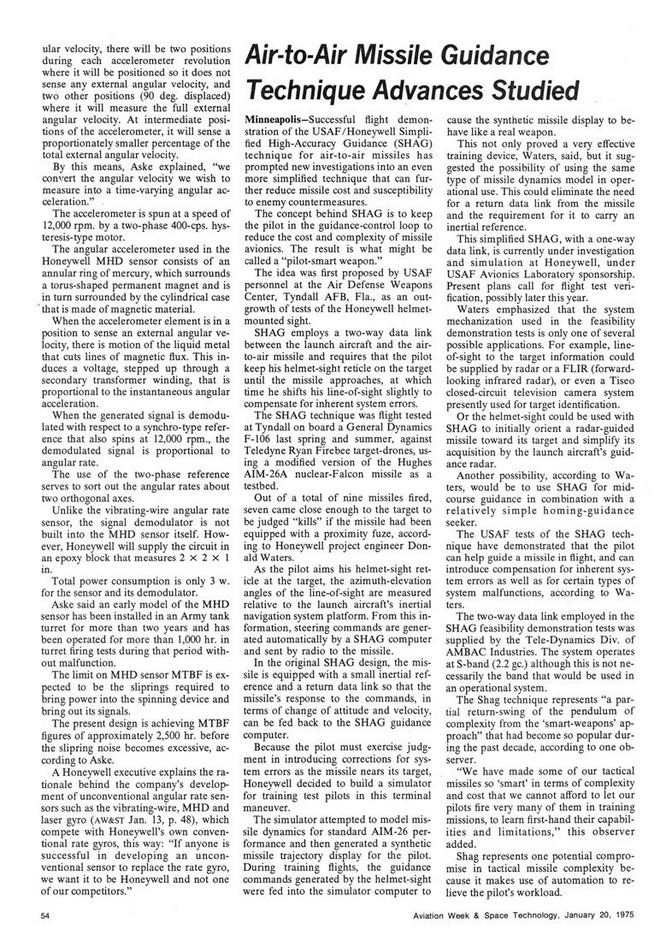
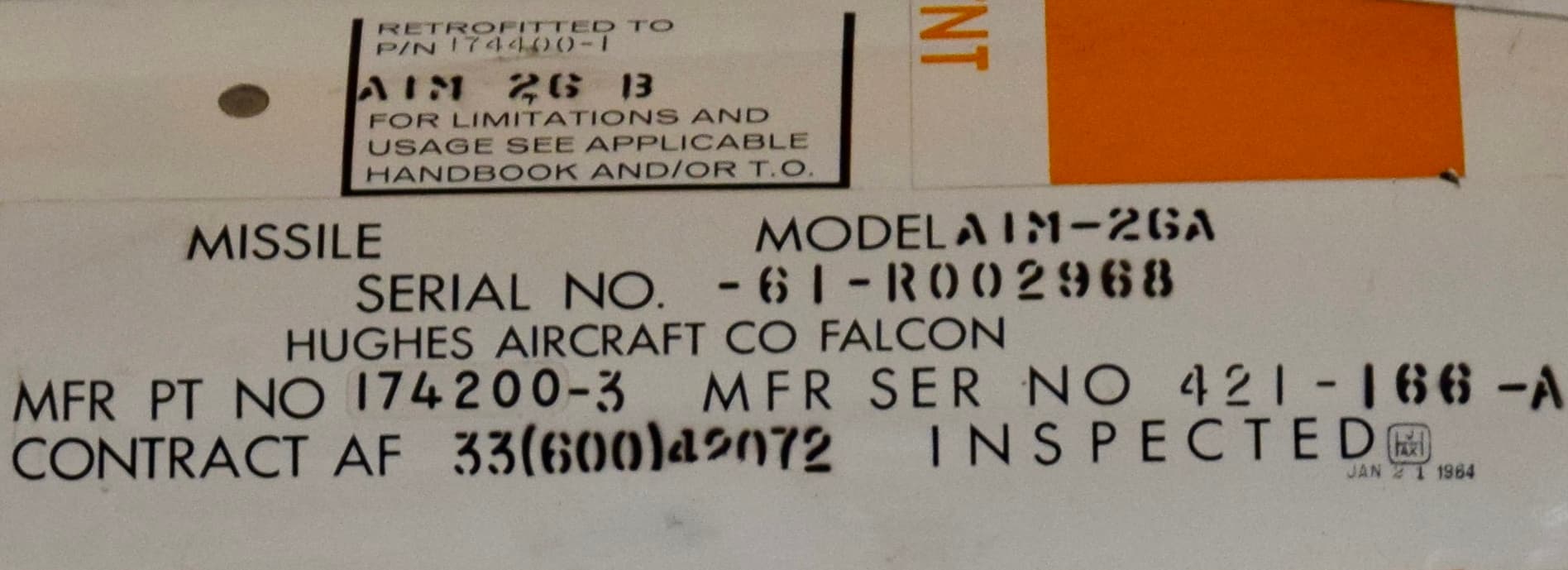
It is also worth noting that the AIM-26A could be retrofitted to the AIM-26B standard by replacing the nuclear warhead with a conventional warhead. There is a photographic example that shows an AIM-26A airframe that was modified to carry the conventional warhead and effectively became AIM-26B standard.
This means that the F-106A was capable of employing either the AIM-26A or AIM-26B.
To be fair theyre the exact same in all but warhead and probably the computer on where to guide it lol
Seems like the AIM-26A is basically identical to AIM-26B aside from warhead TNTe being 250t instead of ~18kg or less. They even have a proximity fuse for both missiles.
It’s a combination of both
I’d like to note that the article specifies that if the aim-26b were added to the F106a, it would become a sarh+IOG+datalink missile like an r-27, and additionally would have the ability to be guided with the helmet mounted sight in SACLOS mode by the datalink alone, thus not triggering enemy RWR at any point…
That article is talking about experiments with a modified AIM-26A, it’s not a standard AIM-26 feature. Also the fact that only 7 out of 9 missiles got close enough to score a kill with a nuclear warhead doesn’t fill me with hope for how many would get close enough to score a kill with a far smaller conventional warhead.
Well obviously it’s not a standard feature of the regular AIM-26a, but it’s something specific about the test bed that’s portrayed ingame. And for the record, the regular AIM-26a/b (alongside the AIM-4F) does have the ability to be SACLOS guided when it’s launched in home on jam mode, it just does it by following the radar beam pointed at the target instead of being directly commanded through datalink (so it wouldn’t be as stealthy).
And to quote the test:
Out of a total of nine missiles fired, seven came close enough to the target to be judged kills if the missile had been equipped with a proximity fuze
I’m pretty sure the radius of proximity fuze activation is the size of the explosion of a conventional warhead, rather than the radius of a miniature nuclear bomb…
The article says an AIM-26A was used for testing, not an AIM-26B, so that’s the nuclear version. The AIM-26A used a radar proximity fuse to detonate the nuclear warhead once the missile was within lethal range, so there is nothing in the statement which particularly suggests it is talking about a conventional warhead.
Because of its role it was assumed to be within ~300 meters of a threat bomber to ensure destruction via vaporization.
An actual detonation would have a much larger kill radius since it could additionally rely on blast, pressure or radiation effects to down an aircraft. But as it’s role in the Homeland Defense mission They weren’t going to take any chances. Also expected engagement tactics was to shoot them one at a time at the central most member of Flight, not singular targets.
Taking the known TNTe value, for the W54 warhead (250kT) and the Fuse performance of 300 meters, comparatively downscaling it to the 40lb of the -26B’s warhead to give similar pressure values (sort of) leaves the radius of the -26B’s fusing radius at ~16 meters.
The whole system was advertised to reduce the cost of air to air missile avionics - this guarantees it has to work with cheap conventional explosives, as opposed to very tightly controlled nuclear warheads. Furthermore, the only nuclear air to air weapon in service at the time (1975) was the AIR-2B unguided nuclear rocket, an improved version of the mb-1 rocket which had entered service back in 1957, with the AIM-26A itself having been decommissioned back in 1972 (which is one of the reason they had a few spare missiles available for testing), and there were no plans for a replacement. How you arrive at the conclusion they were testing a system that would only be usable by nuclear air to air missiles is beyond me…
The proximity fuse on an AIM-26A/B is a continuous wave FM design that is activated within 185 feet of the target, and triggers an explosion once relative velocity to target starts increasing. On average AIM-26 missiles got within 30 feet of the target back in 1962,
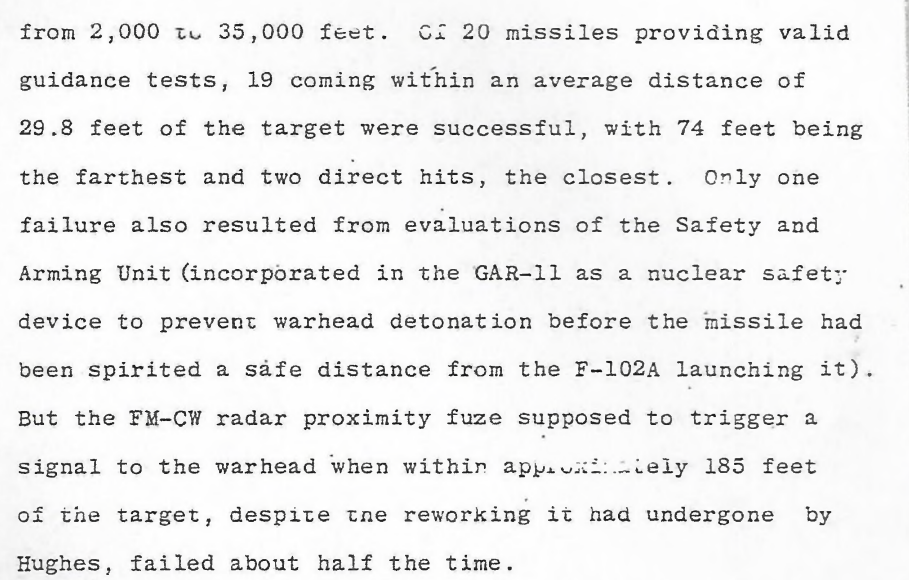
and if you look at the AIM-26b smc that’s the exact distance required to get a kill with the conventional warhead, with 45 feet being the threshold above which there was no kill (although there might be some damage), so it’s safe to conclude that the SHAG tests used 30 feet as the reference miss distance.

Really cool footage of the AIM-4B (AIM-4C before it was made weather proof) being tested against an mgm-1 Matador cruise missile, launched in a salvo of 3 from a F-102 (the F-89J would launch them individually or in pairs, so footage was probably spliced in to hide the weapon bay doors):
apparently an f4E show down a QF-104 drone with an XAIM-4H on 26th of January 1971
source: QF-104 drones - International F-104 Society International F-104 Society
don’t know if this has been shared already