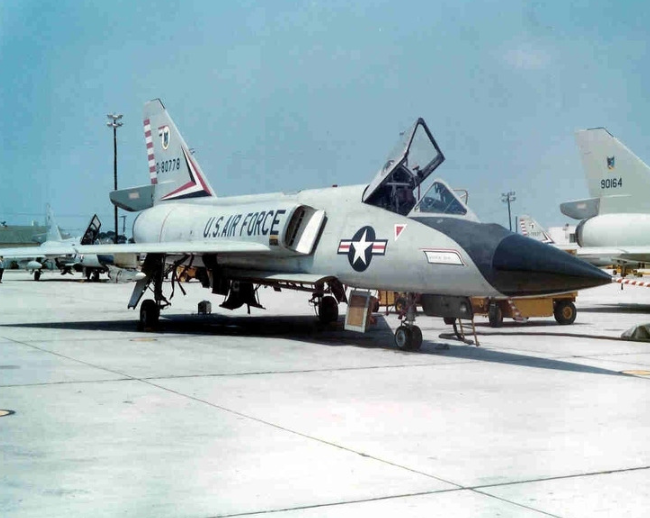
This is new to me at least. A bit of a pity in that it sounds like the AIM-4H may have been tested and developed exclusively on F-4E’s, although given the circumstances it’s not surprising that the money was going into making the phantom more capable. That said, if they were also testing mb1 rockets, maybe the F106’s were also involved…
The missile that pulled 25G’s isn’t named, but given the timeline and assuming they were using f-4es, it’s probably the aim-7-E or aim-7-E-2.
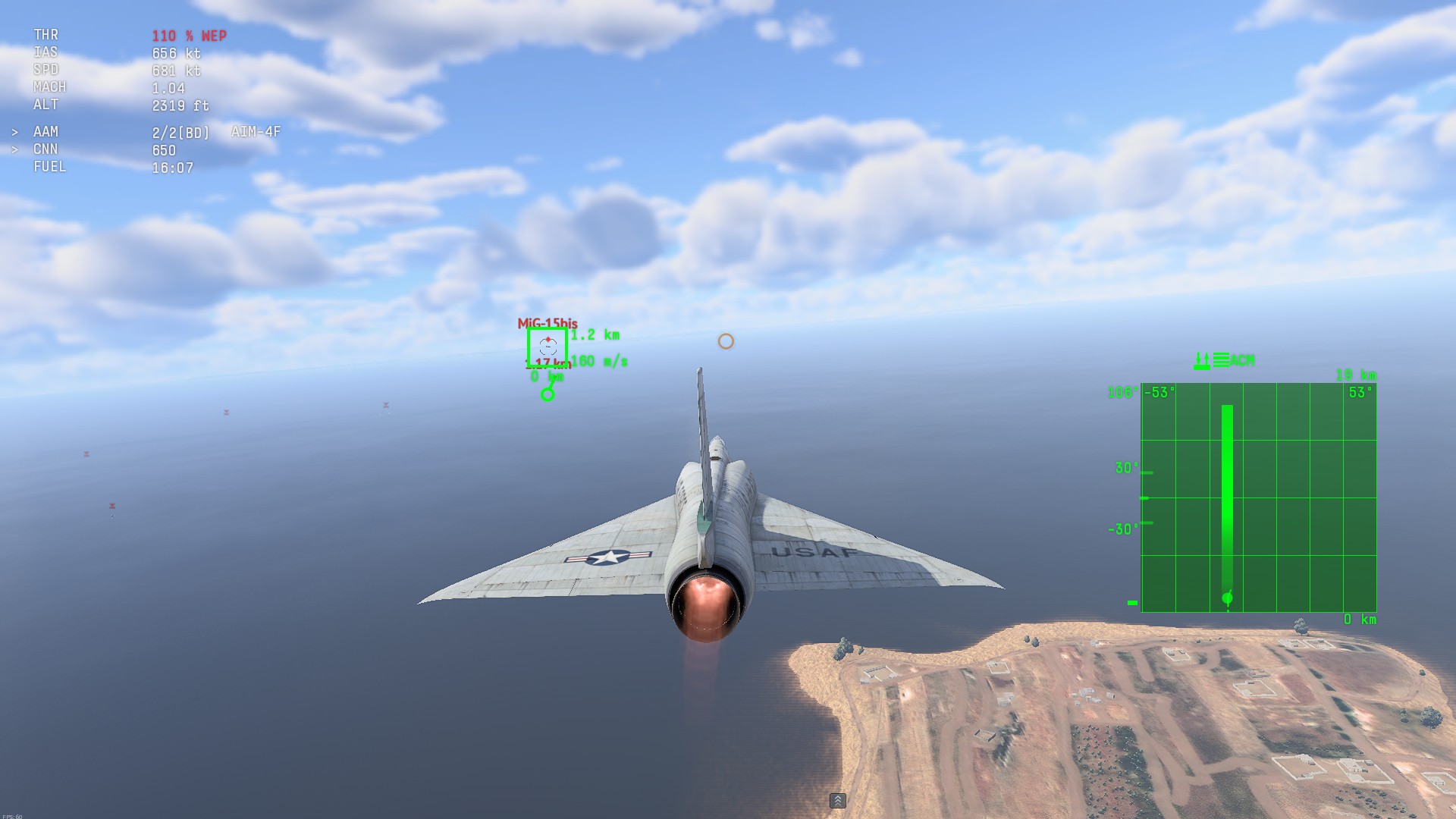
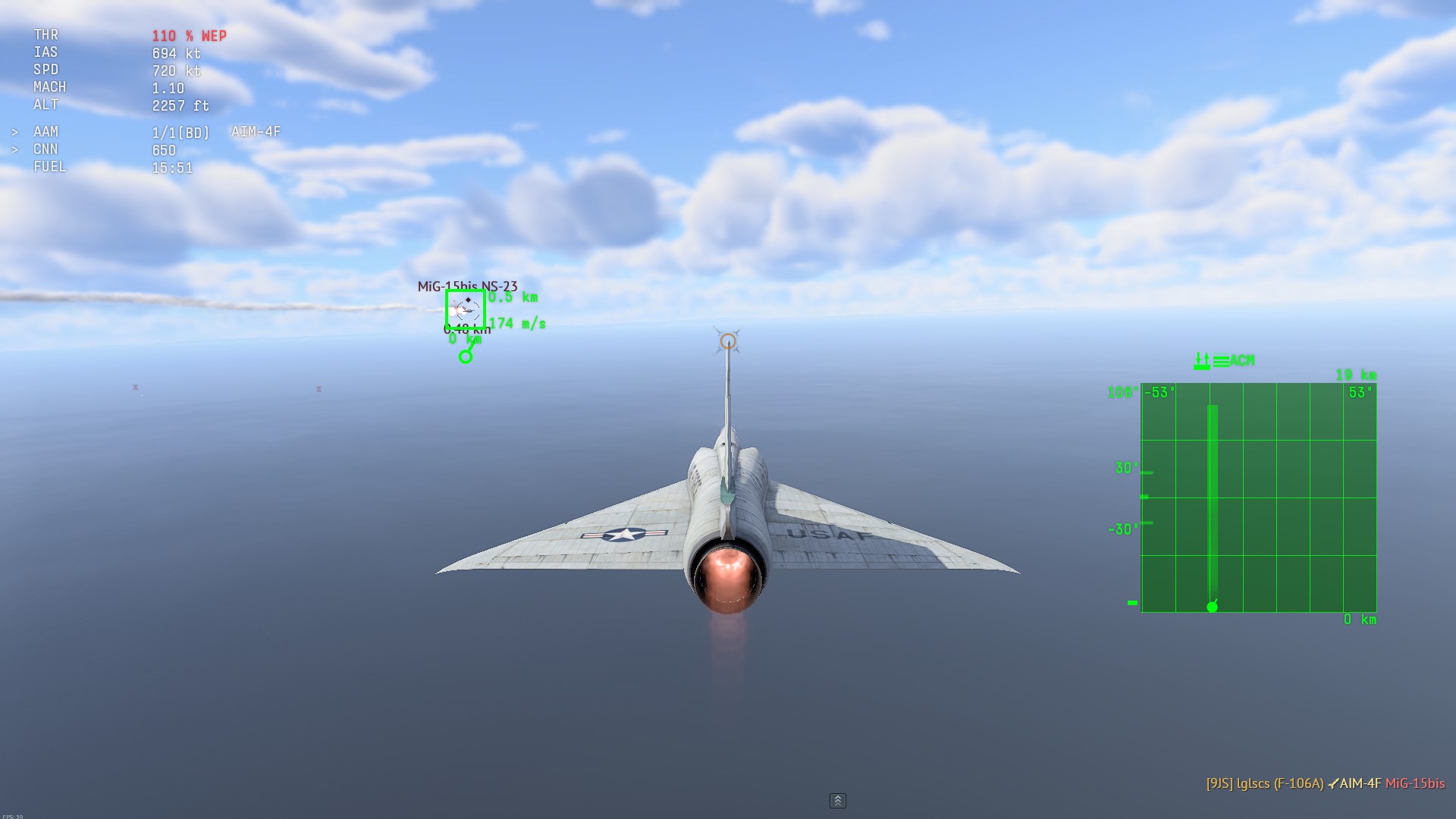
Idk guys if i am doing something wrong but I tried all possible fire distances at all possible speeds and looks like AIM-4F have 100% probability that it will miss.
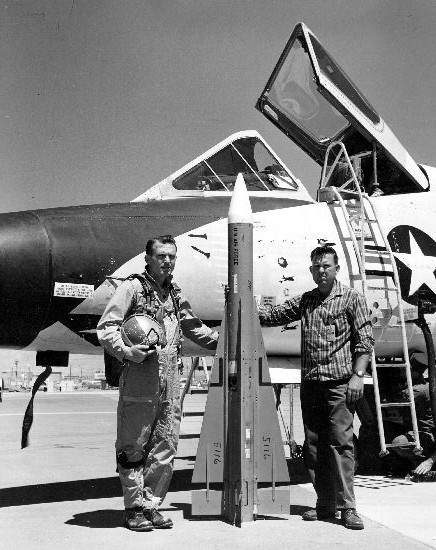
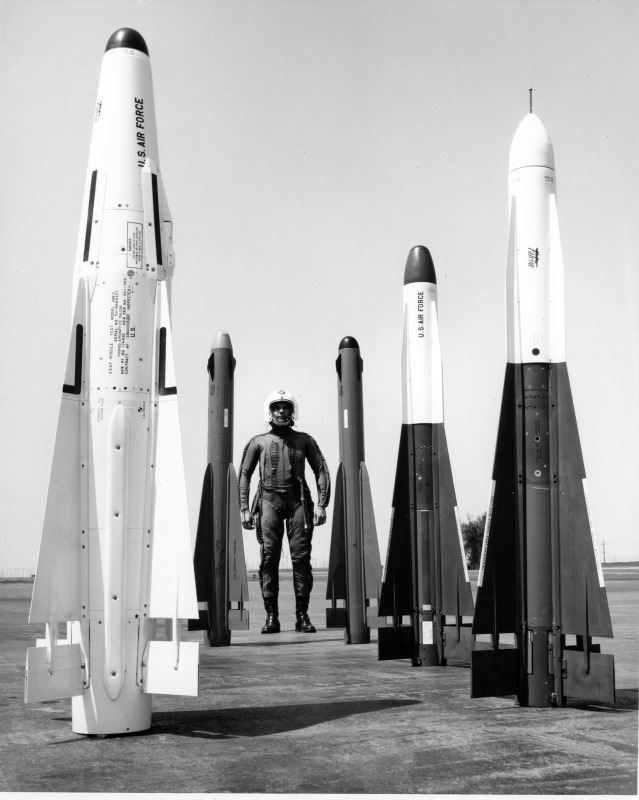
does anybody know why these AIM-26b missiles look difrent than a regular aim 26b
I’ve heard that they might have been with AIM-4F seekers but i don’t know the source for that claim
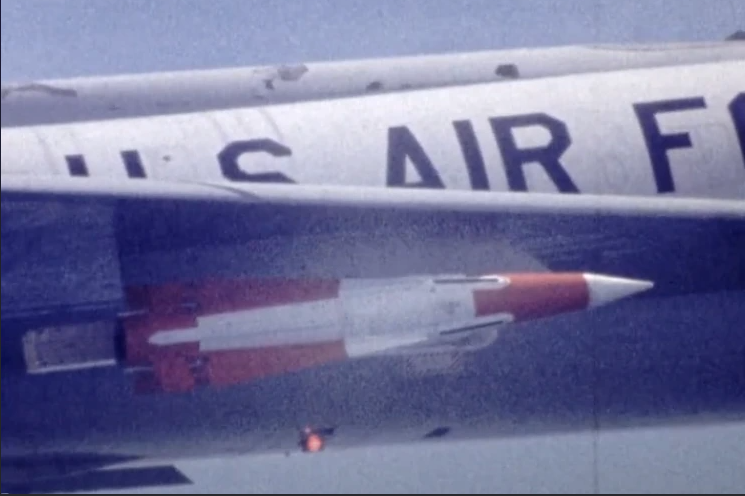
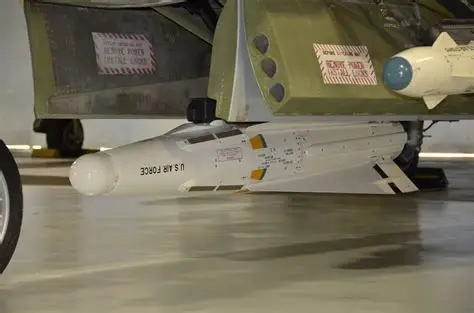
Those early, pointer missiles are using the seeker head of the earlier GAR-3/AIM-4E.
The more rounded seeker head that you are used to is shared with the GAR-3A/AIM-4F, although the 4F covered it with an aerospike to see if it would improve drag/manoeuvrability (it didn’t work, it handled about the same as the aim-4G that didn’t have it).
I’ve tested it myself. The problem you may be having is that you are firing the missile with a negative closure rate, meaning you are forcing the missile to catch up with a target that is flying faster than you, when the missile needs all the speed you can give it.
The other big problem is that unlike it’s AIM-4G IR guided counterpart, the ingame radar guided version AIM-4F stops tracking when it reaches 150 meters from the target, which is especially fatal without a proxy fuse. The shots you were doing would work with the aim-4G, but until this is fixed I would recommend a 150 m/s closure rate at the very minimum for the AIM-4F, to make sure it is going fast enough to not need last minute corrections.
This makes the missile unusable in a direct tail chase or head on shot; you can only use it to attack from the beam (side), a snap up (below) or a dive (above), because you want to maximize the collision area the missile will see as it’s flying, and both the cross section area and the wing planform area are much greater than the frontal area.
There is XAAM-2 mentioned in AIM-4 family and it is correct but information looks a little out-dated. I would like to attach conclusions from suggestion made by @Grzegames and information shared there by @jony12a
First one would be about the “XAAM-2 is AIM-4D upgrade”. It is incorrect state because XAAM-2 has totally different construction. Sizes of this missiles is more similar to Super Falcons than AIM-4D and it differs anyway even from it. Also all major parts was developed and made by Japanese companies. AAM-2 was developed as successor of AIM-4D with full backward compatibility and because of this XAAM-2 should be listed in AIM-4 family but it is not upgrade of any version.
Then let’s speak about features of this missile.
About fuse. It is stated clearly that XAAM-2 got non-contact fuse in contrast to any IR AIM-4 and only this fact make XAAM-2 very unique.
About engine. In this suggestion is said that engine is liquid but looking on scheme it can be said that engine is simple solid rocket engine. But another things is interesting - according to the official books it got more powerful engine than AIM-4D and according to scheme the fuel tank is longer than any other AIM-4’s motor section. It may hint that the XAAM-2 had a large supply of fuel. But need to note that XAAM-2 is also more heavy up to ~15% and probably more fuel compensate more weight. But even if speed is same as AIM-4D, it means that XAAM-2 has more kinetic energy for maneuvers. **but please be skeptical about this, as these are just my guesses.
About seeker. According to document shared in suggestion XAAM-2 it was assumed that the missile could shoot down targets at an angle of 45 degrees from the nose of the target (while 7% chance was indicated for the AIM-4D under the same conditions). Perhaps this shows the presence of an all-round seeker, which is indirectly confirmed by the composition of the seeker - indium antimonide. However, a number of sites say that the all-round accessibility was limited, which makes it difficult to understand the real capabilities of the seeker.
CONCLUSSIONS
Absolutely guaranteed non-contact fuse which alone is great differences from other AIM-4 with IR seeker.
Known that warhead is more powerful than AIM-4D’s but no any data.
Probably more range and kinetic energy for maneuvers thx to more powerful engine.
Probably all-aspect or limited all-aspect (if possible in game) seeker.
All of this make XAAM-2 missile pretty interesting in compare to other AIM-4 and limited only to F-4EJ as only possible carrier (and where missile was tested)
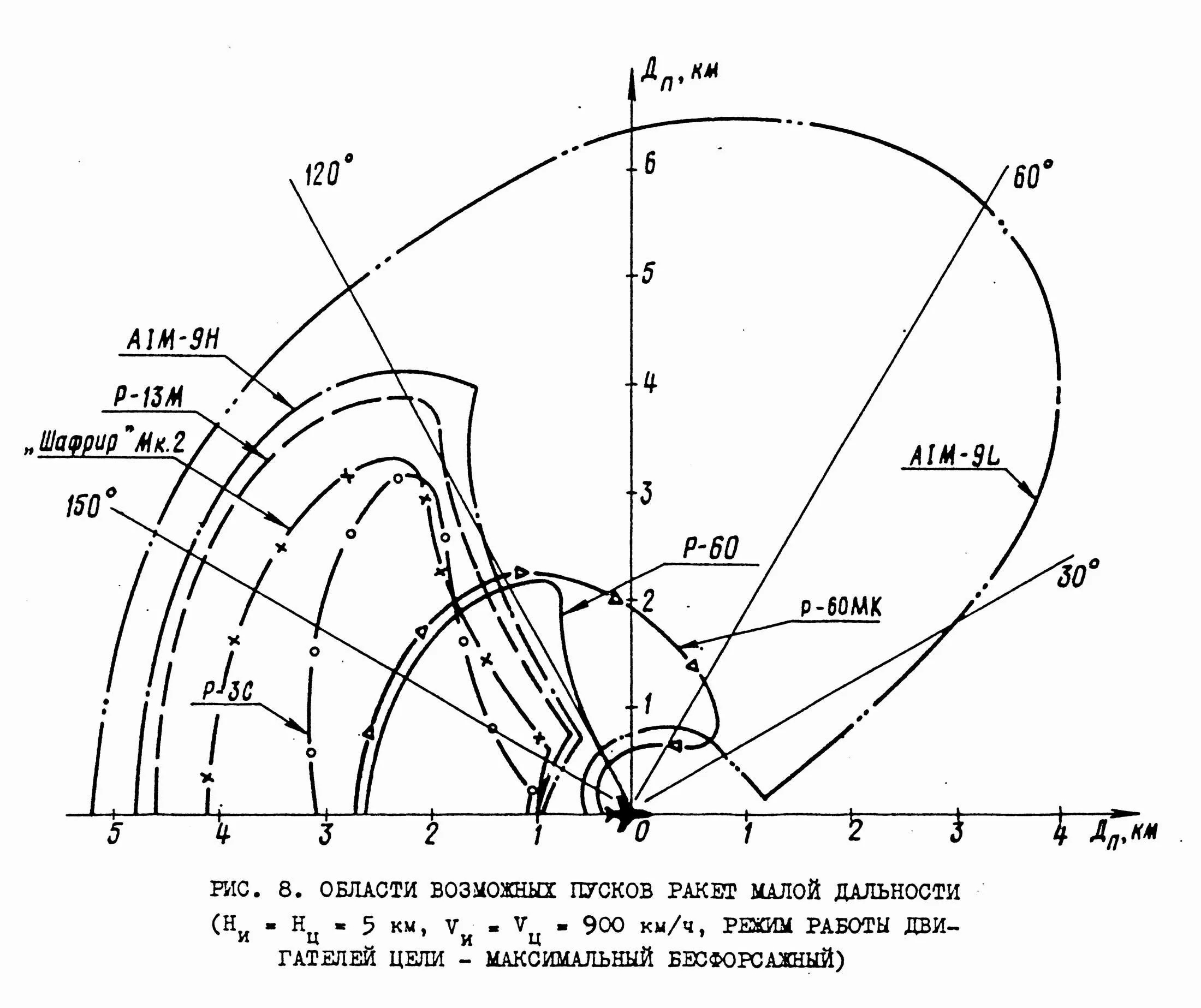
R-60M IRL is considered “limited all aspect” so if XAAM-2 is similar it can probably have a similar seeker. All aspect for hot targets out to 3km~, but the real threat is the enhanced side and rear aspect capability.
The xaam-2 thread goes into further detail, but I would hardly call it “totally different construction”, they used inhouse japanese components, lengthened the missile to the size of the super falcon and tweaked the fins (removed front canard, enlarged control surfaces), but they generally keep the same configuration with delta winged fins attached to rear control surfaces.
As for the seeker, it visually looks identical to the seeker already used on aim-4g and aim-4d, and it would make sense since it’s already an all aspect seeker based on cryogenically cooled indium antimonide. The smc’s of both missiles (see this early post The AIM-4/26 Falcon - History, Design, Performance & Discussion - #282 by lglscs ) establish that is possible to get a kill shot within an angle 15º or less from the nose of a non afterburning target, which is especially impressive since this is without a proxy fuse, and it’s a better angle than what the r-60mk’s could achieve, according to the russians themselves.
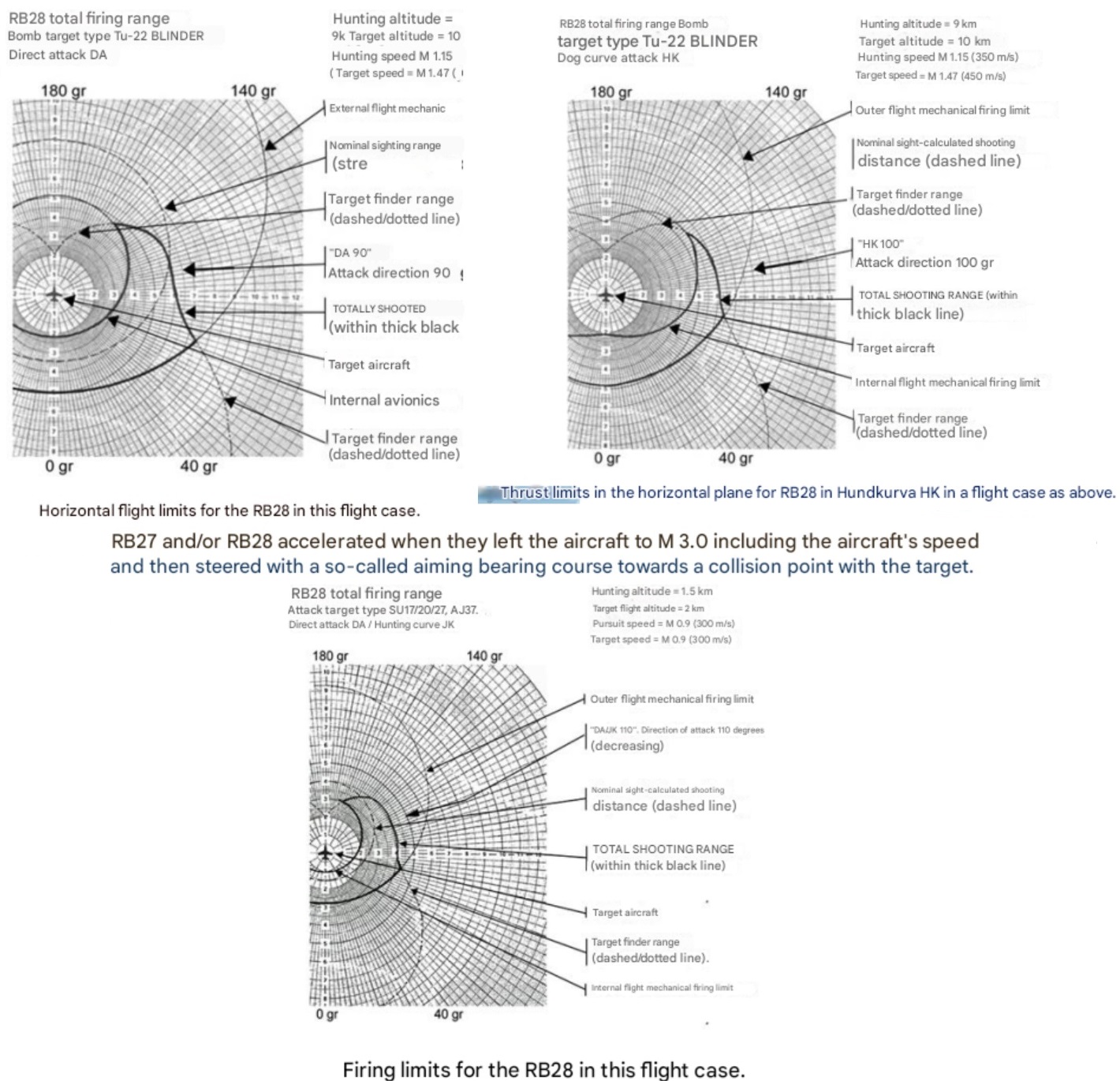
Even the swedish data on the aim-4d/rb28 indicates that it can get a kill shot on a an non afterburning aj37 flying 2000 meters high with just an angle of 20º from a true head on.
I wrote a little bit not correct. Yes it uses exactly same design as missile made to success the AIM-4D but it is not upgrade of AIM-4D because it was made anew and made like other Falcon missiles
It sounds interesting especially with the part about R-60MK though I would search more sources for all this missiles
From what i could tell, that graph first showed up in discussions related to the performance of the mig-21 bis and it’s weapons and thus it’s possibly lifted from one of it’s manuals, but i can’t tell you from which exact document this is from, let alone the page number. There might be other users more familiar with russian documents that can answer you, as the image has been floating around the internet for more than a decade.
Why did they never put the aim 26 into service on the f-106 even though they put it into service on the f-102? was it due to the size of the weapons bay too small to fit them?
The aim 26 is the same overall size (length x wing span) as the Aim-4fs and the aim-4gs, so the weapons bay could fit 6 of of them if desired. The problem is that in 1960 kennedy was elected president and nominated robert macnamara as defense secretary, who had the policy that the airforce and the navy had to use the same equipment. As the F-4 (and it’s sparrows and sidewinders) was selected for both airforce and navy, every unrelated program had it’s funding cut, and as they already had thousands of aim-4fs and aim-4g’s in stock they didn’t bother spending the money needed to integrate other weapons.
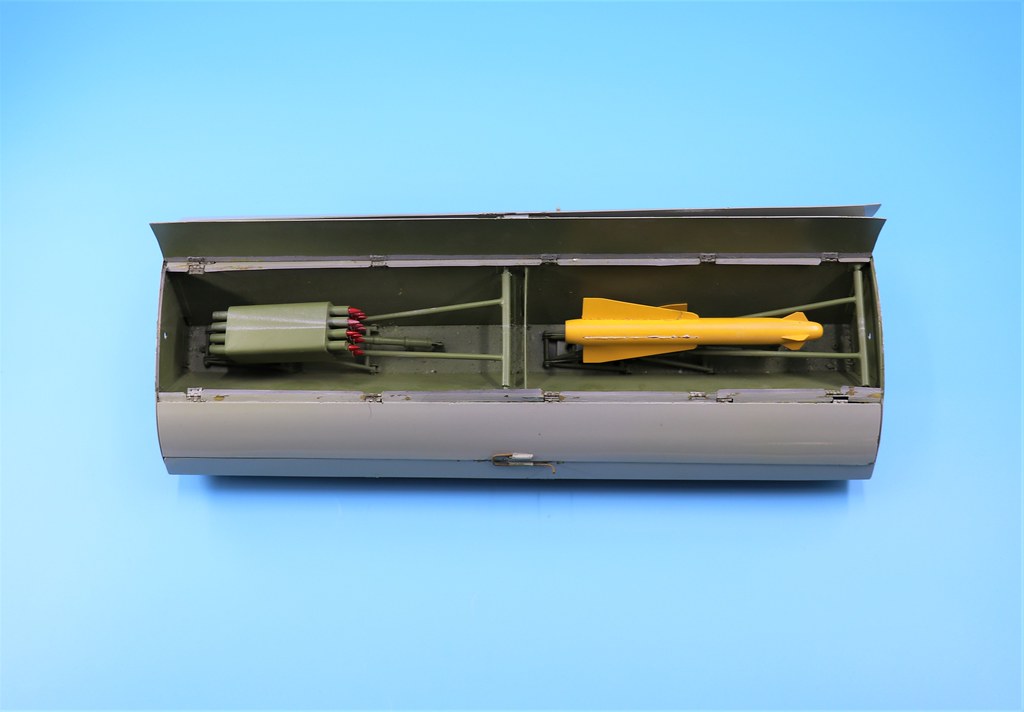
The weapons bay has space for 6 aim-26 sized missiles, 4 on the sides plus 2 on the center. It’s usual 4 falcons + genie loadout is because the length of the centrally mounted genie (2.95 m) doesn’t allow enough space in front of it for another super falcon (2,2 m) in the 4,7 m long weapons bay. The F102 wasn’t able to carry 6 aim-26’s because of the width of the side weapons bay doors rather than the space within the bay itself, which is why the f106 used folding doors for the full width instead. The m61 vulcan is much shorter and they could have added another missile in front of the gun, but i’m sure if they had the required budget they would rather have spent it to add countermeasures instead, like they wanted to.
You could even fit standard size lau-3/lau-10 rocket pods in there, in theory.
The maintenance crews didn’t really like the rocket firing door design in the F102. They had to be cleaned of dust after firing, and having 2 rockets in tandem in a single tube meant that there was a risk of explosion if the front rocket misfired/got stuck and the rear rocket was launched into it, which is why it was done away in the f106.
the missiles don’t track up close for some strange reason (I’ve read that all pulse guidance missiles (the ones without an aspect) also do this) don’t know if it’s a bug or historical tho probably a bug. However, the ir variant doesn’t suffer this issue