- Yes
- No
Hello everyone, and welcome to this new suggestion.
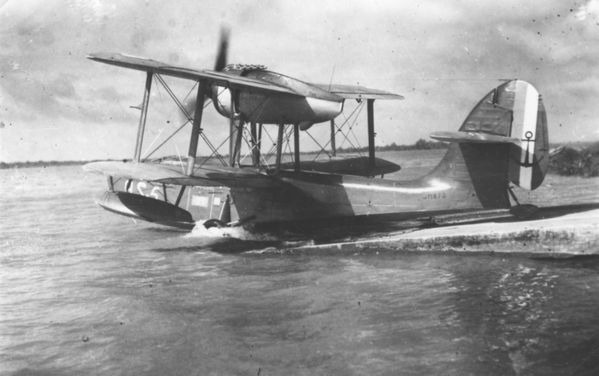
Today, I am presenting a new aircraft used by French forces after the Second World War: the Supermarine Sea Otter.
The Supermarine Sea Otter was a British amphibious reconnaissance and search-and-rescue aircraft developed as the successor to the famous Supermarine Walrus. Designed during the 1930s, it retained the general concept of a naval biplane capable of operating from both land and water, while incorporating a more modern and streamlined design. The prototype made its maiden flight in 1938, but several development issues, particularly concerning low-speed stability, delayed its entry into operational service until 1943.
Once finally introduced, the Sea Otter was primarily used for search-and-rescue missions. Its ability to land on water made it particularly valuable for recovering airmen who had been forced to ditch at sea, especially over the English Channel and the North Sea. Although its main role was rescue rather than combat, the aircraft was also used operationally during the final stages of the Second World War. During the Normandy campaign, Sea Otters supported Allied forces by carrying out reconnaissance and rescue missions, while some aircraft were also employed for light bombing and close-support missions against German positions.
Following the end of the war, Sea Otters continued to serve with British forces around the world. Their ability to operate from remote coastal areas made them particularly useful for colonial and overseas operations, and it was this capability that eventually attracted the attention of the French Navy.
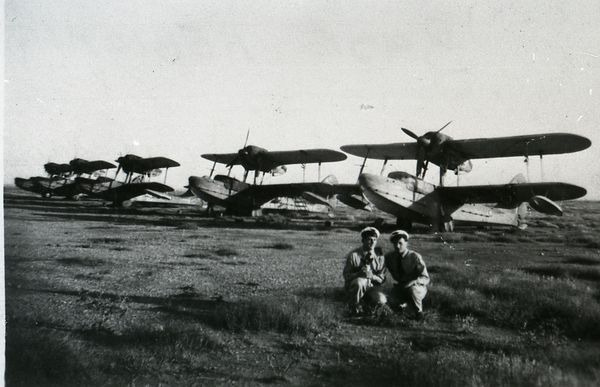
In 1947, the French Navy was looking for a suitable amphibious aircraft to perform search-and-rescue missions in Indochina, where French forces were engaged in the First Indochina War. Rather than developing or purchasing an entirely new aircraft, France turned to the United Kingdom, which still had a number of Sea Otters available following the end of the war. An agreement was reached, and France acquired an initial batch of approximately ten aircraft.
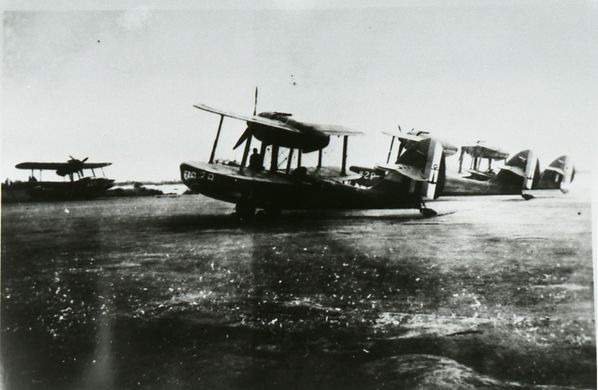
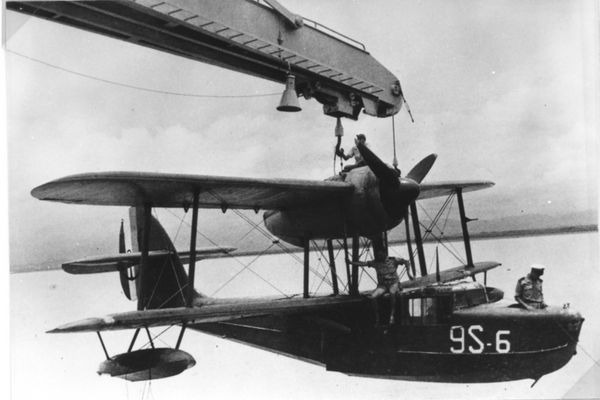
These aircraft were assigned to Flottille 8S and deployed to Indochina, where they were primarily tasked with rescuing aircrews and supporting French forces operating over the region. Their amphibious configuration made them particularly useful in an environment dominated by rivers, coastlines, and areas with limited infrastructure. They could operate from conventional airfields when necessary, but also land directly on suitable bodies of water, giving their crews considerable flexibility.
In 1950, France received a second batch of seven Sea Otters. These aircraft were assigned to Flottille 9S, providing the French forces in Indochina with a second dedicated search-and-rescue unit. With a total of seventeen aircraft, the Sea Otter became an important part of the French Navy’s rescue capabilities during the later stages of the conflict.
However, the aircraft’s career in French service was relatively short-lived. By 1952, the French Navy had access to newer and more capable aircraft that could perform search-and-rescue missions more effectively. With the First Indochina War also approaching its final stages, the Sea Otters were withdrawn from service. The seventeen aircraft were left behind in Indochina rather than being returned to France, bringing their brief French career to an end.
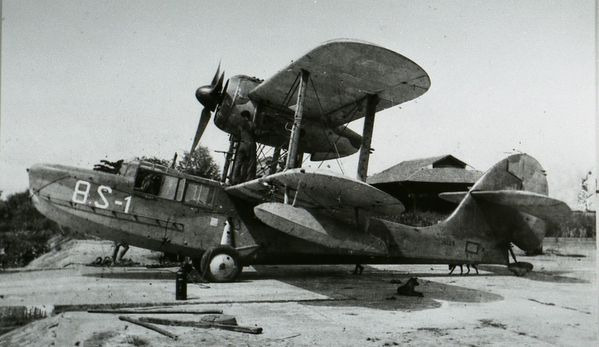
Characteristics
Length : 12.12 m
Width : 14.02 m
Height : 4.93 m
Mass :
- Empty : 3087 kg* Full : 4536 kg
The aircraft is powered by an 805hp Bristol Mercury XXX engine, allowing it to reach a maximum speed of 262 km/h and a service ceiling of 5200 m. Its range is 1167 km at a cruising speed of 160 km/h.
The crew consists of 3 to 4 people.
Weapons
The aircraft’s armament is very simple, consisting of three mountable machine guns for self-defense (one at the front and two at the rear). Additionally, the aircraft can carry light bombs to attack ground targets, specifically four 110 kg bombs.
In-game, this aircraft would be an interesting addition to the French tree, providing a low-BR seaplane capable of carrying out ground-attack missions against light targets while defending itself against threats, provided they aren’t too strong.
Pictures