“Su-27SK is heavier than Su-27S, therefore is not comparable for a bug report”
5 Likes
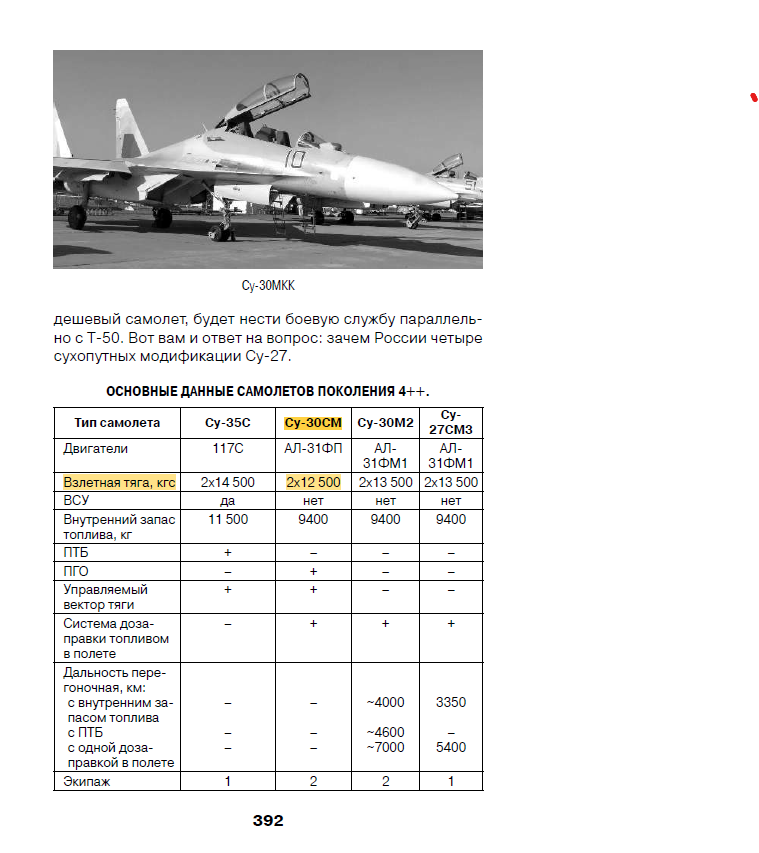
Static thrust @ sea standard day =“Take-off thrust”.
Взлетная тяга, кгс = Takeoff thrust, kgf
Gaijin has a tough time understanding what take-off thrust is. Take-off thrust is the lowest certified baseline thrust guaranteed by the aircraft manufacturer when the engines are installed in the aircraft. Installed turbine engines always produce more than stated, especially when mass airflow and ram effect take place. This is because the aircraft manufacturer must always select the lowest thrust rating that all engines of the same type will reliably produce together during airworthiness certification trials & must place these figures in the flight manuals.
This is to provide the aircrew a safety margin when conducting the most critical phase of manned flight, take-off. Always better to understate than to ever over state thrust figures.
This is regulated by the civil and defense departments/ministries of both US, USSR/RF etc.
They believe that flight manuals of either US & USSR only list uninstalled thrust in flight & take it upon themselves to further reduce the certified installed thrust that is already corrected and adjusted for all installation losses.
Gaijin will nerf thrust & blame it on “channel loss”, a terminology that has zero relevance or existence in aerospace engineering.

Gaijin’s diehard, bitter reluctance on this matter results in many fictional underperforming aircraft in every aspect as thrust defines the aircrafts overall flight characteristics. This includes just about every Flanker.
Their understanding comes from their misinterpretation of what static thrust @ seal level, standard day actually represents in flight manuals.
For example, here in the MiG-29G manual:
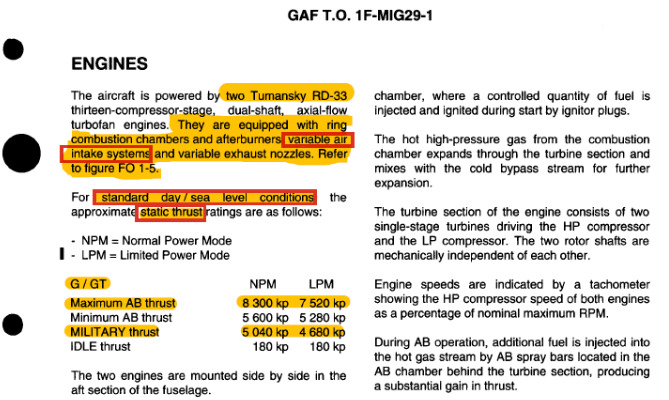
Even though BOTH engines are clearly described as installed (variable geometry intakes)… Gaijin still declares they believe static standard day/seal level conditions means uninstalled thrust of the RD-33 & uses this made-up assumption to model every 4th generation aircraft under this flawed logic. This includes all fulcrums, Flankers, Eagles & everything in between.

All gaijin ever needed to do was simply open any Aerospace propulsion engineering textbook and find what does static thrust standard/day sea level conditions mean:


The Definition of Static Thrust @ sea level/standard day:
“Take-off thrust is commonly considered to be the static thrust quoted by the manufacturer. The static thrust is the thrust measured with the engine stationary, as would be the case when the aircraft is initiating the take-off roll.”
“Note that the take-off thrust is usually taken to mean the sea-level static thrust and is equal to the gross thrust at sea level…”
Source: Theory of Aerospace Propulsion 1st Edition - Pasquale M. Sforza Pages 395-396
5 Likes
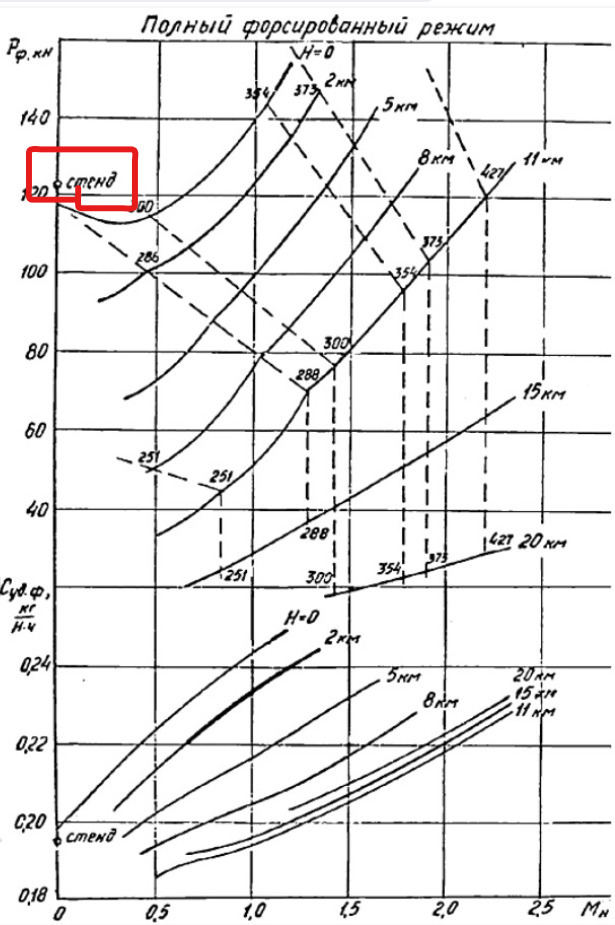
its not 12500 theres channel loss. you can see the bench v standard thrust as indicated by the circle at 122kn and the little circle it has. 122 kn is 12500 kgf.
Spoiler
2 Likes
This is not take-off thrust lol & the drop off you see is not the phenomenon you describe.
you can see the channel loss right there, wym by takeoff thrust.
that table you posted was for sea level standard day thrust on a bench.
how would a engine have the same thrust as it does on a bench when installed lol
You must have not read the definition below of what static thrust at sea represents in flight manuals.
Your table is representing inflight at very high Mach number where altitude & ram effect can become detrimental to thrust output.
I do not believe this is Su-30SM data either, rather SK data. SM has entirely different nozzle that can significantly minimize installation loss or “channel loss” or increase it depending on design.
1 Like
it literally shows 0 Mach installed thrust bro
Does any of these aircraft fly at Mach 2 at sea level? You see height is in the table you posted.
My post is regarding thrust at take-off. I actually do not see a drop off in thrust until very high mach number which is normal if I am reading this correctly.
0 Mach and 0 altitude right here

This not uninstalled thrust figures. There is a Mach number at the bottom there.
I said that the bench thrust is shown by the circle and then installed thrust is the curves of the line

that means bench
1 Like
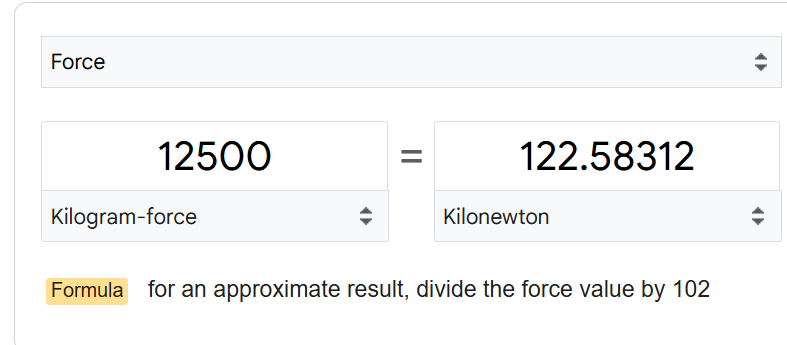
look at that, 122 kn as shown by the circle is bench thrust
2 Likes
I am sorry do you think installed thrust is not determined by bench?
what. installed means on an aircraft
That’s an Su-34.
Installed thrust is mathematically corrected by the manufacturer to sea level conditions and temperatures for standard day. Correction factors are applied to cover all installation effects imposed by the air vehicle. That is how they determine take-off thrust, literally on a bench.
How do you think they determine installed thrust?
flight testing in an aircraft…
1 Like
Brother, I literally explained it prior. Unless that was someone else. Static thrust at sea represents the baseline thrust that is guaranteed by the manufacturer. The thrust will increase/drop off in flight due to a multitude of variables, like air inlet distortion, mass airflow, ram effect & temperature.
The most reliable thrust rating measurement testing is static, sea level testing which is done on a stand with no assistance with mass airflow. The jet engine is compressing air entirely by itself during ground operations. This is critical for take-off thrust measurement where the aircraft is not assisted by mass airflow and ram effect as it does when it is in flight.
The engine is mathematically corrected for sea level, standard day & corrected for all installation losses.
1 Like
yea on a bench. not in a plane
1 Like
Maneuverability and IIRC acceleration graphs are available for Su-27S, even if gaijin give it more thrust, something will be made worse to fit in graphs.
2 Likes