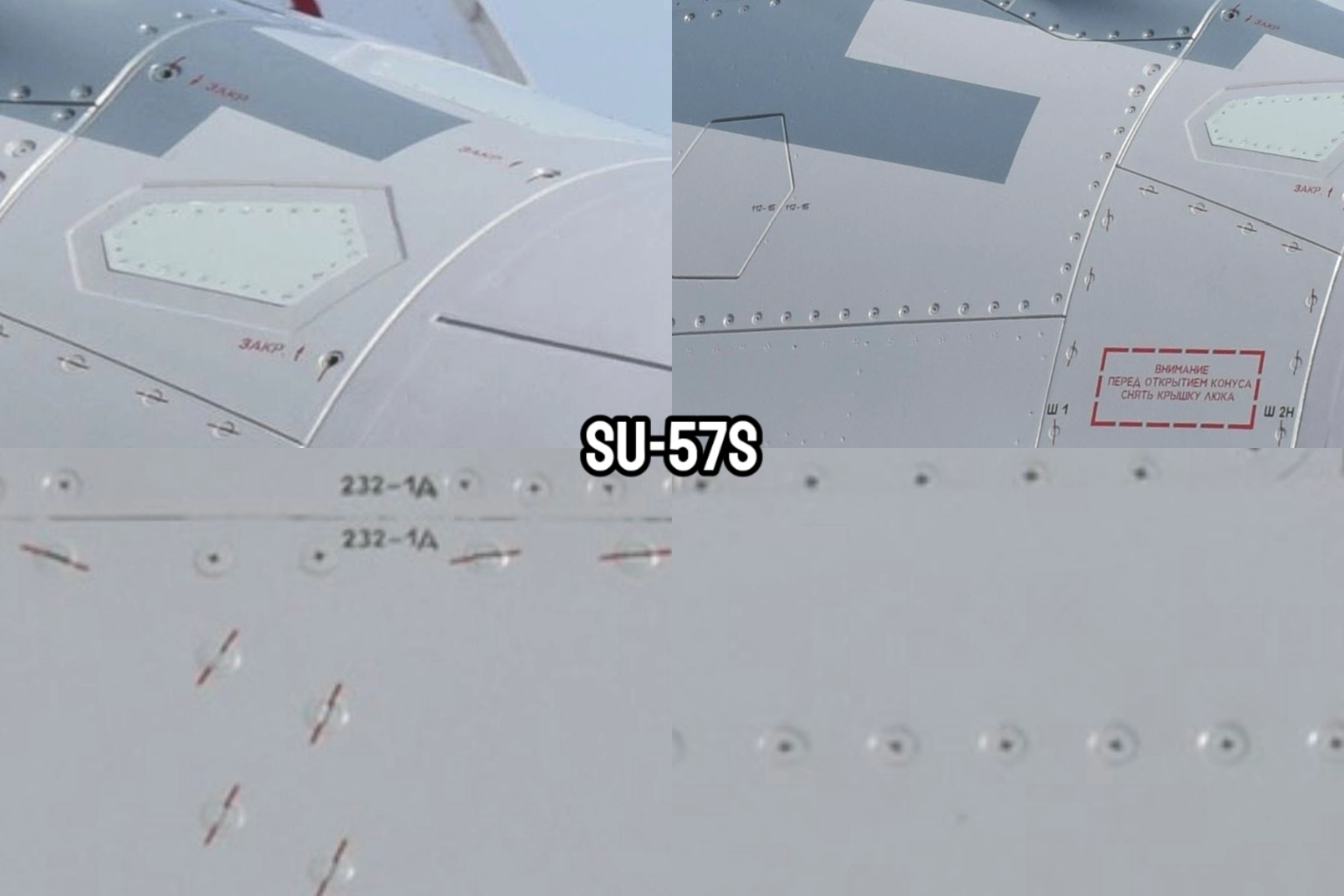
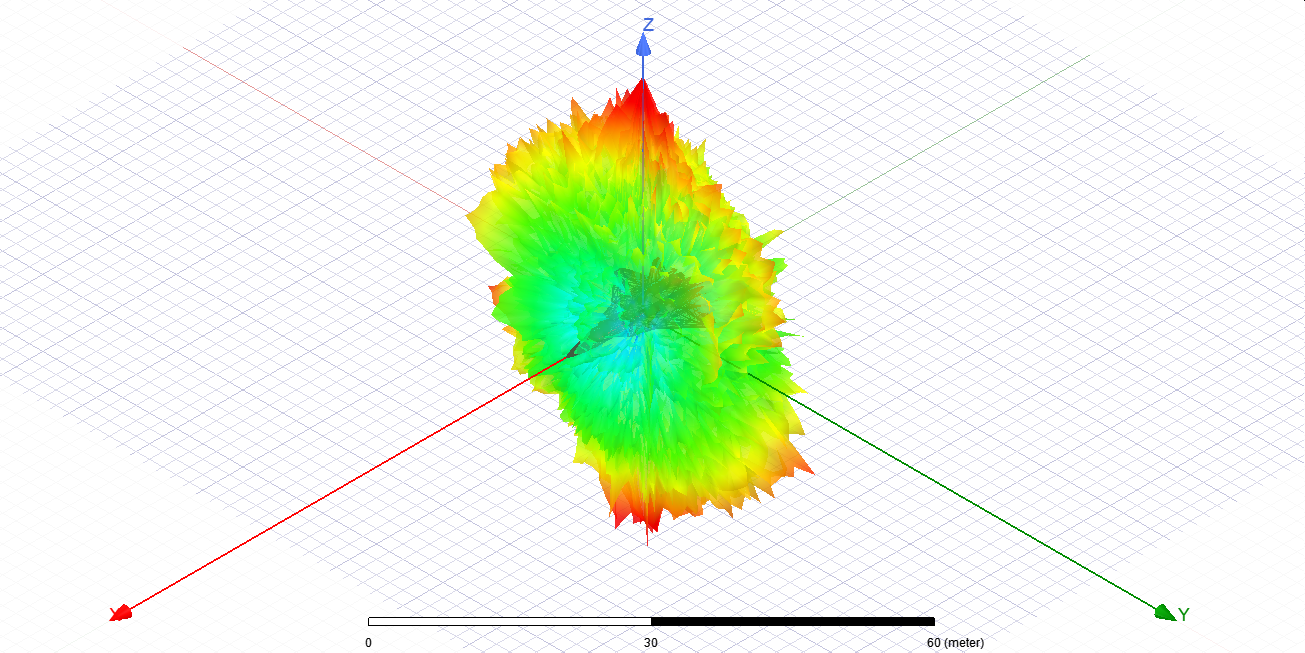
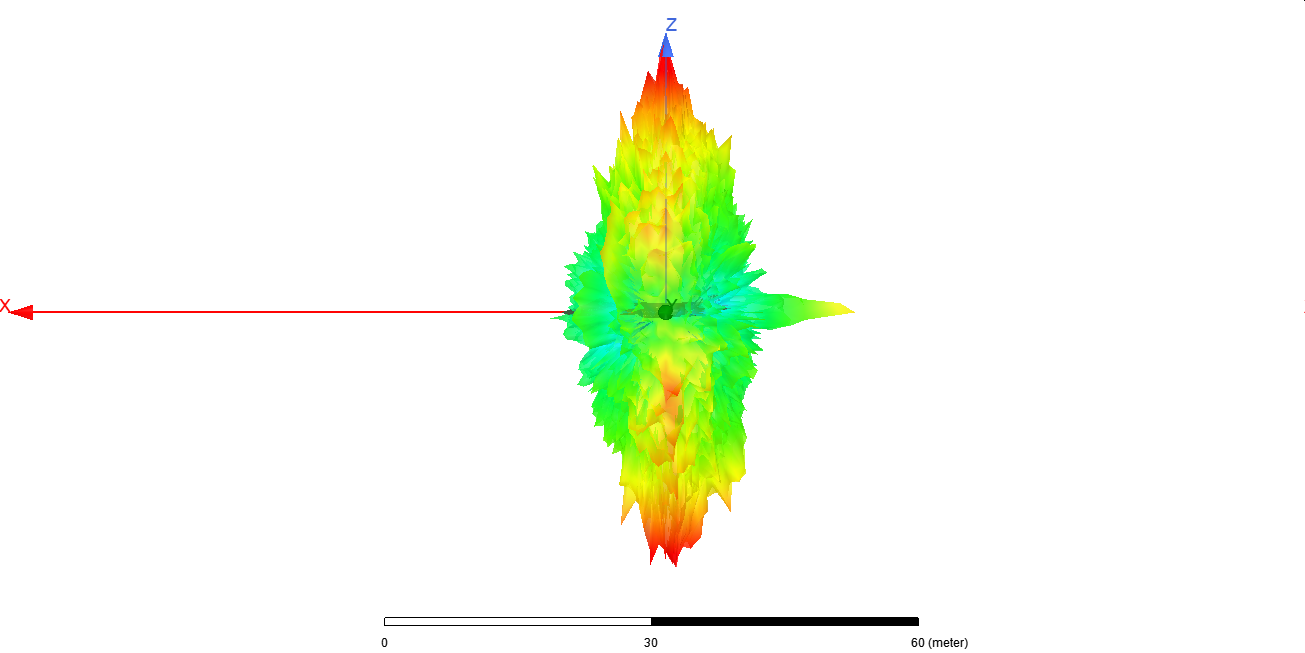
For the result to be completely unrealistic, there would have to be something significantly wrong with the model/simulation. The model includes all if the major shaping and extruding stuff like the IRST, the LDIRCM towers, and even the small cooling intakes.
Sure, it leaves some stuff out. For example, the model for the radar blocker isn’t as sophisticated as the real thing and it assumes that both aircraft have the same RAM, other that that, I don’t see anything wrong with it.
As I have already explained, electrically small imperfections are not really possible to model and they wouldn’t change the result too much. After all, the Su-57 doesn’t have ”bad” surfaces or large imperfections in its panels.
To make even a rough assessment of a simulation’s credibility, you need to base it on at least some real-world data. And this particular model contains plenty of errors, or, if you prefer, simplifications.
1 Like
The model completely ignores panel seams and access hatches, and it treats every external surface as a perfect electrical conductor etc.
You must have ignored what I have said (once again). Small panel seams wouldn’t affect the result significantly. Small protruding imperfections will still be electrically small meaning that they won’t have a major signature.
These things would not affect the result by a lot due to the fact that they are too small to change the total RCS dramatically and on both aircraft, we see that they don’t have any major sources of signature, both of them have flush panels with good treatment to edges and bolts/rivets.
What?? I have said it like 3 times now, they are treated with RAM in the model. RAM is not perfectly conductive, what are you talking about? Give me a major fault with the model that would prove it to be completely unrealistic.
2 Likes
He doesn’t even bother to read what I write. After all these messages he still thinks that the model doesn’t include RAM.
2 Likes
What are you basing that conclusion on?
Lol wut? First prove that the results of this simulation bear any meaningful resemblance to reality.
This is not from the simulation I sent. This is from another simulation that uses the same 3D model but not the same model treatment.
What are you talking about?! I can’t prove it’s actual RCS, this is just a simulation and it’s the best thing we can look at.
I have explained this 3 times

And you two are still going back and forth XD
5 Likes
That’s what happens when people play dumb and refuse ti listen
Then what’s the point of entertaining it.
I’m still looking for a more accurate simulation of its RCS if you have any leads.
Yeah this is sort of just going in circles. I recommend just moving on.
3 Likes
There are sadly no better ones. Basically all the ones you find online are made by the same person. It’s also extremely hard to model finer details and simulating them would be basically impossible, I don’t think the program would be able to handle it anyways.
There is no info on RAM either, we don’t know the properties of any ”modern” RAM, you can only estimate.
As I have explained many times now, these smaller details would affect the result but not by much due to their small size. If something is electrically big, meaning bigger than the wave, they start to become very reflective but since both of these planes have very good treatment around the panels, this won’t happen.
That’s what I came to conclude when I was making this suggestion. I do think Stealth will be up to Gaijins freedoms.
I do think it’ll be interesting to see how RCS is modelled.
Especially if we’ll see RCS depending on Azimuth and Weapon Bays (since we currently don’t).
1 Like
I really don’t know how they will model it since it’s very dependent on angles, wavelengths and more.
I think the best thing they can do is to make a simple ”map” of it at different frequencies. So the signature will depend on the angle and the radar’s frequency.
The thing is that these ”maps” would look super complex.
Imagine if you had something like 1000 points for the model, spread around it spherically at different angles. Each of these points would have a RCS value. For example, a Su-35 faces a F-35. The Irbis operates at 9.35GHz and the game would look at which point describes the angle between the radar and the plane the best. This point will have a specific RCS value for this frequency and this would allow the game to calculate if the radar is able to detect it or not.
I just don’t know how they would assign RCS values for each of these points because there are planes that lack any sort of good RCS simulations online, as the F-22.
2 Likes