[Would you like to see this in-game?]
- Yes
- No
0
voters
How would you like to see SU-100 (1969) in-game?
- As a Tech-Tree Vehicle
- As a Premium Vehicle
- As an Event Vehicle
- As a Squadron Vehicle
- I said No
0
voters
SU-100 Model 1969
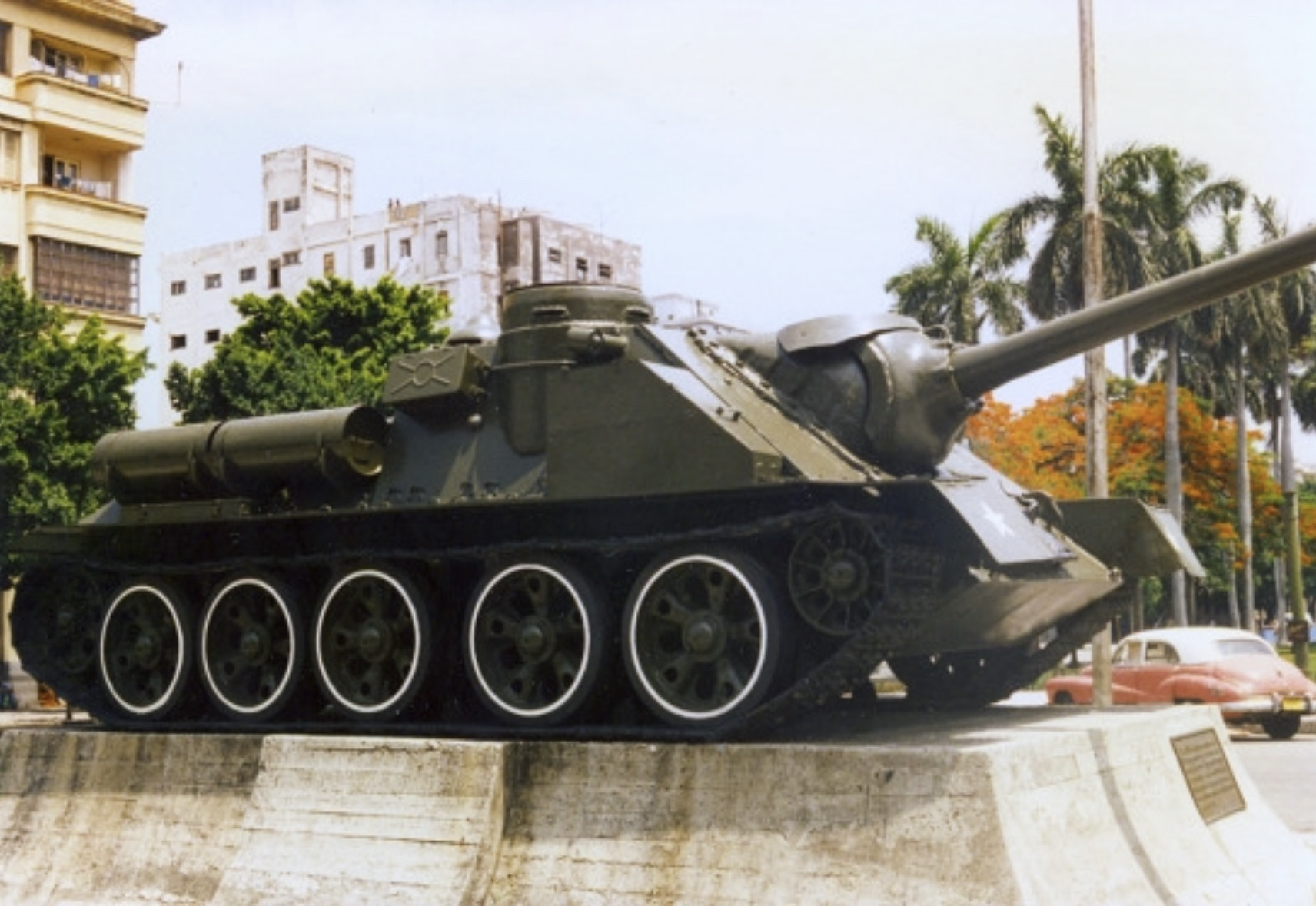
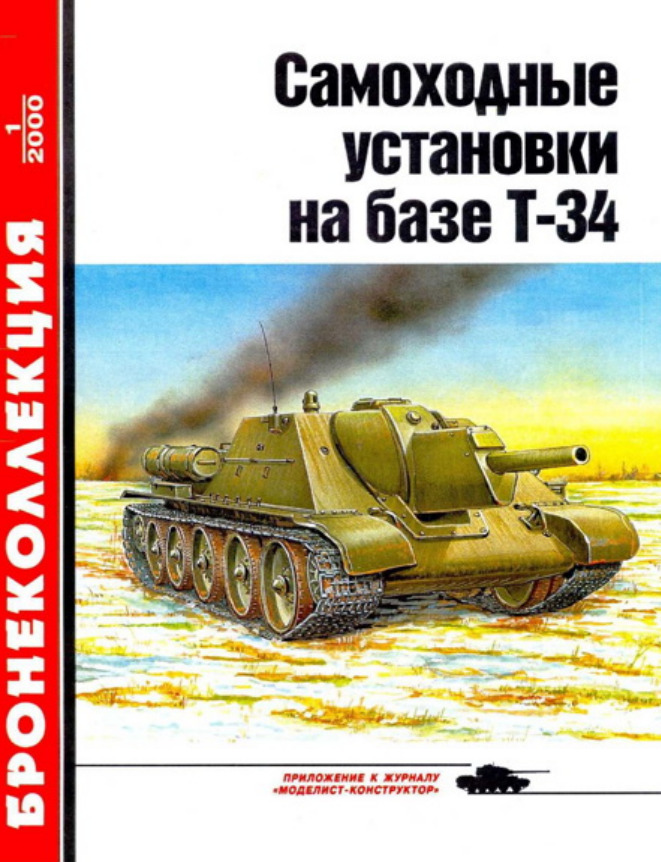
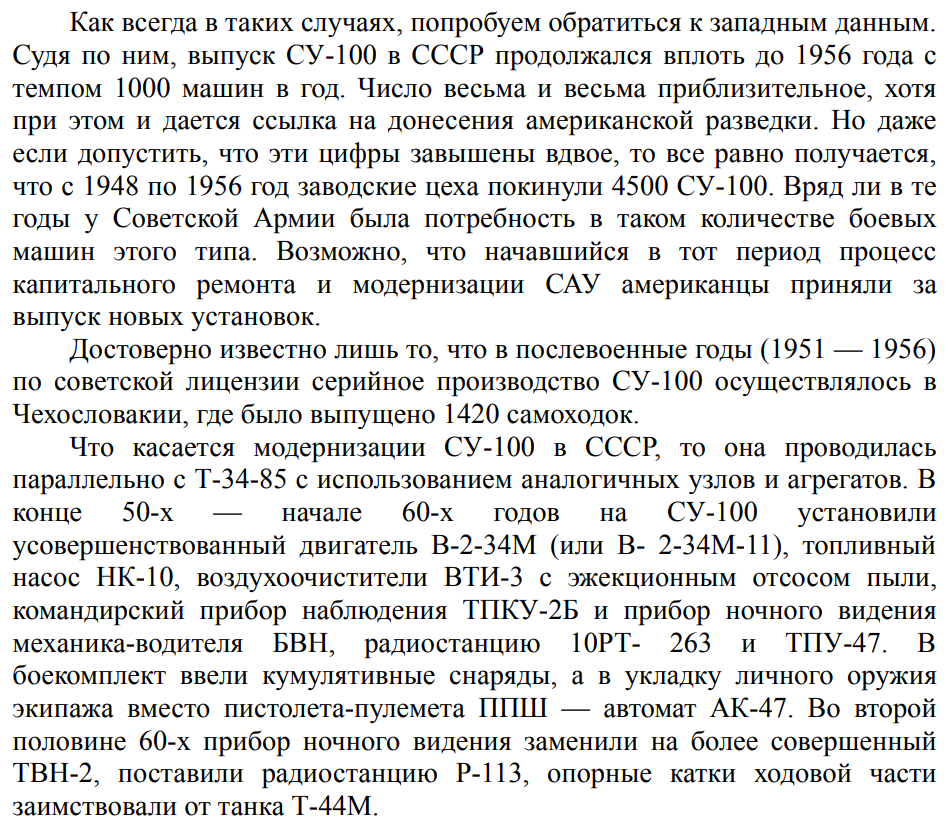
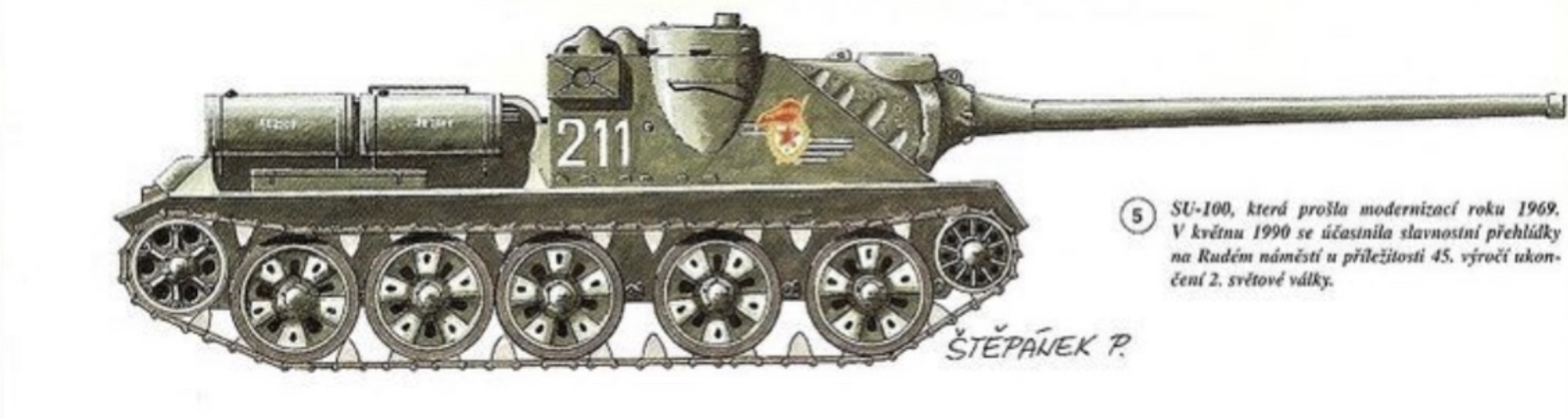
The SU-100 (1969), also known as SU-100 Model 1969, represents a post-World War II modernization of the original Soviet SU-100 tank destroyer. This upgrade program was designed to extend the vehicle’s combat viability and operational lifespan deep into the Cold War era. The USSR generally avoided discarding equipment if it could still be made useful. As a result, many Second World War-era vehicles were modernized to meet Cold War standards rather than being immediately retired. In most cases, these upgrades focused on practical improvements: allowing the vehicles to operate in low-light conditions, communicate with newer Soviet vehicles and command posts, and, where possible, benefit from general quality-of-life improvements such as better range, reliability, and mobility. The Su-100 (1969) overhaul program closely mirrored the T-34-85 Model 1960/69 programs. Most importantly for War Thunder, Su-100 (1969) could employ more modern ammunition (including BK5M HEAT-FS) that was developed during the Cold War for the T-54 tanks, significantly improving its anti-armor performance over the base model.
Distinguishing Features
It is imperative to note that not all SU-100s received every feature that will be mentioned in this suggestion. Equipment varied depending on the refurbishment facility, end user requirements, and export configuration. That said, the modifications that I am about to list should represent the most complete visual depiction of the SU-100 Model 1969.
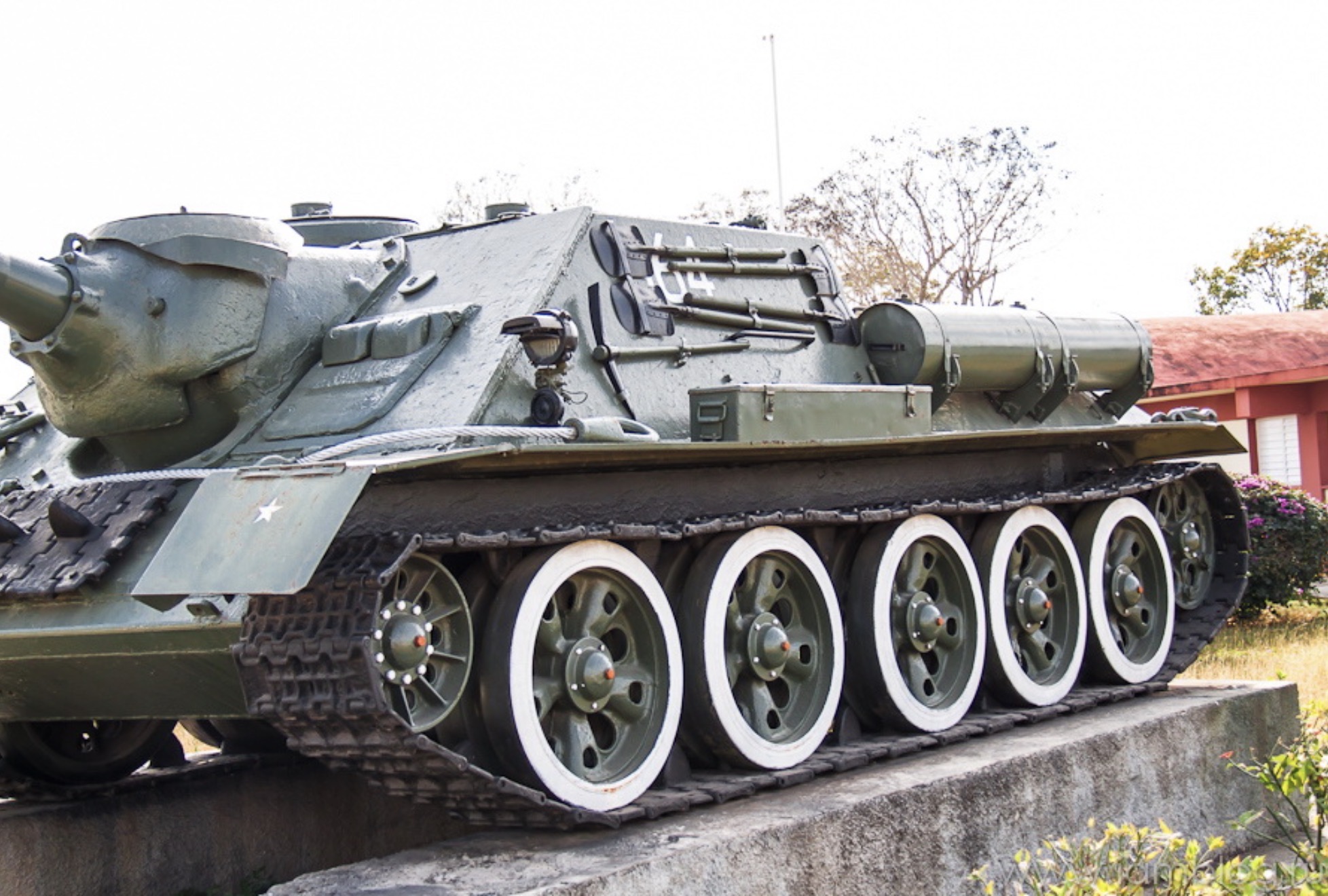
SU-100 (1969) The Full Visual Package:
- T-55 “Starfish” type road wheels
- Smoke Canisters or 200 Litre Fuel Drums on the rear hull slope
- Improved single piece commander’s hatch
- Antenna moved to the left of the commander’s cupola (rare)
- Storage box to the right of the superstructure
- Fuel pump box on the right of the superstructure (in some cases on the left)
- Newer blackout projector to the front on the left of the superstructure
- Projector mount to the front on the front slope on the right
- Projector facing the rear on the superstructure roof to the left rear
- Commander’s search light mounted above his optics on the cupola (Seen on the Su-100s equipped with the older hatch)
History
Spoiler
The SU-100 was a Soviet tank destroyer developed in 1944 to address the need for better anti-tank firepower on the Eastern Front. Built on the reliable T-34 chassis, it was designed as an evolution of the earlier SU-85, replacing the 85 mm gun with a much more powerful 100 mm D-10S cannon. This new gun gave the SU-100 the ability to penetrate the amor of formidable German tanks such as the Panther and Tiger I at distances exceeding 1,500–2,000 meters, giving Soviet forces a much-needed advantage in tank engagements. The first prototype appeared in early 1944 under the designation Object 138, with production ramping up by autumn. SU-100s began seeing combat by late 1944 and were immediately valued for their combination of firepower, sloped armour, and improved crew layout, including a commander’s cupola for better visibility, something missing from many previous Soviet assault guns and tank destroyers.
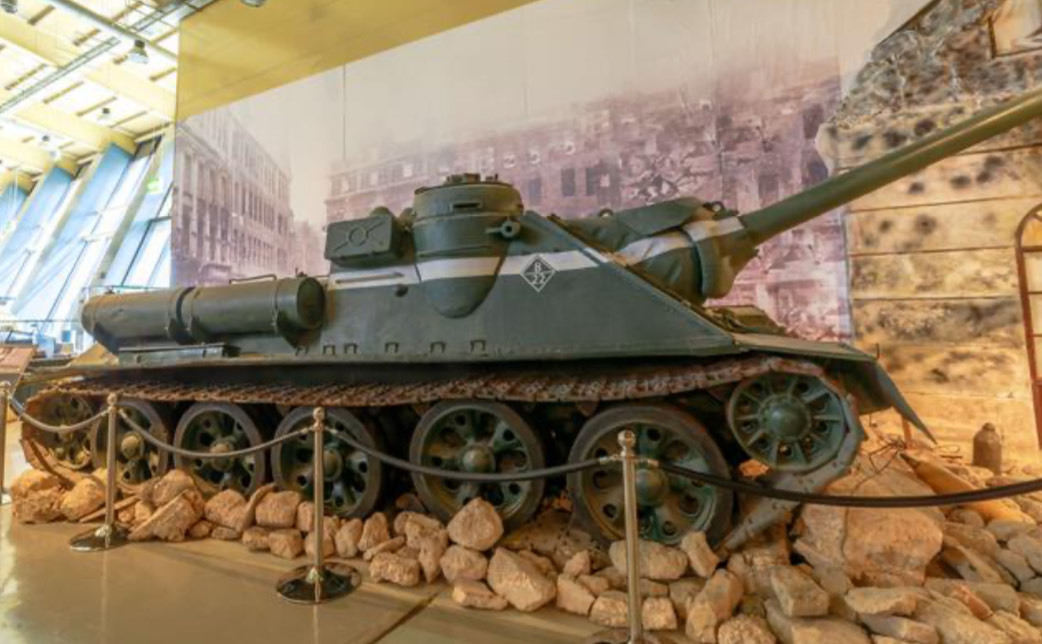
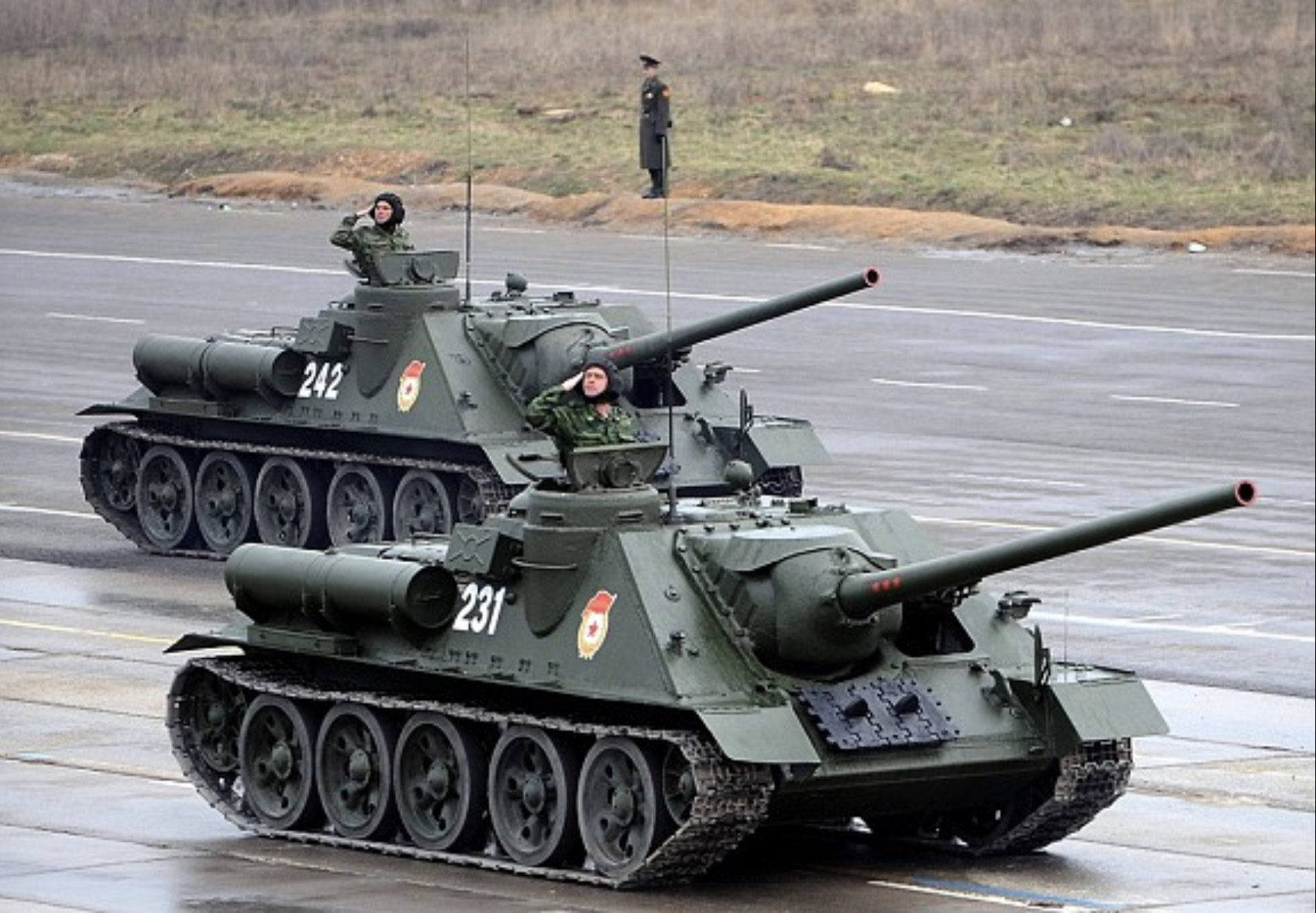
After World War II ended, production continued until 1947 in the USSR, while Czechoslovakia built additional units into the 1950s. The SU-100 remained a mainstay in Soviet armoured units for years, serving in reserve formations and training roles well into the 1960s. Even as newer designs like the T-54/55 and T-62 entered service, the SU-100 was considered reliable and cost-effective, especially for less demanding roles. The SU-100 remained in regular Soviet Army service until approximately the end of the 1970s. A small number appear to have survived in operational use into the very early 1980s, including with Soviet forces in Afghanistan, but by this point the type had effectively disappeared from normal frontline units and most surviving vehicles had been placed in storage or reassigned to secondary duties. During the early 1980s, more than a hundred SU-100s were modified into remotely controlled target vehicles capable of starting, moving across the training ground, and even firing a single preloaded round. These vehicles were employed during major exercises such as Zapad-81, Zapad-83, Zapad-84, and Osen-88. Other vehicles remained mechanically serviceable for ceremonial or potentially operational purposes. A number of SU-100s were taken from storage, refurbished, and returned to running condition for the 1985 Victory Parade.
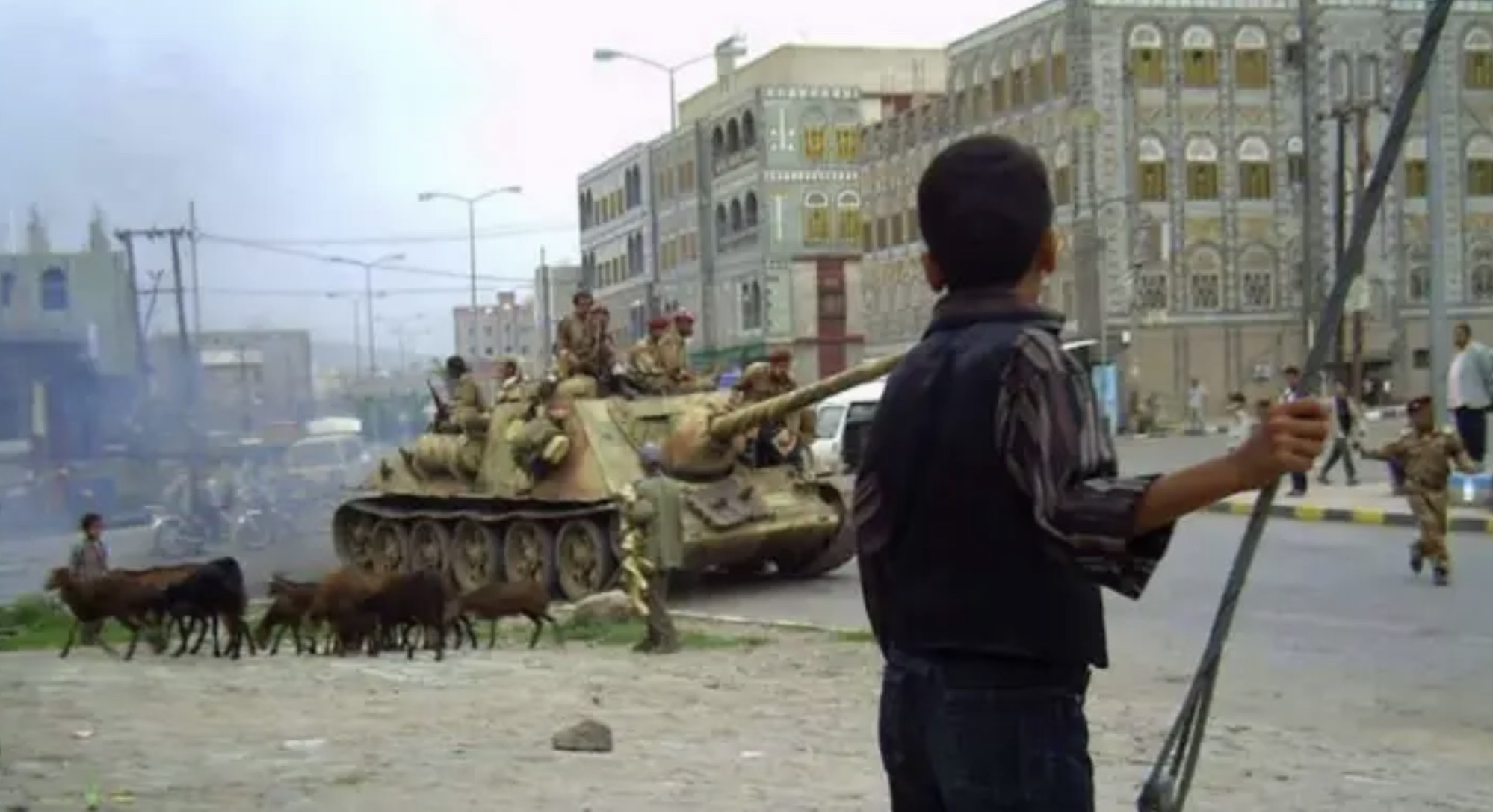
Beyond the USSR, the SU-100 was widely exported and used by many allies and client states. It saw action in numerous Cold War conflicts, including the Suez Crisis, the Vietnam War, and the Arab–Israeli wars, where its cannon was still capable of threatening contemporary Western armour under the right conditions. Iraq also employed SU-100s during the Iran-Iraq War, with some reports suggesting that Coalition forces may even have encountered surviving examples during the 2003 invasion of Iraq. The Yugoslav conflicts of the 1990s likewise saw the continued use of the type. The most recent combat use of the type comes from the 21st-century Yemeni Civil War, where SU-100s have been seen operating alongside T-34s.
Modernization In-Depth
Spoiler
Engine and Road Wheels
Spoiler
In the 60s T-34-85 tanks were upgraded with the V-2-34M-11 diesel engine, producing 520 hp. This enhancement provided a modest boost in performance and reliability compared to the original V-2-34 engine. In addition, numerous startup assistance upgrades were introduced to help the vehicle start reliably in adverse conditions, particularly in cold weather. Cooling, Lubrication and Air-Filtration systems were also improved.
The SU-100 (1969) incorporated T-55-style ‘starfish’ pressed steel road wheels, replacing the original cast or stamped wheels commonly seen on earlier SU-100/T-34-85s. While visually similar to those used on the T-54/55, these wheels were not interchangeable between the tank types due to differences in hub design.
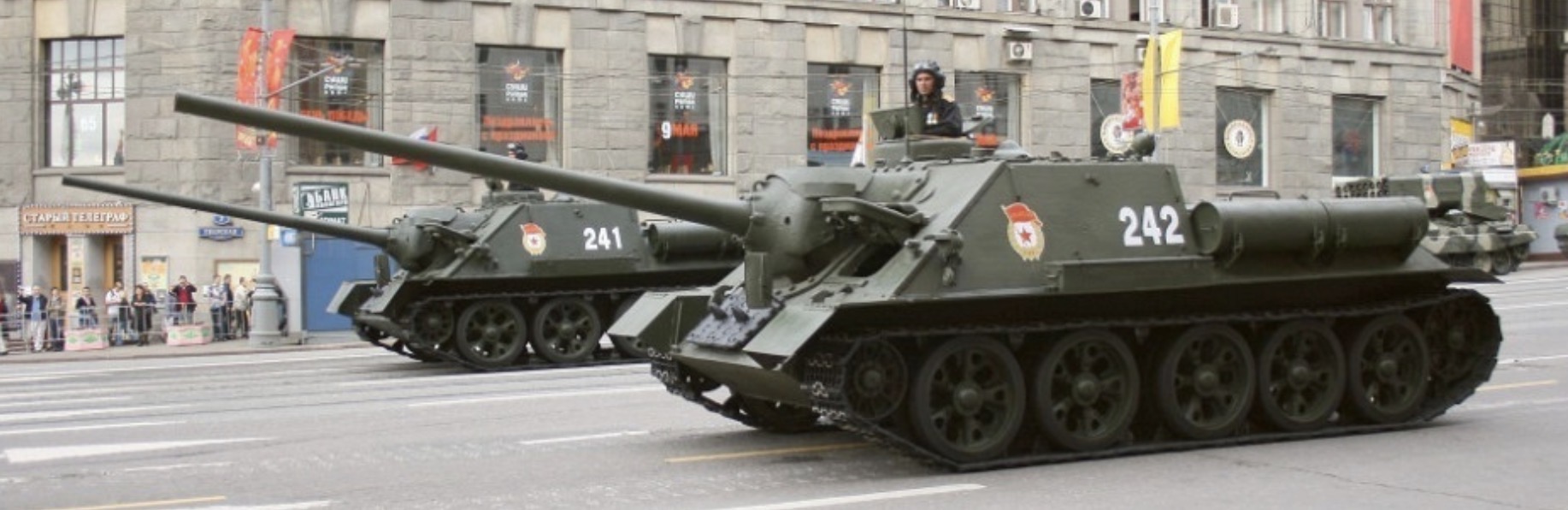

The SU-100 (1969)'s wheel is on the left.
Commander’s Hatch and Antenna
Spoiler
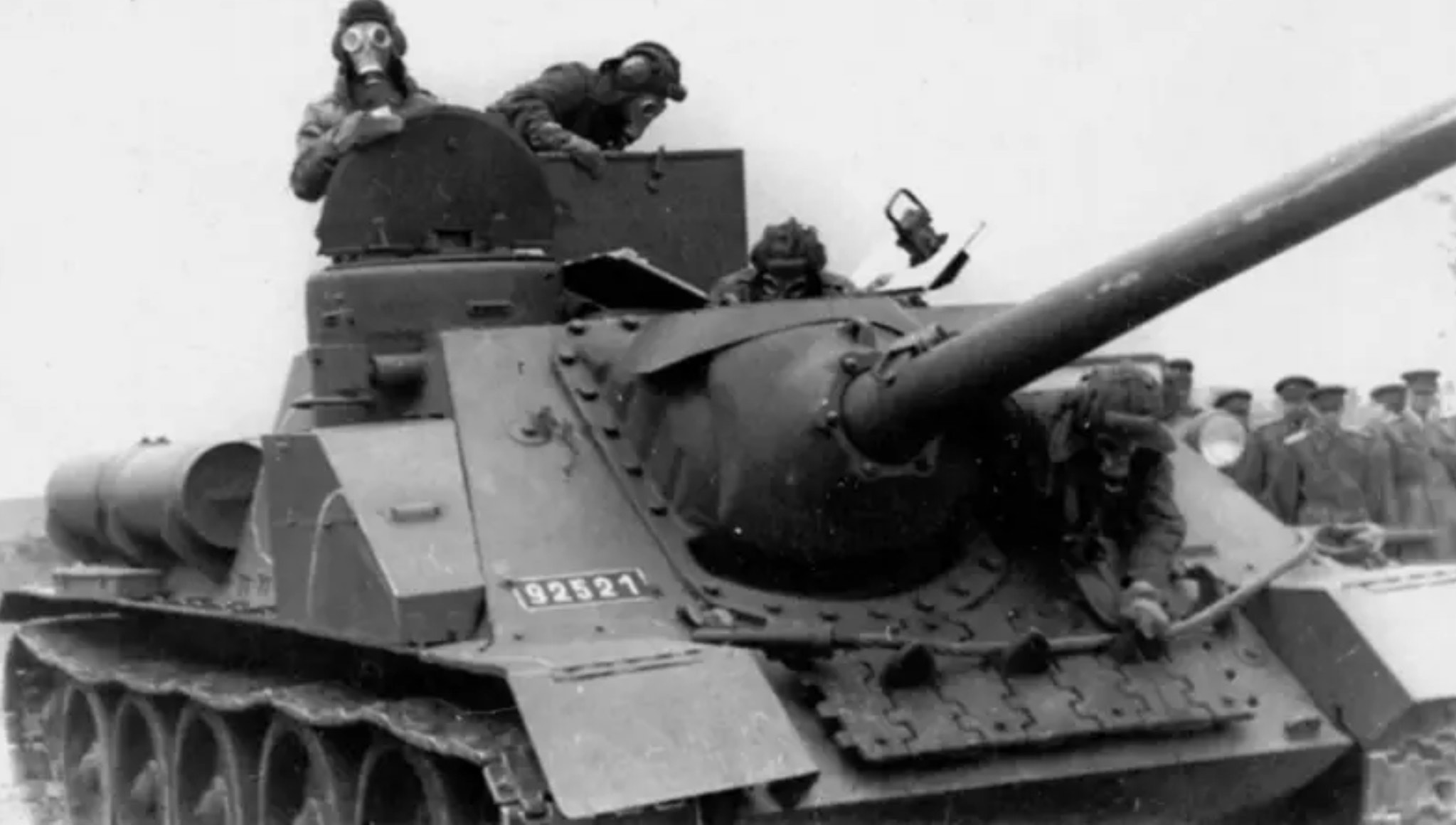
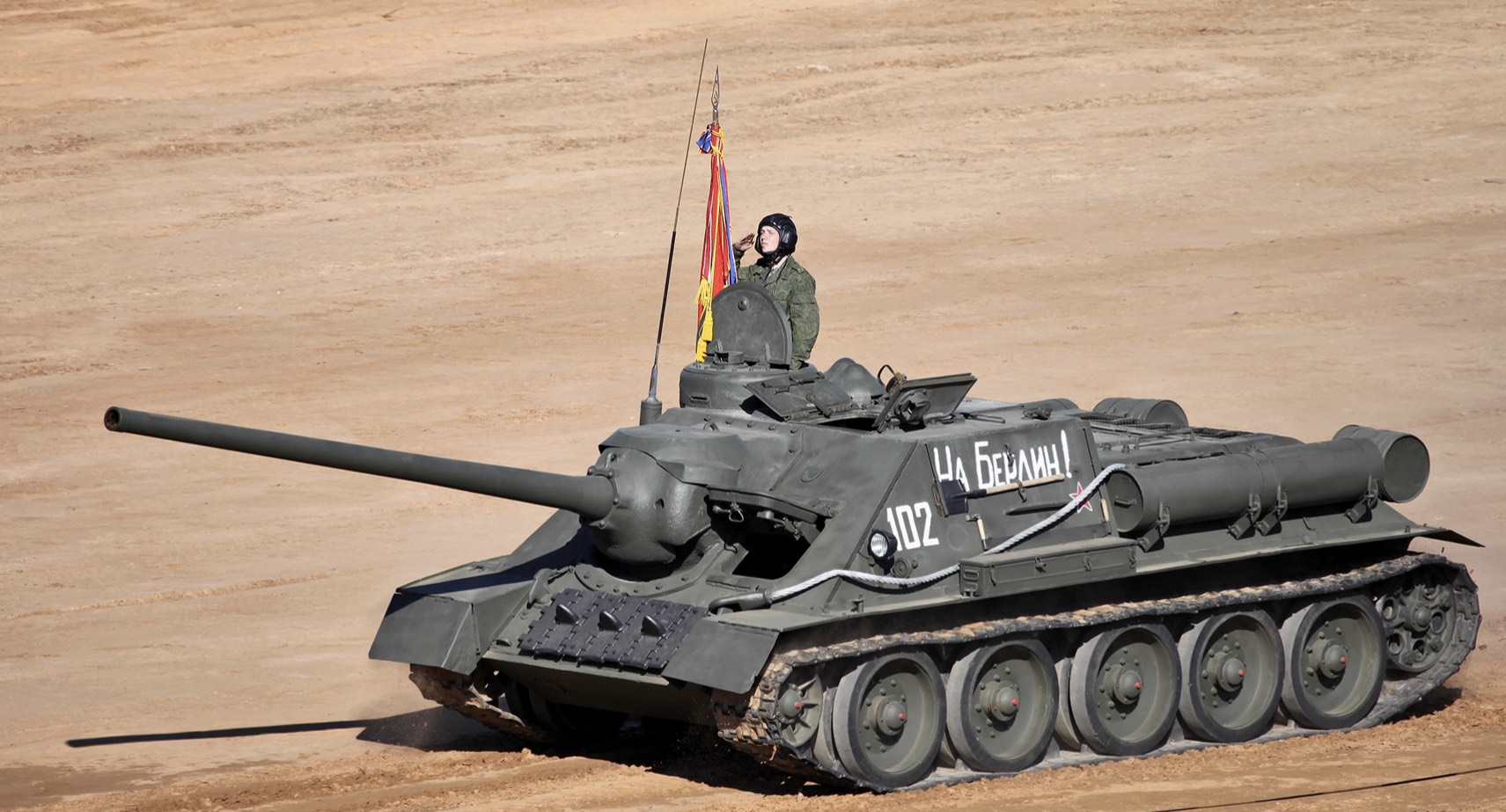
Some vehicles featured a modified commander’s hatch, a notable improvement over the earlier design. This hatch was a single-piece, forward-opening design. Additionally, the hatch was equipped with a rotating TPKU-2B panoramic sight, providing enhanced visibility and target acquisition. Beyond just visibility, the hatch provided quicker entry and exit, which was crucial in combat emergencies. Its structure also offered better frontal protection while on the move, allowing the commander to observe the battlefield with greater safety during marches or early engagements. Some vehicles retained the earlier commander’s hatch. Some Su-100s feature a commander’s search light mounted on his optic, particularly those featuring the older hatch design. In some variants, the radio antenna mount was relocated, with the original holder removed and the antenna repositioned to the left of the commander’s cupola. Some vehicles were photographed without the radio antenna fitted at all, leaving only the original antenna mounting bracket as evidence of its former installation. Improved R-123 radio was installed, same one used on the T-34-85 (1969) and T-54/55 tanks.
Traffic Lights and NVDs
Spoiler
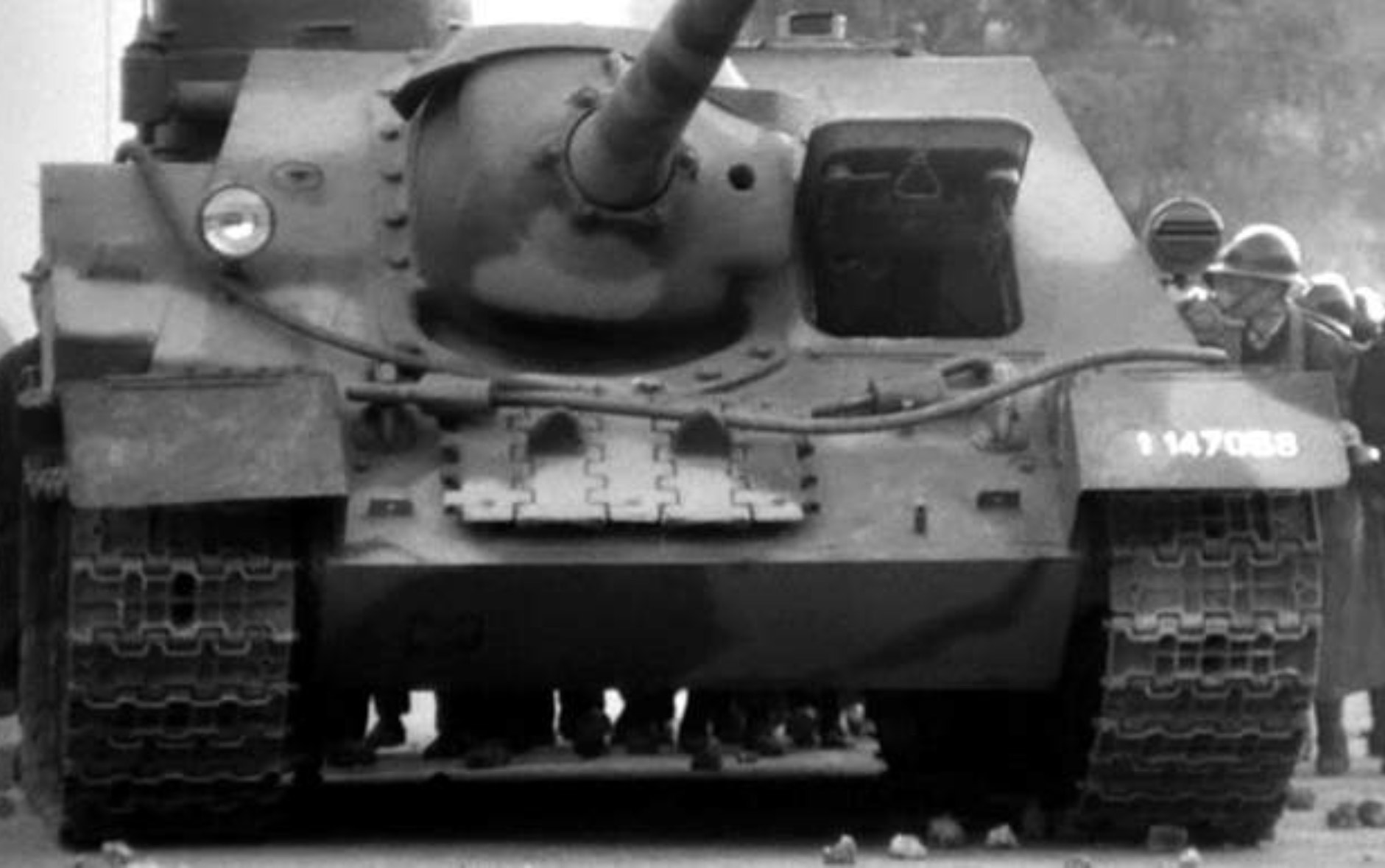
SU-100 was equipped with infra-red night driving equipment with passive night vision devices (BVN and later TVN-2) and modernized headlights. These were typically FG-100 series projectors, though exact models varied depending on production batches and availability. Some units may have included infrared (IR) filters. The projectors were mounted in three standard positions: on the front left of the superstructure side, the right side of the upper front plate, and on the left rear side of the superstructure roof facing the rear (I’ve yet to photographically confirm all 3 lights equipped on a single Su-100 at once). Some vehicles also feature a commander’s search light mounted on his cupola. This setup of lights allowed the driver and commander to navigate and maneuver the tank in low-light or no-light conditions, something that was a significant limitation for earlier SU-100/T-34 variants.

Smoke and Fuel Canisters
Spoiler
The SU-100 (1969) featured the TDP smoke generation system, which utilized MDSh smoke canisters mounted on an inclined stern sheet. These canisters were electrically detonated from inside the tank, allowing the crew to deploy a smoke screen without exposing themselves to enemy fire. This system greatly enhanced the tank’s ability to disengage from combat or conceal movement, especially in open terrain or during retreats. Alternatively two fuel barrels, with a capacity of 200 liters, could be mounted. The tank spare parts kit included a small-sized MZA-3 filling unit, placed in a transport position in a metal box mounted outside on the superstructure. Some vehicles lacked the external fuel-pump box.

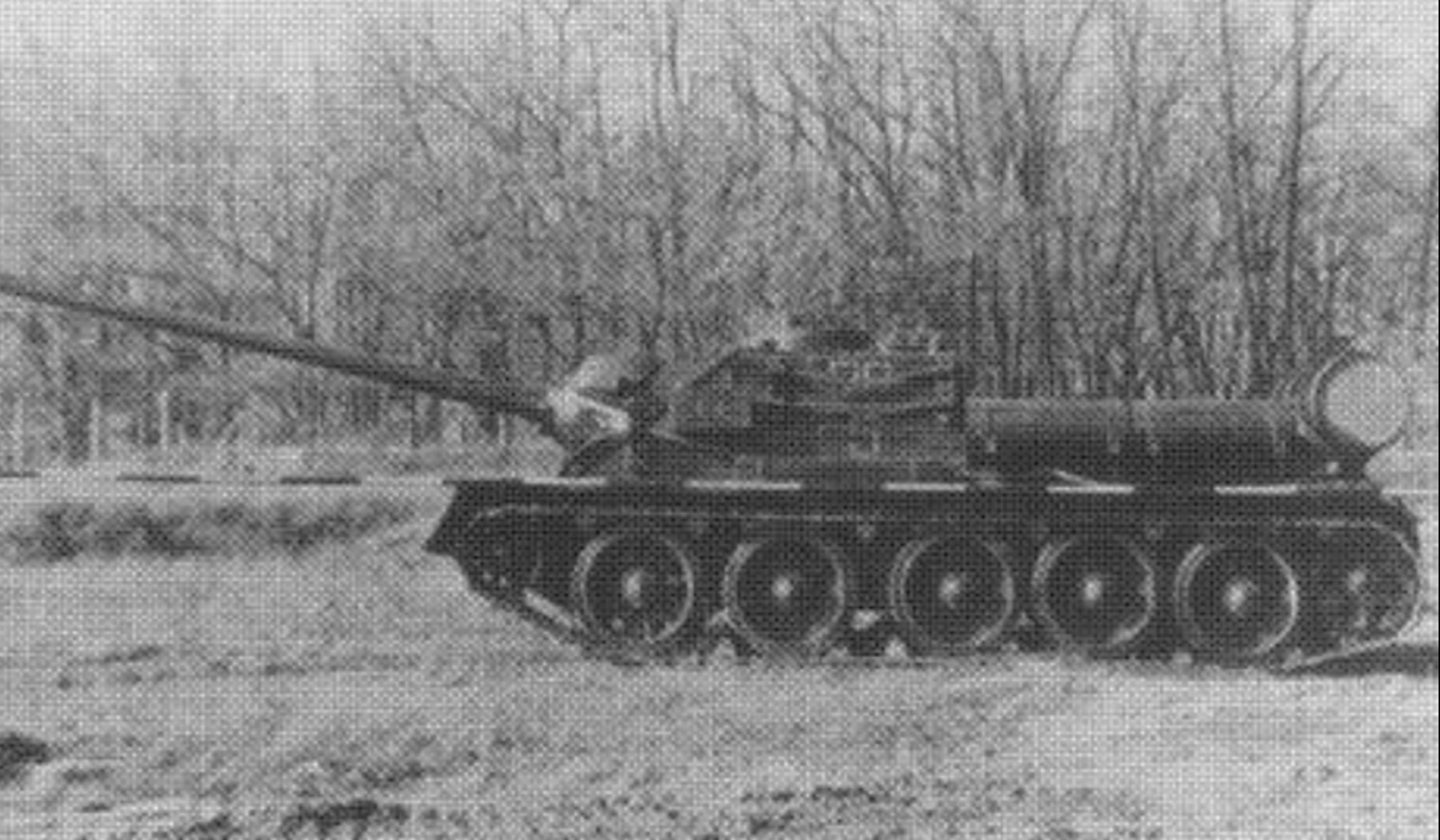
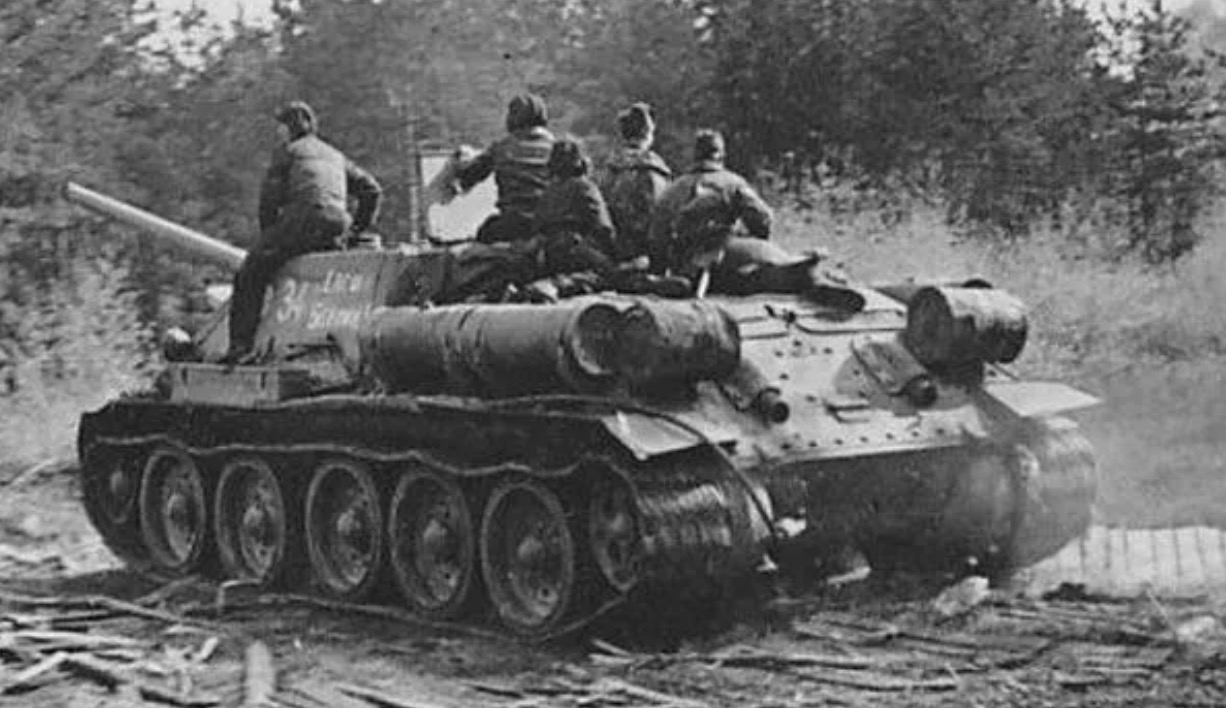
It should be noted that some modernized SU-100s were configured to carry both the smoke canisters and the later 200-liter auxiliary fuel drums. On these vehicles, the smoke-canister racks were relocated to the rear of the casemate, while the 200-liter fuel drums were carried on the rear hull.
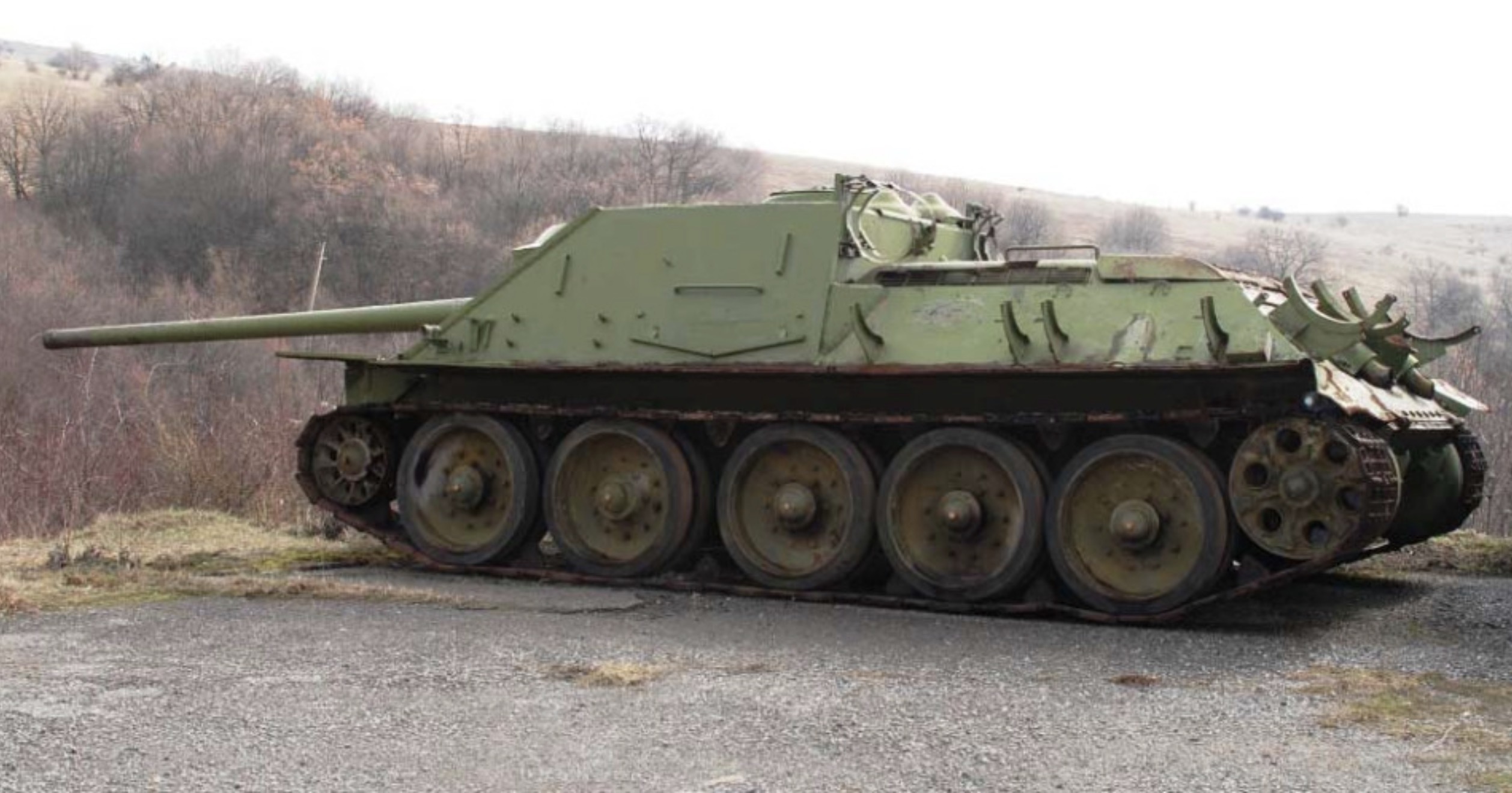
Here is a Bulgarian example of this arrangement. In the gallery, you can also find a photograph of a Soviet/Russian SU-100 fitted with the smoke-canister rack on the rear of the superstructure.
Gallery
Spoiler
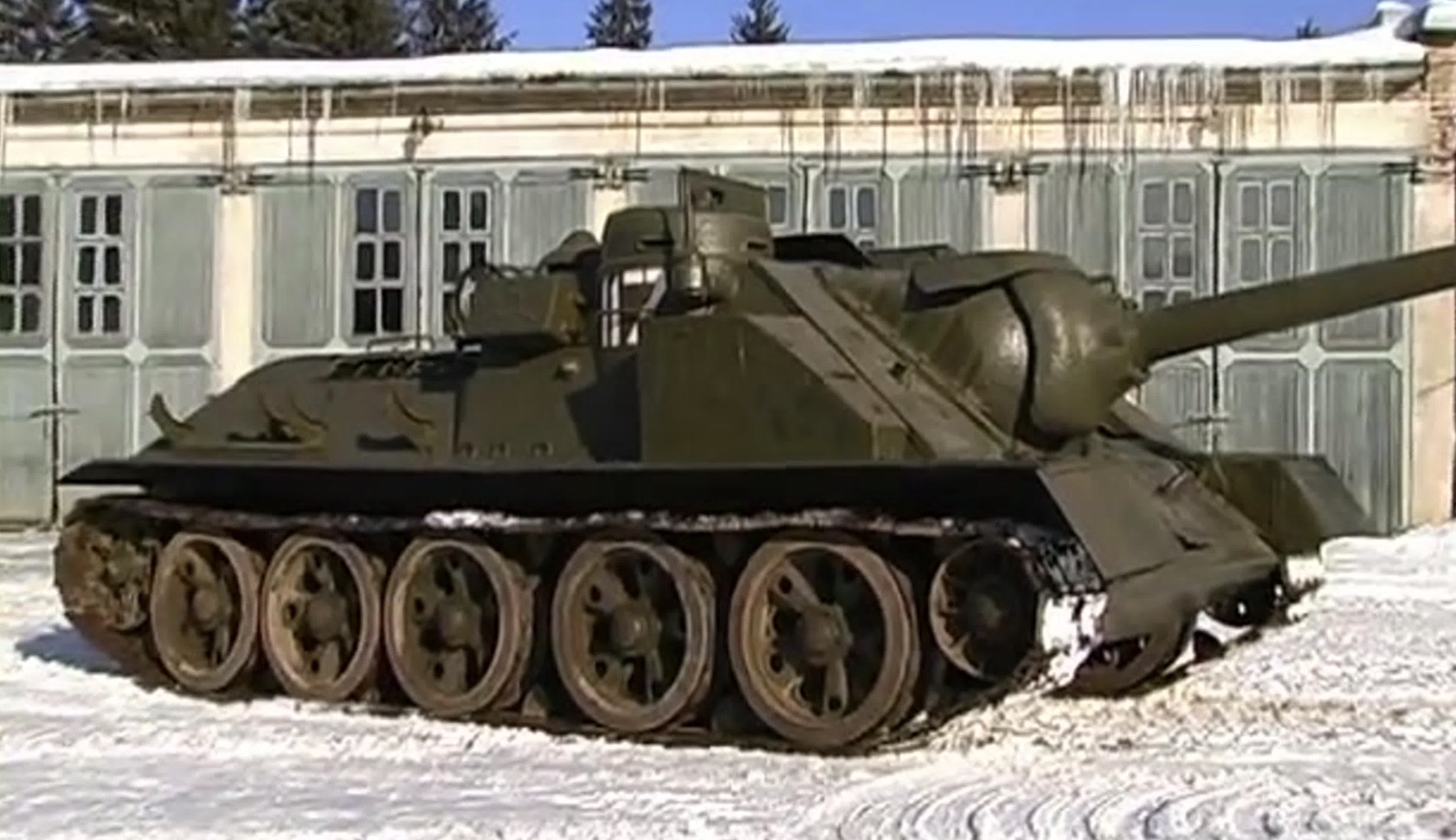
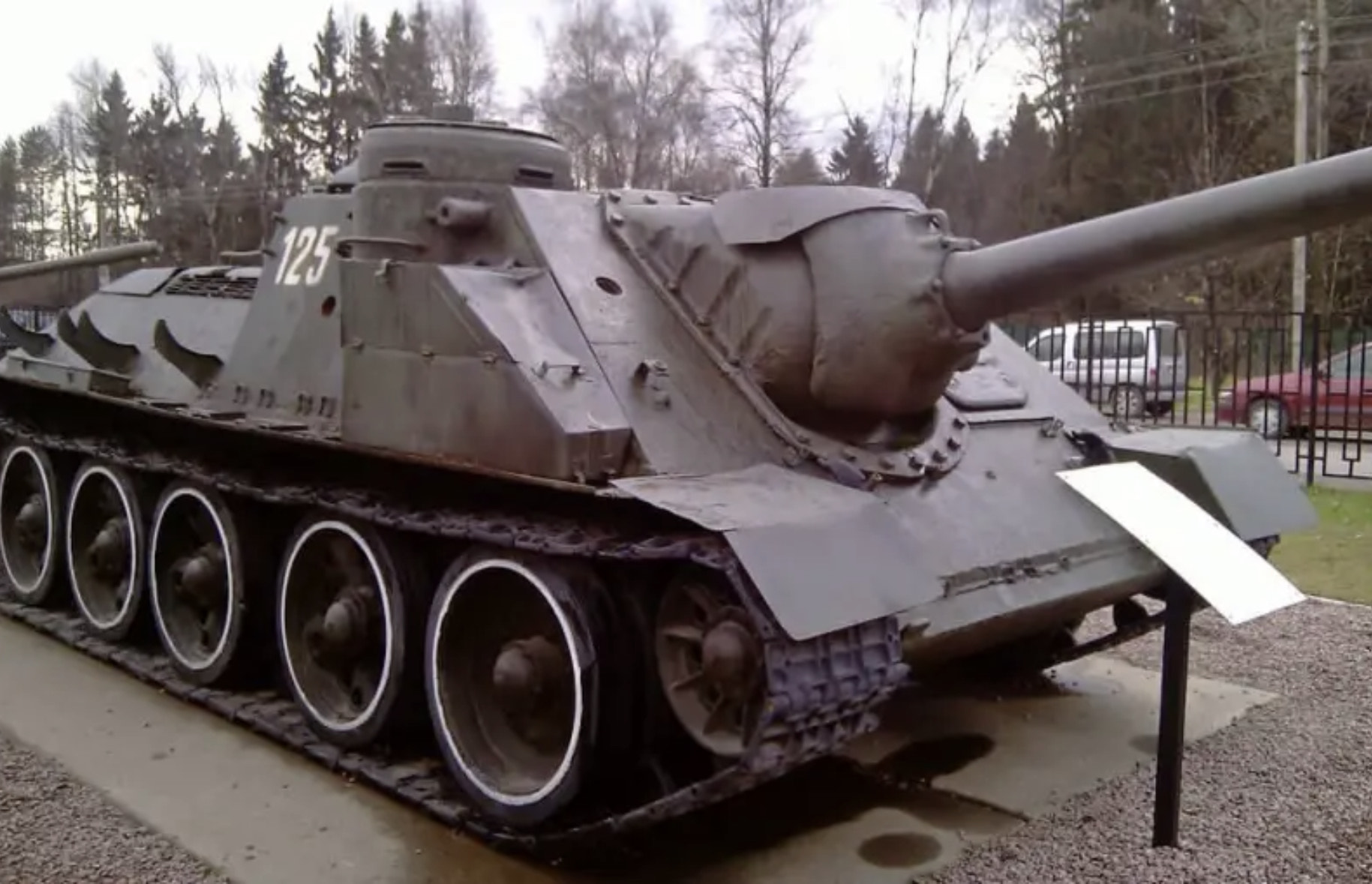
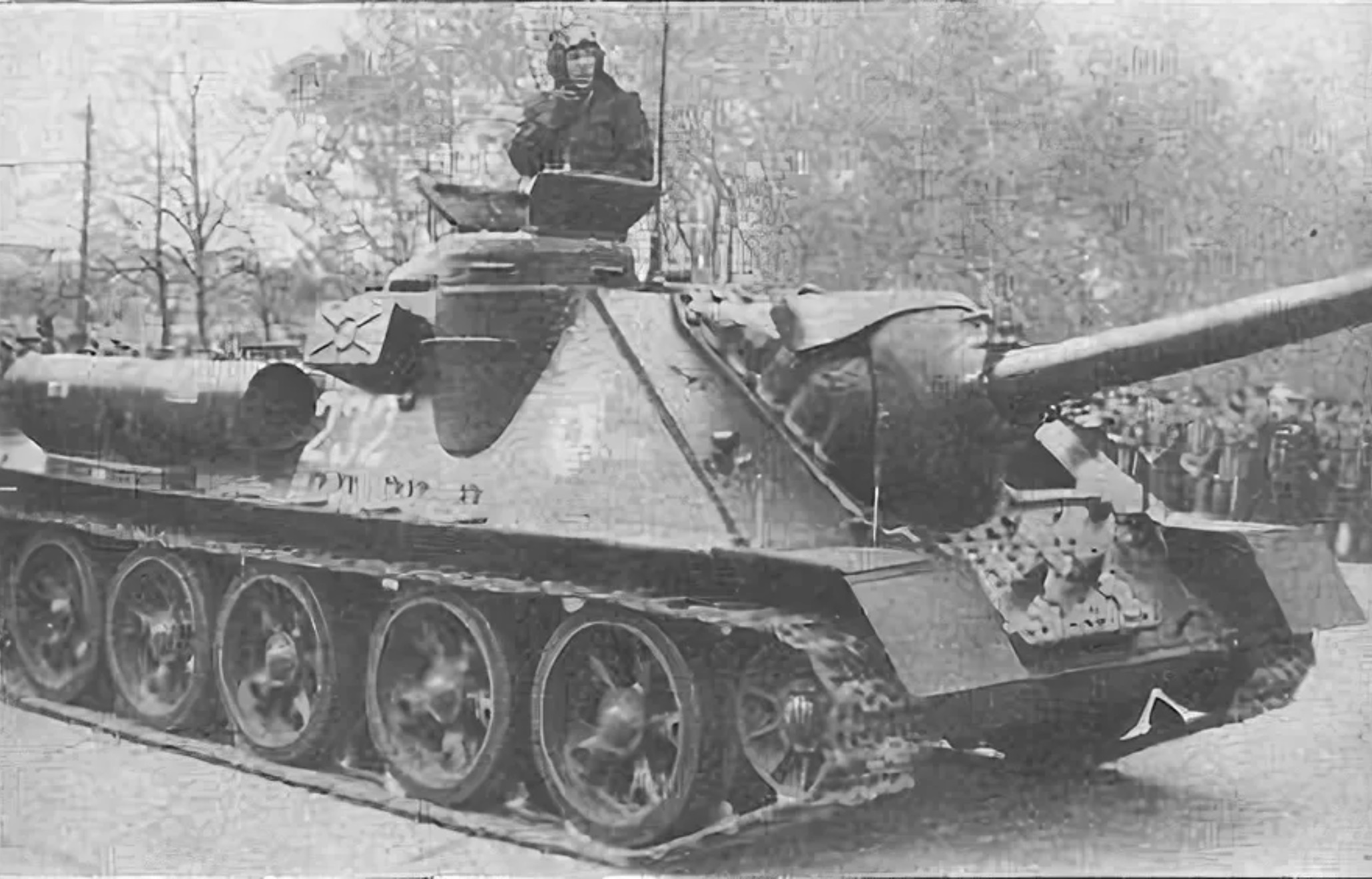
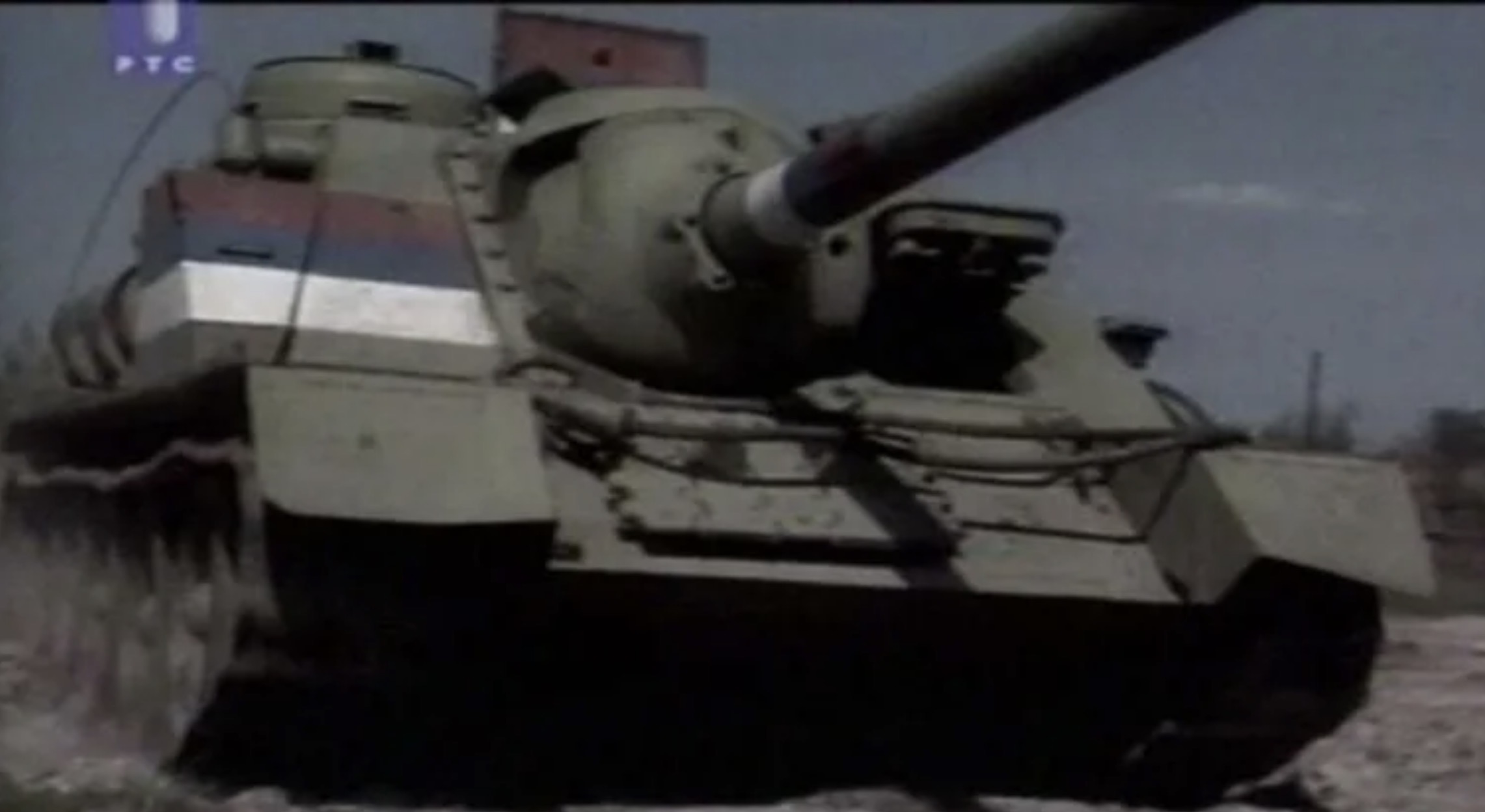
The image above shows an SU-100 in service with Serbian forces in the 90s.
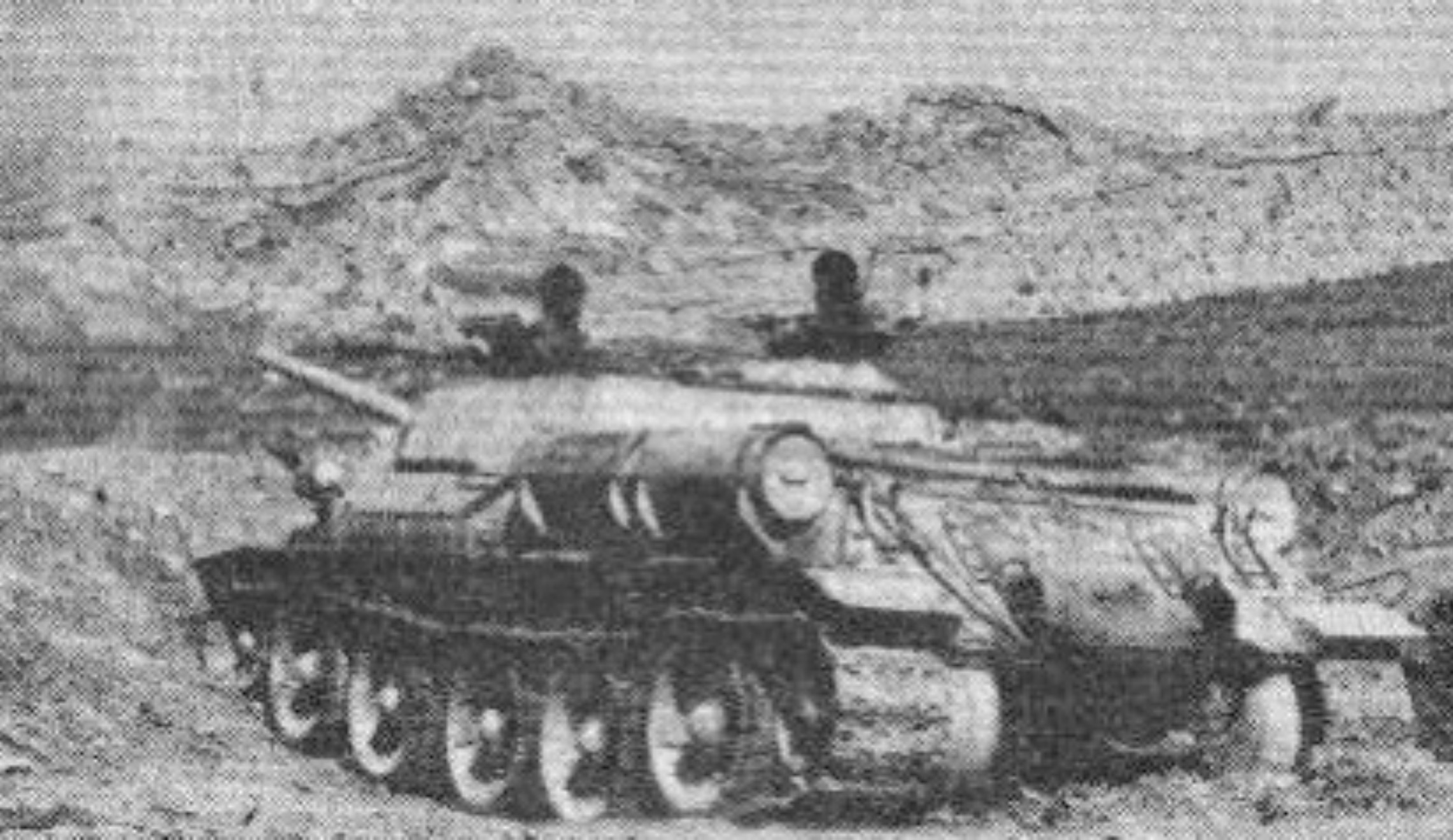
The photo above shows an Iraqi SU-100 Model 1969 in service during the Iran-Iraq War. Some surviving vehicles were reportedly encountered by Coalition forces during the 2003 invasion of Iraq.
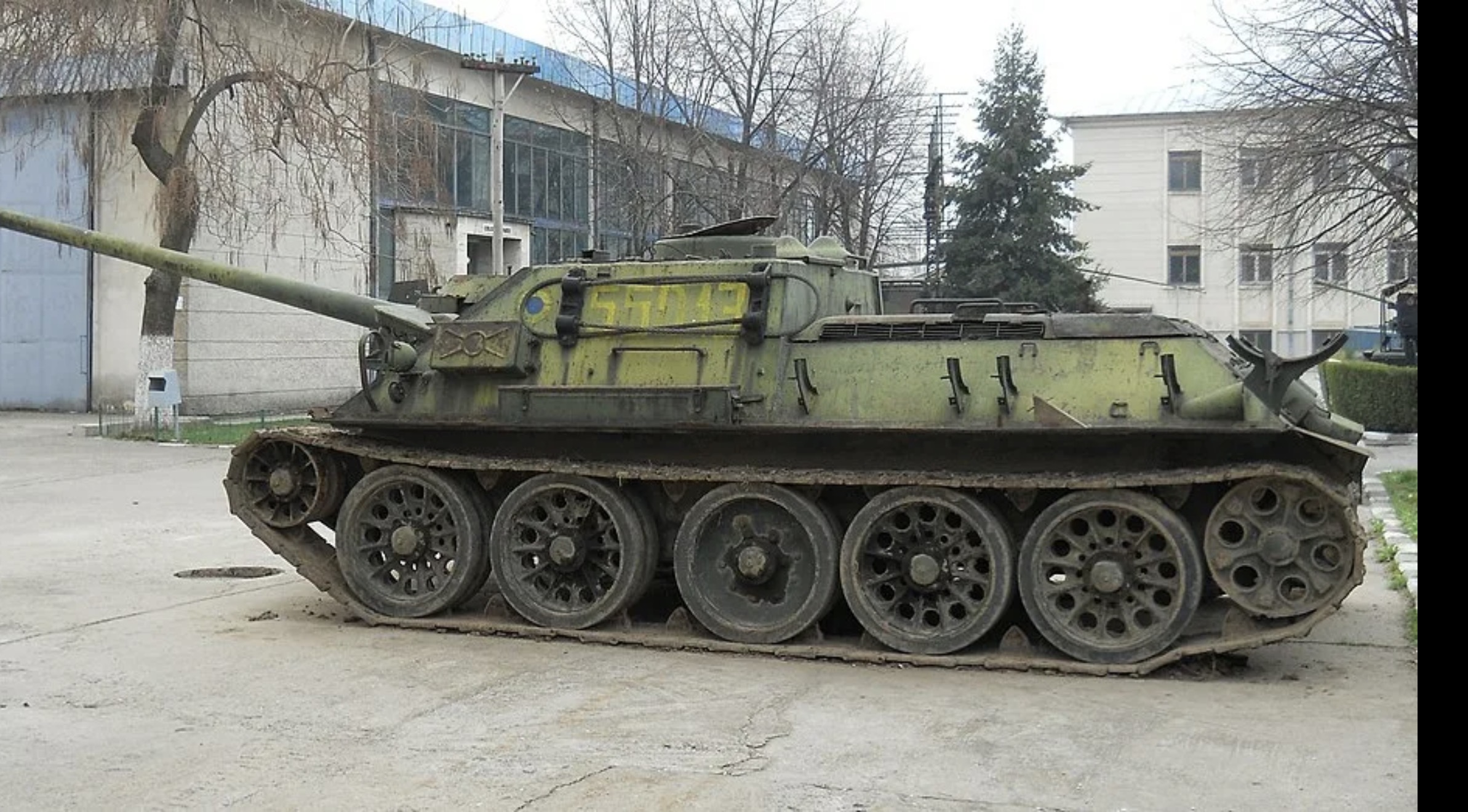
This Romanian SU-100, fitted with 200-litre fuel drums in place of the BDSh smoke system and the fuel pump box on the left, has clearly seen better days.
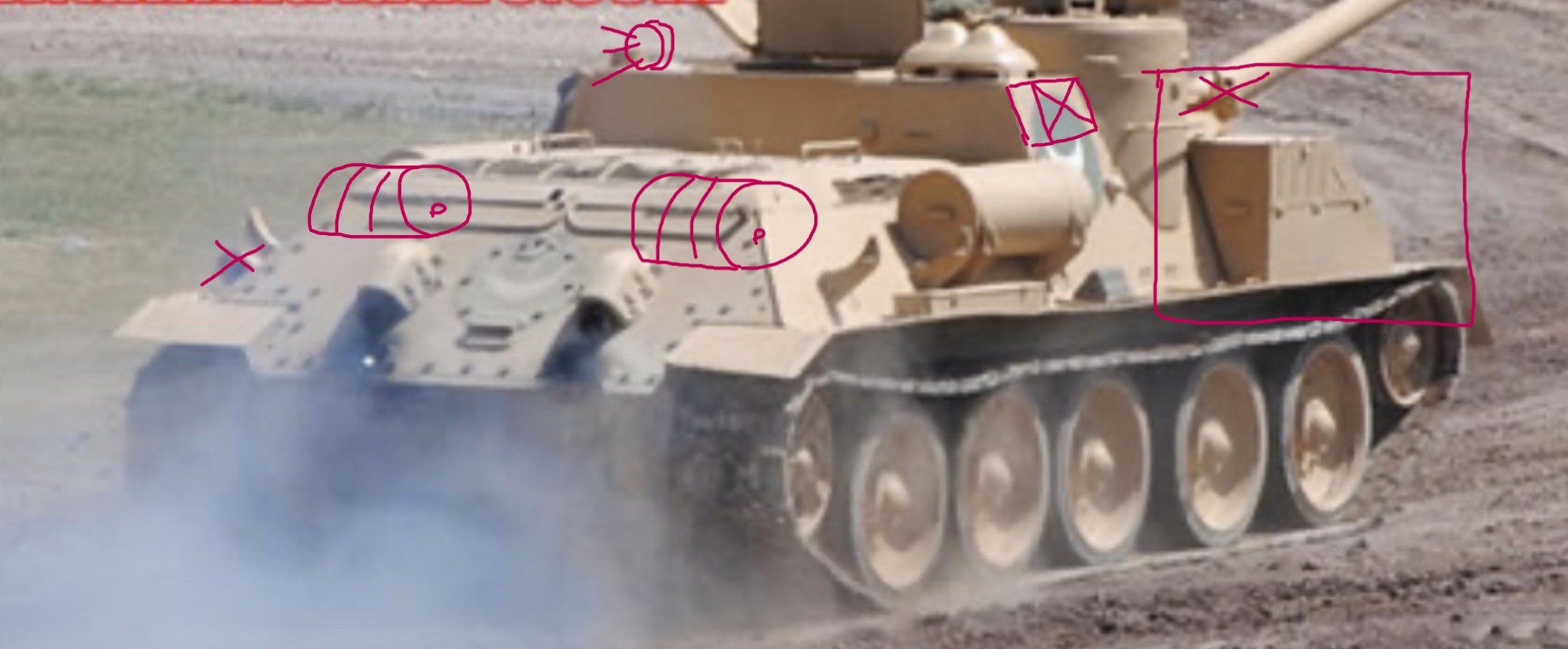
The image above shows a Czech-built Algerian SU-100, identifiable by the intercom unit mounted on the left side below the rear fuel tank. I’ve included rough sketches on this image to illustrate the typical features and upgrades seen on an SU-100 (Model 1969). It’s worth noting that the antenna holder on the right side wasn’t always removed on these models.
Conclusion
Spoiler
The SU-100 Model 1969 stands as a testament to the remarkable longevity of Soviet armored design. Modernized in parallel with the T-34-85 Model 1969, it continued to appear in both front-line and support roles across numerous Cold War and post-Cold War conflicts. From the Arab-Israeli wars of the 1960s and 1970s to the civil wars in Yemen well into the 21st century, the SU-100 remained in use long after most World War II-era vehicles had disappeared from regular service. Despite its wartime origins, the vehicle’s powerful 100 mm D-10S gun, compatibility with T-54/55 ammunition, and mechanical simplicity allowed it to remain practical far beyond its expected service life.
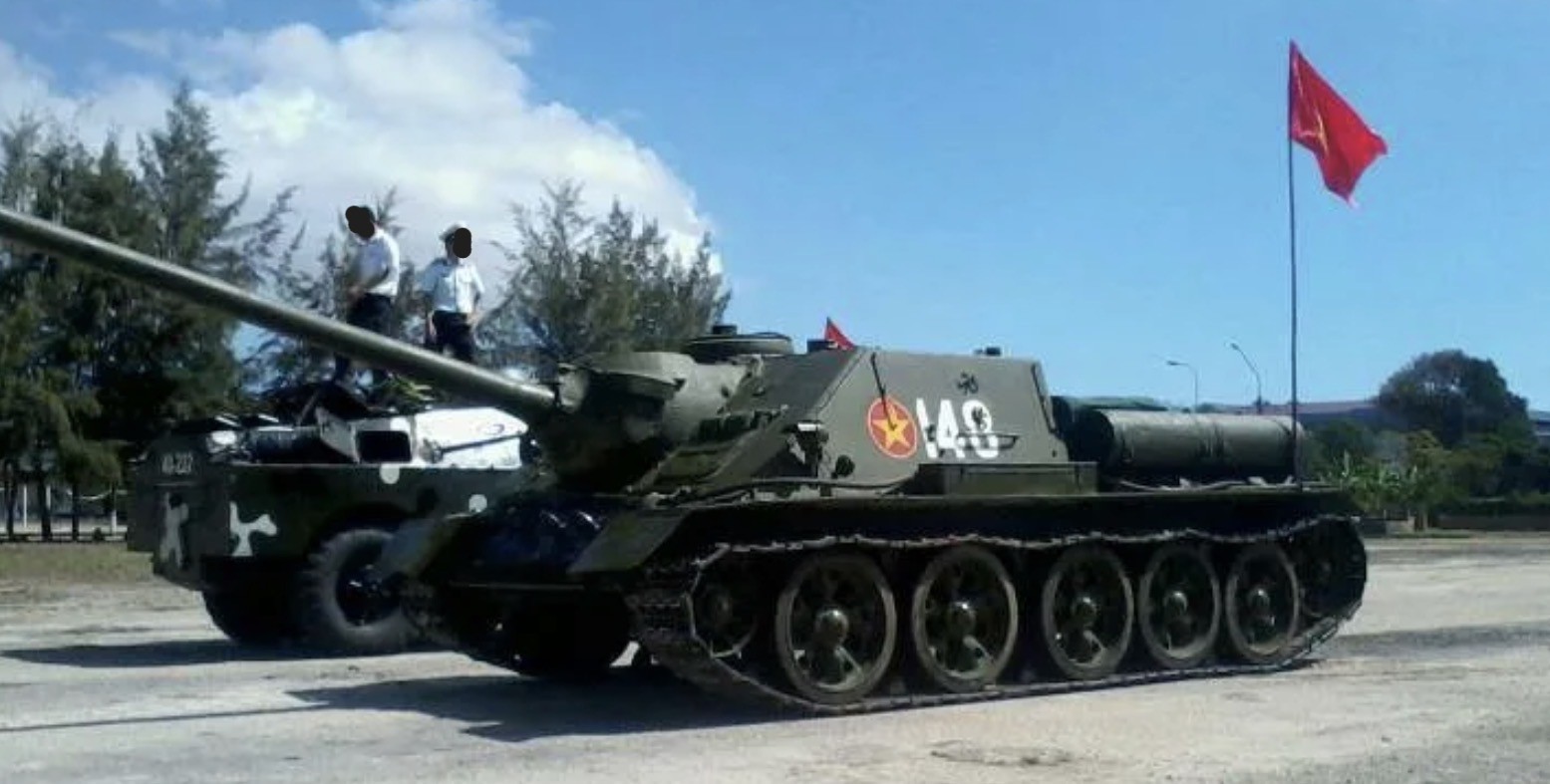
Today, countries like Vietnam maintain these vehicles in pristine condition for reserve purposes, and it’s likely that some others continue to do so quietly, supported by the abundant global stockpiles of T-54/55-compatible ammunition. The SU-100 (1969) is a symbol of how robust design, smart upgrades, and logistical pragmatism can keep even WWII-era armor relevant on modern battlefields.
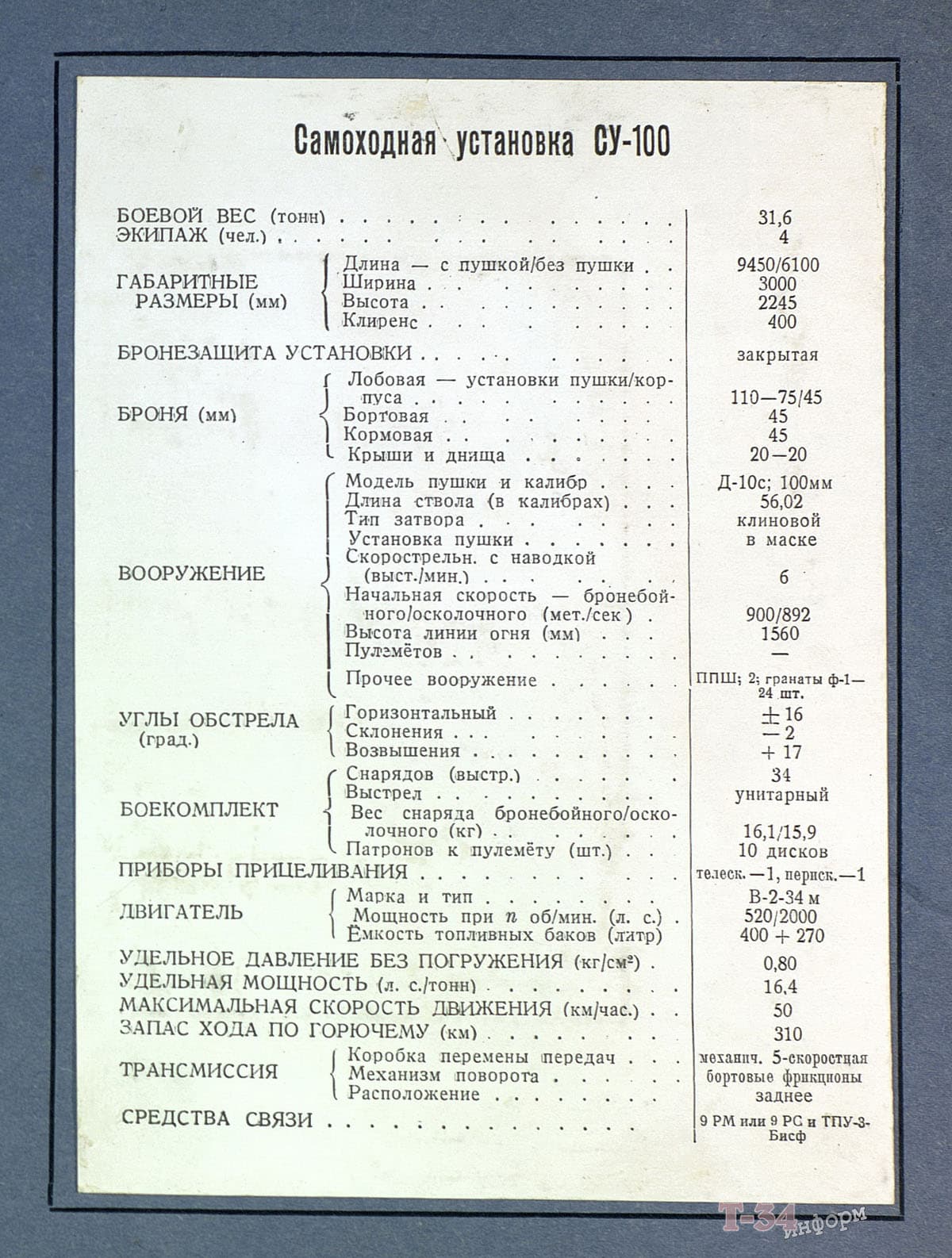
SU-100 (1969) – Specifications
Spoiler
- Origin: Soviet Union
- Type: Tank Destroyer
- Crew: 4 (Commander, Gunner, Loader, Driver)
Armament
- Main Gun: 100 mm D-10S tank gun
- Ammunition Types:
- UBR-421D
- 3BM-8
- BK-5M (HEAT)
Mobility
- Engine: V-2-34M(-11) V12 Diesel
- Power Output: ~500-520 hp (depending on the engine and RPM)
- Top Speed: ~50 km/h
Armor
- Front Hull: up to 75 mm, sloped
- Side Hull: 45 mm
- Superstructure: Welded casemate with sloped armor
Dimensions
- Length (w/ gun): ~9.45 m
- Width: ~3.0 m
- Height: ~2.25 m
- Combat Weight: ~31.6 tons