- Yes
- No
- With Type A barrel
- With Type B barrel
- Both (as two different vehicles)
- I answered ‘No’ above

Introduction
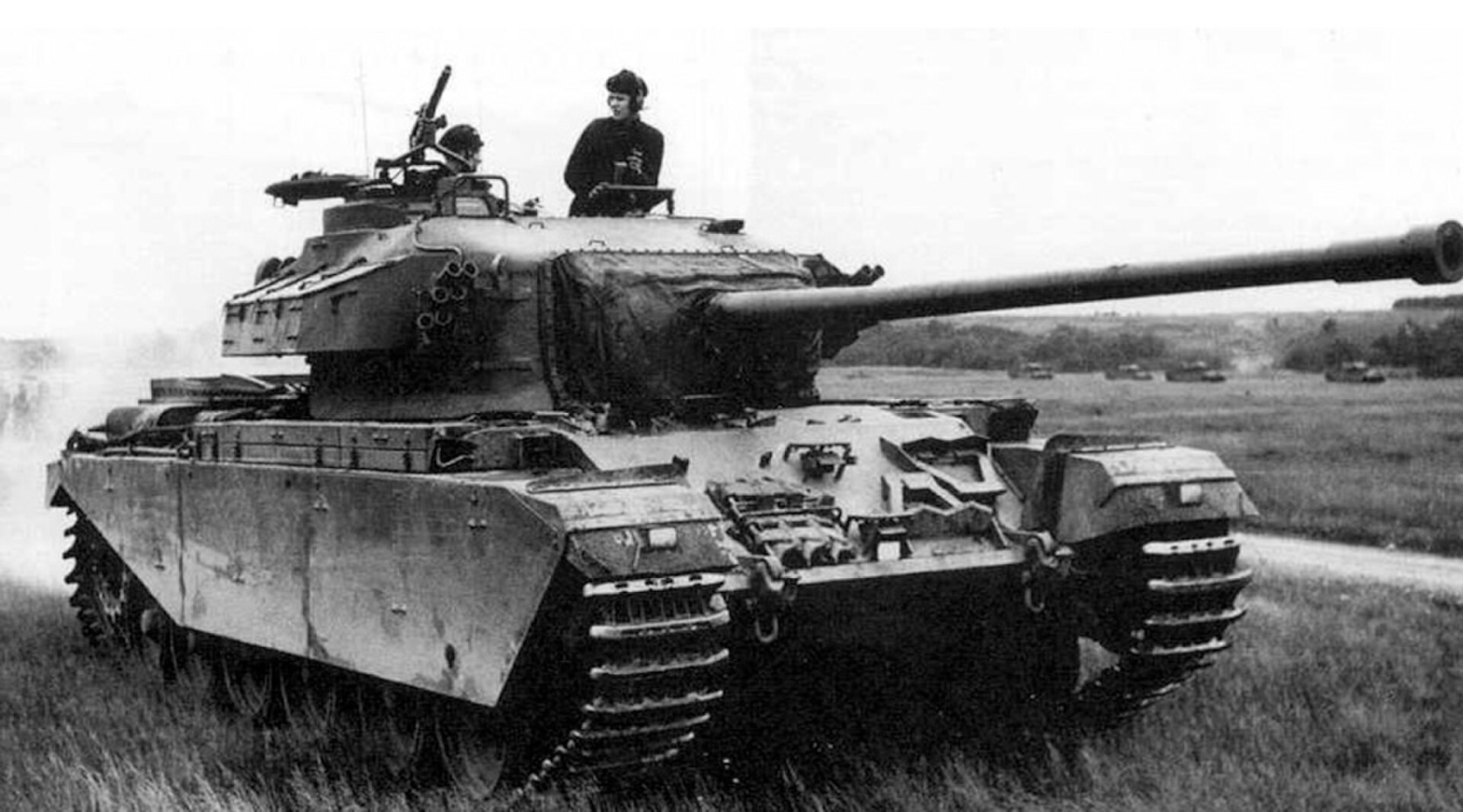
In the 1950’s, Sweden ordered the Centurion tank to replace the Strv m/42, which would later be rebuilt as the Strv 74 to accompany the Centurions. The Centurions ordered first were the Centurion Mk. III, which would become the Stridsvagn 81A (Strv 81A). A second batch of Centurions would be ordered, which consisted of the Mk. V, and these became the Stridsvagn 81B (Strv 81B). The easiest way to identify these two from each other is via the cannon barrel. The 81A has what was called the Type A barrel (20 pdr Mk. I A), while the B has the Type B barrel (20 pdr Mk. I B). The Type A barrel has a counterweight at the muzzle of the gun, while the B has a fume extractor on the barrel and thus lacks the counterweight. But there are cases where the B barrel has been retrofitted onto the Strv 81A, and there are some cases, not as common tho, where the A barrel has been mounted to the 81B. Another difference is that instead of just a coaxial machine gun, the 81B got a ring mount for an external machine gun. It was able to mount either a Ksp m/39B or a Ksp m/42 for anti-air. The storage box on the upper front plate was also removed in favor of space for spare track links.
Currently in-game, the Strv 81 represented is the 81A. This is both for the tech tree tank and for the Strv 81 Rb 52 in the Swedish tree and in the British tree for those who have it. Would this be a game changer? Certainly not, but it would be a nice addition for Sweden, as these two versions of the Strv 81 usually do not get represented independently, neither in games nor in any other media.
History
In the early 1940s, the Strv m/42 was ordered from Landsverk, but by the time delivery started of the Strv m/42, it was outdated compared to what was being produced by other nations. Landsverk started to propose different solutions to a new tank that could replace the Strv m/42, with Pricken and Lansen in different configurations being presented, but no orders were placed. Meanwhile, upgrading the fleet of Strv m/42 TM was a high priority as their gearboxes were failing after just a few years of active service. Testing of new tanks began in the early 1950s, with the AMX 13 being of particular interest as it was mobile and had good firepower. Testing was very satisfactory as well, and the Swedish army was ready to buy them, but then in 1953, Britain asked if there was any interest in buying Centurion tanks. This led to a discussion about acquiring the lighter AMX 13 or the heavier Centurion. General Carl August Ehrensvärd was against the Centurion and argued that: “…it is an excellent tank but way too heavy for Swedish conditions and expensive, even in service…”. Meanwhile, General Nils Swedlund was against the AMX 13 and argued: “…skeptical about the ability to manufacture high-quality military equipment in France…”. Why Swedlund was so skeptical of the AMX 13 was mainly due to its thin armor, as he argued the new tank to be acquired would need to be able to resist the blast of a nuclear bomb, which the AMX 13 would not be able to. Somehow, the accusation of the Centurion tanks did not get passed by KAF or the army chief before a deal was made with the British. This deal consisted of 80 Centurion Mk. III that had already been produced for the British army but were now just sitting because of their financial troubles with the military. This resulted in the Centurions needing to be shipped immediately as the deal was finished.
By New Year 1953, the deal was signed for the purchase of 80 Centurion Mk. III tanks. These would initially be designated Stridsvagn m/53 (Strv m/53), with it later changed to Stridsvagn C III (Strv C III). It was changed again to a whole new designation system where the type of AFV was first in the designation, followed by the initial number of the caliber of the cannon, and the second number was the order in which the vehicle was introduced into the army. This resulted in the designation Stridsvagn 81 (Strv 81), 8 because of the 84mm cannon and the 1 because it was the first tank in service with an 80 mm cannon. A second batch of Centurions would be subsequently ordered in 1955, and these were ordered when switching to the Mk. V standard was commencing, and because of this, there were a few differences between these and the previous batch. Delivery of the Strv 81 began in the summer of 1953, and training for the vehicles began right away. This resulted in the tanks being able to participate in large-scale training scenarios in both the north and the south of Sweden. Because of the success of the Strv 81, a second batch would be ordered in 1954, and delivery of these was made in 1955.
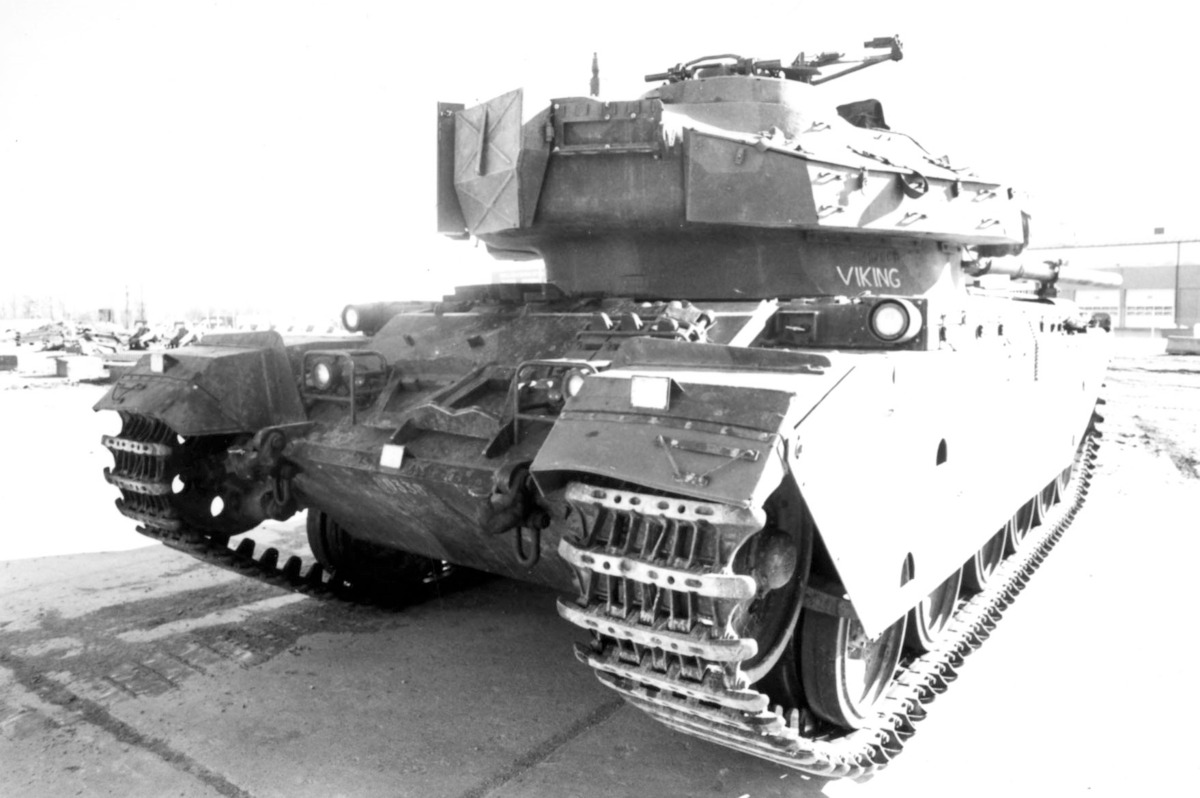
Unlike the earlier Strv 81 that had been originally built for the British military, this batch was specifically made for the Swedish military. But since the order was placed right around the switch in production from the Mk. III to Mk. V of the Centurion, some of the tanks delivered in 1955 were of the Mk. V variant. It was at this time that it was decided to distinguish these two batches from each other by naming the first batch of Centurions Strv 81A and the second batch of 160 tanks to Strv 81B. Both A and B models would go on to serve in the army up into the 1960’s when it was decided to upgrade the tanks with the same 10,5 cm cannon found on the Strv 101 ordered in 1958. Upgrading the Strv 81s began in 1964 and concluded in 1966, with the tanks almost identical to the Strv 101. The only real way to tell them apart is by the number of attachment points on the sideskirts, with the Strv 102 having fewer than the Strv 101. The Strv 102s would later be renovated and upgraded yet again to the Strv 102R. Because of these two major overhauls of the original Strv 81, the tanks would serve in the army well into the 80s, but they were kept in service until the 2000s, with the Strv 102R serving until 2006. Half of the Strv 102s would be upgraded with a new engine as well as the addition of a new diesel engine; these would be designated Stridsvagn 104 and would also be in service until 2006 alongside the Strv 102R. The same tanks ordered in 1954 chassis thus served over 50 years in the army, although modified; it can all be traced back to the Strv 81B. It is widely considered that the Centurions were kept in service with the Swedish army for about 20 years too long.
Specifications
Protection
Chassis
- Front: 76 mm
- Sides: 51 mm
- Rear: 38 mm
Turret
- Front: 152 mm
- Sides: 89 mm
- Rear: 89 mm
Crew
- Commander
- Periscope, Sighting, AFV No. 3
- Zoom / Field of View: 10× magnification
- Periscope, Sighting, AFV No. 3
- Gunner
- Periscope, Sighting, AFV No.1
- Zoom / Field of View: 6× magnification
- Periscope, Sighting, AFV No.1
- Loader
- Driver
Armaments
Main armament
- 8,4 cm kanon Strv 81
- Eldrör typ B
- Velocity: 251 - 1,433 m/s (depending on the round fired)
- Horizontal guidance: ±180°
- Vertical guidance: +18° / -10°
- Amount of rounds: 65
- Slpprj (APCBC)
- Slsgr m/53 (HE)
- Slpprj m/54 (APDS)
- Rökgr m/53 (Smoke)
- Eldrör typ B
Secondary armaments
Option 1
- 2× Ksp m/36B
- 1× coaxially mounted
- 1× on a ring mount
- 12× Smoke grenades
Option 2
- 1× Ksp m/36b
- 1× coaxially mounted
- Ksp m/42
- 1× on a ring mount
- 12× Smoke grenades
Mobility
Engine
- Rolls-Royce Meteor Mk. IV B
- 650 hp @ 2550 rpm
Transmission
- Merritt-Brown Z51R Mk. F
- Manual mechanical gearbox
- Gears forward: 5
- Gears backward: 5
- Manual mechanical gearbox
Speed
- Forward: 35 km/h
- Backward: 12 km/h
Weight
- Combat weight: 50 tons
Power-to-Weight
- 650 hp ÷ 50 tons = 13 hp / ton
Dimensions
- Lenght: 9,620 m
- Width: 3,370 m
- Height: 3,230 m
Sources
Rickard O. Lindström, Carl-Gustaf Svantesson. Svenskt Pansar 90 år av svensk stridsfordonsutveckling.
Didrik von Porat. Svenska arméns PANSAR.
KAFT Jan 1960. Stridsvagn 81 B Ra 400+130+121 med tillbehör. (Mtrlnr M523-081B)
Centurion (stridsvagn) – Wikipedia
Fil:Strv 81B (C V) 1.jpg – Wikipedia
strv 81-105 Centurion
Strv 81/101/102/104 Centurion
Militaria - Hans Högman
Strv 81 | War Thunder Wiki
Strv 81 (RB 52) | War Thunder Wiki