- Yes
- No
Introduction
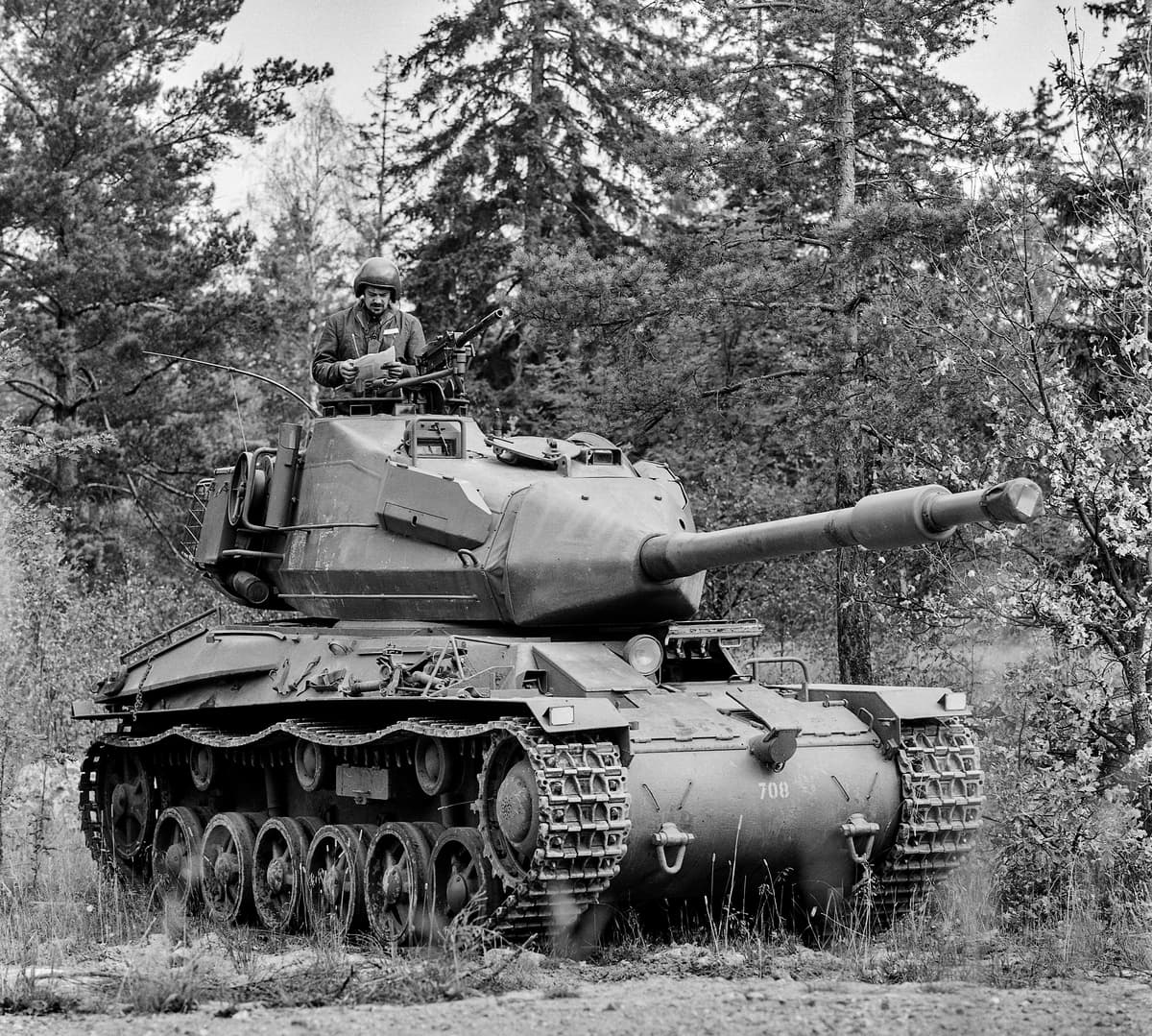
Most people are probably familiar with the Strv 74 and that the Strv m/42 was the tank it was built on as a low-budget complement to the Centurion tanks that had been bought in the late 50s. What many may not know is that just like there are a few different versions of the Strv m/42, the Strv 74 has actually two different versions as well because of the difference in driveline used in the production of the Strv m/42 tanks. Currently, in-game, the Strv 74 is simply labeled “Strv 74”, which is not wrong, but it does not specify which model is actually represented. Looking at the transmission, it seems to be the Volvo typ VL 420, same as found on the TV model. Thus, the Strv 74 in-game would be a Strv 74 V, and the Strv 74 H is not yet represented in-game. The Strv 74 H used a hydromechanical planetary gearbox, hence the H in the designation. Both V and H models still use the twin pair of Scania-Vabis typ L603/1 engines, which were modified for the Strv 74 and became Scania-Vabis typ 607. The problematic first batch of the Strv m/42, known as the TM, was in the late 40s rebuilt into the TH and TV models. These are the models that were rebuilt into the Strv 74, while the EH models became Infanterikanonvagn 73 (Ikv 73).
History
The Centurion would be accepted as the new main tank for the Swedish army in the mid 50s and would replace the Strv m/42 that was currently in use. The Strv m/42 would at this point be reclassified as a light tank instead of a heavy tank, as it was when it first came into production. But the Strv m/40 and m/41 could perform the role of the light tank much better than the Strv m/42, so that left it somewhat in a bad spot. Since the tanks were only around 10 years old, it was figured that they should have at least a few years left in them before they needed to be retired. Simultaneously, studies were conducted on adapting the French AMX 13, but this would have been expensive. Because of the huge expense of importing foreign tanks, it was thought that mounting the AMX 13 turret on the Strv m/42 could be an alternative. Sven Berge, who was a engieneer Swedish army and would later design the Strv 103, came forward with the proposal of developing a new turret for the Strv m/42 that could house a larger cannon. The cannon chosen was a 7,5 cm high-velocity cannon that was, in reality, just a Bofors 7,5 cm anti-aircraft cannon that was being decommissioned and was now to become a tank cannon instead. The cannon had a length of 56,5 calibers, which made it about as potent as the AMX 13’s cannon.
It was decided to go through with Berge’s idea of a new turret with a 7,5 cm on one condition: no parts from the original turret were allowed to be used on the new turret. This was because the turrets were to be mounted as coastal defence turrets. The new turret would be constructed at both Bofors and Landsverk as well. In 1954, it was decided that two prototypes were to be constructed using older Strv m/42 hulls with the new turret housing the 7,5 cm cannon. It was at this point that it was chosen to use the TH and TV hulls, as both used the same pair of Scania-Vabis typ L603/1 engines, just paired with different transmissions. The EH model would not be rebuilt and would only change designation to Infanterikanonvagn 73 instead. Some other changes also needed to be done for this to work. The suspension was changed a bit, and wider tracks were chosen. This improved the total ground contact length, and even tho the tank was 4 tons heavier than the Strv m/42, the ground pressure of the vehicle was 25% lower. This allowed the tank to still have very good mobility on the road as well as off-road. The final drive was also modified, as well as the engines, which were given direct fuel injection and a newly redesigned muffler. The engines would, with these modifications, be called Scania-Vabis typ 607. These improvements resulted in the engines producing 340 horsepower instead of the 320 horsepower they produced while in use on the Strv m/42 models. The transmission and drivetrain did not take up as much internal volume as the V variant, which resulted in an additional 5 rounds being possible to carry compared to the V variant. The prototypes were completed by 1956 and would subsequently begin being tested and evaluated.
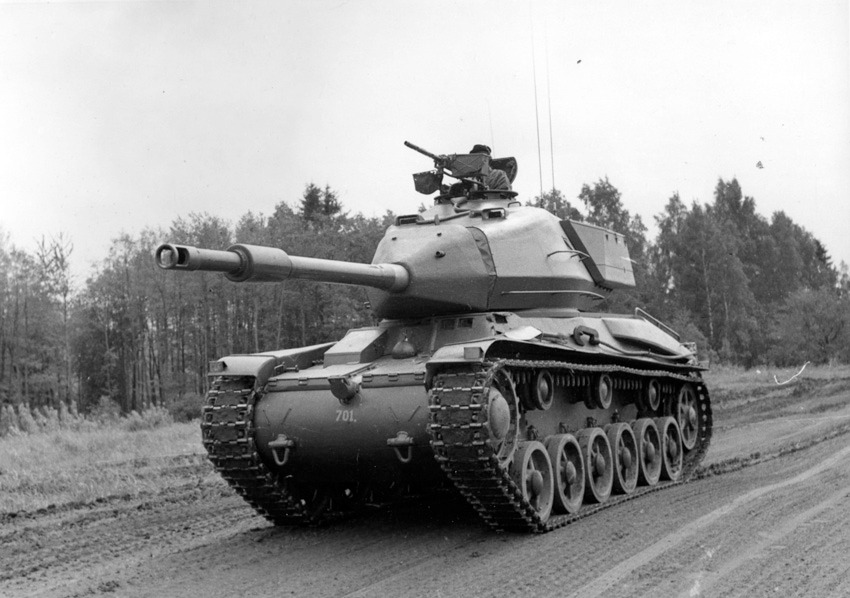
Strv m/42 TH No. 701 would serve as one of the two prototype chassis for what would become the Strv 74 H
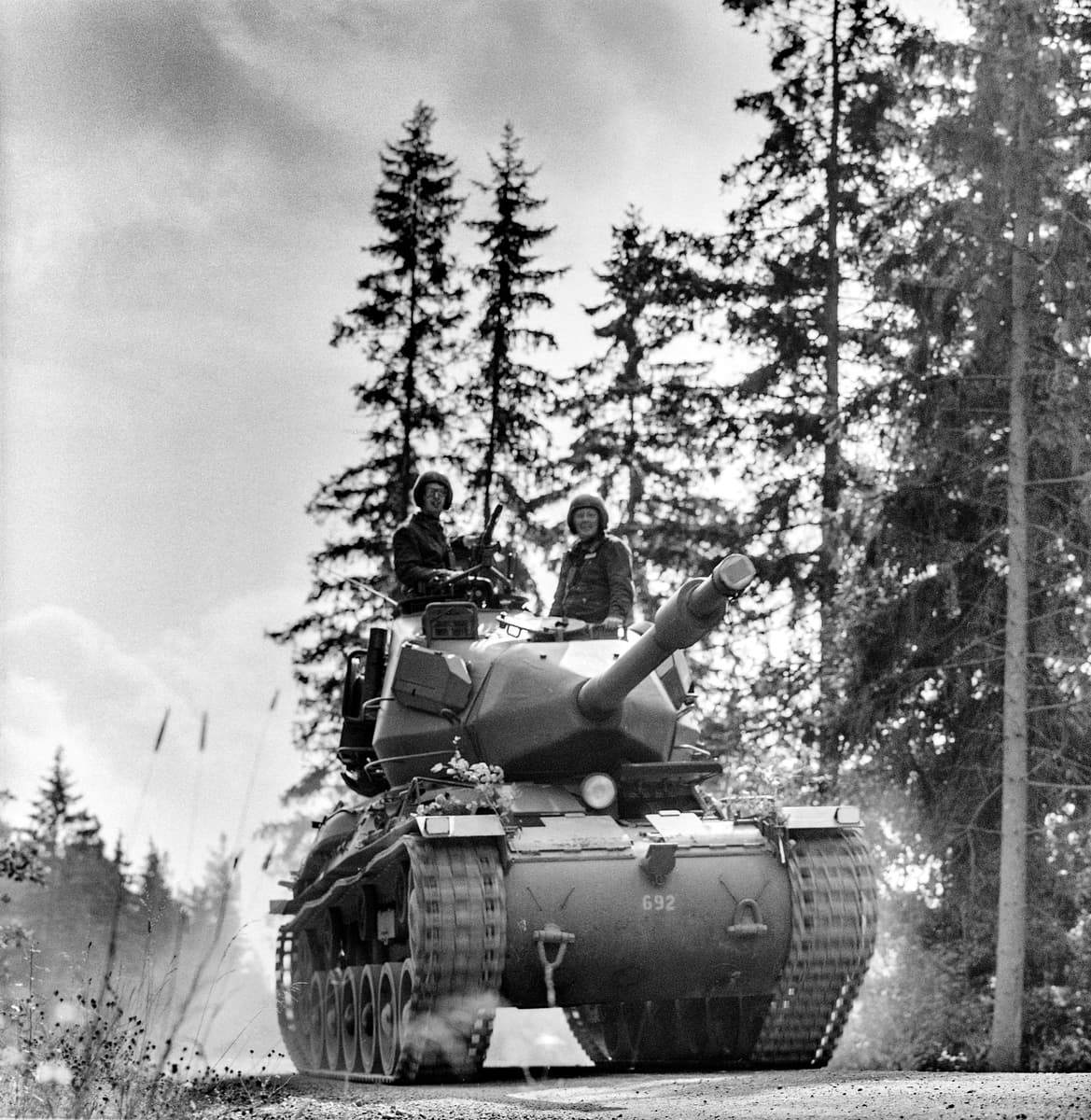
The test results of the prototypes were good, but some more modifications need to be made. Smokelanchers on the sides of the turret were requested, as well as a basket on the back of the turret. Before, personal belongings would have needed to be strapped onto the back of the turret. Testing with a fuel trailer had also been done, but this was abandoned in favor of a rack of 10 gas cans on the back of the chassis. Mounting for three spare roadwheels was also implemented. Precision when firing was good even tho the cannon was not stabilised. The ammunition for the 7,5 cm kan strv 74, as it had been named, was the same as the Pvkv m/43 could fire. Serial production of the Strv 74 would commence in 1957, and all 225 tanks were delivered by 1960. They would serve in tank brigades until the Strv 103 started to be delivered and subsequently moved to independent corps tank companies. Retirement of the tanks would begin in 1976, and the turrets of the tanks were removed and placed at harbors, and alongside the coastline of Sweden, some were also placed along roads in the far north. First out were the Strv 74 V, while the Strv 74 H got to serve up until 1979. In the end, the acquisition of the Strv 74 saved 80 million Swedish crowns compared to if the AMX 13 had been bought and imported. The tank was not were neer perfect, but it worked, and that was what mattered the most.
Specifications
Armor
Chassis
- Front: 55 mm
- Sides: 30 mm
- Rear: 20- 25 mm
Turret
- Front: 30 mm
- Sides: 20 mm
- Rear: 20 mm
Crew
- Commander
- Gunner
- Periscope, Sighting, AFV No.1
- Zoom / Field of View: 6× magnification
- Periscope, Sighting, AFV No.1
- Loader
- Driver
Armaments
Main armament
- 7,5 cm kan strv 74
- Velocity: 840 - 1160 m/s
- Horizontal guidance: ±180°
- Vertical guidance: ±15°
- Amount of rounds: 45
- slpgr m/38 (APCBC)
- sgr m/38 (HE)
- slpprj m/49 (APDS)
Secondary armaments
- 2 × 8 mm ksp m/39 strv
- 1 × coaxially mounted
- 1 × on a ringmount at the commander’s cupola
- Amount of rounds: 16 belts (4500 rounds)
- 2 × 6 smoke grenade launchers
- 6 launchers on each side of the turret
- Amount of grenades: 60
- 6 launchers on each side of the turret
Mobility
Engine
- 2 × Scania-Vabis typ 607
- 2 × 170 hp @ 2300 rpms
- 340 hp in total
- 2 × 170 hp @ 2300 rpms
Transmission
- 2 × Lysholm-Smith Atlas-Diesel typ DF - 1,0
- Hydromechanical transmission
- 1 × Lysholm-Smith Atlas-Diesel typ TER - 1/1,81
- Planetary off-road gearbox
- Gears forward: 2
- Gears backward: 1
Speed
- Forward: 45 km/h
- Backward: 5 km/h
Weight
- Empty weight: 24 tons
- Combat weight: 26 tons
Power-to-Weight
- 340 ÷ 24 ≈ 14,16 hp/ton
- 340 ÷ 26 ≈ 13,07 hp/ton
Sources
Rickard O. Lindström, Carl-Gustaf Svantesson. Svenskt Pansar 90 år av svensk stridsfordonsutveckling.
Didrik von Porat. Svenska arméns PANSAR.
KAFT - Stridsvagn 74 H med tillbehör / Stridsvagn 74 V med tillbehör, november 1963
Stridsvagn m/42 – Wikipedia
Stridsvagn m/42 - Wikipedia
Strv m/42
Stridsvagn m/42
stridsvagn m/42 – Swedish tank archives
Se produkter som liknar Nife kikare/sikte till strids… på Tradera (745071989)
Militaria - Hans Högman
Strv m/42 EH | War Thunder Wiki
Stridsvagn 74 – Wikipedia
Stridsvagn 74 - Wikipedia
strv 74 | gotlandsforsvarsmuseum.se
strv 74
Strv 74
Försök med AMX-13 i Sverige
Strv 74 | War Thunder Wiki
https://www.youtube.com/watch?v=CPBldkL5Ckg
https://www.youtube.com/watch?v=z56Z3wMLais&t