- Yes
- No
Hello, I’m suggesting the version of the Staghound with the Land Mattress rockets; well, it was thought to have been a British project, but looking into it at was actually done by the No 1 Canadian Base Workshop, making both rocket Staghounds Canadian. Even tho with how its history reads, there is a good chance of British involvement with support in a few ways.

History:
The 12th Manitoba Dragoons would go looking for a way to deliver high-explosive firepower, as the 37mm guns weren’t cutting it and the Staghound III had yet to enter production and attempts to get 17 Priest were unsuccessful. After getting permission from the HQ of the First Canadian Army, the Manitoba Dragoon would borrow some obsolete Rocket Launcher Rails and 60lb. warhead rockets that were used by the RCAF on the Hawker Typhoon.
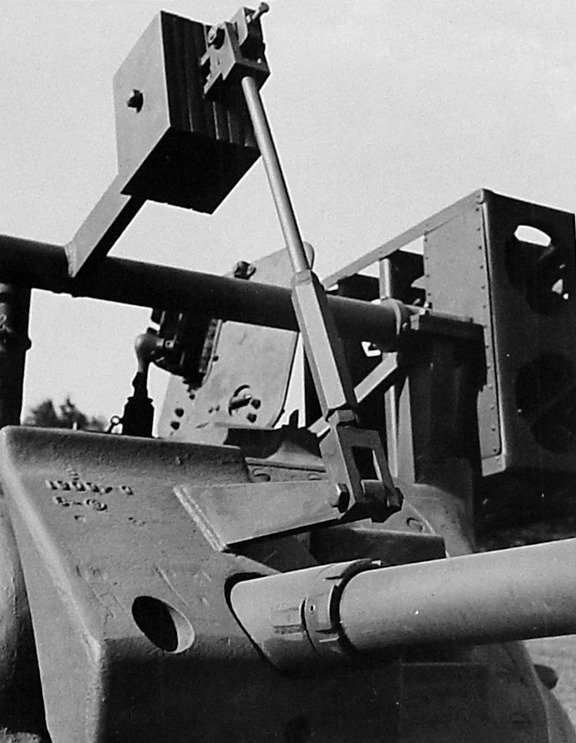
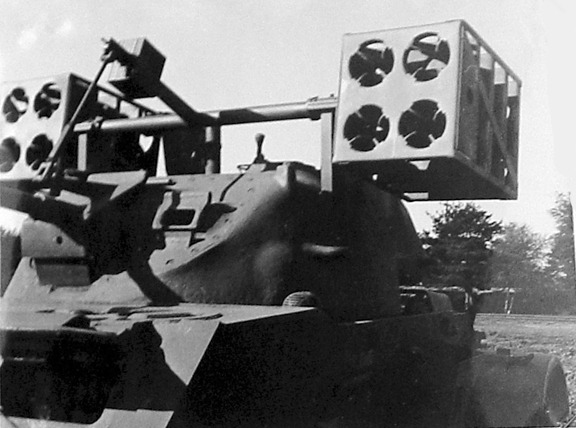
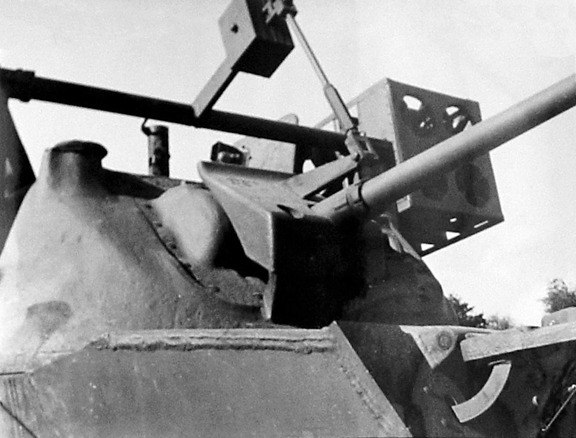
On the 19th of November, 1944, the modifications would be carried out. The rails would be mounted to the mantlet so they could be elevated with the gun and rotated with the turret. The system would be tested on the 20th of November, with formal trials held at St. Philip’s Island on the 26 of November and the 2nd of December. The results would be generally promising; they were unable to get accurate measurements of its range. However, accuracy was found lacking, and at short ranges the rockets would often fail to detonate. Even so, neither the crew or car suffered from the back-blast of the rockets, so in turn it was considered sufficiently successful. Well, the project was planned to enter full service with the 40 LAD; with the change in their role, the project would be cancelled.
After the Co of the 12th Manitoba Dragoons, Lt-Colonel Roberts had been given command of the 8th Canadian Infantry Brigade, where he had considered mounting rockets to a Universal Carrier, howevery this idea went nowhere. Yet at the same time the 4th Canadian Armoured Brigade would be performing similar experiments. This would be mounting a pair of Typhoon Rails to the side of a half-track. These rails would be pivoted so range adjustment was possible, and a sheet metal guard would be fitted over top to protect the crew from a back blast. Well, the vehicle was able to get to ranges of 1,500 yards (1,350 metres), but accuracy was lacking. The conclusion of these trials would be the same as the Staghound trials; further development would be recommended.
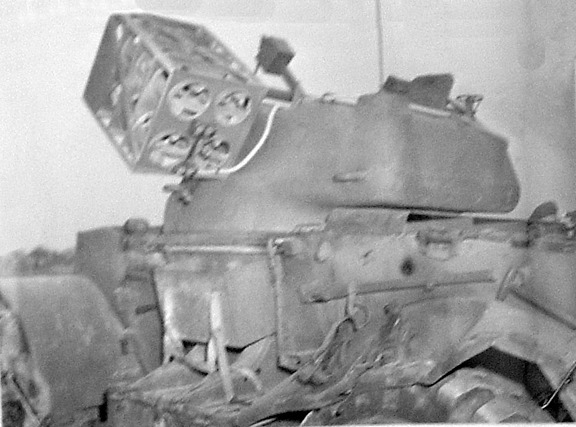
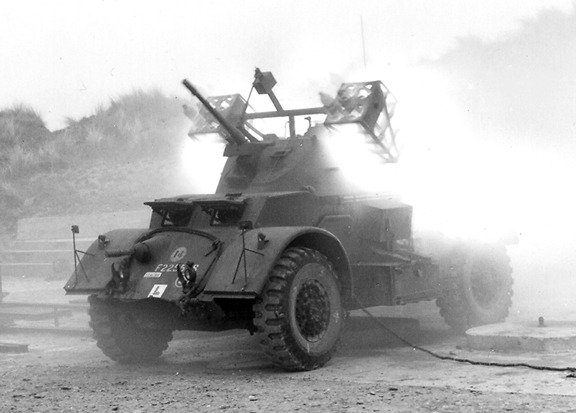
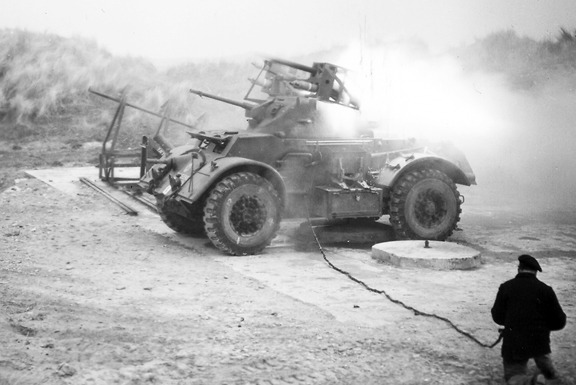
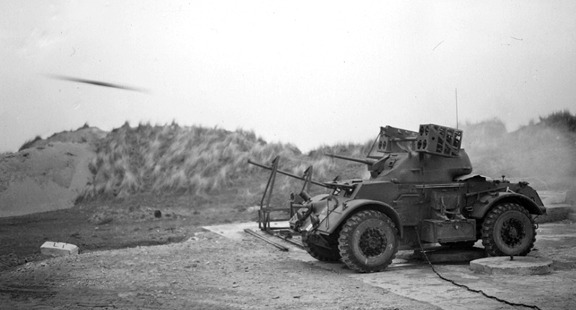
In January 1945, the Canadian Military Headquarters (CMHQ) in London would take up the proposal and would conduct its own tests, but it had found the Mk 1 rails to be unsatisfactory. British experts would point out that air-launched rockets are unsuitable for ground use, and would recommend that any further development use SEAC spiral launchers. These would use 3-inch and 5-inch rockets, which had already been allocated to the First Canadian Army as part of the Land Mattress. Well, the War Office saw no need for a rocket-armed armoured car; they were interested in developing launchers that could be mounted on any armoured vehicle. CHMQ would take the idea further by drawing up a concept for a dedicated vehicle that had its turret replaced by the launcher tubes. Still, however, work would continue using the Staghound as a platform for long-term development. With help from the British rocket experts found at CEAD, they would develop a launcher that used six cast aluminum spiral launching rails. CMHQ would order 12 of these from a Birmingham foundry, Northern Aluminum Co. However, only 5 would be delivered before the order was cancelled in July. So in order to proceed with trials, No 1 Canadian Base Workshop would fabricate a set of eight steel tubes. They would look at two possible mounting options before picking one: four mounted on each side, in banks of two, being attached to the turret with angle irons and steel tubing. The rails would be linked to the gun barrel and, in turn, elevated with it. It would also have a range dial attached to the gun’s trunnions, which allowed for more refined aiming. The system would be ready on the 5th of April and was tested on the 26th of April at Ynys-Las, South Wales. Well, about 35 rockets would be fired with satisfactory results, with little harm done to the crew; the back-blast of the full salvo had damaged the rear mudguards and, in turn, activated the CO2 fire-extinguishers. Ripple firing had also caused serious erosion to the launcher rails; this eventually damaged the launcher to the point where the fin of a rocket was pulled off, leading to it breaking up in mid-flight. A recommendation from this test was the addition of blast deflectors so to protect the CO2 release handles. Well, a new contract for cast aluminum tubes would be given to High Duty Alloys Ltd. of Slough, who were able to deliver. However, they struggled to get range access, which delayed testing of the redesigned launcher. They would finally be able to do it at the British Chemical Warfare Establishment located in Porton Down in December of 1945. Well, the results had been successful, with damage to the fins being avoided by chamfering their edges. Tho with the location of the tests was taking place, the British interest was now on any potential for delivering chemical and smoke rounds. Work would continue on the project, including attempts to develop a suitable smoke round up untill the very least 1946. At some point the Staghound Rocket Launcher would be returned to Canada.
More photos
Specs:
Staghound Mk I:
Mass 14 t
Length 17 ft 10 in (5.49 m)
Width 8 ft 10 in (2.69 m)
Height 9 ft 4 in (2.84 m)
Crew 5
Armour 9 to 44 mm
Main
armament
1 × 37 mm M6
Secondary
armament
2–3 × .30 (7.62 mm) M1919 Browning machine guns
Engine 2 × GMC 270
2 × 97 hp (72 kW)
Power/weight 13.9 hp/tonne
Suspension wheels, 4 x 4
Operational
range
450 miles (724 km)
Maximum speed 55 mph (89 km/h)
Land Mattress:
Mass 1,118 kg (2,465 lb)
Shell Rocket length: 1.77 m (5 ft 10 in)
Rocket weight: 30.5 kg (67 lb)
Warhead: 3.18 kg (7 lb)
Calibre 76.2 mm (3 in)
Muzzle velocity 353 m/s (1,160 ft/s)
Maximum firing range 7,230 m (7,910 yd)
Sources
Staghound Rocket Launcher | CSMMI MILART
T17E1 Staghound - Wikipedia
Mattress (rocket) - Wikipedia
https://www.flamesofwar.com/hobby.aspx?art_id=3779
Canadian Armour: T17E1 Staghound Armoured Car - SilverHawkAuthor Website Military History Materials
Panzerserra Bunker- Military Scale Models in 1/35 scale: Staghound Mk I, Mk II CS and Mk III (6pdr. and 75mm) T17E1 - case report