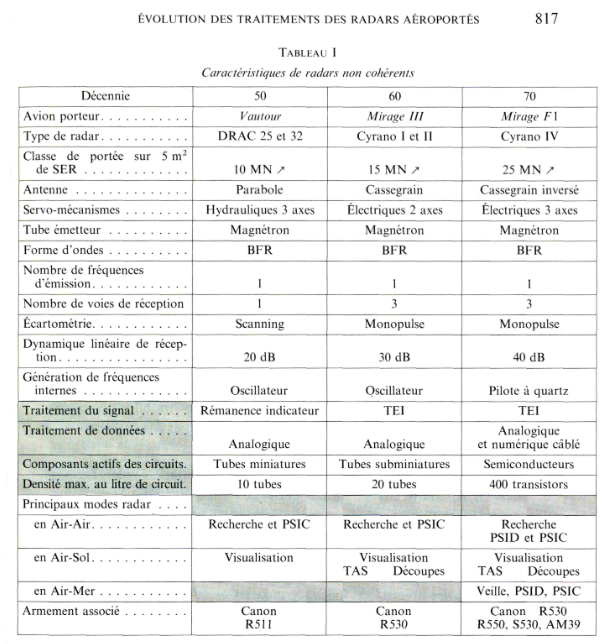
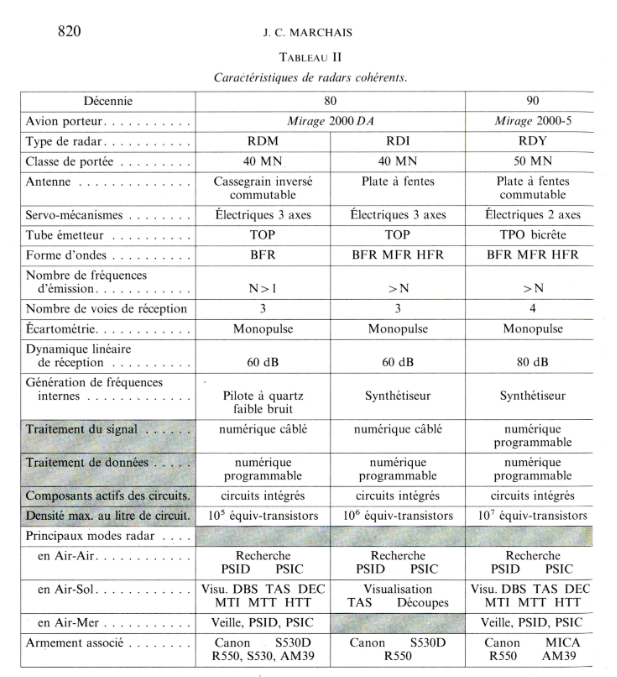
In the game, the radar modes for the Cyrano IV and Thomson-CSF RDI radars contain inaccuracies. Specifically, the in-game Cyrano IV radar features an MTI (Moving Target Indication) mode, while the Thomson-CSF RDI radar is limited to a high-repetition-frequency Doppler mode only.
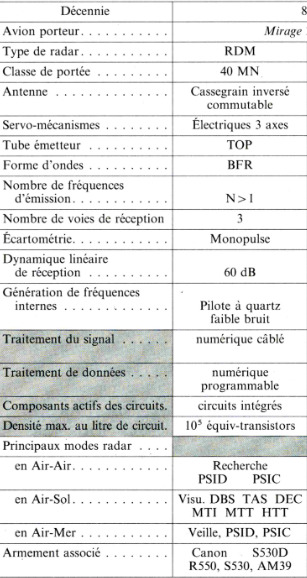
However, according to a technical paper authored by personnel from Thomson-CSF’s Avionics Division, the Cyrano IV radar does not possess an MTI mode; this capability was instead implemented on the Thomson-CSF RDM radar equipped on early-production Mirage 2000C aircraft.
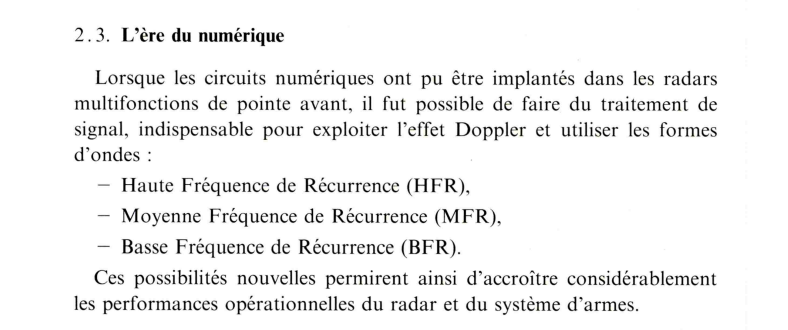
Regarding the Thomson-CSF RDI radar, the same paper states that it supports three pulse repetition frequency modes: BFR / MFR / HFR (Basse / Moyenne / Haute Fréquence de Récurrence; Low / Medium / High Pulse Repetition Frequency) This configuration indicates that the RDI is a full-waveform Doppler radar with all-aspect lock-on capability.
In contrast, the in-game implementation of the RDI radar only provides pulse-Doppler functionality in two head-on search modes: “PD HDN” and “PDV HDN”—both corresponding to the high-repetition-frequency (HFR) mode. This simplified representation does not align with the documented capabilities of the actual RDI radar.
If these changes are implemented in the game, will the Mirage F1 series receive a battle rating adjustment? After all, losing the radar’s look-down capability would limit its ability to employ the Super 530 missile at low altitudes. As for the Mirage 2000C S-4/5, since the F-15A/J has been downgraded to 12.7, its battle rating would not change despite the enhanced radar capabilities. I have compiled the information regarding radar capability adjustments into a report, link below:
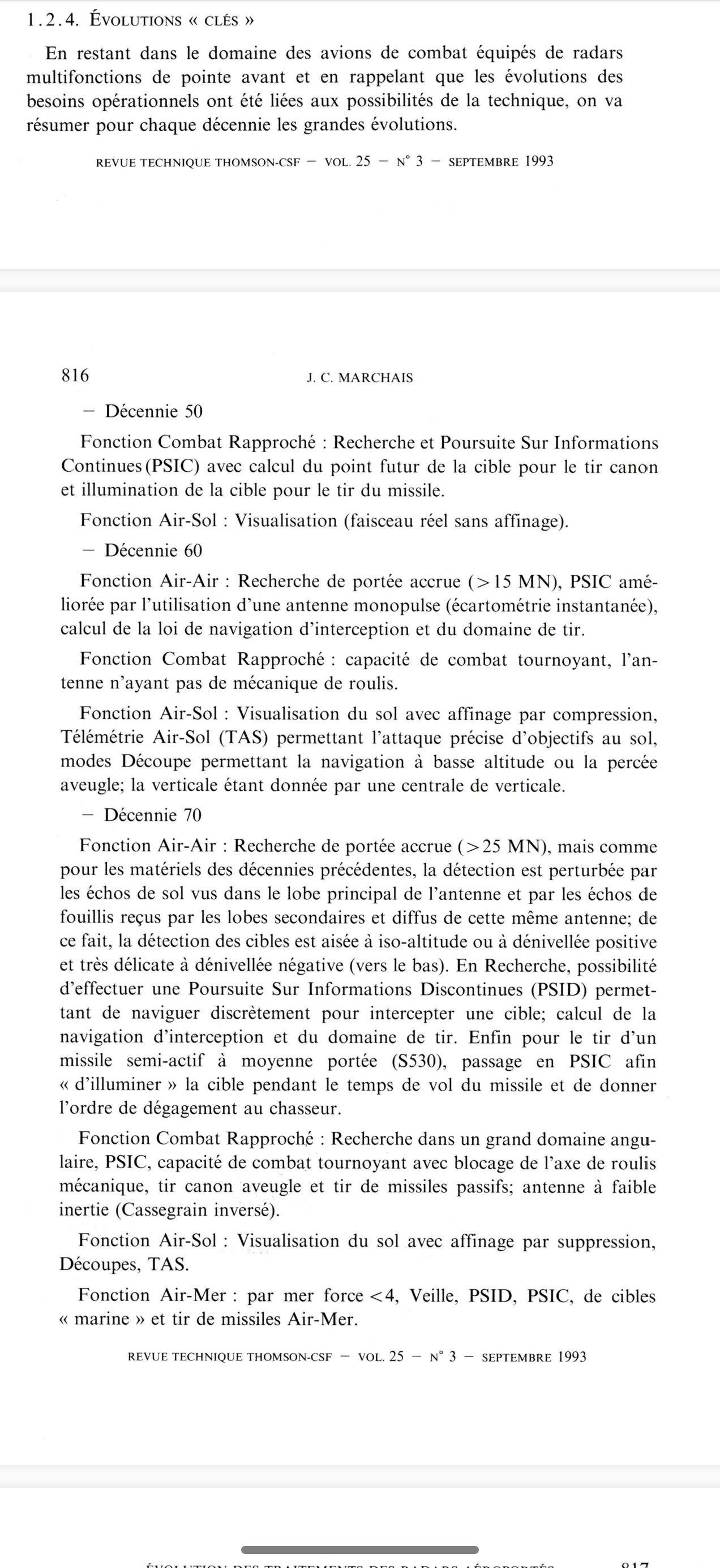
I am not someone who know anything about radar in general so I decided to check the meaning of those abbreviation , PSID mean “Poursuite Sur Information Discontinue” aka TWS , does that mean technically the MF1 should have such feature since it’s under “air-air”?
I believe the meaning of PSID corresponds to PSIC. The relevant content from the paper has been captured in the screenshot below. PSIC in this context refers to a mode that provides guidance to missiles, which can be understood as STT (Single Target Track). As for whether PSID can be interpreted as TWS , I think it should not be. First, the more realistically simulated Mirage F1 in DCS does not possess this capability. Second, the PSID mode mentioned in the article appears to be used only for scanning and finding targets and cannot achieve a tracking.
Yeah checking the passage under “décennie 70” seem to confirm that at best it would at best be a search only TWS of somekind.
As for the lack of MTI , the text does mention it’s struggling while looking down due to ground clutter (more or less) so it appear you are right.
In this paper, it is also mentioned that the CSF RDM radar lacks pulse Doppler functionality and can only utilize MTI (Moving Target Indication) and MTD (Moving Target Detection) modes for look-down capability. Since this radar is equipped on the Mirage 4000 in the game, and the Mirage 4000 already has an exceptionally high BR, combined with weaponry that can significantly overpower lower-BR aircraft, nerfing its radar while simultaneously lowering its BR would be inappropriate.
If the Mirage 4000 were fitted with an inferior radar and adjusted to a BR of 12.7 or even 12.3, its loadout of eight Magic 2 missiles would remain excessively dominant. Conversely, if its Magic 2 and Super 530D missiles were removed and its BR lowered to 12.0 or below, its flight performance would then become overly superior.
Therefore, I do not intend to submit a issue regarding the Mirage 4000’s current configuration, as achieving a balanced adjustment proves exceptionally challenging.
Note that the RDM installed on the 4000 is not the same as the RDM of the first Mirage 2000s (for example the first versions of the RDM on the 2000C S1 and S2 could not guide radar missiles, the following versions on 2000C S3 could guide Super 530F and the version on the 4000 which was to be offered was to be able to guide Super 530D), what this document does not indicate is that each radar has received several updates during its service.
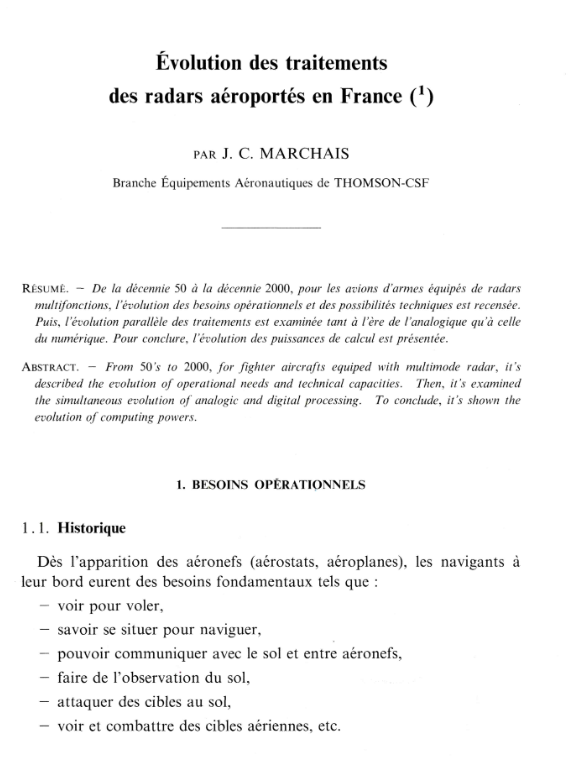
I believe I had a discussion with a moderator on the Mirage 2000 thread about this document (a few years ago), and it emerged that it is unfortunately not very reliable; it is primarily a document dealing with the evolution of technologies rather than what radars are actually capable of doing.
The game’s handling of radar modes is also quite simplified. For example, the JA37’s radar can achieve full-aspect PD lock capability in the game, however its radar in the real world only has MPRF mode. According to this document, the RDI radar has LPRF, MPRF, and HPRF modes, so treating it as an full-aspect PD radar similar to the APG-66 would not be unreasonable. The frequency modes available to the radar should be relatively general information, so the content in this article regarding this aspect may have a certain degree of reliability.
The article certainly contains a lot of truth, I’m certainly not going to say otherwise, but you still have to take the information with a grain of salt.