- Yes
- No
History:
In early 1937, the French Air Force issued a request to create a B5 type, 4-engined bomber (known as the “Specification A20”) to replace the aging Farman F.221 and F.222. The specification requested to deliver 1,800 kg (4,000 lbs) of bombs within the range of 1,200 km (750 mi) or 3,600 kg (7,900 lbs) within the range of 700 km (430 mi), and having a cruise speed of 450 km/h (about 280 mph), though changed a year later to 470 km/h (290 mph), and needs to house 5 crew members inside. As such, 3 manufacturers responded to the request: Bloch with their MB.135, Breguet with their BR.482 and finally SNCAO with their CAO.700.
The CAO.700 from SNCAO (or Société Nationale de Construction Aéronautique de l’Ouest) was inspired by the bi-engine torpedo seaplane LN-10 from Loire-Nieuport that was at the time in development. As such, they gave the same fuselage as the LN-10 for the bomber, and the brand new sail which would house the new 4 engines. Those engines are the Gnome & Rhône 14N with 1156 hp each. The engineers have then used both the engines which are really near to the fuselage that uses the 14N-49 model that turns with a clockwise rotation, and the 2 others in the reverse clockwise rotation and uses the 14N-48 model. The engineers have installed 3 MAC 7.5mm machine guns - which includes 1 on the nose operated by the “bomb aimer”/navigator, and the 2 others in the ventral position operated by the radio operator, near the wings - and 1 20mm that can be found in an electric assisted dorsal turret. Finally the bomber would have a bomb charge estimated at 1,580 kg (3,483.3 lbs).
The A20 program would accelerate as France would enter the 2nd World War, the 3rd September of 1939, as the French Air Force urgently needed the “new gen” B5 type bombers. Even if the Bloch MB.135 had already flown in January of the same year and shown good results, the Br.482 and the CAO.700 were favored by the French aviators. As such, the acceleration of the program and the period of the “funny war” (a specific part of the war where nothing happens pretty much), made the SNCAO (the aircraft manufacturer of the CAO.700) having a higher budget and doubled the engineers and workers affected by the program. However, the bomber won’t see its full production as it would only create prototypes of the aircraft and only make its first flight… the 24th June of 1940 which is 2 days after the Armistice. Its first flight that only lasted dozens of minutes weren’t even conclusive and had to be abandoned, as they didn’t put armaments (the 20mm and 7.5mm) onto the prototype.
The aircraft won’t see its full operational history as the “Petain” authorities would direct SNCAO to not make the CAO.700 flying again as the program would be cancelled, although the Luftwaffe would be interested for some time to make the CAO.700 as a reconnaissance plane but the project didn’t not see the day. The CAO.700’s only prototype would see its demise when the plane was unfortunately scrapped and the remains of the plane were gone.
There were some proposed models such as the CAO.700M for the long-range naval reconnaissance aircraft with an up to 18 hours endurance, the CAO.710 that would be an improved version that houses the more powerful Gnome-Rhône 14R engines with 1,320 hp (or 980 kW) and increased wingspan, and the airliner version that is pressurised for 15 passengers (however the derivative was eventually stopped due to instructions from Germany as the factory of SNCAO were ordered to build instead the Arado Ar-196 floatplanes, in December of 1940).
The General Characteristics:
Crew: 5
Length: 18.85 m (61 ft 10 in)
Wingspan: 25.00 m (82 ft 0+1/4 in)
Height: 6.10 m (20 ft)
Empty weight: 11,390 kg (25,111 lb)
Engines: 2 × Gnome-Rhône 14N-49 and 2 x Gnome-Rhône 14N-48 Radial Engines
Power: 850 kW (1,140 hp) each in take off power and 772 kW (1,035 hp) at 4,800 m (15,750 ft)
Performance:
Maximum speed: 540 km/h (335 mph) at 5,000 m (17,385 ft)
Cruise speed: 320 km/h (200 mph) at 5,000 m (16,400 ft)
Estimated Stall Speed: 120 km/h (74.56 mph)
Estimated Combat Range: 350 km (217.48 mi)
Range: 2,200 km (1,400 mi)
Service ceiling: 5,500 m (18,000 ft)
Armaments:
Guns: 1x Hispano-Suiza HS-404 20mm cannon in dorsal turret and 3x MAC 1934 7.5mm machine guns (1 in the flexible nose mount and 2 in the flexible ventral mount).
Bombs: 1,580 kg (3,483.3 lbs)
Pictures of the aircraft:
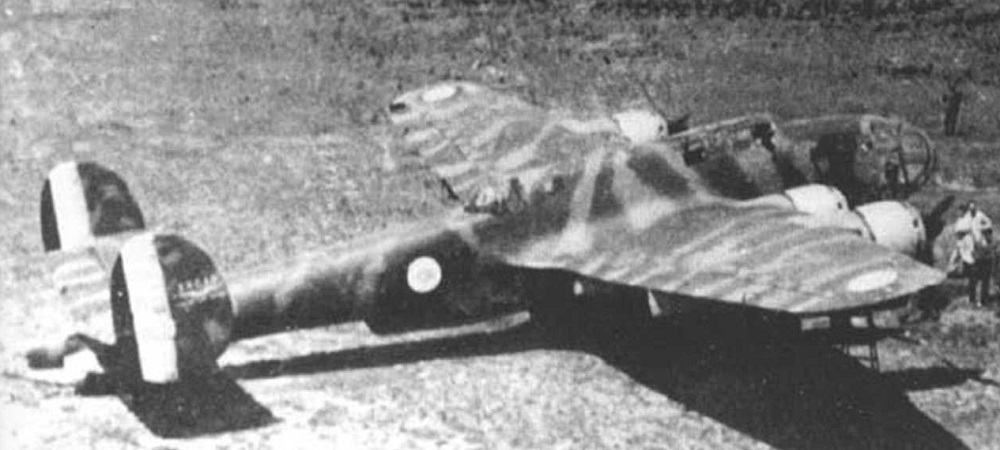
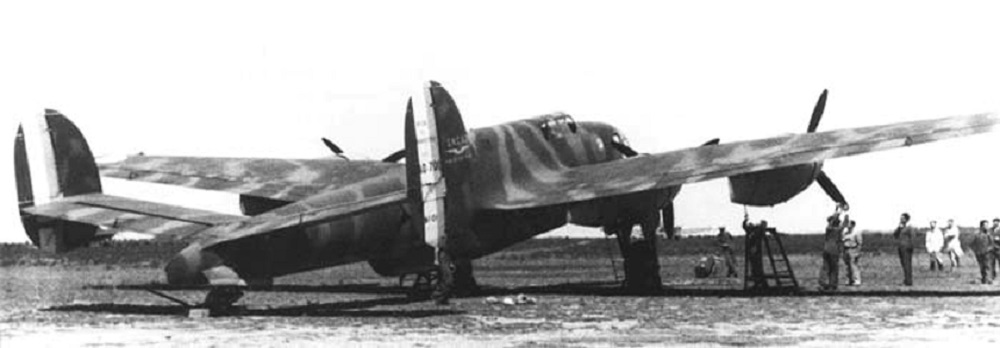
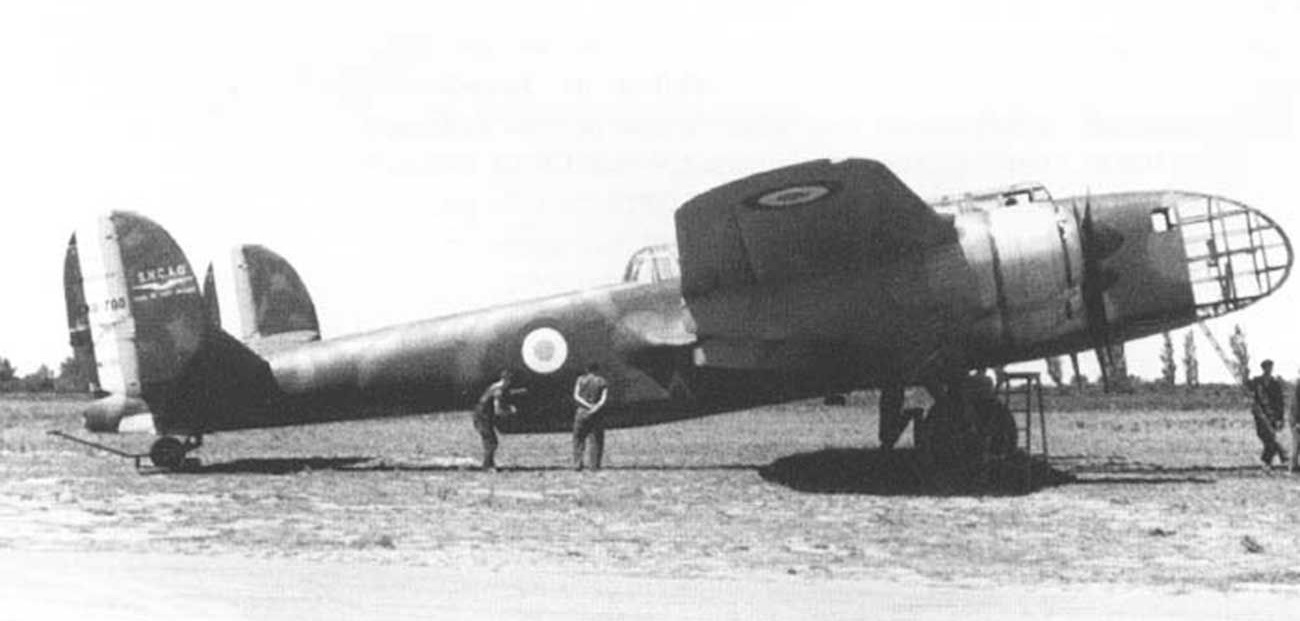
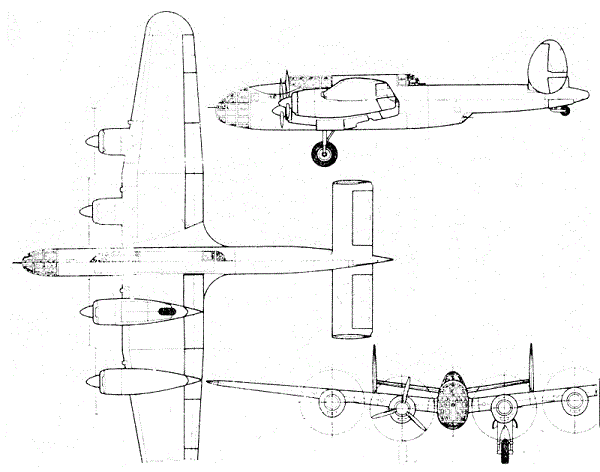
Sources:
Wikipedia Page
Avions Légendaires
Nicolas PONTIC, Et si la guerre avait débuté en 1940 ? Les Alliés auraient-ils pris l’avantage ? Ligne de Front n°100 (2022)